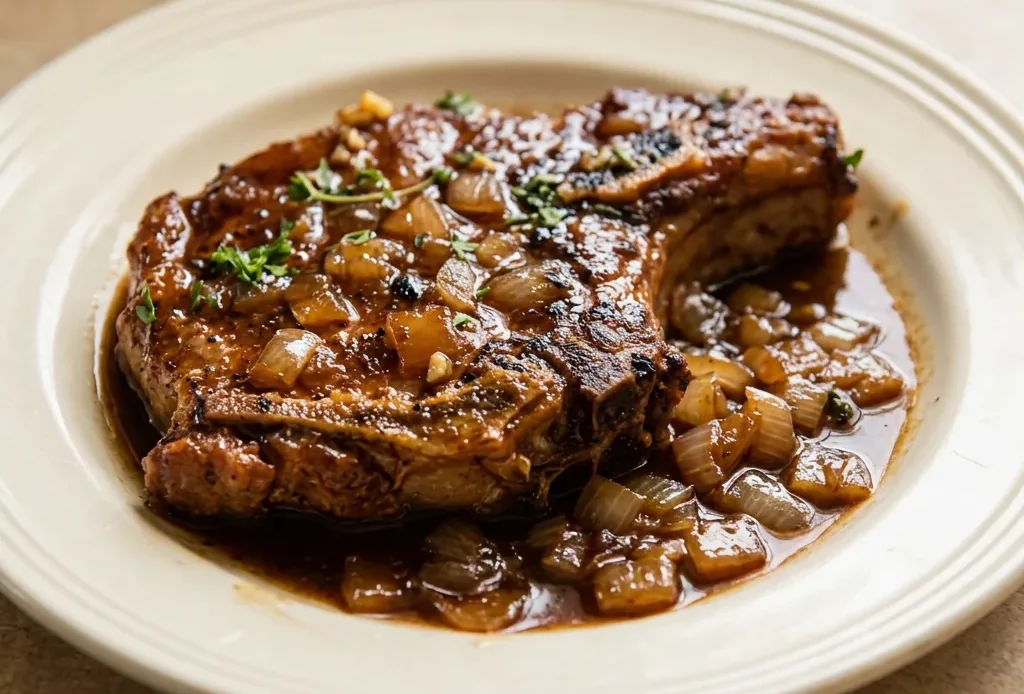
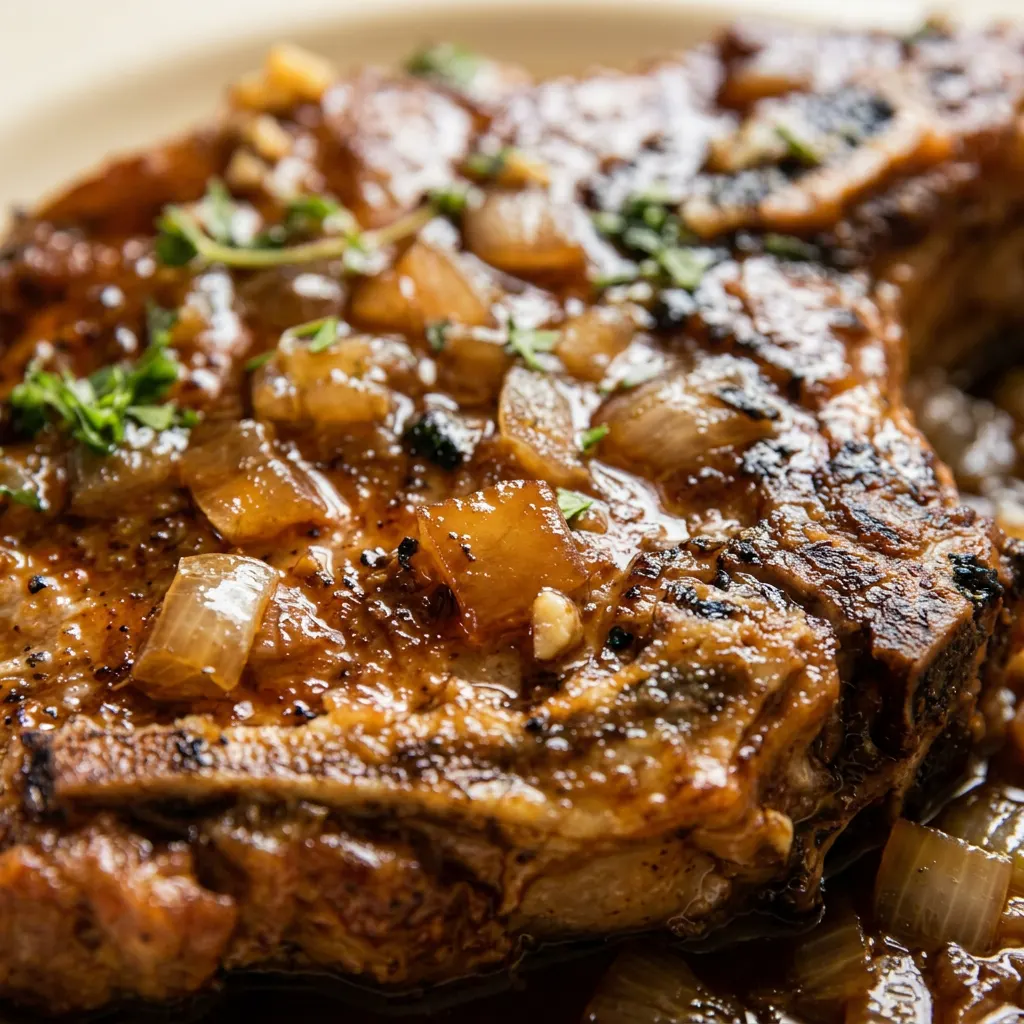
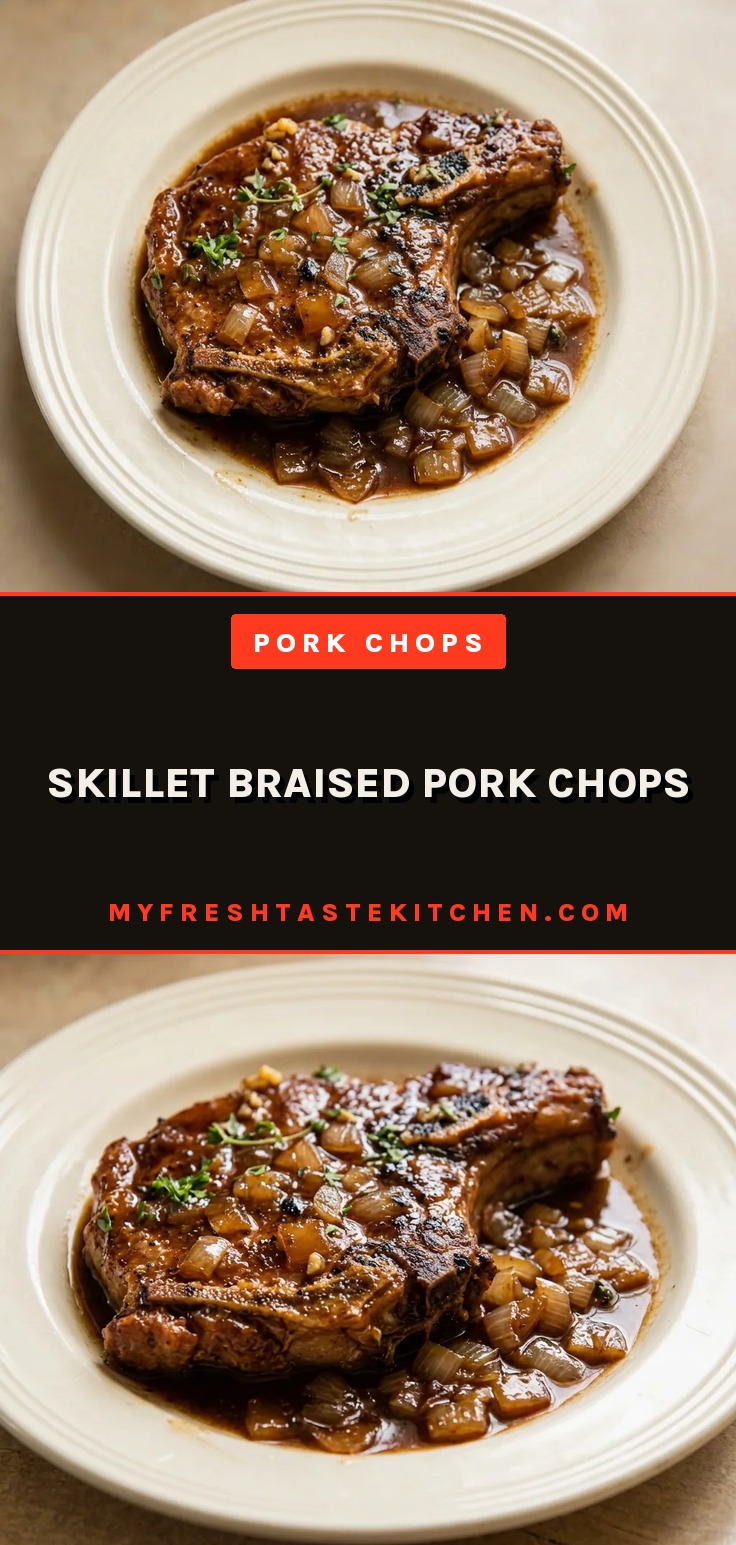
A skillet braised pork chop is the kind of dinner that looks like you fussed but really just took a long, lazy simmer. The quick sear gives you a mahogany crust that carries the whole dish, then the heat drops and the pork relaxes into a glossy, sweet-tangy sauce. If you’ve ever pulled a dry, sad chop from the oven, this is the fix: bone-in meat, a covered pan, and the patience to let the connective tissue do its job.
The sauce is sharp and dark from balsamic and Worcestershire, balanced with brown sugar so it coats without cloying. You don’t need to be precise here, the low simmer forgives a lot.
What you get is tender meat that pulls apart with a fork, and enough sauce to justify a second serving of mashed potatoes.
I pulled the chops after 30 minutes because I was impatient, and they were dry and chewy. The sauce was thin, too.
Sear pork chops to build deep flavor
Browning the chops before braising isn’t optional, it’s the foundation of the dish. The intense heat of the skillet triggers the Maillard reaction, creating a rich, savory crust on the meat. That browned surface carries flavor you can’t get any other way.
As the pork sears, browned bits called fond stick to the pan. Those bits dissolve into the braising liquid later, giving the sauce depth and complexity.
Without that fond, the sauce would taste flat. The contrast between the caramelized exterior and the tender interior after braising makes every bite more interesting. You can smell the difference as soon as the chops hit the skillet, that nutty, meaty aroma tells you the flavor is building.
Balance sweet and tangy in the sauce
The sauce gets its character from three ingredients working together. Balsamic vinegar brings acidity and a fruity sharpness that cuts through the richness of the pork. Brown sugar adds sweetness, but more importantly, it helps the sauce caramelize as it reduces, giving it a glossy finish and deeper flavor.
Dijon mustard contributes tanginess and a slight heat, plus it helps emulsify the sauce so it stays silky rather than separating. Taste the sauce before adding the chops back, it should be sharply sweet and tangy. As it simmers, the flavors will round out and cling to the meat.
The result is a sauce that’s bold but balanced, coating each pork chop evenly.
Braise low and slow until fork-tender
Braising bone-in pork chops low and slow changes them. The bone conducts heat evenly and keeps the meat moist during the long cook time.
Low heat breaks down connective tissue into gelatin, which makes the meat tender and gives the sauce body. Covered skillet traps steam, creating a gentle environment that slowly cooks the pork without drying it out. You’ll know it’s done when the meat pulls apart easily with a fork, not shredding, but yielding.
Now I always simmer them covered for at least 45 minutes until the meat pulls apart with a fork. The result is pork that’s succulent throughout, not just on the outside.
Prep: 5 min · Cook: 1 hr 10 min · Total: 1 hr 15 min · Servings: 4 · Calories: 460 kcal
Ingredient notes for braised chops
Bone-in pork loin chops: Go for at least 1-inch thick chops; thin ones dry out before the meat gets tender.
Balsamic vinegar: Use a decent bottle, not the syrupy glaze; you want acidity, not sugar.
Light brown sugar: Packed light brown sugar dissolves evenly; dark would overpower the balance.
Dijon mustard: Smooth Dijon, not whole grain; it blends into the sauce without seeds.
Low-sodium beef broth: Low sodium lets you control the salt; full sodium can make the sauce too salty as it reduces.
Braised pork chops step by step
Sear the chops
Heat 2 tablespoons olive oil in a heavy skillet over medium-high until it shimmers. Season the chops with salt, pepper, and thyme, then lay them in.
You should hear a steady sizzle, if it’s weak, the pan’s not hot enough. Sear 3 to 4 minutes per side until the underside is deep mahogany brown.
That crust is flavor locked in.
Build the sauce
Pour off the grease, add remaining oil, and lower heat to medium. Sauté onions until they soften and turn translucent, about 1 minute; they should hiss gently without burning. Stir in garlic and cook just until fragrant, about 30 seconds, if garlic browns, the pan’s too hot.
Pour in broth, brown sugar, vinegar, mustard, and Worcestershire. Stir until sugar dissolves, scraping up any browned bits from the pan bottom. The liquid should be a uniform dark brown.
Braise until tender
Return chops to the skillet, nestling them into the sauce. Bring to a boil, then cover, reduce heat to low, and simmer for 45 minutes to 1 hour. You want the sauce at a gentle bubble, not a rolling boil.
After 45 minutes, poke a chop with a fork, the meat should yield easily and begin to separate. If it resists, give it more time.
The sauce will darken and thicken as it goes.
Skillet Braised Pork Chops
Ingredients
- 3 tablespoons olive oil divided (or as needed)
- 4 bone-in pork loin chops
- Kosher salt and freshly ground black pepper
- 2 teaspoons chopped fresh thyme
- 1 cup diced onions
- 2 cloves garlic minced
- 1 cup low-sodium beef broth
- 3 tablespoons light brown sugar
- 2 tablespoons balsamic vinegar
- 1 tablespoon Dijon mustard
- 1 tablespoon Worcestershire sauce
Instructions
Sear Pork Chops:
In a large heavy skillet over medium-high heat, warm 2 tablespoons of the olive oil. Season both sides of the pork chops with salt, pepper, and thyme. Place the chops in the skillet and sear for 3 to 4 minutes per side until well browned. Move them to a plate and set aside.Sauté Onions and Make Sauce:
Pour off the grease from the skillet, then add the remaining 1 tablespoon olive oil. Lower the heat to medium. Sauté the onions for about 1 minute, stirring frequently. Add the garlic and continue cooking until the onions become tender and lightly golden, taking care not to scorch the garlic. Mix in the broth, brown sugar, balsamic vinegar, Dijon mustard, and Worcestershire sauce. Stir and cook for roughly 1 minute.Simmer Pork Chops:
Put the pork chops back into the skillet, submerging them in the sauce. Turn up the heat to bring the liquid to a boil. Cover the skillet, reduce the heat to low, and simmer for 45 minutes to 1 hour, until the pork chops are fork-tender.
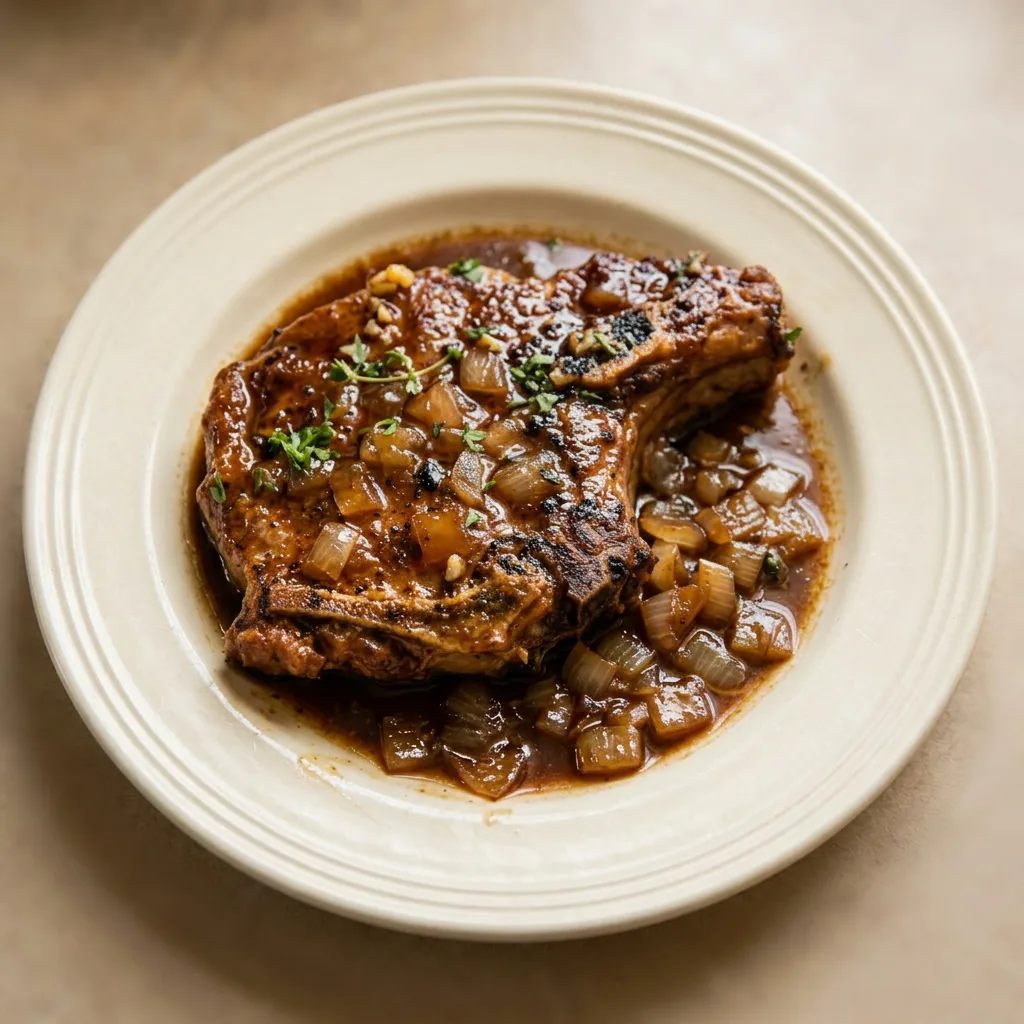
Storage and Serving
Serve the pork chops within 30 minutes of braising for the best texture. The sauce is at its most fluid right off the stove; as it cools, it thickens. Leftovers keep in the fridge for 3 to 4 days.
The meat becomes even more tender after a day as the collagen continues to break down. Reheat gently in a covered skillet over low heat, adding a splash of broth if the sauce is too thick. Freezing is not recommended.
The sauce’s emulsion breaks upon thawing, and the pork chops turn dry and mealy. If you must freeze, freeze only the braising liquid and make fresh chops later.
Tips
- If your skillet lid doesn’t fit tightly, seal the edges with a strip of foil to keep steam from escaping; this ensures the chops braise evenly without drying out.
- Let the cooked chops rest in the covered skillet off the heat for 5 minutes before serving; this allows the juices to redistribute into the meat, making each bite more succulent.
Swap bone-in for boneless, but adjust the time
Bone-in pork loin chops: Boneless pork loin chops (same weight total). Boneless chops cook faster, check for tenderness around 30 minutes instead of 45. They can dry out if overcooked, so start checking early.
The bone adds moisture and flavor to the braise; without it, the sauce may taste slightly less rich.
Balsamic vinegar: Red wine vinegar (same amount). Red wine vinegar is less sweet and more sharply acidic. The sauce will be tangier and less glossy.
Add a pinch of brown sugar (start with 1 teaspoon) to balance if needed, but taste first.
Low-sodium beef broth: Chicken broth or vegetable broth (same amount). Chicken broth gives a milder, lighter background; the sauce won’t be as deeply savory. Vegetable broth works but can taste thin, simmer uncovered for the last 10 minutes to concentrate flavor.
Worcestershire sauce: Soy sauce (use half the amount, then taste). Soy sauce adds saltiness and umami but lacks the tang and slight sweetness of Worcestershire. Start with 1½ teaspoons and adjust.
The sauce may be darker and saltier, dial back added salt elsewhere.
Frequently Asked Questions
Can I make these pork chops ahead of time and reheat them?
Yes, but the texture is best fresh within 30 minutes of braising. Leftovers keep 3 to 4 days in the fridge and become even more tender as collagen breaks down overnight.
Reheat gently in a covered skillet over low heat, adding a splash of broth if the sauce thickens. Avoid freezing, the sauce’s emulsion breaks and the meat turns dry.
How do I prevent the pork chops from becoming tough or dry?
Use bone-in chops at least 1 inch thick: thin ones dry out before they get tender. Searing builds flavor, but the real key is braising low and slow for 45 minutes to 1 hour.
The covered skillet traps steam, breaking down connective tissue into gelatin. Test with a fork, when the meat yields easily and starts to separate, it’s done.
What should I serve with these braised pork chops?
Something that soaks up the sauce: mashed potatoes, polenta, or crusty bread work well. A simple green vegetable like sautéed green beans or a crisp salad balances the richness. The sauce is glossy and tangy-sweet, so choose sides that won’t compete, keep them plain.
Can I use boneless pork chops instead of bone-in?
Yes, but adjust timing: check for tenderness around 30 minutes instead of 45. Boneless chops cook faster and can dry out if overcooked.
The bone adds moisture and flavor, so the sauce may taste slightly less rich without it. Use the same total weight of chops.
Why is my sauce too thin or too thick after braising?
If it’s too thin, uncover the skillet during the last 10 minutes of braising to let it reduce. If it’s too thick, stir in a splash of warm broth or water. The sauce should coat the back of a spoon, thinner when hot, thicker as it cools.
Over-reduction concentrates salt, so taste and adjust seasoning afterward.