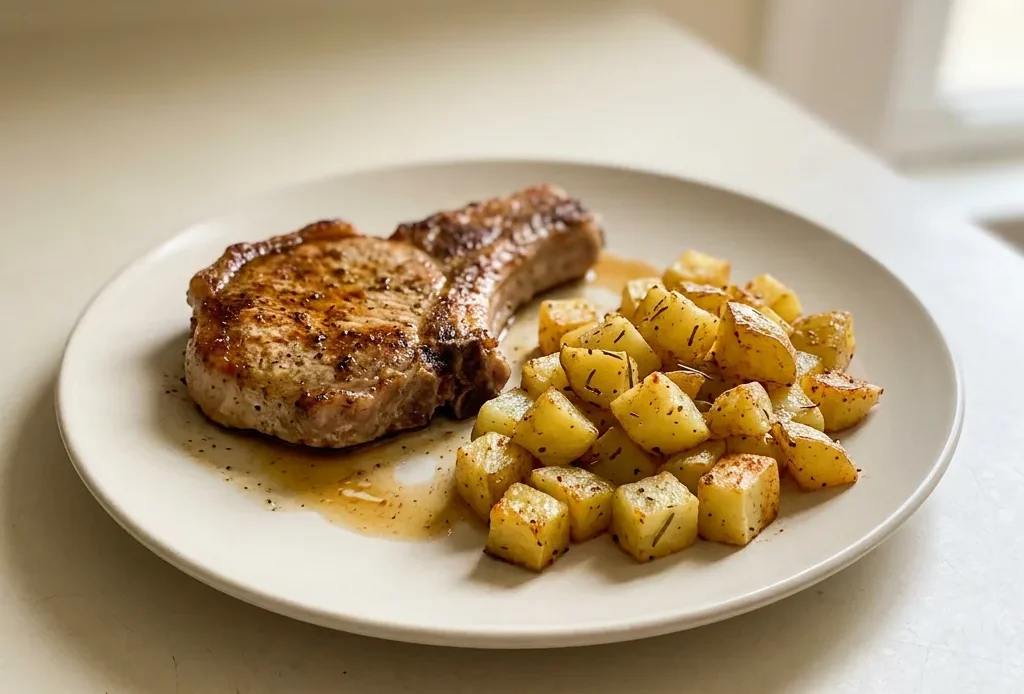
Most people end up with dry pork chops and pale potatoes from the same sheet pan because they don’t account for how differently each cooks. The bone-in chops need enough space and heat to brown before the inside dries out, while the potatoes need a single layer and a head start on seasoning to turn crisp instead of steamed.
This sheet pan pork chops and potatoes recipe aligns those two timelines so the chops come out juicy and the potatoes actually get those golden edges you want. It’s a one-pan meal that works because it treats each ingredient according to what it needs, not just what’s convenient.
Why use bone-in pork chops for sheet pan roasting?
Bone-in chops hold onto moisture better than boneless during high-heat roasting. The bone itself conducts heat evenly, so the meat cooks uniformly from edge to center. That means you get a nicely browned exterior without a dry, overcooked interior.
Resting after roasting lets juices reabsorb into the meat fibers; skip that and you’ll lose moisture the moment you cut. The difference is noticeable in the first bite, juicier, more tender. Boneless chops can work, but they leave less room for error.
For a forgiving roast that stays succulent, bone-in is the way to go.
How potato size and placement affect even cooking
Dice potatoes into 1/2-inch cubes so they finish at the same time as the pork, not earlier or later. Spread them in a single layer around the chops, crowding traps steam, and steam means pale, soft potatoes instead of golden, crispy ones. Tossing with herbs and melted butter coats every surface for flavor without extra basting.
You want edges that brown, centers that are tender, and no raw spots. If cubes are larger, they’ll still be firm when the pork is done; smaller, they burn. That single layer is the key to achieving that contrast.
Why seasoning the pork directly matters for flavor
Drying the chops with paper towels removes surface moisture so the seasoning actually sticks. Without that step, spices slide off or steam away.
Coating with oil does double duty: it helps the spice blend cling and promotes browning during roasting. Season both sides evenly, underside often gets neglected, but that’s where half the bites come from. The result is a crust that tastes of garlic, paprika, and pepper in every mouthful, not just on top.
Relying on the potatoes alone to carry flavor leaves the meat bland. Direct seasoning is the difference between a seasoned chop and a merely cooked one.
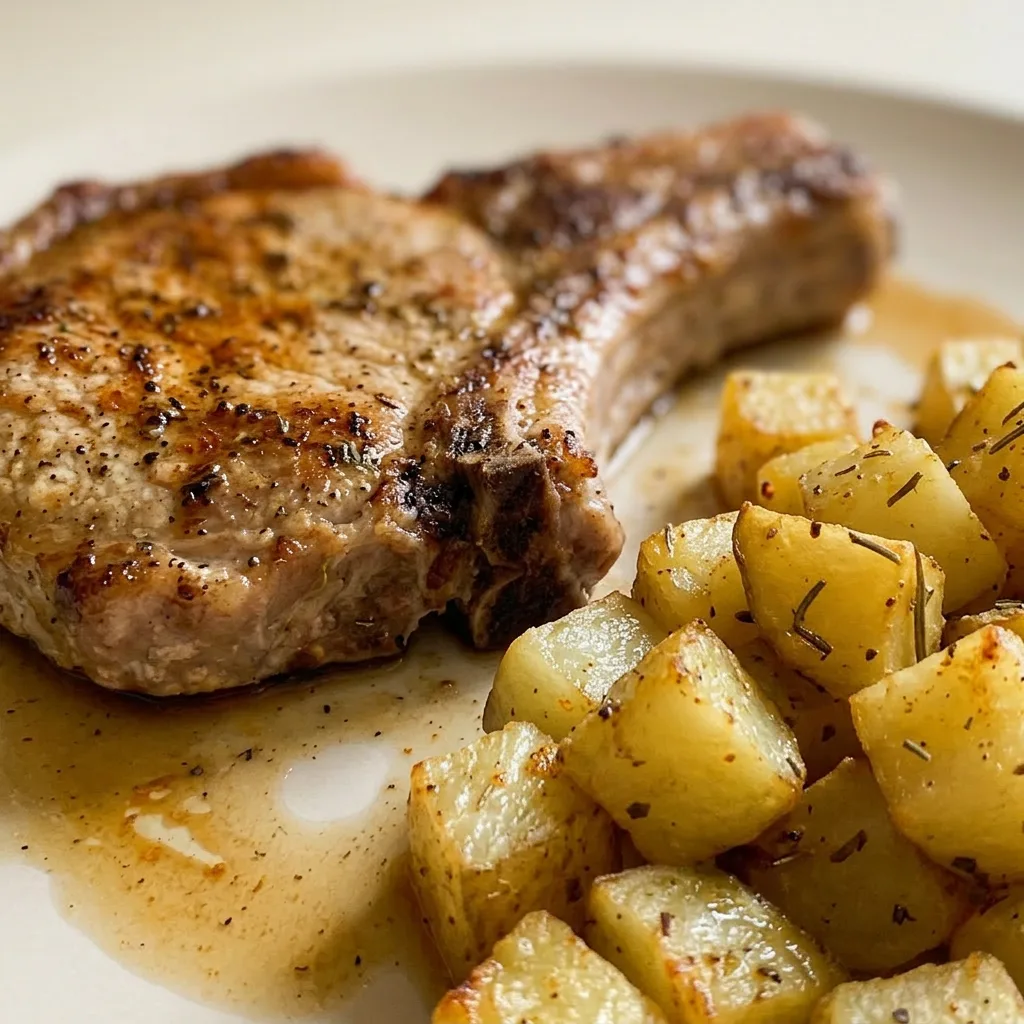
Prep: 10 min · Cook: 30 min · Total: 40 min · Servings: 4 · Calories: 450 kcal
What to look for at the store and how to prep each ingredient
pork chops: Bone-in chops hold moisture better than boneless during high-heat roasting; look for 1-inch thick ones.
potatoes: Yukon Gold or red potatoes hold their shape; waxy varieties won’t fall apart during roasting.
dried rosemary and thyme: Use dried herbs here; fresh would burn before the potatoes are tender at 400°F.
Getting the timing right: pork and potatoes finish together
Prep the pork
Pat chops dry, if they feel tacky, you’ve removed enough moisture for seasoning to stick. Oil and spices should coat like a thin paste, not slide off.
Cut and season potatoes
Dice potatoes into 1/2-inch cubes. When you toss with oil and herbs, each cube should glisten evenly. Any dry spots will brown unevenly.
Arrange on the sheet
Place chops in the center, potatoes in a single layer around them. If potatoes overlap, they’ll steam and turn soft instead of crisp. Leave a little space between cubes.
Roast and flip
After 15 minutes, flip the chops. The underside should be deep golden, not pale. If it’s still light, give them another few minutes before flipping.
Check doneness
At 25 minutes, probe the thickest chop, 145°F means it’s done. Potatoes should pierce easily with a fork and have browned edges. If not, return for 5 more minutes.
Rest before serving
Let the chops sit for 5 minutes. You’ll see juices stop pooling on the cutting board; that’s the muscle fibers relaxing. Cut sooner and the meat will be dry.
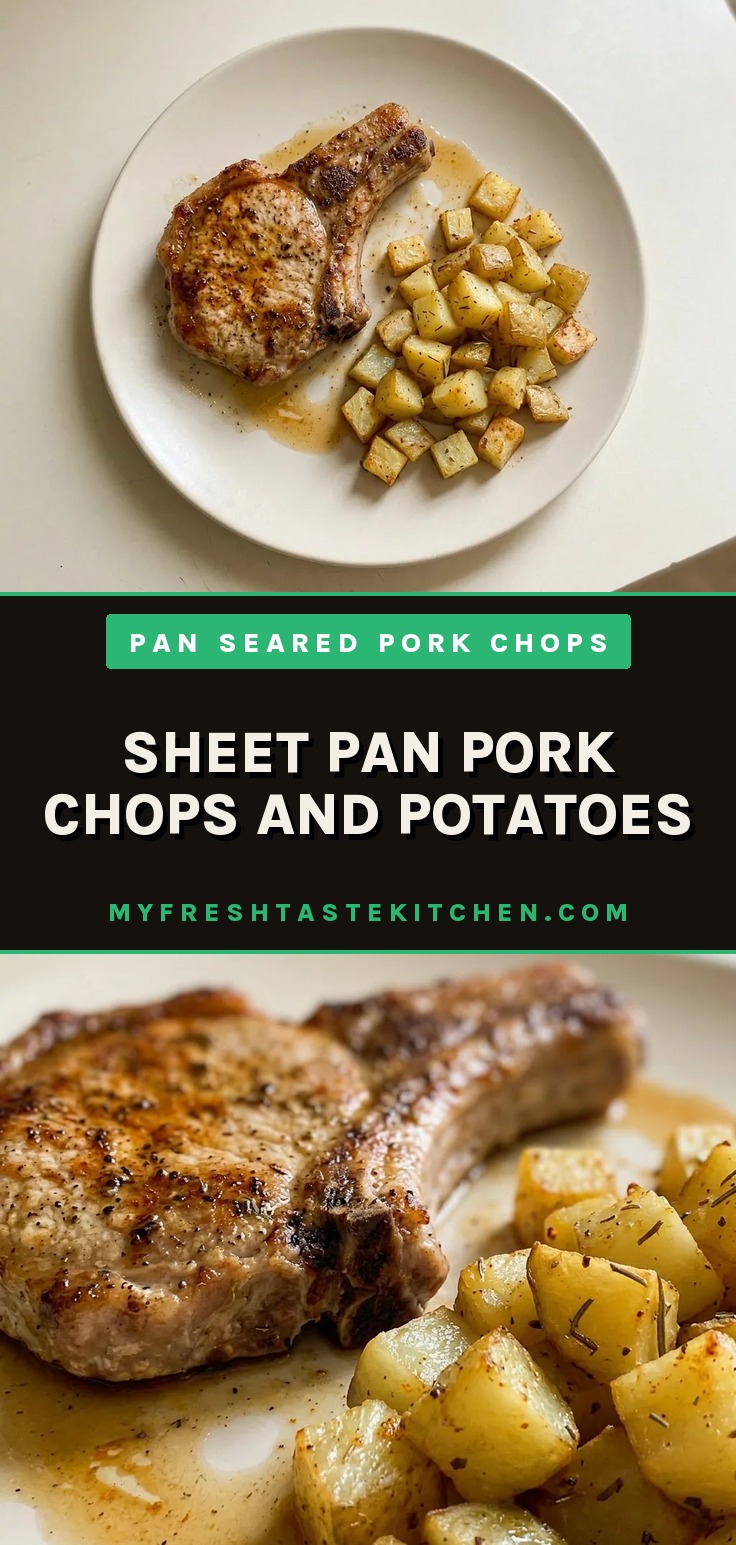
Sheet Pan Pork Chops and Potatoes
Ingredients
- 4 pork chops (bone-in or boneless)
- 1.5 lbs Yukon Gold or red potatoes, diced about 3 cups
- 2 tbsp olive oil
- 1 tsp garlic powder
- 1 tsp paprika
- 1 tsp dried rosemary
- 1 tsp dried thyme
- 1 tsp salt adjust to taste
- 1/2 tsp black pepper
- 1 tbsp unsalted butter melted
Instructions
Preheat Oven:
Heat oven to 400°F (205°C). Cover a large baking sheet with parchment or foil for simple cleanup.Season Pork Chops:
Dry pork chops with paper towels so the seasoning adheres. Coat with 1 tbsp olive oil. Evenly dust both sides with garlic powder, paprika, salt, and pepper. Set aside.Toss Potatoes with Herbs:
In a large bowl, combine diced potatoes with the remaining 1 tbsp olive oil, rosemary, thyme, and a pinch of salt and pepper until well coated.Arrange on Sheet:
Place pork chops and potatoes on the prepared sheet, arranging potatoes in a single layer around the chops. If desired, drizzle melted butter over the potatoes.Bake Until Done:
Bake for 25-30 minutes, turning the pork chops halfway for uniform browning. Cook until pork reaches 145°F (65°C) internally and potatoes are golden and tender.Rest and Serve:
Allow pork chops to rest for 3-5 minutes prior to serving. Present hot with the roasted potatoes.
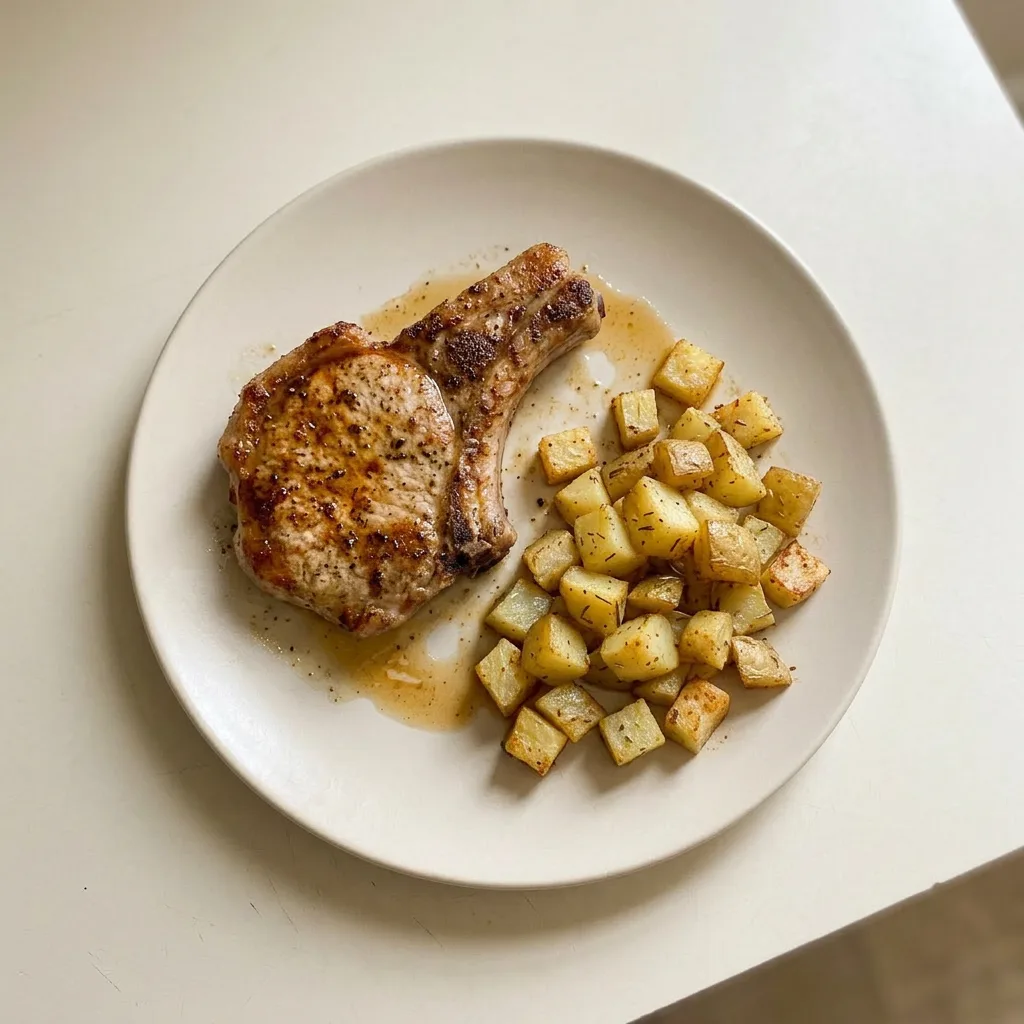
Smart swaps for roasted pork and potatoes
pork chops: Use boneless chops instead of bone-in. Boneless chops cook faster and can dry out more easily. Reduce cook time by 5 minutes and start checking internal temp earlier.
The bone helps retain moisture, so expect a slightly leaner result.
Yukon Gold potatoes: Substitute sweet potatoes or red potatoes. Sweet potatoes will caramelize faster, cut them slightly larger (3/4-inch cubes) to avoid burning. Red potatoes hold their shape similarly but have a firmer texture; no adjustment needed.
dried rosemary: Use dried oregano instead. Oregano brings a more pungent, slightly floral note that pairs well with pork and thyme. Use the same amount (1 tsp).
The overall herb profile shifts, but the dish still works.
butter (melted): Omit or use dairy-free butter for dairy-free option. The butter adds richness and helps browning on the potatoes. Without it, the potatoes will still brown from the olive oil but may be slightly less golden and flavorful.
Start with the same amount of a dairy-free substitute.
Tips
- For even browning, flip the chops with tongs rather than a fork; piercing the meat releases juices that can cause steaming.
- If your baking sheet is dark or nonstick, reduce the oven temperature to 375°F to prevent the potatoes from burning before the pork is done.
Storage and Serving
Pork chops and potatoes are best served within 20 minutes of resting, while the chops are still juicy and the potato edges crisp. For leftovers, transfer everything to an airtight container and refrigerate for up to 3 days. The potatoes will soften as they absorb moisture, and the pork may dry out slightly.
To restore texture, reheat on a baking sheet in a 350°F oven for 10 to 15 minutes, until the potatoes are crispy again and the pork reaches 145°F. Avoid microwaving, which makes the potatoes soggy and the pork tough. Freezing isn’t recommended: the potatoes become mealy upon thawing, and the pork loses moisture.
If you must freeze, do so before roasting, but the texture won’t be the same. For make-ahead, you can season the pork and dice the potatoes up to a day in advance, store separately in the fridge, then assemble and roast when ready. The final dish doesn’t keep well beyond 3 days, so plan to eat it fresh or reheat only once.
I still catch myself cutting potatoes too big sometimes, but I force myself to cut them into ½-inch cubes so they actually finish at the same time as the pork.
Frequently Asked Questions
Can I use boneless pork chops instead of bone-in?
Yes, but expect them to cook faster and dry more easily. Start checking internal temperature 5 minutes early, around 20 minutes, because boneless chops lose moisture quicker without the bone conducting heat. Look for an internal temp of 145°F and let them rest 5 minutes before cutting.
The bone-in version is more forgiving, but boneless works if you watch closely.
How do I know when the pork chops are done without a thermometer?
Cut into the thickest part of a chop and check the color, it should be white or very pale pink throughout, with clear juices. If the center is still translucent or the juices are pink, it needs more time.
The potatoes should pierce easily with a fork and have browned edges when the pork is done. For the most reliable result, a thermometer is best.
Can I prep the sheet pan ahead of time and bake later?
You can season the pork and dice the potatoes up to a day in advance, but store them separately in the fridge. Assemble on the sheet pan just before baking, not earlier, because the potatoes will discolor and the moisture from the potatoes can make the pork soggy. When ready, bake as directed, the timing stays the same.
For best texture, don’t let the prepped ingredients sit together on the pan for more than 30 minutes before roasting.