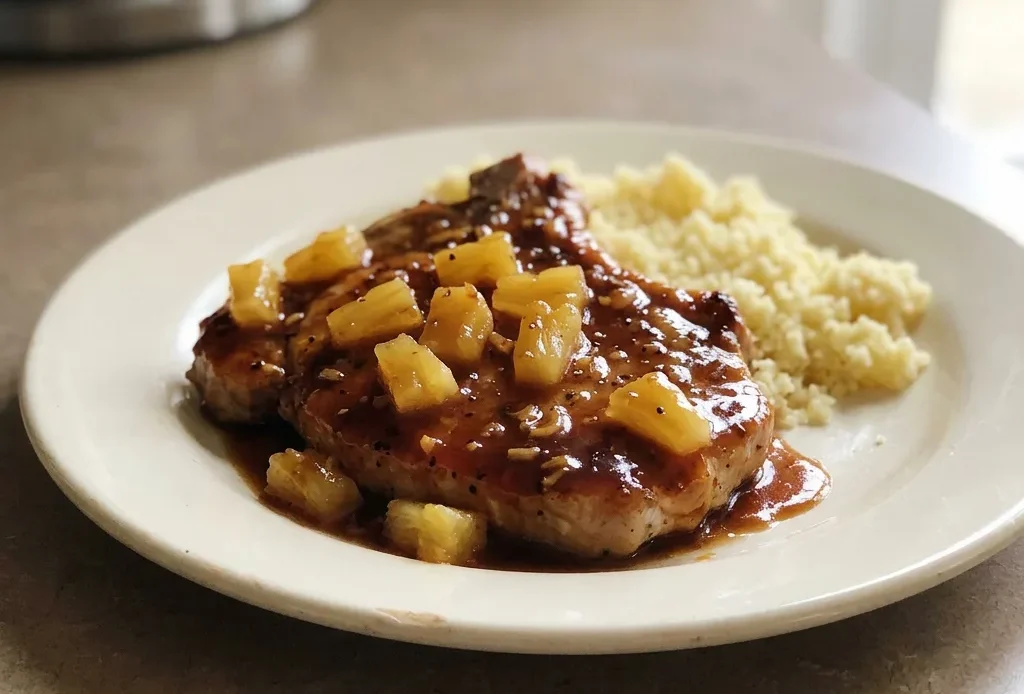
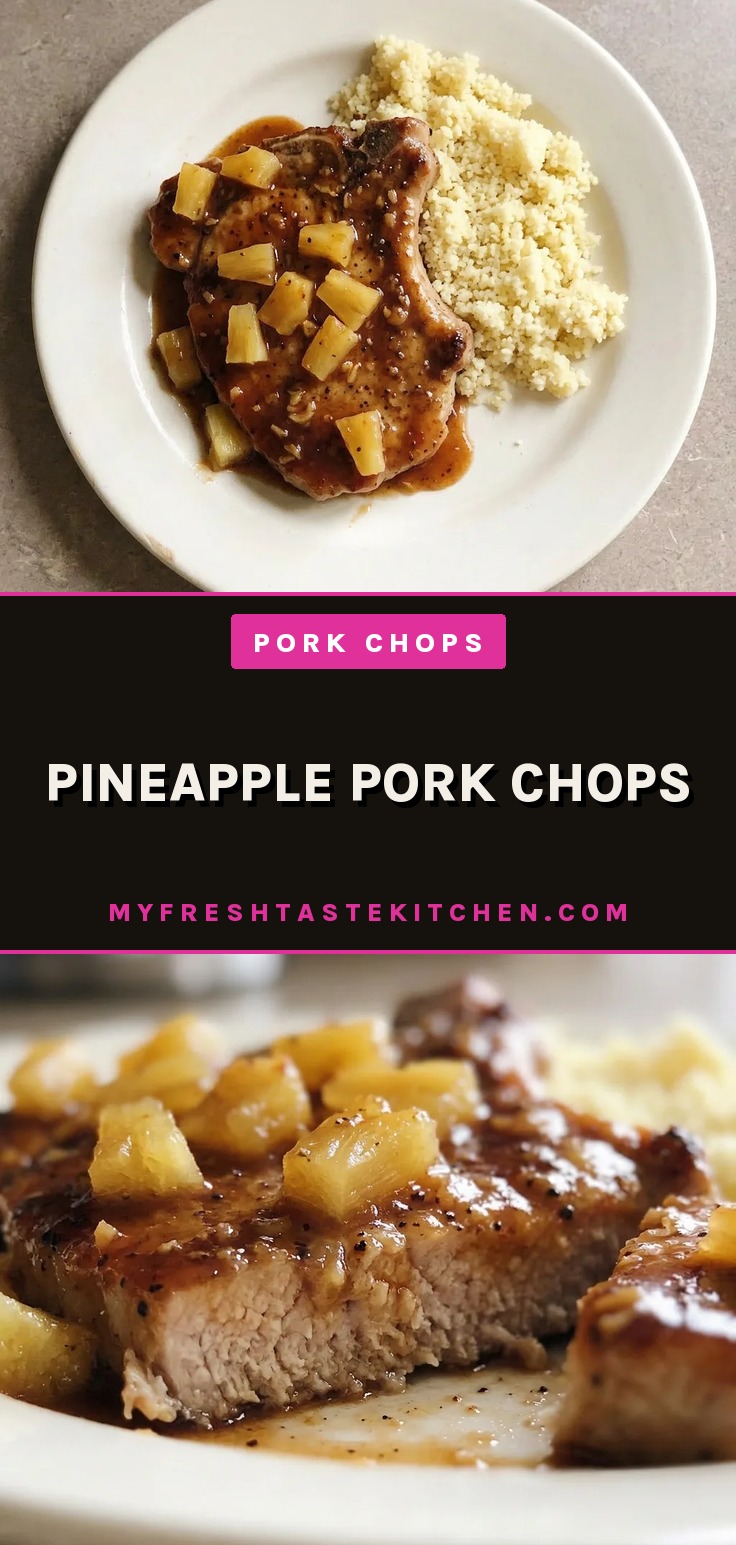
These are not the dry, lean pork chops of sad weeknight dinners. This one-skillet recipe uses pineapple juice as both a tenderizer and a built-in sauce base, so the meat stays moist while the sweet-tart glaze clings to every slice. The trick is the short simmer, it softens the chops without breaking them down into mush, and the barbecue sauce keeps the sweetness from going one-note.
With a quick sear for color and a handful of canned tidbits stirred in at the end, it’s a practical way to get sticky, saucy pineapple pork chops on the table fast.
Why pineapple juice tenderizes without mush
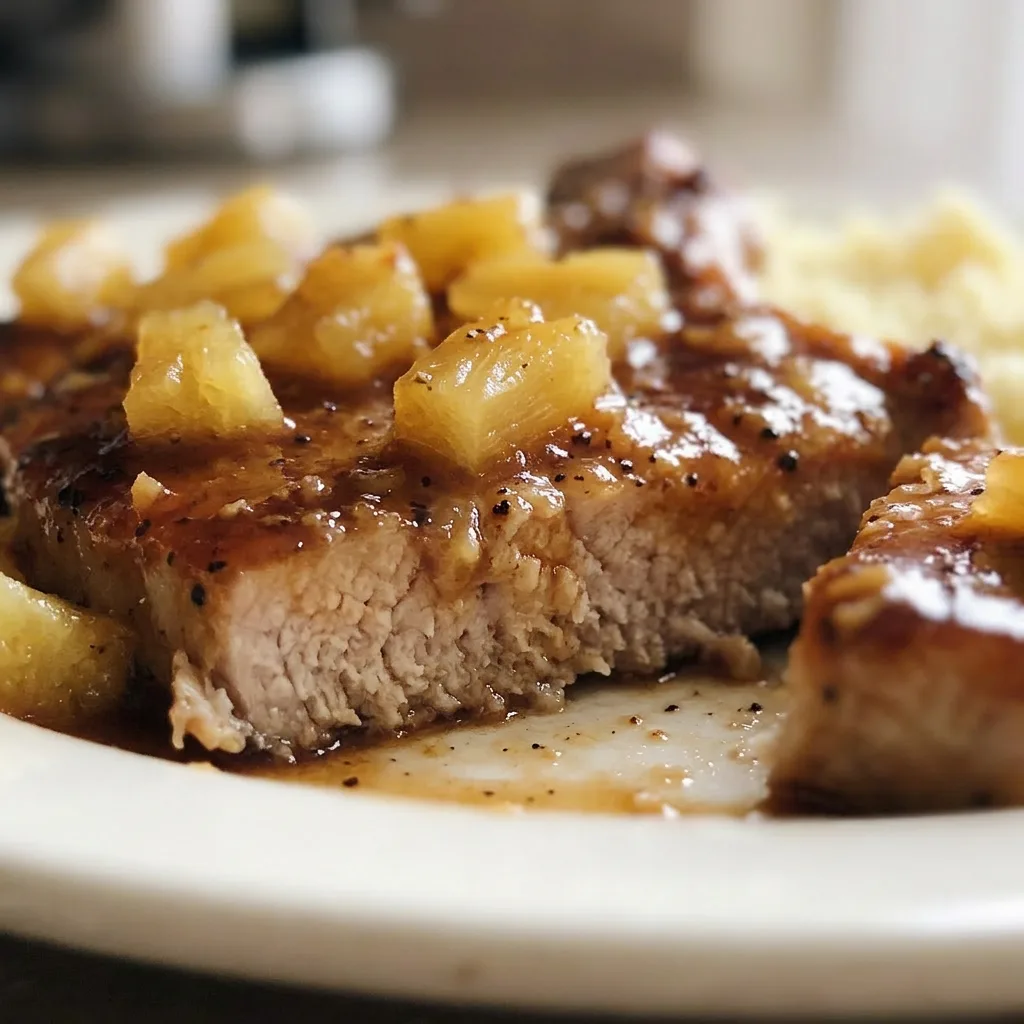
Pineapple juice contains bromelain, an enzyme that breaks down proteins. That’s why it tenderizes the pork chops. But the 10-minute simmer in this recipe is short enough to soften the meat without turning it mushy.
You’ll notice the chops stay firm yet noticeably more tender than if you used water or broth. The juice also pulls double duty as the sauce base, adding sweetness and acidity that balance the savory pork.
So when you bite in, the texture is yielding, not falling apart.
Sear first for best pork chops ever
A quick sear at high heat (about 2 minutes per side) gives the chops a golden-brown crust via the Maillard reaction. That crust locks in juices and creates a savory depth that contrasts with the sweet sauce.
After you remove the chops, deglaze the pan with the sauce, the browned bits stuck to the skillet dissolve into it, adding another layer of flavor. Without searing, you’d lose that rich, caramelized taste, and the chops would be pale and one-dimensional. The result: a deeply flavored exterior and moist interior.
Balancing sweet, tangy, and savory in the sauce
Brown sugar and pineapple bring sweetness; barbecue sauce adds tang and a hint of smokiness. Ginger, garlic powder, and dried minced onions round out the savory side, so the sauce isn’t cloying. When you simmer it, the liquid reduces slightly, concentrating those flavors and coating each chop evenly.
You taste the sweet first, then a tangy finish with warm spice. It’s a straightforward balance, no ingredient overpowering the others.
The pineapple tidbits stirred in just before serving add little bursts of brightness.
Prep: 5 min · Cook: 15 min · Total: 20 min · Servings: 4
Key ingredients for pineapple pork chops
Boneless pork loin chops: Go for chops about 1 inch thick so they stay juicy during the quick simmer.
Pineapple juice: Use the juice from the can of tidbits. It’s sweet and tangy with natural tenderizing enzymes.
Barbecue sauce: Pick a sauce with some tang and smokiness, not overly sweet, to balance the brown sugar and pineapple.
Pineapple tidbits: Drain them well. You add them at the end so they stay firm and burst with sweetness.
How to get tender, saucy pineapple pork chops in 20 minutes
Season and prep
Pat the chops dry, then salt and pepper both sides. The salt draws moisture to the surface, which helps the crust form during searing. Set them aside while you whisk the sauce.
Make the sauce base
Stir together pineapple juice, barbecue sauce, brown sugar, salt, ginger, garlic powder, and minced onions until the sugar dissolves. Taste it, it should be sweet-tart with a warm spice finish.
Sear the pork chops
Heat olive oil in a large cast iron skillet over medium-high until it shimmers. Lay in the chops without crowding; you want a hard sear, not steamed meat.
Let them sizzle for 2 minutes per side, until deep golden brown. Lift one to check, if it’s pale, give it more time.
Deglaze and simmer
Remove the chops to a plate and tent with foil. Pour the sauce into the hot skillet, scraping up the browned bits with a wooden spoon. Bring to a boil, then reduce heat to medium.
The sauce will thicken slightly as it simmers.
Finish cooking
Return the chops to the skillet, nestling them into the sauce. Simmer for 8 to 10 minutes, flipping once halfway, until the internal temperature hits 145°F. The sauce should be bubbling gently, too vigorous and it may scorch.
Add pineapple tidbits
Stir in the pineapple tidbits just before serving. They’ve already been drained, so they’ll plump slightly in the hot sauce without releasing extra liquid. You want them warm but still firm, adding little bursts of sweet acidity.
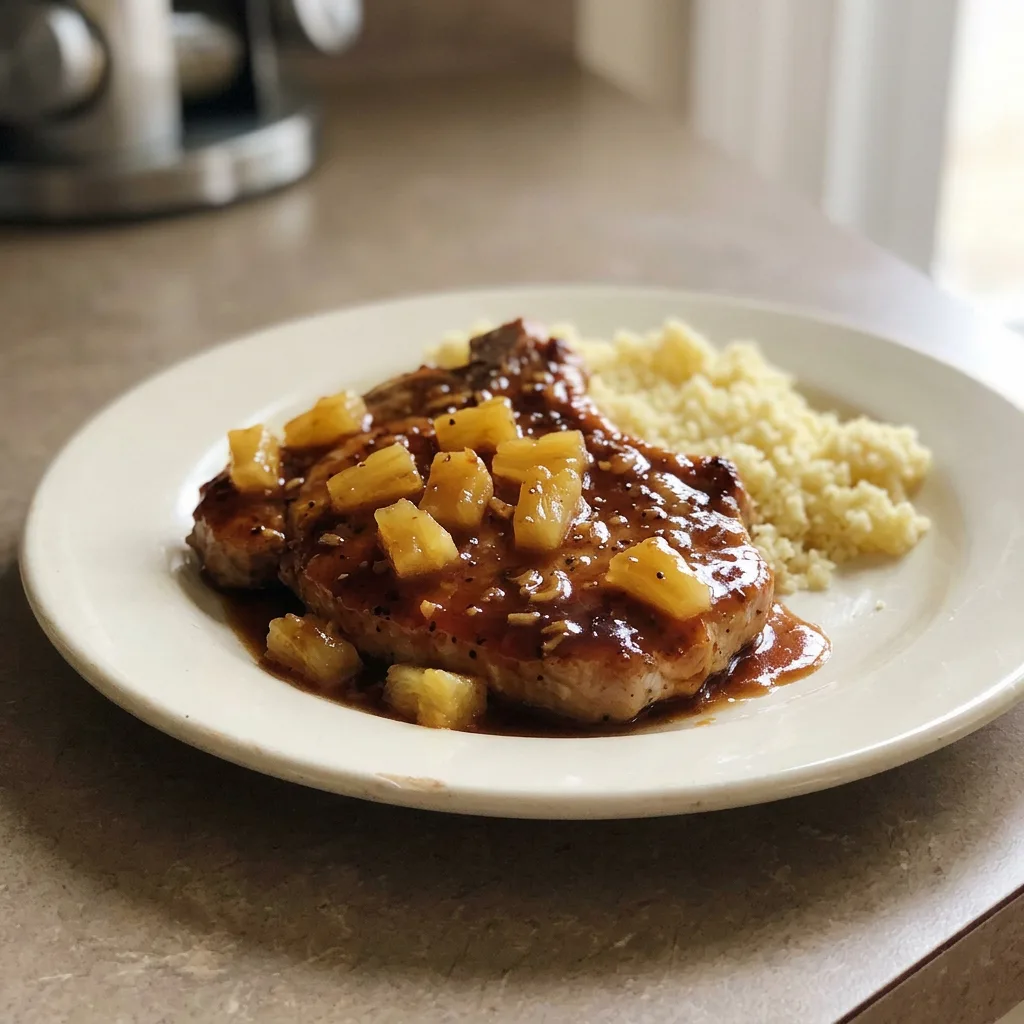
Pineapple Pork Chops Recipe
Ingredients
Method
Season pork chops:
Season both sides of the pork chops with salt and pepper.Make pineapple sauce:
Combine pineapple juice, barbecue sauce, brown sugar, sea salt, ginger, garlic powder, and dried minced onions; stir until smooth. Reserve.Sear pork chops:
In a large cast iron skillet over medium-high heat, warm olive oil. Add the pork chops and sear for roughly 2 minutes per side until golden brown.Rest pork chops:
Remove the chops to a platter and tent with foil.Deglaze skillet:
Pour the sauce into the skillet, scraping up any browned bits. Bring to a boil, then lower the heat to medium.Simmer pork chops:
Return the pork chops to the skillet and let them simmer in the sauce for 8 to 10 minutes, until the internal temperature reaches at least 145°F (65°C).Add pineapple:
Mix in the reserved pineapple just before serving.
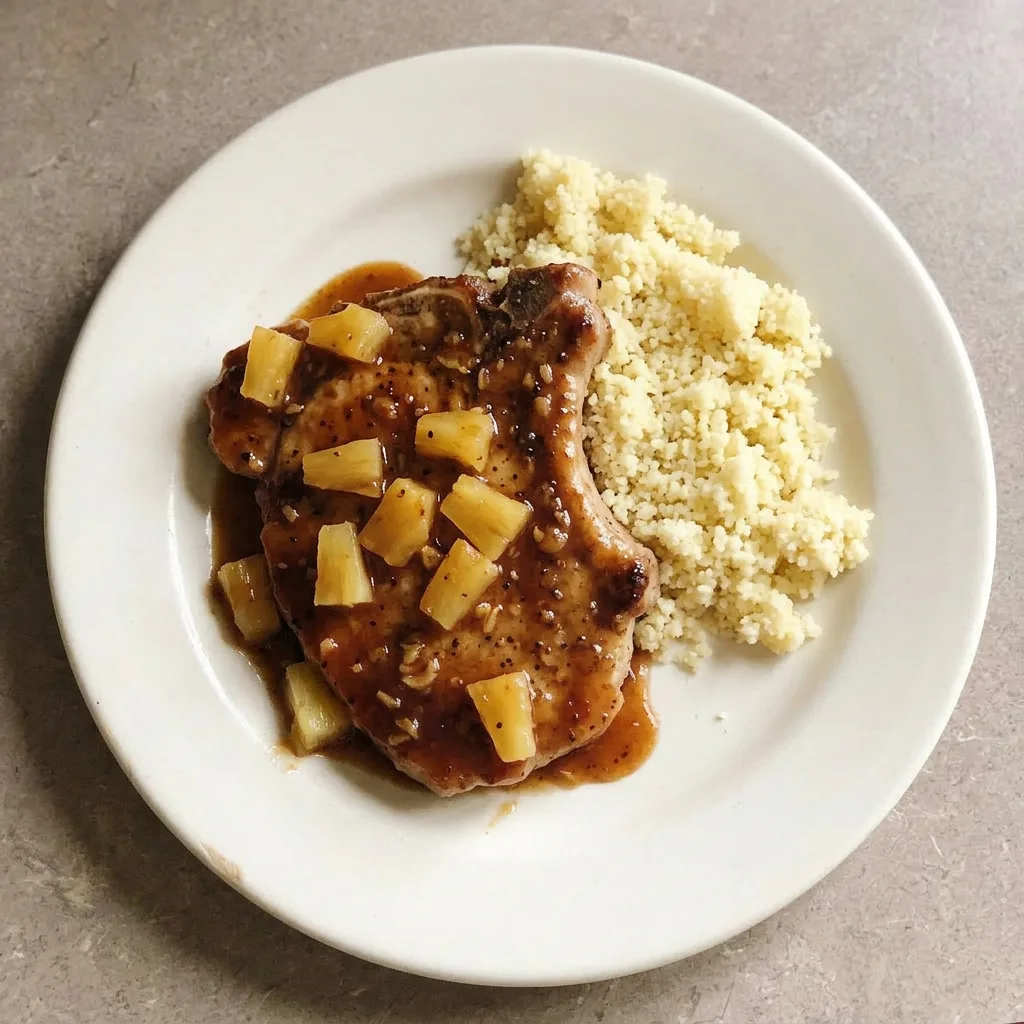
Bone-in chops or chicken thighs work, but keep the canned pineapple
Boneless pork loin chops: Bone-in pork chops (same thickness) or boneless, skinless chicken thighs. Bone-in chops will take a couple extra minutes to reach 145°F.
Chicken thighs need to hit 165°F, so simmer 12 to 14 minutes instead. Both stay moist because the sauce keeps them basting.
Pineapple juice (from can of tidbits): Unsweetened pineapple juice from a carton or fresh-squeezed, plus 1 tablespoon canned tidbit syrup for sweetness. Carton juice is less sweet and has fewer tenderizing enzymes. Adding a splash of the canned syrup restores the recipe’s sugar balance, but the meat won’t soften as much, still fine, just firmer.
Barbecue sauce: Ketchup + 1 teaspoon liquid smoke + 1 tablespoon apple cider vinegar. Ketchup mimics the tang and sweetness but lacks smoke. Liquid smoke and vinegar bring the barbecue character back.
The sauce will be thinner, so simmer an extra minute to reduce.
Tips
- Pat the pork chops dry with paper towels before seasoning. Excess moisture on the surface turns to steam in the hot skillet, preventing the Maillard reaction that creates a golden crust. Dry meat sears faster and browner, giving you that savory exterior in the 2-minute sear window.
- Don’t skip tenting the chops with foil while you deglaze the pan. The residual heat continues to cook them gently, and the foil traps steam to keep them from drying out. This short rest also lets the juices redistribute, so the chops stay moist when you return them to the sauce.
Storage and Serving
Serve the pineapple pork chops right after adding the pineapple tidbits; the texture is best within 30 minutes. The tidbits soften as they sit, so eat sooner for firmer bursts. Store leftovers in an airtight container in the fridge for up to 3 days.
The sauce thickens as it cools, coating the chops more. Reheat gently in a covered skillet over low heat with a splash of water or broth to loosen the sauce; avoid high heat or the microwave, which can dry out the pork. Freezing is not recommended: the pineapple’s enzyme continues to work, and the texture of both the pork and fruit breaks down further upon thawing, turning mealy.
If you must freeze, do so before adding the tidbits, but note the sauce may separate.
Frequently Asked Questions
Can I use fresh pineapple instead of canned?
You can, but the result will be different. Fresh pineapple has more active bromelain, so the enzyme will tenderize the pork more aggressively during the 10-minute simmer, potentially making the edges mushy.
Canned pineapple is already processed, so the enzymes are less active, giving you the tenderizing effect without the risk of breaking down the meat too much. If you use fresh, add it only at the end, like the canned tidbits, and use unsweetened pineapple juice from a carton for the sauce.
How do I know when the pork chops are done?
Use an instant-read thermometer; the internal temperature should reach at least 145°F. The chops will be firm to the touch but still juicy, and the juices will run clear when pierced. After you pull them from the skillet, tenting with foil allows carryover cooking to bring them up a couple more degrees without overcooking.
Can I make this dish ahead of time?
This dish is best served right after adding the pineapple tidbits, as the texture peaks within 30 minutes. If you need to prep ahead, you can season the chops and whisk the sauce base up to a day in advance, storing each covered in the fridge. Cook and add the tidbits just before serving.
Leftovers keep up to 3 days in the fridge, but the tidbits soften and the pork may lose some moisture upon reheating.
What’s the difference between this and classic Hawaiian pork chops?
Classic Hawaiian pork chops are often braised for longer with soy sauce, vinegar, and ketchup, resulting in a tangier, more savory sauce. This version uses barbecue sauce and brown sugar for a sweeter, smokier profile, with pineapple juice as the main liquid. The cooking time is shorter, just 10 minutes simmer, so the chops stay firmer and the sauce is less reduced.
The ginger and garlic powder add warmth without the soy sauce tang.
