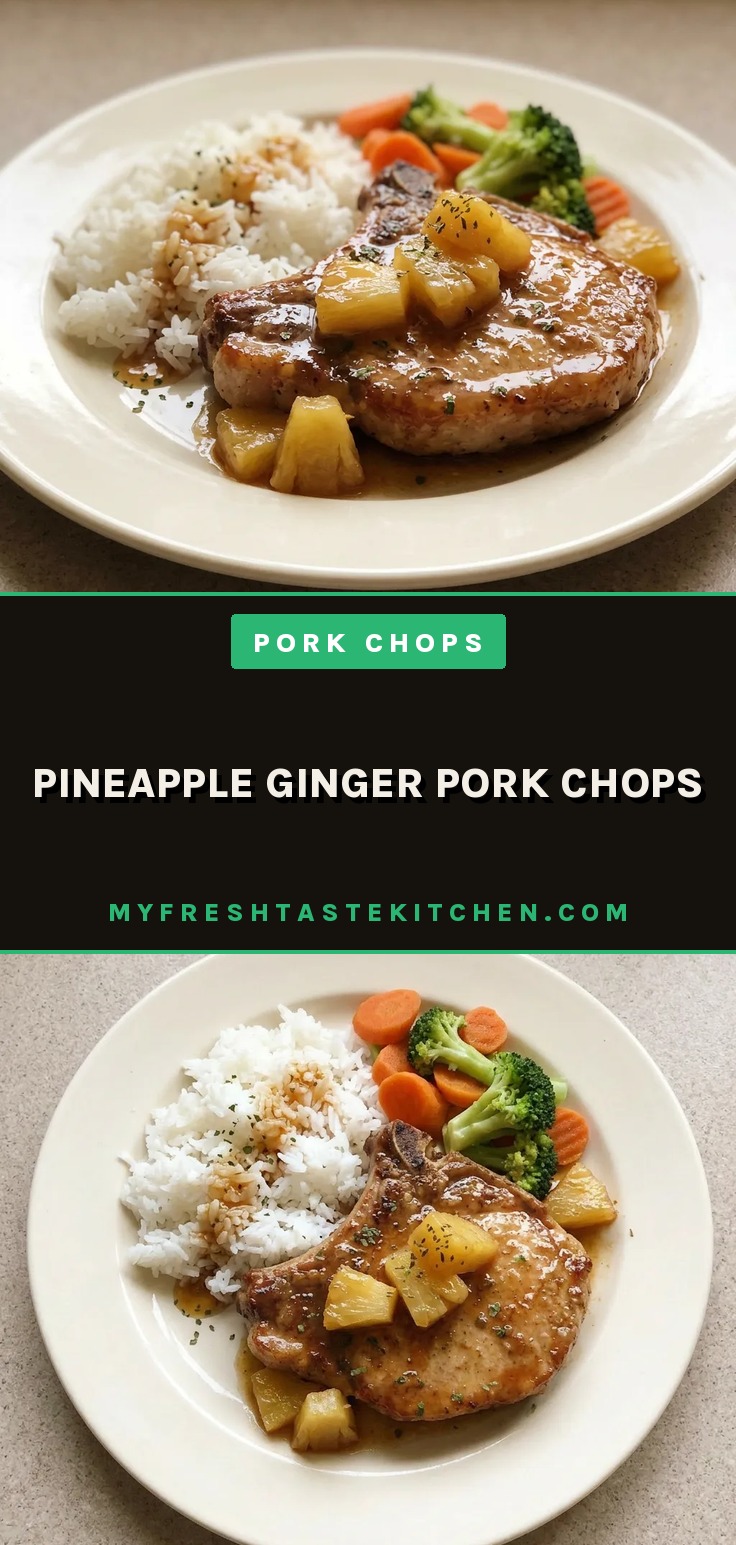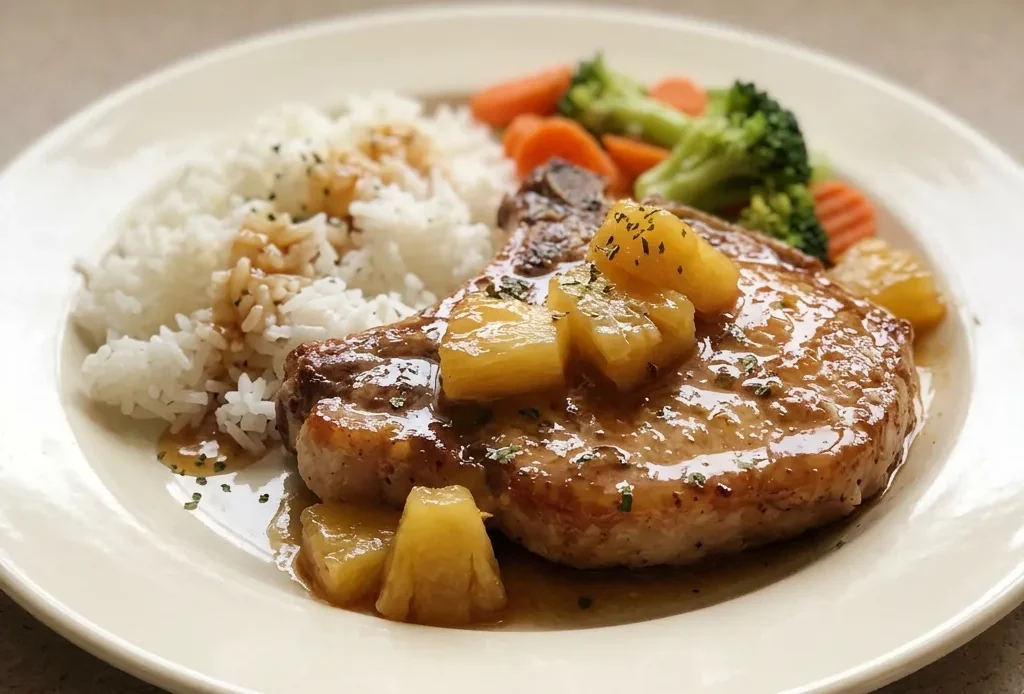
This isn’t a sticky-sweet glazed chop drowning in canned syrup. It’s a pan-seared pork chop with a glossy, savory-sweet sauce that hits like a tropical punch, pineapple, ginger, soy, and brown sugar in a quick one-skillet simmer.
The trick is building a real crust before the sauce goes in; that browned fond melts into the liquid, giving the whole dish a meaty backbone you won’t get from just braising. The pineapple ginger pork chops come together fast enough for a weeknight, but the caramelized edges and balanced tang make them feel like something you lingered over. No marinating, no fuss, just a hot pan and a few minutes of attention.
Why sear pork chops before simmering?
A quick sear over medium-high heat builds a golden-brown crust through the Maillard reaction. That browning adds savory depth you simply don’t get from simmering alone.
It also seals the surface, locking in moisture so the chops stay juicy during the longer cook. The browned bits left in the pan, the fond, dissolve into the sauce, giving it a richer, meatier backbone.
You can see the color change and smell the toasty aroma. That crust is the difference between a pale, boiled chop and one with real character.
How pineapple, ginger, and soy sauce balance each other
Pineapple brings two things: sweetness and acidity. The acid gently tenderizes the pork as it cooks, while the sugar helps the sauce cling and caramelize.
Ginger cuts through with warmth and a slight peppery bite that keeps the fruit from cloying. Soy sauce steps in with umami and salt, pulling the sweetness of the brown sugar into check. Together, they create a sauce that hits sweet, sour, salty, and savory in one spoonful.
Taste it as it simmers, you’ll notice how each element keeps the others from dominating.
Why simmer the pork in the sauce after searing?
After searing, the pork needs gentle heat to reach the center without drying the exterior. Simmering in the sauce does exactly that, the liquid surrounds the meat, cooking it evenly while the sauce reduces and thickens. As it bubbles, the sauce coats each chop, clinging to the crust you built.
The internal temperature target of 145°F guarantees safety while keeping the meat moist. You can feel the sauce turn syrupy on the spoon; that’s when it’s ready. The result is a chop that’s tender all the way through, not just on the surface.
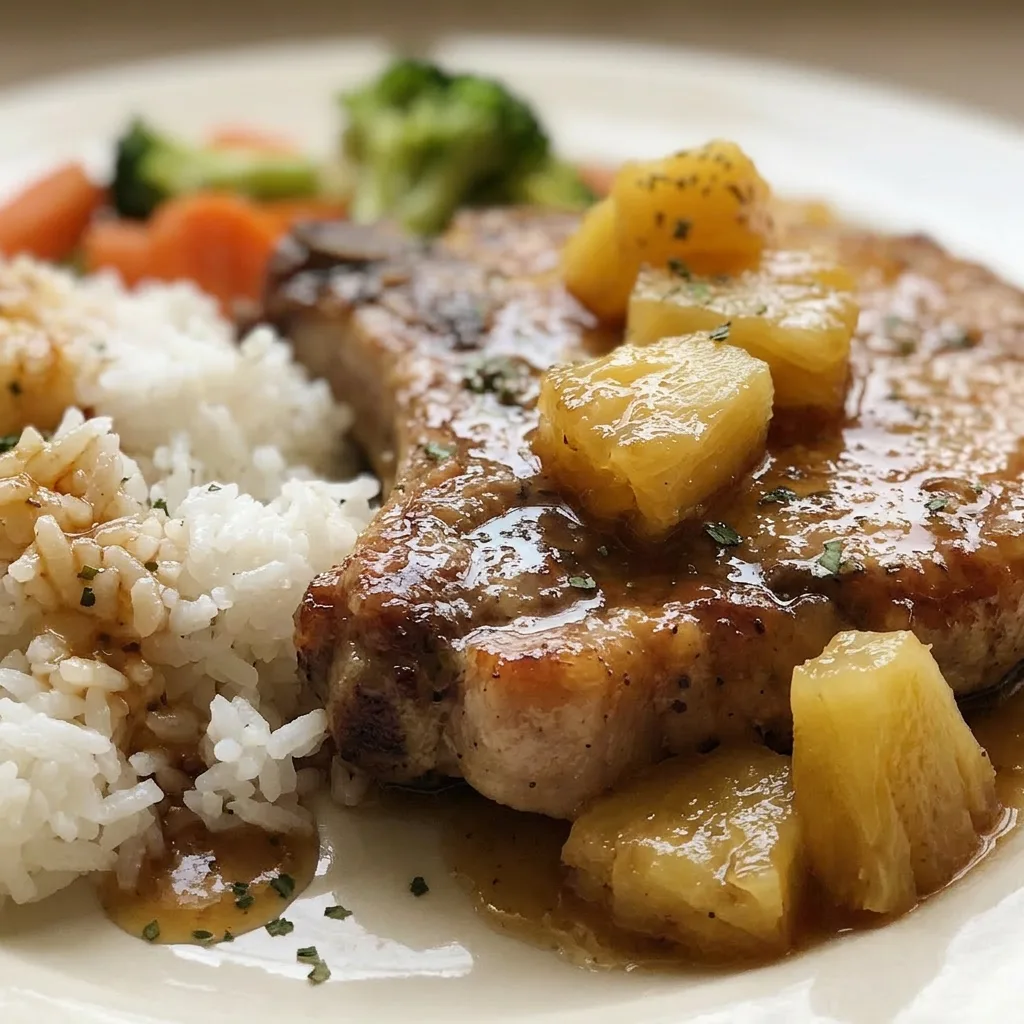
Prep: 15 min · Cook: 25 min · Total: 40 min · Servings: 6
A few notes on the ingredients
Pork chops: Look for chops about 1 inch thick so they stay juicy through the sear and simmer.
Pineapple: Canned chunks are fine; just drain and reserve the juice. Fresh works too but will have less sugar.
Ginger: Fresh ginger gives more punch than ground. Peel it with a spoon before grating.
Soy sauce: Regular or low sodium both work; the salt in the recipe accounts for regular.
Cornstarch: Only if you want a thicker sauce. Skip it for a looser, more brothy consistency.
Building the sauce around the sear
Sear the pork
Pat the chops bone-dry, any moisture steams instead of browning. Lay them in the hot oil-butter mix and leave them alone. When they release easily from the pan, flip; you should see deep golden patches.
Sauté the aromatics
After removing the chops, the pan will have browned bits. Drop the heat to medium, add garlic and ginger, and stir constantly. When you smell them strongly, about 30 seconds, move on, burned garlic turns bitter.
Build the sauce base
Pour in pineapple chunks, juice, soy sauce, brown sugar, and vinegar. Stir, scraping up the fond. Let it bubble for 2 to 3 minutes; the liquid will darken and smell sweet-tangy.
Taste, it should be sharp and salty.
Thicken if you like
If you want a clingier sauce, whisk cornstarch with cold water until no lumps. Drizzle it in while stirring. Within 30 seconds the sauce will go from watery to syrupy.
Stop when it coats the back of a spoon.
Simmer the chops in sauce
Return the pork and any juices to the pan. Spoon sauce over each chop.
Keep at a gentle simmer, not a rolling boil, for 8 to 10 minutes. The sauce will reduce and glaze the meat. Check with a thermometer; 145°F is done.
Pineapple Ginger Pork Chops
Ingredients
- 4 boneless pork chops approximately 1 inch thick
- 1 tablespoon olive oil
- 1 tablespoon butter
- 1 cup pineapple chunks fresh or canned, drained
- 2 tablespoons pineapple juice reserved from can or fresh squeezed
- 1 tablespoon freshly grated ginger or 1 teaspoon ground ginger
- 2 cloves garlic finely chopped
- 2 tablespoons soy sauce
- 1 tablespoon brown sugar or honey
- 1 tablespoon rice vinegar or apple cider vinegar
- ½ teaspoon salt
- ¼ teaspoon black pepper
- 1 teaspoon cornstarch optional, for thickening
- 2 tablespoons water to combine with cornstarch
- 1 tablespoon chopped green onions or parsley for garnish
Instructions
Season Pork Chops:
Dry pork chops thoroughly using paper towels. Season both sides lightly with salt and pepper.Sear Pork Chops:
In a large skillet over medium-high heat, warm olive oil and butter. Place pork chops in the skillet and sear each side for 3–4 minutes until golden brown. Remove chops and set aside.Sauté Aromatics:
Lower heat to medium in the same skillet. Add minced garlic and ginger; cook for 30 seconds until aromatic.Simmer Pineapple Sauce:
Mix in pineapple chunks, pineapple juice, soy sauce, brown sugar, and vinegar. Let simmer for 2–3 minutes.Thicken Sauce:
Optionally, whisk cornstarch and water in a small bowl. Pour into the pan and stir until the sauce thickens slightly.Simmer Pork in Sauce:
Return pork chops to the skillet, spoon sauce over them, and simmer for 8–10 minutes until the internal temperature reaches 145°F (65°C).Garnish and Serve:
Top with chopped green onions or parsley and extra pineapple sauce. Serve alongside rice, steamed vegetables, or mashed potatoes.
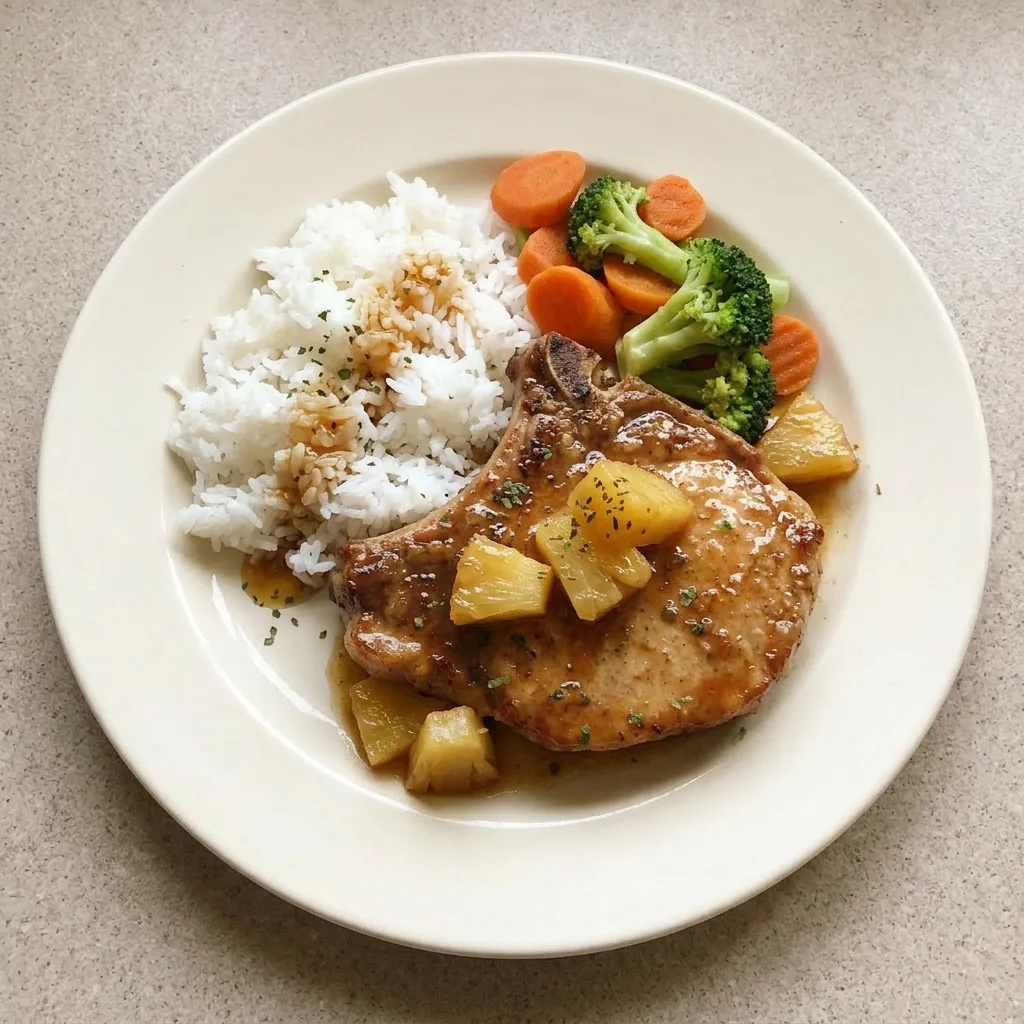
What you can swap in these pineapple ginger pork chops
Pork chops: Boneless chicken thighs or firm tofu. Chicken thighs need about the same sear and simmer time; check for 165°F.
Tofu should be pressed, sliced thick, and seared without moving until crisp, skip the simmer and just spoon sauce over. The pork’s richness is what balances the sweet-tangy sauce; chicken is lighter, tofu leaner.
Soy sauce: Tamari or coconut aminos. Tamari is nearly identical; use the same amount.
Coconut aminos are sweeter and less salty, start with same amount, then add salt to taste. The umami depth will be thinner, and the color lighter.
Butter: Olive oil or coconut oil. Use the same amount.
Butter adds a nutty richness to the sear crust; oil gives a cleaner browning. The final sauce will lack that subtle dairy depth but the pineapple-ginger-soy combo still works.
Cornstarch: Arrowroot powder. Use the same amount mixed with cold water.
Arrowroot thickens at a lower temperature and stays clear, the sauce will look glossier but behave the same. Skip it entirely for a thinner, brothy sauce.
Storage and Serving
Serve the pork chops immediately after the final simmer. The sauce is at its glossiest and the meat is juiciest right when it comes off the heat. If you’re making the dish ahead, cook the pork and sauce, then cool and refrigerate separately.
Combine just before reheating to keep the pork from over-softening in the sauce. Leftovers keep in an airtight container in the fridge up to 3 days. The sauce thickens as it sits; the pork will be slightly drier upon reheating.
To reheat, warm the sauce in a skillet over medium-low, add the chops, and spoon sauce over them until hot. The pork won’t be as moist as fresh, but it’s still tender. The green onion or parsley garnish goes on right before serving, not during storage, to keep its color and crunch.
Freezing is not recommended; the pineapple in the sauce breaks down during thawing and the pork’s texture suffers.
Tips
- Pat the pork chops bone-dry before seasoning. Any surface moisture will steam and prevent proper browning, leaving a gray crust instead of golden-brown.
- If using canned pineapple chunks, reserve the juice and reduce the brown sugar by 1 teaspoon to compensate for the added sweetness from the syrup.
Honestly, most people end up with dry, sad pork because they either skip the sear or boil the chops into submission.