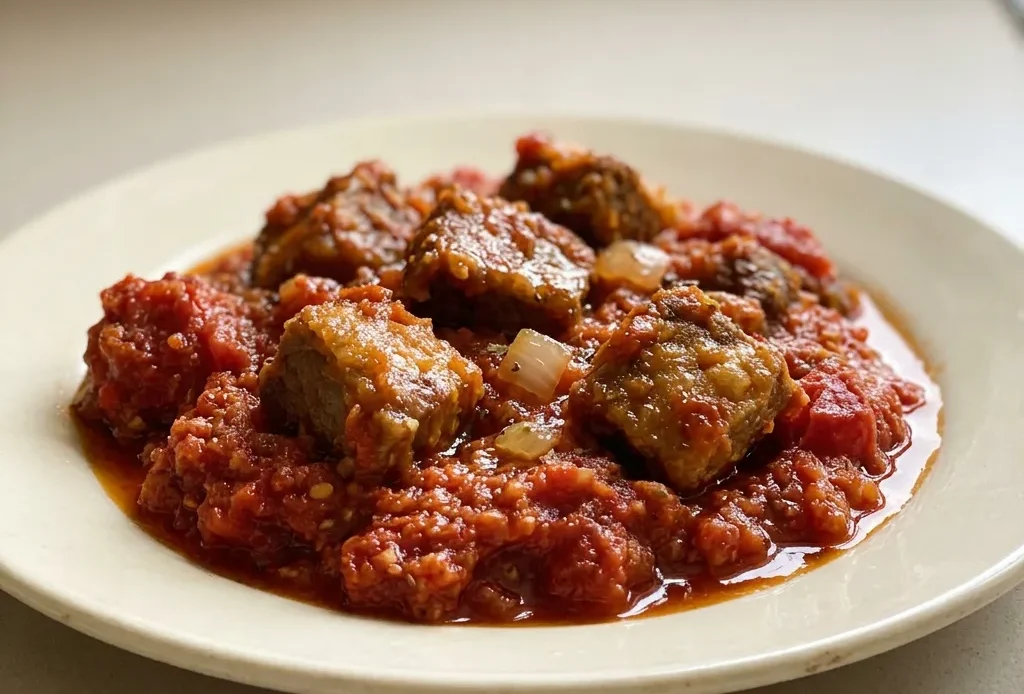
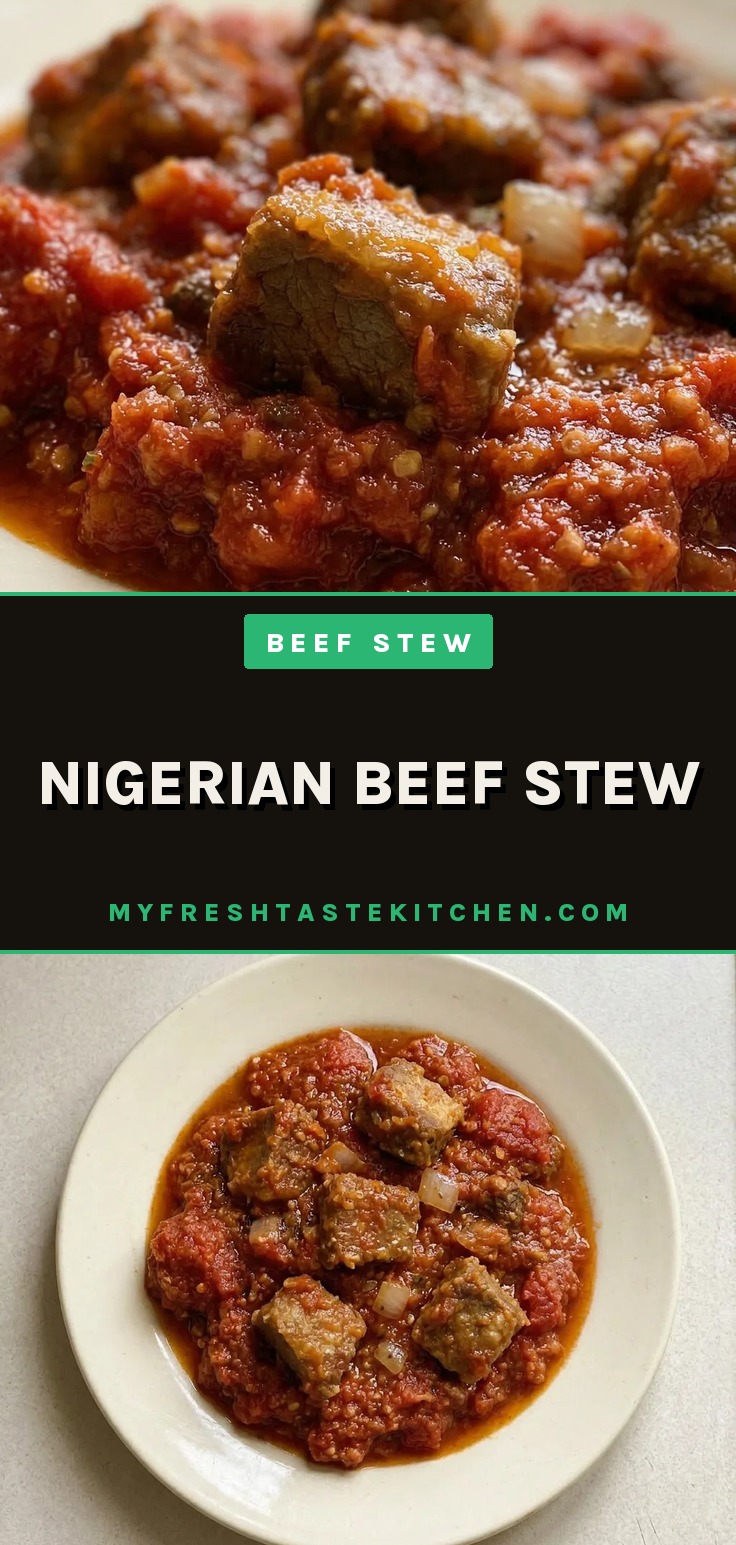
Oil pooling on the surface of a dark, glossy stew is the sign you’re after. That slick tells you the peppers and tomatoes have cooked down to a concentrate and the beef has given up its flavor. Getting there takes one extra step, frying the beef until golden before it ever touches the sauce.
That crust is what makes a nigerian beef stew taste layered and savory, not just salty and tomatoey. Skip it and the meat stays tender but flat.
The whole dish hinges on that browning.
Frying beef builds deeper flavor
The beef is first boiled with seasonings until fork-tender. That step relaxes the meat and infuses it with salt and bouillon. Then you fry the pieces in hot oil until golden.
Frying creates a browned crust through Maillard browning, that’s the same reaction that makes toast taste toasty or a steak crust savory. If you skipped frying and just simmered the beef in the sauce, you’d miss that rich, roasted note. The boiled meat would be tender but one-note.
Frying gives the stew a deeper, more complex flavor that lingers.
Frying the pepper base concentrates it
Once the beef is out, the hot oil left in the pot gets the blended peppers and tomatoes added. They sizzle and cook for ten minutes. That time on heat drives off moisture and thickens the puree into a dense, oil-rich base.
It’s what makes this a fried stew, not a watery tomato sauce. The finished stew clings to the beef and coats each piece. You taste the peppers and tomatoes in a concentrated, almost jammy way.
That texture and intensity are the whole point.
Oil rising tells you it’s done
After the beef goes back in, the stew simmers for ten to fifteen minutes. Watch for oil to separate and rise to the surface.
That’s the cue that the stew is emulsified and the flavors have married. Now I trust the process and let it simmer until the oil rises to the surface, adding liquid only a tablespoon at a time if it actually scorches.
A watery stew won’t show that oil slick. When you see it, you know the stew is thick and ready.
Prep: 40 min · Cook: 25 min · Total: 1 hr 5 min · Servings: 8
Know the peppers and beef for best results
Beef: Tougher cuts need longer boiling; the goal is fork-tender, not fall-apart.
Red bell peppers and scotch bonnet peppers: Blend them smooth so the base cooks evenly without chunky bits.
Canned chopped tomatoes: Use good-quality whole tomatoes crushed by hand if you prefer a fresher taste.
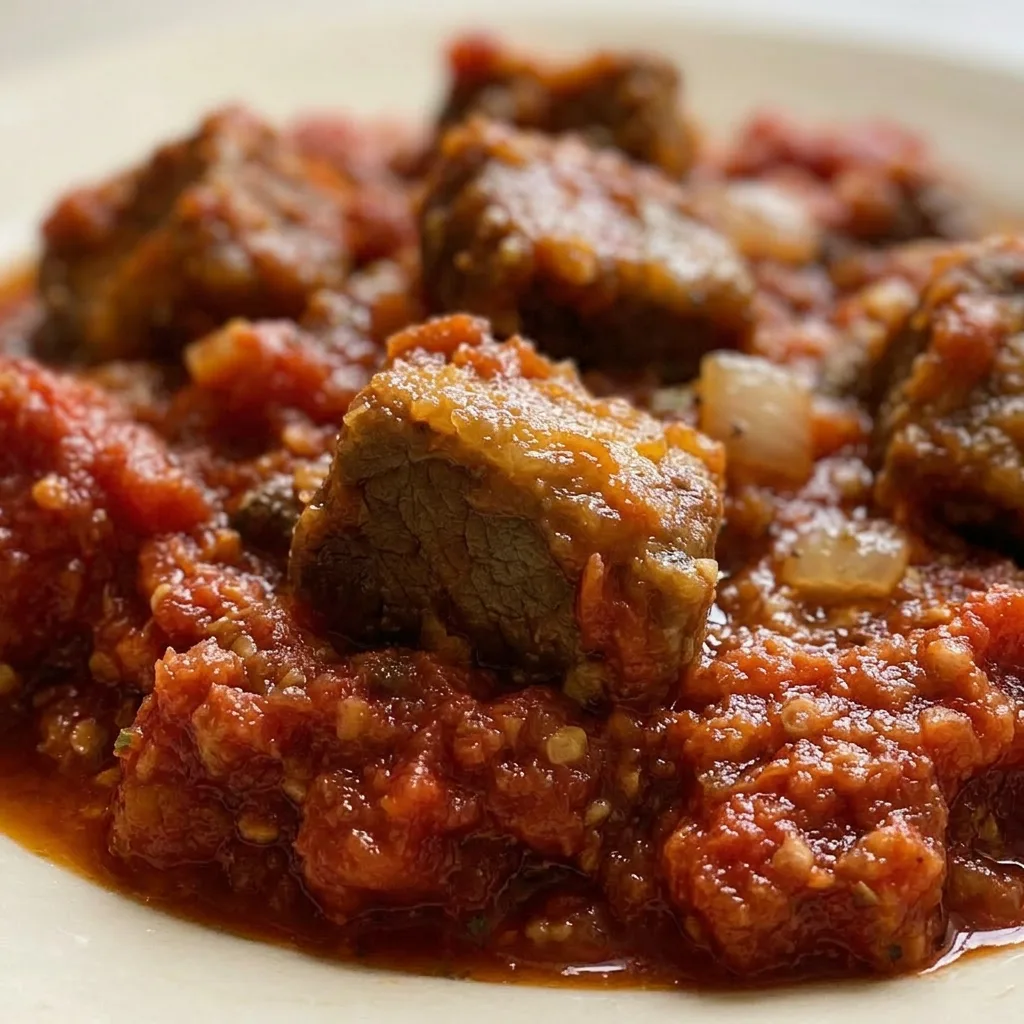
Watch the oil rise to know it’s ready
Boil the beef until fork-tender
Cook beef with onion, bouillon, salt, and oregano until a fork slides in with little resistance. For tough cuts, that takes 20 minutes or more, check early and often.
Fry the beef until golden
Shallow-fry the boiled pieces in shimmering oil, turning once, until they’re brown all over. The crust should feel firm but not hard; if it darkens too fast, lower the heat.
Cook down the pepper-tomato base
Add the blended peppers and tomatoes to the hot oil. Let it bubble uncovered for 10 minutes, stirring occasionally. The puree should thicken visibly and start to separate from the oil, if it looks soupy, give it more time.
Simmer the stew until oil surfaces
Return the beef to the pot, stir in curry and thyme, then let it simmer 10 to 15 minutes. Watch for a glossy layer of oil pooling on top, that’s your cue it’s done. If the stew sticks, add stock a tablespoon at a time, but keep it thick.
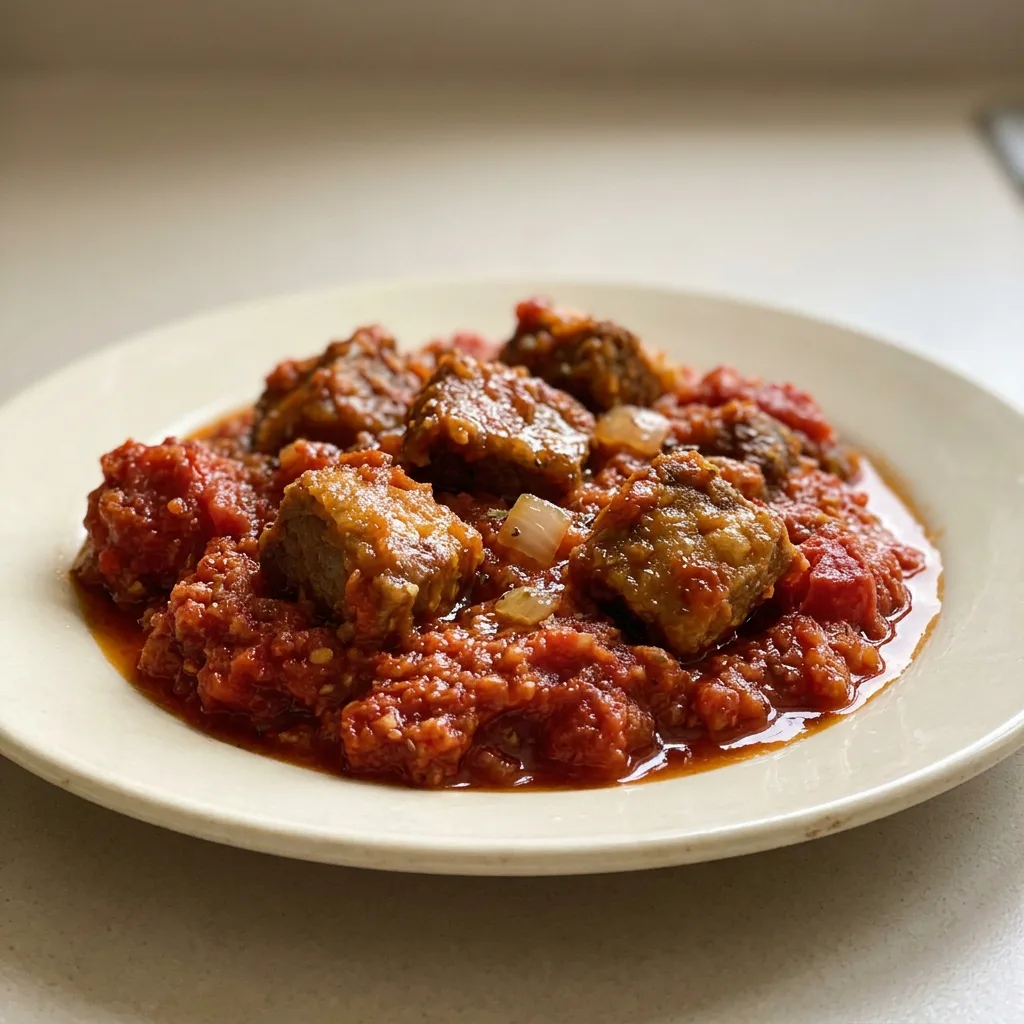
Nigerian Beef Stew (African Stew)
Ingredients
Method
Cook beef with bouillon:
Cook beef with 2 tsp bouillon powder, 1/2 tsp salt, chopped onion, and oregano until fork-tender (20 minutes or more based on cut; tougher cuts need longer). Remove beef, filter stock to discard scum, and set stock aside.Fry beef until golden:
Warm vegetable oil in a pot over medium heat until shimmering. Gently fry beef pieces until they turn golden. For a lighter version, grill instead. Transfer fried beef to paper towels to drain.Cook pepper-tomato puree:
Into the hot oil, cautiously add the pureed peppers and tomatoes. Stir, cover, and let cook for 10 minutes. Should the stew become too thick, add a splash of reserved stock or water as needed to prevent scorching (note: this is a fried stew, so keep liquid minimal).Add curry and thyme:
Mix in curry and thyme (if desired) and stir thoroughly.Simmer stew with beef:
Put the fried beef back into the stew. Adjust seasoning with additional bouillon powder and/or salt to taste, but be cautious not to oversalt (recall that salt and bouillon were used during boiling; if using stock, extra may be unnecessary). Stir well and let simmer for 10-15 minutes until oil rises to the surface. Remove from heat and serve warm with a side of choice.
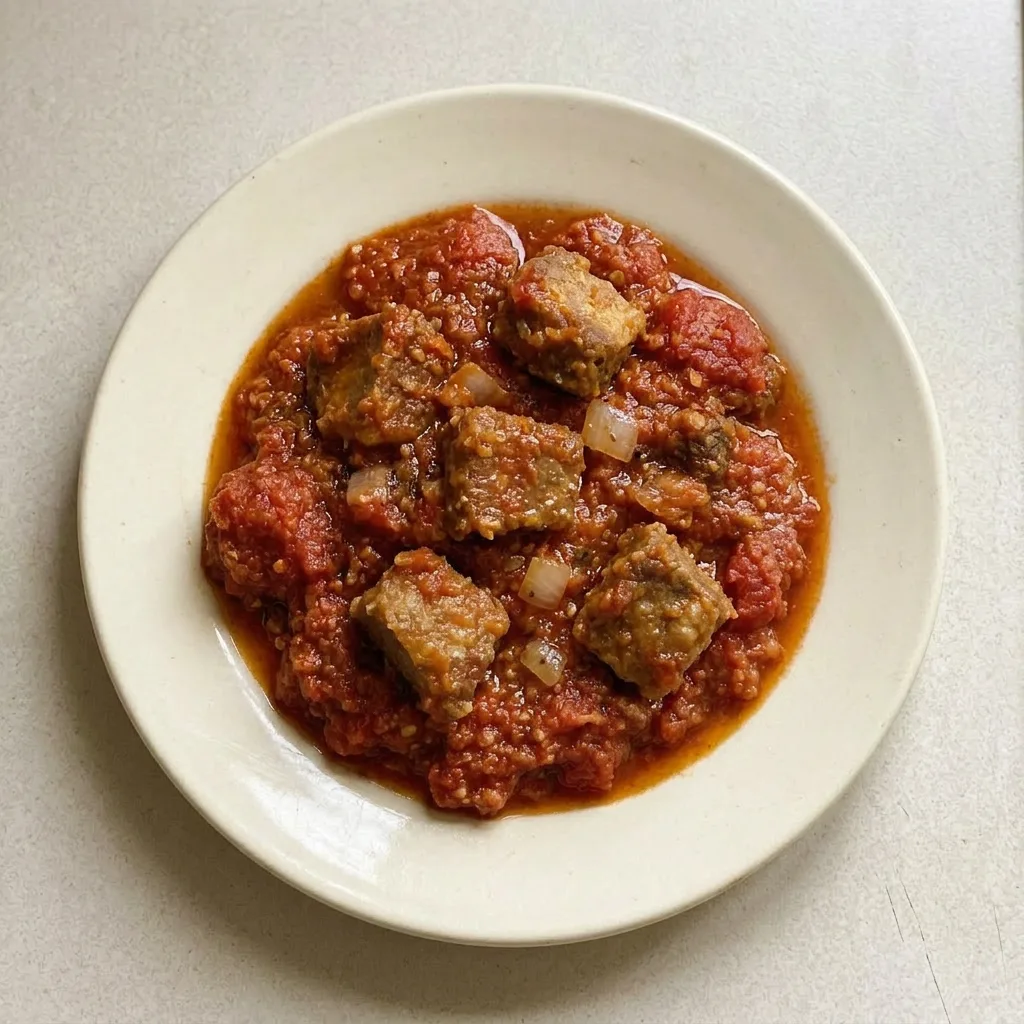
Swap the peppers, not the tomatoes
Scotch bonnet peppers: Habaneros (same heat) or a mix of red bell peppers and cayenne (milder). Start with 3 habaneros for equivalent heat, or 3 bell peppers + 1/2 tsp cayenne for a milder kick. Habaneros taste nearly identical; the bell-cayenne mix loses the fruity note and gives a drier heat.
Canned chopped tomatoes: Fresh tomatoes are not a good substitute. They contain more water and less pectin, so the base stays thin and won’t thicken to the fried, oil-separated texture the stew needs. If you must, use drained crushed canned tomatoes instead.
The stew will be looser and take longer to cook down; you’ll need extra simmering to drive off moisture, and the final texture won’t be as dense.
Vegetable oil: Any neutral oil with a high smoke point: canola, sunflower, peanut, or avocado. Coconut oil adds a faint coconut flavor that clashes with the stew’s savory profile. Flavor changes slightly with coconut oil; others work without noticeable difference.
Storage and Serving
This stew tastes even better the next day. Store it in an airtight container in the fridge for up to 5 days. The oil layer solidifies on top; just scrape it off or stir it back in when reheating.
Reheat gently on the stovetop over medium low, adding a splash of water or stock if it’s too thick. The texture stays rich and the beef remains tender.
For longer storage, freeze the stew in a freezer safe container for up to 3 months. Thaw overnight in the fridge, then reheat as above. Serve the stew warm, ideally within 30 minutes of reheating, while the oil is still glossy and the beef is moist.
If you’re making it ahead, the stew is best after at least 4 hours in the fridge to let the flavors settle. It holds well at room temperature for up to 2 hours, but don’t leave it out longer.
Tips
- When blending the peppers and tomatoes, strain the puree through a coarse sieve to remove seeds and skins. This gives a smoother, more refined sauce that coats the beef evenly without fibrous bits.
- Use a slotted spoon to remove the fried beef from the oil, not tongs. Tongs can tear the crust, and the spoon lets excess oil drain back into the pot, keeping the stew from becoming greasy.
Frequently Asked Questions
Can I make this stew ahead of time? How does it reheat?
Yes, make it a day ahead, the flavor deepens overnight. Store in the fridge up to 5 days; the oil solidifies on top, which you can scrape off or stir back in.
Reheat gently on the stovetop over medium-low, adding a splash of water or stock if it’s too thick. The beef stays tender and the oil regains its glossy sheen.
Why did my stew turn out watery instead of oily?
The pepper-tomato base likely didn’t cook down long enough. It needs a full 10 minutes uncovered to drive off moisture and thicken until it visibly separates from the oil. If you added too much stock during simmering, that also thins the stew, add liquid only a tablespoon at a time if it scorches.
Is this stew the same as Nigerian tomato stew? What’s the difference?
They’re close but not identical. Nigerian tomato stew relies heavily on fresh tomatoes and often uses a larger quantity of oil, while this version uses canned tomatoes for consistency and fries the beef separately before adding it back. The frying step builds a browned crust on the meat, giving a deeper savory note that classic tomato stew doesn’t emphasize.
