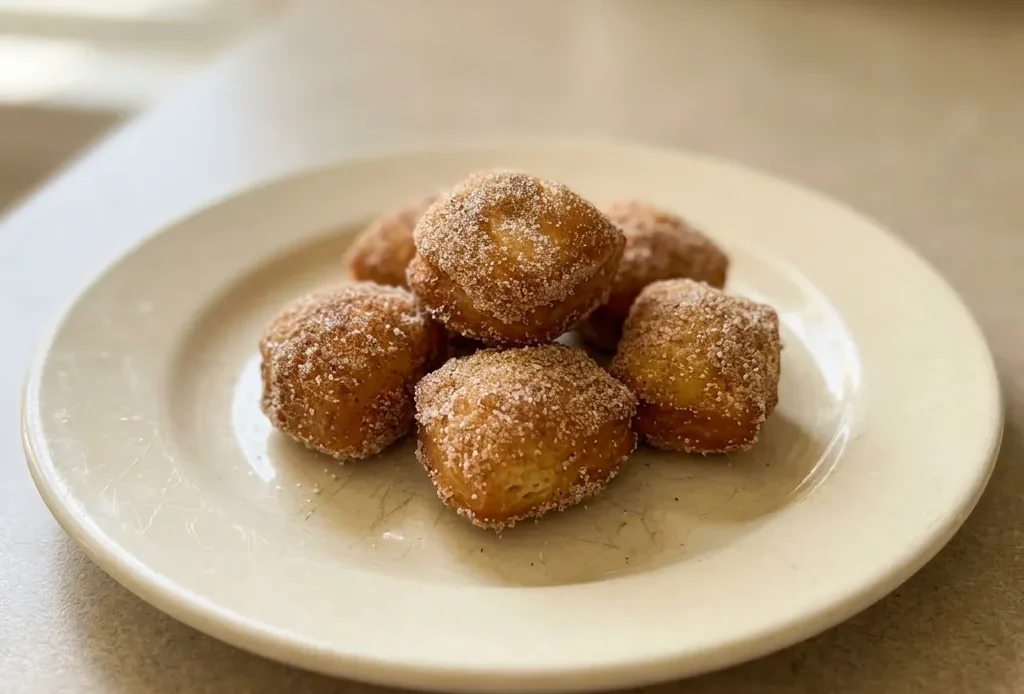
Frying canned biscuits is faster than yeast dough but leaves no margin for low oil temperature, the dough soaks up grease fast if the oil’s below 375°F. These biscuit donut holes skip proofing entirely, so the window between crispy and greasy is narrow but easy to hit with a wooden spoon test. The payoff is a flaky, tender crumb that tastes like a beignet, not a doughnut.
Flaky Biscuit Shortcut
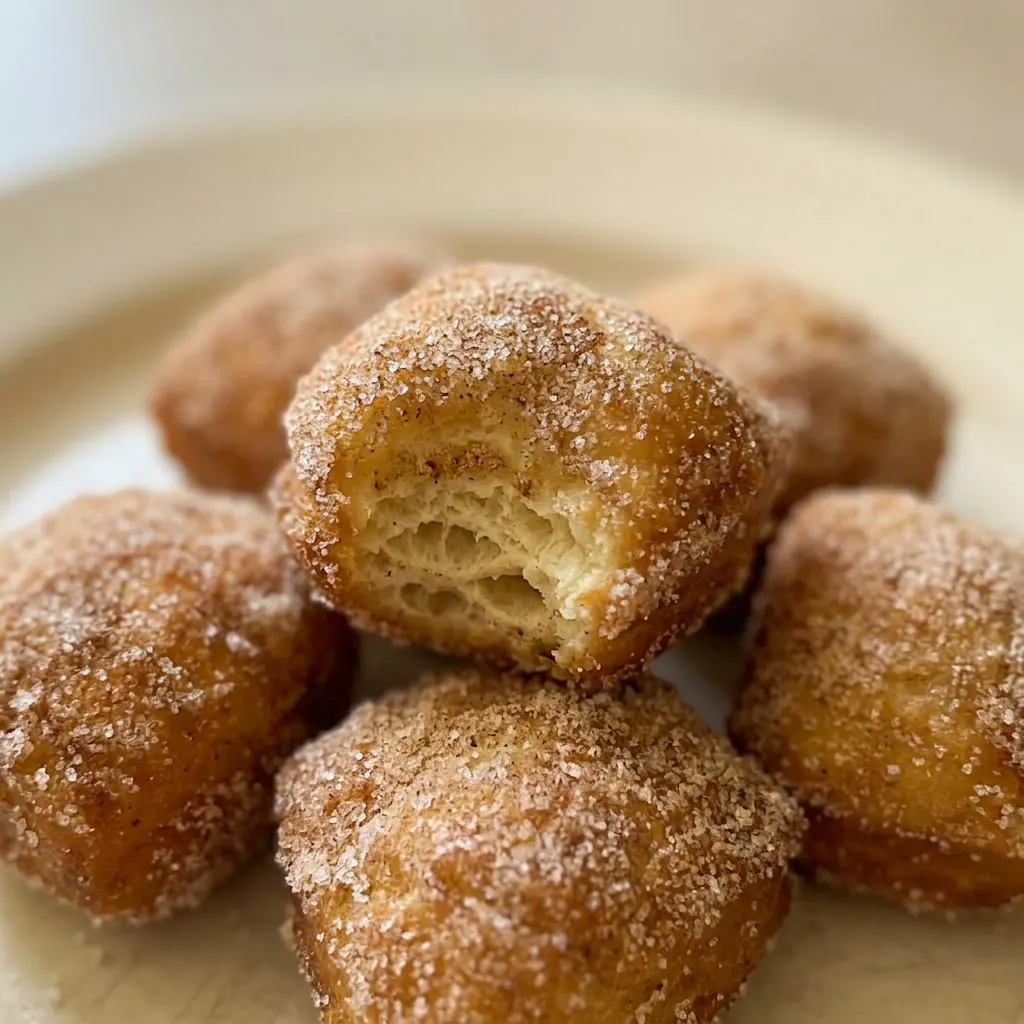
Pillsbury Grands Flaky Biscuits bring something canned dough usually can’t: real layers. Each biscuit gets cut into quarters, and during frying those layers separate into airy pockets. The dough doesn’t need proofing or rising, so you skip the hour-long wait yeast demands.
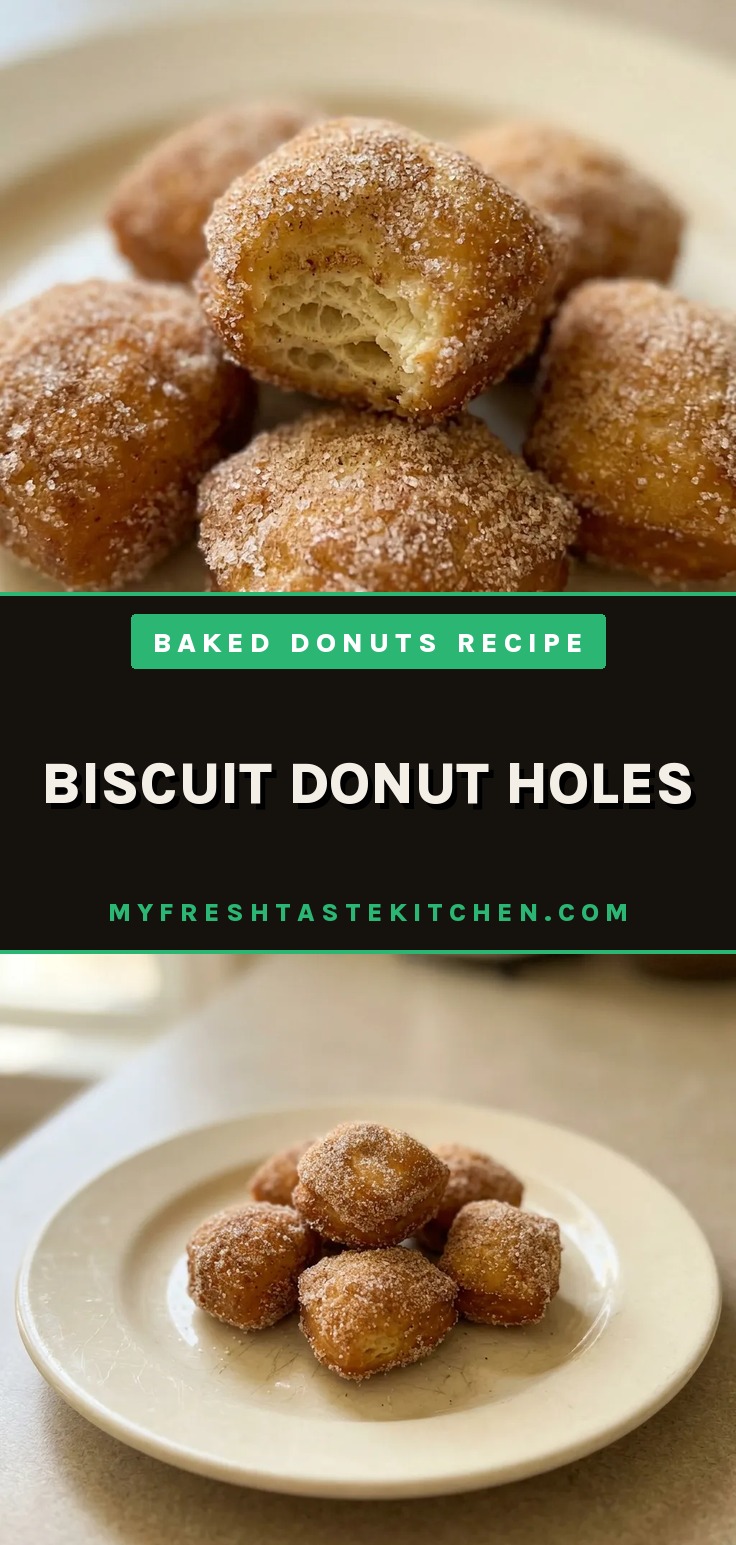
What you see is a donut hole with visible flakes, not a dense, cake-like crumb. The texture leans closer to a beignet than a traditional yeast donut, but it’s done in minutes.
Oil Temperature Control
Get the oil to 375°F and keep it there. Too cool and the dough soaks up fat like a sponge, turning greasy and heavy.
Too hot and the outside browns before the interior cooks through. A wooden spoon handle dipped in the oil tells you: steady streams of tiny bubbles mean it’s ready; a furious boil means back off. At the right temperature, the exterior sets quickly, forming a crisp shell that stops oil from seeping in.
The result is a golden, crunchy donut hole that’s not slick with grease.
Coating While Hot
Straight from the fryer, the residual heat on the donut holes partly melts the sugar crystals, fusing them into a brittle, crunchy coating. Blot away excess oil with paper towels first, otherwise the sugar dissolves into a sticky, soggy film instead of staying crisp.
The coating sticks only to a warm surface; once the donut holes cool, the sugar just slides off. So work fast: fry, blot, toss in cinnamon sugar, and serve immediately for that crackly shell.
Prep: 10 min · Cook: 10 min · Total: 20 min · Servings: 32 · Calories: 30 kcal
What to Know About These Ingredients
Pillsbury Grands Flaky Biscuits: Use the flaky layered kind, not the homestyle or butter variety, for the right texture.
Canola (Vegetable or Peanut oil): Pick an oil with a high smoke point; peanut oil adds faint nuttiness but any works.
Granulated sugar: Standard white sugar melts just enough when hot to form a brittle coating; don’t swap for powdered.
Ground cinnamon: Fresh cinnamon is punchier; stale cinnamon turns flat, so check the date.
Frying the Donut Holes
Cut the Biscuits
Slice each biscuit into four equal pieces, not more. Irregular sizes fry unevenly, small ones burn, big ones stay doughy inside.
Test the Oil
Dip a wooden spoon handle into the oil. Steady small bubbles mean go; furious bubbling means the oil’s too hot, pull the pan off the heat a moment.
Fry in Batches
Drop 6, 8 pieces in, no crowding. They’ll puff and rise; if they sink and barely bubble, the oil’s too cool. Listen for a steady sizzle.
Flip Once
When the underside turns deep golden, flip each piece. Golden-brown on both sides means done, about 1 to 2 minutes total. Overcooking turns them dark and bitter.
Blot and Coat
Set on paper towels, blot excess oil, then toss immediately in cinnamon sugar. If they cool, the sugar won’t stick, work while they’re still hot.
Biscuit Donut Holes
Ingredients
- 1 tube Pillsbury Grands Flaky Biscuits
- 1/2 cup granulated sugar 100 g
- 2 tablespoons ground cinnamon 14 g
- Canola (Vegetable or Peanut oil for frying)
Instructions
Heat oil:
Pour oil to a depth of 2 inches into a deep pan set over medium-high heat. As an alternative, preheat oil in an electric fondue pot or deep fryer to 375°F (190°C).Cut biscuits:
Unseal the biscuit tube and slice each biscuit into 4 equal portions.Mix cinnamon sugar:
Combine the sugar and cinnamon in a small bowl, mixing thoroughly.Test oil temperature:
To test oil temperature, insert a wooden spoon: steady bubbles indicate readiness; violent bubbling means the oil is too hot.Fry doughnut holes:
Once oil is hot enough, fry 6-8 doughnut holes per batch, avoiding overcrowding.Flip and cook:
Cook each batch until the underside is golden brown, then flip and cook the other side until both are golden, about 1-2 minutes in total.Coat in cinnamon sugar:
Transfer finished doughnut holes to a plate lined with paper towels. Blot away extra oil, then immediately coat them in the cinnamon-sugar mixture.Serve immediately:
Continue with remaining batches. Serve right away.
Storage and Serving
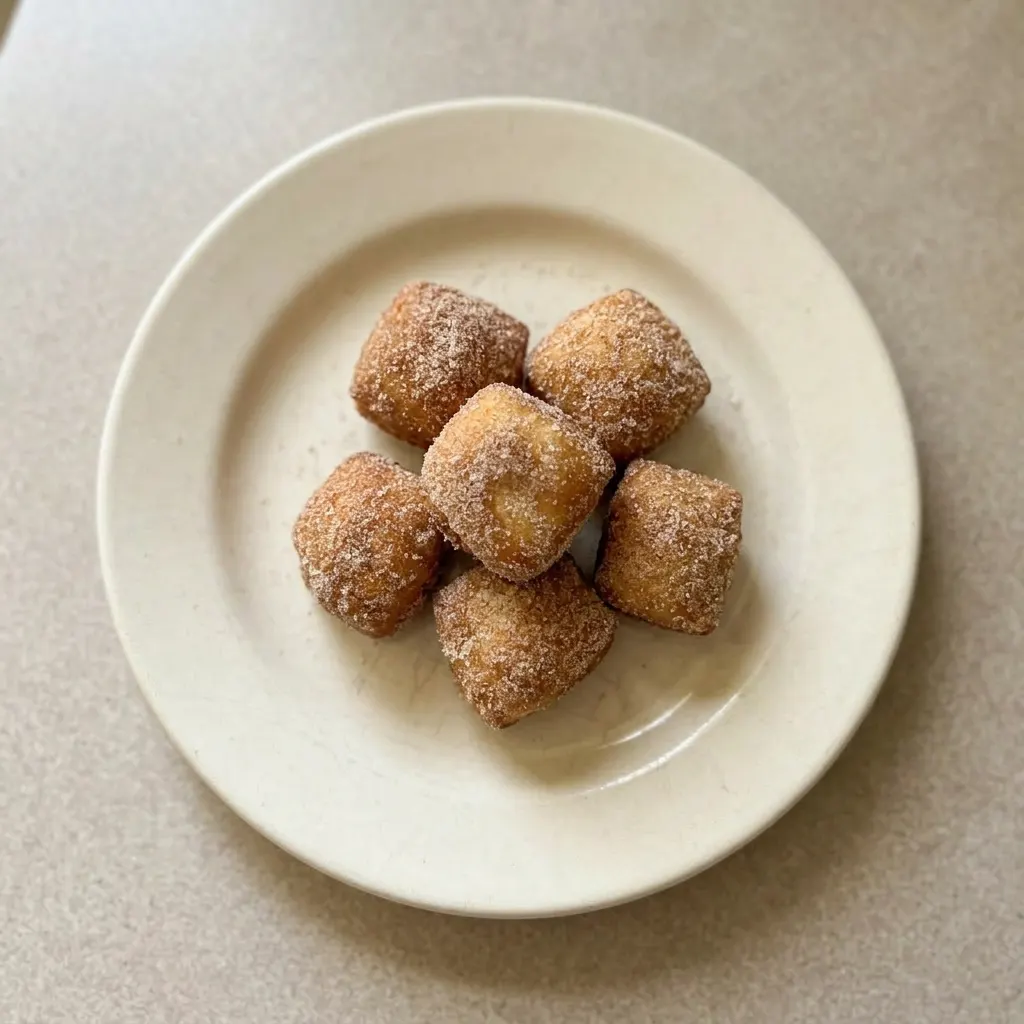
Biscuit donut holes are best eaten within 15 minutes of frying; that’s when the coating is crackly and the interior is fluffy. If you have leftovers, store them in an airtight container at room temperature for up to 1 day. The sugar coating will soften into a thin, moist crust, and the dough will become chewier.
Refrigeration accelerates staling, so skip it. To reheat, place them on a baking sheet in a 350°F oven for 3 to 4 minutes; this restores some crispness. Do not microwave, it makes them rubbery.
These don’t freeze well because the texture turns dense and soggy upon thawing.
Tips
- Use a slotted spoon to gently turn the donut holes while frying for even browning; flipping with a fork can tear the delicate dough and cause uneven color.
When You Skip the Canned Biscuit Shortcut
Pillsbury Grands Flaky Biscuits: Homemade buttermilk biscuit dough. Roll dough to 1/2-inch thickness and cut into 1-inch rounds or squares. The layers won’t separate as dramatically, so the crumb is more tender and less flaky.
You lose the convenience but gain control over the fat and flavor.
Pillsbury Grands Flaky Biscuits: Gluten-free biscuit dough (store-bought or homemade). Gluten-free doughs are stickier and absorb more oil, so blot thoroughly before coating.
The texture will be denser and less airy; some brands turn greasy. Fry test one piece first to assess oil absorption.
Canola (Vegetable or Peanut oil): Coconut oil or lard. Coconut oil adds a faint tropical note that fights the cinnamon; use refined for a neutral taste. Lard gives a savory richness that some love, but it solidifies at room temperature, so the coating may feel greasy as it cools.
Granulated sugar: Coconut sugar or turbinado. These coarser sugars don’t melt as readily on the hot donut holes, so the coating stays grainy instead of forming a brittle shell. The flavor shifts to caramel-like, which pairs well with cinnamon but changes the classic profile.
The first time I made these, half the batch exploded into oily shreds in the pan. By accident, I found that pinching the cut edges shut before frying kept them sealed and fluffy.
Frequently Asked Questions
Can I make these donut holes ahead of time?
Not really, they’re best within 15 minutes of frying, when the coating stays crackly and the interior is fluffy. Leftovers stored in an airtight container at room temperature will keep for up to 1 day, but the sugar softens into a moist crust and the dough turns chewier. Reheat in a 350°F oven for 3 to 4 minutes to restore some crispness; skip the microwave, which makes them rubbery.
Freezing is a bad idea, thawing turns the texture dense and soggy.
Why did my donut holes turn out greasy?
Most likely the oil wasn’t hot enough when you dropped the dough in. At 375°F the exterior sets quickly, forming a barrier that keeps oil out; if the oil is cooler, the dough soaks up fat like a sponge. Check your oil with a wooden spoon handle, steady small bubbles mean it’s ready; if you see barely any bubbles, wait.
Overcrowding the pan can also drop the oil temperature, so stick to 6, 8 pieces per batch.
How do I know when the oil is hot enough without a thermometer?
Dip a wooden spoon handle into the oil, steady streams of tiny bubbles mean it’s ready at around 375°F. If the oil bubbles furiously, it’s too hot; pull the pan off the heat for a moment. The test is visual and immediate, so you can gauge the temperature without any extra equipment.
What’s the difference between these and traditional yeast donut holes?
Yeast donut holes rely on proofed dough that rises for an hour, giving them a light, airy crumb. These use canned flaky biscuits, so the layers separate into pockets during frying, creating a flaky, beignet-like texture instead. The shortcut skips proofing and rising; you go from package to fried donut holes in about 20 minutes total.