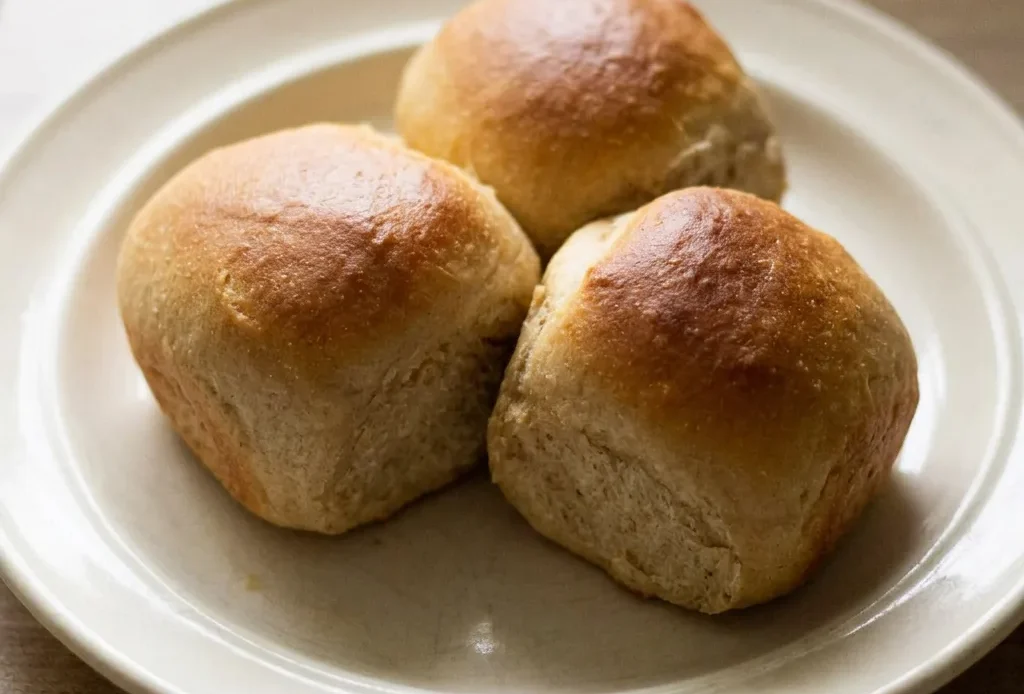
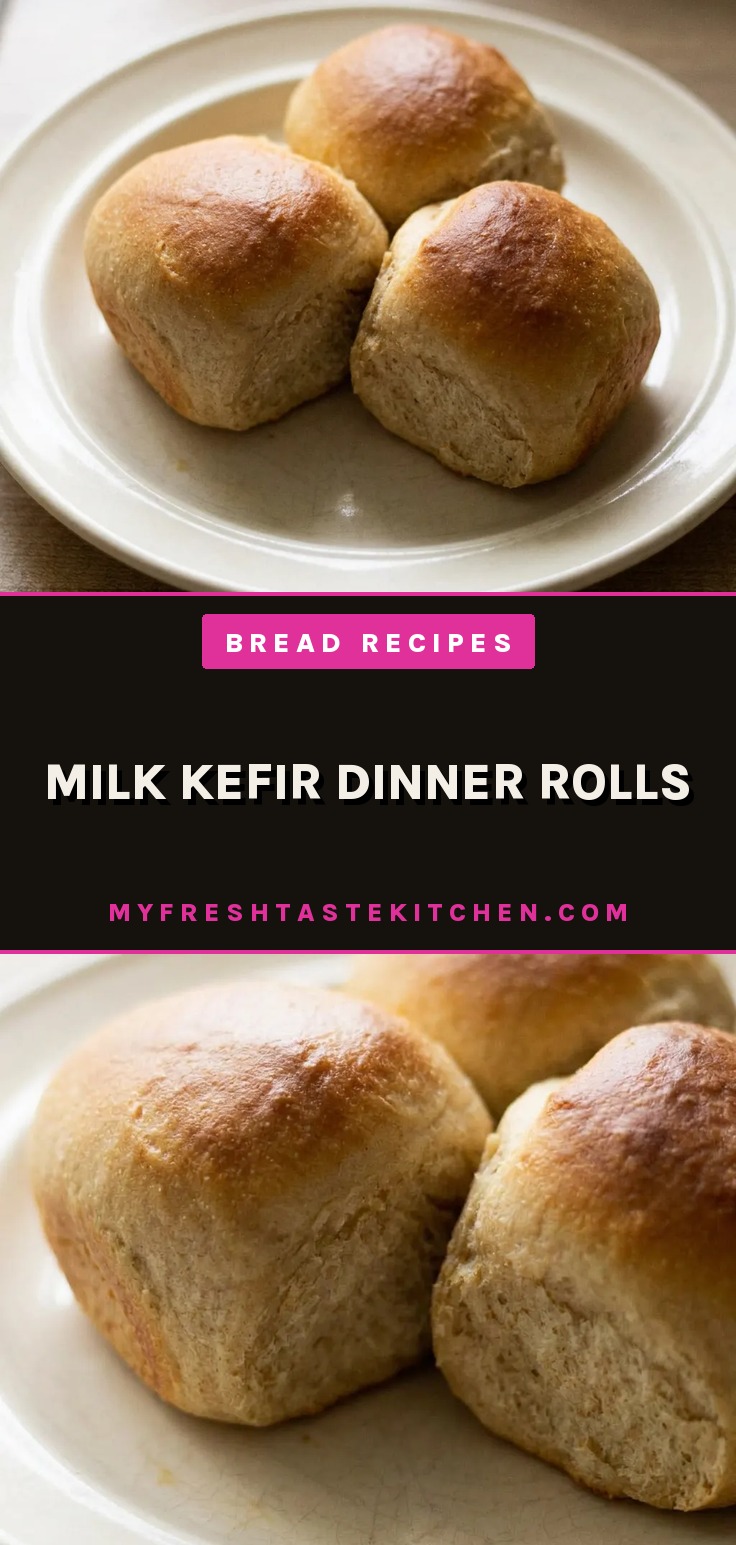
These aren’t butter-slathered, milk-made dinner rolls. Milk kefir, the tangy fermented dairy drink, does the tenderizing here, and the result is a roll that’s softer and more plush than any standard version.
The acidity weakens gluten just enough, while the live cultures contribute a subtle, sourdough-like rise and a clean tang that honey balances without masking. It’s a one-bowl, no-fuss dough that comes together faster than you’d expect for rolls this good, and the margin for error is generous, knead a little longer or shorter, and the crumb stays forgivingly tender.
I let the dough rise for two full hours one time, and the rolls came out dense and flat. The next batch, I cut the rise to just until doubled and they were fluffy.
Milk kefir’s tenderizing tang
Kefir’s acidity weakens gluten strands just enough to keep the crumb soft, not tough. That same tang comes from lactic acid and the natural yeast and bacteria in the culture. Those microbes also produce gas during fermentation, contributing to the rise and a subtle, sourdough-like flavor you won’t get from plain milk or buttermilk.
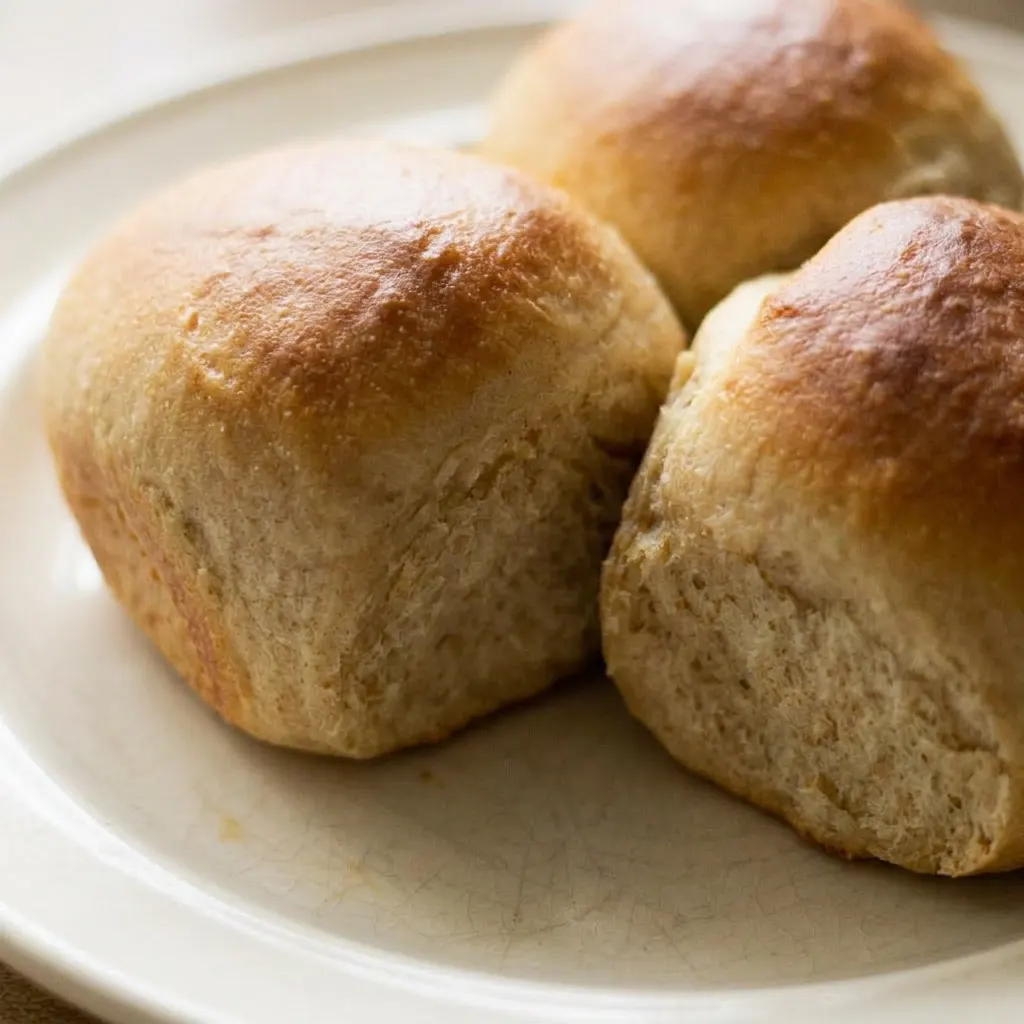
The texture ends up plush and moist, with a clean dairy tang that sets these rolls apart.
Honey’s dual job: sweetener and yeast fuel
The 2 tablespoons of honey do two things. One: they add a gentle sweetness that balances kefir’s sharpness, you taste the tang, not a sour punch. Two: the sugars feed the instant yeast, speeding fermentation so the dough rises reliably.
The amount is calibrated: enough to aid the yeast and soften the acid, not enough to make the rolls taste sweet. The result is a balanced roll where neither honey nor kefir dominates.
Why a single full rise (then a short second) works
This dough rises once after mixing, then again after shaping. Kefir’s acidity can break down gluten if left too long, so a shorter total rise protects structure. The second rise happens while the oven preheats, usually 15 to 20 minutes, which is enough for the rolls to puff without over-proofing.
That timing also saves you an hour. The final rolls are airy but sturdy, with no collapse or gummy center.
Egg and oil for a rich, never-greasy crumb
One egg adds richness and structure, the proteins strengthen the crumb so it holds its shape without being dense. Oil, not butter, keeps the rolls soft even after they cool; butter’s water content can make the texture firmer.
Together they create a moist, tender interior that feels rich but not greasy. You get a soft, soft roll every time.
Prep: 5 min · Cook: 15 min · Total: 1 hr 20 min · Servings: 8 · Calories: 250 kcal
What to look for in each ingredient
Milk kefir: Use plain, unsweetened kefir; anything flavored or low fat will change the tang and moisture.
Instant yeast: No need to proof it; stir it into the flour after the wet ingredients are combined.
All-purpose flour: Weigh it for accuracy; 360g is about 3 cups spooned and leveled, not scooped.
Vegetable oil: Any neutral oil works; olive oil is too assertive here.
Working the dough: when to stop adding flour and how to knead
Mix the wet ingredients
Whisk the kefir, honey, oil, salt, and egg until the honey dissolves and the mixture looks smooth. Any lumps of honey left will starve the yeast in that spot.
Add the first flour, then the yeast
Stir in 2 cups of flour until it’s a thick batter. Then sprinkle the yeast on top and mix it in. This order keeps the yeast from clumping in the wet liquid.
Incorporate the rest of the flour gradually
Add the last cup of flour in two additions, mixing until the dough pulls away from the bowl. You may not need every spoonful; the dough should be tacky but not sticky.
Knead for 10 minutes
Knead on medium speed until the dough is smooth and springs back when poked. Under-kneaded dough tears easily; over-kneading here is unlikely in 10 minutes, but stop if the dough tightens.
First rise: until doubled
Let the dough rise in a greased bowl, covered, until it’s doubled in size, about 1 to 2 hours. A finger dent that stays indicates it’s ready; if it springs back, give it more time.
Shape into balls
Deflate the dough and divide into 8 equal pieces. Shape each into a taut ball by pulling the dough across the counter; the surface should be smooth, not rippled.
Second rise atop the oven
Place the rolls in a greased pan, cover with a damp cloth, and set on the preheating oven. They’ll rise quickly, about 15 to 20 minutes, until puffy but not doubled.
Bake at 400°F for 15 minutes
Bake until the tops are deep golden and the rolls sound hollow when tapped. Over-baking dries them out; if they brown too fast, tent with foil for the last 5 minutes.
Cool on a wire rack
Transfer the rolls to a rack immediately. Let them cool completely before serving; cutting too early exposes a gummy interior. The crumb sets as it cools.
Milk Kefir Dinner Rolls
Ingredients
- 3 cups all-purpose flour 360g
- 2 1/2 tsp instant yeast
- 1 tsp salt
- 1 large egg
- 1 cup milk kefir 240ml, lukewarm
- 2 tbsp vegetable oil 30ml
- 2 tbsp honey 42g
Instructions
Whisk Wet Ingredients:
In a stand mixer bowl, whisk together the warm milk kefir, honey, oil, salt, and egg until well blended.Mix in First Flour:
Mix in 2 cups (240g) of flour until incorporated.Stir in Yeast:
Stir in the instant yeast.Add Remaining Flour:
Slowly incorporate the remaining flour, adding 1/2 cup (60g) at a time, until a soft dough develops.Knead Dough:
Knead the dough for 10 minutes.Let Dough Rise:
Transfer the dough to a greased bowl, cover, and allow it to rise until it doubles in volume, roughly 1 to 2 hours.Preheat Oven:
Heat the oven to 400°F (205°C).Divide Dough:
Deflate the dough and split it into 8 equal pieces.Shape into Balls:
Shape each piece into a taut ball by pulling the bottom across the work surface.Arrange in Pan:
Arrange the rolls in a greased baking pan.Second Rise:
Cover them with a damp cloth and let them rise atop the oven while it preheats.Bake Rolls:
Bake for 15 minutes.Cool on Rack:
Move the rolls to a wire rack to cool fully.
What you can (and can’t) swap in kefir dinner rolls
Honey: Replace with an equal amount of granulated sugar or maple syrup. If using sugar, dissolve it in the kefir first. With maple syrup, reduce the kefir by 1 tablespoon to offset the extra liquid.
Sugar gives a cleaner sweetness and the same yeast boost but no honey flavor. Maple syrup adds its own taste and a slightly softer dough because of its moisture.
Vegetable oil: Swap in melted butter, using the same 2 tablespoons. Let it cool slightly before mixing.
Butter makes the crumb a little firmer and adds a rich, dairy flavor. The rolls won’t be as soft-soft after a day, but they’re still tender.
All-purpose flour: Use bread flour, same weight (360g). You may need an extra tablespoon of kefir if the dough feels stiff.
Bread flour builds more gluten, giving a chewier, taller roll with a slightly denser crumb. The tang from kefir still comes through, but the texture leans toward a classic yeast roll rather than a soft dinner roll.
Milk kefir: Do not replace kefir with buttermilk, yogurt, or milk. The acidity and microbial activity are unique here.
Kefir’s lactic acid bacteria and yeast create the tender crumb and gentle rise. Buttermilk lacks the live cultures that produce gas, so rolls will be denser and less fluffy.
Yogurt is too thick, making the dough heavy. Plain milk has no acidity, so the rolls lose the tenderizing effect and taste flat.
Storage and Serving
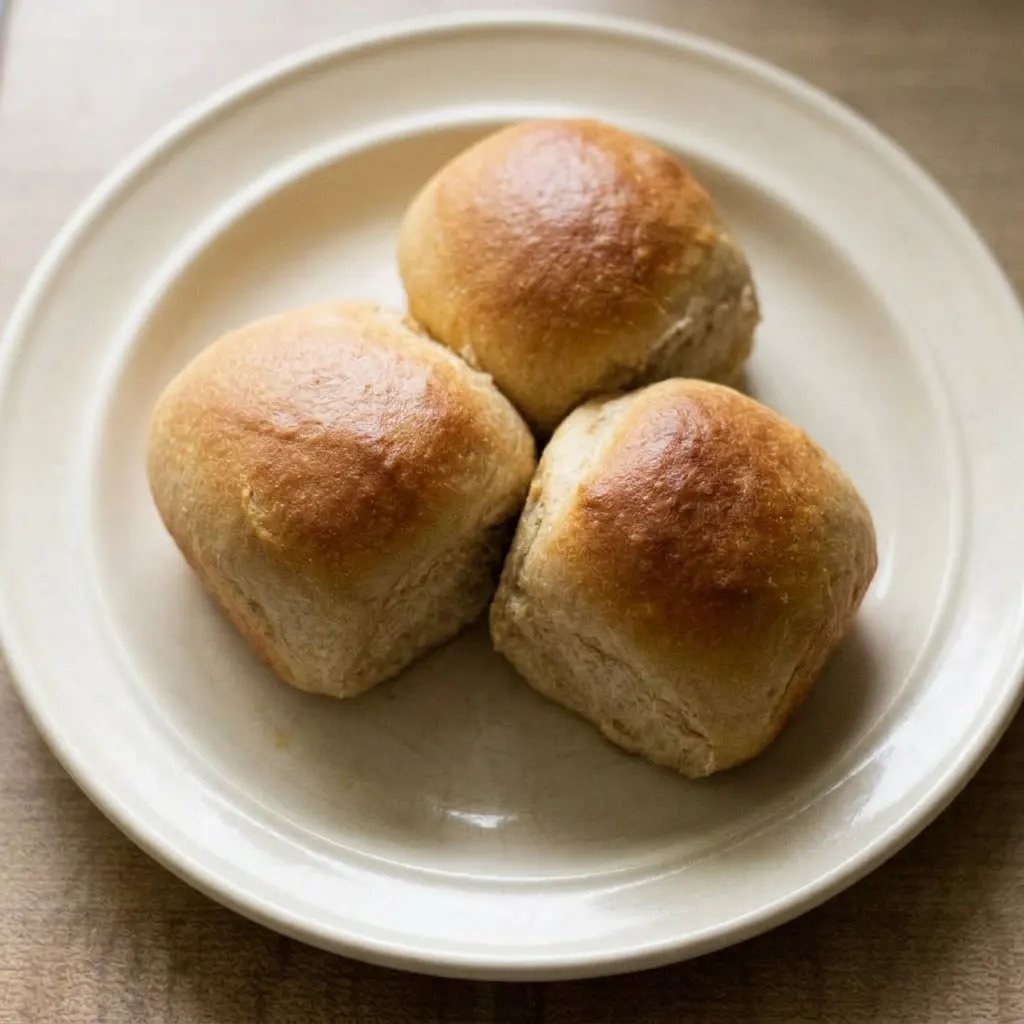
These rolls are at their best the day they’re baked: soft, with a tender crumb and a slight tang from the kefir. For the next two days, they stay pleasantly soft at room temperature when stored in an airtight bag or container. After that, the crumb starts to dry out.
To refresh a day-old roll, warm it in a 350°F oven for 5 minutes or microwave for 10 seconds. For longer storage, freeze the fully cooled rolls in a zip-top bag for up to a month.
Thaw at room temperature, then reheat as above. Do not refrigerate; the cold accelerates staling.
If you’re making them ahead, bake, cool completely, and freeze without the final warm-up. Add any finishing touch like a butter or herb topping just before serving, not before storage.
Tips
- Heat kefir to 110°F (43°C) max; above 130°F kills the live cultures that tenderize the dough and add tang.
- If you don’t have a thermometer, the kefir should feel like warm bath water, not hot; test a drop on your wrist.
Frequently Asked Questions
Can I let the dough rise overnight in the fridge?
Not for this recipe. Kefir’s acidity weakens gluten over time, so an overnight rise risks a slack dough that won’t hold its shape. The 1-to-2-hour room-temperature rise is the window for the best structure.
Why did my rolls turn out dense instead of fluffy?
Most likely the dough didn’t get enough rise time. Look for it to double in volume, about 1 to 2 hours, and the second rise after shaping should puff up, about 15 to 20 minutes atop the preheating oven. Over-flouring during mixing can also weigh them down; the dough should be tacky, not sticky.
Can I make these rolls ahead and reheat them?
Yes, but best to freeze them after baking. Cool completely, then freeze in a zip-top bag for up to a month. Thaw at room temperature and warm in a 350°F oven for 5 minutes or microwave for 10 seconds.
Don’t refrigerate, it speeds staling.
How are these different from regular dinner rolls?
The kefir gives a clean dairy tang and a tender crumb that plain milk rolls lack. Honey balances that tang without making them sweet, and oil keeps the texture soft even after cooling. The crumb is plush and moist, not dry or dense.