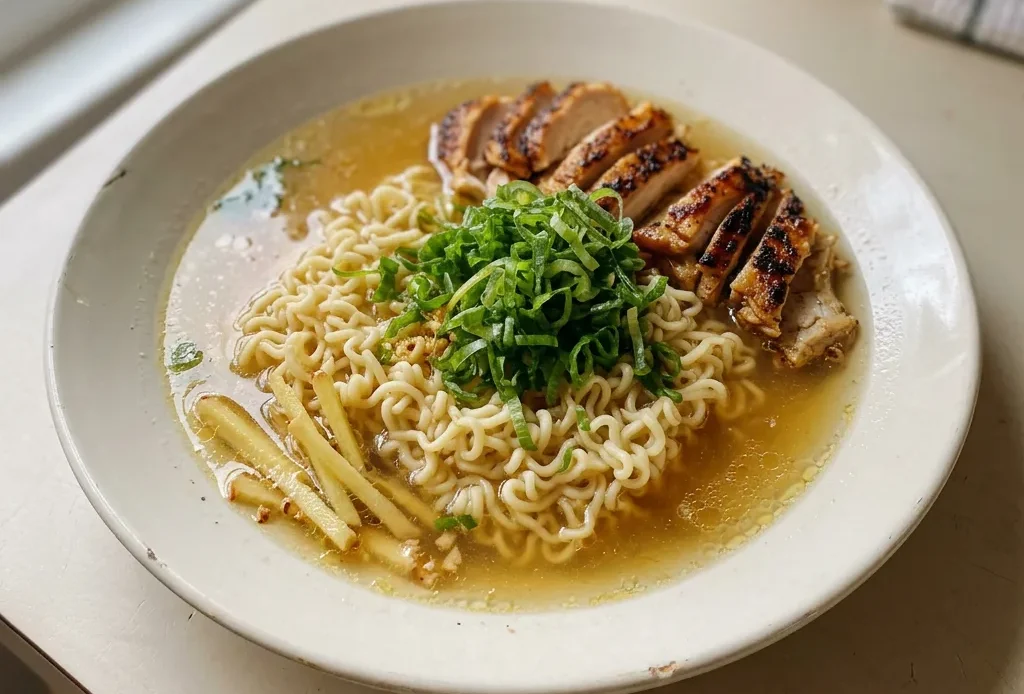
The most common mistake with ginger garlic chicken noodle soup is under-flavoring the broth, relying on minced garlic and a few ginger slices doesn’t get you the deep, integrated taste this dish needs. Roasting a whole head of garlic until it’s soft and sweet, then searing chicken thighs to build fond, changes that.
The broth ends up rich but clear, with a ginger kick that’s bright without being harsh. Instant ramen keeps its springy bite when cooked separately and bathed in hot broth just before serving.
This ginger garlic chicken noodle soup is forgiving in timing but demands patience on those two flavor-building steps.
Roasted garlic changes the broth
Roasting a whole head of garlic until the cloves are soft and caramelized does something that raw or sautéed garlic can’t. The harsh pungency fades, replaced by a mellow sweetness and a nutty note that blends seamlessly into the broth. Once cooled, the cloves squeeze out like paste, no chopping required.
That creamy texture dissolves into the soup, thickening it just enough to coat the noodles and chicken without making it heavy. It’s a subtle depth that doesn’t shout garlic; it rounds out the ginger and soy, making each spoonful feel complete. You’ll taste the difference compared to a standard garlic-forward soup, this one is smoother, richer, and more integrated.
Searing chicken thighs builds savory depth
Browning chicken thighs until deeply golden creates a crust packed with flavor via the Maillard reaction. That browned surface isn’t just for appearance, it’s the foundation of a savory broth.
When you sear, the fond left in the pan carries concentrated chicken flavor. As you add broth and scrape up those bits, the fond dissolves, enriching the entire pot.
Chicken thighs stay moist even after simmering because their higher fat content resists drying out. Slicing the meat after resting keeps it juicy in the bowl.
The result is a soup with a meaty backbone that water-based simmering alone can’t achieve.
Julienned ginger infuses evenly, doesn’t turn mushy
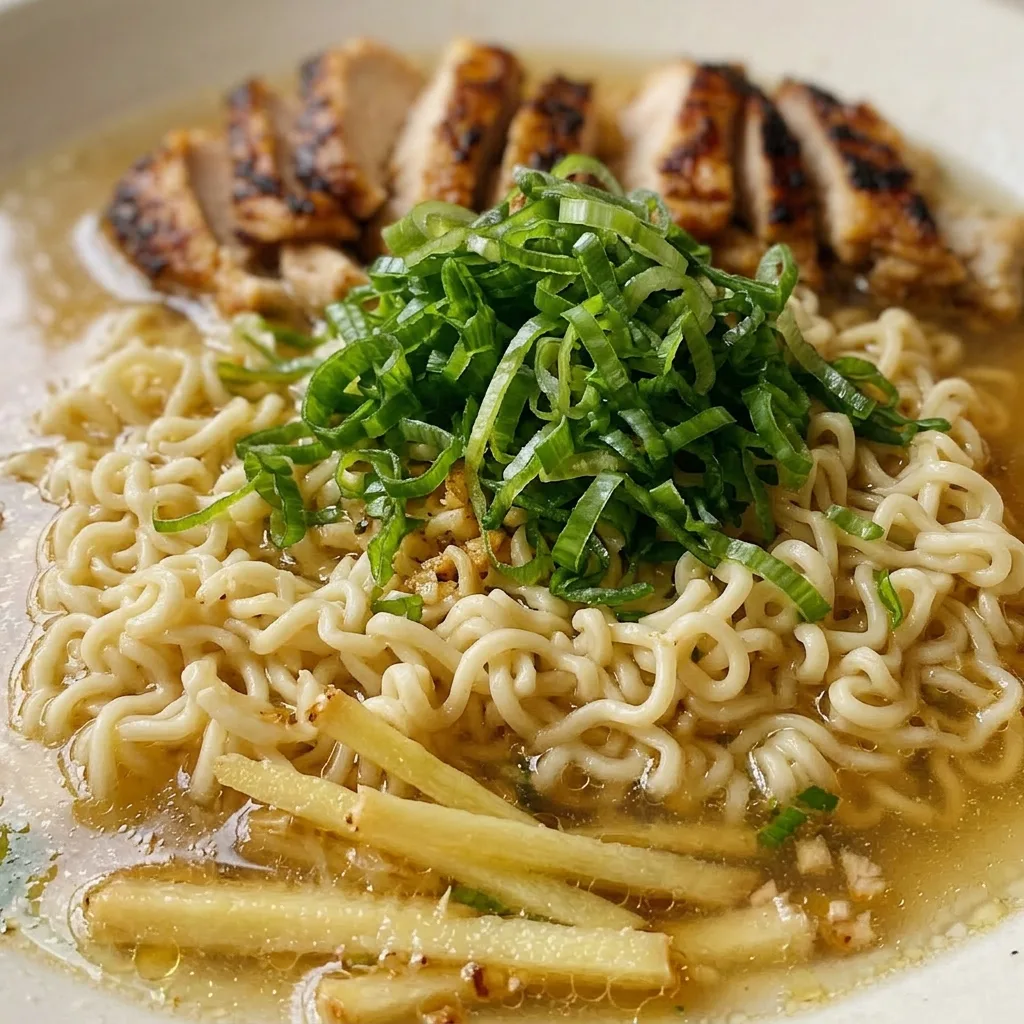
Fresh ginger cut into thin matchsticks releases its aromatic oils quickly into hot broth, building a lively kick that hits the back of the throat. Unlike minced ginger, which can turn pasty and dull after simmering, julienned strips hold their shape.
They soften slightly but stay distinct, offering a pleasant chew and a visual pop against the golden broth. The even size ensures each strip infuses at the same rate, so the ginger flavor is balanced throughout the 15-minute simmer.
If you want ginger-forward chicken recipes to have a clean, bright presence, this cut delivers without the muddiness of a paste.
Instant ramen noodles keep their springy texture
Not all noodles belong in broth for extended simmering. Instant ramen noodles are designed to cook in minutes and maintain a bouncy, al dente bite if handled right. The trick is cooking them separately in plain water, then draining thoroughly.
That way, the excess starch washes away, and the noodles don’t release it into the soup, which would turn the broth cloudy and thick. When you add the drained noodles to bowls and ladle hot broth over them, they finish cooking just before serving.
The result is a clean, clear broth with noodles that stay resilient, not mushy, even after a few minutes in the bowl.
Prep: 15 min · Cook: 25 min · Total: 40 min · Servings: 4 · Calories: 560 kcal
Key Ingredients for Ginger Garlic Chicken Noodle Soup
Chicken thighs: Boneless, skinless thighs stay moist during simmering better than breasts, and sear up with a deep crust.
Garlic: A whole head, roasted until soft, gives a sweet, nutty paste that dissolves into the broth.
Ginger: Fresh ginger, peeled and cut into thin matchsticks, infuses evenly and keeps its shape without turning mushy.
Instant ramen noodles: Discard the seasoning packets; the noodles themselves add a springy texture that holds up in hot broth.
I still catch myself wanting to toss the noodles right into the broth to save a pot, but I force myself to boil them separately every time.
Roast the garlic first, then build the broth
Roast the garlic
Cut the top off the garlic head, rub with a little oil, wrap in foil, and bake at 400°F for 20 to 25 minutes. The cloves should be soft enough to squeeze out like paste when cool.
Sear the chicken
Pat the chicken thighs dry, season with salt and pepper. Heat oil in a skillet over medium-high and cook 5 to 7 minutes per side. Look for a deep golden-brown crust; that fond in the pan is flavor.
Sweat the aromatics
In a Dutch oven, cook the julienned ginger and minced roasted garlic for 1 minute until fragrant. The ginger should smell lively but not burn, stop if it starts to brown.
Simmer the broth
Add broth and soy sauce, bring to a simmer, then lower heat to maintain a gentle bubble for at least 15 minutes. The broth should smell rounded, not harsh, roasted garlic smooths it out.
Cook the noodles separately
Boil the ramen noodles in plain water per package directions, then drain well. This keeps starch out of the broth, so the soup stays clear and the noodles stay springy.
Assemble the bowls
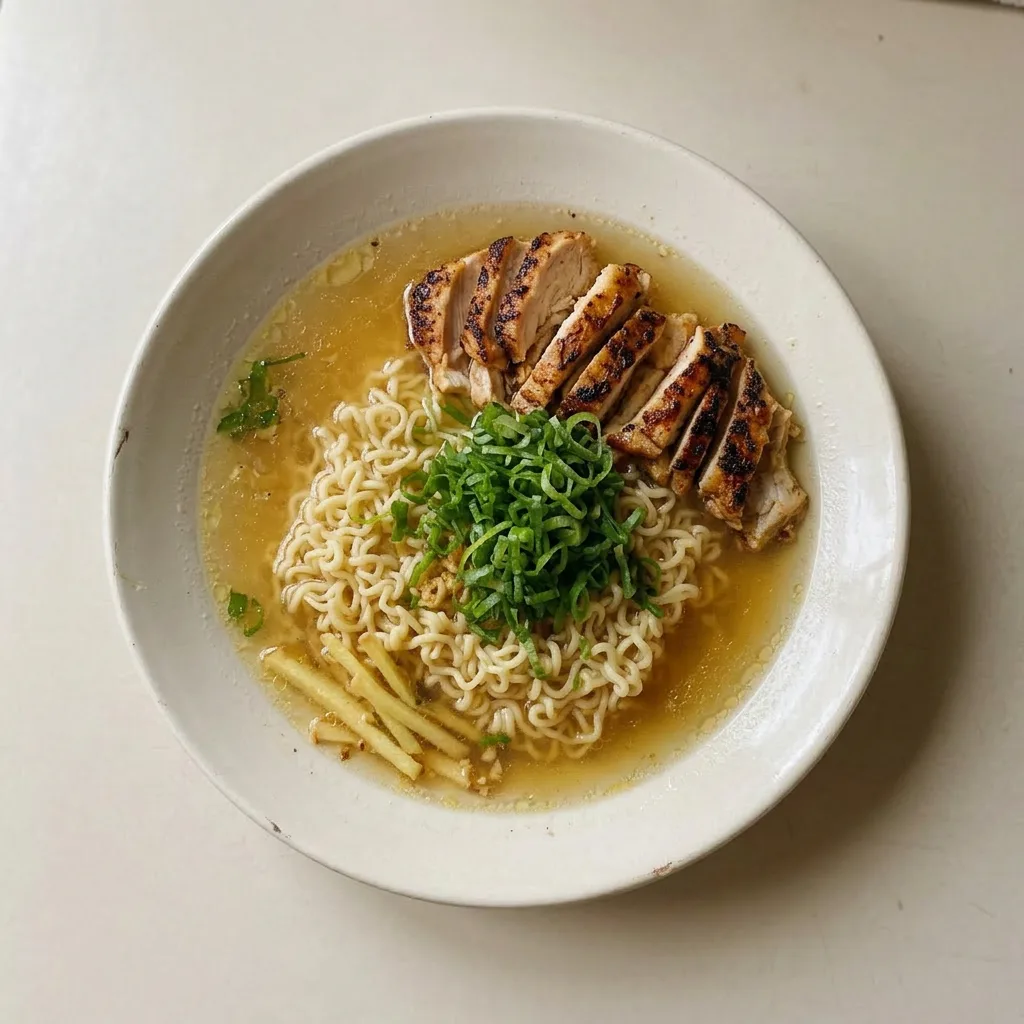
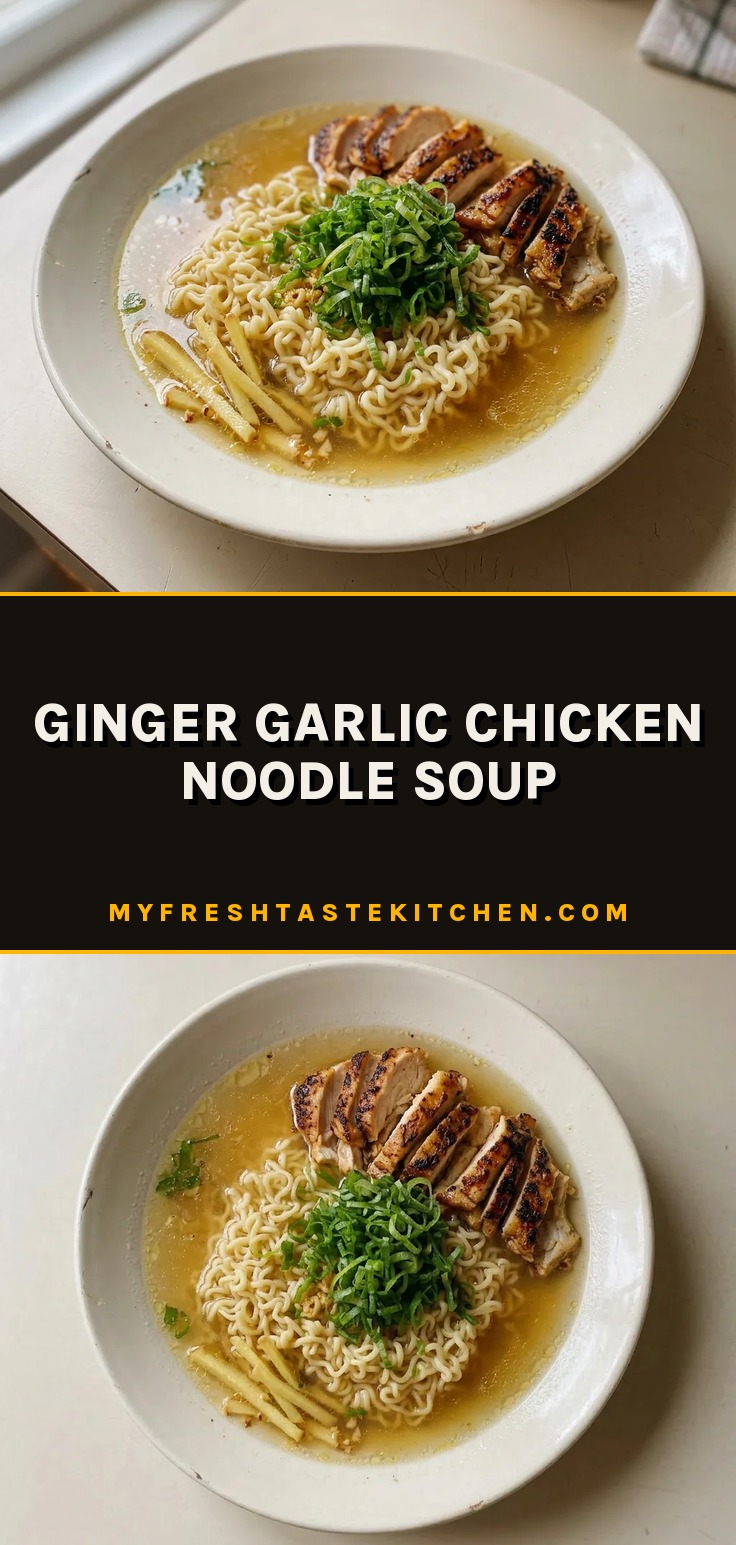
Divide drained noodles into bowls, forming a nest. Ladle hot broth over the top, arrange sliced chicken on one side, and finish with scallions. The broth should just coat the noodles, not drown them.
Ginger Garlic Chicken Noodle Soup
Ingredients
- 1 lb boneless, skinless chicken thighs 450g
- 1 tbsp vegetable oil 15ml
- 1/2 tsp kosher salt
- 1/4 tsp black pepper
- 8 cups low-sodium chicken broth 1.9L
- 1 whole head garlic
- 2 inch piece fresh ginger, peeled and julienned 5cm
- 2 tbsp low-sodium soy sauce 30ml
- 2 packages instant ramen noodles, flavor packets discarded 3 oz/85g
- 1 tbsp sesame oil 15ml (optional, for aroma)
- 1/2 cup chopped fresh scallions 50g (green parts only)
Instructions
Roast and mince garlic:
Prepare the garlic: cut off the top of the head, coat with a small amount of vegetable oil, enclose in foil, and bake at 400°F (205°C) for 20-25 minutes until tender. After cooling, extract the cloves and finely mince.Slice ginger and scallions:
During the garlic roasting, peel the ginger and slice into thin strips. Chop the scallions and reserve.Season chicken thighs:
Thoroughly dry the chicken thighs with paper towels, then season both sides with salt and pepper.Sear chicken until golden:
Warm vegetable oil in a large skillet over medium-high heat. Cook the chicken for 5-7 minutes per side until a deep golden-brown crust develops. Move to a cutting board to rest, then slice.Sauté ginger and garlic:
In a large Dutch oven, cook the ginger strips and minced roasted garlic for 1 minute until aromatic.Simmer broth with soy:
Add the chicken broth and soy sauce. Bring to a simmer, then lower the heat and maintain a gentle simmer for at least 15 minutes.Cook ramen noodles:
In a separate pot, boil water and cook the ramen noodles per package instructions. Drain thoroughly.Assemble bowls with toppings:
Divide the cooked noodles among bowls, forming a nest. Pour the hot broth over the noodles. Place sliced chicken on one side and top with chopped scallions.
Storage and Serving
For best texture, serve this soup immediately after assembly. The noodles absorb broth quickly and lose their spring, so eat within 10 minutes of pouring the broth over them. To store leftovers, keep the broth and noodles in separate containers in the fridge for up to 3 days.
The broth intensifies in flavor as it sits, but the noodles turn soft and bloated if left in liquid. Reheat the broth on the stove or microwave until steaming. Meanwhile, boil fresh water and cook a new batch of ramen noodles just until tender.
Drain, add to bowls, and pour the hot broth over the top. The chicken and scallions reheat fine in the broth, but add fresh scallions after reheating for color and crunch.
Freezing is not recommended; the noodles become mushy and the broth’s texture suffers. If you must, freeze only the broth for up to 3 months, and cook fresh noodles when serving.
Three ingredients worth swapping, one you shouldn’t
Chicken thighs: Boneless skinless chicken breasts. Thighs stay juicy through the simmer because of their higher fat content. Breasts will dry out if cooked the same way.
Sear them as directed, then slice and add to the broth only at the very end, let them warm through for a minute, not 15. The broth itself won’t suffer, but the meat will be leaner and less forgiving.
Instant ramen noodles: Fresh ramen noodles or soba noodles. Fresh ramen cooks in 1 to 2 minutes; add them directly to the simmering broth for 30 seconds once the soup is done.
Soba noodles need a separate boil and rinse to remove excess starch, just like the instant ramen, use the same weight (3 oz per serving). Both will be springy, but soba brings a nutty, earthy note that changes the broth’s character. The soup will still be good, just different.
Low-sodium soy sauce: Tamari or coconut aminos. Tamari is a straight 1:1 swap, same saltiness, same umami. Coconut aminos are sweeter and less salty; start with 2 tablespoons (not 3) and taste before adding more.
The broth will be milder and slightly fruity. If you go gluten-free, tamari is the cleanest swap.
Coconut aminos work but the soup won’t have the same savory punch.
Tips
- Peel ginger with the edge of a spoon instead of a vegetable peeler: the skin comes off without gouging the flesh, which contains the most aromatic compounds. A peeler often cuts too deep, wasting that flavorful layer and leaving a woody texture that can turn bitter in the broth.
- After julienning the ginger, rinse the strips in cold water for 10 seconds and pat dry. This washes away surface starch that can make the broth cloudy and removes a small amount of bitter compounds from the skin’s residue, leaving a cleaner, brighter ginger flavor that infuses without harshness.
Frequently Asked Questions
Can I make this soup ahead of time?
Yes, but store the broth and noodles separately. The broth can be refrigerated for up to 3 days and actually deepens in flavor overnight.
When reheating, cook a fresh batch of ramen noodles in boiling water, they take just a few minutes, and pour the hot broth over them. The chicken reheats fine in the broth, but add fresh scallions after reheating for crunch.
How do I prevent the noodles from getting mushy if I’m serving later?
Cook the noodles separately just before serving, then drain them well and form a nest in each bowl. Pour the hot broth over only at the last minute, the noodles will finish cooking in the bowl and stay springy for about 10 minutes.
If you need to hold them longer, keep the drained noodles at room temperature and add broth just before eating. Never let the noodles sit in the broth for more than a few minutes.
Is this soup spicy? It has ginger and garlic but no chili.
It’s not spicy in the chili-heat sense, but the ginger gives a lively, aromatic kick that hits the back of your throat. The roasted garlic adds sweetness and depth, so the overall effect is warming and bright, not fiery. If you want actual heat, you’d need to add chili flakes or chili oil, this version stays gentle.
What’s the difference between this and a classic chicken noodle soup?
The biggest difference is the broth: roasted garlic and julienned ginger replace the usual mirepoix, giving a nutty sweetness and a clean, bright ginger punch instead of the earthy celery-and-carrot base. The seared chicken thighs add a deep savory note from the fond, and instant ramen noodles provide a bouncy, al dente texture that traditional egg noodles don’t have. It’s a richer, more focused soup, less about vegetables, more about the interplay of chicken, garlic, and ginger.