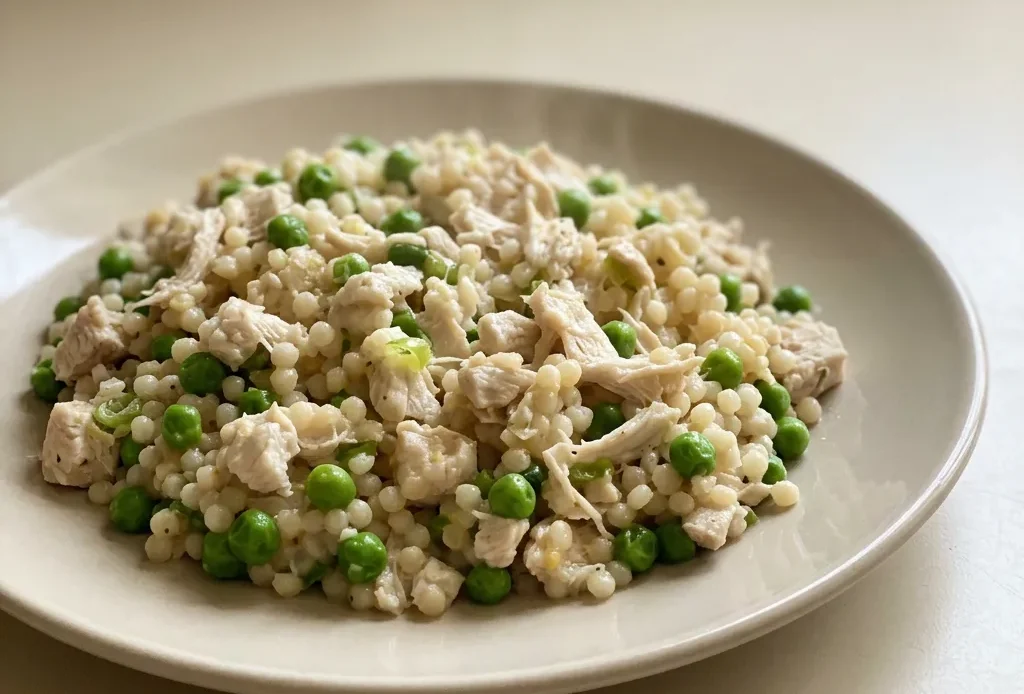
The trick with this one-pot lemon chicken couscous is getting the sauce right, creamy from Parmesan, bright from lemon, and thin enough to coat every pearl without turning soupy. That balance hinges on one deliberate step: toasting the couscous in olive oil before adding liquid. It’s a short window, two to three minutes, but skip it and the grains release starch that thickens the broth into a gluey mess.
With the toast, each pearl stays distinct and the sauce clings without overwhelming. The whole thing comes together fast, and the payoff is a bowl where every forkful tastes like more effort than it required. That’s the appeal of this israeli couscous with chicken and peas.
Toasting in Olive Oil
Toasting Israeli couscous in olive oil before adding liquid deepens its nutty flavor and keeps each grain separate. Without that initial toast, the pearls turn soft and sticky, more like risotto than couscous. The oil coats the surface, slowing water absorption so the center stays chewy while the outside firms up.
You’ll see the pearls shift from pale beige to golden, and you’ll smell a warm, toasty aroma. That’s your cue to stop. Two to three minutes is plenty; any longer and the oil starts to smoke.
The contrast between toasted and untoasted is stark: one batch yields a firm, distinct bite, the other a clumpy mass. This step matters for the texture you want in pearl couscous recipes dinner.
Lemon Zest and Juice
Lemon zest and juice do different jobs here. The zest adds fragrant oils that cling to the couscous and chicken, brightness you can smell before you taste.
The juice cuts through the richness of Parmesan and chicken fat, keeping each forkful clean. The recipe calls for zest from one to two lemons and about a quarter cup of juice.
That’s enough acid to balance but not so much that it puckers. Without both, the dish tastes flat and greasy.
For couscous meals, that citrus backbone makes the difference between a heavy one-note plate and something you want to keep eating.
Finishing Off Heat
Mixing in Parmesan, scallions, peas, and chicken after removing the pot from the heat prevents problems. Cheese melts into the residual liquid without clumping, if you added it over the burner, the fat separates and you get greasy streaks.
Peas stay bright green and tender; boiled peas turn olive and mushy. Scallions keep their crunch and mild bite. And the chicken just warms through, not cooks further, so shreds stay moist.
Stir until everything is evenly distributed and the cheese has pulled the sauce together. You want a creamy coating, not a thin broth.
This last step turns the components into one cohesive dish for simple couscous recipes.
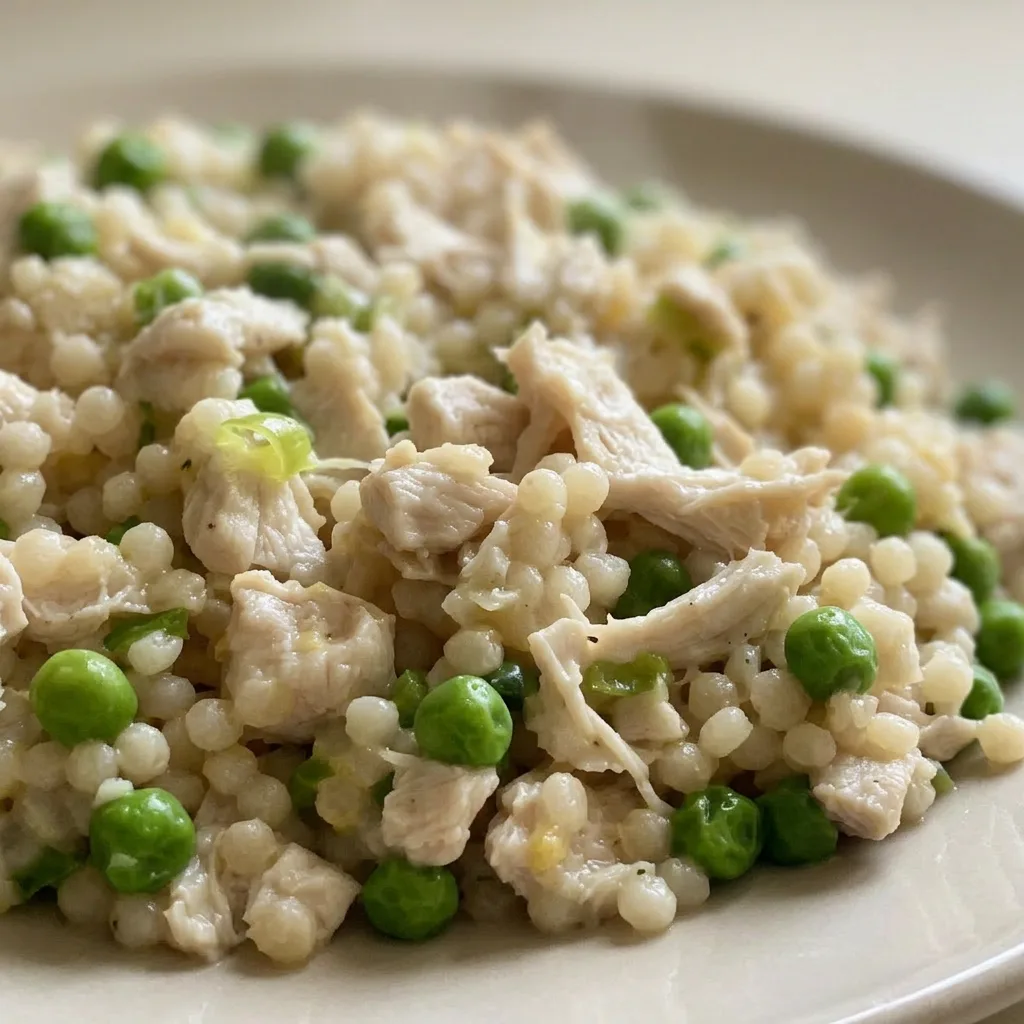
Prep: 15 min · Cook: 10 min · Total: 25 min · Servings: 4 · Calories: 500 kcal
Ingredients That Matter
Israeli (pearl) couscous: Look for large, pearl-shaped couscous; it holds its shape better than fine couscous and stays chewy.
Lemon zest: Zest the lemons before juicing: the oils are in the colored part only, so avoid the white pith.
Parmesan cheese: Buy a block and grate it yourself; pre-shredded has anti-caking agents that won’t melt smoothly.
Frozen peas: Thaw them for about an hour at room temp; straight-from-freezer peas will cool the dish and turn mushy.
How to Cook Israeli Couscous with Chicken and Peas
Toast the Couscous
Heat olive oil over medium-high, add couscous, and stir. The pearls start pale beige and turn golden with a nutty smell, that’s your cue, about 2 to 3 minutes. Too long and the oil smokes.
Simmer with Lemon
Pour in broth, zest, juice, salt, and pepper. Bring to a boil, then lower heat to medium-low. Simmer until couscous is al dente, about 8 minutes.
You want some liquid left, a loose sauce, not dry.
Finish Off Heat
Remove pot from burner. Stir in ½ cup Parmesan, scallions, peas, and chicken. The cheese melts smoothly into the warm liquid.
If the sauce is thin, add the remaining ¼ cup cheese. Serve with extra Parmesan on top.
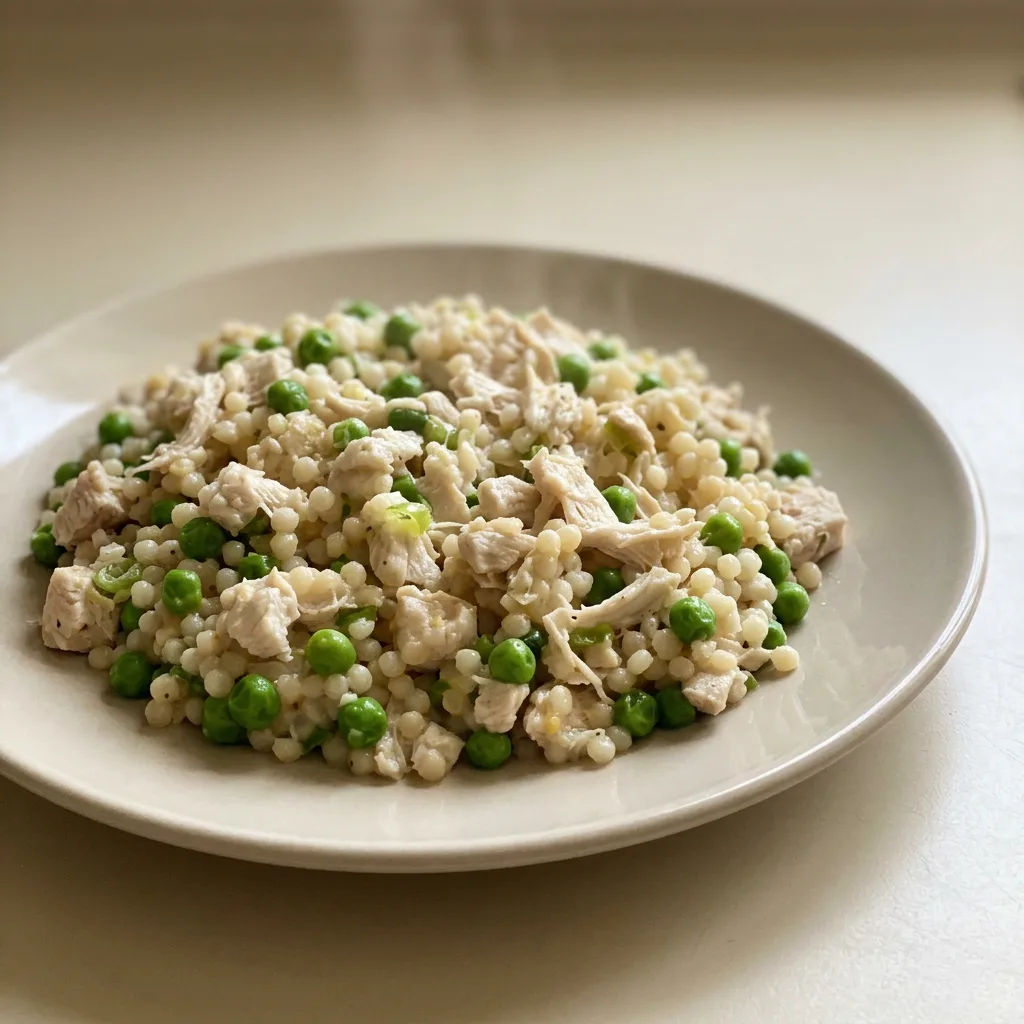
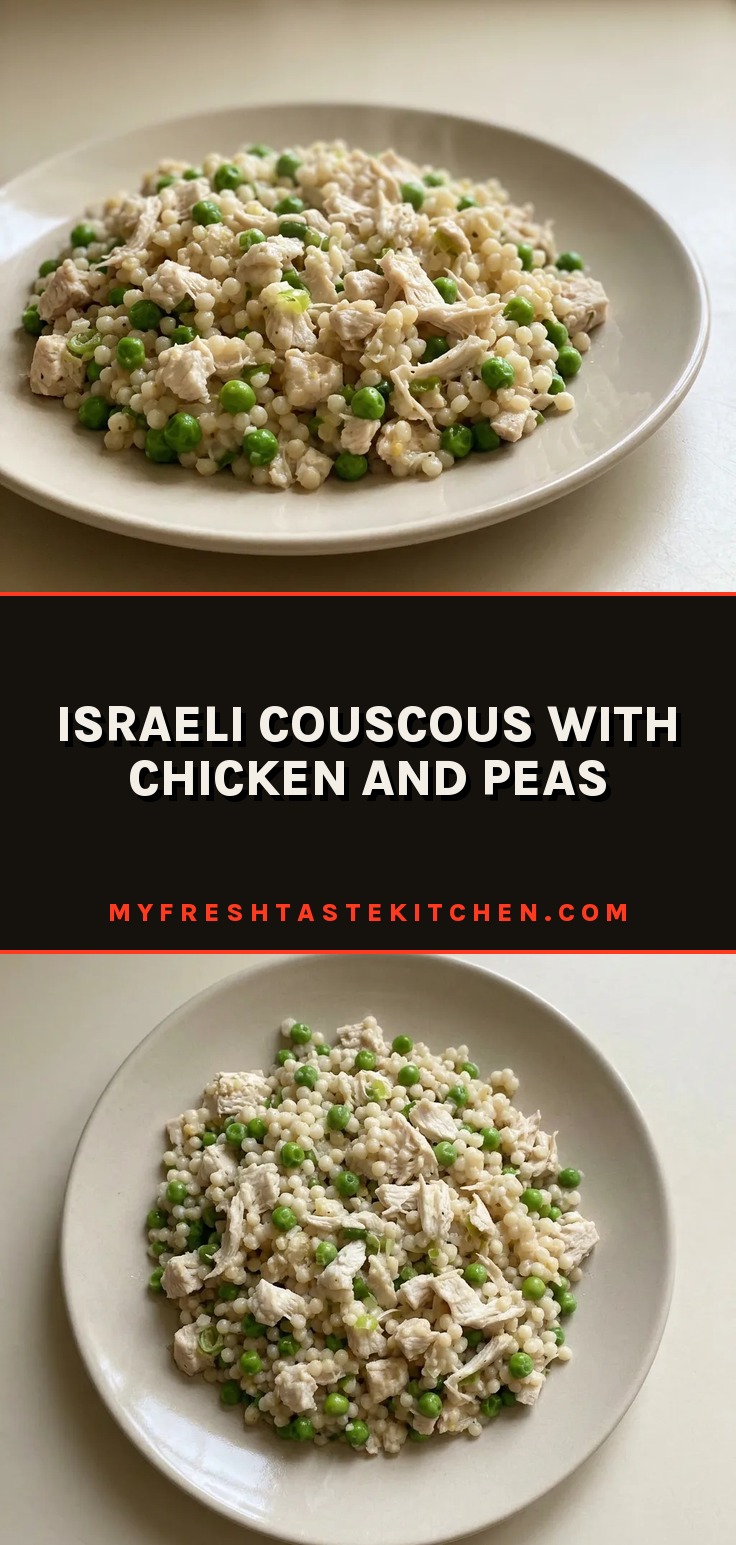
Israeli Couscous with Chicken and Peas
Ingredients
Method
Toast couscous:
Heat olive oil in a large saucepan over medium-high heat. Add couscous and stir frequently until lightly toasted, about 2 to 3 minutes.Simmer couscous:
Pour in chicken broth, add lemon zest, lemon juice, salt, and pepper; stir to blend. Bring to a boil, then lower heat to medium-low and simmer until couscous is al dente, roughly 8 minutes. (Some liquid should remain for the sauce.)Mix in ingredients:
Mix in ½ cup Parmesan cheese, scallions, peas, and chicken until thoroughly combined. If the sauce appears too thin, incorporate an additional ¼ cup Parmesan cheese.Serve with Parmesan:
Serve right away, topping with extra grated Parmesan cheese if desired.
Notes
Storage and Serving
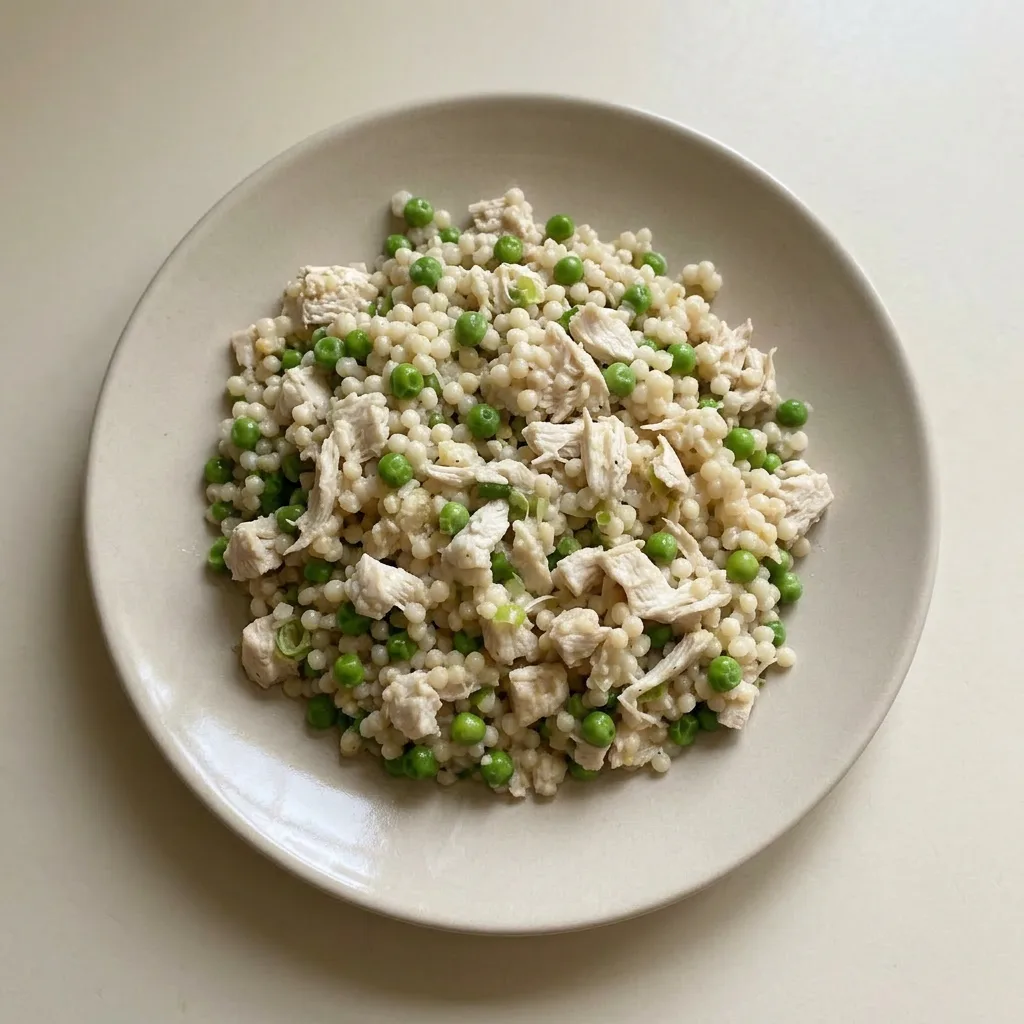
Serve this dish right away for the best texture: the couscous is al dente, the peas are bright, and the scallions stay crisp. Leftovers keep in a sealed container in the fridge for up to 3 days. As it sits, the couscous absorbs remaining liquid and softens.
To restore creaminess, add a splash of chicken broth when reheating. Freezing is not recommended; the couscous turns mushy upon thawing, and the dairy in the Parmesan can separate.
If you must freeze, do so before adding the cheese, peas, and scallions, then add those fresh after reheating. For make ahead, cook the couscous through step 2, cool, and refrigerate for up to 2 days. When ready to serve, reheat with a splash of broth, then finish with cheese, scallions, peas, and chicken as directed.
Three Swaps That Work in This Couscous Dish
Chicken: Shredded rotisserie turkey or crumbled extra-firm tofu. Turkey mimics the texture of chicken closely; tofu will be softer and less savory, so season it well.
Peas: Chopped asparagus (blanched) or frozen edamame (thawed). Asparagus stays firmer than peas; edamame adds a similar pop and sweetness without the mush risk.
Parmesan: Pecorino Romano (same amount) or nutritional yeast (start with 2 tablespoons, add to taste). Pecorino gives a sharper, saltier finish. Nutritional yeast won’t melt but adds a nutty, cheesy flavor, expect a thinner sauce.
Tips
- Thaw frozen peas by placing them in a colander and running cool water over them for a minute, then drain well before adding to the dish. This prevents them from cooling the couscous too much and keeps their color bright.
- If you need to make this dish ahead, cook the couscous through step 2, cool, and refrigerate for up to 2 days. When ready to serve, reheat with a splash of broth, then finish with cheese, scallions, peas, and chicken as directed.
Frequently Asked Questions
Can I make this dish ahead of time and reheat it?
Yes, but with a caveat. Cook the couscous through step 2, then refrigerate for up to 2 days. When reheating, add a splash of broth to restore creaminess, then finish with cheese, scallions, peas, and chicken off the heat.
If you add the dairy and greens early, the peas dull and the cheese can separate.
Why is my couscous mushy or undercooked?
Mushy usually means you skipped toasting or simmered too long. That oil coat in step 1 keeps the pearls separate; without it, they absorb water too fast and turn sticky. Undercooked means the heat was too high and liquid boiled off before the center softened, check that the simmer is gentle and you have enough broth left at 8 minutes.
What’s the difference between Israeli couscous and regular couscous in this recipe?
Israeli (pearl) couscous is larger, chewier, and holds its shape during the 8-minute simmer, it’s the right grain for this dish’s al dente bite. Regular couscous is tiny and cooks in 5 minutes off heat; it would turn to paste if toasted and simmered the same way. Stick with pearl couscous here or you’ll lose the texture.
