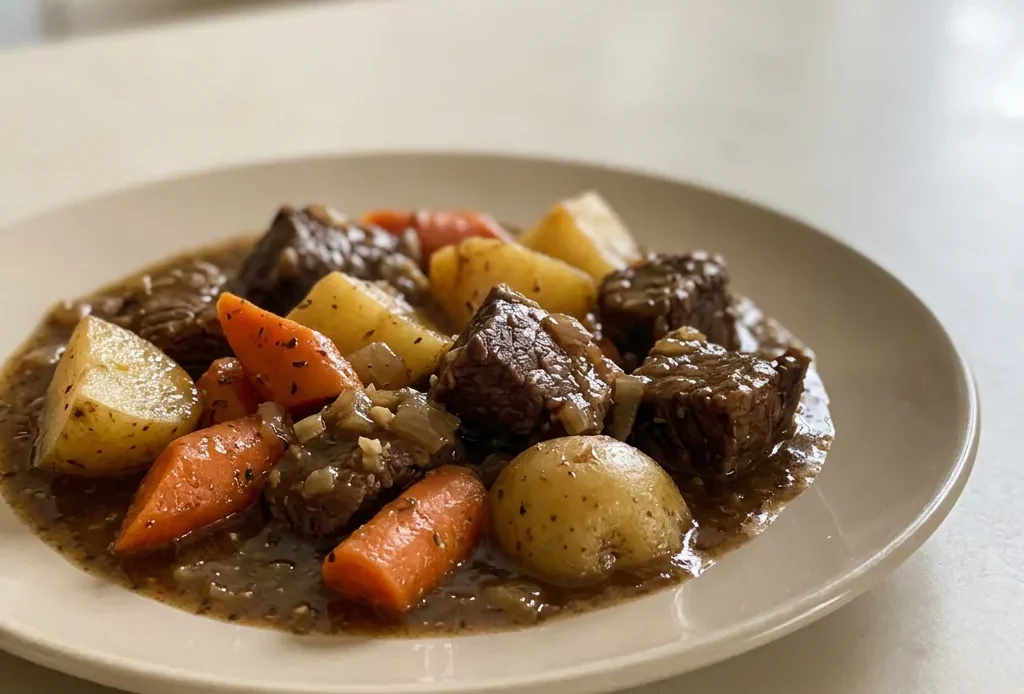
The difference between good beef stew and great beef stew comes down to one thing: how you treat the meat before it hits pressure. Brown it in batches, undisturbed, and you build a crust that no spice blend can fake.
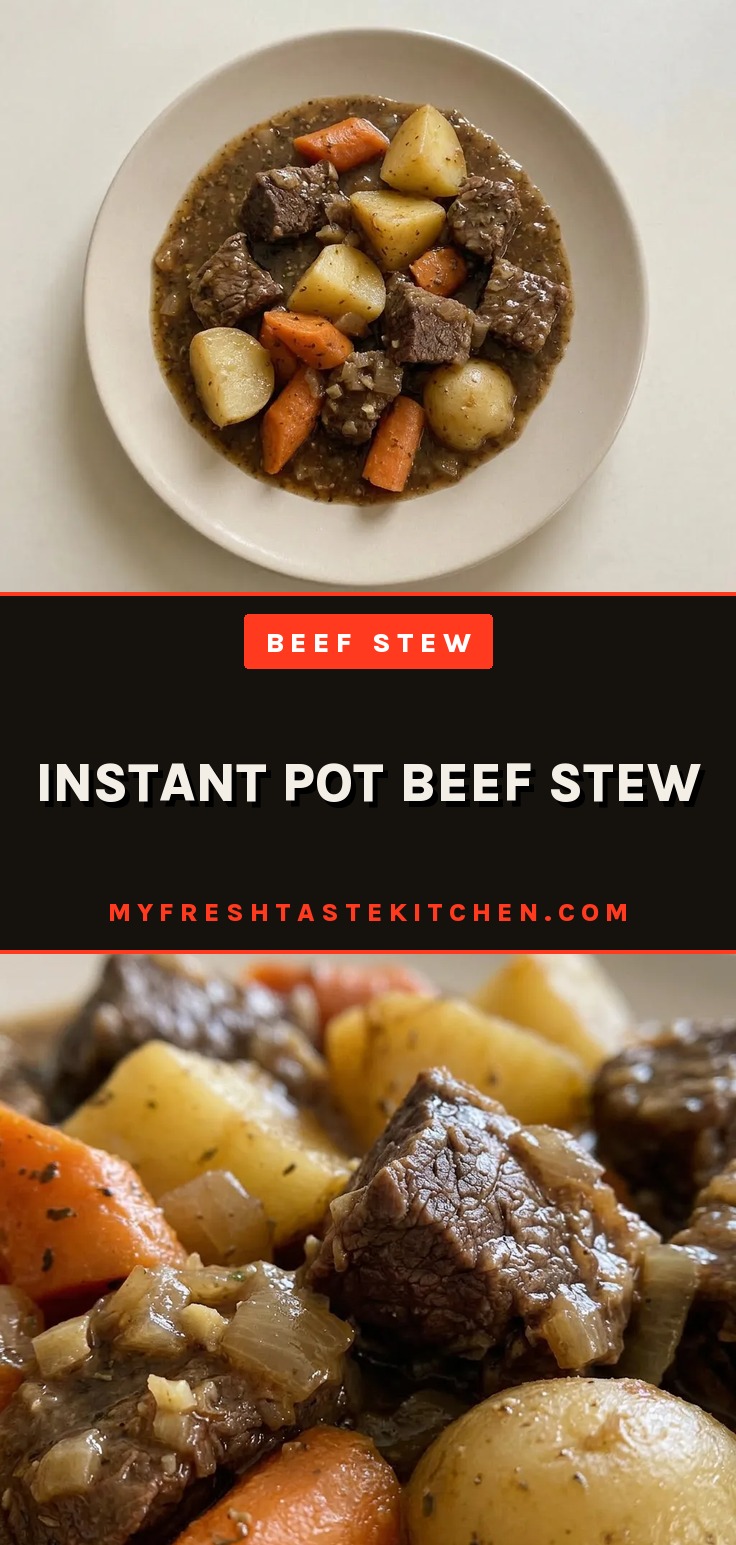
Crowd the pot and you get gray, steamed chunks with a flat broth. This instant pot beef stew respects that sear, then layers vegetables on top so they steam, not boil, into firm-tender pieces. It’s a stew that tastes like it simmered all afternoon, but the pressure cooker does the work in a fraction of the time.
Why brown the beef in batches?
Crowding the pot drops the pan temperature, and the meat steams instead of sears. A single layer with space between pieces lets heat concentrate on the surface, browning each side in about 4 minutes undisturbed. That caramelized crust, the fond sticking to the pot, is where deep beef flavor comes from.
If you rush and dump all the meat in at once, you get gray, boiled chunks and a pale stew.
Why layer vegetables on top without stirring?
In a pressure cooker, vegetables above the liquid cook mostly from steam, not by simmering in broth. That keeps carrots and potatoes firm-tender, not mushy.
If you stir them into the liquid before sealing, they soak up moisture and break down during the high-pressure cycle. Layering them on top of the beef and broth means they soften just enough, you still get distinct pieces when you spoon them out.
Why natural release then a cornstarch slurry?
A full quick release after pressure cooking would yank moisture from the meat, making it dry and stringy. Letting it sit for 10 minutes of natural release lets the muscle fibers relax and reabsorb some liquid.
After that, venting the remaining steam stops the vegetables from overcooking. The slurry you stir in afterward, cornstarch and cold water, thickens the broth into a rich gravy without needing to boil the stew for another 20 minutes, so the beef stays tender and the potatoes keep their shape.
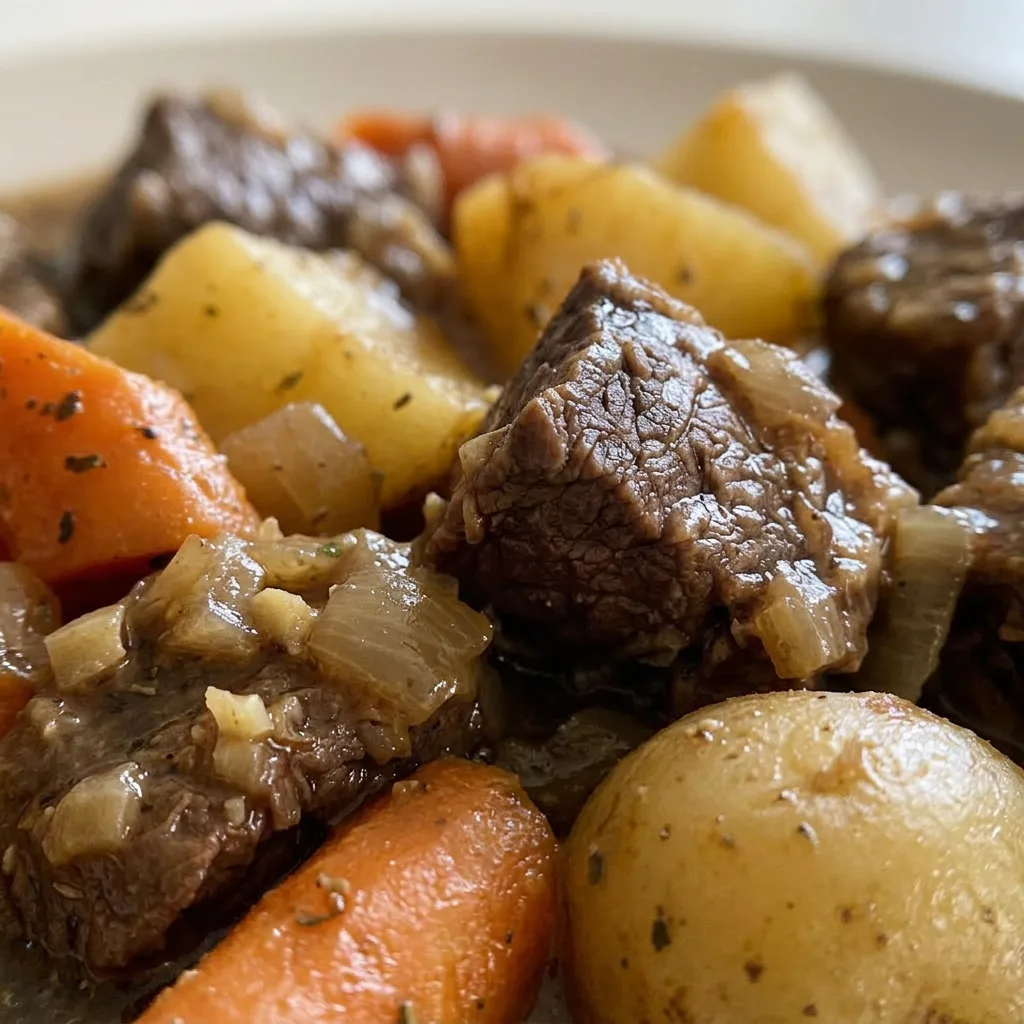
Prep: 25 min · Cook: 35 min · Total: 1 hr 25 min · Servings: 6 · Calories: 440 kcal
Choosing the Right Beef and Vegetables
Beef chuck roast or stew meat: Chuck is ideal: marbled enough to stay tender after pressure cooking, but trim large fat pieces.
Yellow onion: A standard yellow onion handles the long cooking and adds savory depth without turning sweet.
Beef stock or broth: Unsalted so you control the salt; low sodium is fine. The fond alone gives plenty of flavor.
Yukon gold potatoes: Firm, waxy potatoes hold up through pressure cooking. Russets would fall apart.
Carrots: Cut them on the diagonal for more surface area and a uniform cook with the potatoes.
How to nail the beef browning every time
Sear the first batch
Heat 1 tablespoon oil in the Instant Pot on sauté. Arrange half the beef in a single layer, if pieces overlap, shift them.
Season with half the salt and pepper. Leave untouched for 4 minutes; the bottoms should release easily when you nudge them with a spatula.
If they stick, let them cook another 30 seconds.
Sear the second batch
Add the remaining oil and repeat with the second half of beef, seasoning with the rest of the salt and pepper. Again, 4 minutes per side, undisturbed. Transfer the browned meat to the same bowl; the fond on the pot bottom should be dark brown but not burnt.
Sauté the aromatics
Cook the chopped onion in the hot pot for 2 to 3 minutes, scraping up any fond with a wooden spoon. The onion should soften and turn translucent. Add garlic and stir for 30 seconds until fragrant, don’t let it brown or it will turn bitter.
Deglaze and build the broth
Pour in 1 cup of beef stock and scrape the bottom clean, all the browned bits should dissolve. Then add the remaining stock, tomato paste, Worcestershire sauce, Italian seasoning, thyme, and bay leaf. Stir until the tomato paste dissolves; the liquid should be a uniform reddish-brown.
Layer vegetables on top
Return the beef and its juices to the pot. Arrange the carrots and potatoes on top in an even layer, do not stir them in. The vegetables should sit above the liquid level; they’ll cook from steam, remaining firm-tender.
Pressure cook and release
Lock the lid, set the valve to sealing, and pressure cook on high for 35 minutes. After cooking, let the pressure release naturally for 10 minutes, you’ll see the float valve drop partway. Then quick release any remaining steam using a long spoon to turn the valve.
Thicken the stew
Discard the bay leaf. In a small bowl, whisk cornstarch and water into a slurry.
Pour it into the pot, set the sauté function, and stir gently until the broth thickens, about 2 to 3 minutes. The liquid should coat the back of a spoon; avoid breaking up the vegetables.
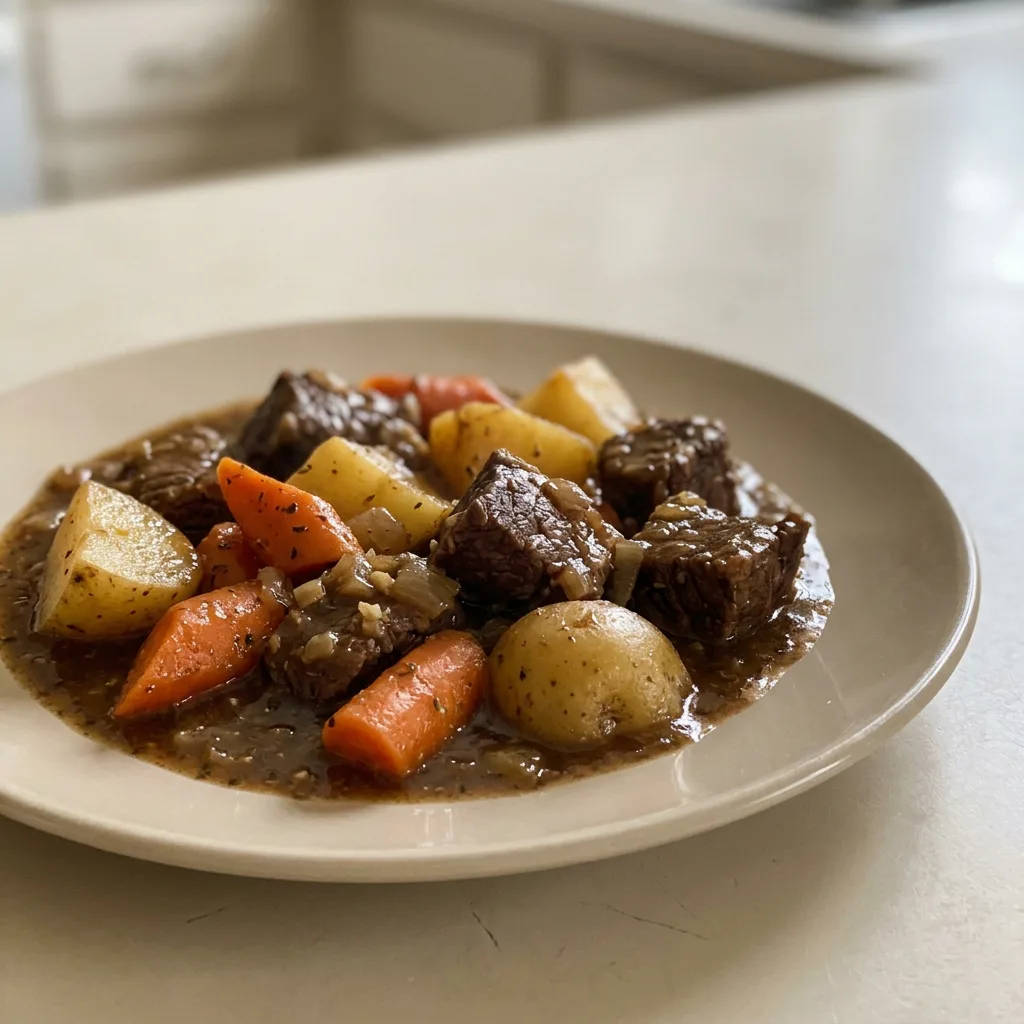
Instant Pot Beef Stew
Ingredients
Method
Dice Beef into Cubes:
If the beef is a chuck roast rather than pre-cut stew meat, dice it into 1 1/2 to 2 inch cubes.Brown First Batch:
Set the Instant Pot to sauté and warm 1 tablespoon of olive oil. Once hot, arrange half the beef in a single layer and season with half the salt and pepper.Flip and Brown:
Let the beef brown undisturbed for 4 minutes, until it releases easily from the pot bottom. Flip and brown the other side for about 4 minutes. Transfer to a clean bowl.Brown Second Batch:
Pour the remaining 1 tablespoon olive oil into the pot. Brown the second half of the beef, seasoning with the remaining salt and pepper, roughly 4 minutes per side. Move to the bowl with the first batch.Sauté Onion and Garlic:
Sauté the chopped onion in the pot for 2-3 minutes until it softens. Hit cancel, add the minced garlic, and stir for 30 seconds.Deglaze and Add Broth:
With the pot still hot, deglaze by adding 1 cup of beef broth and scraping up any browned bits. Then pour in the remaining 2 cups of broth.Add Seasonings and Beef:
Stir in the tomato paste, Worcestershire sauce, Italian seasoning, thyme, and bay leaf. Return the beef and any accumulated juices to the pot. Arrange the carrots and potatoes on top without stirring.Pressure Cook 35 Minutes:
Lock the lid, set the steam release valve to sealing, and press Manual/Pressure Cook at high pressure for 35 minutes. It will take 10-15 minutes to pressurize. After cooking, let the pressure release naturally for 10 minutes, then quick release any remaining steam with a long spoon.Discard Bay Leaf:
Open the lid and discard the bay leaf.Thicken with Cornstarch:
In a small bowl, combine 2 tablespoons cornstarch with 2 tablespoons water. Pour this slurry into the pot, turn on sauté, and simmer while stirring occasionally until the stew thickens. Avoid breaking up the vegetables.
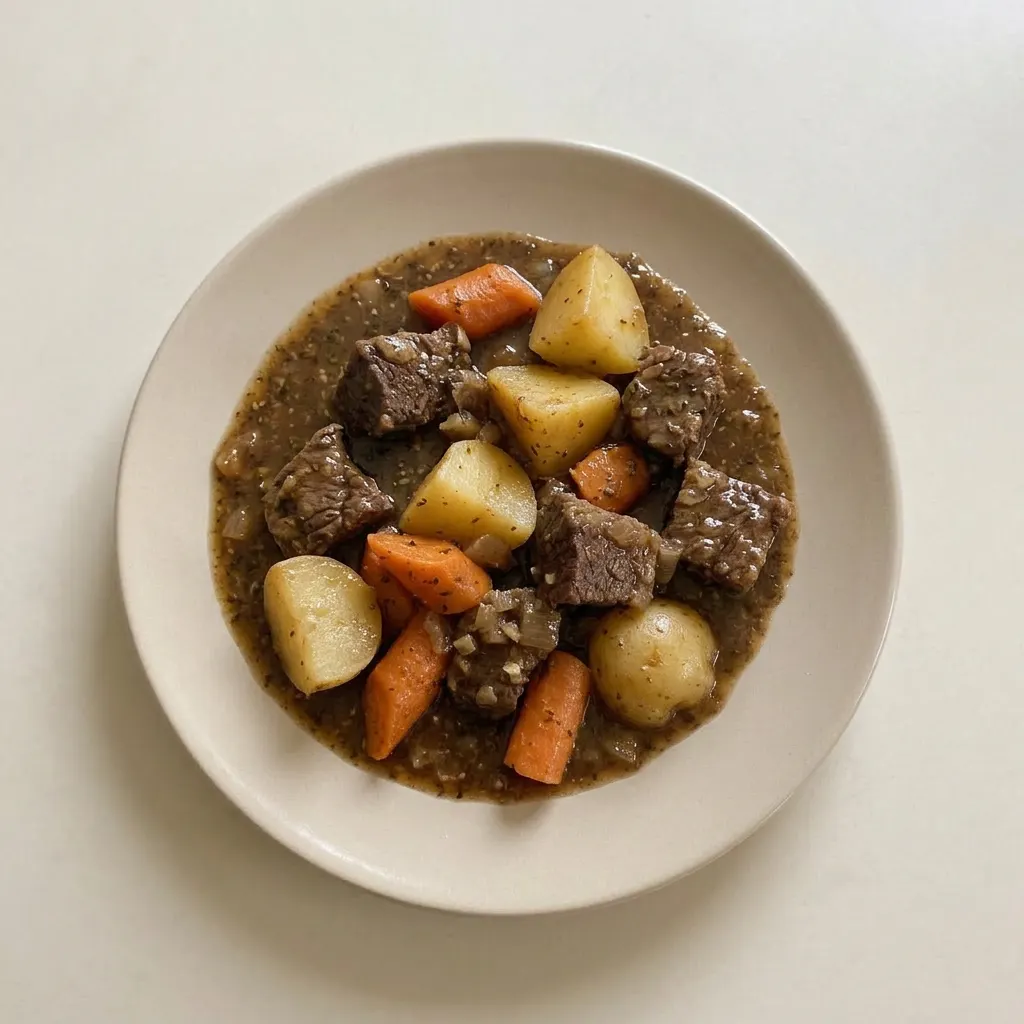
Beef and Potato Swaps That Work (and One That Doesn’t)
Beef chuck roast: Boneless short ribs or brisket. These cuts have enough connective tissue and fat to stay moist after pressure cooking. Avoid lean cuts like sirloin or round, they’ll come out dry and tough.
Yukon gold potatoes: Red potatoes or russets. Red potatoes hold their shape similarly.
Russets will break down more, thickening the broth but leaving fewer distinct potato pieces, fine if you don’t mind a chunkier stew texture. Skip waxy new potatoes; they stay too firm and don’t absorb the broth’s flavor.
Unsalted beef stock: Low-sodium beef broth, or water with a teaspoon of Better Than Bouillon. Switching to water alone will flatten the beef flavor. Bouillon restores it.
If using regular salted broth, reduce added salt to taste.
Storing and Serving Instant Pot Beef Stew
Store cooled stew in an airtight container in the fridge for up to 4 days. The cornstarch thickener continues to set as it sits, so the stew will be noticeably thicker on day two.
That’s fine. Just add a splash of beef broth or water when reheating to loosen it to your liking.
Reheat gently on the stovetop over medium-low, stirring occasionally, or in the microwave in 30-second bursts. The vegetables will soften further over time, so the earlier you eat it, the firmer they’ll be. For make ahead, the stew is best within 2 days.
To freeze, omit the potatoes from the base recipe and add them fresh when reheating; potatoes turn grainy after thawing. Freeze the meat and broth in a freezer-safe container for up to 3 months.
Thaw overnight in the fridge, then reheat with fresh potatoes. Serve as soon as it’s hot; the texture peaks within 30 minutes of reheating.
Tips
- Pat the beef dry with paper towels before browning; moisture on the surface creates steam that prevents a deep sear. A dry surface hits higher heat and builds more fond, which enriches the broth.
- Cut the potatoes into 1½-inch pieces, not smaller; larger chunks hold their shape better under pressure and don’t dissolve into the broth, giving you distinct potato pieces in the finished stew.
Frequently Asked Questions
Can I make this stew ahead of time and reheat it?
Yes, the stew keeps in the fridge for up to 4 days and thickens further as it sits. Reheat gently on the stovetop over medium-low with a splash of broth or water to loosen it; the texture peak is within 30 minutes of reheating. For longer storage, freeze the meat and broth without potatoes for up to 3 months, then add fresh potatoes when reheating.
Why did my beef come out tough instead of tender?
Most likely you skipped browning the meat in batches, crowding the pot steams the beef instead of searing it, and without that caramelized crust you lose flavor and the meat can end up dry. Another cause: you may have quick-released the pressure fully instead of letting it natural release for 10 minutes, which yanks moisture from the muscle fibers. Chuck has enough connective tissue for 35 minutes at high pressure; if it’s still tough, the chunks were too large or the pot didn’t reach full pressure.
Can I use a different cut of beef besides chuck roast?
Boneless short ribs or brisket work well because they have similar marbling and collagen that breaks down during pressure cooking. Lean cuts like sirloin or round will turn out dry and tough, so avoid those. If you swap, cut the meat into 1½- to 2-inch pieces just like chuck and follow the same browning and cook times.
