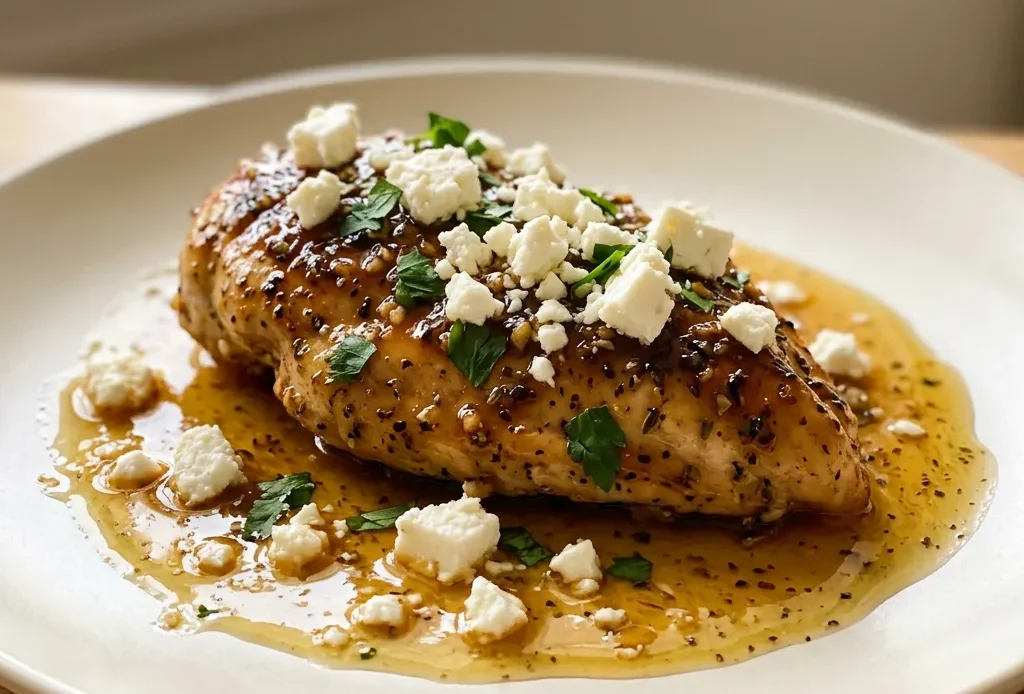
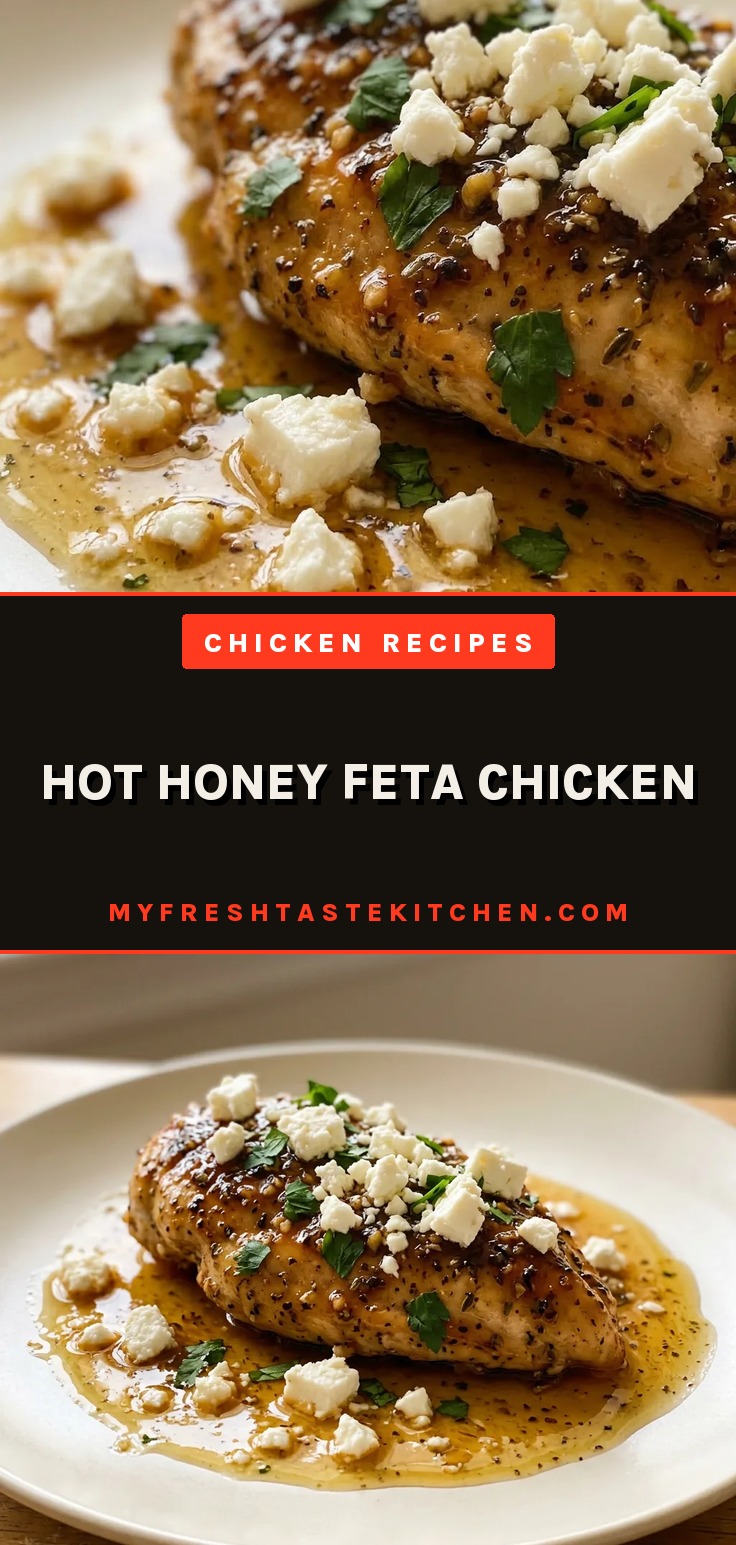
The success of this dish hinges on the order of baking then broiling feta, not the other way around. A lot of recipes dump cheese on raw chicken and hope for the best, but that gives you dry, crumbly feta and unevenly cooked meat. Here, the chicken bakes first in a hot honey glaze until sticky and caramelized, then a quick broil melts the feta into a creamy blanket.
The saltiness of the cheese against the sweet heat is the whole point. Get that right, and this hot honey feta chicken is a 30-minute dinner that actually delivers on contrast.
The glaze reduces into a tacky coating while the feta stays soft, and the pan juices tie it all together.
Why broil feta after the chicken is baked?
Feta goes on after the chicken hits 165°F. If you added it earlier, it would overcook into rubbery bits. A 2- to 3-minute broil melts the cheese into a creamy, tangy blanket without drying it out.
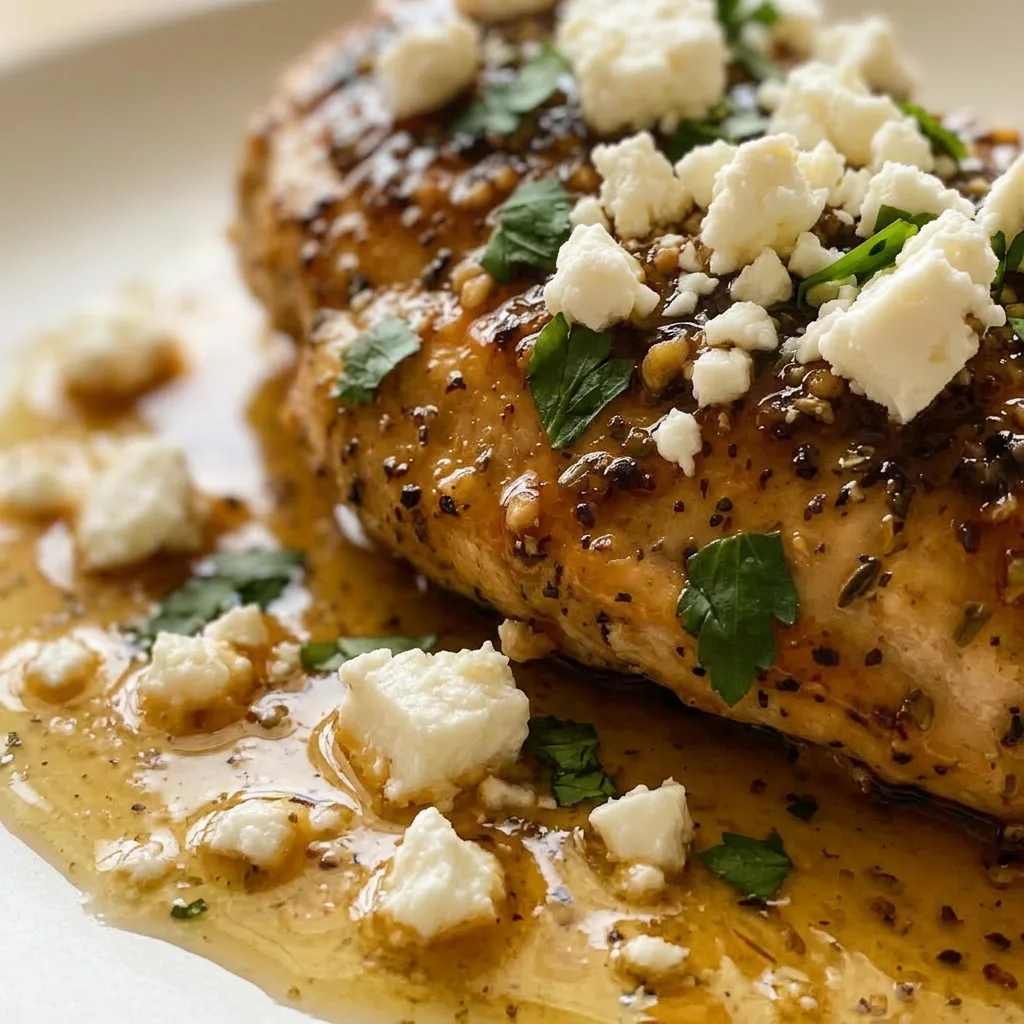
That saltiness cuts right through the sweet heat from the honey and hot sauce. You get a soft, almost fondue-like crust on top of the chicken.
The contrast is the point: sticky glaze, juicy meat, cool crumbles that turn silky. This works best with block feta packed in brine; pre-crumbled dry feta won’t soften the same way.
Watch the broiler, feta bubbles fast, and you want it golden in spots, not browned all over.
How does the honey-hot sauce glaze work?
Honey brings sweetness that caramelizes in the oven, while hot sauce adds heat without vinegar sting. Olive oil carries those flavors and helps the glaze brown evenly. Applied before baking, the marinade reduces into a sticky coating that clings to the chicken.
You don’t dip afterward; the glaze forms during cooking. The sugar in honey hits 400°F and creates that tacky, shiny surface. Hot sauce here is about flavor, not just heat, choose one with a fruity or smoky profile.
The balance is key: too much honey and it’s cloying, too much hot sauce and it overpowers the feta. Taste the marinade raw; it should be sweet with a clear kick.
Why use boneless, skinless chicken breasts?
Boneless breasts cook through in about 25 minutes, so the glaze doesn’t burn before the meat is done. Without skin, the marinade hits every surface directly, no barrier. Even thickness matters: if one end is thicker, it’ll be dry by the time the thin end is safe.
Pound them to an even 1-inch thickness, and they’ll all finish together. Bone-in would require a longer roast, drying out the exterior.
Skin would turn soggy under the wet glaze, not crisp. These breasts stay juicy because the marinade seals the surface fast. The result is tender meat with a concentrated sweet-heat coating, no wasted bits to cut off.
Prep: 10 min · Cook: 30 min · Total: 40 min · Servings: 4 · Calories: 330 kcal
Ingredient Notes for This Dish
Feta cheese: Buy a block packed in brine; pre-crumbled dry feta won’t turn creamy under the broiler.
Hot sauce: Choose one with a fruity or smoky profile for flavor, not just heat.
Chicken breasts: Pound to even 1-inch thickness so they cook through before the glaze burns.
Honey: Raw or clover honey works fine; avoid honey with strong floral notes that clash with hot sauce.
How to build the sticky, salty glaze
Whisk the marinade
Combine honey, olive oil, hot sauce, garlic, lemon juice, and oregano. Taste it, should be sweet with a clear kick, not cloying or watery.
Coat the chicken
Pour the marinade over the chicken in the dish. Turn each piece to coat every surface. The liquid should pool around the meat, not just sit on top.
Bake until done
Roast at 400°F for 22 to 28 minutes. The glaze will darken and bubble. Check temp at 22 minutes; it should hit 165°F.
If the thin ends brown too fast, the heat is too high.
Add feta and broil
Scatter crumbled feta over the baked chicken. Broil 2 to 3 minutes. Watch closely, feta bubbles quickly.
You want golden spots, not a solid brown crust. Stop when it looks molten.
Finish with parsley and pan juices
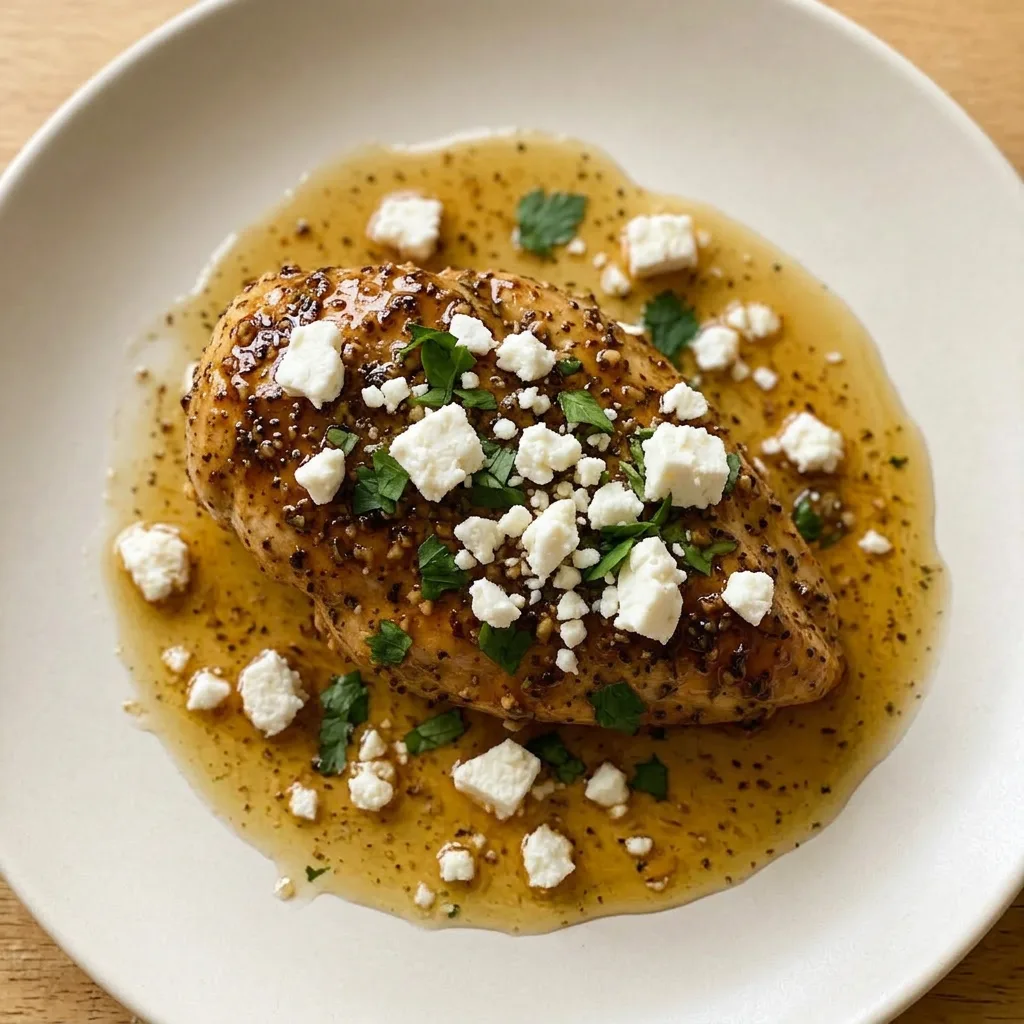
Sprinkle fresh parsley on top. Spoon the pan juices over each serving. The juices are sweet-spicy; without them the dish tastes dry.
Use what pools around the chicken.
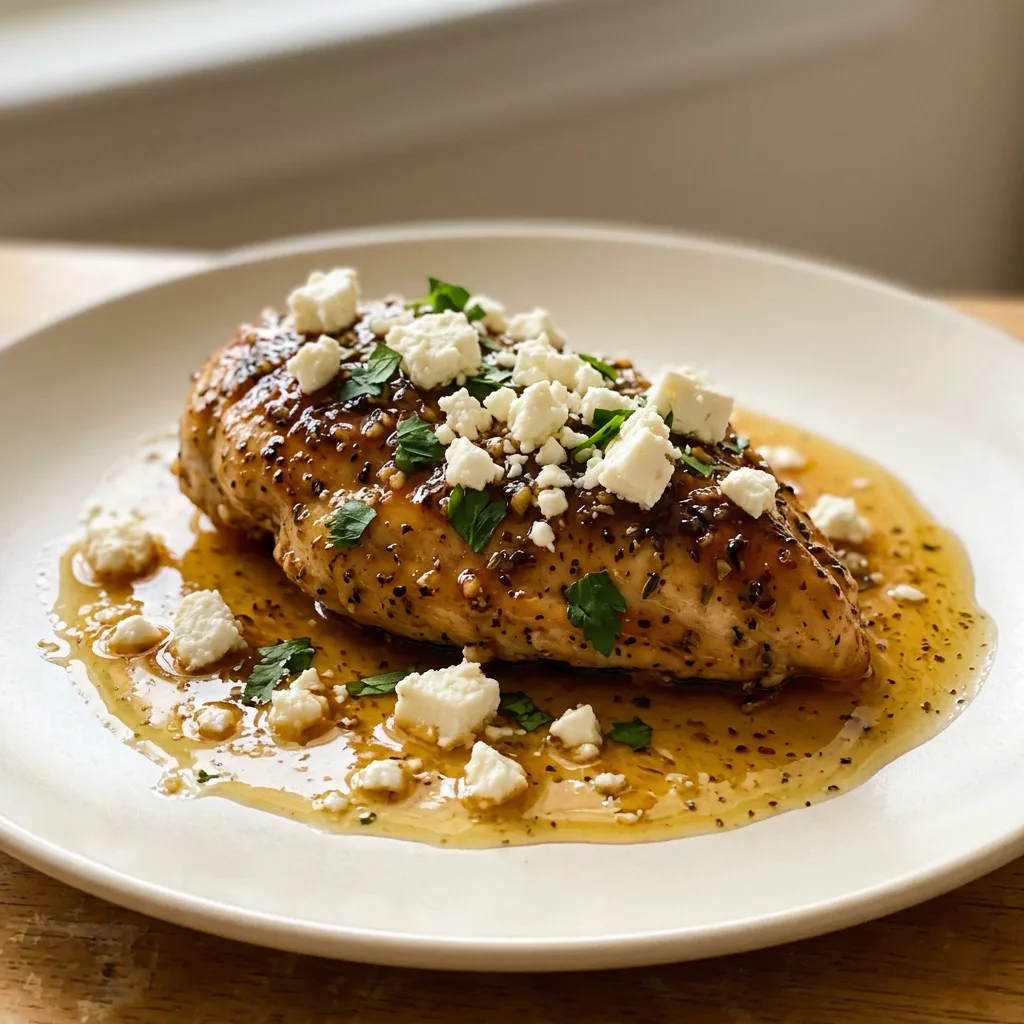
Hot Honey Feta Chicken
Ingredients
Method
Preheat Oven and Coat Dish:
Heat oven to 400°F (205°C). Coat a baking dish lightly with olive oil.Whisk Marinade Ingredients:
Combine honey, olive oil, hot sauce, garlic, lemon juice, oregano, salt, and pepper in a bowl; whisk until smooth.Marinate Chicken Breasts:
Arrange chicken breasts in the oiled dish and cover thoroughly with the prepared marinade.Bake Chicken Until Done:
Cook for 22–28 minutes, until the chicken’s internal temperature reaches 165°F (75°C).Add Feta and Broil:
Take the chicken out, scatter crumbled feta on top. Broil for 2–3 minutes after returning to the oven.Garnish and Serve:
Top with fresh parsley and drizzle pan juices over each portion before serving.
Storage and Serving
This dish is best eaten right after broiling while the feta is molten and the chicken is juicy. If you have leftovers, let them cool completely, then transfer to an airtight container. Store in the fridge for up to 3 days.
The feta will firm up and the chicken may dry out slightly on reheating. To bring it back, reheat gently in a 350°F oven for 10 to 12 minutes, covered with foil, or in a microwave at 50% power in 30-second bursts.
Add a splash of water or extra honey to restore moisture. The parsley garnish should be added fresh before serving leftovers; it wilts quickly. Do not freeze the assembled dish; the feta turns grainy and the chicken loses texture.
You can freeze the baked chicken without feta for up to 2 months, then thaw, add feta, and broil.
Tips
- Pat the chicken dry with paper towels before marinating; excess moisture dilutes the glaze and prevents browning.
How to swap feta, hot sauce, or honey without breaking the glaze
Feta cheese: Goat cheese or ricotta salata. Goat cheese melts creamier and a bit tangier; ricotta salata stays firmer and less salty. Both give you a soft, salty contrast to the sweet heat, but goat cheese behaves more like feta under the broiler.
Hot sauce: Skip hot sauce for a milder version. The glaze loses its heat and fruity depth. To keep balance, double the lemon juice and add 1/2 teaspoon smoked paprika for a gentle smoky note without spice.
Honey: Maple syrup or agave nectar. Maple syrup adds a woody sweetness and a thinner glaze; agave is milder and sweeter.
Both caramelize similarly but won’t get quite as sticky. Use the same amount as honey.
Frequently Asked Questions
Can I make this dish ahead of time and reheat it?
Yes, you can, but the feta won’t be molten on reheat. Cool leftovers completely, store in an airtight container up to 3 days. Reheat covered in a 350°F oven for 10 to 12 minutes or microwave at 50% power in 30-second bursts.
Add a splash of water or extra honey to restore moisture, and garnish with fresh parsley after reheating.
How do I prevent the chicken from drying out if I use thicker breasts?
Pound thicker breasts to an even 1-inch thickness before marinating. This ensures they cook through in the 22 to 28 minute window without the thin ends drying out. If you skip that, the outside will overcook before the center hits 165°F.
Use a meat thermometer to check the thickest part.
Is this dish very spicy, and can I adjust the heat level without changing the recipe?
It’s moderately spicy from the hot sauce, but you can cut the heat without breaking the glaze. Swap the hot sauce for a milder version; the glaze will lose the fruity depth, so double the lemon juice and add 1/2 teaspoon smoked paprika to balance. Alternatively, use less hot sauce and replace with extra olive oil and a pinch of cayenne to control the kick.