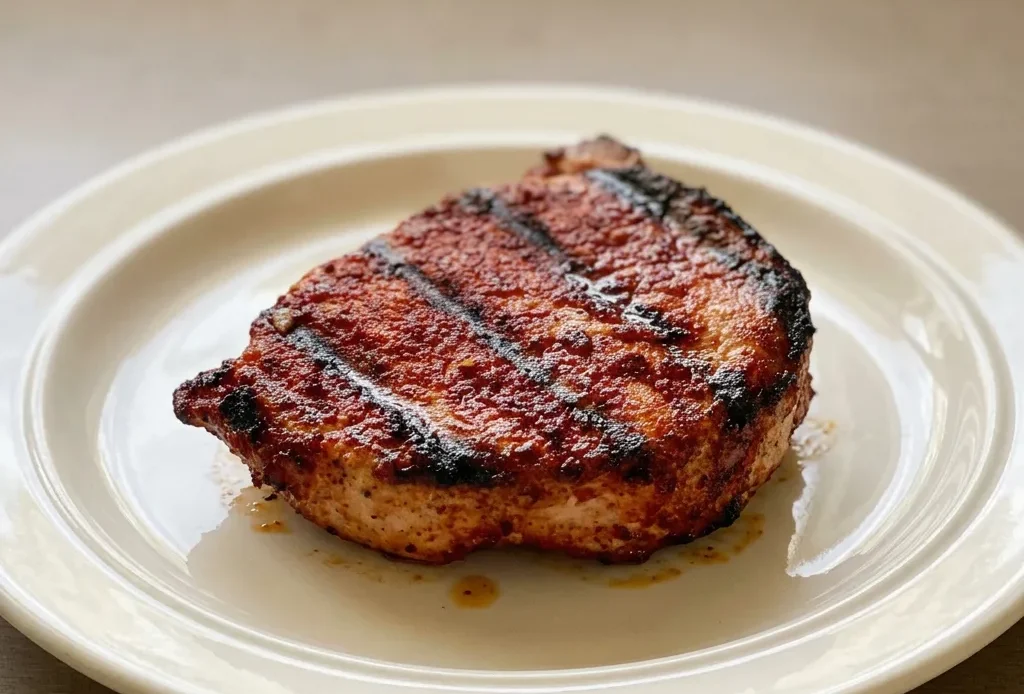
This isn’t a dry, gray pork chop. This is a juicy, caramelized, smoky one, the kind that makes you wonder why you ever bothered with anything else. The trick isn’t a fancy marinade or a secret spice blend; it’s a two-zone fire and a simple dry rub that builds a deep crust while the inside stays tender.
These grilled pork chops come off the grill with a mahogany sear, a hint of sweetness from the brown sugar, and a warmth from smoked paprika and chili that lingers. No flips, no fuss, just a handful of ingredients and a grill that does the work.
If you’ve struggled with pork chops before, this method fixes it.
Two zones solve the thick chop problem
A 1-inch pork chop needs two distinct heat zones because you’re fighting two different timers. High heat alone will char the outside while the center stays raw; low heat alone won’t give you that browned crust. The two-zone setup, one side at medium-high, the other at medium-low, lets you sear first, then finish gently.
Searing over direct heat builds that mahogany crust and deep flavor in about 3 minutes per side. Then you move the chop to the cooler side, close the lid, and let it climb to 145°F.
That second phase cooks the interior evenly without burning the exterior. The moment the thickest part hits 145°F, pull it.
That temperature hits the safety mark while keeping the meat juicy.
How the dry rub builds flavor and crust
Brown sugar in the rub does more than sweeten: it caramelizes on the grill, helping form a deep brown, slightly tacky crust. Smoked paprika and chili powder bring warmth and a faint smokiness that lingers. Salt and the other spices, garlic powder, onion powder, ground mustard, black pepper, don’t just sit on the surface; they penetrate the meat during the brief rest before grilling.
You’ll see the pork turn a rich red as you massage the rub in. That color tells you the spices are adhering and the sugar is coating every surface. When the chop hits the grill, that layer browns quickly, sealing in juices and adding a spiced backbone that balances the pork’s natural sweetness.
Resting locks in juiciness you can taste
When you pull a chop off the grill at 145°F, the juices are still moving, press it and they’ll spill out. Resting 5 to 10 minutes lets those juices redistribute throughout the meat.
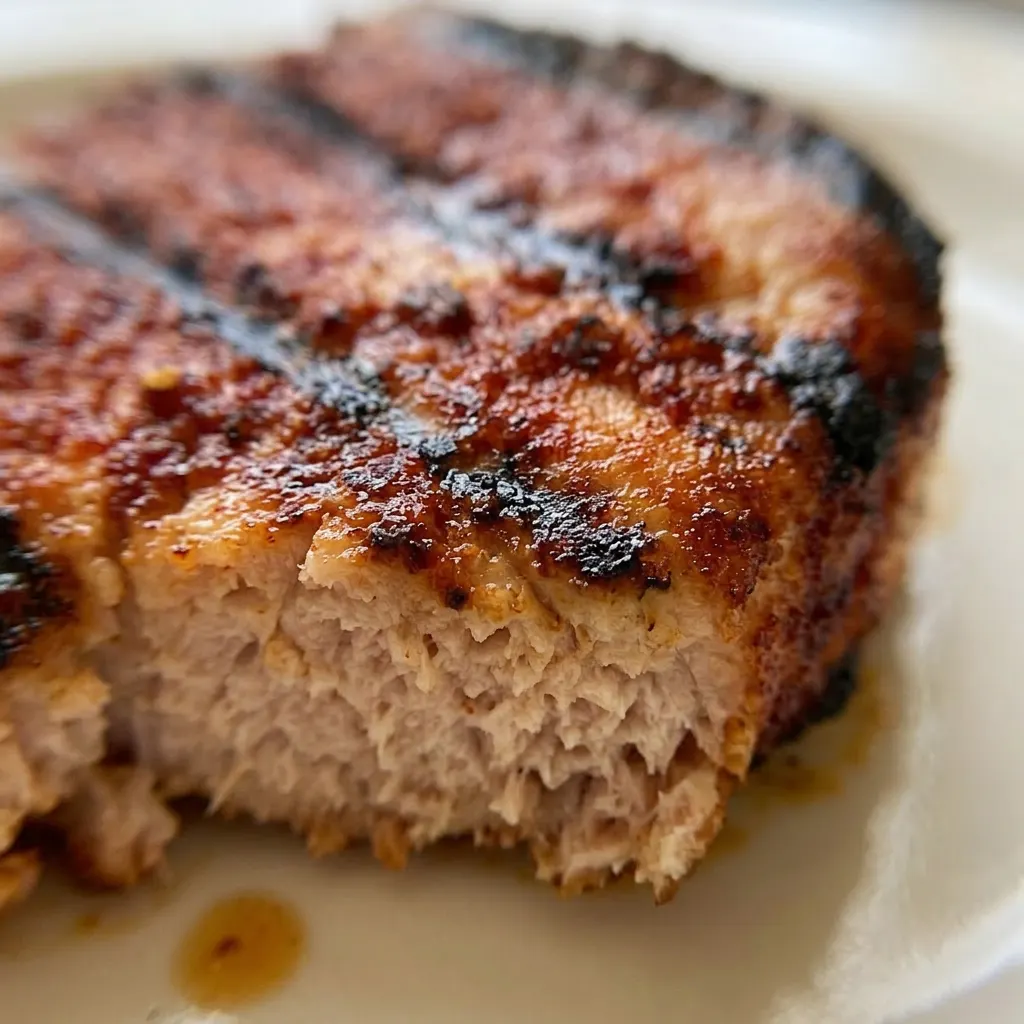
Cut too soon and the board floods with liquid, leaving the pork dry. During the rest, carryover cooking pushes the internal temperature up a few degrees, finishing the cook gently. You’ll notice the chop firms up slightly as it rests; that’s the muscle fibers relaxing and reabsorbing moisture.
The result is a uniformly tender, juicy bite from edge to center. That short wait at the end is the difference between a good grilled chop and a great one.
Prep: 10 min · Cook: 11 min · Total: 21 min · Servings: 4 · Calories: 260 kcal
The dry rub does more than season
Pork chops: Look for 1-inch thick chops, bone-in or boneless, with even marbling so they don’t dry out.
Brown sugar or coconut sugar: Use a finely textured brown sugar; clumpy sugar won’t spread evenly on the meat.
Smoked paprika: Smoked paprika, not sweet or hot; the smokiness is key to the rub’s character.
Chili powder: Standard American chili powder blend works; it’s mild with cumin and garlic.
Ground mustard: Yellow ground mustard powder, not prepared mustard; it adds subtle heat and helps crust form.
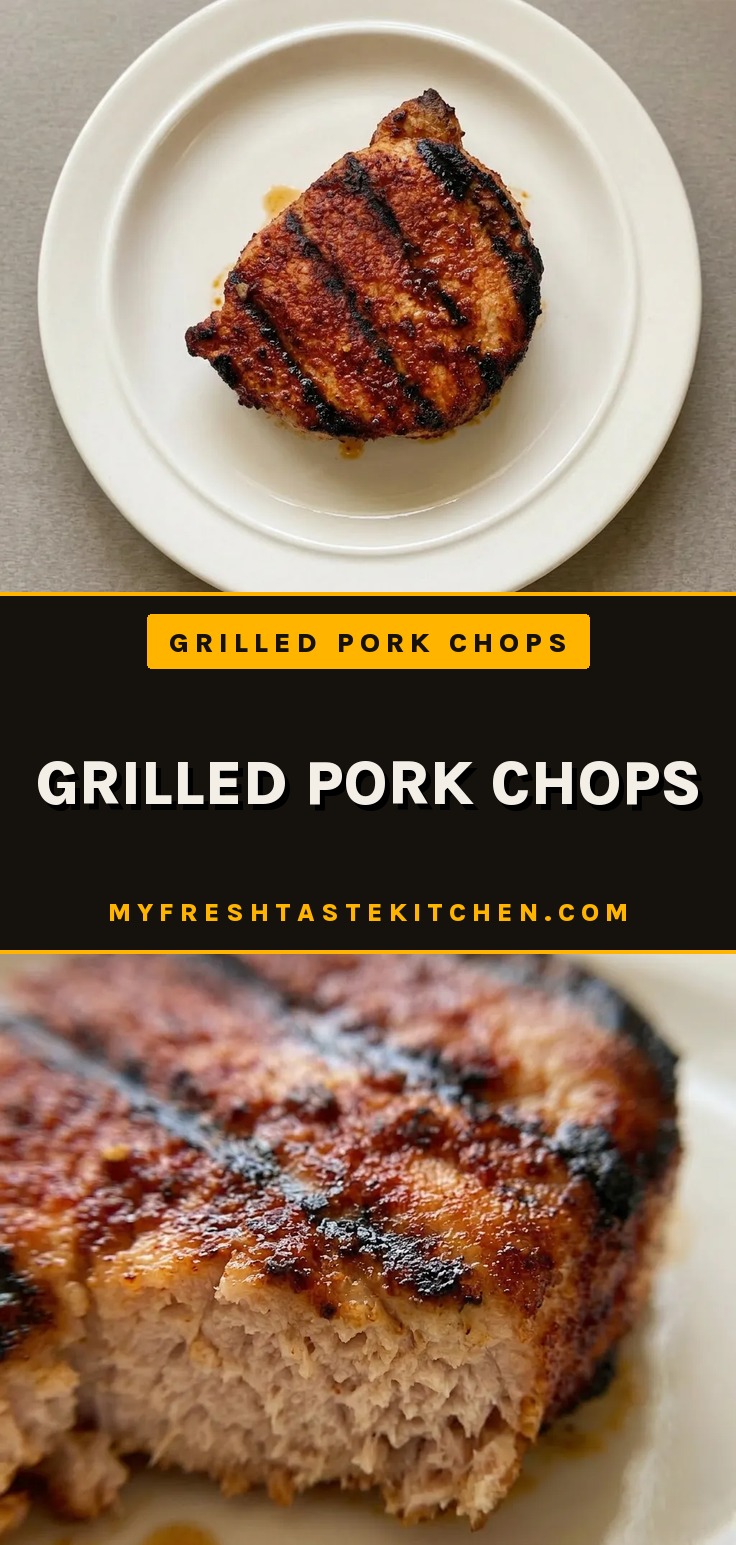
Grill marks aren’t just for looks, they’re your doneness timer
Set up two-zone fire
Get one side of the grill to medium-high (400°F) and the other to medium-low (250 to 300°F). You should feel a distinct difference when you hold your hand over each zone, one sears, the other finishes gently.
Apply the rub generously
Mix the dry rub, then press it into every surface of the chops. The meat should look wet and turn a deep reddish-brown, if it looks patchy, you’ve missed spots. That color means the sugar and spices are clinging evenly.
Sear over high heat
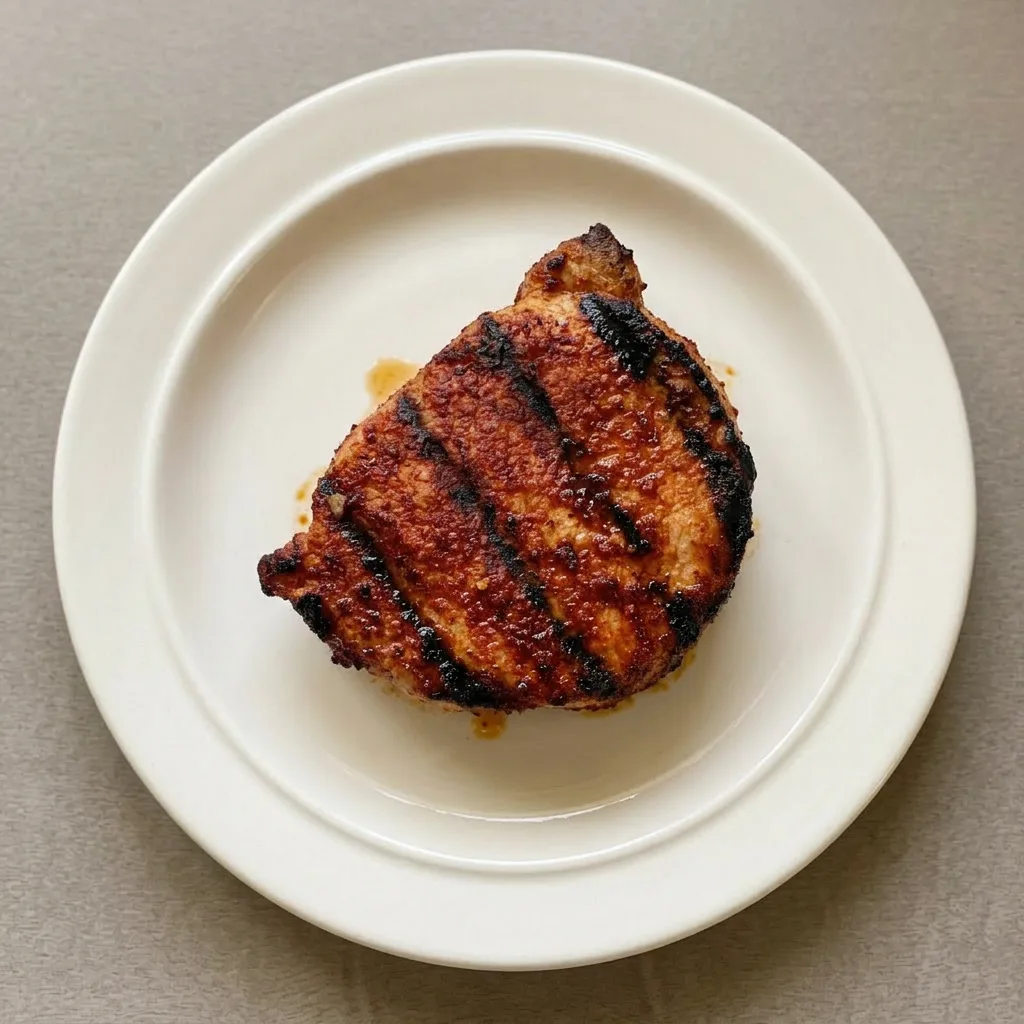
Lay the chops on the hot grate at a 45° angle, close the lid, and cook 3 minutes. Flip and repeat on the other side. You should see dark grill marks and hear a steady sizzle, if the sizzle fades, the heat dipped.
Don’t peek; the lid keeps the heat in.
Finish over low heat
Move the chops to the cooler side, rotating 180° if you want crosshatch marks. Close the lid and cook 5 to 6 minutes. The exterior will darken further but shouldn’t blacken, if it starts to char, your low zone is too hot.
Pull at 145°F, then rest
Check the thickest part with an instant-read thermometer; stop cooking the moment it reads 145°F. Transfer to a cutting board and let rest 5 to 10 minutes. You’ll see juices settle back into the meat, cut too soon and they’ll pool on the board.
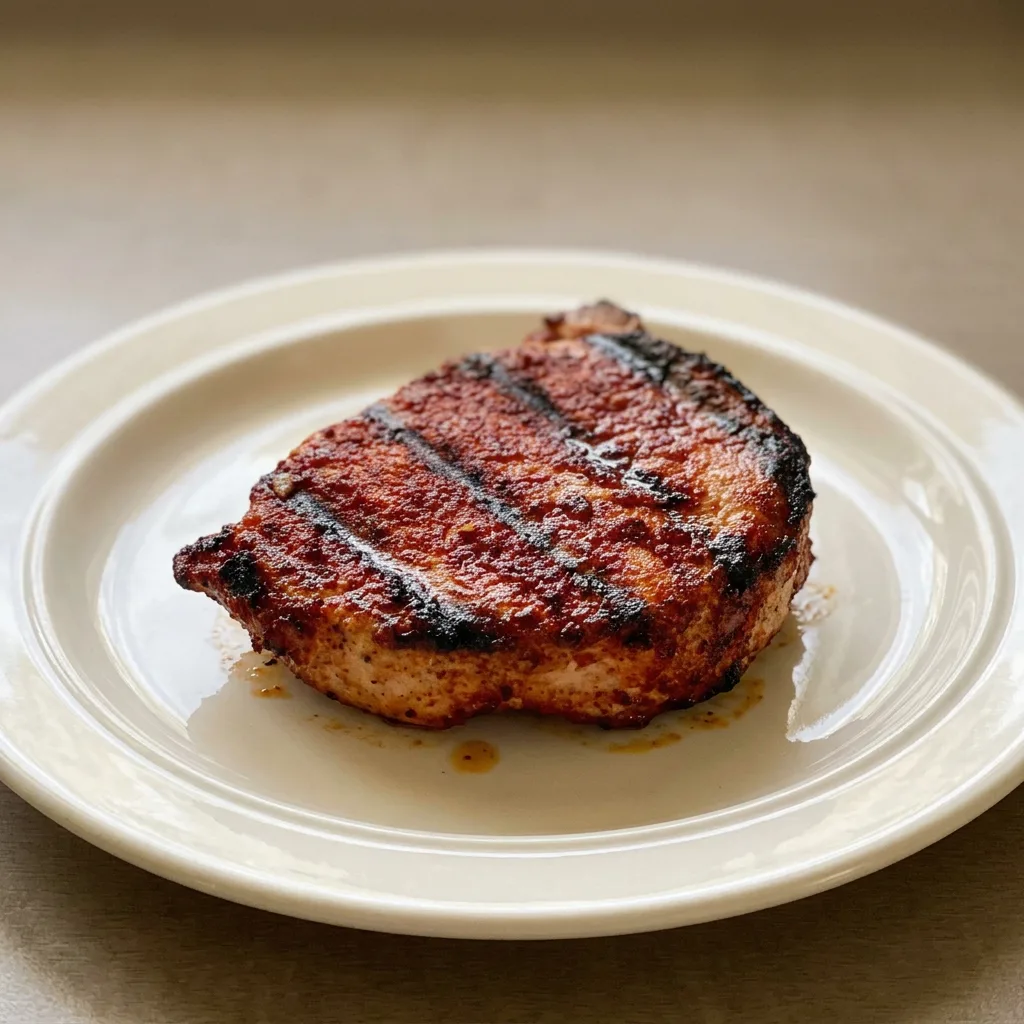
Grilled Pork Chops
Ingredients
Method
Set up two-zone grill:
Set up the grill for two-zone cooking: one side at medium-high heat (400°F (205°C)) and the other at medium-low heat (250-300°F (150°C)).Apply dry rub to chops:
Combine the dry rub ingredients in a medium bowl, then liberally apply to all surfaces of the pork chops. Massage the rub into the meat with your fingers; the meat will turn a deep red hue.Sear chops over high heat:
Put the pork chops on the grill grates over the high-heat zone and close the lid right away. Sear each side for 3 minutes over direct heat, opening the lid only briefly to flip the chops. For diagonal grill marks, position the chops at a 45-degree angle when placing them on the grill.Move chops to indirect heat:
After searing, use tongs to transfer the chops to the indirect-heat zone. If you made diagonal marks, rotate the chops 180° when placing them on the cooler side to produce a crosshatch pattern (optional but yields attractive grill lines).Cook until internal temp 145°F:
Once the chops are on the low-heat side, close the lid and cook for an additional 5-6 minutes, until the internal temperature hits 145°F (65°C). Take them off the grill when the thickest part registers 145°F (65°C), then move to a clean cutting board and let rest for 5-10 minutes before serving.
Storage and Reheating
Leftover grilled pork chops hold up well for 3 to 4 days in the fridge, but moisture loss is the main concern. Once cooked, the chops have already lost some juices during grilling and resting. In the fridge, that moisture continues to evaporate if the chops aren’t sealed.
Wrap each chop tightly in plastic wrap or place in an airtight container, pressing out as much air as possible. The rub’s sugar can make the surface sticky; that’s fine, it won’t affect texture.
To reheat without drying the meat further, use a low, gentle method. The best approach: put the chops in a 300°F oven, covered with foil, for about 10 minutes, or until just warmed through.
The foil traps steam, rehydrating the surface. A microwave will turn the exterior rubbery and tough; avoid it.
The serving window for peak texture is within 30 minutes of resting. After that, the crust softens and the meat firms up. For longer storage, freeze the grilled chops in a single layer on a baking sheet, then transfer to a freezer bag.
They keep for up to 2 months. Thaw overnight in the fridge, then reheat as above. The crust won’t be as crisp as fresh off the grill, but the interior stays moist.
The swaps that keep these chops juicy and crusty
Brown sugar or coconut sugar: Swap brown sugar for coconut sugar measure-for-measure. Both caramelize and form a crust, but coconut sugar is less sweet and has a deeper, almost molasses-like flavor. If you swap, the rub will be slightly less sticky and the crust a touch darker, still fine.
Coconut sugar gives a less sweet, more caramelized crust. The chop will still develop that deep brown sear, just with a different sweetness profile.
Smoked paprika: Replace smoked paprika with an equal amount of regular sweet paprika plus 1/2 teaspoon liquid smoke per tablespoon of paprika. Or just use sweet paprika alone, you lose the smoky depth but keep the color.
The rub will taste milder, more like a standard barbecue rub. Without smoked paprika, the rub loses its characteristic campfire note.
Adding liquid smoke recovers some of that, but it won’t be identical. The crust color stays similar.
Chili powder: For more heat, swap chili powder for cayenne pepper, use 1/4 teaspoon cayenne per 1/2 teaspoon chili powder. That’s a direct heat-for-flavor trade: chili powder is mild and cumin-heavy; cayenne is pure heat. The rub will be noticeably spicier, so start with less and taste.
Cayenne increases heat significantly without the background cumin and garlic notes. The crust forms the same, but the afterburn is real.
Pork chops: Bone-in and boneless both work here. Bone-in takes slightly longer to cook (add 1 to 2 minutes to the indirect stage) and stays slightly juicier.
If using boneless, look for chops at least 1-inch thick, thinner ones will overcook before the crust forms. The two-zone method still applies to either. Bone-in chops have a built-in heat buffer and more flavor; boneless are leaner and cook faster.
Either produces a good chop as long as thickness is consistent.
Tips
- Pat the pork chops dry with paper towels before applying the rub. Moisture on the surface steams instead of sears, preventing the crust from forming and causing the rub to slide off. Dry meat ensures the sugar and spices adhere and caramelize properly.
Frequently Asked Questions
Can I use boneless pork chops instead of bone-in?
Yes, boneless works fine. Just stick to chops at least 1-inch thick, thinner ones will overcook before the crust forms. Bone-in chops take 1 to 2 minutes longer in the indirect stage and tend to stay slightly juicier, but the two-zone method handles both.
How do I know when the pork chops are done without a thermometer?
Without a thermometer, you’re guessing. But if you must, use the touch test: a finished chop feels firm with a little give, like the base of your thumb when you make a fist. The juices should run clear, not pink.
That said, a thermometer is far more reliable, 145°F is narrow window.
Can I prepare the dry rub ahead of time?
Yes, mix the rub up to a week ahead and store it in an airtight container at room temperature. The spices keep their punch, and the sugar won’t clump if sealed. Apply it just before grilling, though, the salt will start drawing moisture out of the meat if left on too long.
What’s the best way to get grill marks?
Place the chops at a 45-degree angle to the grill grates over the high-heat zone, then don’t move them for the full 3 minutes. After flipping, you get one set of marks. For crosshatch, rotate the chop 180° when you move it to the cooler side, the second set of marks will form during the indirect cook.