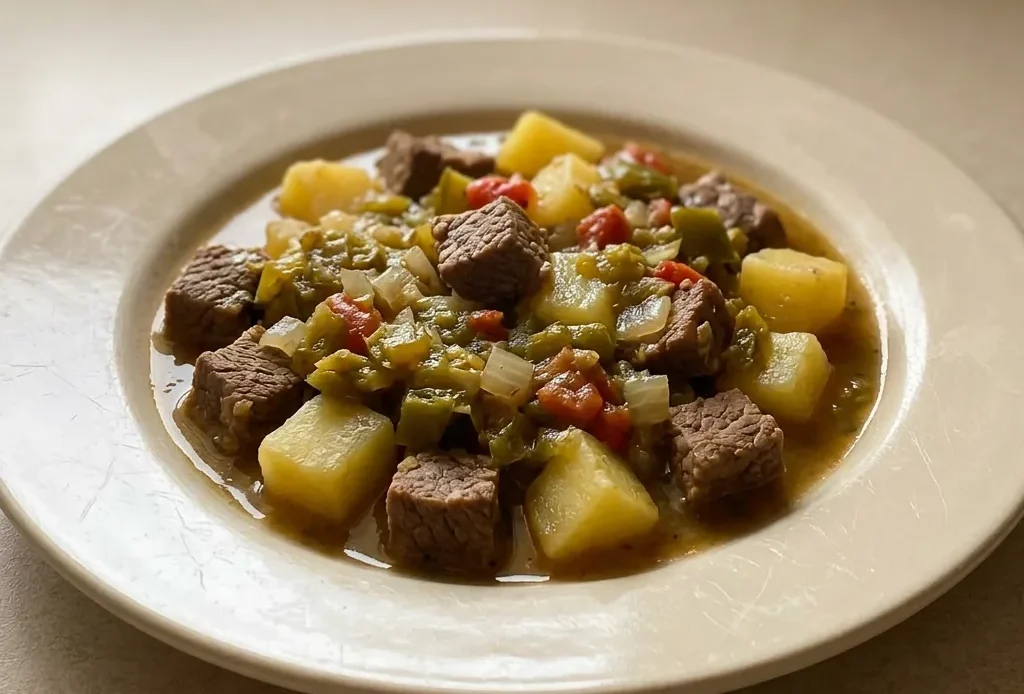
This stew lives or dies on the quality of your green chiles. The right ones, roasted Hatch, preferably, give a smoky depth that raw or canned chiles can’t fake.
Even well-browned meat and long simmering won’t rescue a stew made with the wrong chiles. The rest is technique, but the chiles are important.
That’s what makes New Mexico green chile stew taste like the real thing.
Why does roasting green chiles matter here?
Roasted green chiles bring a smoky, earthy depth that raw or canned chiles just can’t match. That charred aroma becomes the backbone of this stew, giving New Mexico green chile beef stew its signature character. When you roast them, the skins blister and the flesh softens, releasing oils that carry flavor into every spoonful.
You’ll taste it in the broth: a subtle bitterness balanced by sweetness, not just heat. The recipe calls for roasted chiles for a reason, they’re what make this stew taste like the real thing, not a pale imitation.
Beef or pork: how does each change the stew?
Beef gives a heartier, deeper savory note, think rich and beefy. Pork, often shoulder or loin, turns slightly sweeter as it cooks, lending a milder, more tender result.
Both are traditional, so it’s your call. What matters is cubing the meat and browning it well. That step builds fond on the pot bottom, which brown bits dissolve into the broth, layering in roasted, meaty flavors that can’t be achieved any other way.
The choice of meat sets the stew’s tone, but browning is important for depth.
Why is simmering so important for this stew?
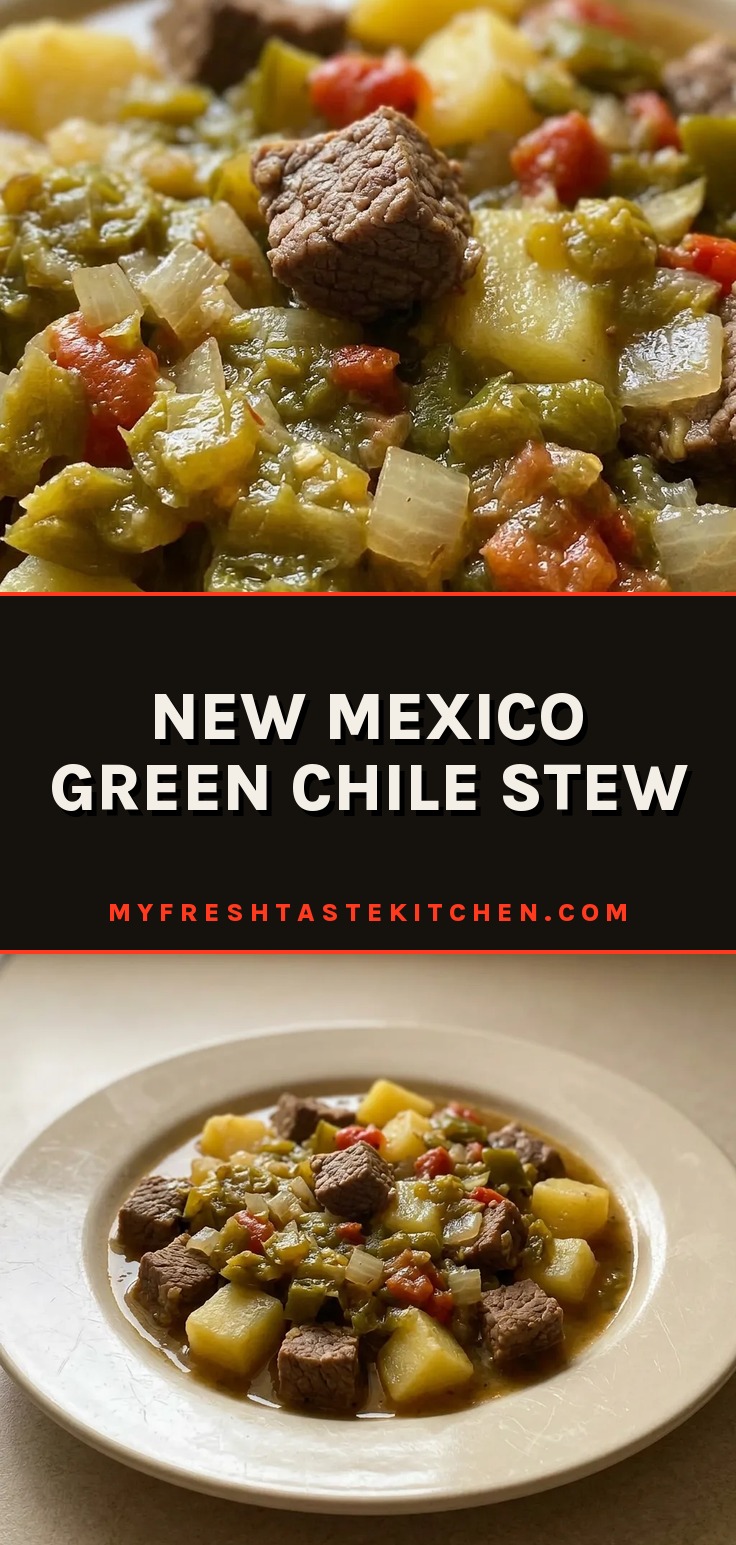
A long, gentle simmer does two things you can see: the broth darkens as chiles and spices release their color and flavor, and the potatoes start to break down at the edges, thickening the liquid naturally. You don’t need a roux or flour, just time at a low bubble. The meat also becomes fork-tender as the heat gently relaxes its fibers.
After 45 to 60 minutes, the whole pot tastes unified, each ingredient contributing without one dominating. That’s the point: a stew that feels cohesive, not a collection of parts.
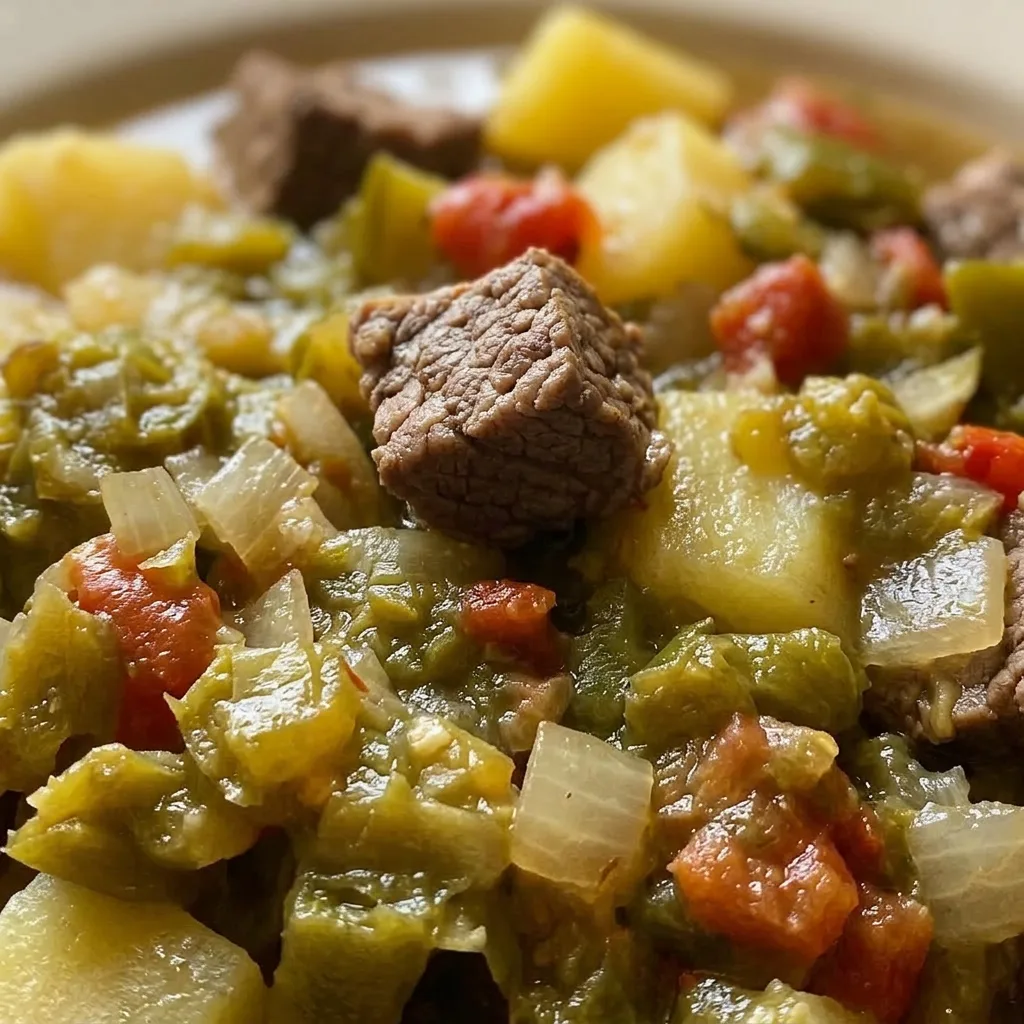
Prep: 15 min · Cook: 1 hr · Total: 1 hr 15 min · Servings: 6 · Calories: 450 kcal
Pick the right chiles and meat for this stew
Roasted green chiles: Buy frozen roasted Hatch chiles if you can’t roast your own; they keep that smoky depth.
Beef or pork: Use stew meat from chuck or pork shoulder; both turn tender after the long simmer.
Potatoes: Yukon Golds hold their shape better than russets, which can turn mushy during the hour-long simmer.
Chicken broth: Low sodium broth lets you control the salt; the chiles bring enough flavor on their own.
Build the base, then let the simmer do the rest
Soften onion and garlic
Warm the olive oil over medium heat until it shimmers. Add onion and garlic; stir until translucent and fragrant, about 3 to 4 minutes. If they brown too fast, your heat is high, turn it down.
Brown the meat cubes
Add the meat in a single layer; don’t crowd. Let it sit undisturbed for a minute before stirring, so a crust forms. After 5 to 7 minutes, you’ll see browned bits stuck to the pot, that’s the fond.
Bloom the spices with chiles
Stir in green chiles, cumin, and oregano. Cook 1 to 2 minutes until the chile aroma intensifies and the spices become fragrant. If the pot looks dry, add a splash of broth.
Pour broth and bring to a boil
Add the chicken broth and raise heat to high. Watch for the surface to break into large, lazy bubbles, that’s a gentle boil. Don’t let it roar; a hard boil can toughen meat.
Simmer with potatoes until tender
Drop heat to low, add potato cubes, and let it simmer uncovered. After 45 to 60 minutes, the broth will be darker and slightly thickened, potatoes soft at edges, meat fork-tender.
Season and serve
Taste the broth, it should be savory with a mild heat. Add salt and pepper gradually, stirring and tasting after each addition. The right salt level makes the chile flavor pop.
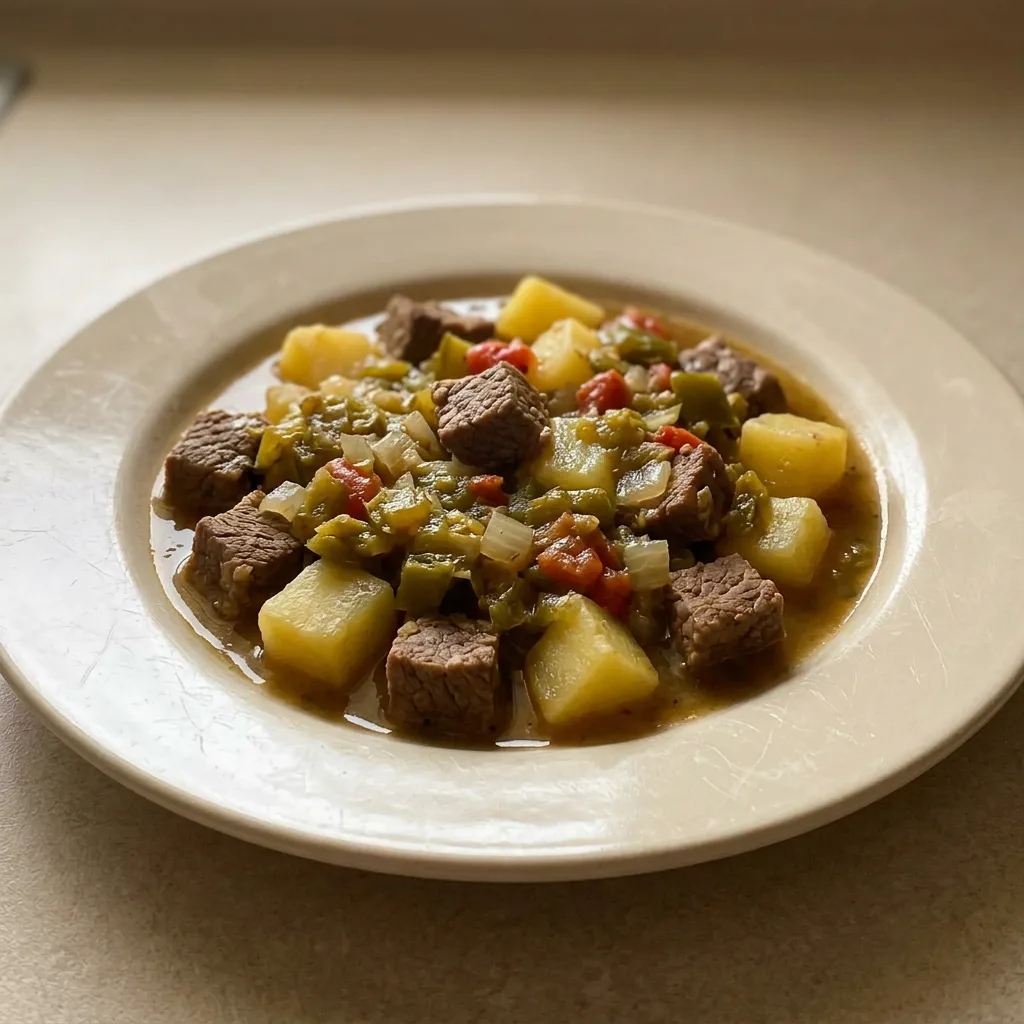
New Mexico Green Chile Stew
Ingredients
Method
Sauté Onion and Garlic:
Warm the olive oil in a large pot set to medium heat. Sauté the onion and garlic until softened and aromatic, roughly 3-4 minutes.Brown Meat Cubes:
Introduce the meat cubes. Brown them on all sides, stirring now and then, for about 5-7 minutes.Cook Chiles and Spices:
Mix in the green chiles, cumin, and oregano. Continue cooking for 1-2 minutes.Add Chicken Broth:
Add the chicken broth and heat until it reaches a gentle boil.Simmer with Potatoes:
Lower the heat, drop in the potato cubes, and let it simmer uncovered for 45-60 minutes.Season with Salt and Pepper:
Season with salt and pepper to your preference.Serve Stew in Bowls:
Serve the stew in bowls, adding any desired garnishes.
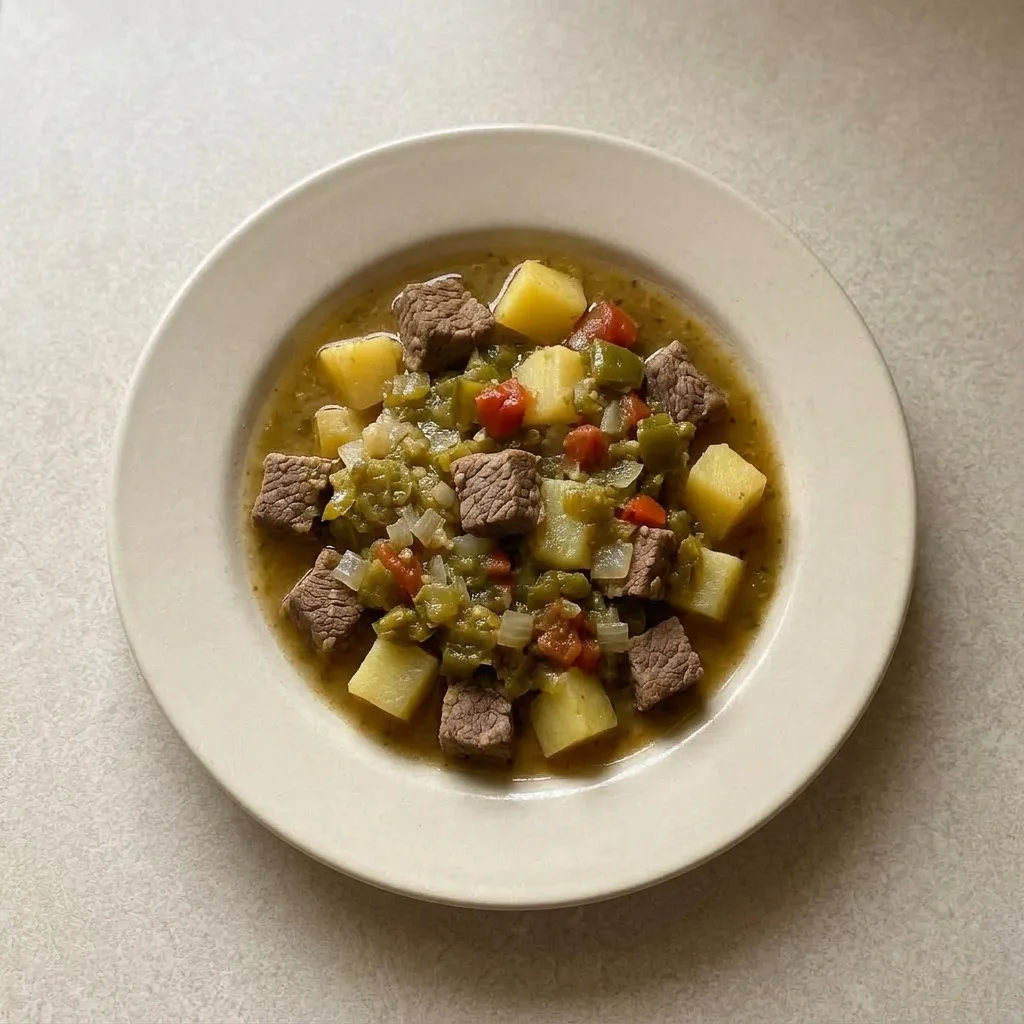
Storage and Serving
Cool the stew completely before storing in an airtight container. It keeps in the fridge for up to 4 days. The flavors deepen overnight, making leftovers taste even better.
To reheat, warm gently on the stovetop over medium heat. The potatoes will soften more each day, and the broth thickens as it sits.
Freeze the stew for up to 3 months in a freezer-safe container. Thaw overnight in the fridge before reheating. The texture of the potatoes and meat will soften further upon thawing, but the stew remains hearty.
Serve right after cooking for the best texture: the potatoes are tender but not mushy, and the meat is fork-tender. If you plan to serve later, hold off on garnishes like fresh herbs or cheese until just before serving.
The stew can sit at room temperature for up to 2 hours. For make-ahead, prepare the stew a day in advance and refrigerate; the flavor intensifies.
Tips
- Add potatoes after the stew has simmered for 30 minutes, not at the start. This prevents them from breaking down into mush, keeping distinct tender chunks that contrast with the soft meat.
- Use a slotted spoon to remove the meat after browning, then deglaze the pot with a splash of broth before adding the chiles. This lifts the fond without scorching the spices, giving a cleaner base.
Substitute the meat or chiles, but keep the core intact
Beef or pork: Chicken (boneless thighs or breast) or omit for a vegetarian version. Chicken yields a lighter stew with a milder savory profile; it may cook faster, so check tenderness after 30 minutes. Omitting meat altogether leaves the broth thinner, add a can of drained pinto beans or extra potatoes for body.
The chile and cumin still carry the flavor, but the stew loses the deep, meaty fond from browning.
Roasted green chiles: Canned green chiles (not roasted) or fresh poblano peppers. Canned chiles lack the smoky char that defines this stew; the result is a brighter, grassier heat with less depth. Poblanos are milder and need roasting yourself to approach the right flavor.
For best results, stick with frozen roasted Hatch chiles, they’re the closest to the real thing. If you must use canned, add a pinch of smoked paprika to mimic the smoke.
Chicken broth: Vegetable broth or water. Vegetable broth keeps the stew vegetarian without sacrificing much savory body. Water works but makes the broth thinner and less flavorful; compensate with extra salt and a bay leaf simmered in.
The chiles and meat still provide most of the taste, so water is an acceptable last resort.
Potatoes: Sweet potatoes or turnips. Sweet potatoes add sweetness that clashes with the chile’s earthy heat, only swap if you want a noticeably different flavor.
Turnips are neutral and hold up similarly, but they’ll be firmer and slightly peppery. Both will thicken the stew less than Yukon Golds, so the broth stays a bit thinner.
Frequently Asked Questions
Can I make this stew ahead of time and does it reheat well?
Yes, make it a day ahead, the flavors deepen overnight. Cool completely, refrigerate, then reheat gently on the stovetop. The broth thickens as it sits, so add a splash of water if needed.
The meat and potatoes soften more each day, but the stew stays hearty.
How do I prevent the stew from being too watery or too thick?
The uncovered 45 to 60 minute simmer is key, watch for the broth to darken and reduce slightly. If it’s too watery, simmer longer without the lid; too thick, add broth or water a splash at a time. The potatoes naturally thicken the stew as they soften at the edges, so don’t rush the simmer.
What is the difference between New Mexico green chile stew and other green chile stews?
New Mexico green chile stew is defined by roasted Hatch chiles, their smoky, earthy depth and the way they infuse the broth. Other stews often use canned or raw chiles, which taste grassier and lack that charred complexity. The long simmer with potatoes thickens it naturally, no flour or cream.
Is this stew supposed to be spicy and how can I control the heat level?
The heat depends entirely on your green chiles, mild Hatch chiles give a gentle warmth, while hot varieties bring real fire. To control it, choose your chiles by heat level (mild, medium, hot) or mix them. Start with milder chiles; you can always add heat later with a pinch of cayenne or crushed red pepper.
