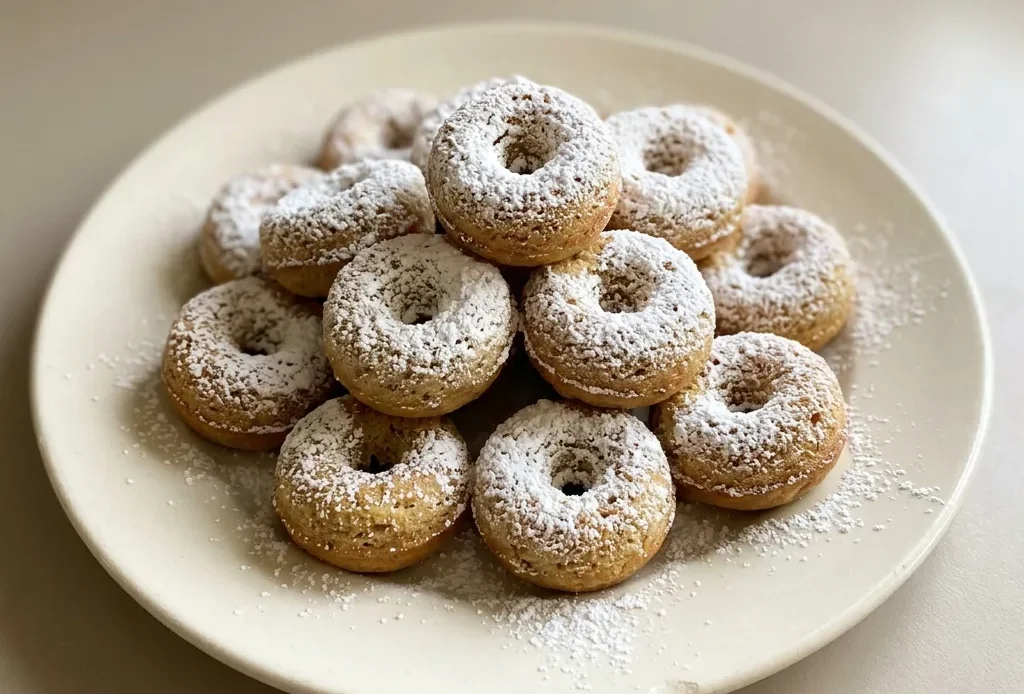
Overmixing is the trap with baked powdered sugar donuts, stir the batter too enthusiastically and you get a dense, rubbery crumb instead of the tender, cakey bite that makes these worth baking. The batter should look shaggy and a little lumpy; those lumps protect the air bubbles that give the donuts their lift.
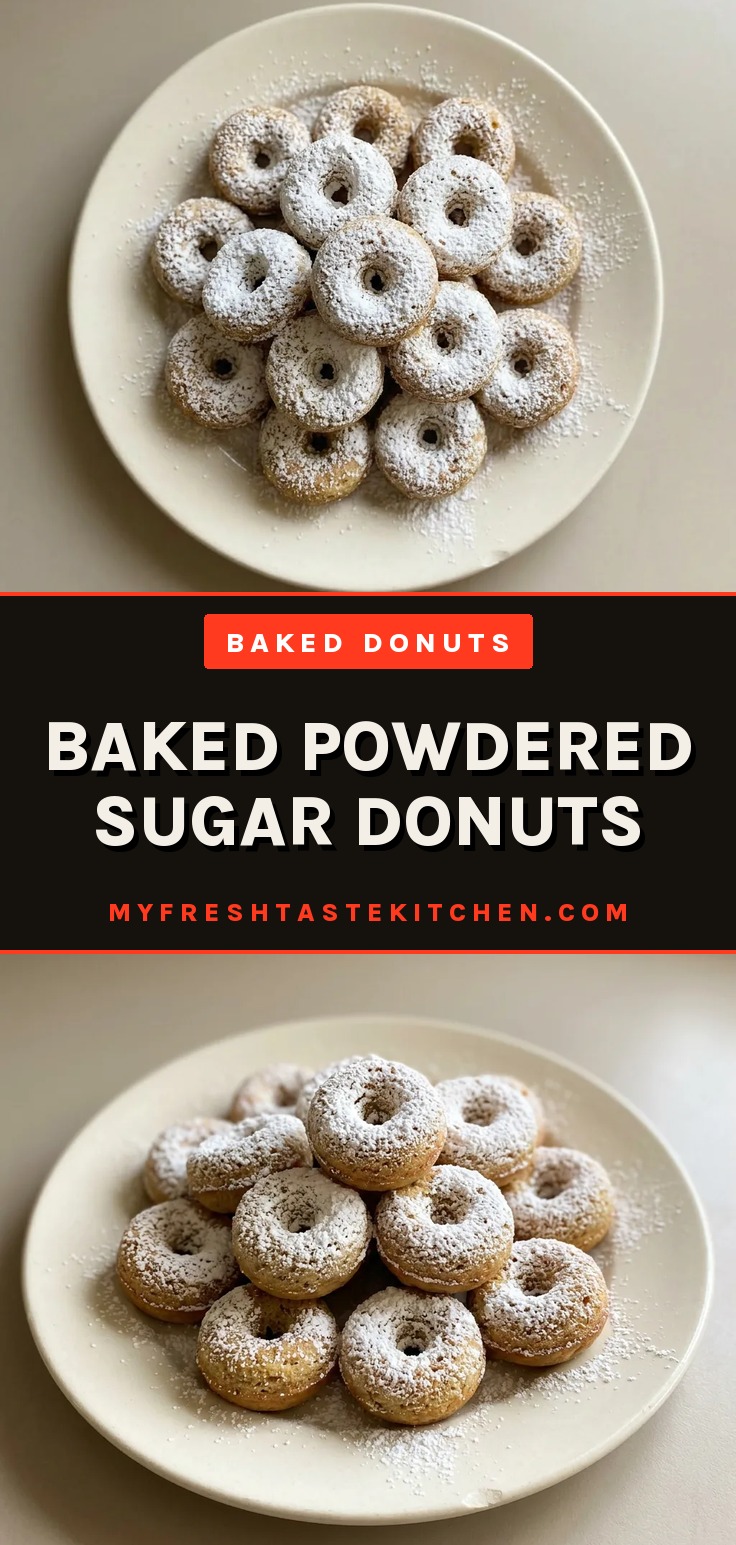
A gentle hand is all it takes, and the payoff is a light donut that holds a delicate powdered sugar crust. These baked powdered sugar donuts skip the fryer entirely, so there’s no grease to weigh them down, just a nostalgic sweetness that lands somewhere between a fairground treat and a simple breakfast pastry.
Why does buttermilk make donuts tender?
Buttermilk brings acidity that kicks off the baking powder reaction, giving these mini donuts a proper lift. Without it, they’d come out flat and dense. The acid also weakens some gluten strands, which keeps the crumb soft and cake-like.
You taste it too, that slight tang cuts through the sweet powdered sugar coating, so the donut doesn’t cloy. It’s not a background player; the flavor difference is obvious side by side.
The texture? Moist, tender, with a fine crumb that almost melts.
That’s the buttermilk doing its job.
What changes when you bake donuts instead of frying?
Baking gives you a lighter, airier crumb, more like a tender cake than the dense, greasy interior of a fried donut. The fat content drops significantly; these donuts use just two tablespoons of oil for the whole batch.
That’s a real difference you can feel eating them, no slickness on your fingers. The pan shapes the ring, so you get that classic silhouette without submerging batter in hot oil. The trade-off is a less crisp exterior, but the powdered sugar coating adds a delicate crust that compensates.
For a quick donut recipe, baking is the practical choice.
Why does coating warm donuts in powdered sugar work best?
The residual heat from the oven softens the powdered sugar slightly as it hits the surface, forming a thin, delicate crust that sticks evenly. If you wait until they’re cool, the sugar just dusts off and clumps in spots. Warmth also prevents the sugar from absorbing moisture too fast, so you get a clean, even coat, no patchy patches.
The coating adds pure sweetness without any extra fat, keeping the donut light. That first bite, with the sugar layer cracking against the soft crumb, that’s the payoff. It’s a simple finish that relies on timing.
Why is overmixing a problem for cake donuts?
Stirring too much develops gluten, and gluten makes these donuts tough and chewy, the opposite of what you want. The batter should look shaggy with some lumps; that’s fine.
Those lumps mean you haven’t overworked the flour, so the air bubbles from the baking powder stay intact during baking. The result is a tender, open crumb that springs back when pressed.
Overmixed batter gives a dense, rubbery donut every time. You can see the difference in the shape: a gentle mix yields rounded, puffed tops; overmixing leads to flat, uneven ones.
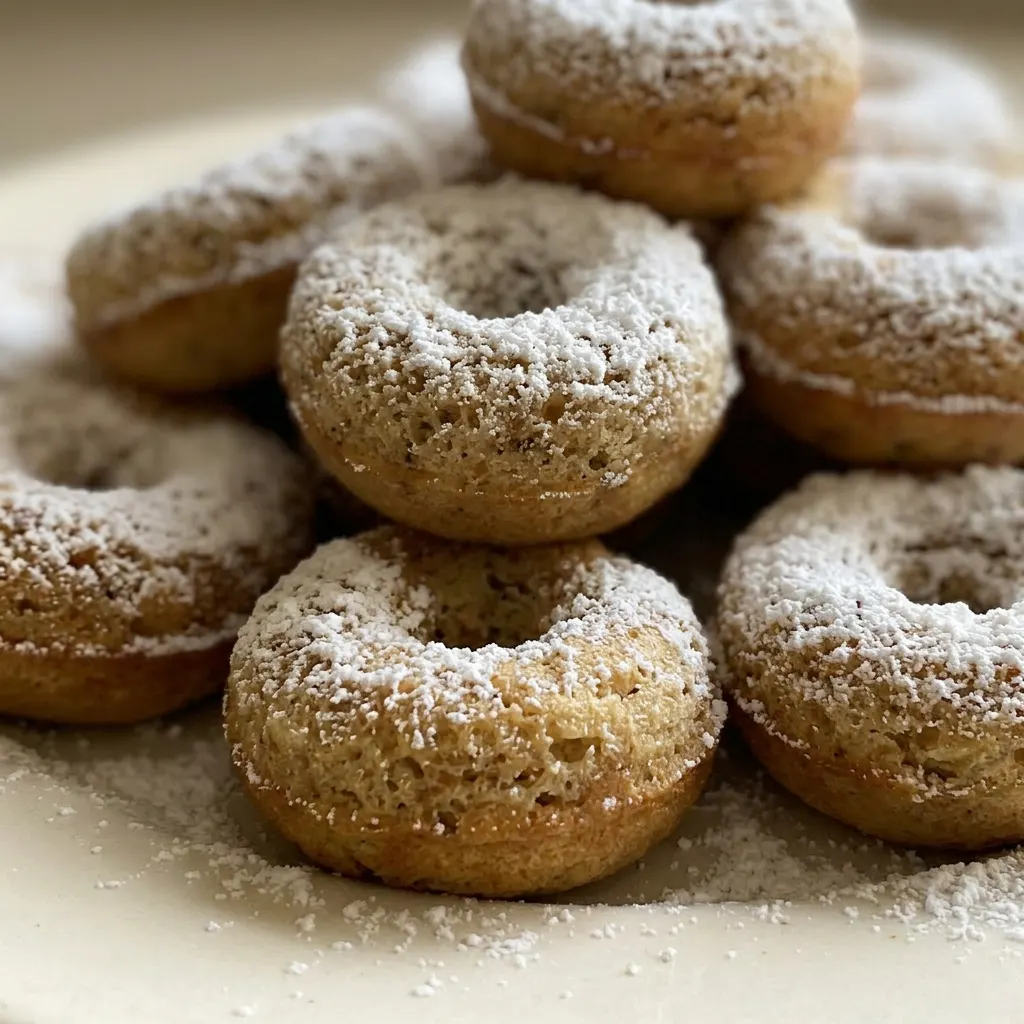
Prep: 15 min · Cook: 9 min · Total: 24 min · Servings: 24 · Calories: 110 kcal
What to look for in each ingredient
Buttermilk: Real cultured buttermilk is best; powdered buttermilk mixed with water works but yields a blander tang.
All-purpose flour: Standard AP flour is fine; avoid bread flour as it makes the donuts tough.
Baking powder: Check your baking powder is fresh; if it doesn’t fizz in water, it’s dead and the donuts won’t rise.
Powdered sugar: Use confectioners’ sugar with cornstarch; it clings better and doesn’t dissolve into a glaze.
How to tell when your baked donuts are done right
Preheat and prep the pan
Set oven to 400°F and spray a 12-cavity donut pan thoroughly. You want every nook coated, any bare spot will make the batter stick and tear the donut when you unmold.
Mix dry ingredients
Whisk flour, sugar, baking powder, cinnamon, nutmeg, and salt together in a large bowl. Whisking aerates the flour and breaks up clumps; you should see an even color with no streaks of baking powder.
Combine wet ingredients
In another bowl, whisk buttermilk, eggs, and oil until smooth. The mixture will look pale and slightly thickened, that’s the buttermilk doing its job. No need to beat air into it.
Fold wet into dry
Pour the wet mixture into the dry and stir gently with a spatula until just combined. Stop when you see a few streaks of flour still visible. The batter will be lumpy and that’s fine, overmixing ruins the crumb.
Fill the cavities
Transfer batter to a piping bag and snip the tip to about ½-inch. Pipe each cavity half to two-thirds full. Too much batter and the donuts will puff over the rim, losing their ring shape.
Bake until springy
Bake for 7 to 9 minutes. At 7 minutes, touch a donut top, it should spring back without leaving an indent.
The edges will be lightly golden. If it feels soft or leaves a mark, give it another minute.
Cool and coat
Let donuts cool in the pan for 5 minutes, then turn them out onto a wire rack. While still warm, toss them in powdered sugar. The warmth melts the sugar just enough to create a thin, even crust that sticks.
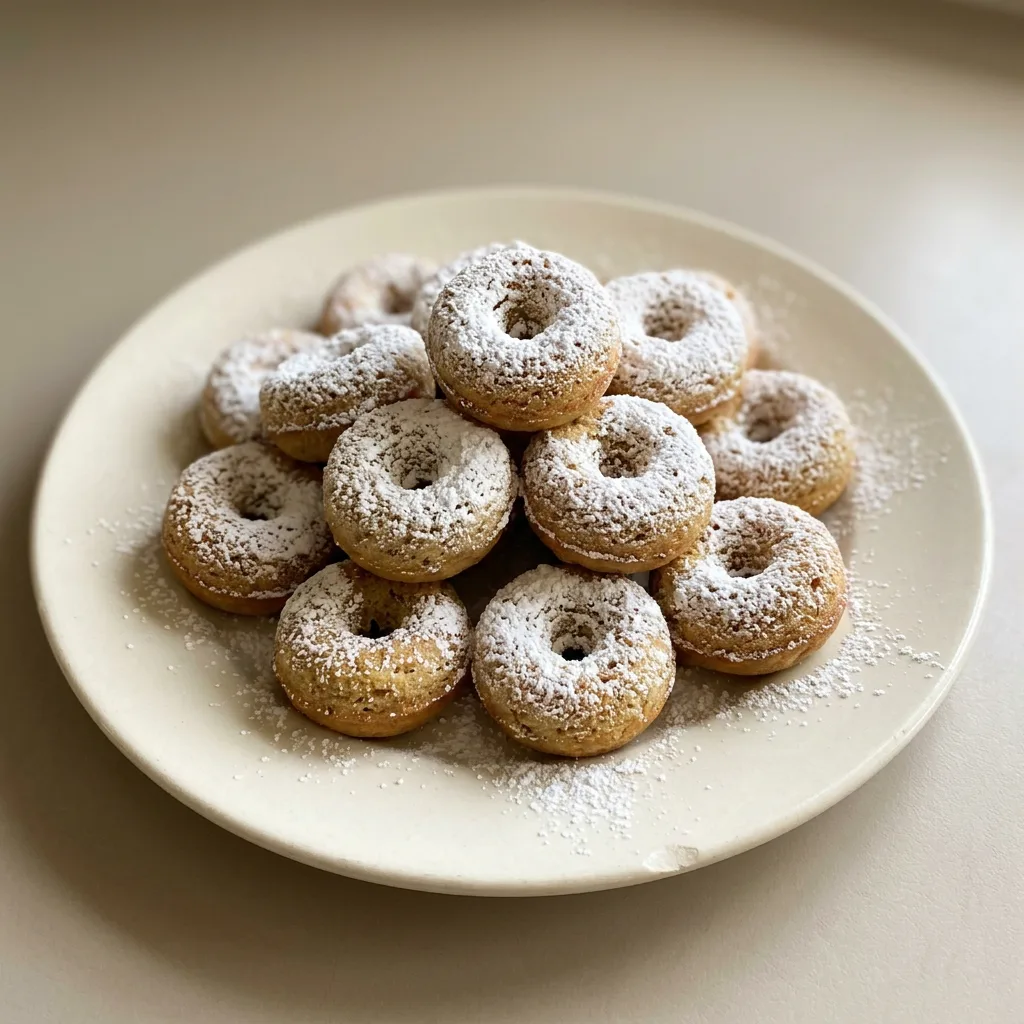
Baked Powdered Sugar Donuts
Ingredients
Method
Preheat Oven, Grease Pan:
Set oven to 400°F (205°C). Coat a 12-cavity donut pan thoroughly with non-stick cooking spray.Whisk Dry Ingredients:
In a large bowl, combine flour, sugar, baking powder, cinnamon, nutmeg, and salt with a whisk.Mix Wet Ingredients:
In another bowl, whisk together buttermilk, eggs, and oil.Combine Wet and Dry:
Pour wet mixture into dry mixture and stir gently until just combined; avoid overmixing.Fill Donut Cavities:
Transfer batter to a piping bag and fill each cavity to about half to two-thirds full.Bake Donuts:
Bake for 7–9 minutes, until tops are lightly golden and they spring back when pressed.Cool and Coat with Sugar:
Let cool in pan for 5 minutes, then move to a wire rack. While still warm, coat donuts in powdered sugar.
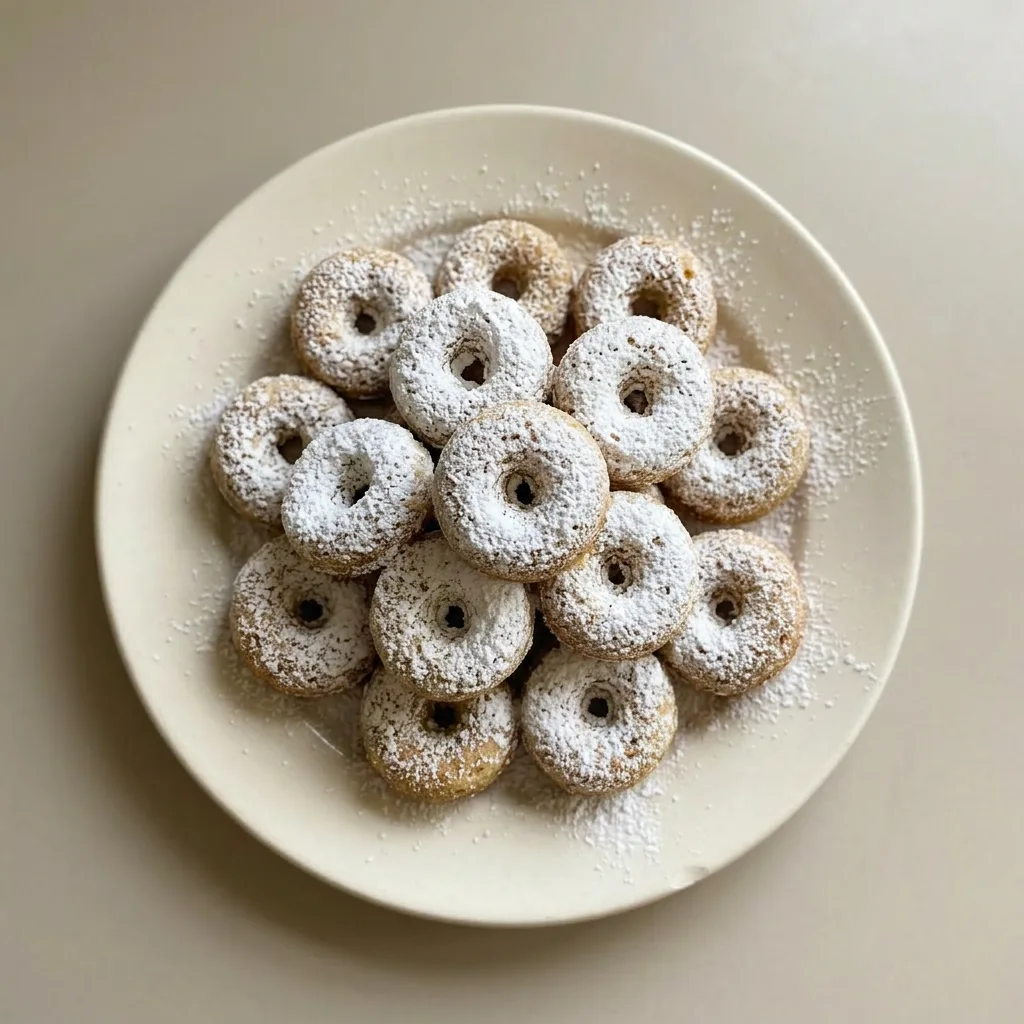
Swapping buttermilk or flour changes these donuts more than you’d think
Buttermilk: Add 1 tablespoon lemon juice or white vinegar to a measuring cup, then fill with regular milk to 3/4 cup. Let sit 5 minutes until curdled.
You get the same tang and acidity to activate the baking powder, so the donuts rise just as high. The crumb stays tender.
Taste difference is subtle, slightly less creamy, but fine.
All-purpose flour: Use 1:1 gluten-free flour blend (with xanthan gum). Start with same 2 cups. Donuts will be a touch more delicate and crumbly, they won’t spring back as firmly.
The powdered sugar coating helps hold them together. Flavor is neutral; no one will call it out as gluten-free.
Buttermilk: Plain yogurt thinned with milk (3/4 cup total, about 1/2 cup yogurt plus milk). Density increases slightly; donuts are less airy but still soft.
The tang is milder. Works well if you’ve got yogurt on hand.
Tips
- When piping the batter, hold the bag vertically and squeeze from the top, not the tip, to avoid air pockets that can cause uneven rise.
- If you don’t have a piping bag, use a zip-top bag with a corner snipped off; the thinner plastic gives more control for precise filling.
How to store baked powdered sugar donuts
These donuts are best within 24 hours of baking. The powdered sugar coating stays crisp and the crumb stays tender. After that, the sugar absorbs moisture from the air and the donuts get sticky.
Store leftovers in an airtight container at room temperature for up to 2 days. Don’t refrigerate; the fridge dries them out and makes the coating clump. For longer storage, freeze uncoated donuts in a zip-top bag for up to 1 month.
Thaw at room temperature, then reheat in a 300°F oven for 3 to 4 minutes to revive the texture. Coat with powdered sugar while still warm, just like the original. The coating won’t stick as well to reheated donuts, but the flavor holds.
If you coat before freezing, the sugar will dissolve during thawing, so always coat after reheating.
Frequently Asked Questions
Can I make the batter ahead of time and bake later?
No, the leavening starts as soon as you mix wet and dry. If you hold the batter, the bubbles escape and the donuts won’t rise. Mix and bake immediately for the best spring.
Why did my donuts turn out dense and not fluffy?
Likely overmixing the batter developed gluten, making them tough. The batter should be lumpy with a few flour streaks. Another possible cause: baking powder that’s too old, if it doesn’t fizz in water, it’s dead.
How do I get the powdered sugar to stick evenly without clumping?
Coat the donuts while they’re still warm from the oven. The heat softens the sugar just enough to form a thin, even crust. If you wait until they’re cool, the sugar won’t stick well and will clump.
What’s the difference between baked and fried donuts in terms of taste and texture?
Baked donuts have a lighter, airier crumb, more like a tender cake, while fried donuts are denser and greasy with a crisp exterior. Baking uses just 2 tablespoons oil for 24 donuts, so you get no slickness on your fingers. The trade-off: a less crisp crust, but the powdered sugar coating adds a delicate crunch.
