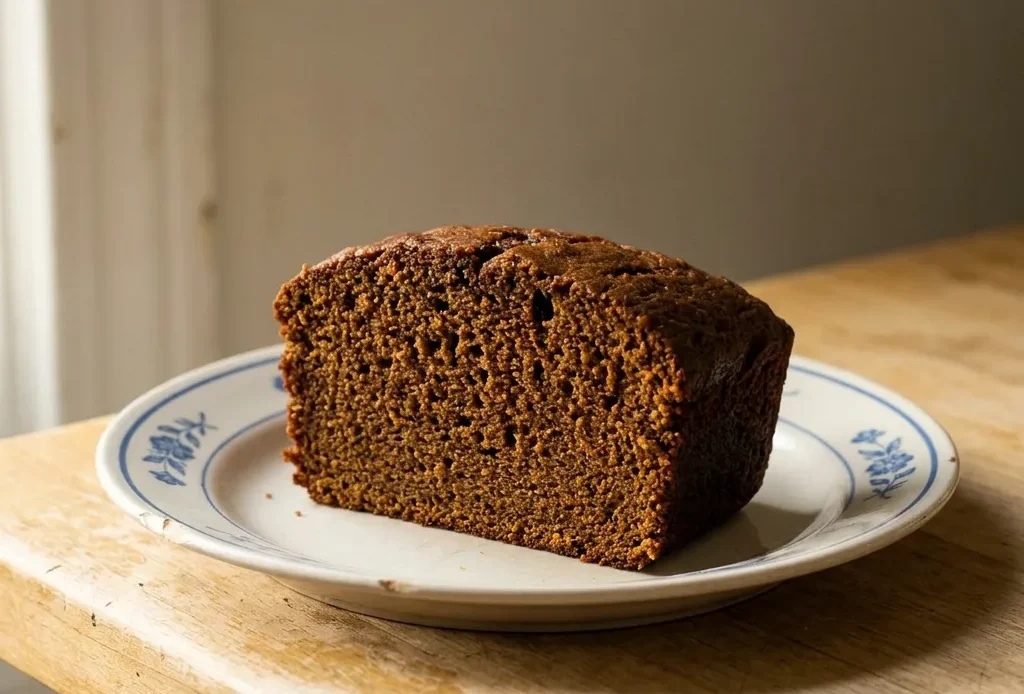
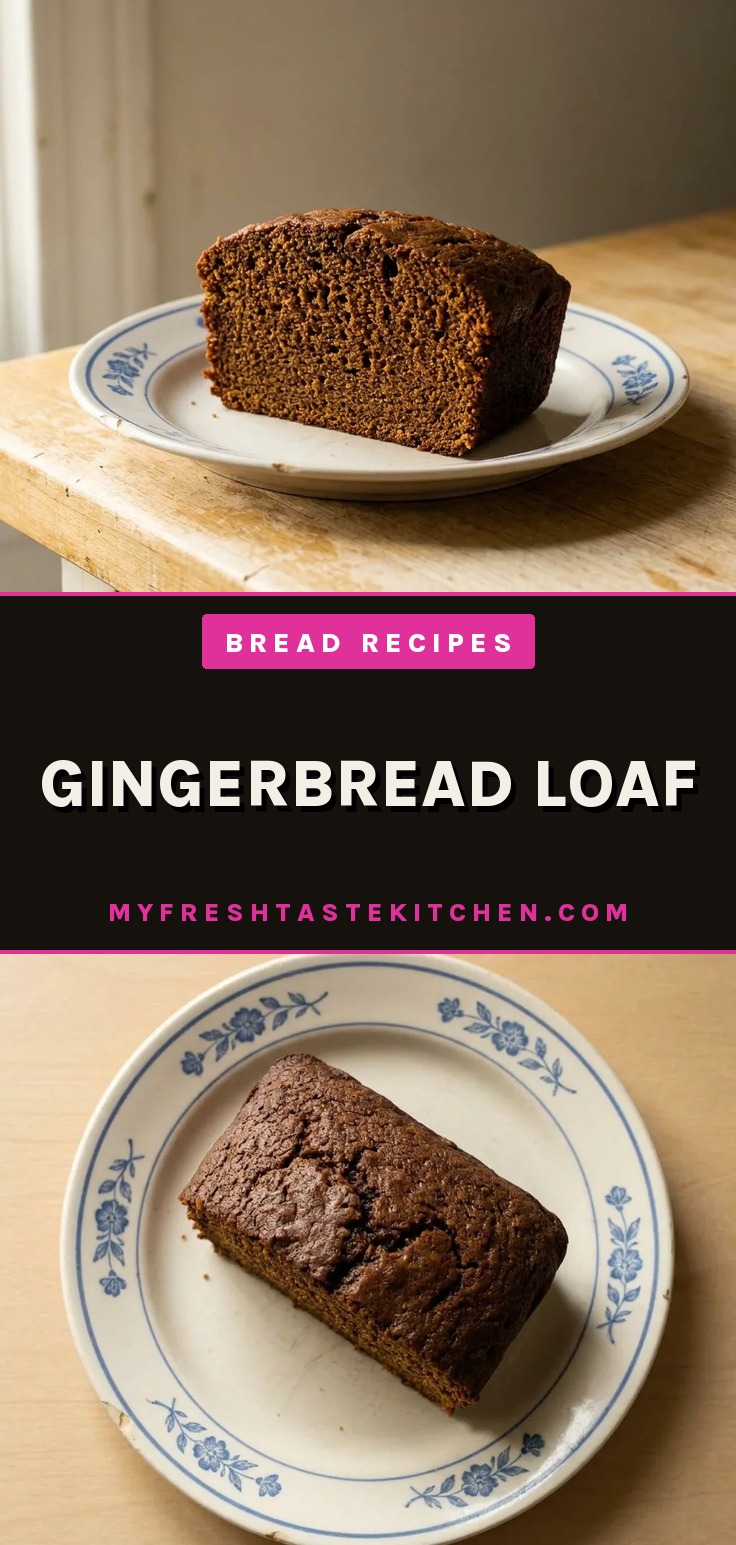
If you’ve ever had a gingerbread loaf turn out dry or crumbly, the culprit is usually how the wet ingredients hit the batter. This version uses boiling water, and that’s not for show, it dissolves the molasses completely and thins the batter to a consistency that bakes up tender, not tough. The creaming step feels counterintuitive for a dense loaf, but it builds just enough structure so the crumb is fine and even, not fudgy.
The spices, ginger, cloves, cinnamon, are assertive enough to cut through the richness without turning bitter. It’s a gingerbread loaf that tastes like the holidays but doesn’t demand precision; the margin for error is wider than you’d expect.
My first gingerbread loaf looked on top but when I sliced it, the middle was dense and sunken like a crater. I had stirred the batter too vigorously after adding the hot water, deflating all the air.
Why cream butter and sugar separately for a dense loaf?
You’d think creaming is for light cakes, but this gingerbread loaf benefits from it too. Beating the butter alone first creates a smooth base with tiny air pockets.
Then adding the brown sugar incorporates more air, which helps the dense batter rise a bit. If you skip this, the crumb turns out tighter, almost fudgy.
The order matters: butter first, then sugar, then eggs one at a time. Each egg fully emulsifies before the next, keeping the batter stable. By the time you add molasses and boiling water, that structure holds.
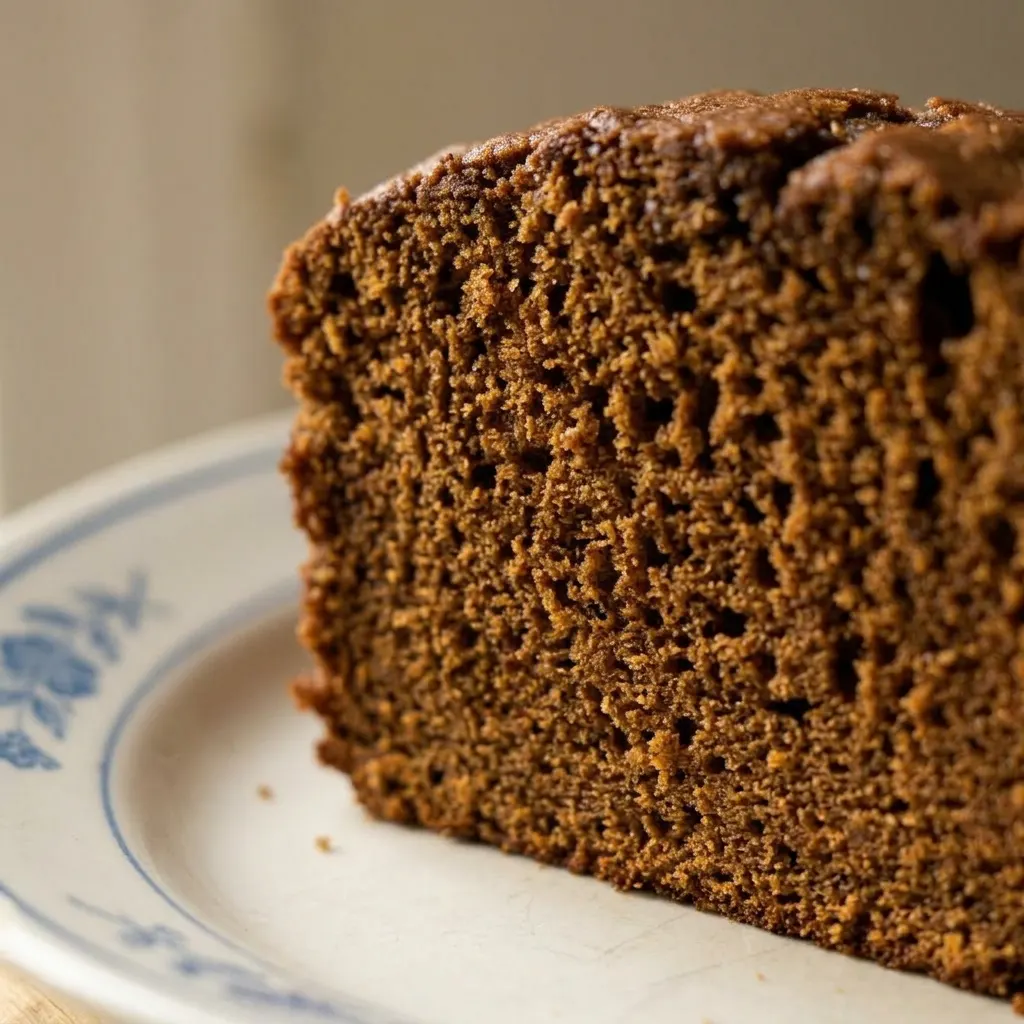
The result is a loaf that’s tender but not heavy, with a fine, even crumb.
How does molasses and spice balance create classic gingerbread flavor?
Dark brown sugar brings molasses notes and moisture without the harshness of blackstrap. The molasses itself, not blackstrap, adds deep sweetness and a tang, but too much can turn bitter. The spice trio of cinnamon, cloves, and ginger gives that warm, familiar profile.
Cloves punch through the richness, ginger adds heat, and cinnamon rounds it out. If the spices were off, the loaf would taste flat or one-note.
Here, they complement the molasses, not compete. The result is a rich, aromatic loaf that tastes like gingerbread should.
Why add boiling water to the batter?
Boiling water does two things you can see. First, it dissolves the molasses and brown sugar completely, so no sticky streaks remain in the batter. Second, it thins the batter to a pourable consistency.
Now I gently fold the boiling water into the batter with a spatula just until no streaks remain, and I never use a whisk after that step, that would deflate the air you built. The hot liquid also hydrates the flour quickly, which helps the loaf bake up moist. A thick batter would bake dense and dry, but this one stays tender.
You’ll notice the batter is loose, almost like a thin cake batter, and that’s right.
Why cool the loaf completely in the pan before slicing?
Hot from the oven, this loaf is fragile. Cooling in the pan for at least 30 minutes lets it set, the crumb firms up, so it won’t fall apart when you turn it out. If you try to slice warm, it crumbles into chunks.
Running a knife around the edges first releases any stuck bits, then inverting gently gives a clean release. Letting it cool completely on a rack before slicing ensures clean, neat slices without tearing.
The wait might test your patience, but it’s the difference between a slice and a pile of crumbs.
Prep: 15 min · Cook: 35 min · Total: 50 min · Servings: 8 · Calories: 290 kcal
Key ingredients for a moist, spiced loaf
Dark brown sugar: Adds moisture and molasses notes without the harshness of blackstrap molasses.
Molasses (not blackstrap): Use regular molasses; blackstrap is too bitter and will throw off the sweetness.
Spices: cinnamon, cloves, ginger: Cloves punch through richness, ginger adds heat, cinnamon rounds out the profile.
Build the batter in order for a tender, spiced crumb
Cream butter and sugar
Beat the butter alone until it looks smooth and pale, about a minute. Then add the brown sugar and mix until fluffy. Scrape the bowl, if you see streaks of butter, keep mixing.
Add eggs one at a time
Crack in the first egg and beat until fully incorporated before adding the next. The batter should look glossy and smooth, not curdled. If it looks separated, the eggs went in too fast.
Mix in dry ingredients
Sprinkle the flour, baking soda, and spices over the batter. Stir just until no dry patches remain, overmixing here makes the loaf tough. The batter will be thick and pasty.
Add molasses and boiling water
Spray the measuring cup before measuring molasses so it slides out cleanly. Pour it in, then add the boiling water. Fold gently with a spatula until the batter is uniform and thin, like a loose cake batter.
Bake until a toothpick comes out with moist crumbs
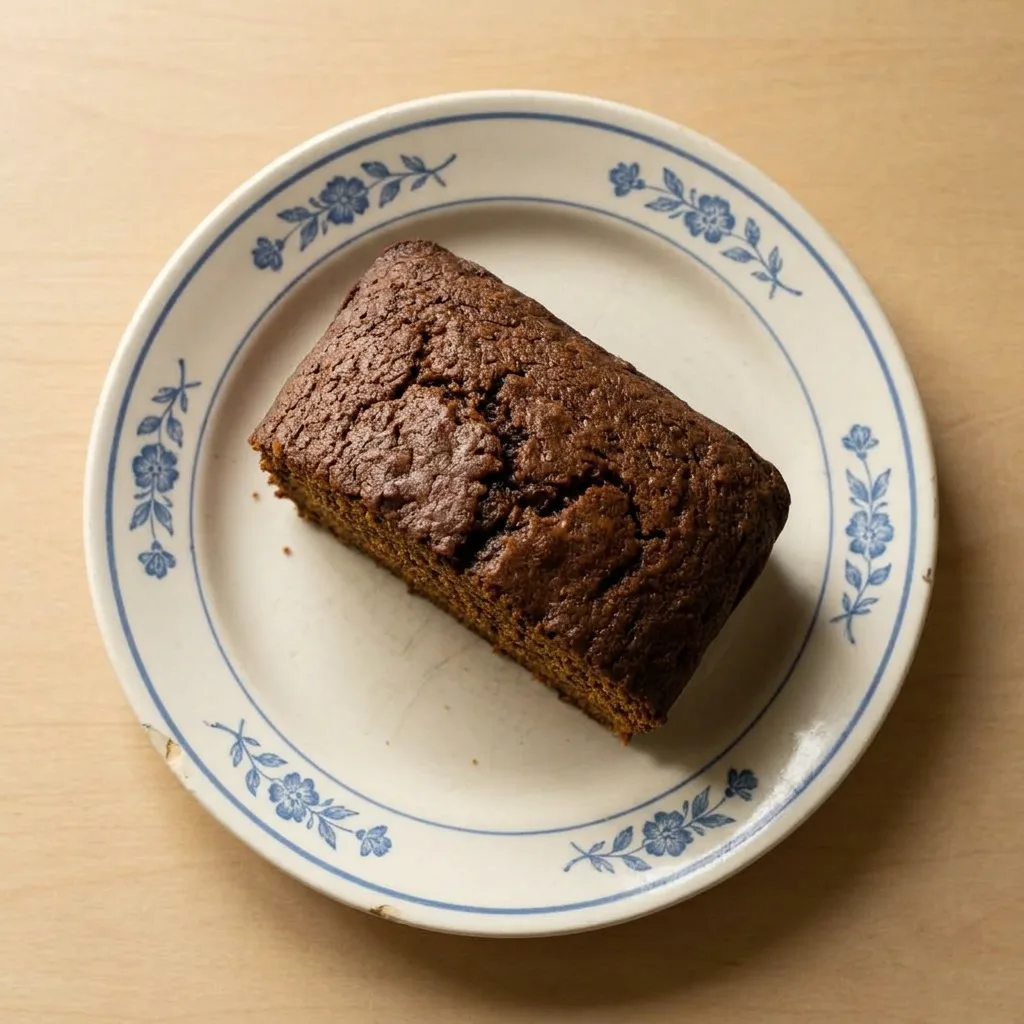
Pour the batter into the prepared pan. Bake at 350°F for 60 to 65 minutes, the loaf should be domed and spring back when pressed. A toothpick inserted in the center should have a few moist crumbs, not wet batter.
Cool in the pan before turning out
Let the loaf sit in the pan for at least 30 minutes. Run a knife around the edges, then invert onto a rack.
If it sticks, let it cool longer. Slice only after it’s completely cool, or it will crumble.
Gingerbread Loaf
Ingredients
- 1/2 cup unsalted butter, softened 4 ounces, 113 grams
- 1 cup dark brown sugar 7 ounces, 198 grams
- 2 large eggs
- 2 cups all-purpose flour 10 ounces, 284 grams
- 1 teaspoon baking soda
- 1 teaspoon ground cinnamon
- 1 teaspoon ground cloves
- 2 teaspoons ground ginger
- 1/2 cup molasses 6 ounces, 170 grams, not blackstrap
- 1/2 cup boiling water 4 fluid ounces, 118 ml
Instructions
Prepare Pan and Oven:
Coat a 9-inch loaf pan thoroughly with cooking spray and preheat the oven to 350°F (175°C).Cream Butter and Sugar:
In a large bowl, cream the butter until light and fluffy, roughly 1 minute. Add the brown sugar and mix until incorporated.Add Eggs One by One:
Beat in the eggs one at a time, ensuring each is fully combined before adding the next.Mix Dry Ingredients:
Evenly distribute the flour, baking soda, cinnamon, cloves, and ginger over the mixture. Stir until all dry ingredients are integrated.Add Molasses and Water:
Spray a liquid measuring cup with cooking spray, then measure the molasses. Pour it into the batter (it should release easily due to the spray). In the same cup, measure the boiling water and add it to the batter.Combine and Transfer Batter:
Mix everything until uniform, then transfer the batter into the prepared loaf pan.Bake and Cool Loaf:
Bake for 60-65 minutes, until a toothpick inserted into the center emerges clean except for a few moist crumbs. Allow the loaf to cool in the pan for at least 30 minutes. Then, run a knife around the edges, carefully invert the pan to release the loaf, and let it cool completely before slicing and serving.
Three swaps that change this gingerbread loaf, one you shouldn’t make
Dark brown sugar: Substitute light brown sugar plus 1 tablespoon molasses (added with the wet ingredients), or use 1 cup (7 oz) coconut sugar for a less sweet loaf. Light brown sugar plus extra molasses mimics the moisture and flavor closely; coconut sugar yields a drier, less tender crumb with a milder spice impression.
All-purpose flour: Replace with a 1:1 gluten-free baking blend (one that contains xanthan gum). Use the same amount by weight (10 oz / 284 g).
The loaf will be slightly more crumbly and less tender. Do not skip the boiling water, it’s essential for hydrating the gluten-free flour and preventing a gritty texture.
Molasses (not blackstrap): Do not substitute blackstrap molasses; it is too bitter and will overpower the spice blend. Instead, use an equal amount of light or dark corn syrup mixed with 1 teaspoon molasses for a milder flavor, or try maple syrup for a different sweetness, but expect a less complex gingerbread character.
Storage and Serving
Store the completely cooled loaf tightly wrapped in plastic or in an airtight container at room temperature for up to 3 days. The crumb stays moist and tender during that window. For longer storage, refrigerate for up to a week; the loaf will firm up but remain moist.
To serve, microwave individual slices for 10 to 15 seconds to restore warmth and softness. The loaf freezes well for up to 3 months. Wrap it tightly in plastic, then foil, and thaw overnight in the fridge before slicing.
Do not slice while frozen, or the texture will be crumbly. Serve at room temperature or slightly warmed. If you add a glaze or icing, do it just before serving, not before storing, or it will turn sticky and soak in.
Tips
- Measure the molasses in a liquid measuring cup that you’ve sprayed with cooking spray; it will slide out cleanly without waste.
- Use a metal or silicone spatula to fold the boiling water into the batter, and stop as soon as it’s uniform to avoid deflating the air you built.
Frequently Asked Questions
Can I make this gingerbread loaf ahead of time?
Yes, you can bake it up to 3 days ahead. Store it tightly wrapped at room temperature. For longer, refrigerate up to a week or freeze for 3 months.
Just don’t add any glaze or icing until you’re ready to serve, it will turn sticky and soak in.
Why did my gingerbread loaf sink in the middle?
Most likely the batter was overmixed after adding the boiling water, which deflated the air you built during creaming. Also check your oven temperature, if it runs cool, the loaf may not set quickly enough. Use an oven thermometer to verify 350°F.
How do I know when the loaf is done baking?
Insert a toothpick into the center; it should come out with a few moist crumbs, not wet batter. The loaf will be domed and spring back when lightly pressed. Bake time is 60 to 65 minutes.
Can I freeze this gingerbread loaf?
Yes, it freezes well for up to 3 months. Wrap the cooled loaf tightly in plastic, then foil. Thaw overnight in the fridge before slicing, never slice while frozen, or the texture will be crumbly.
Is this gingerbread loaf more like cake or bread?
It’s a moist, tender loaf with a fine crumb, closer to a dense cake than a yeast bread. The texture is soft and sliceable, not bready or chewy.