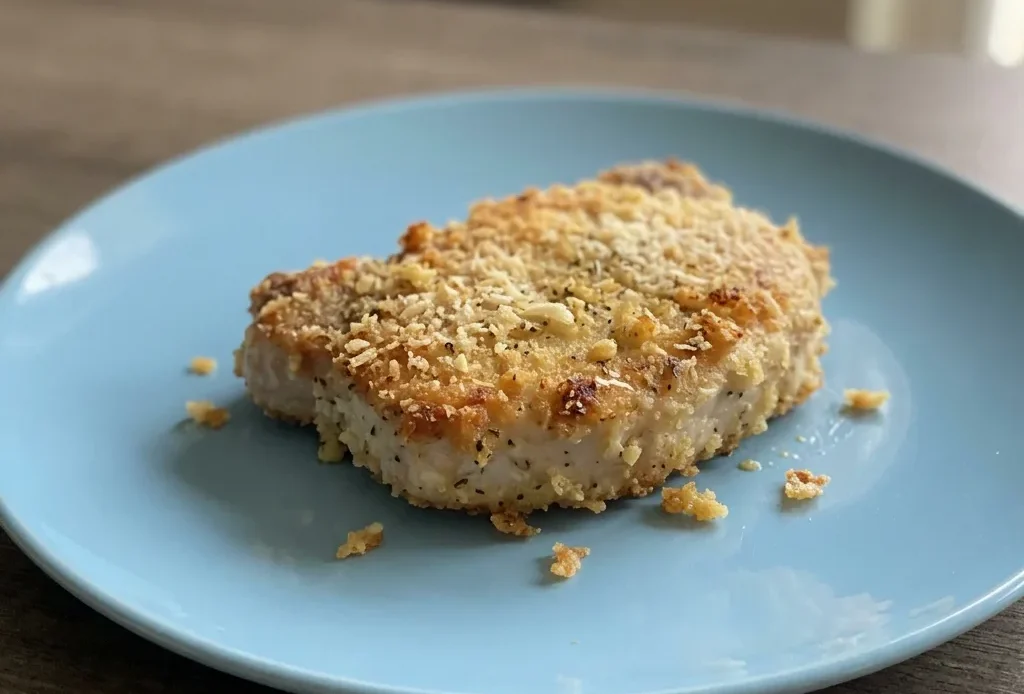
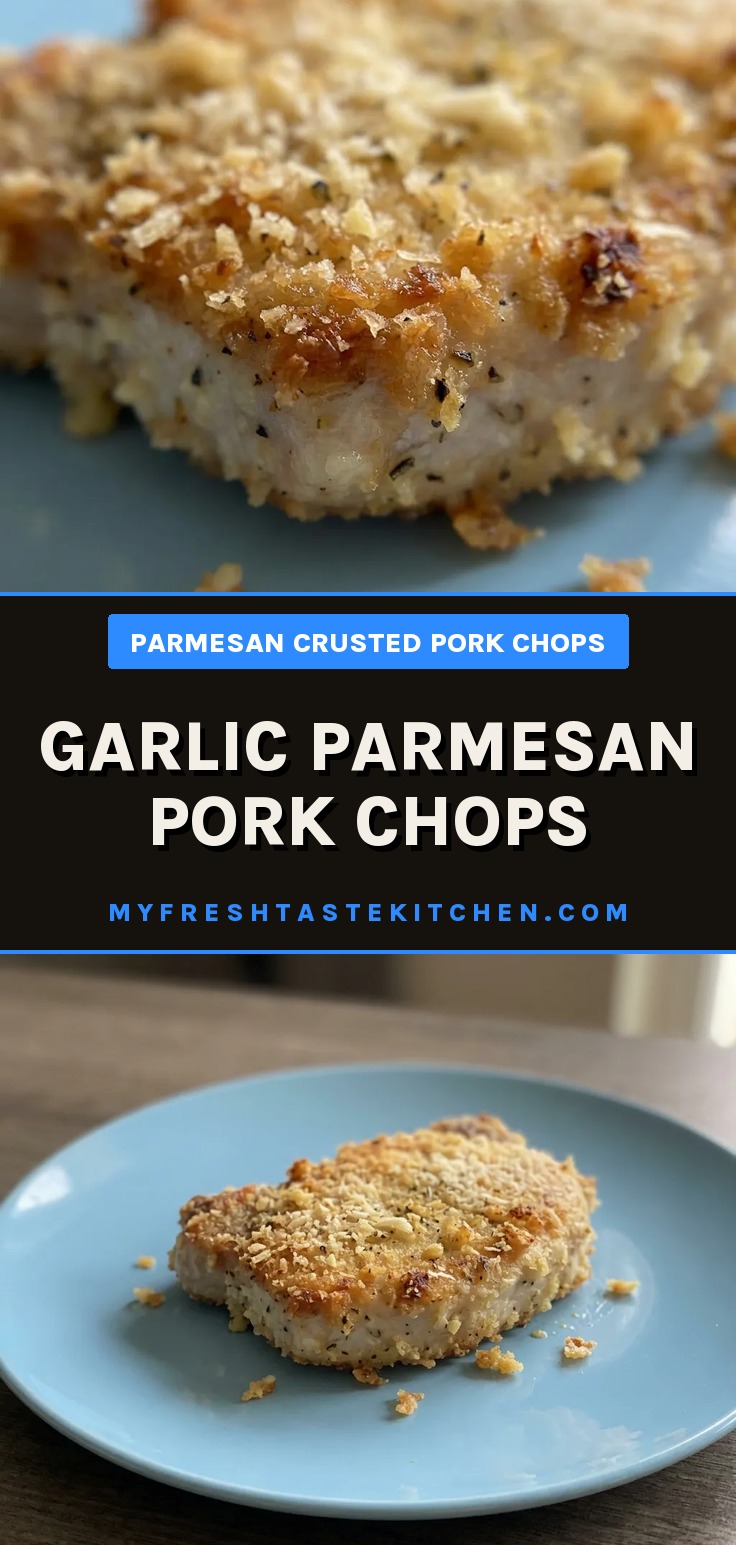
A crust that shatters when you bite, then gives way to tender, juicy pork, that’s what this method delivers. The trick is a quick stovetop sear before the oven finishes the job, building a deep golden crust without the mess of deep frying.
Parmesan and panko stay crunchy because they’re insulated from steam by the sear, so you get restaurant-quality garlic parmesan pork chops from a single skillet. It’s a two-step process, but each step has a narrow window: over-sear and the coating burns; under-bake and the center stays raw.
Get the timing right and you’ll never go back to all-oven or all-stovetop chops.
Searing for a Superior Crust
A quick sear in a hot skillet with oil and butter kicks off the Maillard reaction, browning that builds deep, savory flavor. That golden-brown crust adds texture and taste that baking alone can’t create.
It also helps seal in juices, so the pork stays moist during the short oven finish. You’ll see the difference when you cut into a chop: a crisp exterior, juicy interior.
Why the Coating Stays Crunchy
Panko breadcrumbs are larger and flakier than standard crumbs, giving a light, airy crunch that survives the oven. Freshly grated parmesan melts and bonds to the pork, forming a protective barrier against steam.
The egg wash, thinned with Dijon mustard, helps the coating adhere without soaking the crumbs. Result: a crisp, flavorful crust, not a soggy one.
Choosing the Right Pork Chop Thickness
For even cooking that avoids a dry chop, aim for 1-inch thick boneless cuts. Uniform thickness ensures the center cooks at the same rate as the edges. Thicker chops hold up to the high heat of searing and the short bake without drying out.
If your chops are uneven, pound them to a consistent 1 inch, you’ll notice the difference in doneness.
Prep: 15 min · Cook: 15 min · Total: 30 min · Servings: 4 · Calories: 380 kcal
What to Look For in the Ingredients
Pork chops: Pick 1-inch thick boneless chops for even cooking. Thinner ones dry out; thicker ones need extra time.
Parmesan cheese: Grate it fresh from a block. Pre-grated stuff has anti-caking agents that won’t melt into the crust.
Garlic cloves: Mince them fine or they’ll burn in the skillet. Garlic powder works, but use 1 1/2 teaspoons.
Panko breadcrumbs: Go for panko, not standard breadcrumbs. Their flaky texture stays crunchy after baking.
Dijon mustard: Adds tang and thins the egg wash so the coating clings without getting soggy.
Smoked paprika: Optional but gives a subtle smoky depth. Skip it if you don’t have it on hand.
I see so many people skip the sear or crowd the pan, and end up with a pale, soggy coating that’s more sad than crispy.
Build the Crust in Two Steps for Lasting Crunch
Dry and season the chops
Pat the pork chops dry with paper towels, any moisture on the surface will steam the coating later. Season both sides with salt and pepper, then check thickness. If some chops are thinner than 1 inch, pound them to match: you want even cooking from edge to center.
Set up the breading station
In one bowl, beat the eggs with Dijon mustard until smooth, the mustard thins the wash so it coats without pooling. In another bowl, combine panko, parmesan, garlic, Italian seasoning, and paprika. Taste the breading: it should be savory with a clear garlic kick.
Coat each chop evenly
Dip a chop into the egg wash, letting excess drip off, then press it into the breadcrumb mixture. Make sure the coating sticks all over, bare spots will brown differently. Set the breaded chops on a plate while you heat the skillet; don’t let them sit long or the crumbs may soften.
Sear until deep golden
Heat the oil and butter in an oven-safe skillet over medium-high until the butter foams. Lay the chops in without crowding, if they touch, they’ll steam instead of sear.
Cook 2 to 3 minutes per side; the crust should be a rich brown, not pale. If it’s browning too fast, lower the heat.
Finish in the oven without overcooking
Transfer the skillet to a 400°F oven and bake 8 to 10 minutes. The internal temperature should hit 145°F; the coating will feel crisp to the touch. Overbaking dries the pork and softens the crust, so pull them at temp and rest on a wire rack for 5 minutes to let juices settle.
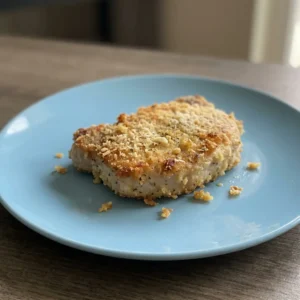
Garlic Parmesan Pork Chops – Crispy, Juicy & Flavorful
Ingredients
- 4 boneless pork chops (approximately 1-inch thick, 1–1.25 lbs in total)
- Salt and black pepper, as desired
- 1 cup panko breadcrumbs
- 3/4 cup freshly grated parmesan cheese
- 4 garlic cloves, minced (alternatively, 1 1/2 teaspoons garlic powder)
- 2 teaspoons Italian seasoning
- 1/2 teaspoon smoked paprika (optional)
- Pinch of red pepper flakes (optional)
- 2 large eggs, lightly beaten
- 1 tablespoon Dijon mustard (optional)
- 2 tablespoons olive oil (or avocado oil)
- 1 tablespoon unsalted butter
Instructions
Season and Pound Pork:
Using paper towels, dry the pork chops, then season each side with salt and black pepper. If necessary, pound them to a uniform 1-inch thickness.Prepare Egg and Breadcrumb Mixtures:
In one shallow bowl, beat the eggs with the Dijon mustard until combined. In another bowl, mix together panko, parmesan, garlic, Italian seasoning, smoked paprika, and red pepper flakes.Coat Pork Chops:
Coat each pork chop by dipping it into the egg mixture on both sides, then pressing it into the breadcrumb mixture to ensure full coverage.Preheat Oven and Heat Skillet:
Set the oven to 400°F (205°C). In an oven-safe skillet over medium-high heat, warm the olive oil and butter until hot.Sear Breaded Chops:
Place the breaded pork chops in the skillet and sear for 2–3 minutes per side, until golden brown. If necessary, cook in batches.Bake Until Done:
Move the skillet to the oven (or transfer the chops to a baking sheet) and bake for 8–10 minutes, until the internal temperature hits 145°F (65°C).Rest Before Serving:
Take the skillet out of the oven and allow the pork chops to rest on a wire rack for 3–5 minutes prior to serving.
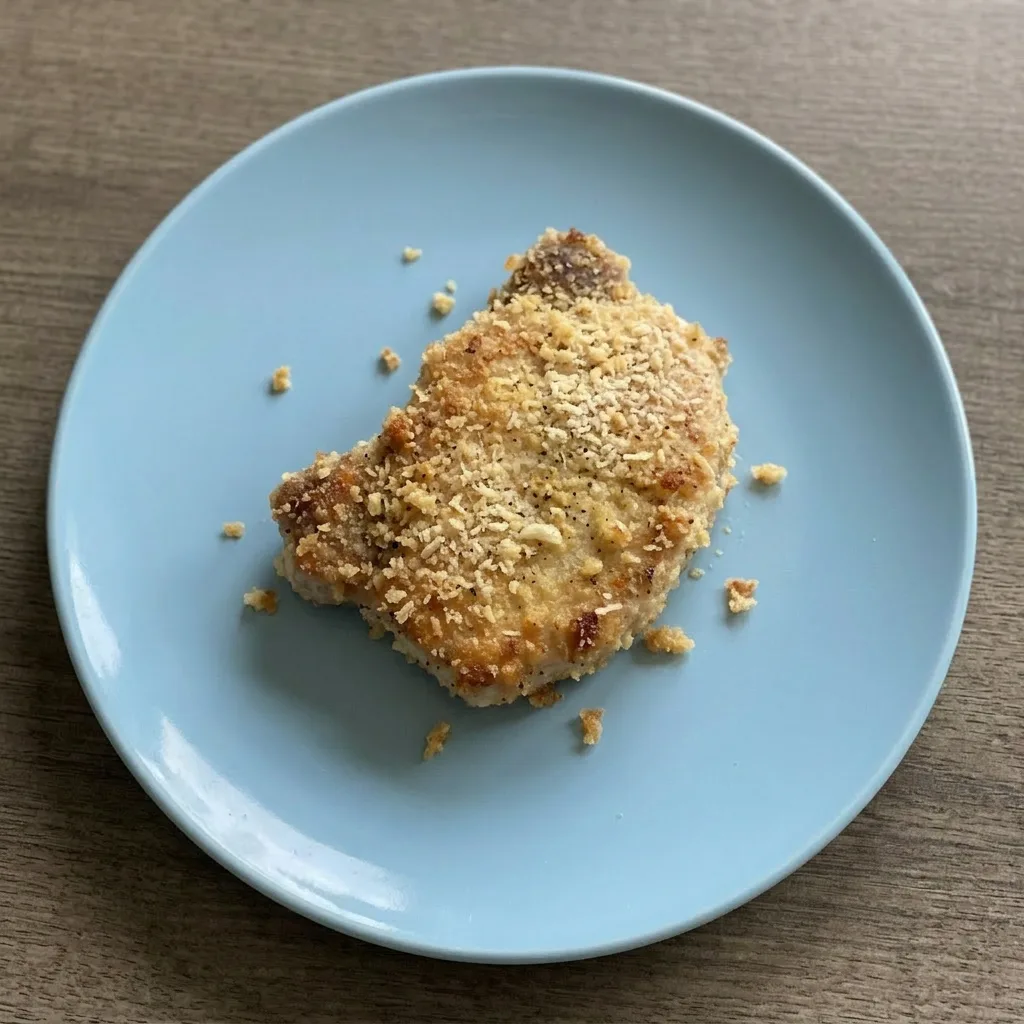
Smart Swaps That Keep the Crust Crisp
Parmesan cheese: Pecorino Romano. Pecorino is saltier and sharper. Use slightly less salt in the seasoning, or the crust may taste overly salty.
Panko breadcrumbs: Crushed pork rinds (keto). Pork rinds give a lighter, less dense crunch. They brown faster, so watch the sear closely to avoid burning.
Dijon mustard: Whole-grain mustard. Whole-grain mustard adds texture and a milder heat. It thins the egg wash similarly, so the coating still adheres.
Tips
- After patting dry, let the chops sit uncovered on a wire rack in the fridge for 15 minutes. This further dries the surface, helping the egg wash cling and the crust brown deeply.
- Use your fingers to press the breadcrumb mixture firmly into the egg-washed pork, especially around the edges. A loose coating falls off during searing, leaving bare patches that won’t crisp.
Storage and Serving
For the crispiest crust, serve the pork chops within 30 minutes of resting. Leftovers hold up to 2 days in the fridge if stored uncovered on a wire rack placed on a baking sheet. Covering traps steam and softens the coating overnight.
To restore crunch, reheat in a 350°F oven for 5 minutes, flipping once. Avoid the microwave: it turns the coating rubbery. Freezing is not recommended the crust will become soggy upon thawing and reheating.
The egg and parmesan coating doesn’t survive freezing well, so only freeze cooked, plain pork chops if needed.
Frequently Asked Questions
Can I use bone-in pork chops instead of boneless?
Yes, but the cooking time will change. Bone-in chops are thicker and take longer to reach 145°F, so expect to add 3 to 5 minutes to the bake. The crust may also brown more on the bone side; rotate the pan if needed.
How do I know when the pork chops are done without a thermometer?
Cut into the thickest part: the juices should run clear, and the meat should be white with just a hint of pink at the center. The crust will feel firm and crisp, not soft. But a thermometer is the only reliable way to hit 145°F without guessing.
Can I prepare the breaded pork chops ahead of time and bake later?
You can bread them up to an hour ahead and refrigerate uncovered on a wire rack, but any longer and the coating softens from moisture. The article notes that freezing is not recommended, the crust will become soggy upon thawing. For best crunch, bread and bake right away.
What’s the difference between this recipe and traditional fried pork chops?
This method sears the chops for a crisp crust, then finishes them in the oven rather than deep-frying. The oven step lets the interior cook gently to 145°F without the coating absorbing excess oil. You get a crunchy, parmesan crust that stays crisp, not greasy.