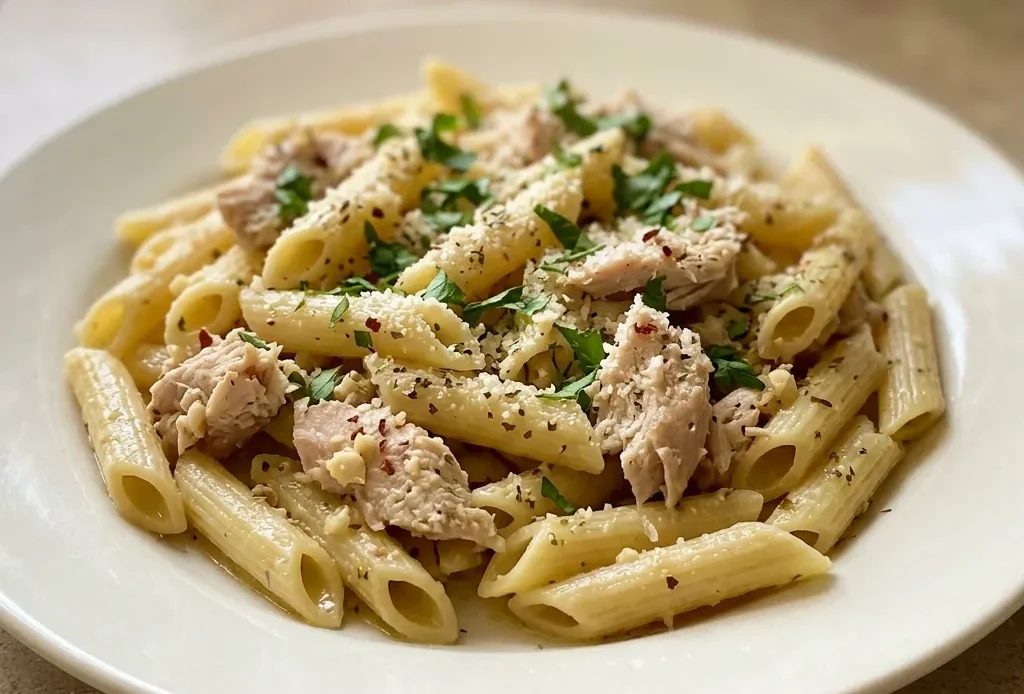
Most garlic butter pastas turn into a greasy puddle the minute they hit the plate, the oil pooling underneath while the noodles stay dry. The fix isn’t more butter, it’s the starchy water clinging to the pasta and the Parmesan acting as a binder.
That’s what makes this garlic & herb rotisserie chicken pasta actually coat every ridge, not just slide off. And because the chicken warms in that same water, you skip the dry microwave reheat entirely.
The whole thing comes together faster than it takes to boil a separate pot of sauce, with a margin for error wide enough that even slightly overdone garlic still tastes good.
Everyone thinks they need to brown the garlic, but that just makes the whole dish taste like regret.
Why use rotisserie chicken instead of cooking raw chicken?
Rotisserie chicken is already cooked, so it only needs warming. Tossing it into the pasta water two minutes before draining rehydrates the meat and brings it up to temperature without further cooking.
That’s the trick: you avoid drying out the chicken, which happens easily when you reheat it in a dry skillet or microwave. The hot, starchy water keeps it moist.
This is one of those leftover chicken recipes that actually turns out better than starting from scratch, less effort, same flavor.
What does the oil-to-butter ratio do for the sauce?
The combination of olive oil and butter creates a sauce that clings to the pasta without being greasy. Butter adds richness and a silky mouthfeel, while olive oil keeps the sauce light and helps it coat every piece evenly.
When you cook the garlic briefly in that fat, it infuses the oil with flavor without burning, you get fragrant, golden garlic, not bitter scorch. This is one of those leftover chicken recipes easy to adjust by eye: if the sauce looks thin, it’s fine; the starch from the pasta will help it adhere.
Why dried herbs instead of fresh?
Italian seasoning is a shelf-stable blend of dried basil, oregano, rosemary, and thyme that delivers consistent flavor every time, regardless of season. Fresh herbs can wilt or lose potency when stirred into a hot sauce unless you add them at the very end.
With dried, you stir them into the warm fat to soften and release their oils, you’ll smell them bloom immediately. For a cooked chicken recipe with leftovers, dried herbs are the practical choice: no chopping, no waste, always on hand.
How does the pasta water improve the dish?
You’re already boiling pasta, that water is doing double duty. Adding the shredded chicken to the pot two minutes before draining warms it through and adds moisture back into the meat. More importantly, the starchy water left on the pasta and chicken helps the garlic sauce cling to every piece.
That’s why you cook the pasta just al dente; it will absorb a bit of the sauce and finish cooking as you toss everything together. The result is a cohesive dish, not separate components.
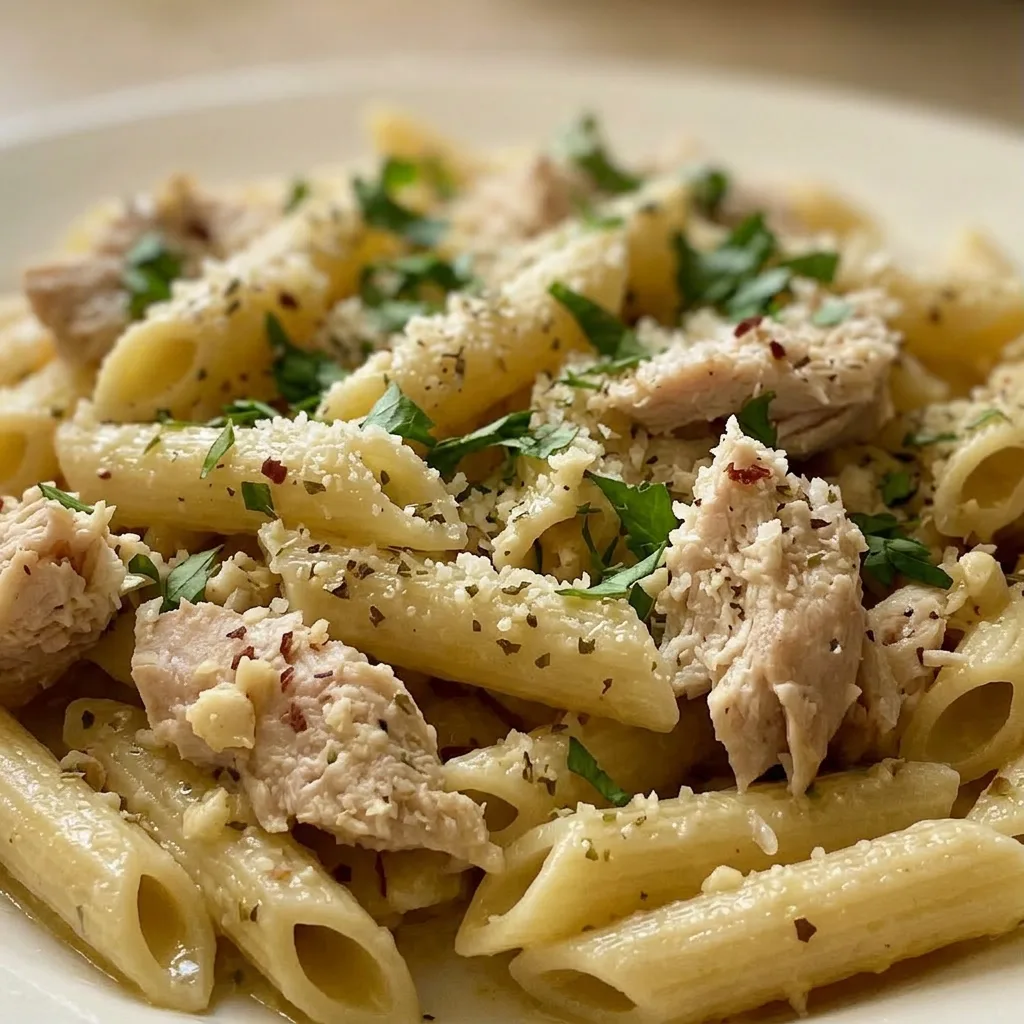
Prep: 5 min · Cook: 15 min · Total: 20 min · Servings: 6 · Calories: 580 kcal
Choose the right rotisserie chicken and pasta shape
Penne pasta: Use a ridged or tubular shape that traps the garlic sauce in its grooves and hollow center.
Rotisserie chicken: Buy a plain roasted bird, not one with heavy seasoning or a glaze that would clash with the sauce.
Extra-virgin olive oil: Use a good but not precious bottle; the heat will mute delicate flavors anyway.
Unsalted butter: Unsalted gives you control over the salt level, especially if your chicken and cheese are salty.
Italian seasoning: This dried blend is consistent year round and blooms instantly in hot fat, unlike fresh herbs.
Parmesan cheese: Buy a wedge and grate it yourself; pre shredded contains anti caking agents that prevent smooth melting.
Build the sauce while the pasta boils
Cook the pasta
Bring a large pot of salted water to a rolling boil. Drop in the penne and stir once. Set a timer for 2 minutes less than the package’s al dente time.
You want the pasta slightly underdone because it will finish cooking in the sauce.
Warm the chicken
When 2 minutes remain on the timer, dump the shredded rotisserie chicken into the pot. Stir gently. The hot starchy water rehydrates the meat without drying it, you’ll see the shreds plump slightly.
Make the garlic sauce
In a small saucepan over medium-high heat, combine olive oil, butter, minced garlic, salt, and red pepper flakes. Cook 2 minutes, stirring often. The garlic should turn pale gold and smell nutty, not acrid.
If it browns too fast, pull the pan off the heat.
Bloom the herbs
Stir in the Italian seasoning. The dried herbs will sizzle and release a fragrant, earthy aroma within seconds. Remove the pan from the heat immediately to avoid burning the garlic.
Combine and toss
Drain the pasta and chicken well, then return them to the pot. Pour the garlic sauce over the top, add the Parmesan, and toss with tongs until every piece glistens. The cheese melts into the sauce, thickening it slightly so it clings to the pasta.
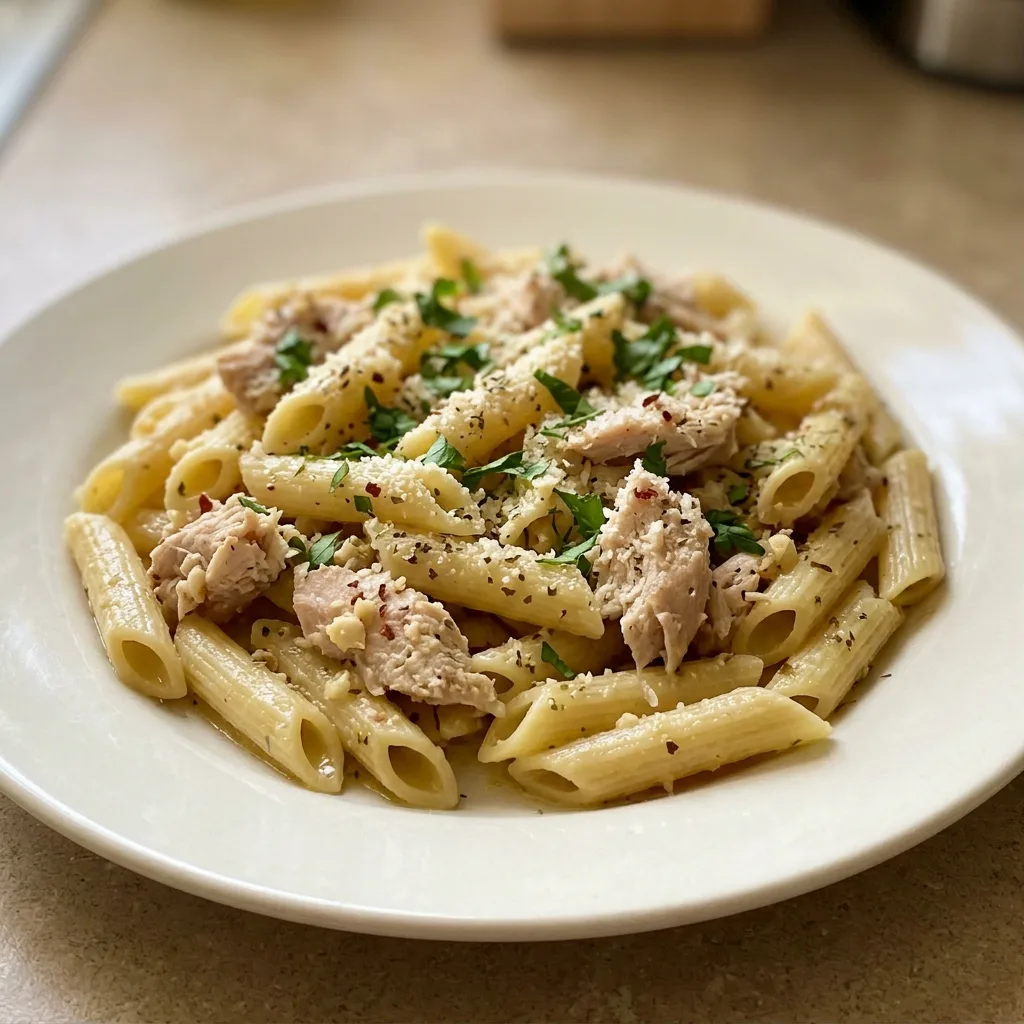
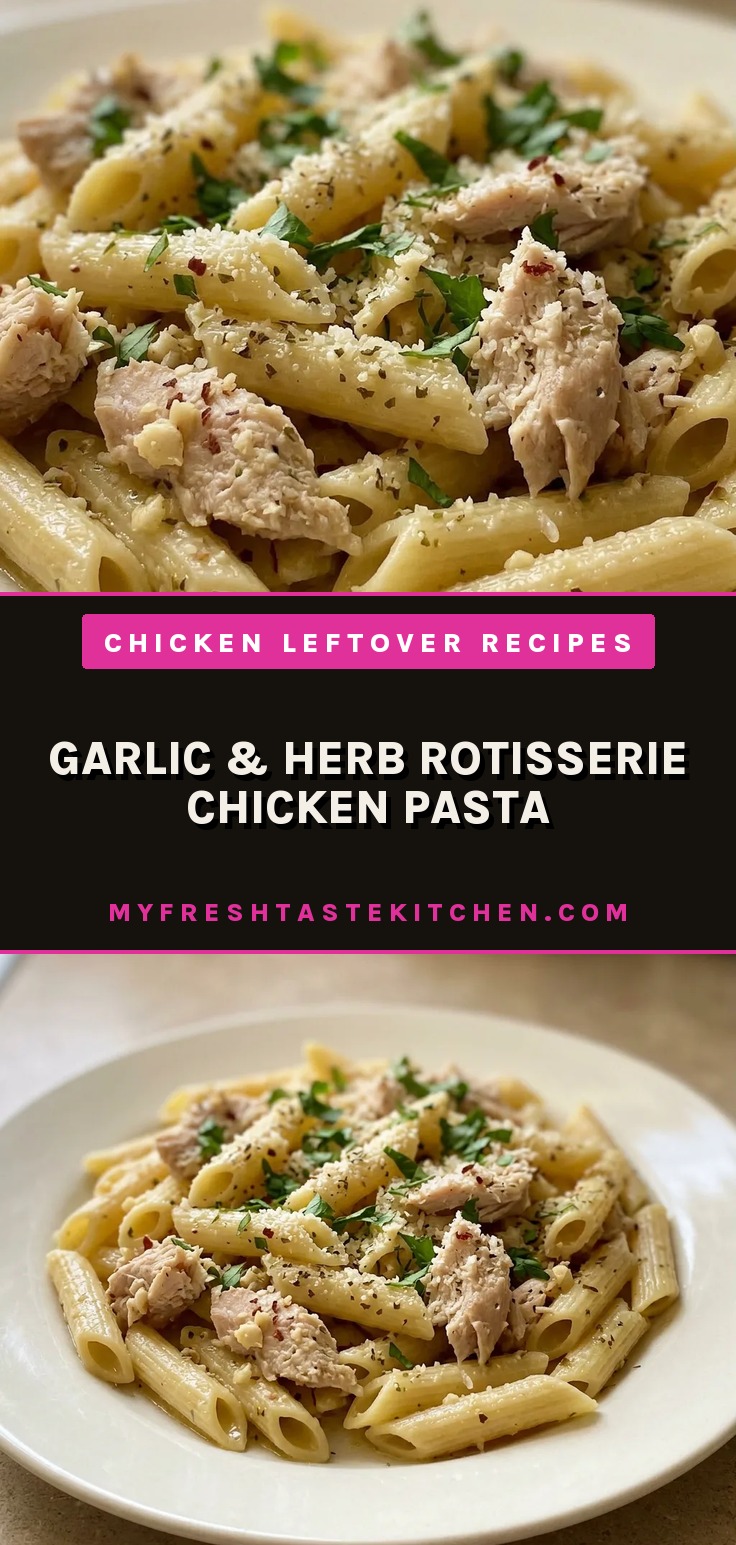
Garlic & Herb Rotisserie Chicken Pasta
Ingredients
Method
Cook the penne:
Heat a large pot of water until boiling, then cook the penne following package instructions. While pasta cooks, prepare the sauce.Add chicken to pasta:
About 2 minutes before draining, when the pasta is still slightly firm, toss in the chopped chicken to warm it through and restore moisture.Drain and return:
Drain the pot, then return the pasta and chicken to it.
Make garlic sauce:
In a small saucepan over medium-high heat, mix the olive oil, butter, minced garlic, salt, and red pepper flakes or black pepper. Cook for roughly 2 minutes, stirring often, until the garlic turns golden and smells fragrant but not burnt. If using Italian seasoning, stir it in to let it soften. Remove from heat.
Toss with sauce:
Pour the garlic sauce over the pasta mixture, then add the fresh parsley and parmesan. Toss everything until the sauce evenly coats all the pasta.
Storage and Serving
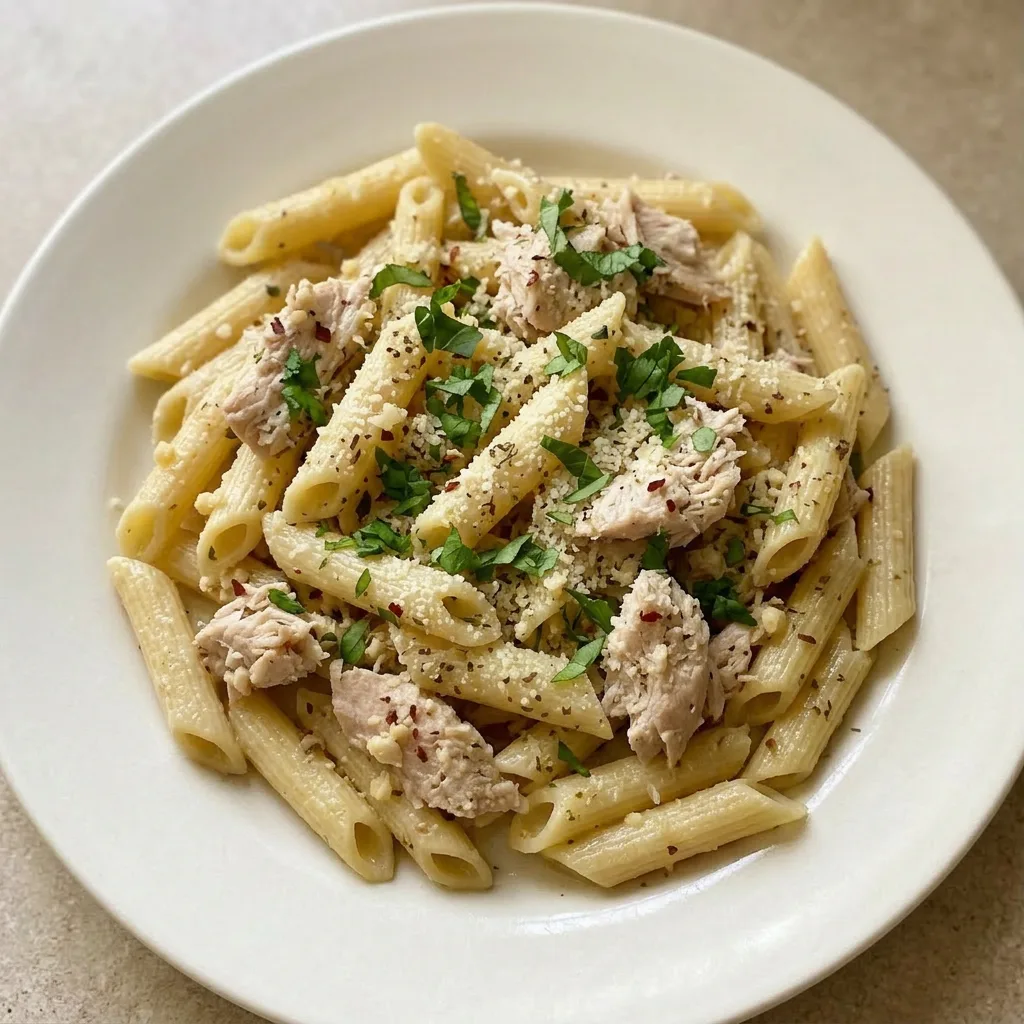
This dish is best served right after tossing, while the sauce is still glossy and the pasta is al dente. As it sits, the pasta absorbs the sauce, so if you plan to eat over a few days, reserve a portion of the garlic sauce before mixing it in. Store leftovers in an airtight container in the fridge for up to 3 days.
The texture will soften, but reheating restores it: add a splash of water or the reserved sauce, then warm in a skillet over medium heat, stirring, until heated through. The microwave works too, but expect slightly softer pasta.
Freezing is not recommended because the dairy based sauce can separate and the pasta becomes mushy upon thawing. The rotisserie chicken component alone can be frozen separately for up to 2 months, but for best quality, prepare and serve this dish fresh.
Tips
- Use a light colored saucepan to cook the garlic sauce so you can see the garlic turn pale gold clearly, which helps prevent burning.
- If the garlic starts browning too quickly, immediately lift the pan off the burner and swirl; residual heat will finish the bloom without scorching.
Three swaps that change how this pasta clings and tastes
Penne pasta: Any short pasta with ridges or curves (farfalle, rigatoni, fusilli, cavatappi). Avoid long strands like spaghetti, the sauce won’t coat them as evenly. The sauce pools in the hollows and clings to the ridges the same way.
Long pasta feels looser and the garlic butter slides off rather than sticking.
Rotisserie chicken: Leftover cooked chicken breast or thighs, shredded or chopped. For store-bought, grab a plain roasted bird, avoid heavily seasoned or glazed varieties that clash with the garlic sauce.
The swap works exactly the same: toss it into the pasta water 2 minutes before draining. Home-cooked chicken may be a bit drier if it was overcooked originally, but the starchy water rehydrates it enough. This is one of those cooked chicken recipes leftovers are for.
Parmesan cheese: Pecorino Romano or aged Asiago, both grated from a wedge. Pre-shredded contains anti-caking agents that won’t melt smoothly into the sauce. Pecorino is saltier and sharper, cut the added salt in the sauce by half.
Asiago is nuttier and milder, closer to Parmesan. Both melt into a creamy coating, but the final salt level shifts noticeably.
Italian seasoning: Use 1/4 cup chopped fresh herbs (parsley, thyme, basil) stirred in after the sauce is off the heat. Or use 1 tablespoon each dried basil and oregano, added with the garlic. Fresh herbs keep their bright color and delicate flavor but wilt quickly in hot oil, add them after you remove the pan from heat.
Dried single herbs behave like the blend; just adjust quantities so one doesn’t overpower. The dried herbs bloom in the fat, fresh herbs stay bright but softer.
Frequently Asked Questions
Can I make this pasta ahead of time and reheat it?
You can, but the pasta absorbs the sauce as it sits. The dish is best within 3 days stored airtight in the fridge. For reheating, add a splash of water or reserved sauce and warm in a skillet over medium heat, stirring, until heated through.
The microwave works but softens the pasta more.
How do I keep the pasta from getting dry when reheating?
Reserve a portion of the garlic sauce before tossing with the pasta. When reheating, add a splash of that sauce or plain water.
Reheat in a skillet over medium heat, stirring, which redistributes moisture better than the microwave. The starchy water from cooking also helps, if you saved some, a tablespoon works too.
Is this dish supposed to be saucy or dry?
It’s meant to be glossy and lightly coated, not swimming in sauce. The oil-butter mixture clings to the pasta thanks to the starch from the water and the melted Parmesan. When you toss it, every piece should glisten but there shouldn’t be a pool of oil in the bottom of the bowl.
What’s the difference between this and a classic garlic butter pasta?
Classic garlic butter pasta usually uses only butter and garlic, often with parsley. This recipe adds olive oil for a lighter coating that doesn’t solidify when cool, plus Italian seasoning for herb depth. The rotisserie chicken makes it a complete meal, and the Parmesan thickens the sauce slightly so it clings to the penne ridges.
