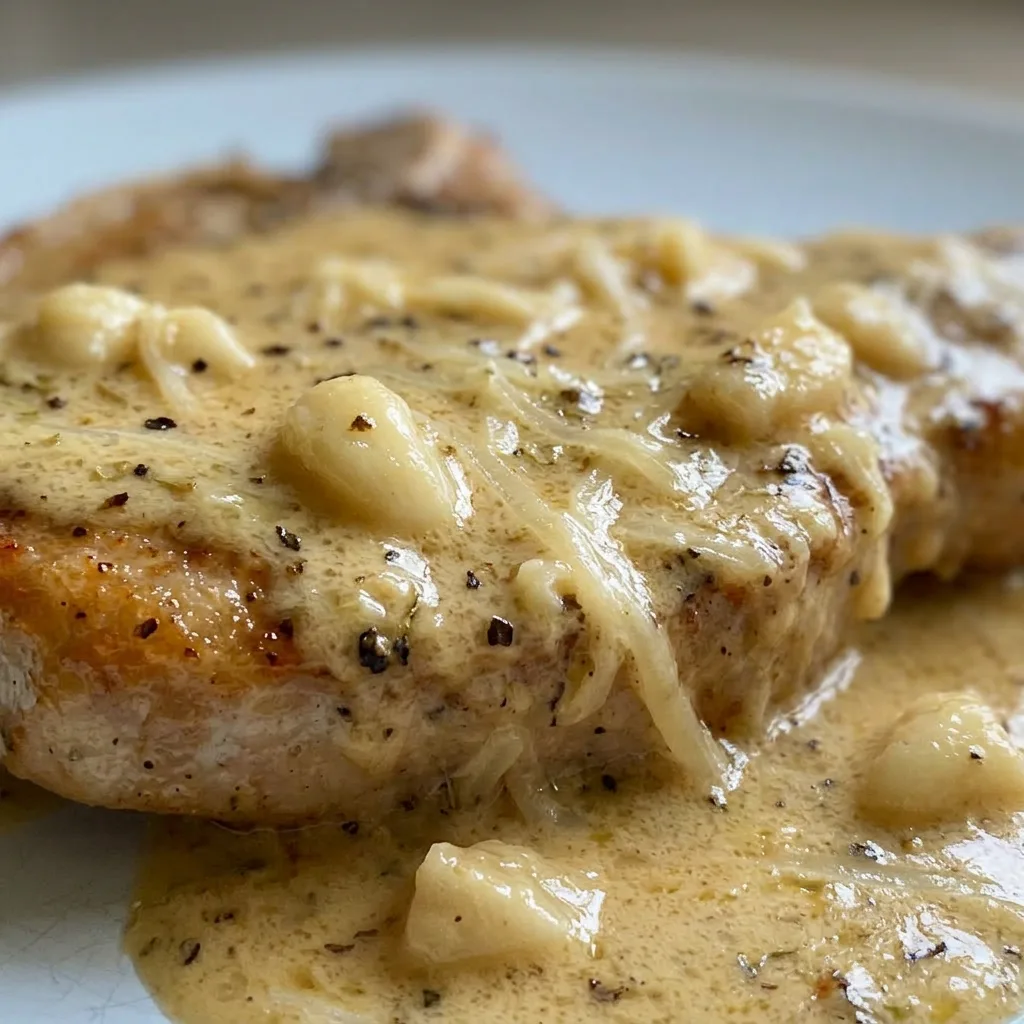
A creamy, garlicky Parmesan sauce that clings to every bite, that’s the payoff here. But the real secret is the 40-minute rest after seasoning, which lets the salt work deep into the meat.
Without that wait, you get a salty crust and a bland interior. This garlic parmesan pork chops recipe starts with a simple technique that makes the rest of the cooking almost foolproof.
Uniform Thickness for Even Cooking
Pork chops from the store vary in thickness, some parts thick, others thin. Flattening them to a uniform thickness ensures every part cooks at the same rate. Without it, thin sections dry out while thick parts stay underdone.
This technique also tenderizes the meat, breaking down fibers for a more pleasant texture. You’ll notice the chops cook evenly all the way through, with no dry edges or raw centers.
Resting Seasoned Chops Before Cooking
Resting the seasoned pork chops at room temperature does two things. First, it lets salt penetrate the meat, seasoning it from within rather than just on the surface. Second, bringing the meat closer to room temperature means it won’t shock the hot pan, so the pan stays hot enough for a proper sear.
The result is a deeper, more even seasoning and a crust that forms quickly without overcooking the interior.
Why Deglazing and a Roux Build a Better Sauce
When you brown the chops, browned bits stick to the pan, those bits are pure flavor. Deglazing with white wine lifts them off, infusing the sauce with savory depth.
Then a quick roux of butter and flour thickens the liquid smoothly, giving the sauce body so it clings to the meat. Combined with broth, cream, and Parmesan, you get a rich, balanced sauce that coats each chop without being heavy.
Prep: 15 min · Cook: 20 min · Total: 1 hr 15 min · Servings: 4 · Calories: 370 kcal
Ingredient Notes for Garlic Parmesan Pork Chops
Pork chops: Buy center-cut chops about 1 inch thick so they stay juicy after pounding.
White wine: Use a dry white wine like Sauvignon Blanc; the acidity balances the cream.
Heavy cream: Don’t sub with half-and-half; it won’t thicken properly and may curdle.
Parmesan cheese: Grate it yourself from a wedge; pre-shredded has anti-caking agents that clump.
Building the Sauce While the Chops Rest
Deglaze the Pan
Pour white wine into the hot skillet and scrape up the browned bits. You’ll see the liquid bubble and dissolve the fond, turning a deep golden brown.
Sauté Garlic and Build Roux
Add minced garlic and stir until fragrant, about 30 seconds. Then add butter and flour; whisk until it forms a smooth paste that bubbles gently, that’s your roux ready to thicken.
Add Liquids and Cheese
Pour in chicken broth and heavy cream while whisking; the sauce will thin out. Add Parmesan and keep whisking until the sauce thickens enough to coat the back of a spoon. If it’s too thin, let it simmer a minute longer.
Return Chops to the Pan
Tuck the browned pork chops back into the sauce, spooning some over the tops. Warm through for 2 to 3 minutes; the sauce should cling to the meat without pooling excessively.
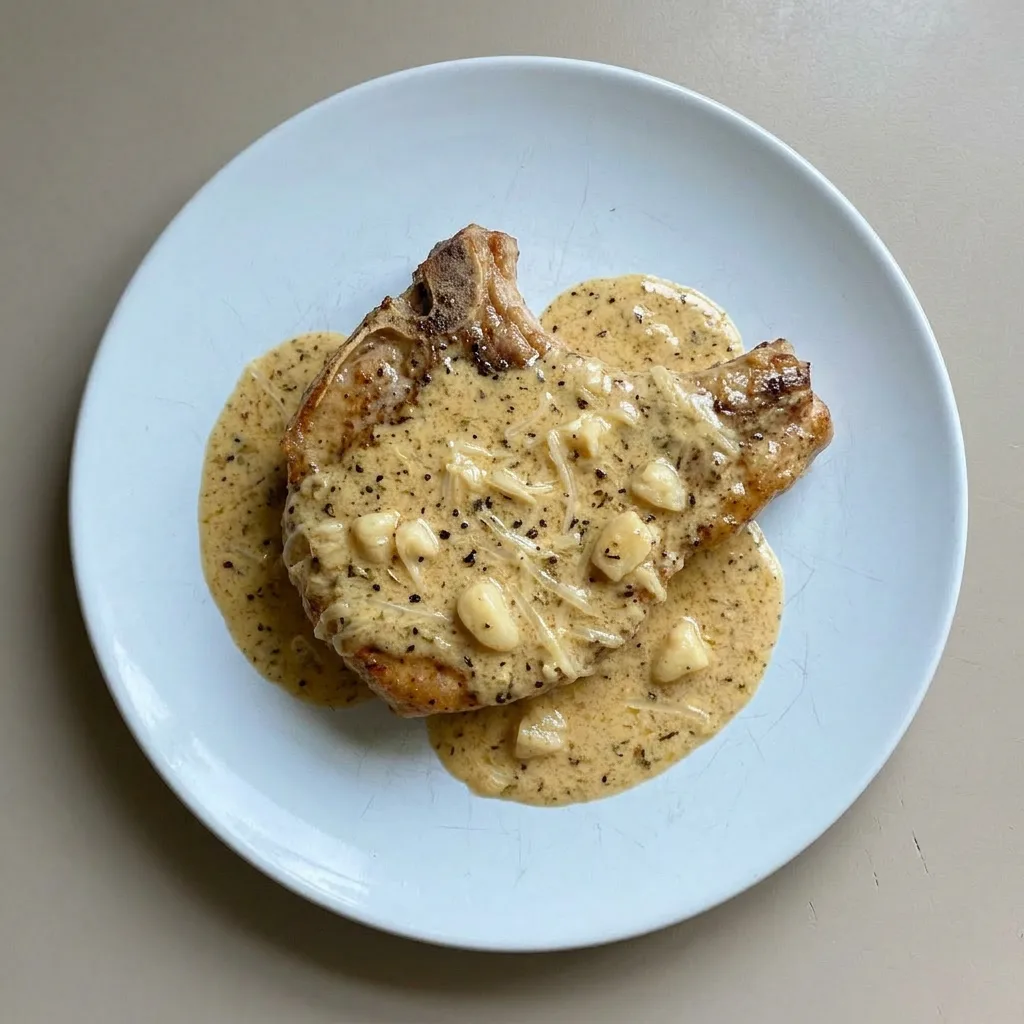
Garlic Parmesan Pork Chops
Ingredients
Method
Flatten Pork Chops:
Flatten the pork chops with a meat mallet to a uniform thickness.Season and Rest:
Season all sides with salt, pepper, and Italian seasoning. Let rest at room temperature for 35-45 minutes.Coat with Flour:
Coat each chop lightly with flour.Brown the Chops:
Warm olive oil in a skillet over medium-high heat; brown the chops on both sides until golden, then set aside.Deglaze with Wine:
Pour white wine into the skillet to deglaze, then add garlic and sauté for a short time.Make Cream Sauce:
Mix in butter and flour to form a roux, then pour in chicken broth, heavy cream, and Parmesan cheese; cook until the sauce thickens.Return Chops to Sauce:
Place the pork chops back in the skillet, coat with sauce, and warm through before serving.
Storage and Serving
Eat these pork chops within 30 minutes of returning them to the sauce for the best texture. The sauce clings best right away; as it sits, the flour-thickened base sets into a thicker coating. If you’re making them ahead, skip the final warm-through step and store the chops and sauce separately.
Refrigerate in airtight containers for up to 3 days. The sauce will thicken as it chills; reheat gently over low heat, adding a splash of broth or cream to restore a silky consistency. Reheat the chops in the sauce just until warm.
Don’t microwave them alone or they’ll dry out. Freezing isn’t recommended. The cream-based sauce separates when thawed, turning grainy.
If you must freeze, freeze only the browned chops without sauce for up to 1 month, then make fresh sauce when reheating.
Tips
- Use an instant-read thermometer to check the internal temperature of the thickest part of the chop; remove from heat at 145°F to ensure juicy, safe meat without overcooking.
Don’t Swap the Dairy, But You Can Change the Meat
Pork chops: Boneless skinless chicken breasts. Flatten chicken to even thickness. Cooks faster than pork; check temp at 155°F.
Sauce clings fine, but chicken lacks the pork’s richness.
White wine: Chicken broth plus a splash of lemon juice. Deglazes bits, but sauce loses wine’s subtle fruit and acidity. Start with 1/4 cup extra broth and 1 tablespoon lemon juice, then taste.
Heavy cream: Leave as is. Half-and-half won’t thicken from the roux and may curdle with the wine’s acidity. The sauce will be thin and grainy, not worth the swap.

Frequently Asked Questions
Can I use boneless pork chops instead of bone-in?
Yes, boneless chops work fine. Just flatten them to even thickness like the recipe says, bone-in chops are usually thicker on one side, so boneless may need less pounding. Watch the cook time: boneless can dry out faster, so pull them when they hit 145°F internal temp.
How do I prevent the sauce from curdling?
Curdling usually happens from high heat or acidic wine hitting the cream too fast. Keep the heat at a gentle simmer after adding cream, not a boil. Also, use heavy cream as listed, half-and-half won’t hold up.
If you see tiny flecks, the sauce is starting to separate; pull the pan off the heat and whisk in a splash of cold cream to smooth it.
Can I make this dish ahead of time and reheat it?
Yes, but store the chops and sauce separately in the fridge for up to 3 days. Reheat the sauce gently on the stove with a splash of broth or cream to restore its silky texture, then add the chops just until warm. Don’t microwave the chops alone or they’ll dry out.
What’s the difference between this creamy Parmesan version and a classic pan-seared pork chop?
A classic pan-seared chop gets a quick crust and is served as-is, relying on a simple pan sauce at most. Here, you build a thicker, roux-based cream sauce with Parmesan and wine, then return the chops to it so the sauce clings. That extra step gives a richer, more cohesive dish, the sauce isn’t a side, it’s part of the meat.