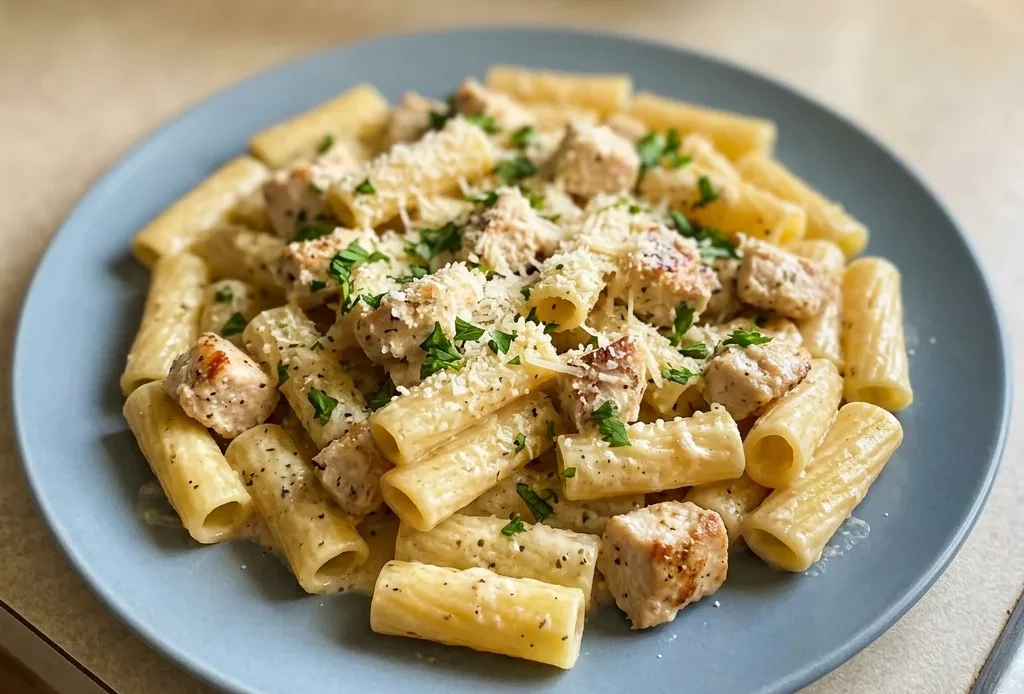
Getting a creamy sauce to actually cling to pasta isn’t about luck, it’s about how you sear the chicken. That golden crust does more than keep the meat juicy; the browned bits left behind dissolve into the cream and Parmesan, making a sauce that grabs every ridge of the rigatoni.
Without that fond, you’d have a pale, thin sauce that slides off the pasta. This garlic butter chicken with rigatoni and parmesan is straightforward, but the margin for error is real: skip the sear and you lose the depth that makes it taste like more than the sum of its parts.
The Sear on the Chicken
A quick sear over medium-high heat gives the chicken pieces a golden-brown crust. That crust locks in moisture, bite into a piece and you’ll feel it’s juicy, not dry.
Cooking the chicken separately means it won’t sit in the sauce long enough to turn rubbery. Meanwhile, the browned bits left in the skillet, called fond, dissolve into the broth and cream, adding a savory depth you can’t get any other way.
Cream and Parmesan Together
Heavy cream gives the sauce its richness and keeps it from curdling when simmered. Parmesan doesn’t just season, it helps the sauce tighten enough to coat each rigatoni.
The sauce clings to the pasta’s ridges and holes, so every forkful carries that creamy, salty taste. You don’t need a roux; the fat in the cream and the protein in the cheese do the thickening for you.
Why That Reserved Pasta Water Matters
The starch left in pasta water is a natural emulsifier. Add a splash to your sauce and it will loosen without turning watery, instead it stays silky and clings even better. If the sauce tightens up as it sits, a tablespoon or two brings it back.
Skip this step and you risk a dish that’s either too thick and gluey or too thin and bland.
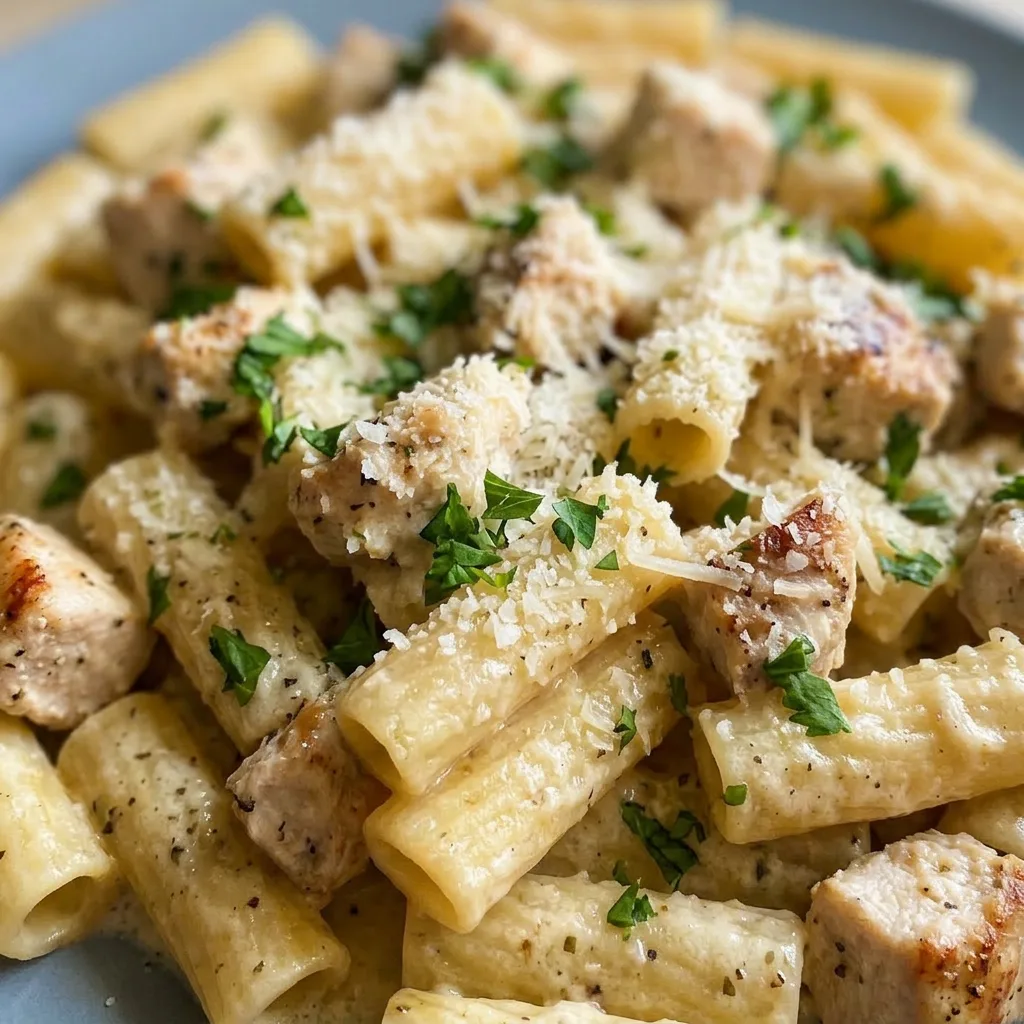
Prep: 10 min · Cook: 20 min · Total: 30 min · Servings: 4 · Calories: 670 kcal
What to Look For in the Pantry
Rigatoni: Buy a bronze-die pasta: the rough surface grabs sauce better than smooth extruded noodles.
Parmesan: Grate it yourself from a block. Pre-shredded stuff has anti-caking agents that won’t melt smooth.
Heavy cream: Don’t use half-and-half or milk. The sauce needs the fat to thicken without breaking.
Chicken broth: Low-sodium lets you control salt. If using regular, cut the added salt by half.
Building the Sauce from the Fond
Deglaze the Skillet
Pour in the chicken broth and scrape up the browned bits with a wooden spoon. They’ll dissolve quickly, stop when the liquid turns a uniform golden brown.
Add the Cream
Stir in the heavy cream and let it bubble gently. Watch for the sauce to thicken enough to coat the back of a spoon, about 2 minutes of simmering.
Finish with Cheese
Sprinkle in the Parmesan and stir until it melts into the sauce. If the sauce looks thin, let it simmer another 30 seconds; if too thick, add a splash of reserved pasta water.
Toss Everything Together
Return the chicken and add the drained rigatoni. Toss until every piece is coated and the sauce clings to the pasta’s ridges, the skillet should look nearly dry.
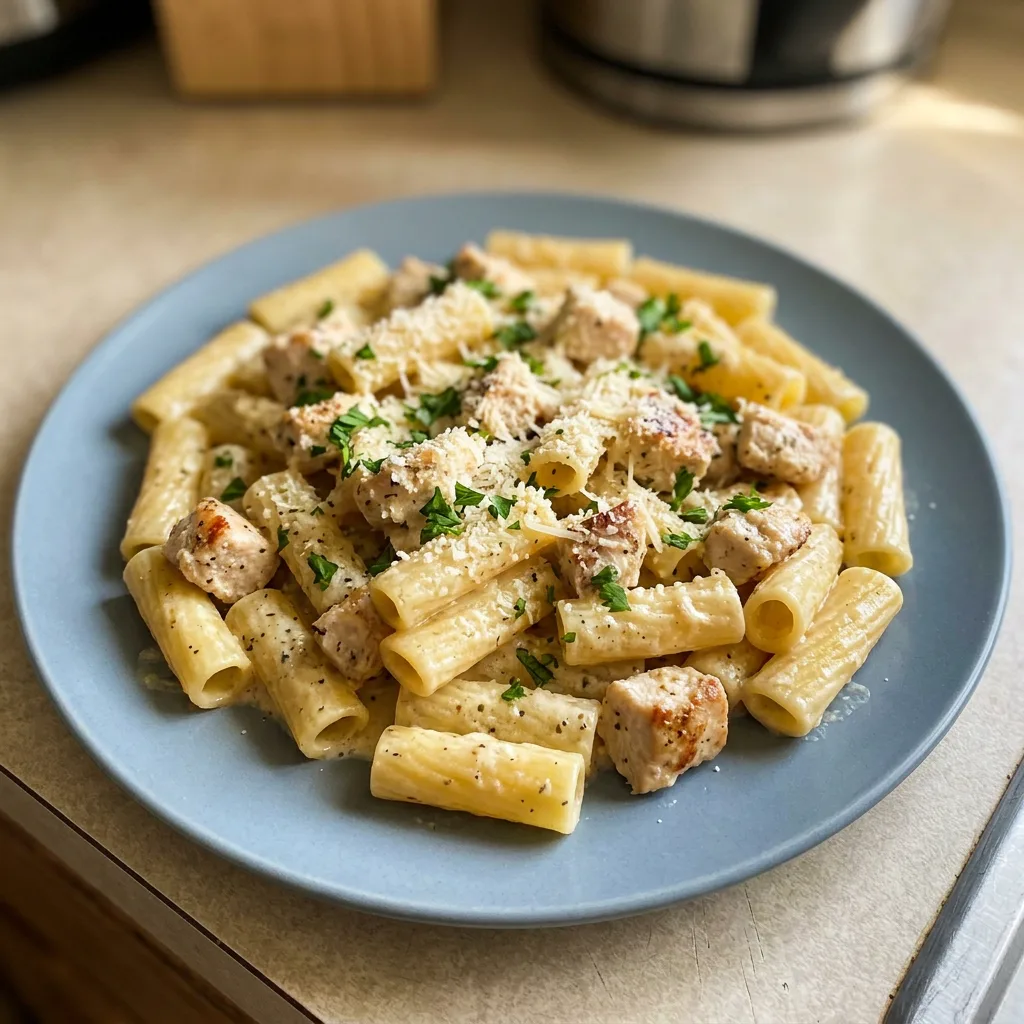
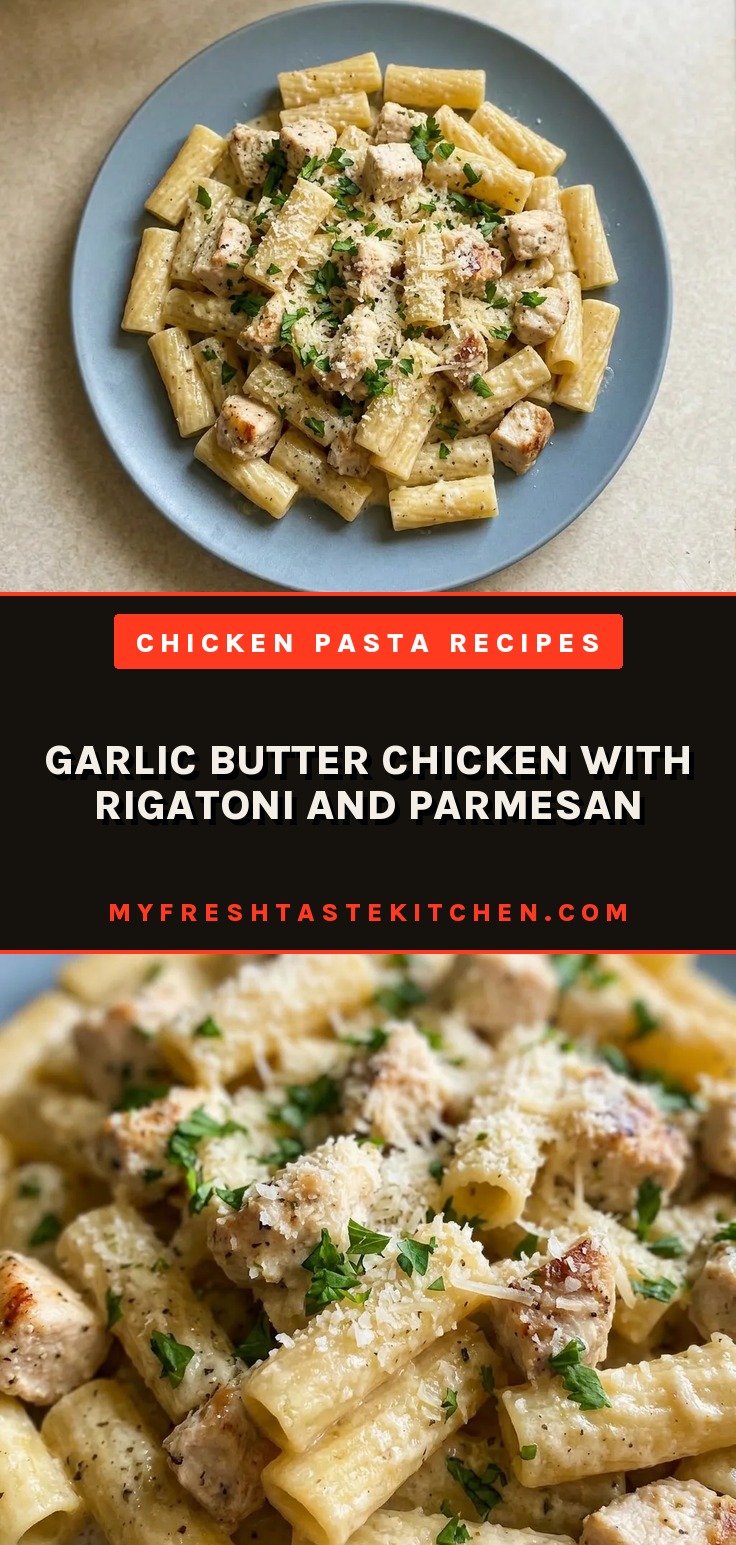
Garlic Butter Chicken with Rigatoni and Parmesan
Ingredients
Method
Boil Rigatoni:
Boil rigatoni in a large pot of salted water until al dente. Set aside ½ cup pasta water before draining.Sear Chicken:
Heat olive oil in a skillet over medium-high heat. Season chicken with salt and pepper, then sear until golden. Remove chicken from skillet.Sauté Garlic:
In the same skillet, melt butter and sauté minced garlic briefly. Add chicken broth and bring to a simmer.Make Cream Sauce:
Pour in heavy cream and allow to thicken slightly, then stir in Parmesan cheese.Combine Chicken Pasta:
Return chicken to the skillet along with rigatoni; toss to coat evenly. Simmer for 1 more minute.Garnish with Parsley:
Plate and sprinkle with parsley.
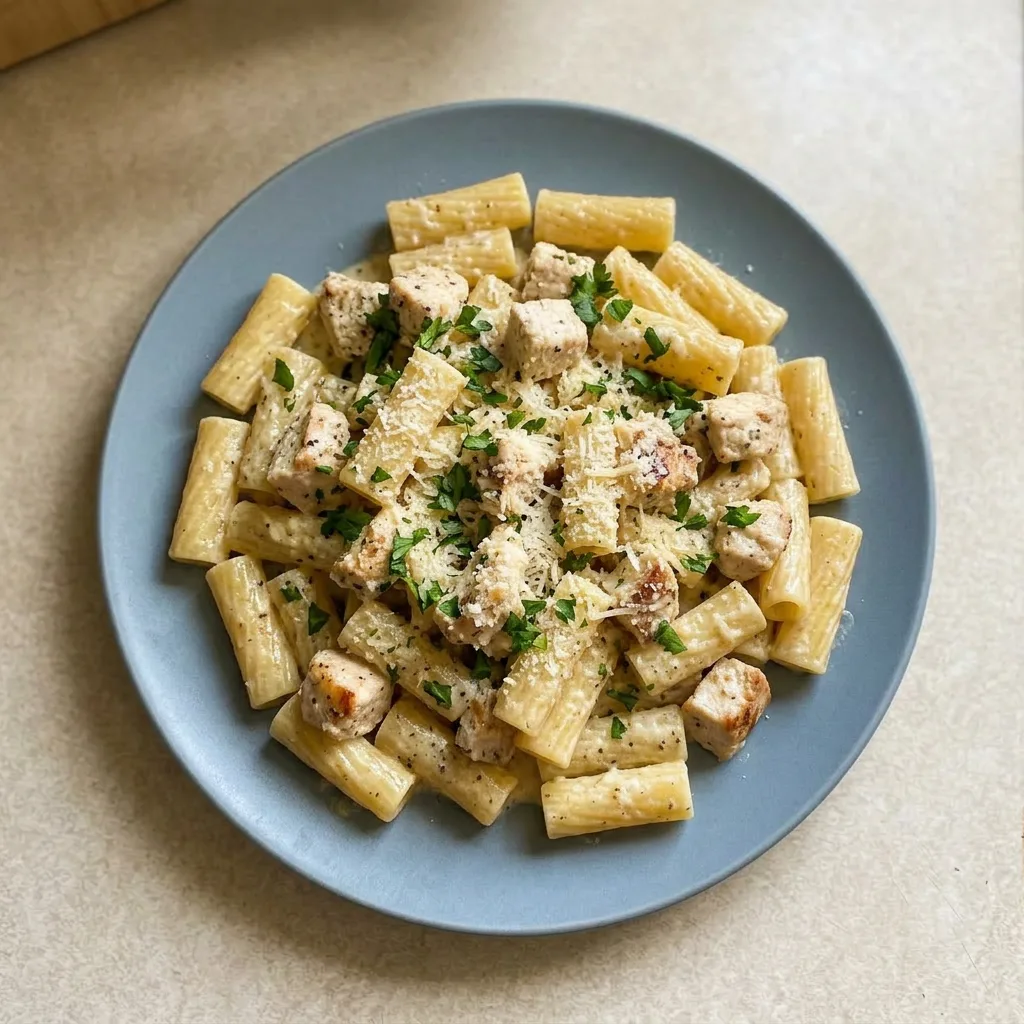
Storing and Reheating Garlic Butter Chicken Rigatoni
Serve this dish right after tossing the pasta with the sauce and chicken. The rigatoni holds the sauce best within the first 15 minutes; after that, the pasta continues to absorb liquid and the sauce thickens. For leftovers, transfer to an airtight container and refrigerate for up to 3 days.
The cream sauce will thicken as it chills, and the pasta will soften slightly. To reheat, add a splash of milk or broth and warm gently in a skillet over medium-low heat, stirring until the sauce loosens and coats the pasta again.
Avoid high heat, which can make the sauce curdle. Freezing is not recommended: the cream sauce will separate and the pasta turns mushy upon thawing. If you must freeze, freeze the cooked chicken and sauce alone, then cook fresh pasta when serving.
Tips
- Use a microplane to grate the Parmesan; it dissolves faster into the sauce and prevents clumps.
- Let the sauce bubble for a full 2 minutes after adding cream before adding cheese, or the sauce will be thin.
When to Swap and When to Hold the Line
Chicken breasts: Boneless, skinless chicken thighs. Thighs stay juicier because they have more fat. You’ll need to cook them a minute or two longer to reach 165°F, but they won’t dry out if you go over.
Heavy cream: Half-and-half. The sauce will be thinner and won’t cling to the pasta as well. It also won’t tighten up as much when simmered, expect a looser, more brothy consistency.
Stir in a teaspoon of cornstarch dissolved in water if you want more body.
Parmesan: Pecorino Romano or Grana Padano. Pecorino is saltier and sharper; cut the added salt in half. Grana Padano is closer in flavor but melts similarly.
Both need to be grated from a block, pre-shredded won’t emulsify into a smooth sauce.
Rigatoni: Any short, ridged pasta (penne, ziti, fusilli). The ridges trap sauce, so smooth pasta like spaghetti will leave much of the creamy sauce in the skillet. Stick to shapes with nooks and crannies for the best coating.
Frequently Asked Questions
Can I use chicken thighs instead of breasts, and will it affect cooking time?
Yes, boneless skinless thighs work well. They’re more forgiving because the extra fat keeps them juicy even if you cook a minute or two longer to hit 165°F, but that extra minute won’t dry them out like it would breasts.
How do I prevent the cream sauce from curdling or separating?
Use heavy cream, its fat content keeps the sauce stable when simmered. If the sauce does start to look grainy, it’s likely from too-high heat; lower it and stir in a splash of the reserved pasta water to smooth it out again.
Can I make this dish ahead of time and reheat it?
You can refrigerate leftovers for up to 3 days, but the pasta will continue absorbing sauce and soften. To reheat, add a splash of milk or broth and warm gently in a skillet over medium-low, stirring until the sauce coats the pasta again, high heat can curdle the cream.