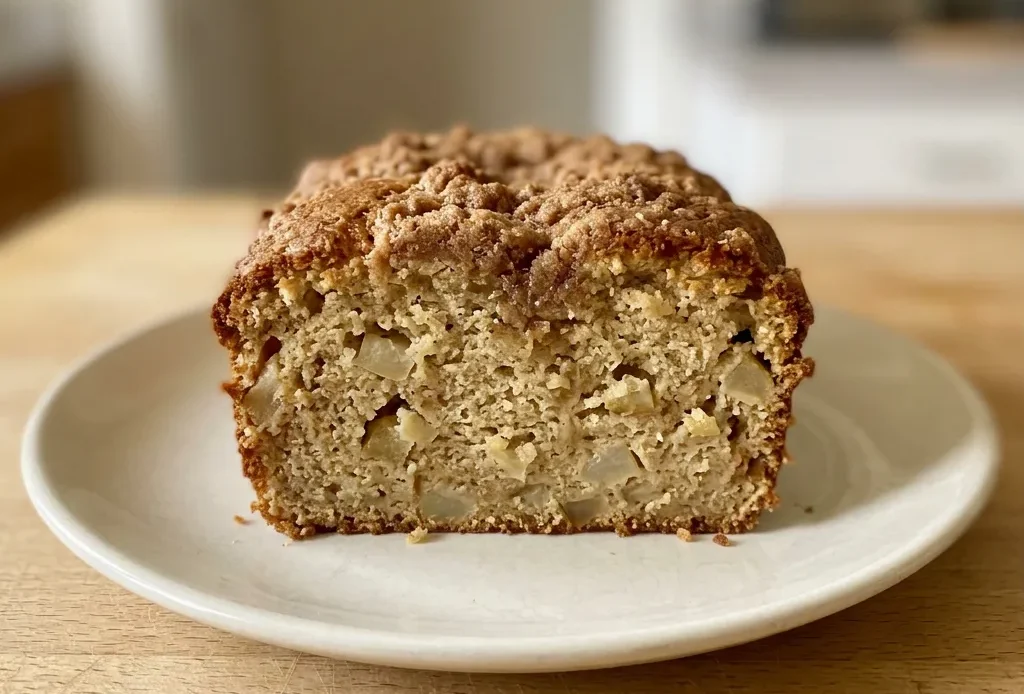
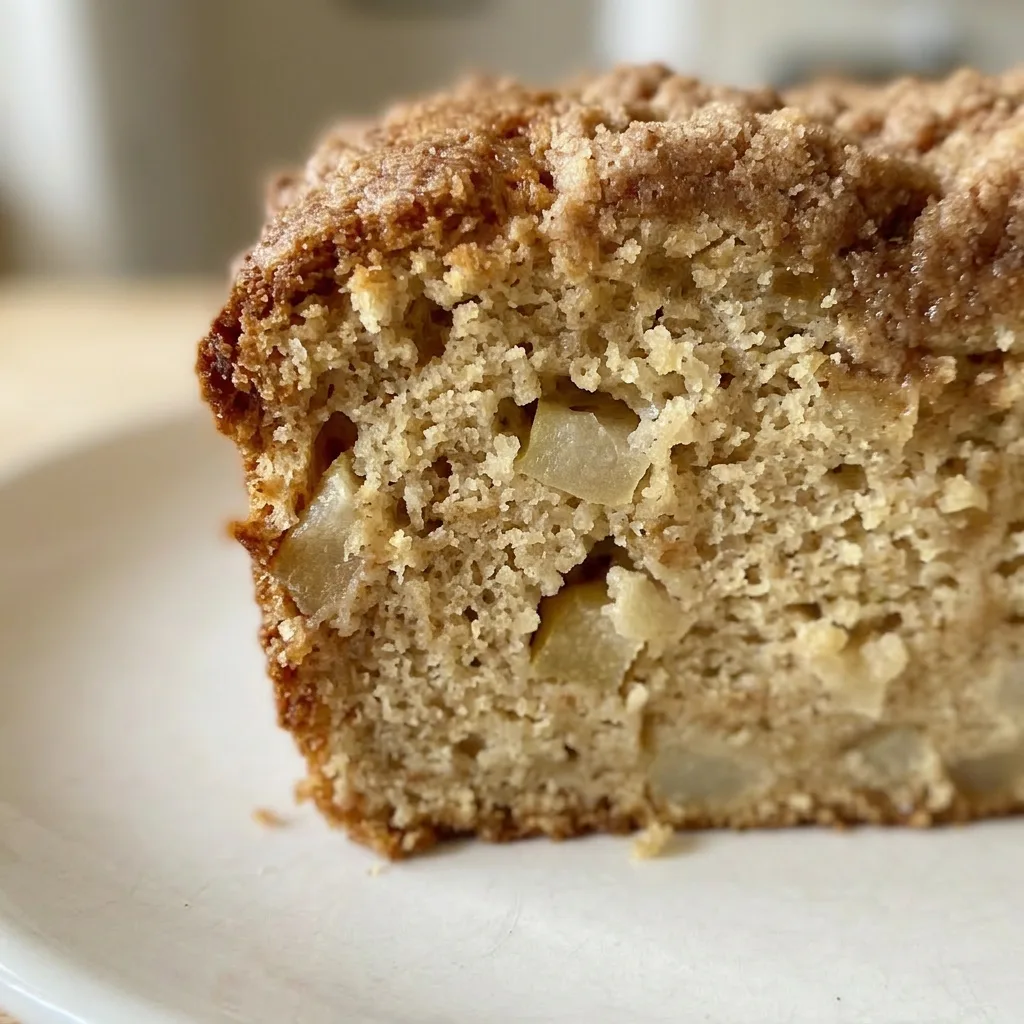
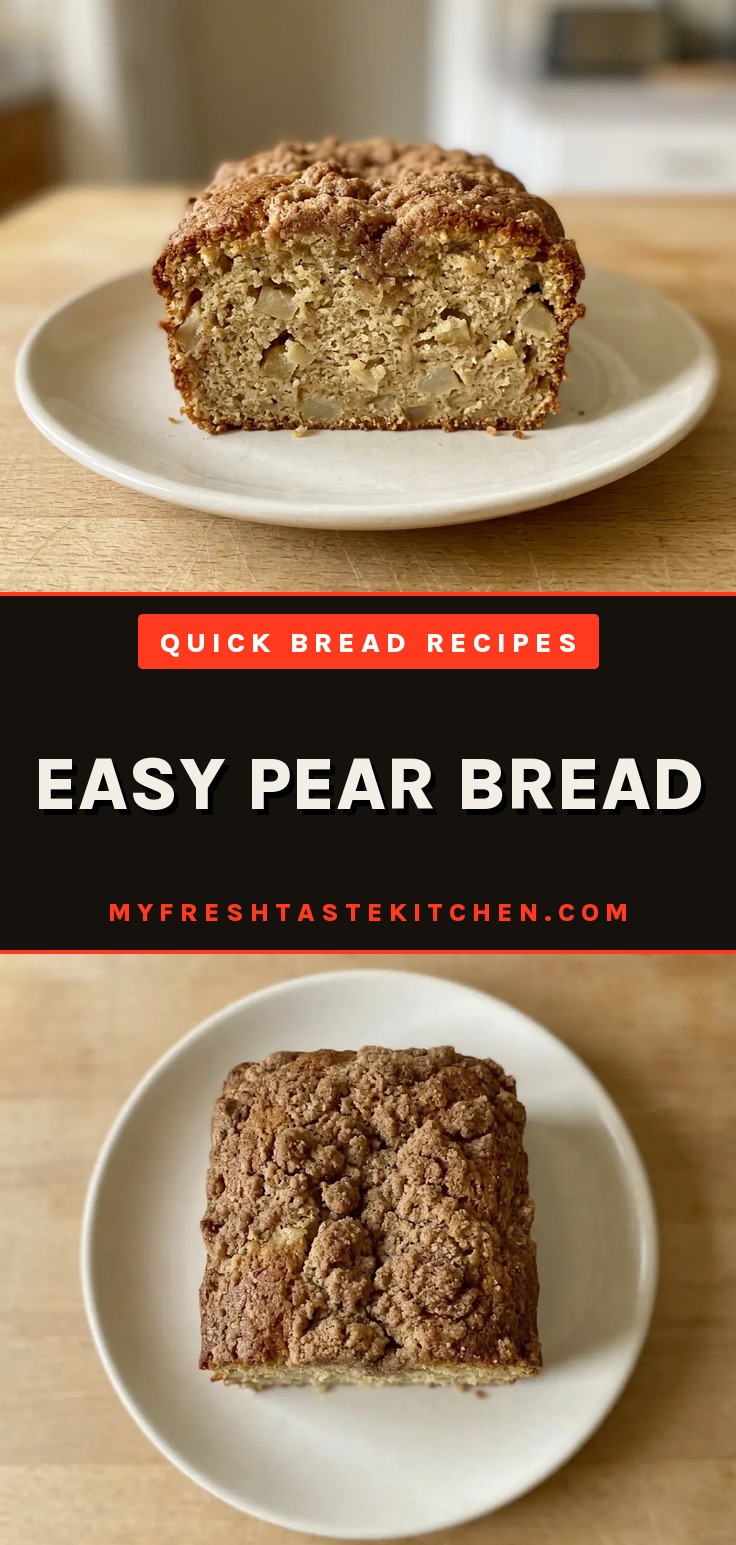
A soft, spiced crumb studded with tender pear chunks, capped with a crunchy cinnamon streusel that shatters when you bite. That contrast, moist bread against crisp topping, is what makes this easy pear bread more interesting than your average loaf.
Canned pears in juice deliver consistent moisture every time, so you don’t have to guess ripeness or adjust liquid. The oil-based batter forgives a light hand, but overmixing still turns it tough.
It’s a forgiving recipe with one real pitfall: beat too long after adding flour and the crumb tightens up. Fine if you’re patient, but worth knowing before you start.
Why do canned pears in juice work so well here?
Canned pears pack consistent sweetness and moisture. You drain and chop them, which removes excess liquid while keeping enough to hydrate the batter. Fresh pears work, but their ripeness varies, a soft Bartlett adds more moisture than a firm Bosc.
The oil and sugar ratios handle that range, so you can swap without adjusting anything else. The result is a reliably moist crumb, never soggy or dry, batch after batch.
What does the streusel topping actually do?
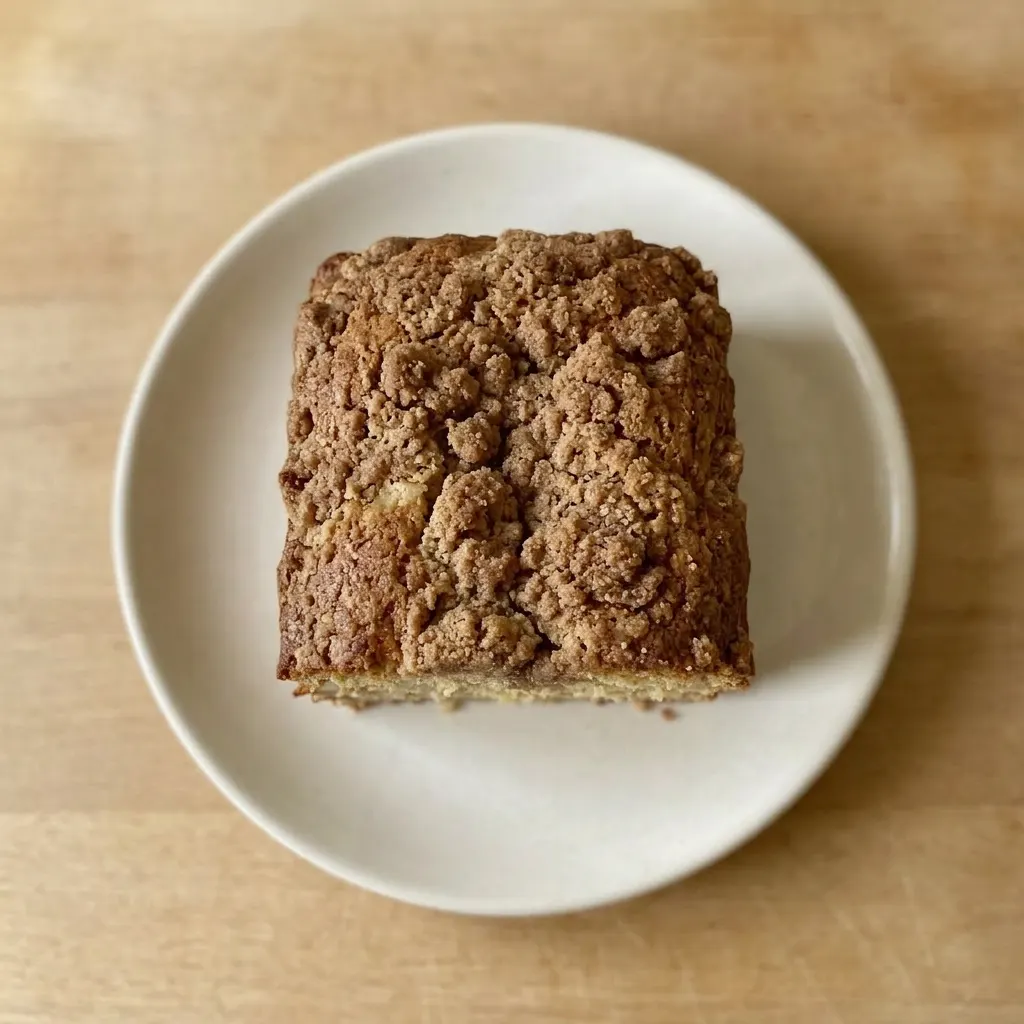
It creates a crunchy, sweet crust that contrasts with the soft, spiced bread beneath. The blend of sugars, flour, cinnamon, and oil bakes into a crisp layer that also seals moisture in the loaf. Without it, the top stays plain and soft.
The visual crunch signals texture before you even bite. It’s a small addition that changes how the whole bread eats.
Why gentle mixing matters for a tender crumb
Creaming oil with sugar aerates the batter without building gluten. That’s the first step to a tender crumb. When you add the dry ingredients, running the mixer on low and stopping as soon as streaks disappear prevents toughness.
Overmixing develops gluten, turning a light quick bread dense and rubbery. You’ll see the difference in the bite, soft, not chewy.
Prep: 10 min · Cook: 1 hr · Total: 1 hr 10 min · Servings: 2 · Calories: 480 kcal
A few things about the ingredients
Canned pears in juice: Drain and chop them. The residual juice hydrates the batter without making it soggy.
Vegetable oil: Use a neutral oil. It keeps the crumb tender without adding flavor.
Streusel oil: Start with 4 tablespoons; add more if you want a thicker, crunchier crust.
Build the batter in sequence for a tender, moist loaf
Prep the pans and dry mix
Butter two 8×4 or 9×5 loaf pans. Whisk the flour, baking soda, baking powder, salt, cinnamon, and nutmeg together. A whisk breaks up clumps without compacting the flour.
Beat oil and sugar
In a stand mixer with the paddle, beat oil and sugar on medium until blended, about 1 minute. The mixture will look thick and glossy, not separated. No creaming happens here, just a uniform base.
Add eggs one at a time
Turn the mixer to low and add eggs one by one, mixing after each until just combined. The batter will loosen slightly. Scrape the bowl after the second egg to keep everything even.
Stir in pears and vanilla
Fold in the drained, chopped pears and vanilla with a spatula. The batter will look lumpy with fruit. Don’t worry if some juice pools, it hydrates the flour later.
Add dry ingredients gently
With the mixer on low, slowly add the dry mixture. Stop as soon as no dry streaks remain, about 15 seconds.
The batter will be thick and slightly curdled-looking from the pears. Overmixing turns the crumb tough.
Make the streusel
Stir the sugars, flour, and cinnamon together. Drizzle in oil a tablespoon at a time, rubbing with your fingers until it feels like wet sand. Use 4 tablespoons for a light crust, up to 8 for a thick one.
Assemble and bake
Divide batter between the pans. Sprinkle streusel evenly over each.
Bake at 350°F for 60 minutes. A toothpick inserted in the center comes out clean. Cool in pans for 10 minutes, then turn out onto a rack.
Easy Pear Bread
Ingredients
Pear Bread
- 3 cups all-purpose flour 360g
- 1 tsp baking soda
- 1 tsp baking powder
- 1 tsp salt
- 1 tsp ground cinnamon
- 1/2 tsp ground nutmeg
- 1 cup vegetable oil 218g
- 1 3/4 cup granulated sugar 350g
- 3 large eggs
- 2 14.5-oz cans sliced pears in juice, drained and chopped or 2 1/2 cups peeled and chopped fresh pears
- 1 tsp vanilla extract
Streusel Topping
- 6 Tbsp granulated sugar 72g
- 6 Tbsp brown sugar 72g
- 4 Tbsp all-purpose flour 30g
- 1 tsp ground cinnamon
- 4-8 Tbsp vegetable oil 54-108g
Instructions
Pear Bread
Preheat oven and butter pans:
Heat the oven to 350°F (175°C). Butter two 8×4″ or 9×5″ loaf pans.Whisk dry ingredients together:
In a medium bowl, combine flour, baking soda, baking powder, salt, cinnamon, and nutmeg with a whisk. Set aside.Beat oil and sugar:
In a stand mixer bowl fitted with a paddle attachment, beat oil and granulated sugar on medium speed until blended.Add eggs one by one:
Turn the mixer to low, then add eggs one by one, mixing briefly after each addition until combined.Stir in pears and vanilla:
Stir in chopped pears and vanilla until incorporated.Mix in dry ingredients:
With the mixer running on low, slowly add the dry mixture, mixing only until no dry streaks remain. Avoid overmixing.Divide batter into pans:
Split the batter equally between the two greased pans.Make and add streusel:
For the streusel: in a small bowl, stir together granulated sugar, brown sugar, flour, and cinnamon. Drizzle in vegetable oil 1 tablespoon at a time, working it with your fingers until it feels like wet sand. Distribute the streusel evenly over the two loaves.
Streusel Topping
Bake and cool loaves:
Bake for approximately 60 minutes, until a toothpick inserted in the center comes out clean. Let cool in the pans for 10 minutes, then turn out onto a wire rack to cool fully.
Three ingredients you can swap in pear bread, and one you shouldn’t
Vegetable oil: Melted coconut oil or unsweetened applesauce. Coconut oil replaces the oil cup for cup; use it melted and cooled slightly.
The bread will be just as tender, with a faint coconut note that plays well with the spice. Applesauce cuts fat and calories: swap up to half the oil (½ cup) for ½ cup applesauce. The crumb will be a touch denser and more cake-like, but still moist.
Don’t go full applesauce, without any oil the texture turns gummy.
Pears: Canned pears in juice (drained) or fresh pears. Both work, but syrup-packed pears are too sweet and throw off the sugar balance.
Canned in juice gives consistent moisture; fresh pears need to be soft-ripe (like Bartlett) and chopped. A firm Bosc will bake up drier.
Either way, you use the same 2½ cups chopped. The batter handles the variation because the oil and sugar already buffer moisture differences.
All-purpose flour: 1:1 gluten-free baking blend. A blend with xanthan gum (like King Arthur Measure for Measure) subs cup for cup. The bread will be slightly more crumbly and less springy, but still sliceable.
Don’t use almond or coconut flour, they absorb differently and need a whole new formula. If you go gluten-free, expect a more delicate crumb that benefits from cooling completely before slicing.
Tips
- When making the streusel, squeeze a handful: it should clump like wet sand; if too dry, add oil 1 tablespoon at a time until it holds together.
- For a more even distribution of pears, toss the chopped pears with a tablespoon of the flour mixture before folding them into the batter; this prevents them from sinking to the bottom.
Storage and Serving
This pear bread is best served the day it’s made, when the streusel topping is still crunchy. As it sits, the streusel absorbs moisture from the bread and softens, losing its contrast. Store leftovers airtight at room temperature for up to 3 days.
The crumb stays moist but the topping will be soft. For longer storage, freeze the whole loaf wrapped tightly in plastic and foil for up to 3 months. Thaw at room temperature, then reheat slices in a 350°F oven for 5 to 10 minutes to crisp the topping slightly.
Do not freeze the streusel separately. If making ahead, bake the bread, cool completely, and store at room temperature for up to 2 days before serving.
I see so many pear breads come out heavy or greasy because people just stir until it looks smooth, not realizing they’re building gluten and making it tough.
Frequently Asked Questions
Can I make this pear bread ahead of time? How should I store it?
Yes, bake it up to 2 days ahead and store airtight at room temperature. The streusel will soften as it sits, so the topping loses its crunch. For longer storage, freeze the whole loaf wrapped in plastic and foil for up to 3 months; thaw at room temperature and reheat slices in a 350°F oven for 5 to 10 minutes to crisp the topping slightly.
Why did my pear bread sink in the middle?
Most likely the batter was overmixed after adding the flour, which develops gluten and makes the bread rise then collapse. Mix only until no dry streaks remain, about 15 seconds. Another cause: the oven door opened too early; wait until at least 50 minutes of the 60-minute bake before checking.
Is this pear bread similar to banana bread? How is it different?
It’s similar in being a tender, oil-based quick bread, but pears have more juice and less starch than bananas. That extra moisture means the crumb is a bit more delicate and less dense than banana bread. The streusel topping also adds a crunchy contrast you don’t get with banana bread.