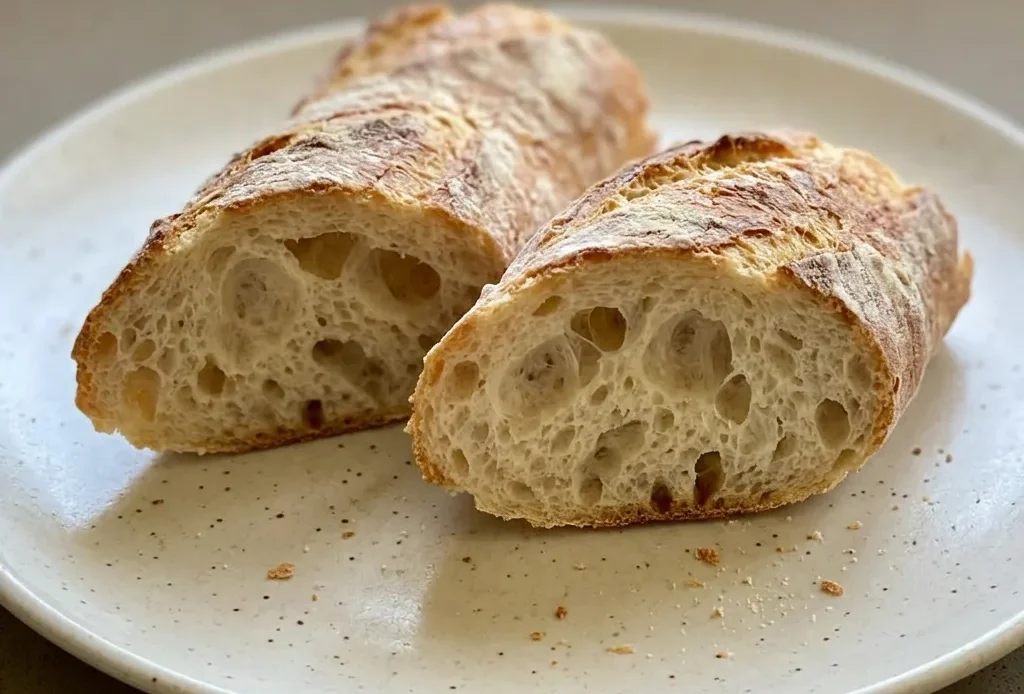
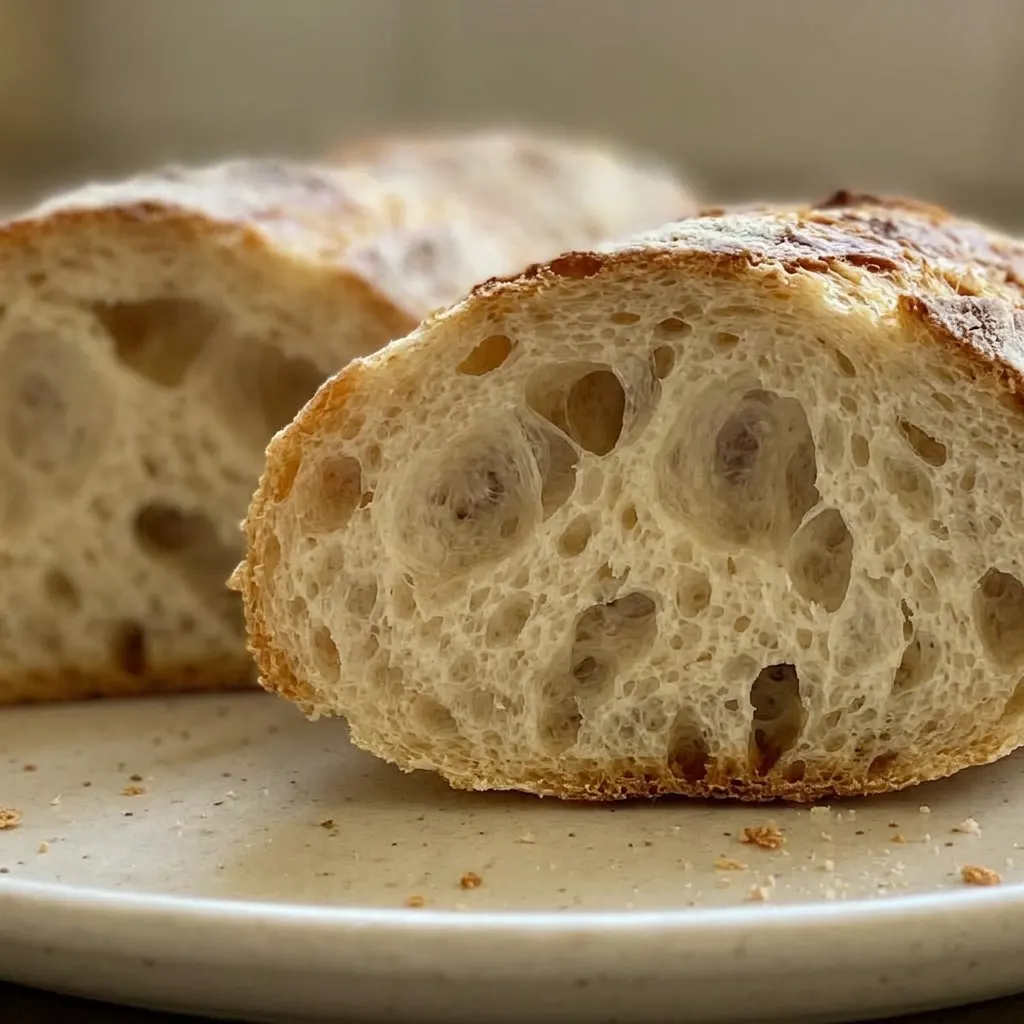
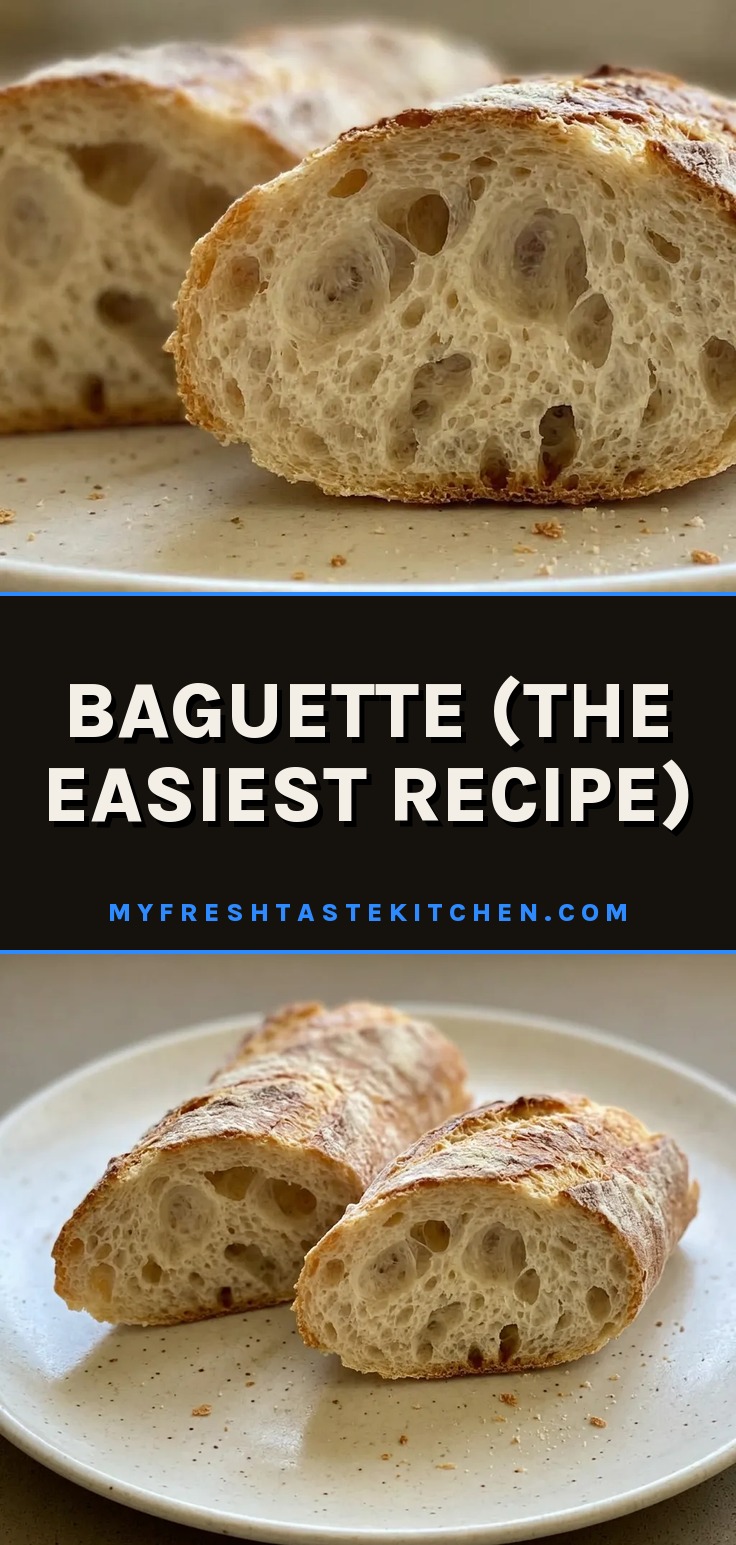
The crust shatters when you bite, revealing an airy, irregular crumb that tastes faintly of yeast and toasted grain. That contrast, brittle outside, tender inside, is what makes a real baguette, and it comes from a method so simple it almost feels like cheating. Four ingredients, a long overnight rest, and a hot oven with steam: that’s all you need for baguette (the easiest recipe) you’ve ever made.
The dough handles like a sticky, bubbly mess, but trust its wetness, that’s what gives the crumb its openness. No kneading, no stand mixer, just time and heat doing the work.
Why does a long fermentation matter for baguette flavor?
Overnight rest does more than just prove the dough. Enzymes break down starches into sugars that yeast feasts on, releasing organic acids and alcohols. Those compounds build the subtle tang and nutty notes no short rise can mimic.
The slower the fermentation, the more time for gluten to relax and align, which leads to an open, irregular crumb instead of a tight, uniform one. A brisk yeast rise gives you bread that tastes flat and bakes up dense. You see the difference in the crust too: a cold, long ferment produces a deeper caramel color and a crackling shell, because the extra sugars brown more readily.
When you bite in, the contrast between that brittle crust and the airy interior comes from giving the dough its time.
How to handle a wet baguette dough without losing air
High hydration doughs stick like glue. That stickiness is exactly what you want: more water means more steam during baking, which puffs up the loaf and keeps the crumb light. But shaping turns into a battle if you fight it.
Rather than kneading in more flour, you dust your hands and the work surface generously. Coating the outside lets you coax the dough into a log without deflating the gas bubbles you spent hours building.
If you press too hard or try to roll it like a drier dough, you squeeze out the air and end up with a dense, flat baguette. The trick is to work gently, using your palms to tuck the dough under itself, creating surface tension that holds the shape. That tension is what gives the slashes room to bloom.
Why steam makes a baguette crust crisp and golden
Drop a pan of boiling water into the oven and something crucial happens. That steam condenses on the cold dough surface, keeping it moist and flexible for the first minutes.
While the crust stays soft, the interior expands rapidly, oven spring, because the trapped gas and vapor push outward. If the crust set too early, it would crack and limit volume. After ten minutes, you pull the water out.
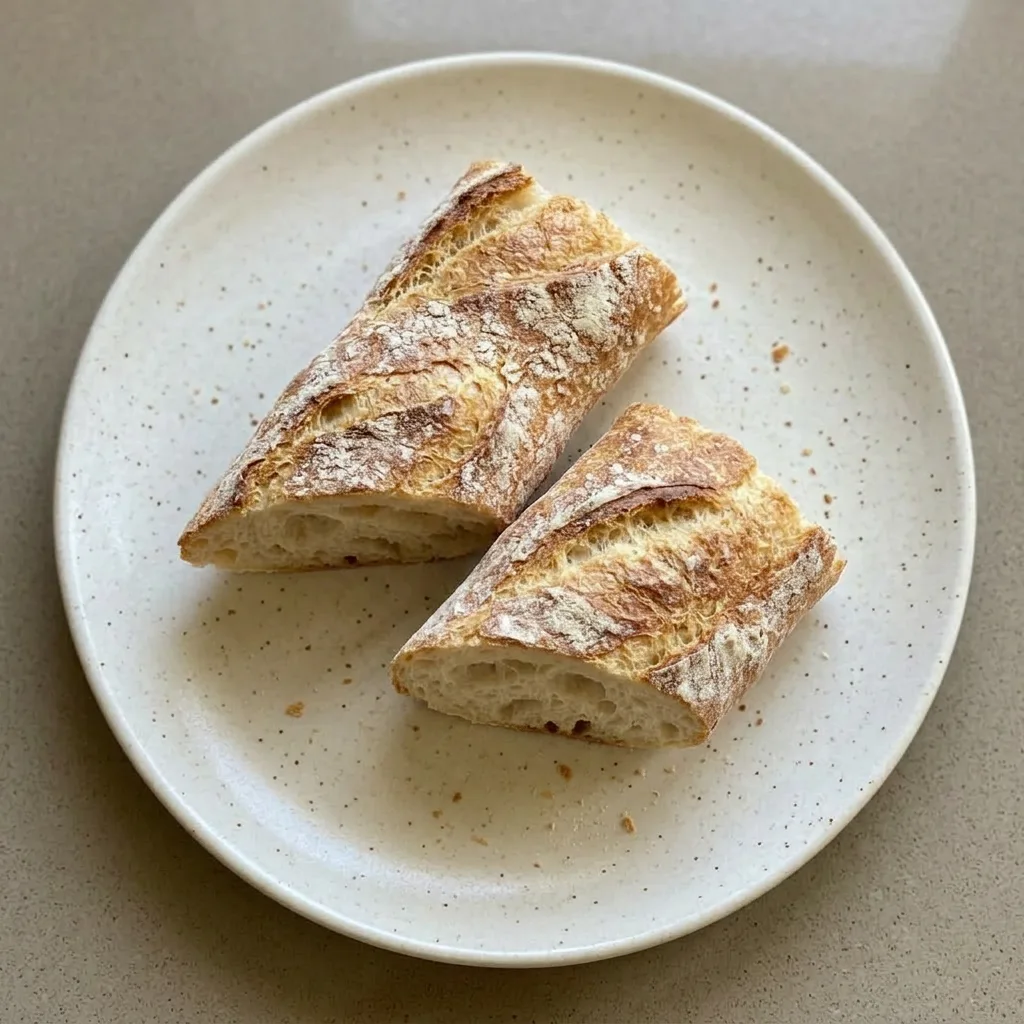
Now the oven dry heat takes over, driving off that surface moisture and letting the starches brown and harden. The result is a crust that shatters when bitten, not a tough, leathery shell. Watch the color: it should turn a deep amber, almost mahogany in spots.
That’s the sign the sugars and proteins have done their work, and the bread is ready.
Prep: 25 min · Cook: 40 min · Total: 13 hr 5 min · Servings: 12 · Calories: 230 kcal
What to Know About the Ingredients
All-purpose flour: Use unbleached for better flavor and structure. Different brands absorb water differently, so keep extra on hand.
Yeast: Active dry or instant both work. No need to proof in water; just stir into the dry ingredients.
One time I tried to shape it with lightly floured hands, ended up pressing out all the bubbles. Another time I used heavily floured hands and a super light touch, those baguettes were airy and.
How to shape and bake baguettes for an open crumb and crackling crust
Mix the dough before bed
Whisk flour, yeast, and salt together, then stir in water until no dry bits remain. You’ll have a shaggy, sticky mass, that’s fine. Cover tightly with plastic and leave on the counter.
Check the dough after 12 to 20 hours
The surface should be dotted with bubbles and the dough loose and jiggly when you tilt the bowl. It’ll smell faintly sour and yeasty. If it looks flat and lifeless, it needed more time.
Shape the loaves without deflating
Dust your hands and a baking sheet heavily with flour. Scrape the dough onto the floured sheet.
Divide into 2 or 3 pieces. Gently tuck each piece under itself to form a log, working from the center outward. Don’t press hard, you want to keep the gas inside.
Slash and proof the baguettes
Dust the tops with more flour. Use a sharp blade to make 3, 4 diagonal slashes about 1/2 inch deep.
The cuts should open slightly as you slice. Cover loosely with a towel and let proof in a warm spot for 1 to 2 hours until puffy and nearly doubled.
Create steam and bake
Set a deep roasting pan with 2 cups of boiling water on the bottom rack. Place the baguettes on the center rack.
Bake at 450°F for 10 minutes, then remove the water pan. Continue baking 30 more minutes until the crust is deep amber and sounds hollow when tapped.
Baguette (The Easiest Recipe)
Ingredients
- 6 cups all-purpose flour 720 g (may need extra depending on brand)
- 3 cups lukewarm water
- 2 tsp yeast
- 2 tsp salt
Instructions
Mix dough overnight:
Combine all components the evening prior: first whisk the dry items together, then incorporate the water. Stir until a dough forms. Encase with plastic wrap and allow to rest on the counter for 12-20 hours.Flour hands and sheet:
The next day, the dough should appear moist, tacky, and aerated. Heavily dust your hands and a baking sheet with flour.Shape baguettes and proof:
Grab the dough (if it adheres, apply additional flour to your hands) and shape into baguette forms. Expect at least 2-3 loaves. Set on the floured baking sheet and dust generously with more flour. Slash the top with a sharp blade and drape with a towel. Let proof in a warm spot for 1-2 hours.Bake with steam:
Heat the oven to 450°F (230°C). Position a deep roasting pan containing 2 cups of hot boiled water on the bottom rack. Arrange the bread on the center rack. Extract the water after 10 minutes. Bake for an additional 30 minutes until golden and crunchy brown.
Which flours and yeasts work for this baguette?
All-purpose flour: Bread flour. The crumb firms up noticeably. You get a chewier bite and more structure, because bread flour holds more protein.
The dough may feel slightly tighter, but still manageable at this hydration.
Yeast: Active dry yeast. No need to adjust the amount. Just stir active dry directly into the dry flour as you would instant.
The yeast may take a few extra hours to show activity, so if your dough looks slack after 12 hours, let it rest another 2, 4.
All-purpose flour: Whole wheat flour (up to 50%). Swap half the white flour for whole wheat. The loaf turns denser and less open, with a nuttier, more earthy flavor.
Expect the dough to feel stiffer and absorb more water, add a tablespoon or two extra if it looks dry. The crust browns faster, so check at 5 minutes early.
All-purpose flour: Gluten-free 1:1 flour blend. Do not swap. A gluten-free blend cannot develop the elastic network this wet dough needs.
You will end up with a flat, gummy puck. This recipe relies on gluten for structure.
Tips
- Use a lame or a razor blade held at a 30-degree angle to make slashes about 1/2 inch deep. A dull blade will drag and deflate the dough, causing the cuts to close up and limiting oven spring.
- Slash the loaves immediately after scoring, while the dough is still cool from proofing. If the dough has warmed too much, the slashes may not open properly; let it rest 10 minutes in the fridge before slashing if needed.
Storage and Serving
Fresh baguettes peak within hours of baking. The crust stays crisp and the crumb airy for about 6 to 8 hours at room temperature, uncovered. After that, the crust softens as moisture migrates from the crumb.
To keep it crunchy for up to 2 days, store the loaf cut side down on a cutting board at room temperature, not wrapped. Avoid the fridge, which accelerates staling. To reheat, mist the baguette lightly with water and place in a 350°F oven for 5 to 10 minutes, directly on the rack.
This restores the crust’s crackle. Sliced bread can be frozen in a sealed bag for up to 3 months; thaw at room temperature and reheat as above. The whole loaf does not freeze well because the crust becomes tough.
Make ahead: the dough can rest in the fridge for up to 24 hours before shaping, but bake and serve the same day for best texture.
Frequently Asked Questions
Can I use instant yeast instead of active dry yeast?
Yes. Active dry or instant both work here; just stir either into the dry ingredients without proofing first. If using active dry, your dough might take a few extra hours to show bubbles, give it up to 22 hours if it looks slack at 12.
My dough didn’t rise overnight, what went wrong?
Most likely your kitchen was too cold. The dough needs a warm spot (around 70°F) to ferment; if the counter is chilly, let it rest a few more hours until the surface is dotted with bubbles and the dough feels jiggly. If it still hasn’t moved after 20 hours, your yeast may be dead, check the expiration date.
Can I make the dough ahead and bake the next day?
Yes, the dough can rest in the fridge for up to 24 hours after its initial rise before shaping. Cold fermentation actually deepens flavor. But bake and serve the same day for best texture; the crust loses its crackle if the finished loaf sits overnight.
Why is my baguette dense and not airy inside?
You likely pressed too hard when shaping, squeezing out the gas bubbles built during the long rise. Next time, dust hands heavily with flour and work the dough gently, tucking it under itself without deflating it. An under-proofed dough after shaping can also cause density, let it proof a full 2 hours until puffy.