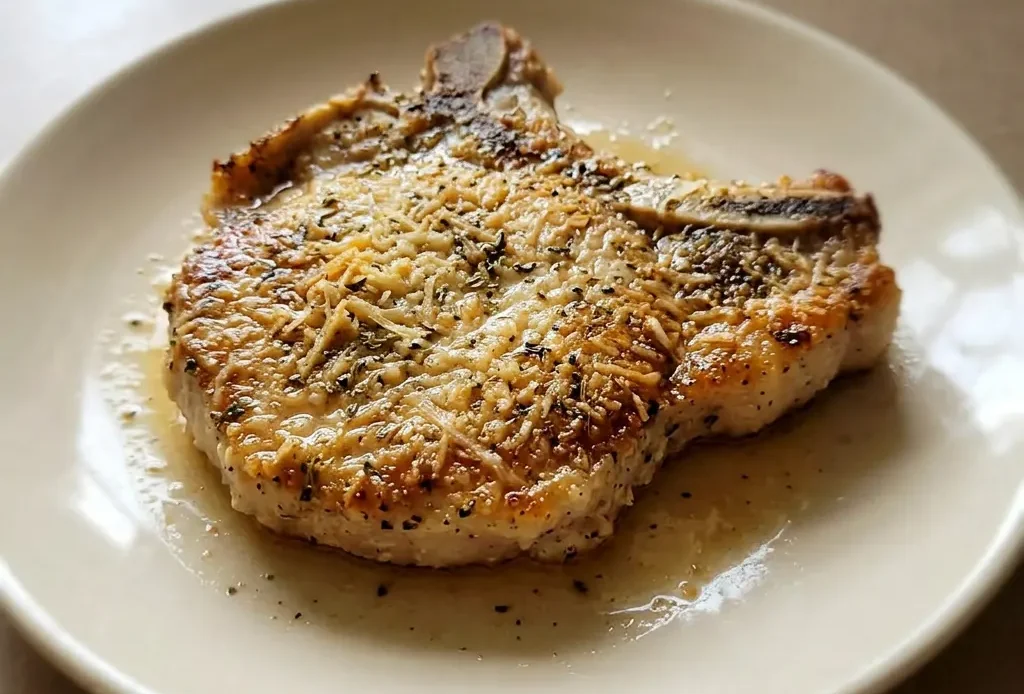
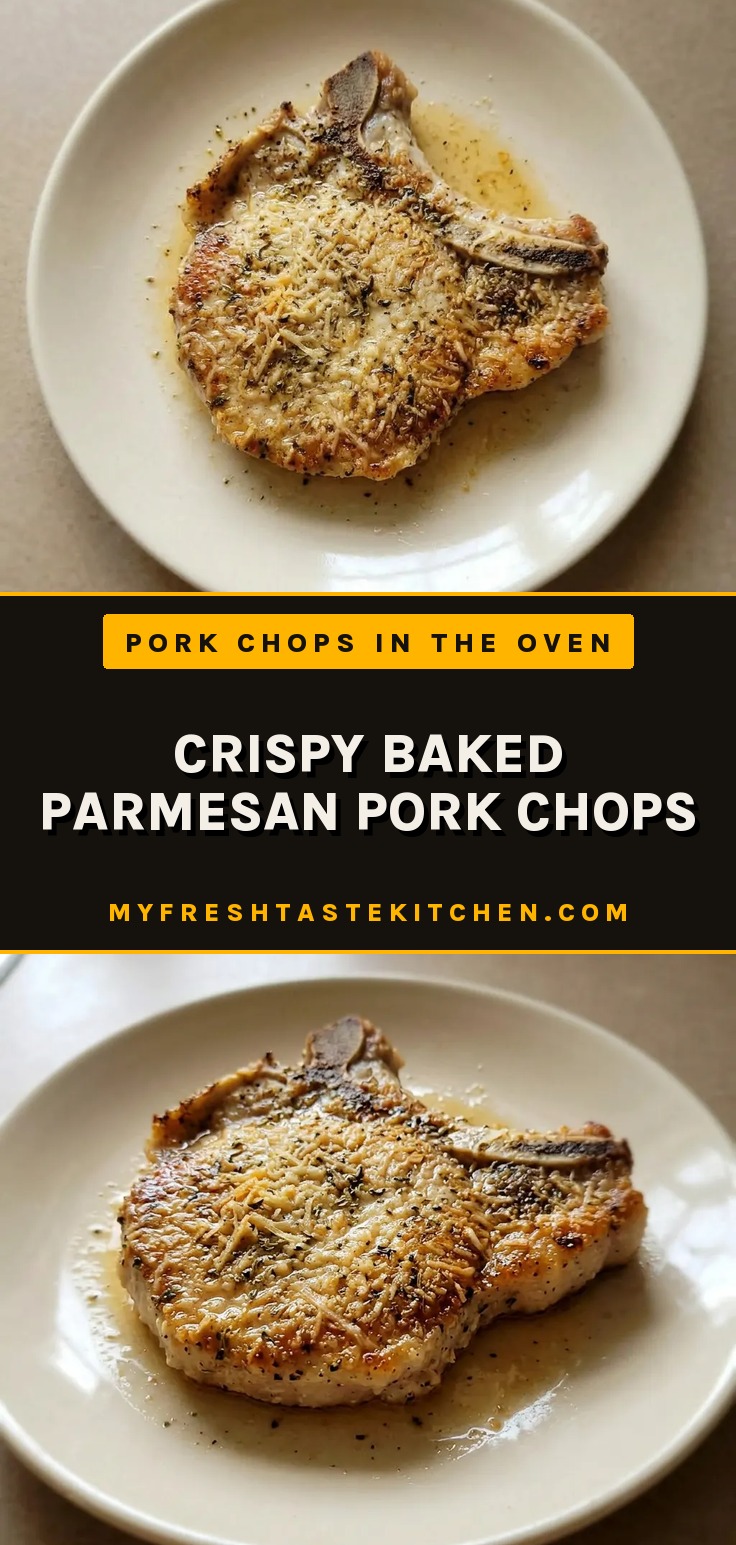
A Parmesan crust that stays crunchy through the whole bake, that’s the trick, and it comes down to how you handle the oil and cheese. Too often, cheese coatings turn greasy or fall off mid-bake. This recipe for crispy baked parmesan pork chops solves that by pressing the coating firmly onto oiled chops so it adheres like armor.
The payoff: a nutty, golden shell that cracks when you bite into it, with juicy meat underneath. No flipping, no breading station, just one sheet pan and a solid technique.
Bone-in chops for moisture
Bone-in pork chops are the right call here. The bone acts as a heat sink, slowing cooking right next to it, so the meat stays juicier.
Boneless chops dry out faster in the oven’s dry heat. You also get flavor from the bone and surrounding fat that you’d miss otherwise. When you bite in, the difference is obvious, the meat is tender and moist, not chalky.
The bone also gives you a visual cue: when the meat starts pulling away from it, you know it’s close to done.
Cheese crust as a seal
That Parmesan crust does more than add crunch. As the cheese melts and then browns, it forms a barrier that traps the pork’s natural juices inside. Without it, moisture escapes into the oven air.
The result is a savory, umami-rich shell that contrasts with the tender meat. You taste the nutty, salty cheese first, then the pork.
The crust also develops a satisfying crackle when you cut through it. It’s not just a topping, it’s a functional layer protecting the meat from drying.
Olive oil for browning
Olive oil is the glue here, but it also drives browning. The oil coats the pork and helps the Parmesan mixture stick evenly. More importantly, oil promotes Maillard browning in the oven, giving the crust a deep golden color and toasty flavor.
Without enough oil, the cheese would burn in spots or stay pale. The oil also keeps the crust from turning brittle and dry.
You see the difference in the even, amber crust and taste it in the richness that doesn’t come from fat-free coatings.
Space on the baking sheet
Give each chop room on the pan. Hot air needs to circulate around every piece for even cooking and browning.
If you crowd them, steam builds up between the chops, and that moisture keeps the crust from crisping. You’ll end up with a soggy, pale coating instead of a crunchy one. The spaces also help you check each chop’s doneness without moving them.
When they come out, the crust should be dry and golden, not tacky. That’s the payoff for leaving a few inches between.
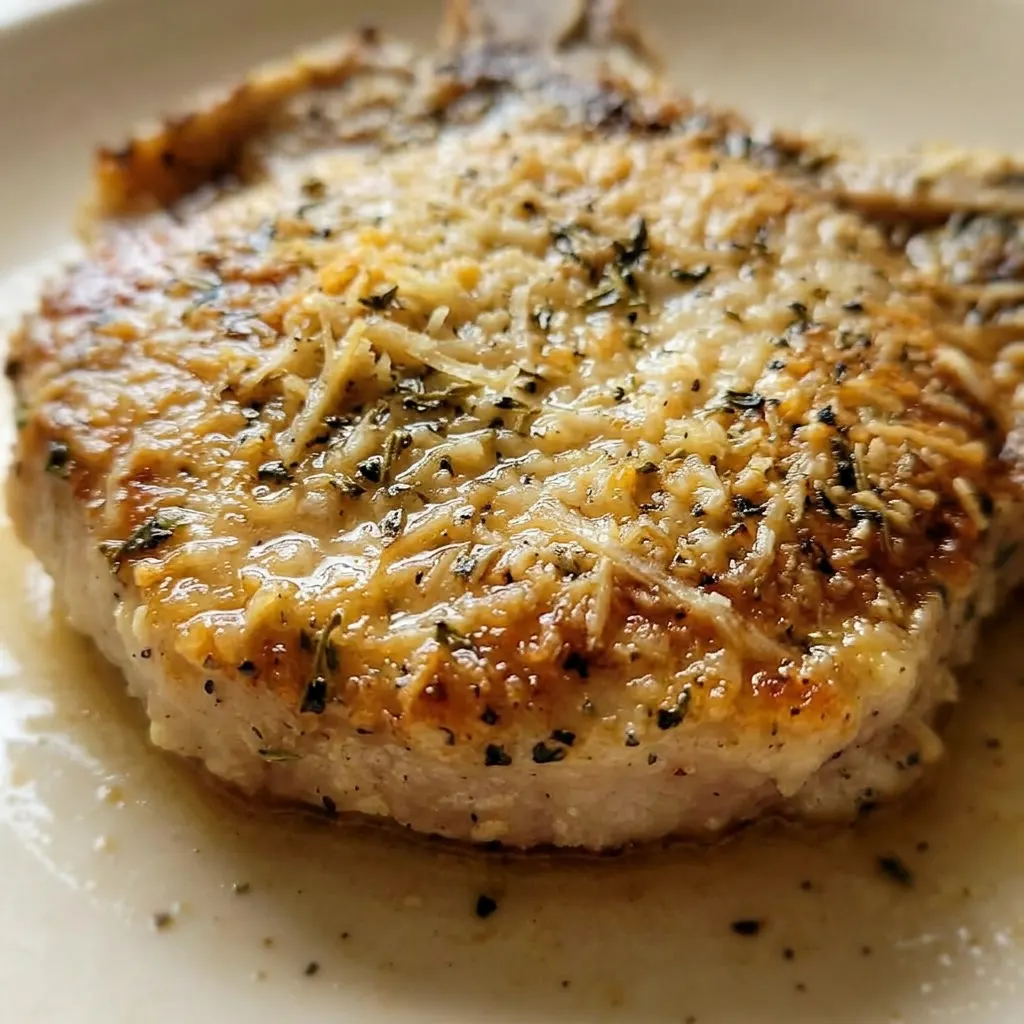
Prep: 15 min · Cook: 30 min · Total: 45 min · Servings: 4 · Calories: 300 kcal
Ingredients that make the crust work
Parmesan cheese: Use the finely grated, powdery kind from a wedge, not the shreds that burn.
Olive oil: It needs to coat every surface evenly so the cheese sticks and browns right.
Bone-in pork chops: The bone keeps the meat moist and gives you a visual doneness cue.
Building the Parmesan crust that stays put
Preheat and prep
Set the oven to 400°F and line a sheet with parchment. The oil goes on before the cheese. You want a thin, even coat, rub it in until the chop looks glossy, not greasy.
Mix the coating
Stir the Parmesan, garlic powder, and herbs together. Press the mixture onto each chop firmly, if it falls off, the cheese layer is too thick or the oil is uneven. A solid crust should stick and hold its shape.
Arrange and bake
Place the chops on the sheet with at least an inch between them. Crowding traps steam, and that softens the crust.
Bake for 30 minutes total. At 20 minutes, check the color: it should be light gold with darker edges.
Check doneness
Insert a thermometer into the thickest part away from the bone. You want 145°F. The crust should be deep golden and crisp, tap it; it should sound hollow, not feel soft.
If the center is still under, give it a few more minutes.
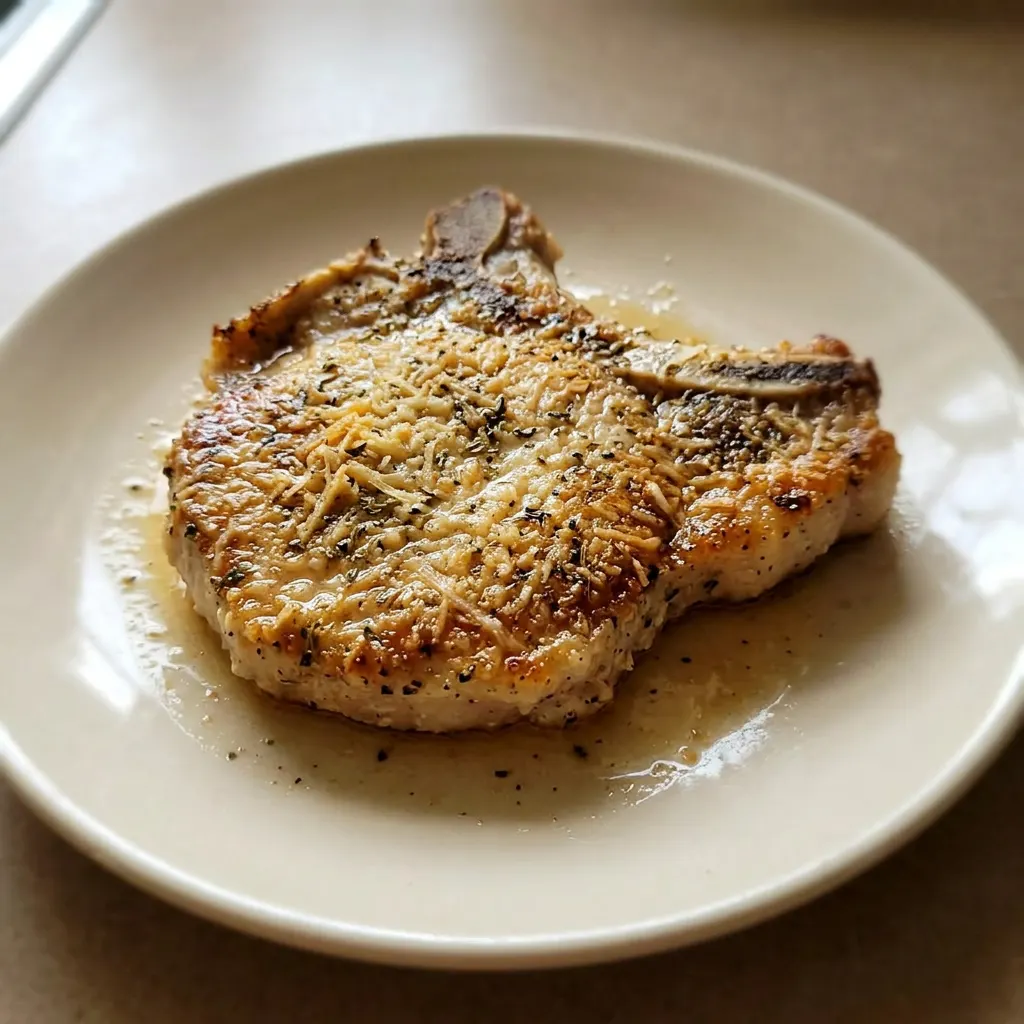
Crispy Baked Parmesan Pork Chops
Ingredients
Method
Preheat Oven and Prep Sheet:
Set oven to 400°F (205°C). Cover a baking sheet with parchment to simplify cleaning.Mix Parmesan Seasoning:
Mix 1 cup (100 g) grated Parmesan, 1 tsp garlic powder, and 1 tsp dried Italian herbs in a bowl until uniform.Oil the Pork Chops:
Thoroughly apply 2 tbsp olive oil to each bone-in pork chop, covering every surface for optimal flavor.Coat Chops with Cheese:
Firmly coat both sides of each chop with the Parmesan mixture to form a thick, cheesy layer.Arrange on Baking Sheet:
Arrange the coated chops on the prepared sheet, leaving space between them for uniform cooking.Bake Until Golden:
Cook for 30 minutes, or until the internal temperature hits 145°F (65°C) and the crust is golden.
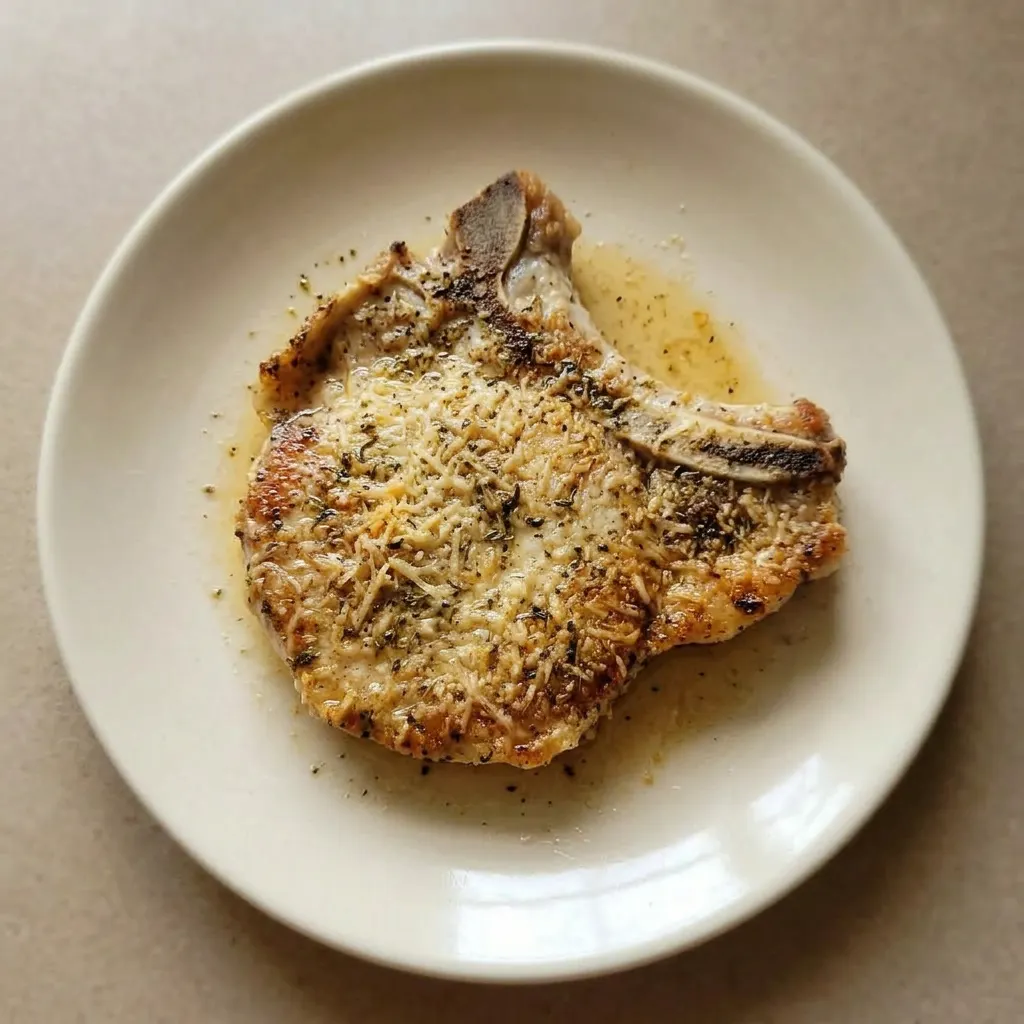
Swapping ingredients without losing the crust
Parmesan cheese: Pecorino Romano. Pecorino is saltier and sharper, so cut added salt by half. The crust browns similarly and stays crunchy.
Garlic powder: 1 clove minced fresh garlic. Fresh garlic adds moisture that can soften the crust slightly. Press it into the oil before coating with cheese, not mixed into the dry ingredients.
Olive oil: Avocado oil. Avocado oil has a neutral flavor and higher smoke point. The crust will brown the same, but you lose the fruity note of olive oil.
Tips
- Pat the pork chops dry with paper towels before applying oil. Any surface moisture creates steam that lifts the cheese crust away from the meat, preventing it from adhering tightly and crisping evenly.
Storage and Serving
These chops are best eaten within 30 minutes of coming out of the oven, while the crust is still shatteringly crisp. For leftovers, let them cool completely on the baking sheet before refrigerating. Store in a shallow container, unwrapped, for the first hour to prevent steam from softening the crust, then cover loosely.
They’ll hold for up to 3 days, but the crust will soften over time. To reheat, place on a wire rack over a sheet pan in a 350°F oven for 8 to 10 minutes; this restores most of the crunch.
Avoid microwaving, which turns the crust rubbery. You can freeze the cooked chops for up to 2 months, but expect the crust to lose crispness.
Thaw in the fridge overnight and reheat in the oven as above. The pork stays moist; the crust is the trade-off.
Frequently Asked Questions
Can I prepare these pork chops ahead of time and bake later?
You can coat the chops and refrigerate them unbaked for up to a day, but the crust will soften as moisture seeps in. For best crunch, bake straight from the fridge, add a couple minutes to the cook time. Don’t let them sit at room temperature before baking, or the crust may turn tacky.
Leftover baked chops reheat best in a 350°F oven on a wire rack to restore some crispness.
How do I know when the pork chops are done without a thermometer?
Look for the meat pulling away from the bone and juices running clear when you cut into it. The crust should be deep golden and sound hollow when tapped. A knife inserted into the thickest part should feel hot to the touch when you pull it out.
But a thermometer is the only reliable way to hit 145°F, pork can look done on the outside and still be under.
Why did my Parmesan crust turn out soggy instead of crispy?
Most likely the chops were crowded on the sheet, trapping steam that softened the coating. Next time leave at least an inch between each chop. Another possibility: too much oil or a cheese layer that’s too thick can also hold moisture and prevent crisping.
Make sure the oil is a thin, even coat and press the cheese mixture firmly so it adheres without extra bulk.
Can I use pork loin chops instead of bone-in?
You can, but they’ll cook faster and dry out more easily since there’s no bone to moderate heat. Check for doneness earlier, around 20 minutes, and expect a less juicy result.
The crust will still crisp, but the meat underneath may be leaner and less forgiving. If you try it, use chops at least 1 inch thick to give yourself a margin.
What should I serve with these pork chops for a complete meal?
Go with sides that contrast the rich, salty crust: a crisp green salad with lemon vinaigrette or roasted asparagus. Starchy options like mashed potatoes or a simple rice pilaf round out the plate without competing. Avoid saucy sides that would steam the crust, keep the chops uncovered until you’re ready to eat.
