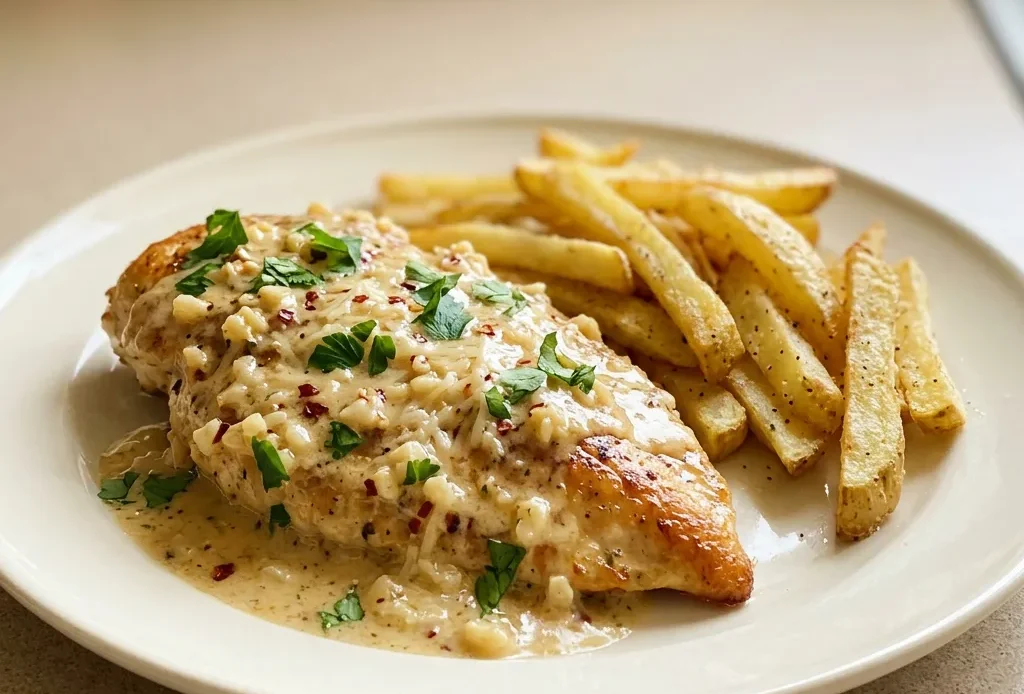
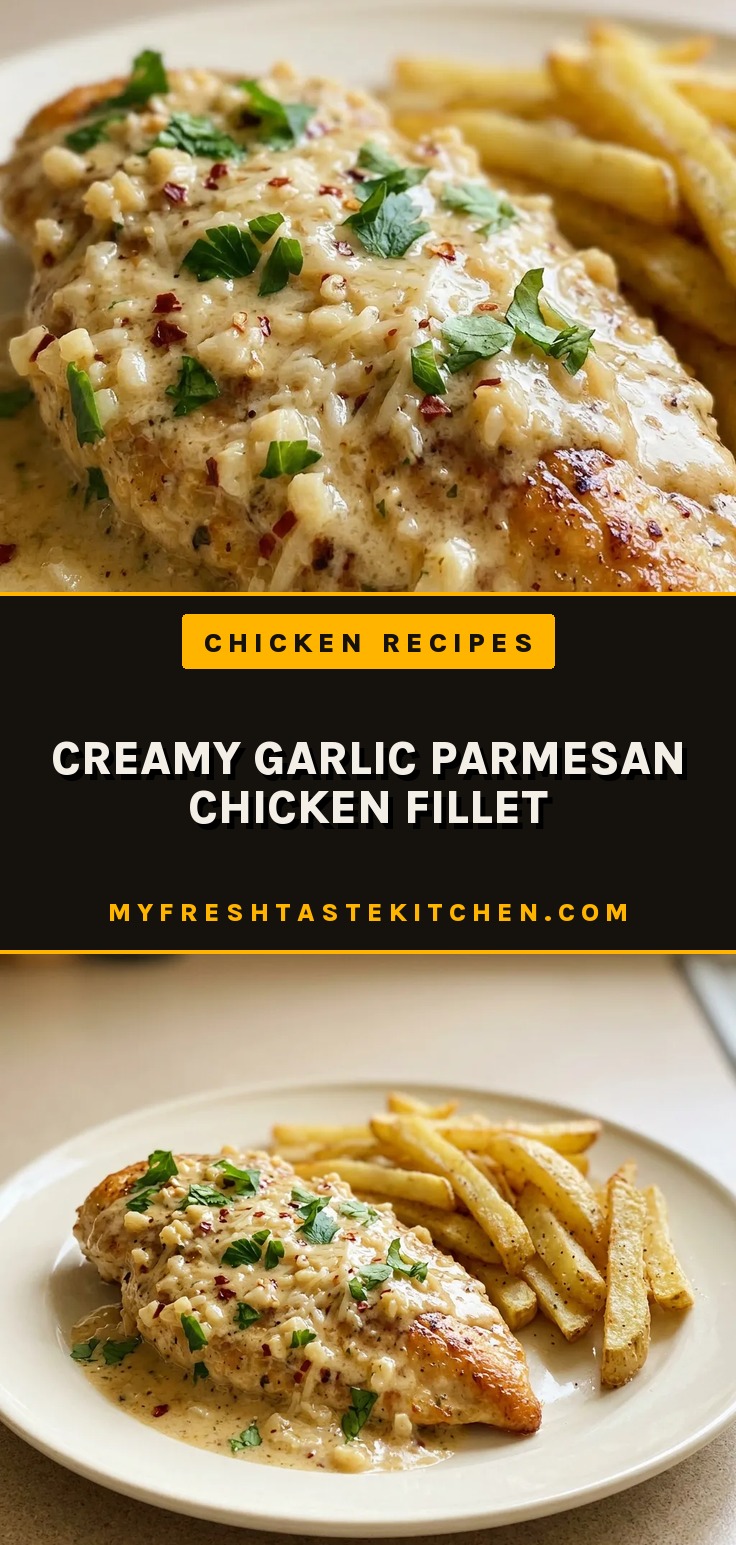
The most common mistake with creamy garlic parmesan chicken is rushing the sear, you need that deep brown crust, not just cooked-through chicken. The crust traps juices and builds the fond that makes the sauce taste savory, not flat. This version leans into the sauce’s balance: heavy cream for body, fresh garlic for punch, red pepper flakes to cut richness.
The fries aren’t an afterthought; their crunch contrasts the tender fillet and soaks up extra sauce. It’s a 30-minute meal that hinges on one pan and a few key choices.
Searing locks in juices
Pan-frying chicken fillets over medium-high heat does two things at once. The surface browns quickly through the Maillard reaction, building a golden crust that tastes deeply savory.
That same crust acts as a barrier, trapping moisture inside so the meat stays tender rather than drying out. Meanwhile, the browned bits left in the skillet, the fond, are pure flavor.
When you later add cream and garlic, that fond dissolves into the sauce, giving it a savory backbone you can’t get from just simmering ingredients. You see the color change and smell the toasty aroma; that’s your cue the crust is forming right.
Creamy sauce that coats without separating
Heavy cream is the backbone here because it provides richness and a smooth consistency that won’t curdle when simmered. Freshly grated Parmesan melts evenly into the hot cream, adding savory umami without turning grainy, pre-shredded cheese often contains anti-caking agents that leave a sandy texture.
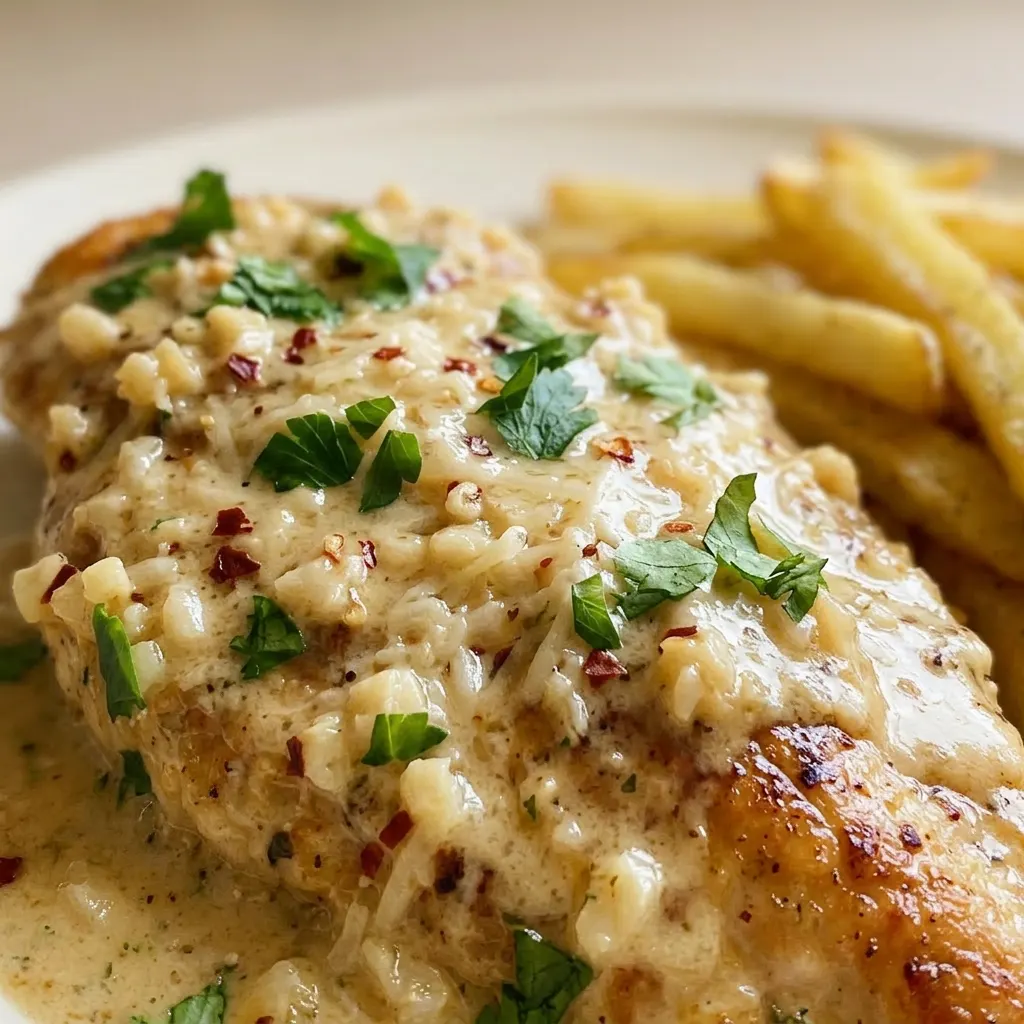
The red pepper flakes bring a gentle heat that cuts through the creaminess, so the sauce tastes balanced rather than one-note. You’ll notice the sauce thickening slightly after a couple minutes of gentle simmering; it should coat the back of a spoon.
That visual cue tells you it’s ready.
Fries give the plate crunch and balance
Pairing creamy chicken with fries isn’t just about heft. The fries offer a crisp, salty contrast to the tender, saucy fillet.
Their neutral potato flavor soaks up the rich garlic parmesan sauce without competing, so every bite stays interesting. Texturally, you get the crunch of the fry against the soft chicken, then the smooth sauce binding them together.
It turns the dish into a complete meal where each element supports the others. The salt on the fries also helps temper the cream’s richness, making the whole plate feel lighter than it is.
Prep: 10 min · Cook: 20 min · Total: 30 min · Servings: 4 · Calories: 500 kcal
Ingredient picks that make this dish work
Heavy Cream: Use heavy cream to avoid curdling; half and half works but won’t be as thick.
Parmesan Cheese: Freshly grated melts smooth; pre shredded contains anti caking agents that turn gritty.
Garlic: Fresh cloves only; pre minced lacks the sharp punch this sauce needs.
Red Pepper Flakes: Adjust to your heat preference; they cut the cream’s richness without overpowering.
Build the dish in sequence for best texture and flavor
Start the fries first
If using frozen, follow package directions. For homemade, slice potatoes into even sticks, toss with olive oil, salt, and pepper, then spread in a single layer on a baking sheet. Bake at 425°F for 30 to 35 minutes, flipping halfway, until deep golden and crisp.
Sear the chicken fillets
Heat olive oil in a skillet over medium heat. Season fillets with salt and pepper, then lay them in the pan. Cook 6 to 7 minutes per side.
You’re done when the crust is deep brown and the internal temp hits 165°F. Remove and set aside.
Build the creamy garlic parmesan sauce
Lower heat to medium-low. Add minced garlic to the same skillet and cook about 1 minute until fragrant, don’t let it brown.
Pour in heavy cream, bring to a gentle simmer. Stir in grated Parmesan and red pepper flakes.
Simmer 2 to 3 minutes until the sauce thickens enough to coat a spoon. Season with salt and pepper.
Return the chicken to the skillet
Place the seared fillets back into the sauce, spooning sauce over each piece. Let them warm through for 2 to 3 minutes. The sauce should cling to the chicken without pooling too thinly.
If it’s too thick, add a splash of cream; if too thin, simmer another minute.
Plate with fries and extra sauce
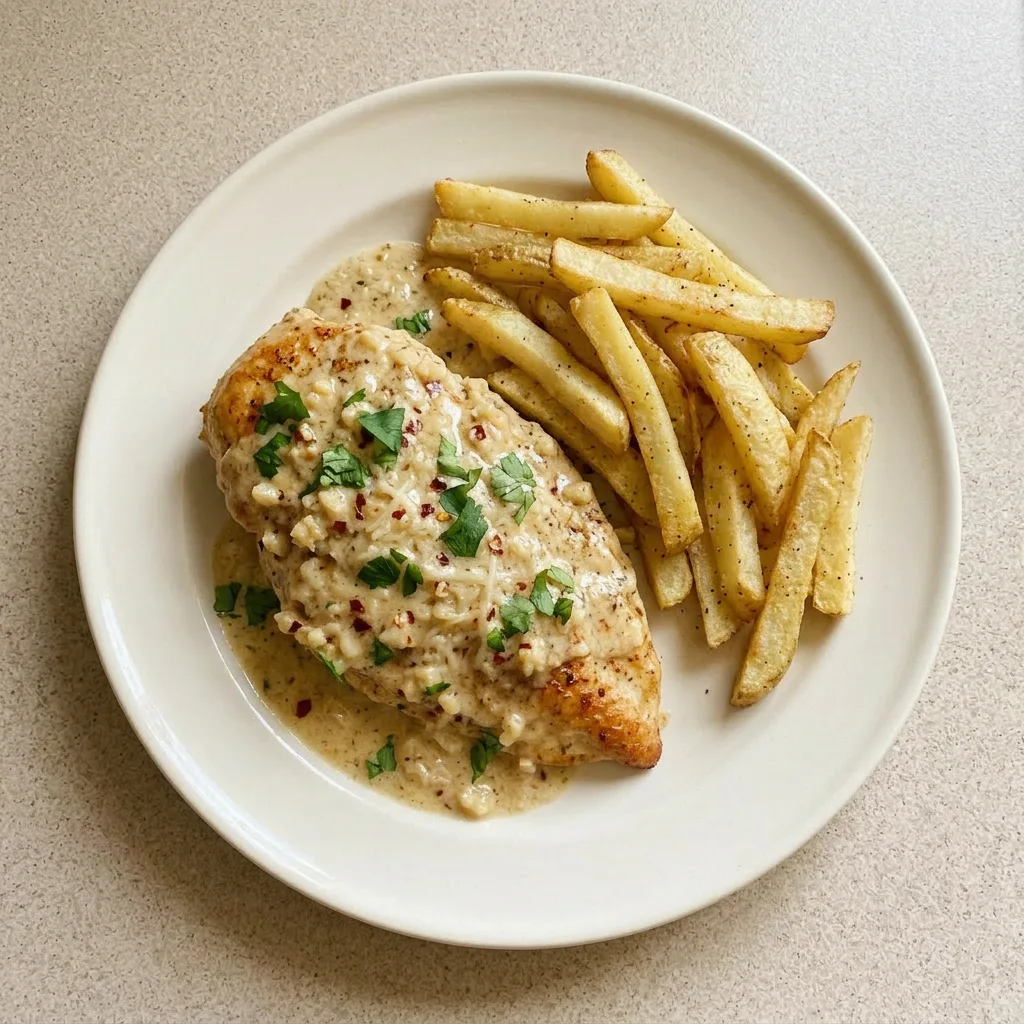
Arrange fries on plates, set a chicken fillet alongside, and drizzle remaining sauce over the top. The fries will soak up the sauce as you eat, giving each bite a mix of crunch and creaminess.
Creamy Garlic Parmesan Chicken Fillet
Ingredients
- 4 pieces Chicken Fillets Can swap for turkey cutlets or pork chops
- Salt to taste
- Pepper to taste
- 2 tablespoons Olive Oil Can be replaced with vegetable oil
- 4 cloves Garlic minced (Fresh garlic is best)
- 1 cup Heavy Cream Can use half-and-half for a lighter option
- 1/2 cup Parmesan Cheese grated (Freshly grated is ideal)
- 1 teaspoon Red Pepper Flakes Adjust to taste
- 4 cups Fries frozen or homemade (Fresh potatoes can be cut for homemade fries)
- Salt to taste
- Pepper to taste
Instructions
Prepare Fries:
Prepare frozen fries per package directions or create from scratch. For homemade, slice fresh potatoes, coat with olive oil, salt, and pepper, then bake at 425°F (220°C) for 30-35 minutes, turning halfway, until golden.Cook Chicken Fillets:
Warm olive oil in a skillet over medium heat. Season chicken fillets with salt and pepper, then cook for 6-7 minutes on each side until golden and internal temperature reads 165°F (75°C). Remove and reserve.Make Creamy Sauce:
In the same skillet, cook minced garlic for about 1 minute until aromatic. Pour in heavy cream and heat to a gentle simmer. Mix in grated Parmesan and red pepper flakes. Cook for 2-3 minutes until sauce thickens; season with salt and pepper to taste.Combine Chicken and Sauce:
Put the chicken back into the skillet, ladle the creamy sauce over it, and let it cook for another 2-3 minutes to blend flavors.Serve with Parsley:
Serve fries alongside the chicken, drizzle extra sauce over the chicken, and top with chopped parsley for color.
What you can swap in this creamy chicken dish
Chicken Fillets: Turkey cutlets or pork chops. Turkey cutlets cook in the same time and stay lean; pork chops need a minute or two extra per side and add a richer, slightly sweeter flavor. Both work because the sear and sauce carry the dish.
Heavy Cream: Half-and-half. Half-and-half makes a noticeably thinner, less rich sauce.
It won’t curdle if simmered gently, but you’ll lose the body that clings to the chicken. Start with the same 1 cup and simmer an extra minute to thicken, but expect a looser result.
Garlic: Jarred minced garlic. Jarred garlic won’t brown the same way fresh does.
It releases less aroma and can taste slightly metallic if cooked too long. Use 1½ teaspoons to match the 4 cloves, but stir it in just before the cream to limit its time in the pan.
Parmesan Cheese: Pecorino Romano or Grana Padano. Both grate and melt similarly.
Pecorino is saltier and sharper, so reduce added salt by a pinch. Grana Padano is milder, nearly a direct swap. Avoid pre-shredded, it’s tossed with cellulose that turns the sauce grainy.
Storage and Serving
For the best texture, serve the chicken and sauce immediately after cooking. The sauce is at its creamiest, and the chicken is juiciest. If you’re making fries, serve them right out of the oven; they lose crispness fast.
Leftovers keep in the fridge for up to 3 days. Store chicken and sauce in one container, fries in a separate airtight container.
The sauce will thicken as it sits; that’s normal. Reheat chicken gently in a skillet over low heat with a splash of cream or water to loosen the sauce, stirring occasionally until warmed through. Avoid the microwave: it makes the chicken tough and sauce grainy.
Fries won’t recrisp well; reheat them in a 400°F oven for 5 to 7 minutes. Freezing isn’t recommended. The cream sauce can separate when thawed, and the chicken’s texture suffers.
If you must freeze, freeze only the cooked chicken fillets (without sauce) for up to 1 month. Thaw overnight in the fridge, then reheat in a fresh cream sauce.
Tips
- Use a microplane to grate the Parmesan directly into the sauce off the heat so it melts instantly without clumping.
- Simmer the sauce just until it coats the back of a spoon; over-reducing will make it too thick to cling to the chicken.
I’ve seen people dump in cold cream and dump in all the cheese at once, then wonder why it looks like scrambled eggs in cream.
Frequently Asked Questions
Can I make the creamy garlic parmesan chicken ahead of time?
Not really. The sauce is at its creamiest right after cooking, and the chicken is juiciest then. If you make it ahead, the sauce thickens and the chicken loses moisture; leftovers keep up to 3 days in the fridge, but the texture degrades.
For the best experience, cook it fresh.
How do I prevent the sauce from curdling or separating?
Use heavy cream as the recipe calls for, it won’t curdle when simmered gently. Keep the heat at a gentle simmer, not a boil, and add the Parmesan gradually while stirring. If you see the sauce starting to look grainy, pull it off heat and whisk in a tablespoon of cold cream.
What’s the best way to reheat leftovers without drying out the chicken?
Reheat gently in a skillet over low heat with a splash of cream or water to loosen the sauce, stirring occasionally until warmed through. Avoid the microwave, it makes the chicken tough and the sauce grainy. If you’re reheating fries, use a 400°F oven for 5 to 7 minutes.
Can I use chicken thighs instead of fillets for this recipe?
Yes, you can. Boneless, skinless thighs work well; they need an extra minute or two per side to reach 165°F because they’re thicker. The sauce still coats them nicely, and thighs stay juicier on reheat if you have leftovers.
Is this dish supposed to be very saucy or more of a coating?
It’s a coating, the sauce should cling to the chicken after simmering for 2 to 3 minutes, not pool thinly on the plate. If you want more sauce, you can double the cream and Parmesan, but the recipe’s proportions give a balanced coat that leaves extra to drizzle over fries.