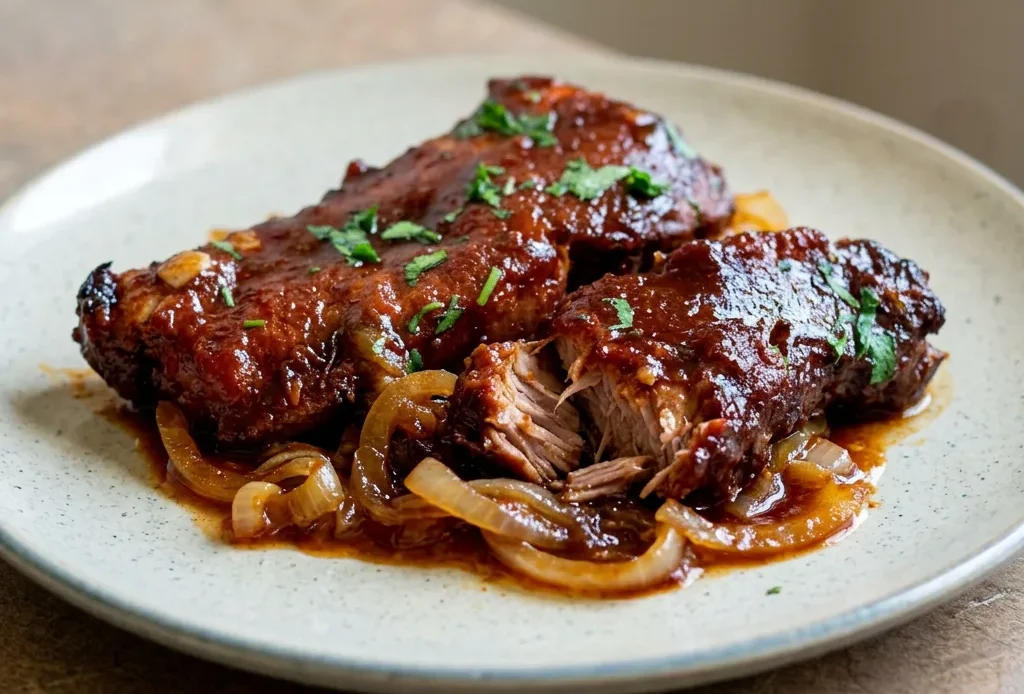
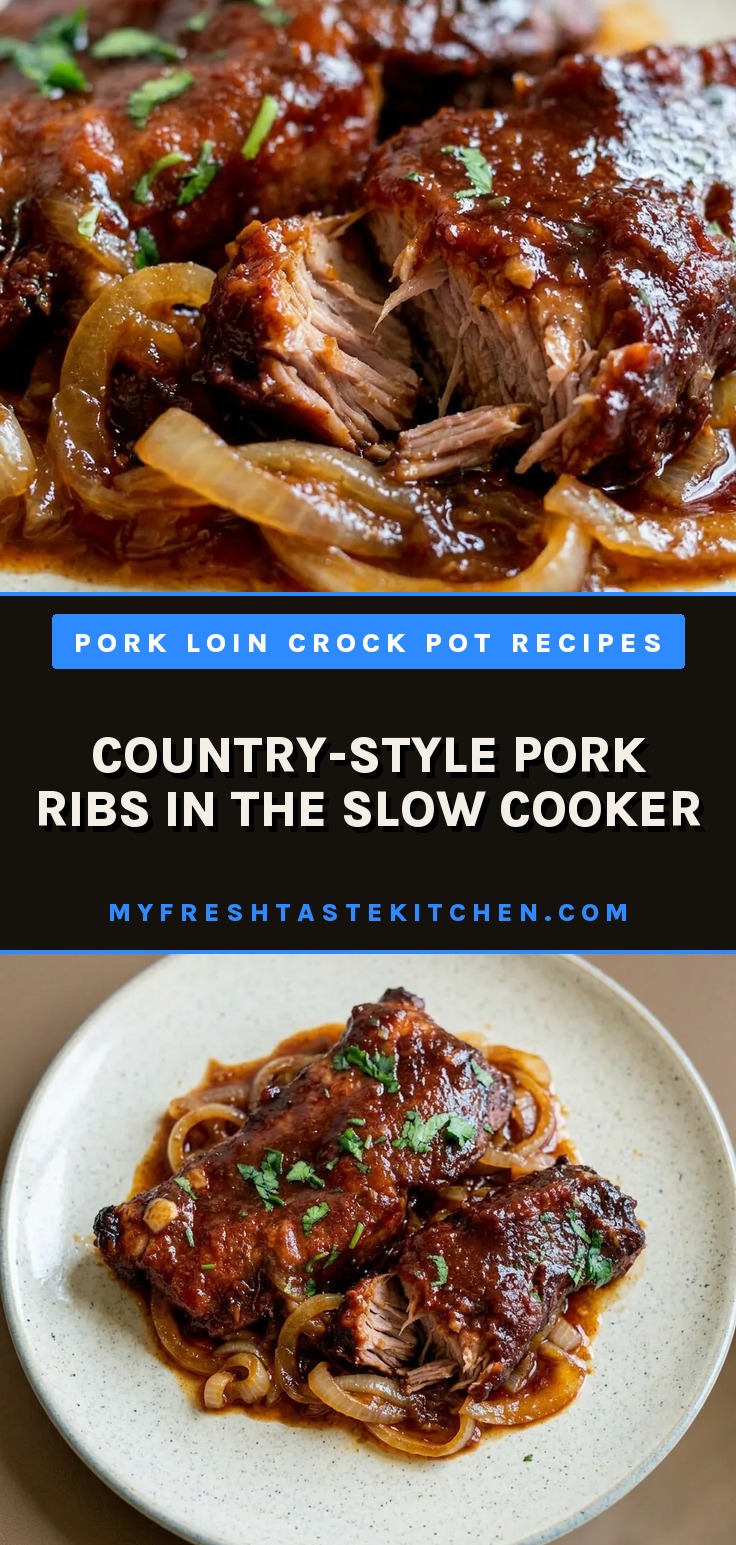
These aren’t ribs from the rib cage, but from the pork shoulder, a cut that rewards slow cooking with rich, pull-apart meat. Country-style pork ribs in the slow cooker turn out tender without the risk of drying out that leaner cuts carry. The key challenge is keeping the sauce bright through a long cook, and that’s where splitting the sauce before the broiler saves it.
I once made these on high for just 3 hours, thinking faster would be fine, they came out tough and dry. Next time I did low for 6 hours, and they were fall-apart tender.
Country-Style Ribs: Why They Work Here
Country-style ribs come from the shoulder, not the rib cage, so they have more fat and collagen than true ribs. That marbling is exactly what you want for a long, moist cooking method.
Slow cooking at low heat melts collagen into gelatin, yielding meat that’s fork-tender and pulls apart easily. The dry rub, with salt and sugar, seasons the meat and draws out some moisture, which then gets reabsorbed, helping to tenderize the surface. These ribs don’t dry out like leaner cuts might; they stay juicy even after hours in the cooker.
pork roast crock pot recipes often rely on tough cuts, and this one delivers every time.
Why Split the Sauce?
You add half the sauce at the start to braise the ribs and create a flavorful cooking liquid. The reserved sauce stays fresh, with its sweetness and acidity intact.
If you dumped it all in at once, the sauce would get diluted by the rendered fat and juices, and the long cooking would dull its brightness. After the ribs are tender, you can use the reserved sauce as a glaze under the broiler, or just serve it on the side. That way, you get both a deeply flavored meat and a bright, bold barbecue finish.
easy pulled pork crock pot recipes often lose sauce character; this split approach fixes that.
The Broiler Finish Makes a Difference
The optional broiling step caramelizes the sugars in the sauce, creating a sticky, slightly charred crust that mimics the texture of grilled ribs. Under the intense heat, the brown sugar and BBQ sauce bubble and darken, developing a deeper, more complex flavor.
The contrast between that caramelized exterior and the tender interior is what takes these ribs from good to great. You don’t have to do it, the ribs are fully cooked and straight from the slow cooker, but it adds a visual and textural layer that feels closer to a backyard cookout. Just watch them closely; the sugars can scorch fast.
Onions at the Bottom: Not Just for Flavor
The sliced onions at the bottom of the slow cooker do more than add sweet, savory flavor. As they cook, they release moisture, creating steam that keeps the ribs moist and prevents any scorching. They also act as a natural rack, lifting the ribs off the bottom so they aren’t sitting in direct contact with the heat source.
By the end, the onions have absorbed the drippings and become a soft, caramelized side component that you spoon over the ribs. It’s a simple trick that improves texture and adds built-in flavor, all without extra effort.
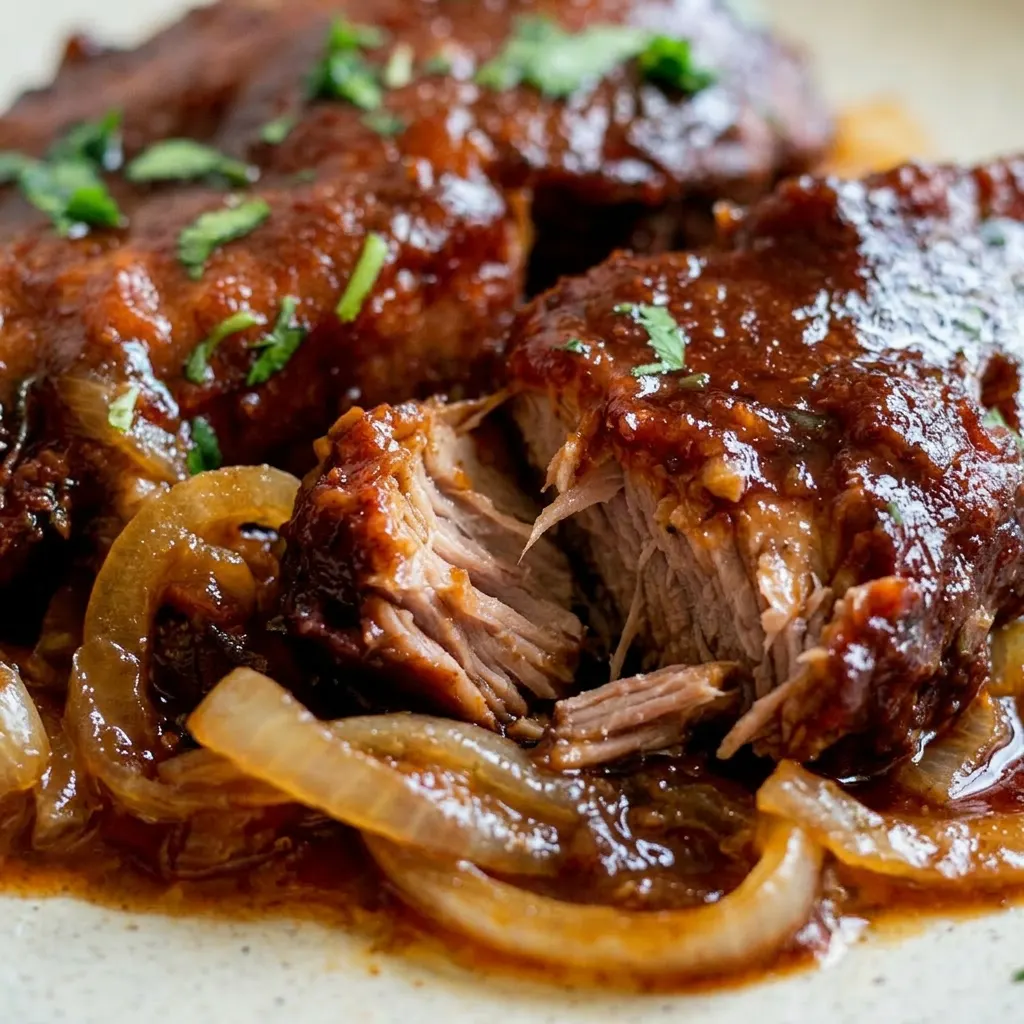
Prep: 5 min · Cook: 5 hr · Total: 5 hr 5 min · Servings: 4 · Calories: 640 kcal
What to Know About the Ingredients
Country-style pork ribs: These come from the shoulder, not the rib cage, so they’re well-marbled and for long, moist cooking.
BBQ sauce: Use a thick, sweet sauce. Thin or vinegary sauces can turn sour after long cooking.
Apple cider vinegar: Standard apple cider vinegar, not distilled white. It adds a fruity tang that balances the rich meat.
Worcestershire sauce: Adds a savory depth you can’t get from just vinegar and BBQ sauce. Don’t skip it.
Yellow onion: Thinly slice it so it cooks down quickly and creates a soft, sweet bed for the ribs.
How to Build Layers of Flavor from the Bottom Up
Dry and Season the Ribs
Pat the ribs dry, any moisture on the surface will prevent the rub from sticking. Coat evenly with the spice blend, pressing it into the meat. Look for a uniform, slightly tacky coating; bare spots mean underseasoned bites.
Layer Onions and Ribs
Spread sliced onions in an even layer across the bottom of the slow cooker. Arrange the ribs on top in a single snug layer. The onions lift the meat off the bottom, letting heat circulate and preventing the underside from stewing.
Half the Sauce, Then Cook
Whisk together BBQ sauce, vinegar, and Worcestershire, then pour half over the ribs. Reserve the rest.
You want enough liquid to come about a quarter inch up the sides, too much and the meat will boil rather than braise. Cook on low for 5 hours, or until a fork twists into the thickest part with no resistance.
Broil for a Sticky Crust
Transfer the ribs to a foil-lined sheet pan and brush with the reserved sauce. Broil 3 to 5 minutes, watching closely. The surface will bubble and darken in spots; pull them when the sugars start to char but before they turn black and bitter.
Country-Style Pork Ribs in the Slow Cooker
Ingredients
- 3 pounds country-style pork ribs (bone-in or boneless)
- 1 large yellow onion, thinly sliced
- 1/4 cup light brown sugar
- 1 tablespoon kosher salt
- 1 tablespoon chili powder
- 1 tablespoon mustard powder
- 1 1/2 teaspoon garlic powder
- 1 1/2 teaspoon onion powder
- 1 cup BBQ sauce (preferably thick and sweet)
- 1/4 cup apple cider vinegar
- 1/4 cup Worcestershire sauce
Instructions
Dry and Season Ribs:
Dry the ribs by blotting them with paper towels. In a small container, combine the brown sugar, salt, chili powder, mustard powder, garlic powder, and onion powder. Apply the spice blend evenly across the ribs.Layer Onions and Ribs:
Arrange the sliced onion at the base of a 6-quart slow cooker. Position the ribs atop the onions in a single layer.Mix and Add Sauce:
In a small bowl, combine the BBQ sauce, apple cider vinegar, and Worcestershire sauce with a whisk. Drizzle half of this mixture over the ribs. Avoid contaminating the remaining sauce; reserve it for later.Slow Cook Until Tender:
Put the lid on and cook on low for 5–8 hours or on high for 3–4 1/2 hours, until the ribs are fork-tender and separate easily.Broil with Extra Sauce:
Optionally, heat your oven’s broiler. Move the cooked ribs to a baking sheet lined with foil and coat them with additional BBQ sauce. Broil for 3–5 minutes until caramelized and bubbling. Keep an eye on them to avoid scorching.Serve with Onions and Sauce:
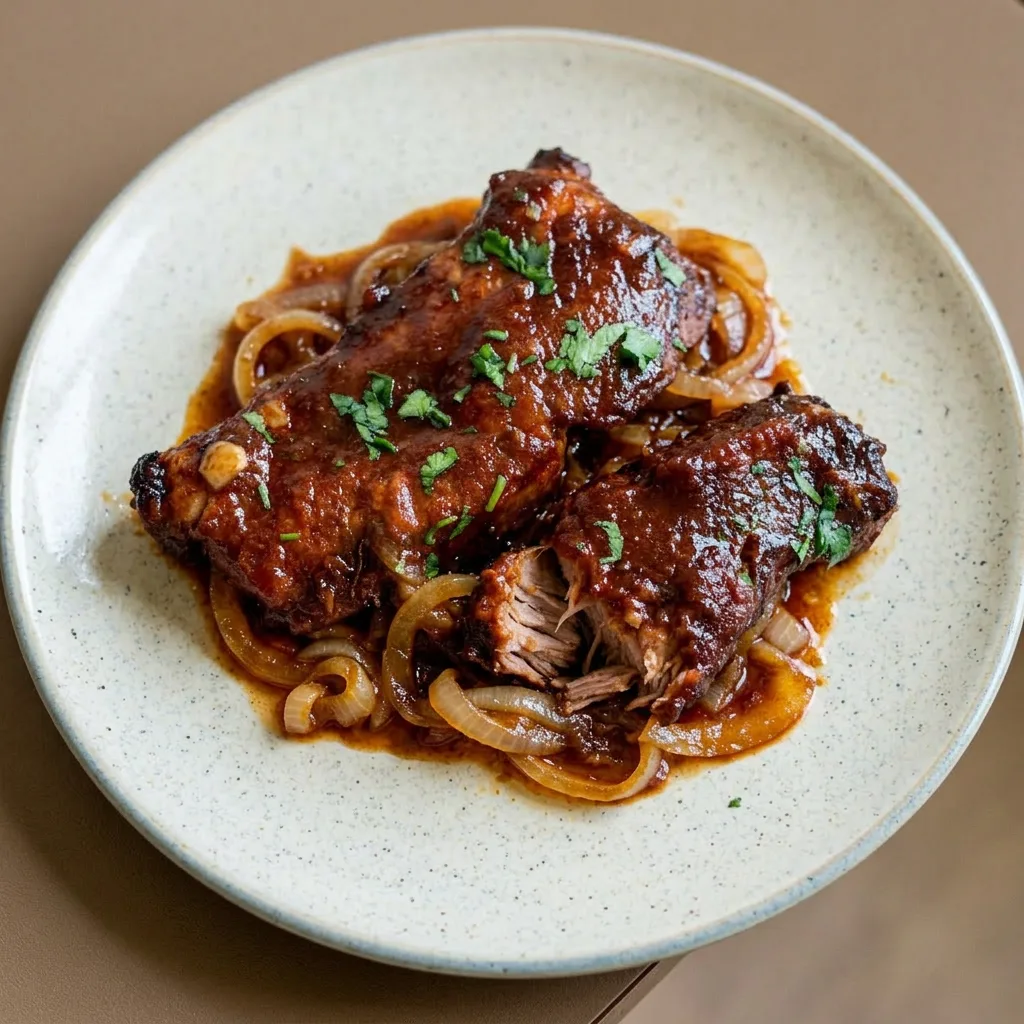
When serving, ladle the onions and cooking juices over the ribs. Offer extra BBQ sauce on the side if desired.
Storage and Serving
Store leftover ribs in their juices in an airtight container in the fridge for up to 4 days. The meat stays tender, but the sauce thickens as it cools; reheating thins it out again.
For best texture, eat within 2 days. To reheat, warm gently in a covered skillet over low heat or in the microwave, stirring the sauce occasionally.
Freezing is not recommended; the sauce may separate and the texture of the meat suffers. If you broiled the ribs, the caramelized crust will soften in the fridge; reheat under the broiler for a minute to restore some stickiness. Serve the broiler-finished ribs immediately for that crisp exterior, otherwise, skip the broil if you plan to store leftovers.
Tips
- Before adding the ribs to the slow cooker, trim any large, hard chunks of fat from the surface, but leave the thin, streaky fat between the muscles. That intermuscular fat renders slowly and keeps the meat moist, while the hard exterior fat just turns greasy and can make the final dish unpleasantly oily.
Three Substitutions That Change How These Ribs Cook
Country-style pork ribs: Pork shoulder cut into 2-inch chunks. Country-style ribs already come from the shoulder, so swapping in shoulder chunks is nearly identical. Trim large fat pieces, but leave some marbling.
Cook time stays the same; fork-tender at 5 hours low.
BBQ sauce: Your favorite brand or homemade, but keep it thick and sweet. A thin, vinegar-heavy sauce will turn sour after 5 hours of slow cooking. The recipe needs that sugar to caramelize under the broiler.
If you swap, expect a tangier, less sticky finish. Adjust brown sugar in the rub up by a tablespoon to compensate.
Worcestershire sauce: Soy sauce or fish sauce. Worcestershire adds savory depth without fishiness. Soy sauce gives a similar umami but less complexity, the ribs will taste more like soy-braised pork.
Fish sauce works too but use half the amount; its funk fades during cooking. For gluten-free, use tamari or coconut aminos.
Apple cider vinegar: White vinegar or lemon juice. Apple cider vinegar brings a mild fruity tang. White vinegar is sharper and more acidic; use 3 tablespoons instead of 1/4 cup.
Lemon juice adds brightness but can read as citrusy, which doesn’t clash but shifts the profile. Both work fine without ruining the dish.
Frequently Asked Questions
Can I cook these ribs on high instead of low, and how does that affect the texture?
Yes, you can cook on high for 3, 4 1/2 hours instead of low for 5 to 8 hours. The ribs will still be tender, but the texture won’t be quite as fall-apart.
Low heat gives collagen more time to break down into gelatin, so the meat is more fork-tender throughout. On high, the exterior may tighten before the interior fully softens, so you might get some chewier bites. Stick with low if you want that shreddable, pull-apart result.
Can I prepare these ribs ahead of time and reheat them?
Yes, you can make them a day or two ahead. Store the ribs in their cooking juices in the fridge for up to 4 days, but the meat is best within 2 days.
When reheating, warm gently in a covered skillet over low heat or microwave, stirring the sauce occasionally. If you broiled the ribs, the caramelized crust will soften in the fridge; you can reheat under the broiler for a minute to restore some stickiness. For the best crisp exterior, broil just before serving rather than ahead.
Why are my ribs dry after slow cooking, and how can I prevent that?
Dry ribs usually mean they cooked too long or the heat was too high. Country-style ribs are fatty, so they shouldn’t dry out easily, but if you go past fork-tender, the meat can start to string and lose moisture. Check for doneness at 5 hours on low by twisting a fork into the thickest part, no resistance means they’re done.
Also, make sure there’s enough liquid in the cooker; the onions release moisture, but if your slow cooker runs hot, add a splash of water or extra sauce next time.
How do these country-style ribs differ from baby back or spare ribs in terms of taste and cooking?
Country-style ribs come from the shoulder, not the rib cage, so they have more fat and collagen than baby backs or spares. That marbling makes them richer and more forgiving for long cooking, they stay juicy even after 5 hours.
Baby backs are leaner and best cooked faster (grilled or smoked) to avoid drying out; spare ribs have more fat than baby backs but still less than country-style. The main difference is texture: country-style shreds like pulled pork, while true ribs have a distinct bone-and-meat chew.
Can I skip the broiling step and still get good results?
Yes, the ribs are fully cooked and straight from the slow cooker. The broiling step is optional; it caramelizes the sauce to create a sticky, slightly charred crust that mimics grilled ribs. Without it, you get tender, saucy ribs with a softer exterior, still great, just less of that backyard-cookout texture.
If you skip the broil, you can serve the reserved sauce on the side to add fresh brightness. Try it both ways and see which you prefer.