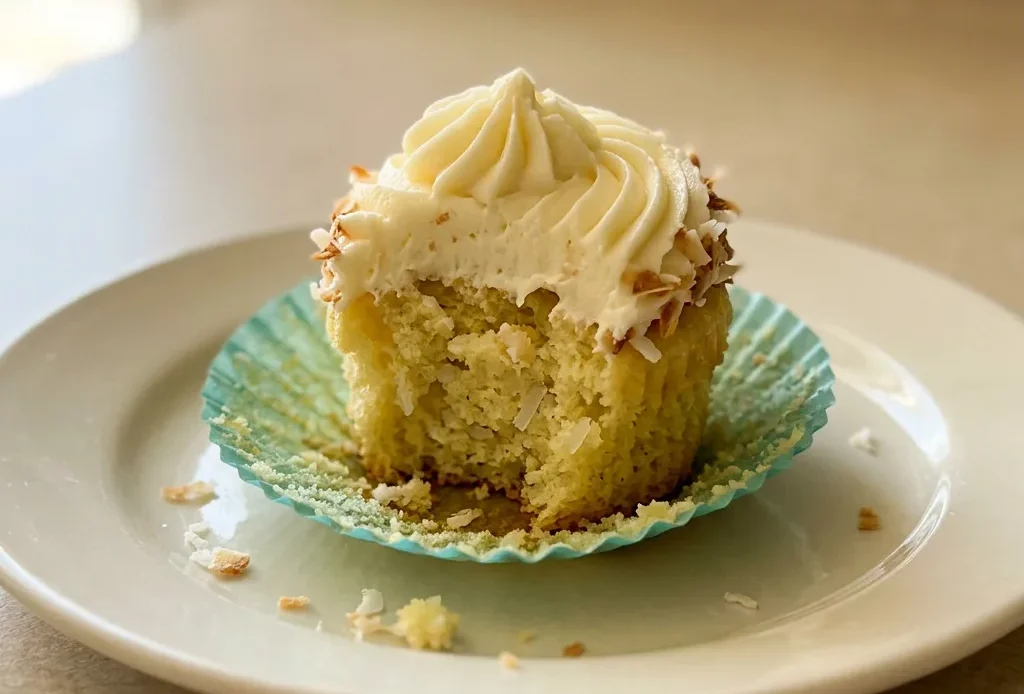
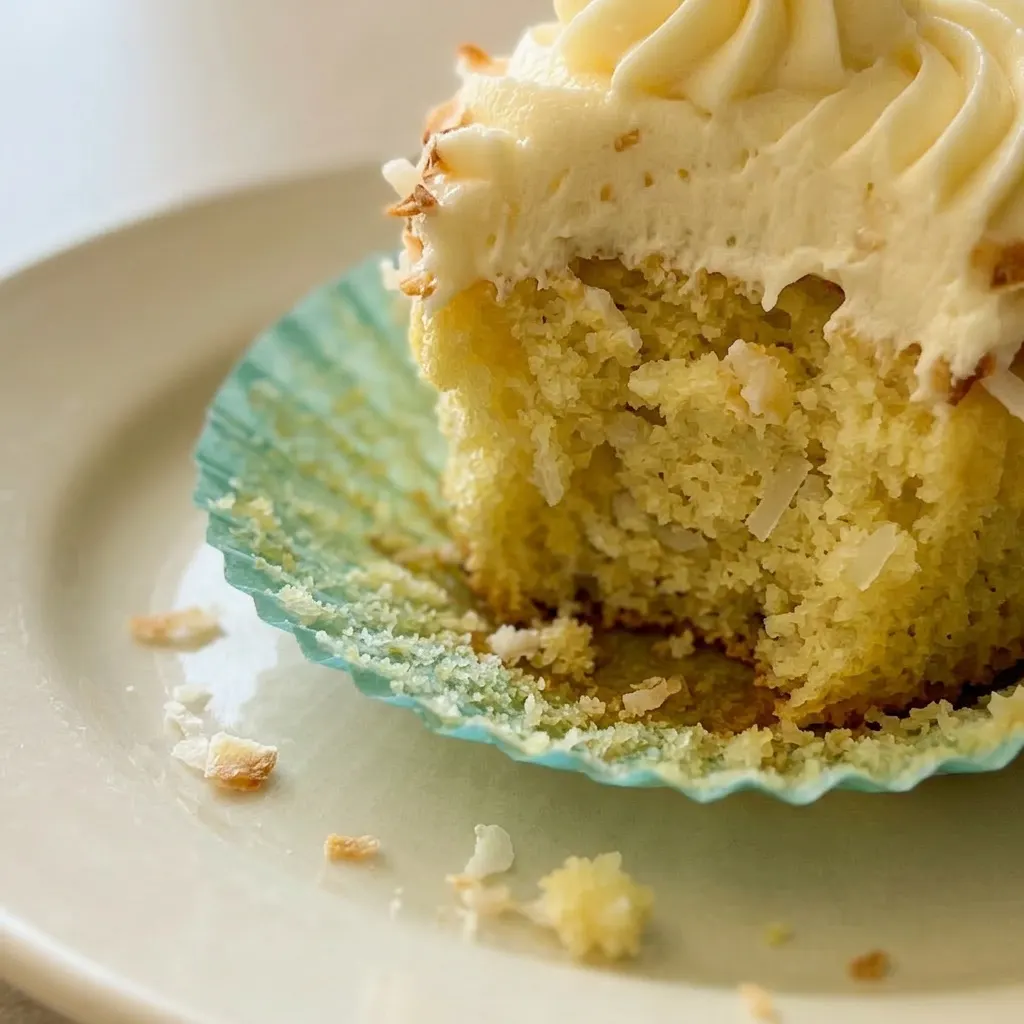
Oil instead of butter means these coconut cupcakes stay soft and tender even on day three. The trick is canned coconut milk plus extract for flavor that reads as coconut, not grease. You whisk, not cream, so there’s less margin for error than a classic butter cake.
That makes it an easy win for anyone who wants a reliably moist crumb without fussing over temperatures or mixing times.
Use oil for a moist, tender crumb
Oil stays liquid at room temperature, so these cupcakes taste soft even the next day. Butter hardens when cool, making the crumb firmer and drier. Here, half a cup of oil coats the flour proteins, limiting gluten formation.
Less gluten means a more tender bite. Oil batters also forgive a few extra stirs, so you don’t risk tough cupcakes from overmixing.
Canned coconut milk plus extract builds deep coconut flavor
Canned coconut milk brings fat and creaminess that light versions can’t match. The 3/4 cup here adds moisture and a subtle sweetness without thinning the batter. Coconut extract punches up the flavor without extra liquid, so the crumb stays tender rather than soggy.
Together they create a rich coconut taste that tastes authentically coconutty, not greasy.
Chop coconut flakes fine for even distribution
Large flakes tend to sink during baking or form dry pockets. Chopping the 1/3 cup of sweetened coconut into small pieces lets them spread evenly through the batter.
Now every bite carries coconut flavor and a hint of chewiness. The tiny bits also don’t burn on the surface, so the tops bake uniformly golden.
Prep: 10 min · Cook: 15 min · Total: 25 min · Servings: 16 · Calories: 170 kcal
Ingredients to watch for coconut cupcakes
Canned coconut milk: Use full fat, not light. The 3/4 cup adds moisture and richness without thinning the batter.
Coconut extract: It punches up flavor without adding liquid, so the crumb stays tender.
Sweetened coconut flakes: Chop the 1/3 cup fine so they distribute evenly and don’t sink or burn.
Oil: Canola or vegetable, not olive. The 1/2 cup keeps the crumb moist and tender even when cool.
Coconut Cupcakes: Step by Step
Prep the oven and pan
Heat oven to 350°F (or 375°F for high altitude). Line 16 cups with paper liners. No greasing needed, the liners do the work.
Sift the dry ingredients
Sift flour, baking powder, baking soda, and salt into a bowl. Sifting removes lumps and aerates the flour, so the batter mixes evenly without clumps.
Whisk sugar and oil
In another bowl, whisk sugar and oil until combined. The mixture will look like wet sand. No need to cream, just get the sugar evenly moistened.
Add eggs one at a time
Beat in eggs one by one, whisking well after each. The batter should be smooth and slightly thickened. If it looks separated, keep whisking until it comes together.
Add coconut milk and extract
Pour in coconut milk, coconut extract, and the finely chopped coconut flakes. Stir until the coconut is evenly distributed. The batter will be thin, that’s fine.
Fold in dry mixture
Add the dry mixture to the wet. Fold gently with a spatula just until no streaks of flour remain. Overmixing makes tough cupcakes, so stop as soon as it’s combined.
Portion the batter
Use a #24 scoop (about 3 tablespoons) to fill each liner two-thirds full. A scoop ensures even size and bake time. Level the tops with a finger if needed.
Bake until springy
Bake 15 to 18 minutes. The tops will be golden and spring back when lightly pressed.
A toothpick inserted in the center should come out clean or with a few moist crumbs. Cool in the pan 5 minutes, then transfer to a rack.
Coconut Cupcakes
Ingredients
- 1 1/4 cups all-purpose flour 156g
- 1 tsp baking powder
- 1/2 tsp baking soda
- 1/2 tsp salt
- 3/4 cup granulated sugar 150g
- 1/2 cup oil 120ml canola/vegetable
- 2 large eggs
- 3/4 cup canned coconut milk 180ml
- 2 tsp coconut extract
- 1/3 cup sweetened coconut flakes 30g chopped finely
Instructions
Preheat oven and line pans:
Heat oven to 350°F (175°C) or 375°F (190°C) for high altitude. Insert paper liners into muffin or cupcake pans.Sift dry ingredients:
In a bowl, sift together flour, baking powder, baking soda, and salt; reserve.Whisk sugar, oil, eggs:
In another bowl, whisk sugar and oil. Beat in eggs one by one, whisking well after each addition.Mix coconut ingredients:
Pour in coconut milk, coconut extract, and finely chopped sweetened coconut flakes; stir to blend.Fold dry into wet:
Add dry mixture to wet mixture; fold until just combined.Portion batter into cups:
Using a #24 scoop, portion batter into lined cups, filling them about two-thirds full.Bake until springy:
Bake at 350°F (175°C) or 375°F (190°C) for high altitude for 15-18 minutes, until the cake springs back when lightly pressed or a toothpick inserted in the center emerges clean or with a few moist crumbs.Cool and garnish cupcakes:
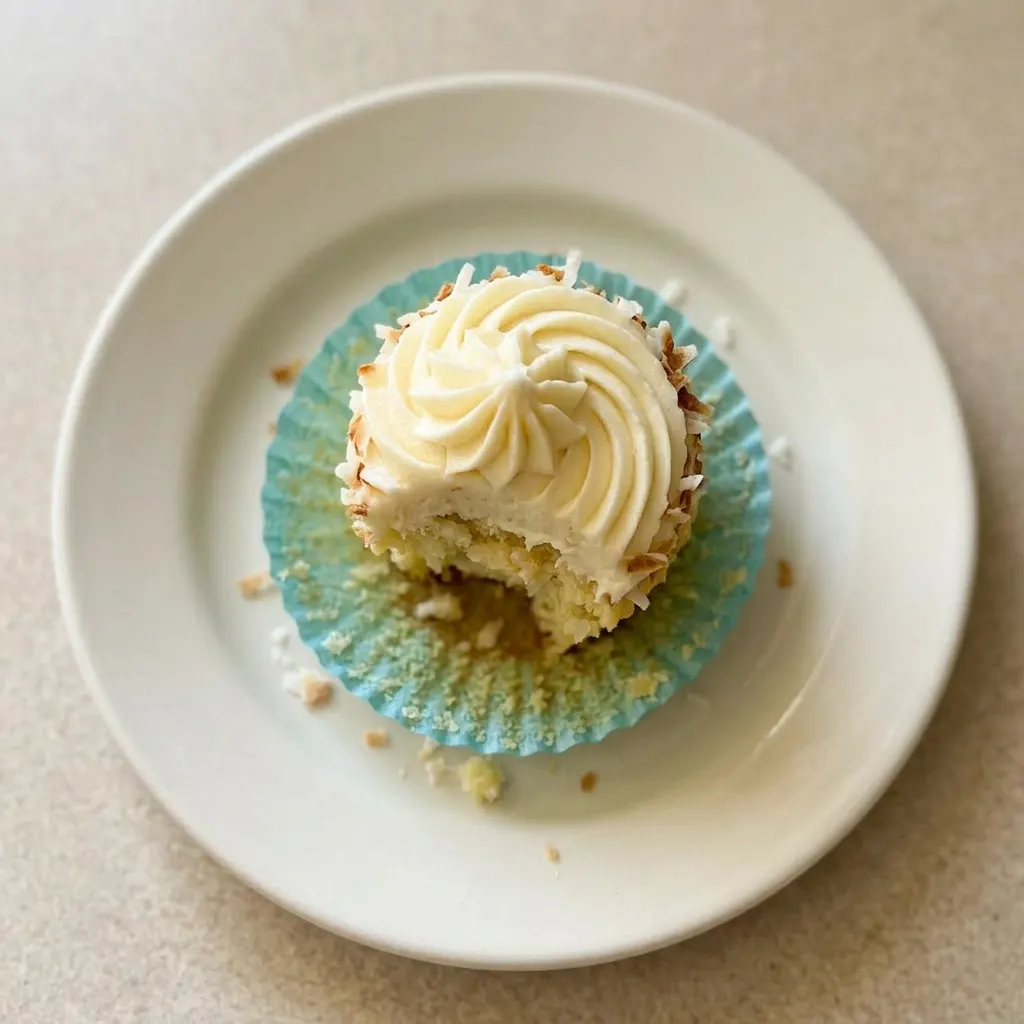
Move cupcakes to a wire rack and let cool entirely. Garnish with frosting and either toasted or plain coconut as preferred.
Storage and Serving
Store unfrosted cupcakes in an airtight container at room temperature for up to 3 days. The oil keeps the crumb soft and moist even on day three.
If you’ve already added frosting, refrigerate them in a single layer in a sealed container for up to 5 days; bring to room temperature about 30 minutes before serving to let the crumb relax. For longer storage, freeze unfrosted cupcakes in a freezer bag for up to 2 months. Thaw at room temperature, still wrapped, then frost.
Frosted cupcakes freeze poorly because condensation ruins the frosting texture. For best texture, serve unfrosted cupcakes within 24 hours of baking, when the crumb is softest and the coconut flavor brightest. Add frosting and any garnish just before serving, not ahead, to keep the topping fresh and the coconut flakes crunchy.
If you’re making these as mini cupcakes, the same storage rules apply, but bake for 10 to 12 minutes instead.
The ingredient you shouldn’t swap in coconut cupcakes
Oil: Butter is not a substitute for oil here. Oil stays liquid at room temperature, keeping these cupcakes moist and tender the next day. Butter hardens when cool, making the crumb firmer and drier.
The recipe also calls for whisking, not creaming, so butter won’t incorporate the same way.
Canned coconut milk: Full-fat coconut cream works, but do not use light coconut milk. Full-fat coconut cream gives an even richer texture, but light coconut milk thins the batter and reduces the fat, making cupcakes drier and less tender. If you swap, start with the same 3/4 cup and expect a less moist crumb.
All-purpose flour: For a gluten-free version, use a 1:1 gluten-free flour blend that contains xanthan gum. The batter will be slightly thicker, and the cupcakes may dome less and have a denser, more tender crumb.
They also dry out faster, so store tightly covered and eat within two days. For healthy cupcake recipes, this swap reduces gluten but doesn’t cut calories.
5 tablespoons water per egg) work for dairy-free or vegan baking. The cupcakes will be more delicate and slightly less fluffy, with a denser crumb.
They also brown less and may sink slightly in the center. Use promptly, as they stale faster.
Tips
- Toast the sweetened coconut flakes in a dry skillet over medium heat, stirring constantly, until golden and fragrant, about 3 to 4 minutes, then let cool completely before chopping. Toasting drives off excess moisture and intensifies the coconut flavor, giving the cupcakes a deeper, nuttier taste without adding any liquid that could throw off the batter’s hydration.
- Use a microplane or fine grater to zest a lime into the sugar before whisking with the oil. The lime oil brightens the coconut flavor and cuts through the richness, making the cupcakes taste more complex and less one-note. This works because the lime zest’s volatile oils are released into the sugar, distributing evenly throughout the batter.
I used to beat the batter until smooth, wondering why my cupcakes came out like bricks. One day I was lazy and barely stirred, they turned out fluffy.
Frequently Asked Questions
Can I make these cupcakes ahead of time and freeze them?
Yes, freeze unfrosted cupcakes in a freezer bag for up to 2 months. Thaw at room temperature still wrapped, then frost. Frosted cupcakes don’t freeze well, condensation ruins the frosting texture.
Why did my cupcakes dome too much or crack on top?
Most likely the oven ran hot or the batter was overmixed. Overmixing develops extra gluten, which can cause cracking as the cupcake rises. Check your oven temperature with an independent thermometer and fold the dry ingredients just until no streaks remain.
How is this different from a classic vanilla cupcake recipe?
This recipe uses oil instead of butter for a moister, more tender crumb that stays soft at room temperature. It also uses canned coconut milk and coconut extract for deep coconut flavor, plus finely chopped coconut flakes for texture in every bite.
Can I toast the coconut flakes before adding them to the batter?
You can, but the flakes will soften during baking anyway, so toasting before doesn’t add much crunch. The recipe already calls for chopping them fine so they distribute evenly without burning. Save the toasted coconut for garnish if you want that extra nutty flavor.