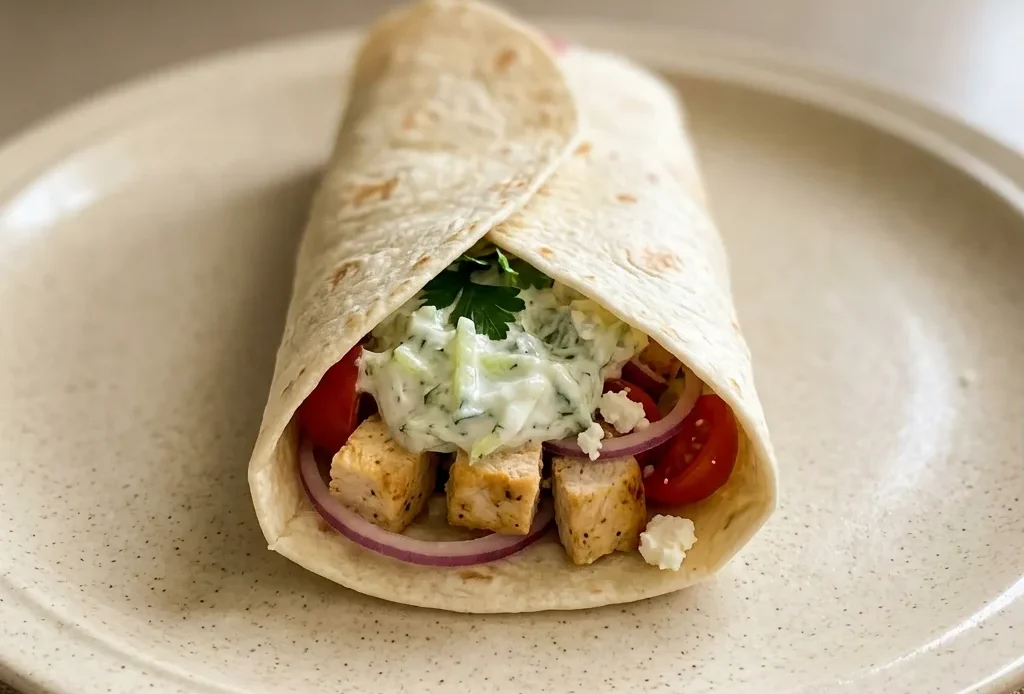
This isn’t a Greek gyro folded around a stack of meat. It’s a quick, pan-fried chicken wrap where the contrast between warm, oregano-scented chicken and cool, creamy tzatziki is the whole point.
The chicken browns fast in a skillet, locking in juice that grilling would lose, while the tzatziki, thickened by squeezed cucumber, stays put instead of turning the tortilla soggy. These chicken tzatziki wraps come together in under 30 minutes, and the real trick is balancing temperatures: hot chicken softens the tortilla just enough to fold cleanly, while the cold yogurt and crisp vegetables keep every bite interesting. It’s a handheld dinner that works because the components play off each other, not because they’re piled high.
The first time I made these, the wraps fell apart in my hands, the tzatziki had turned the tortilla into a wet mess and everything slid out.
Why pan-fry chicken for wraps instead of grilling?
Diced chicken dries out fast on a grill. The open grate lets juices drip away, and even heat can’t reach every side of small pieces.
A skillet gives you control. Olive oil in the pan transfers heat evenly, so each cube browns on contact. That golden crust locks in moisture, you taste juicy chicken, not chalky shreds.
The high heat also blooms oregano and garlic in the oil, building flavor in seconds. You end up with seasoned, tender chunks that stay put in a wrap. Grilling promises smokiness, but for diced meat, pan-frying delivers better texture and taste.
How does tzatziki keep wraps from getting soggy?
Tzatziki works as a barrier. The thick Greek yogurt clings to the tortilla, creating a coat that resists moisture from chicken and tomatoes.
Cucumber adds water, but you squeeze it dry first. Now I always squeeze the shredded cucumber in a clean kitchen towel to remove excess water before stirring it into the yogurt, so the tzatziki stays thick and the wrap holds together.
That drained cucumber blends into the yogurt without weeping later. The result: a wrap that stays intact from first bite to last, not a damp, falling-apart mess.
Should you assemble wraps with warm chicken?
Warm chicken makes the wrap better. As you fold, the heat rises through the tortilla, slightly softening it so it bends without cracking.
That warmth also releases the chicken’s aroma, herb, garlic, browned meat, hitting your nose before the first bite. Contrast that with cool tzatziki and crisp vegetables: each mouthful shifts temperature, keeping every bite interesting.
Cold chicken would mute those sensory cues and stiffen the tortilla. For a wrap that feels integrated and smells like dinner, warm chicken is the move.
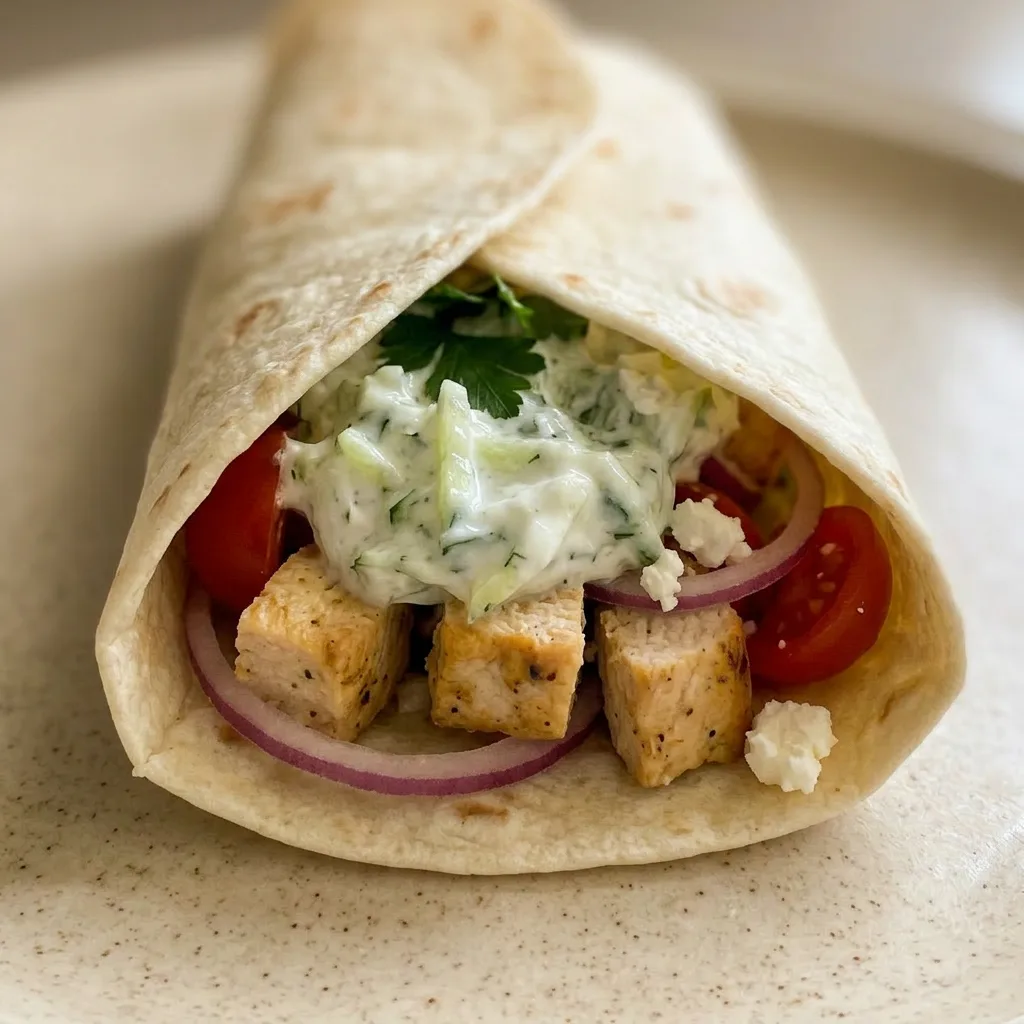
Prep: 1 hr 15 min · Cook: 1 hr 15 min · Total: 1 hr 30 min · Servings: 4 · Calories: 450 kcal
Ingredients that matter in these wraps
Boneless skinless chicken breast: Diced chicken dries fast; pan-fry it golden to keep it juicy inside the wrap.
Greek yogurt: Full-fat Greek yogurt stays thick and won’t make the tortilla soggy.
Cucumber: Shredded and squeezed dry so the tzatziki stays thick, not watery.
Tortilla wraps: Large flour tortillas hold the filling without tearing when folded.
Feta cheese: Crumbled feta adds salt and tang; buy a block and crumble it yourself.
Pan-fry the chicken, then build the wraps quickly
Cook the chicken
Heat olive oil in a skillet over medium heat. Add chicken cubes in a single layer, crowding steams them.
Let them sit undisturbed until the bottoms brown, then toss. You want golden patches on most sides, not gray all over.
Season and finish
Stir in garlic, oregano, salt, and pepper. Cook just until fragrant, about a minute. If the garlic browns too fast, the pan’s too hot, pull it off the burner briefly.
The oregano should smell woodsy, not burnt.
Make the tzatziki
Squeeze the shredded cucumber in a clean towel until barely damp. Stir into yogurt with lemon juice, salt, and pepper. The mixture should be thick enough to hold a dollop shape on a spoon, if it looks runny, squeeze more cucumber.
Assemble the wraps
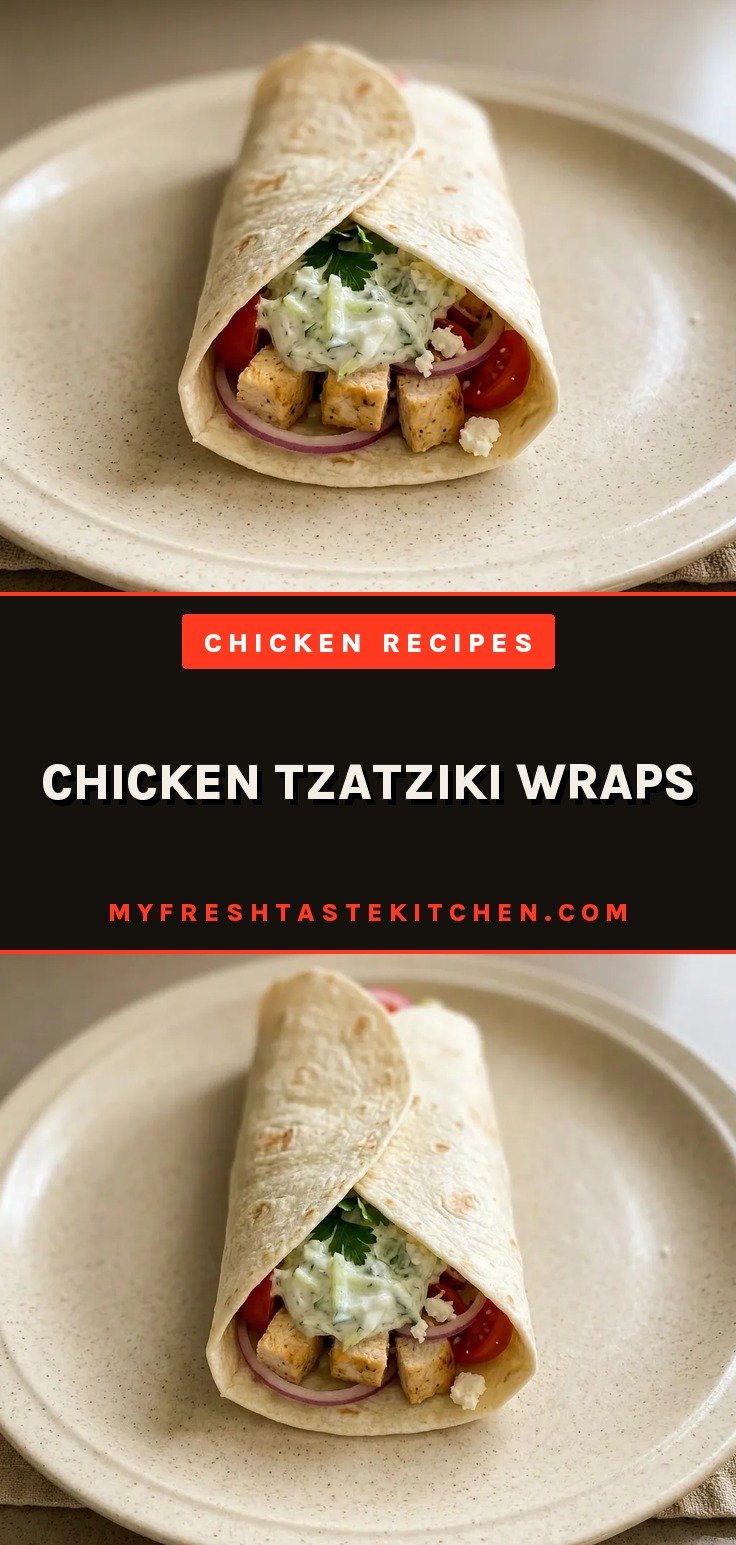
Lay tortillas flat. Divide warm chicken, tomatoes, onion, and feta among them. The warmth from the chicken will slightly soften the tortilla, making it pliable.
Add a generous spoonful of tzatziki and a sprinkle of parsley.
Fold and serve
Fold the bottom edge up, then fold the sides over, tucking snugly. If the tortilla cracks, warm it a few seconds in a dry skillet. The wrap should feel compact, not bulging, filling should peek out just slightly at the ends.
Chicken Tzatziki Wraps
Ingredients
- 1 1/4 lbs boneless skinless chicken breast diced
- 4 large tortilla wraps
- 1 cucumber shredded
- 1 cup Greek yogurt
- 2 cloves garlic finely chopped
- 1 tbsp olive oil
- 1 tsp dried oregano
- 1 tsp lemon juice
- Salt and pepper to taste
- 3.5 oz cherry tomatoes halved
- 3.5 oz red onion sliced into thin rings
- 1.8 oz feta cheese crumbled
- Fresh parsley for garnish
Instructions
Sauté Chicken Cubes:
Warm olive oil in a skillet over medium heat. Sauté chicken cubes until golden and fully cooked.Season with Garlic:
Stir in minced garlic, oregano, salt, and pepper; cook for an additional minute.Prepare Tzatziki Sauce:
Mix Greek yogurt, grated cucumber, lemon juice, salt, and pepper in a bowl to prepare tzatziki.Assemble Wrap Fillings:
Place tortilla wraps on a work surface. Distribute chicken, tomatoes, onion, and feta evenly among the wraps.Add Tzatziki and Parsley:
Top each wrap with a dollop of tzatziki and garnish with fresh parsley.Fold and Serve Wraps:
Fold the wraps shut and serve right away.
Storage and Serving
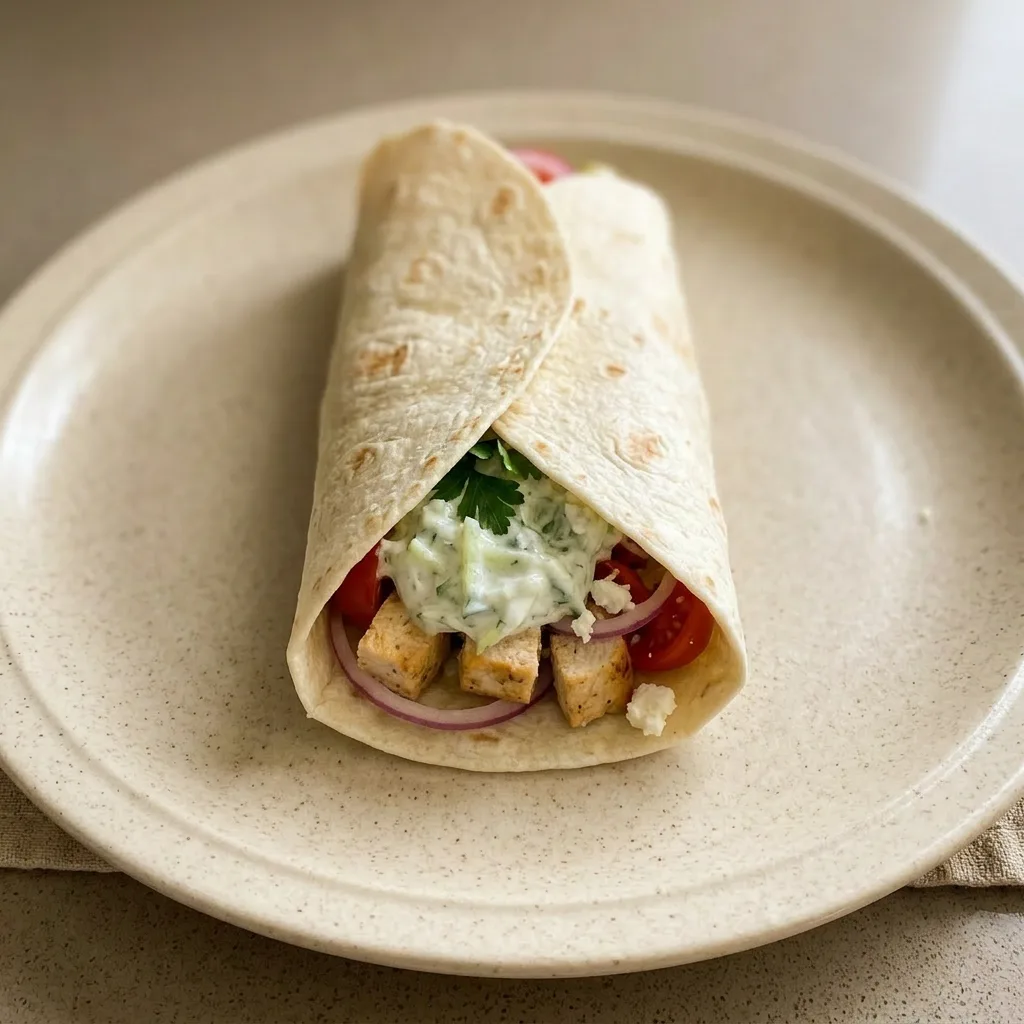
These wraps are best eaten right after assembly, while the chicken is warm and the tortilla is soft. If you plan to make them ahead, store the components separately. Keep the cooked chicken in an airtight container in the fridge for up to 3 days.
The tzatziki also holds for 3 days, but give it a stir before using as some liquid may separate. The vegetables (cucumber, tomatoes, onion) and crumbled feta should be refrigerated separately.
For assembled wraps, you can refrigerate them for up to 24 hours, but the texture will suffer: the tortilla absorbs moisture and softens, the tzatziki thins, and the chicken loses its just-cooked juiciness. To serve leftovers, unwrap and warm the fillings in a skillet, then reassemble with fresh tzatziki and vegetables. Freezing assembled wraps is not recommended; the yogurt and fresh vegetables break down on thawing, turning the wrap soggy.
You can freeze the cooked chicken alone for up to 2 months, then thaw overnight in the fridge and use in fresh wraps with new produce and tzatziki.
Tips
- Shred the cucumber on the large holes of a box grater, then salt it lightly and let it sit for 5 minutes before squeezing. Salt draws out more water than squeezing alone, ensuring a thicker tzatziki that won’t weep into the wrap.
- If your tzatziki still looks thin after squeezing the cucumber, stir in 1 tablespoon of finely ground almonds or almond flour. It absorbs excess moisture without altering the flavor noticeably, and adds a subtle nuttiness that pairs well with the oregano and feta.
A few smart swaps for these wraps
Chicken breast: Boneless skinless chicken thighs. Thighs have more fat, so they stay juicier even if you cook them a minute too long.
Dice them the same size as breast meat and pan-fry until no longer pink at the center. The texture is softer, less lean, but just as good wrapped up.
Greek yogurt: Full-fat plain yogurt or strained regular yogurt. Regular yogurt is thinner, line a sieve with cheesecloth and drain it for 30 minutes to match the thickness of Greek yogurt. If you skip that step, the tzatziki will run and make the tortilla soggy.
The tang stays about the same.
Feta cheese: Halloumi (grilled or pan-fried). Halloumi doesn’t crumble; it holds its shape when heated. Dice it small and pan-fry in a dry skillet until golden on two sides, then add to the wrap.
You get a chewy, salty bite instead of feta’s creamy crumble. Skip crumbling, just dice.
Tortilla wraps: Corn tortillas or lettuce leaves (for gluten-free or low-carb). Corn tortillas are smaller and more brittle.
To use them, double up two per wrap and warm them in a dry skillet until pliable, they’ll still crack at the fold. Lettuce leaves (romaine or butter lettuce) give a cool, crisp wrap but won’t hold hot chicken without wilting quickly. Best for serving right away, not for packing.
Frequently Asked Questions
Can I make the tzatziki ahead of time?
Yes, you can make the tzatziki up to 3 days ahead. Store it in an airtight container in the fridge, and give it a stir before using, some liquid may separate as it sits. The yogurt base keeps well, and the cucumber stays firm if you squeezed it dry thoroughly during prep.
Just don’t assemble the wraps until you’re ready to serve, or the tortilla will soften.
How do I keep the wraps from getting soggy if I’m not serving right away?
Assembled wraps will soften within a few hours as the tortilla absorbs moisture. To avoid sogginess, store the components separately: keep the chicken, tzatziki, and vegetables in their own containers in the fridge. Assemble only when you’re ready to eat, using the warm chicken to slightly soften the tortilla just before folding.
Can I use chicken thighs instead of breast for more flavor?
Yes, boneless skinless chicken thighs work well here. They have more fat, so they stay juicier even if you cook them a minute too long. Dice them the same size as breast meat and pan-fry until no longer pink at the center, the texture is softer but just as good wrapped up.
What’s the best way to reheat leftover wraps without drying them out?
Don’t reheat the whole assembled wrap, the tortilla will get tough and the tzatziki will thin. Instead, unwrap the leftovers and warm the chicken in a skillet over medium heat until hot, then reassemble with fresh tzatziki and vegetables. The chicken stays moist because you’re reheating it alone, and the fresh toppings restore the original texture.
Is this wrap authentic Greek or a modern twist?
It’s a modern twist. Traditional Greek wraps use pita, not large flour tortillas, and the chicken is often grilled or rotisserie, not pan-fried. The tzatziki, feta, and oregano are Greek staples, but the assembly and tortilla borrow from other cuisines.
Think of it as a fusion wrap that puts Greek flavors in a familiar handheld form.