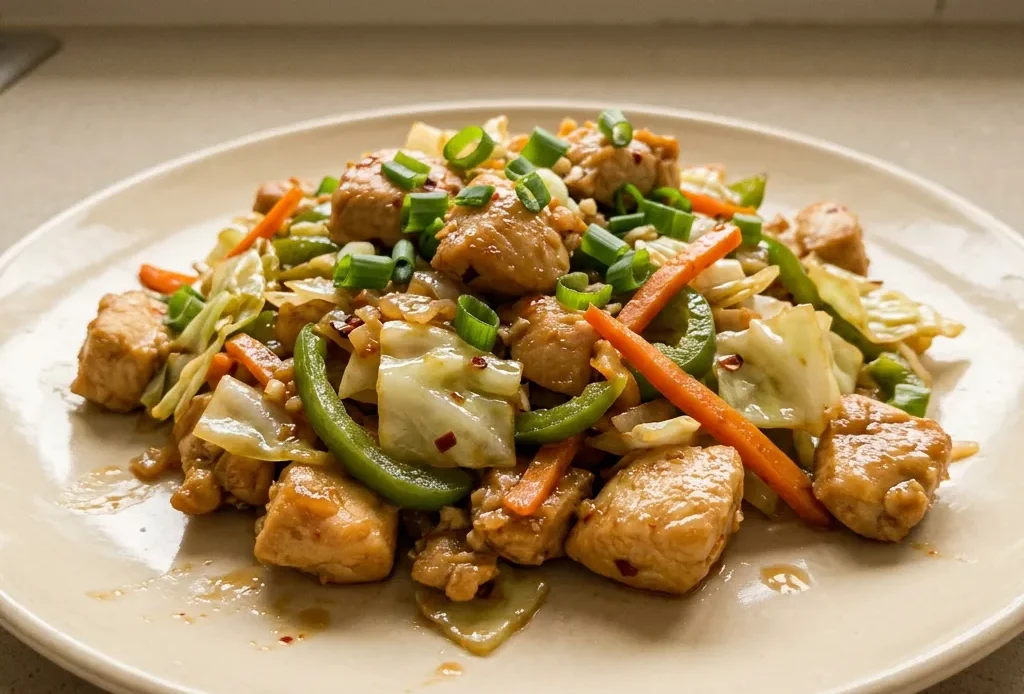
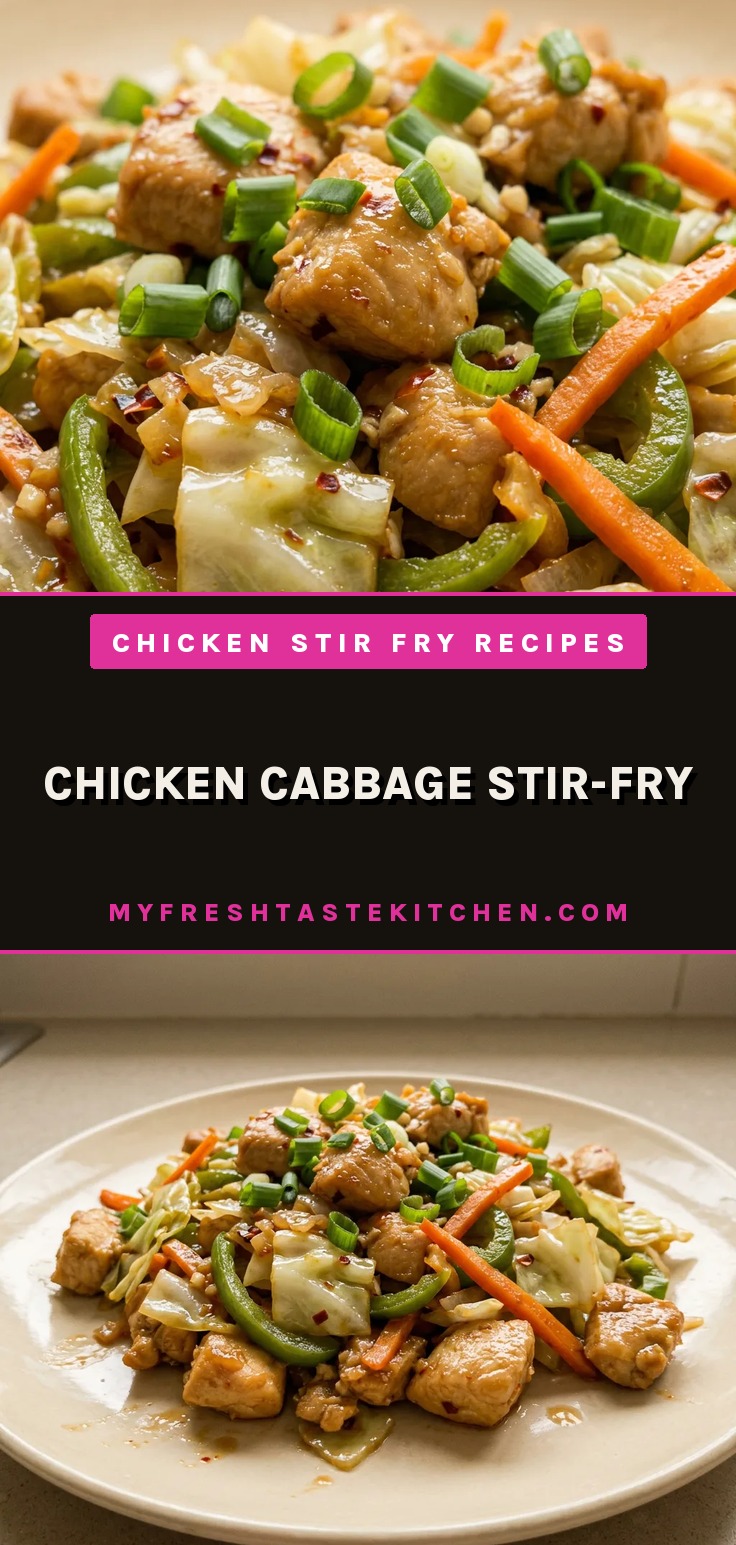
The glossy sauce clings to every piece, not pooling at the bottom. Cabbage stays crunchy, bell pepper snaps, and the chicken is tender throughout. That balance is the trick with a quick chicken cabbage stir-fry: getting the vegetables crisp while the chicken stays juicy, all in a savory coating that tastes like it simmered for longer than it did.
A Quick Marinade That Works
Soy sauce and sesame oil are doing two jobs here. The soy brings salt and savory depth, the sesame adds nutty richness.
Both penetrate the chicken in just ten to fifteen minutes, enough to season the surface without turning the meat soft or watery. That brief soak also helps the chicken hold onto moisture when it hits high heat. You can see it: the pieces brown evenly, stay juicy inside, and don’t dry out even though the stir-fry moves fast.
No need to marinate for hours. This short bath delivers noticeable flavor and a tender result, exactly what you want from quick-cooking chicken.
Color and Crunch from Three Vegetables
Cabbage, bell pepper, and carrot create a visual and textural contrast that keeps every bite interesting. Cabbage gives a mild crunch that softens slightly but never goes limp.
Bell pepper adds a sweet, crisp snap and pops of red or orange. Carrot juliennes bring a tender-crisp bite and faint sweetness.
Together they form a mix that looks bright on the plate and feels varied in the mouth. The cabbage takes up the soy-based sauce without getting soggy, the pepper stays firm, and the carrot retains just enough bite. That’s the kind of vegetable blend that makes a stir-fry feel complete.
Sauce Added Last Keeps Vegetables Crisp
Stir-fry moves fast, and vegetables go from crisp to limp quickly if left in liquid. Preparing the sauce separately means you can toss it in at the last minute, coating everything evenly without steaming the vegetables.
The cornstarch slurry, if you use it, thickens the sauce in seconds, so it clings to the chicken and veggies without pooling at the bottom. The result: each piece glistens with flavor, the cabbage stays slightly crunchy, the bell pepper retains its snap. No soggy stir-fry, just a glossy, well-seasoned dish.
Why Chicken Gets Cooked and Set Aside
Searing the chicken first builds a golden crust and locks in juices. If you left it in the pan while cooking the vegetables, the chicken would keep cooking and turn dry and tough. Pulling it out lets the vegetables cook in the same pan, picking up browned bits, while the chicken rests.
When it goes back in at the end, it just warms through in the sauce, soaking up flavor without losing tenderness. The difference is clear: the chicken stays moist and tender, not chewy.
It’s a simple sequence that makes all the difference.
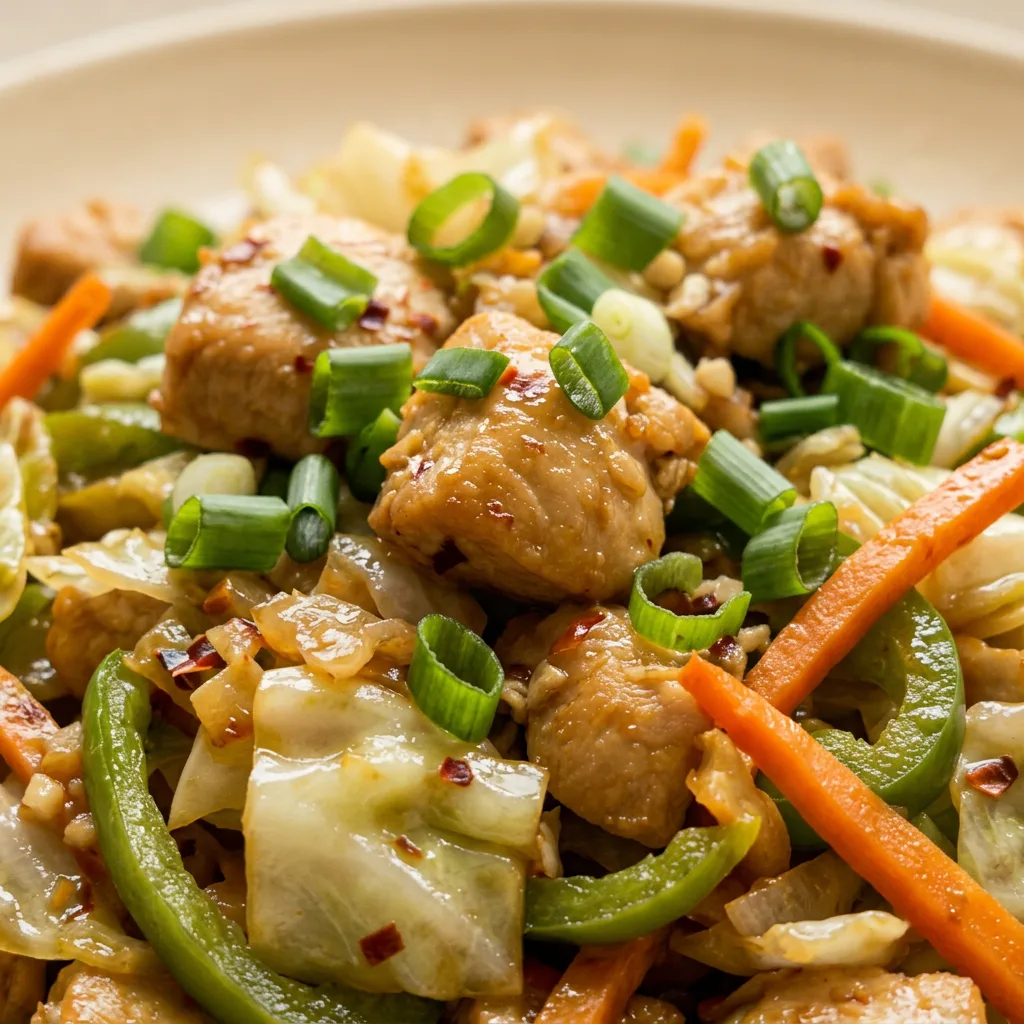
Prep: 15 min · Cook: 10 min · Total: 25 min · Servings: 4 · Calories: 350 kcal
Choosing the Right Cabbage and Chicken
Butter: Use unsalted so you control the salt level; salted can throw off the seasoning.
Chicken breast: Dice into even half-inch pieces so they cook through at the same rate.
Cabbage: Green cabbage holds up best; napa gets too soft too fast in a hot pan.
Bell pepper: Pick a firm one with tight skin; limp ones turn mushy when stir-fried.
Carrot: Julienne into matchsticks, not thick coins, so they soften in under two minutes.
Soy sauce: Use a regular, not low-sodium, soy sauce for the right salt punch in the marinade.
Sear First, Finish Together
Marinate the Chicken
Toss diced chicken with soy sauce, sesame oil, and black pepper; let sit 10 to 15 minutes. You’ll see the pieces darken slightly as they absorb the liquid.
Mix the Sauce
While the chicken marinates, stir together the remaining soy, oyster sauce if using, pepper, salt, red pepper flakes, and cornstarch slurry. Set it aside so it’s ready to pour.
Sear the Chicken
Melt butter over medium-high heat, then add chicken in a single layer. Cook until deep golden on one side, about 3 minutes, then flip. The surface should have browned patches, not just pale.
Set Chicken Aside
Transfer the seared chicken to a plate. Don’t worry if it’s not fully cooked through, it will finish later. Leaving it in the pan would overcook it.
Sauté Aromatics
In the same pan, cook onion and garlic just until fragrant, about 30 seconds. The onion should soften slightly but not brown. If it sticks, deglaze with a splash of water.
Stir-Fry Vegetables
Add cabbage, bell pepper, and carrot; toss constantly for 2 minutes. The cabbage should wilt slightly but the bell pepper and carrot stay crisp-tender. If they steam instead of sear, your heat is too low.
Return Chicken and Add Sauce
Put the chicken back in, pour the sauce over everything, and stir. Within 30 seconds the sauce should thicken and coat the ingredients. If it’s too thin, let it bubble another 15 seconds.
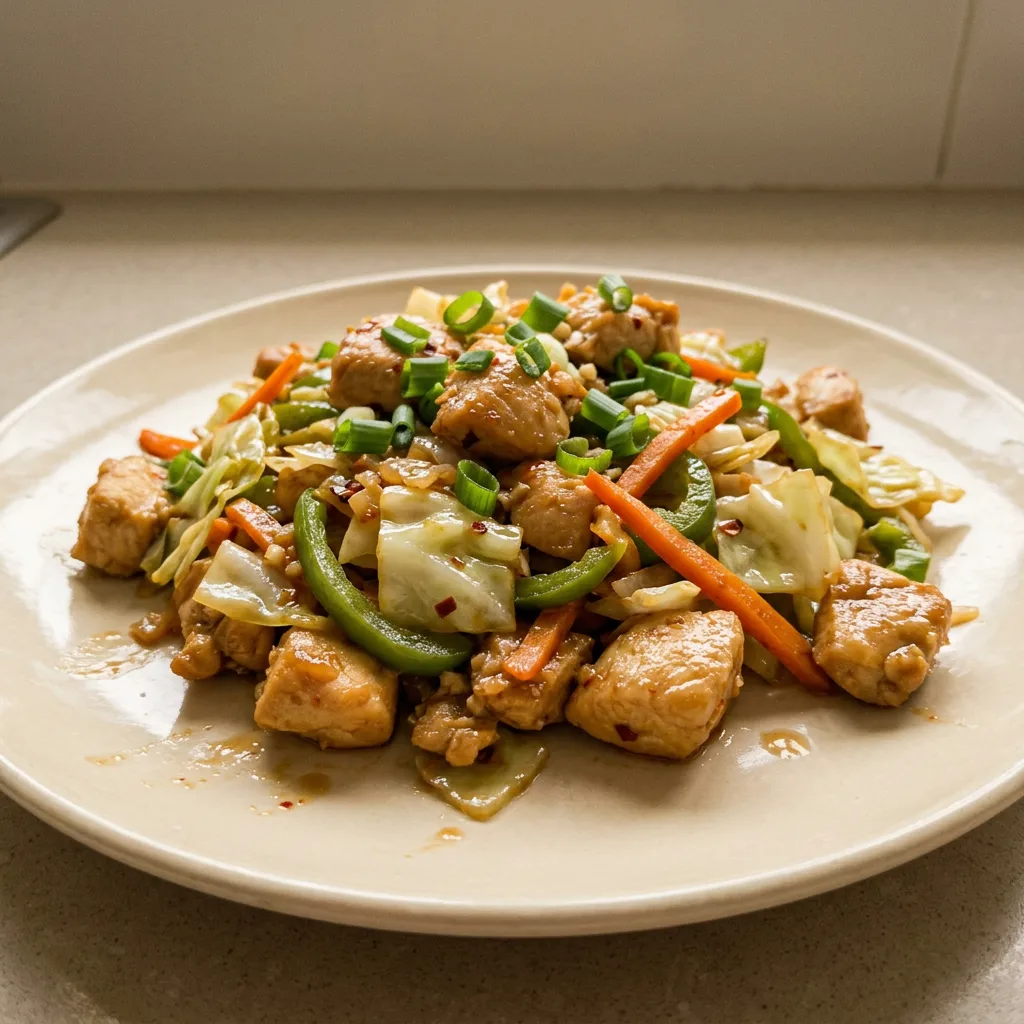
Chicken Cabbage Stir-Fry: Quick & Delicious
Ingredients
Method
Marinate Chicken:
Combine diced chicken with soy sauce, sesame oil, and black pepper; let sit for 10–15 minutes to marinate.Mix Sauce:
During marination, in a separate bowl mix together the rest of the soy sauce, oyster sauce (if using), black pepper, salt, crushed red pepper flakes (if using), and the cornstarch-water slurry.Sear Chicken:
Heat a large skillet or wok over medium-high heat, add butter, and cook the marinated chicken until golden brown on all sides.Sauté Aromatics:
Take out the chicken; in the same pan, sauté sliced onion and minced garlic until aromatic.Stir-fry Vegetables:
Toss in chopped cabbage, sliced bell pepper, and julienned carrot; stir-fry until vegetables are crisp-tender.Combine and Thicken:
Put the chicken back into the skillet, pour the prepared sauce over everything, and cook until the sauce thickens and the dish is hot.
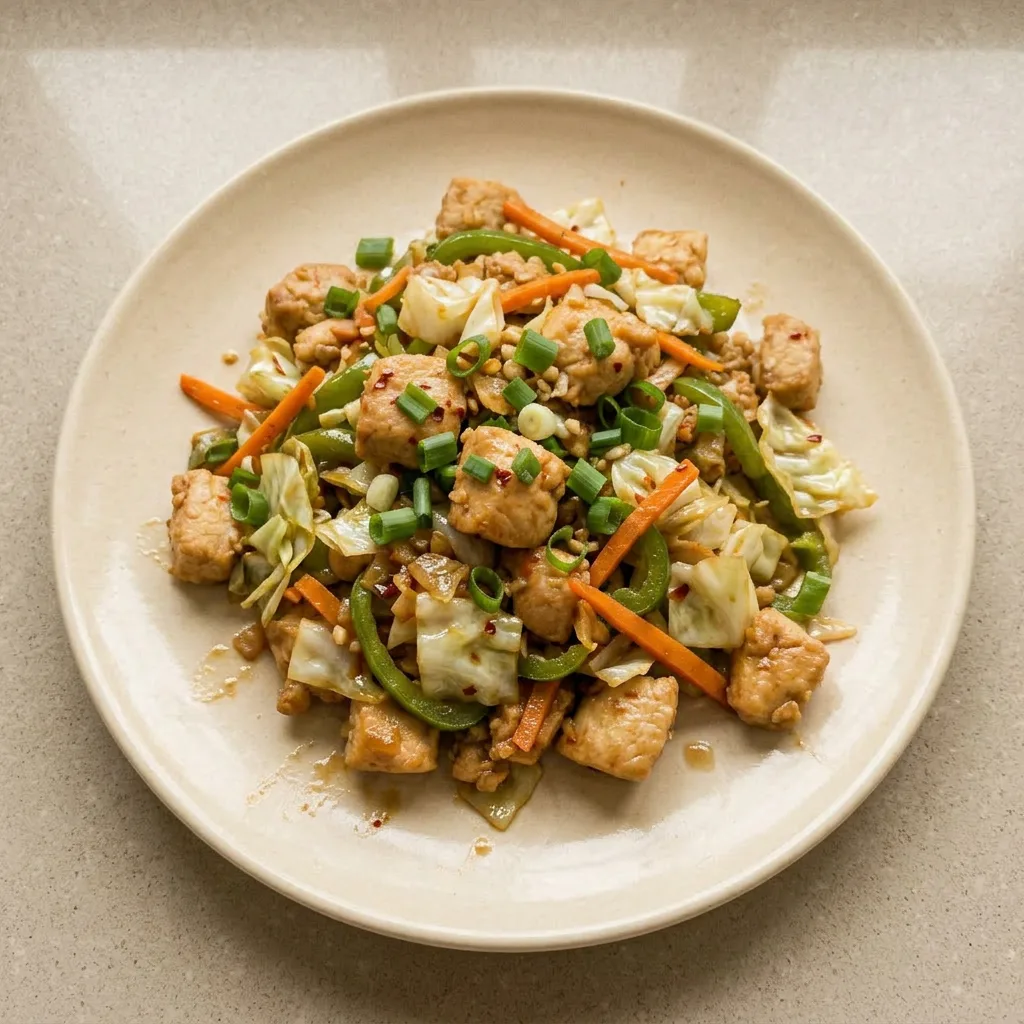
Storing and Reheating Leftover Stir-Fry
This stir-fry is best eaten right after cooking, when the vegetables are crisp-tender and the chicken is juicy. If you have leftovers, cool them to room temperature, then transfer to an airtight container. Refrigerate for up to 3 days.
The vegetables will soften noticeably after the first day, and the cabbage may release some liquid, but the flavors will concentrate and blend. To reheat, use a hot skillet or wok over medium-high heat; add a splash of water or chicken broth to restore moisture and steam until hot, about 2 minutes. Microwaving works but will make the vegetables limp faster.
The cornstarch-thickened sauce may thin on standing; a quick stir-fry will re-emulsify it. Do not freeze the assembled dish.
The cooked cabbage and bell pepper become waterlogged and mushy when thawed, and the sauce separates. If you want to freeze components, freeze the seared chicken separately (up to 3 months) and add fresh vegetables when you cook again.
Three Substitutions That Work, and One That Doesn’t
Oyster sauce: Hoisin sauce or just omit it. Oyster sauce adds a subtle savory-sweet depth. Hoisin is thicker and sweeter, so the sauce will be richer and less savory.
Omit it entirely and the dish is still good, just less complex. Use the same amount if subbing.
Crushed red pepper flakes: Sriracha, chili garlic sauce, or cayenne. Heat level varies.
Start with 1/4 tsp of any hot sauce or a pinch of cayenne, then taste. The flakes provide a slow burn; liquid sauces blend in more evenly but add a little vinegar tang.
Adjust to your heat tolerance.
Cornstarch slurry: Skip it or use arrowroot starch. Leaving out the slurry gives a thinner, more watery sauce that won’t cling as well. Use 1 tsp arrowroot mixed with 2 tbsp water for a similar thickener, it works the same way but can get slightly slick if overdone.
Butter: Vegetable oil or ghee for dairy-free. Butter adds a rich, nutty flavor when browning the chicken. Oil will still sear the chicken but lacks that browned butter taste.
Ghee (clarified butter) works well and is dairy-free for most lactose issues. Use the same amount.
Tips
- If your skillet is not large enough to hold the chicken in a single layer without crowding, sear in two batches. Crowding lowers the pan temperature, causing the chicken to steam instead of brown, which prevents that golden crust.
- When julienning the carrot, cut it into matchsticks about 1/8 inch thick. Thicker pieces will not soften enough in the 2-minute stir-fry, leaving you with raw-tasting carrot chunks that disrupt the texture balance.
Frequently Asked Questions
Can I make this stir-fry ahead of time and reheat it?
It’s best eaten right after cooking for the crispiest vegetables and juiciest chicken. If you need to prep ahead, you can marinate the chicken and chop the vegetables up to a day in advance, then stir-fry just before serving. Leftovers will keep for up to 3 days in the fridge, but the cabbage softens and may release liquid.
Reheat in a hot skillet with a splash of water or broth to restore moisture and re-emulsify the sauce.
How do I prevent the chicken from turning out dry?
Marinate the diced chicken for 10 to 15 minutes in soy sauce, sesame oil, and pepper, that brief soak helps it hold onto moisture during high-heat cooking. Sear it in butter until golden on the outside, then remove it from the pan so it doesn’t keep cooking while you stir-fry the vegetables. Returning it at the end just to warm through in the sauce keeps it tender; overcooking at any stage dries it out.
What if I don’t have oyster sauce?
You can substitute hoisin sauce in the same amount, which adds a richer, sweeter note, or simply omit it, the dish will still be savory and good, just a little less complex. The cornstarch slurry in the sauce will still thicken and coat the chicken and vegetables without the oyster sauce. No other adjustments needed.
Is this dish supposed to be saucy or dry?
It’s meant to be glossy and lightly coated, not swimming in liquid. The sauce, thickened with cornstarch slurry, clings to each piece of chicken and vegetable without pooling at the bottom of the pan. If you prefer a saucier stir-fry, you can double the sauce ingredients (soy, oyster sauce, seasonings, and slurry) but keep the cooking method the same.