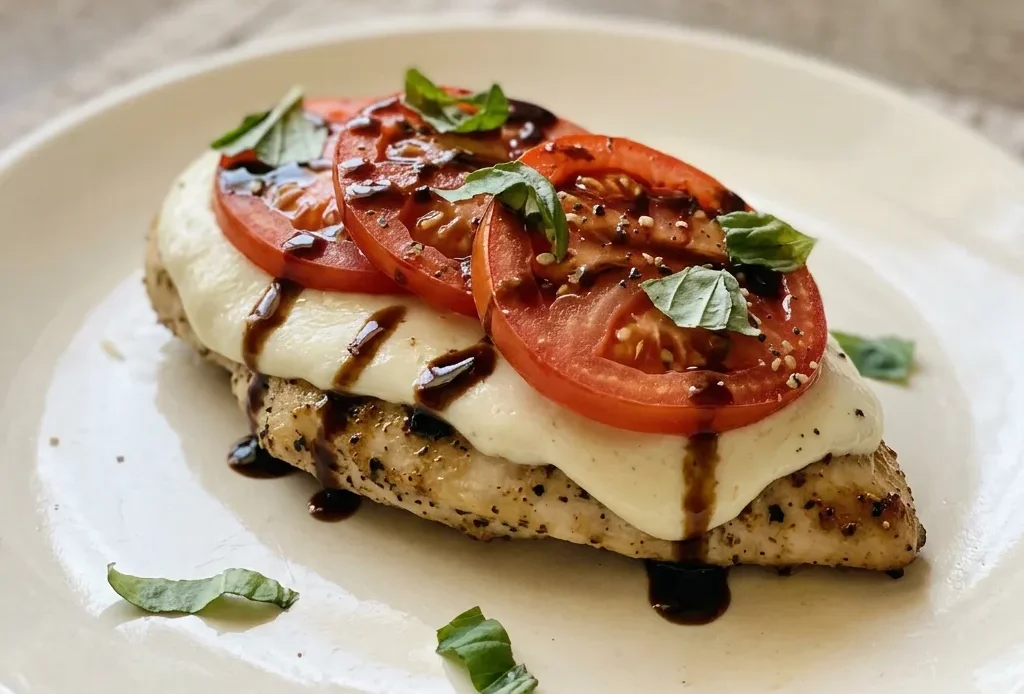
Pounding chicken to even thickness isn’t a fussy chef trick, it’s the difference between a dry, stringy tail and a breast that’s juicy from end to end. Caprese chicken leans on that uniform sear to hold up under fresh mozzarella and tomatoes without turning soggy, and the high heat builds a crust that keeps the meat tender. Get the thickness right and the rest falls into place: melted cheese, ripe tomato, bright basil, a balsamic finish sharp enough to cut through it all.
Why does pounding chicken to even thickness matter?
A chicken breast tapers from thick to thin. Cook it as-is, and the thin end dries out while the thick part barely reaches temp.
Pounding to just under 1 inch evens out the density. Now heat moves through at the same rate everywhere. You get a uniformly cooked breast, edge to edge, without the stringy, overcooked tail.
No need to butterfly or buy cutlets; a rolling pin and parchment do it in seconds.
What does high heat do for the chicken?
High heat on a grill or grill pan does two things at once. It sears the surface, building a browned, savory crust, while the interior stays tender.
Start with a hot grate. Cook 5 to 6 minutes per side until the thickest part reads 155°F.
Then top with mozzarella. Those extra 3 minutes finish the chicken to 165°F and melt the cheese. The crust stays crisp, the meat stays juicy, and the cheese doesn’t slide off.
Why add mozzarella and tomato after the chicken is nearly done?
If you pile fresh mozzarella and tomato on raw chicken, the cheese sweats and the tomato releases juice before the meat cooks through. The result: a soggy crust and diluted flavor.
Instead, cook the chicken to 155°F first, lay on the mozzarella, and grill 3 more minutes. The cheese melts neatly, the chicken hits 165°F, and the tomato goes on after, off the heat.
That keeps the slices firm and bright, and basil leaves stay perky, not wilted.
Does the balsamic drizzle make a difference?
Aged balsamic or balsamic glaze adds a sharp-sweet finish that cuts through the rich mozzarella and chicken. Drizzle it right before serving, not earlier, so the acidity stays bright and the glaze doesn’t soak into the meat.
A thin stream over the tomatoes and basil is enough. It lifts the whole plate without masking the chicken’s seared crust or the fresh basil. Skip it and the dish tastes flat; too much and it fights everything else.
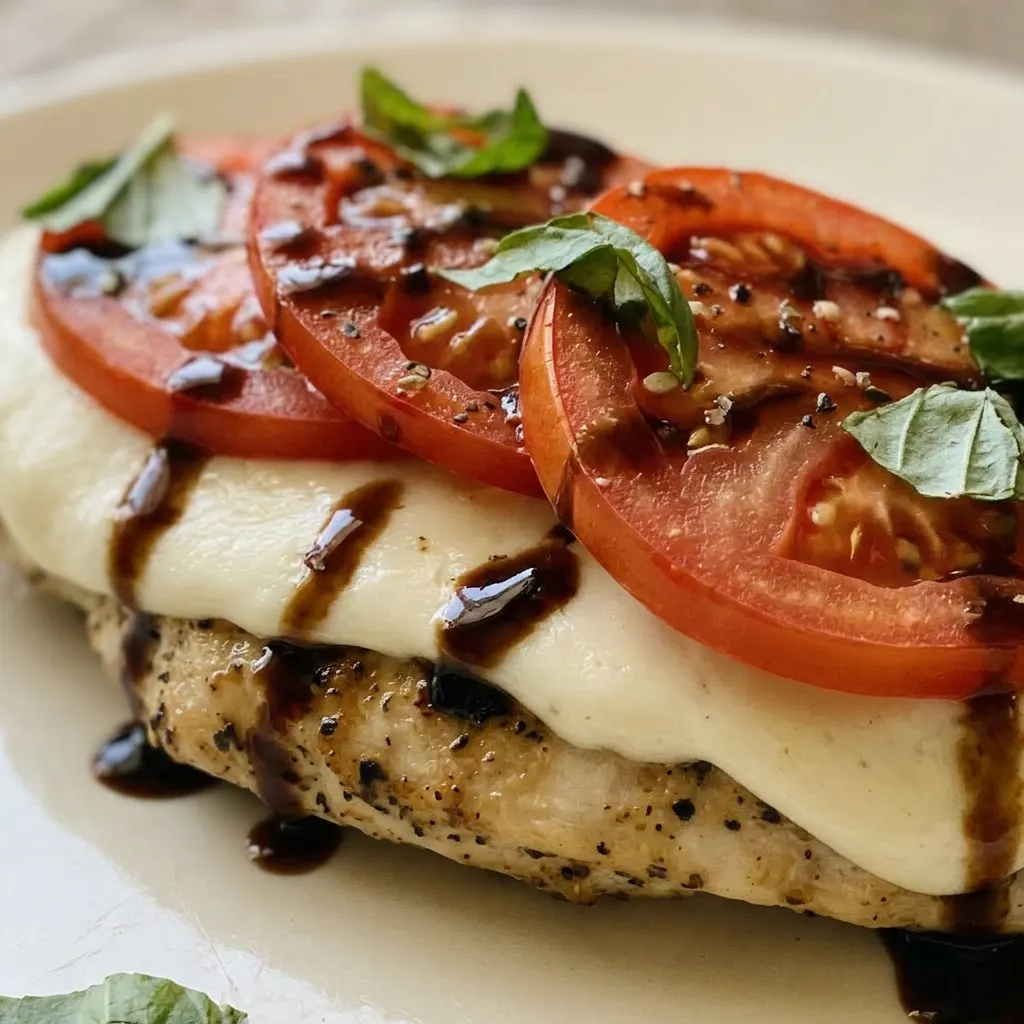
Prep: 10 min · Cook: 15 min · Total: 25 min · Servings: 4 · Calories: 390 kcal
Grab fresh mozzarella in the water-packed balls
Fresh mozzarella: Buy the kind packed in water, not pre-sliced dry logs; it melts creamier and doesn’t turn rubbery.
Vine-ripened tomatoes: Pick firm, ripe tomatoes that yield slightly to pressure; mealy or hard ones ruin the fresh contrast.
Fresh basil: Use whole leaves, not chopped; they stay perky longer and look better on the finished dish.
Aged balsamic or balsamic glaze: Go for aged balsamic or a thick glaze; thin supermarket balsamic is too watery and lacks sweetness.
How to build a Caprese Chicken that stays juicy and looks plated
Pound the chicken
Place each breast between parchment and pound to just under 1 inch thick. The even thickness means the thin end won’t dry out before the thick part cooks through.
Season and oil
Rub olive oil all over the chicken, then sprinkle the seasoning mix evenly on both sides. The oil helps the sear and holds the spices on the meat, not the grill.
Grill over high heat
Preheat the grill or grill pan to high. Cook the chicken 5 to 6 minutes per side until the thickest part hits 155°F. You’ll see a dark brown crust forming, that’s flavor.
Add mozzarella and finish
Place two slices of mozzarella on each breast and grill 3 more minutes. The cheese should be melted and bubbly, and the internal temp now reads 165°F. Pull it right away so the cheese doesn’t slide off.
Top with tomato and basil
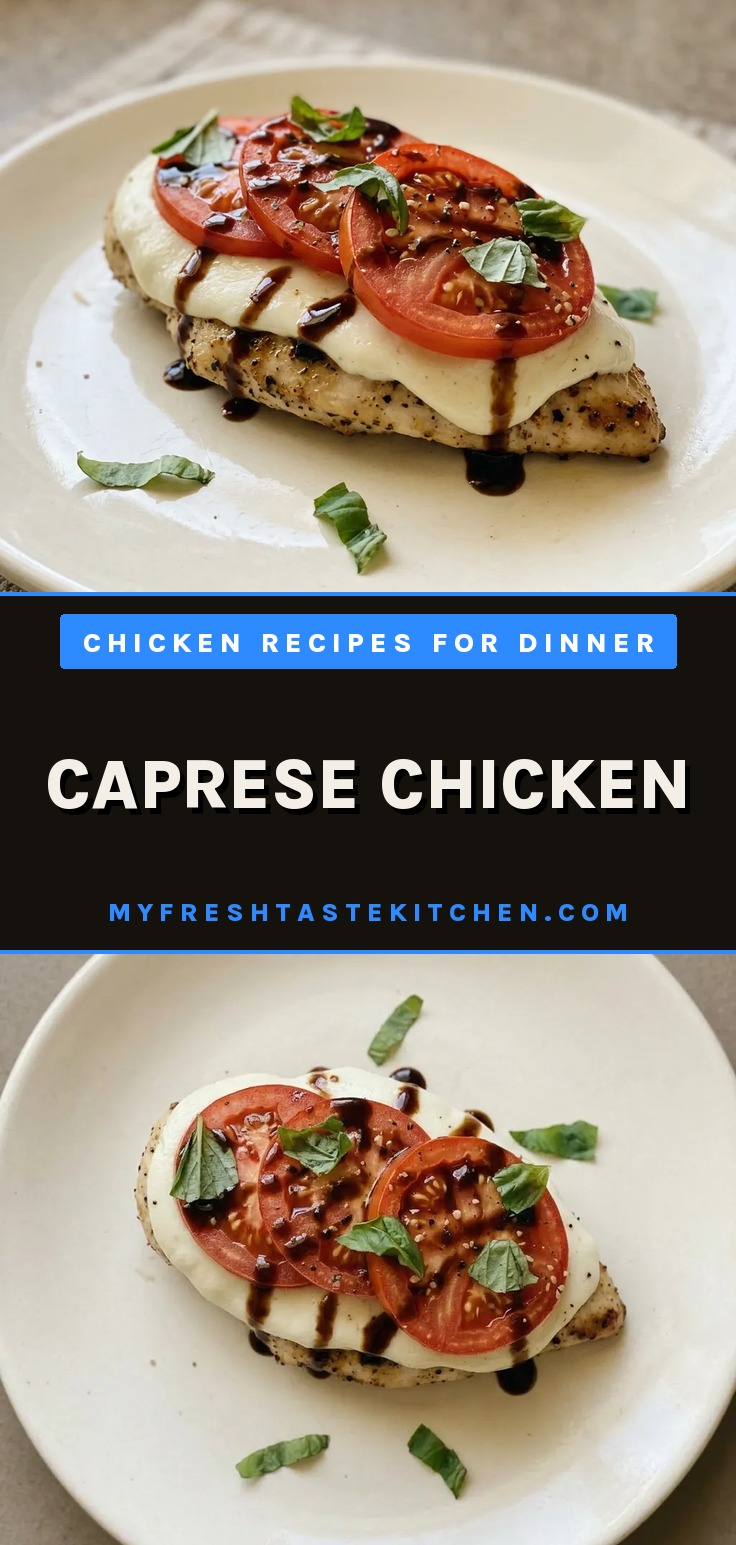
Transfer the chicken to a platter. Lay 2, 3 tomato slices on each breast, then scatter fresh basil over the top. The tomatoes stay firm and the basil stays bright because they never hit the heat.
Finish with balsamic
Drizzle aged balsamic or balsamic glaze over everything just before serving. A thin stream is enough, it adds a sharp-sweet contrast without drowning the seared crust or fresh basil.
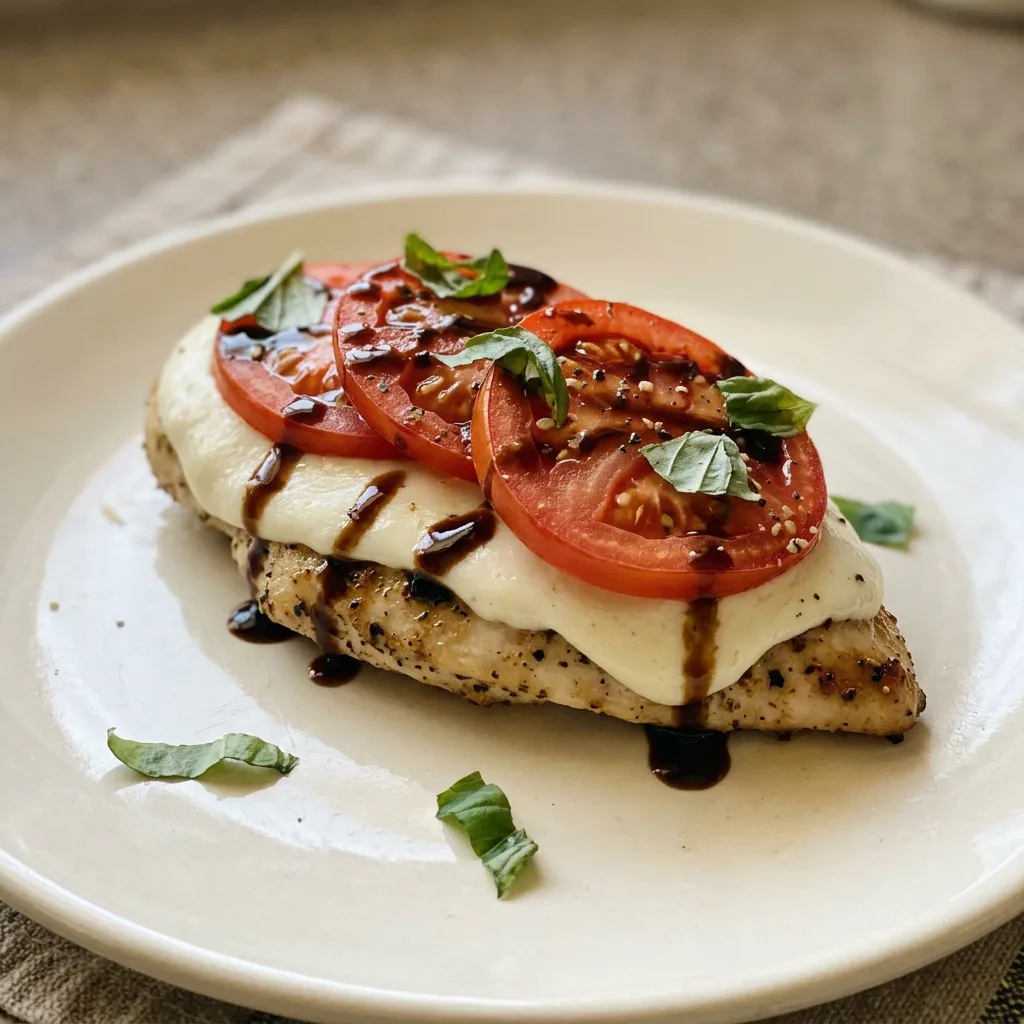
Caprese Chicken
Ingredients
Method
Flatten chicken breasts:
Take a chicken breast and set it on a piece of parchment; fold the paper over and flatten with a rolling pin until it’s just under 1 inch thick. Do the same for the other breasts.Mix seasoning blend:
Mix Italian seasoning, sea salt, garlic powder, onion powder, and pepper in a small bowl; stir until well combined.Season chicken with oil and spices:
Coat the chicken with olive oil, then apply the seasoning mix evenly on both sides.Grill chicken until cooked:
Preheat a grill or grill pan to high heat. Cook the chicken for 5-6 minutes on each side, until an instant-read thermometer reads 155°F (70°C).Add mozzarella and melt:
Place 2 slices of fresh mozzarella on each breast. Continue grilling for 3 minutes, until the cheese is melted and the internal temperature reaches 165°F (75°C).Top with tomatoes and basil:
Move the chicken to a serving platter or individual plates. Add 2-3 tomato slices on top, sprinkle with fresh basil, and season with salt and pepper as desired. Right before serving, drizzle with aged balsamic vinegar or balsamic glaze. Serve immediately.
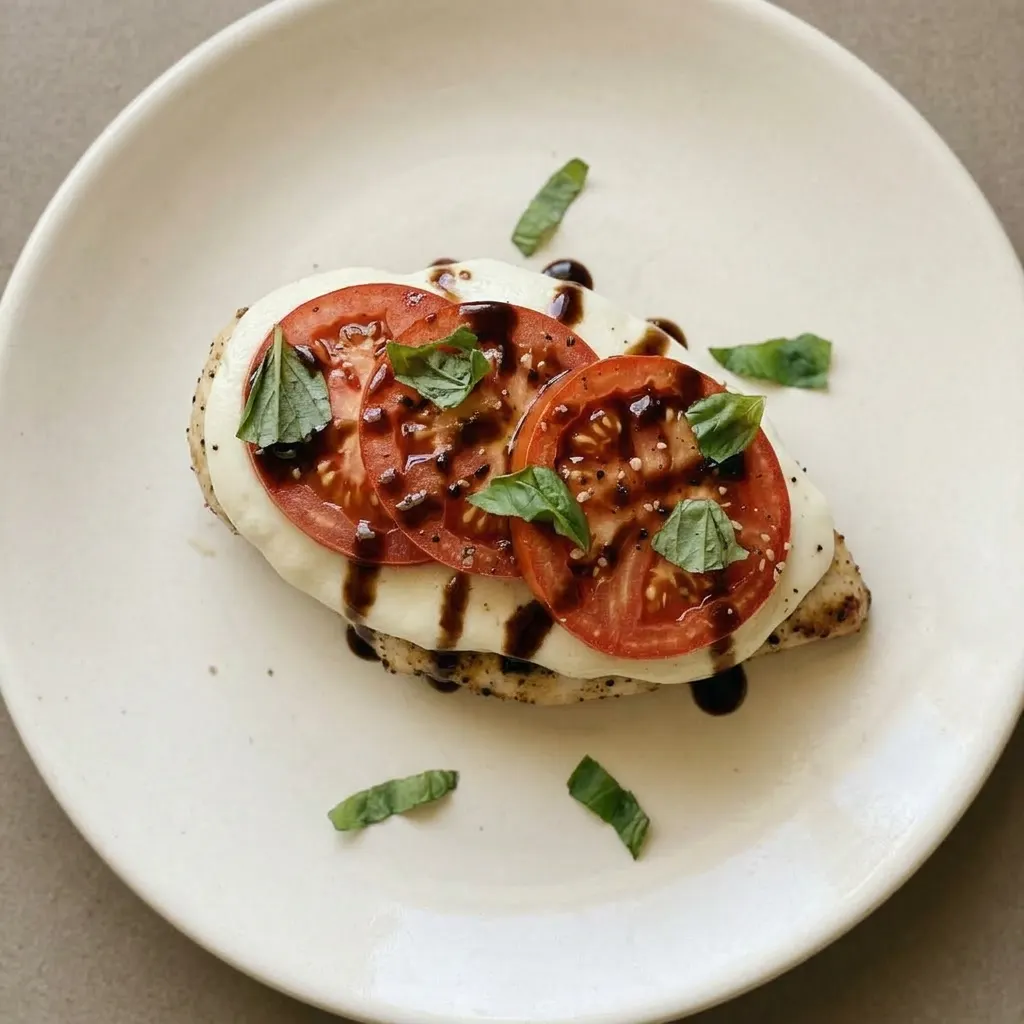
Swap the mozzarella or balsamic, but don’t skip the sear
fresh mozzarella: Burrata or provolone. Burrata gives a creamier, runny center; provolone melts firmer and adds a sharper tang. Both work in the same amount, but pat burrata dry first so excess liquid doesn’t weep onto the chicken.
aged balsamic or balsamic glaze: Balsamic reduction (simmer 1 cup balsamic with 2 tbsp honey until syrupy) or a splash of red wine vinegar with a pinch of sugar. Aged balsamic is thick and sweet; a reduction mimics that.
Plain vinegar alone will be too sharp and thin, add sugar to balance. Drizzle lightly; you can always add more.
garlic powder: Omit or swap 1 tsp granulated garlic (same effect) or 1 clove minced fresh garlic rubbed onto the chicken after oiling. Fresh garlic adds a harsher bite that can burn on high heat; garlic powder stays mild. If omitting, the Italian seasoning still carries enough flavor, but the chicken will taste less savory.
chicken breasts: Boneless skinless chicken thighs (6 oz each, pounded to 3/4 inch) or 1 lb firm tofu (extra-firm, pressed, sliced 1 inch thick, marinated in olive oil and seasoning). Thighs stay juicier and forgive slight overcooking; cook to 175°F for tenderness. Tofu won’t sear the same, pat dry, grill 4 minutes per side, top with mozzarella, and skip the balsamic or use less.
Storage and Serving
This dish hits its peak right off the grill, when the mozzarella is molten, the tomatoes are firm, and the basil is crisp. The balsamic drizzle goes on just before you serve, so it stays sharp and doesn’t soak into the meat. If you have leftovers, transfer them to an airtight container and refrigerate within two hours.
They’ll keep for up to 3 days, but the texture shifts: the tomatoes soften and release juice, the basil wilts, and the cheese firms up. To reheat, place the chicken in a 350°F oven or toaster oven for 8 to 10 minutes, just until the internal temp hits 165°F.
Skip the microwave; it turns the chicken rubbery and the tomatoes mushy. Freezing is not recommended.
The fresh mozzarella and tomatoes break down when thawed, leaving the chicken watery and the textures off. If you must freeze, do it before adding the cheese, tomatoes, and basil. Grill and top fresh after thawing.
Tips
- Let the grilled chicken rest 5 minutes before slicing; otherwise the juices run out onto the cutting board and the meat dries out.
- Use a meat mallet or heavy skillet instead of a rolling pin if you prefer; just keep the parchment in place to avoid tearing the chicken.
Frequently Asked Questions
Can I make Caprese chicken ahead of time and reheat it?
It’s best fresh off the grill. Leftovers keep in the fridge up to 3 days, but the tomatoes soften and basil wilts. Reheat in a 350°F oven for 8 to 10 minutes until 165°F internal; skip the microwave.
Freezing isn’t recommended, the cheese and tomatoes break down.
How do I prevent the chicken from drying out on the grill?
Pound the breasts to even thickness so heat cooks them uniformly. Grill over high heat until the thickest part hits 155°F, then top with mozzarella and cook 3 more minutes to 165°F. The high heat sears a crust that locks in moisture; pulling at 165°F keeps the meat juicy.
What’s the difference between Caprese chicken and chicken Parmesan?
Caprese chicken uses fresh mozzarella, tomatoes, and basil with a balsamic drizzle, grilled without breading. Chicken Parmesan breads and fries the chicken, tops it with sauce and shredded mozzarella, then bakes. Caprese is lighter and brighter; Parmesan is richer and saucier.
Can I use a regular pan instead of a grill for this recipe?
Yes, a grill pan or cast-iron skillet works on the stovetop over high heat. You’ll get sear marks and a browned crust, though slightly less smoky flavor. Cook times remain the same: 5 to 6 minutes per side, then 3 with cheese.