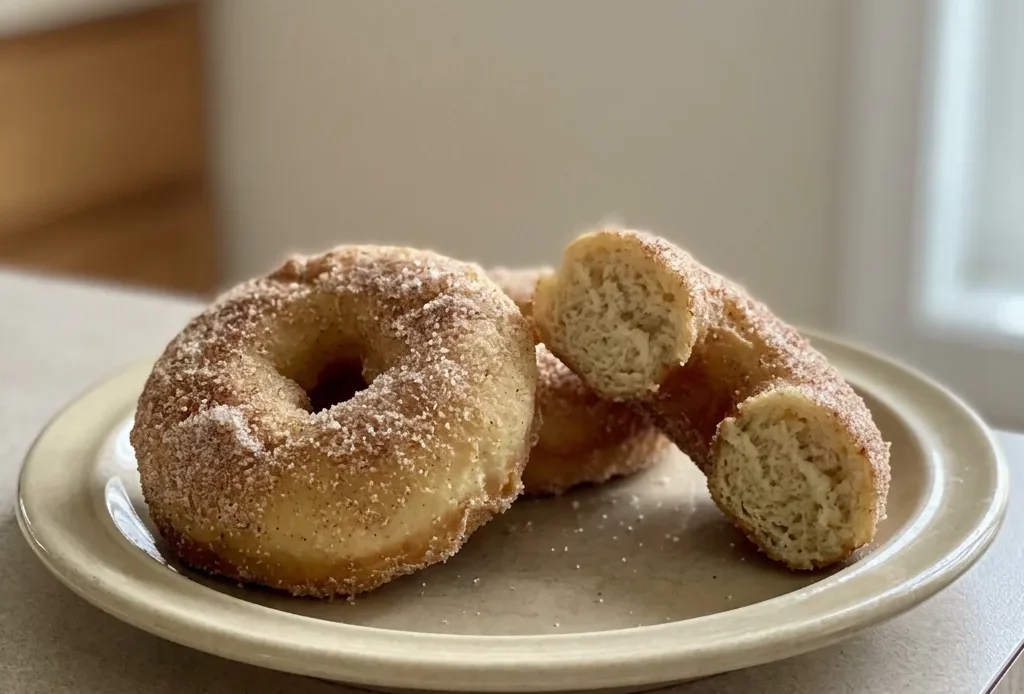
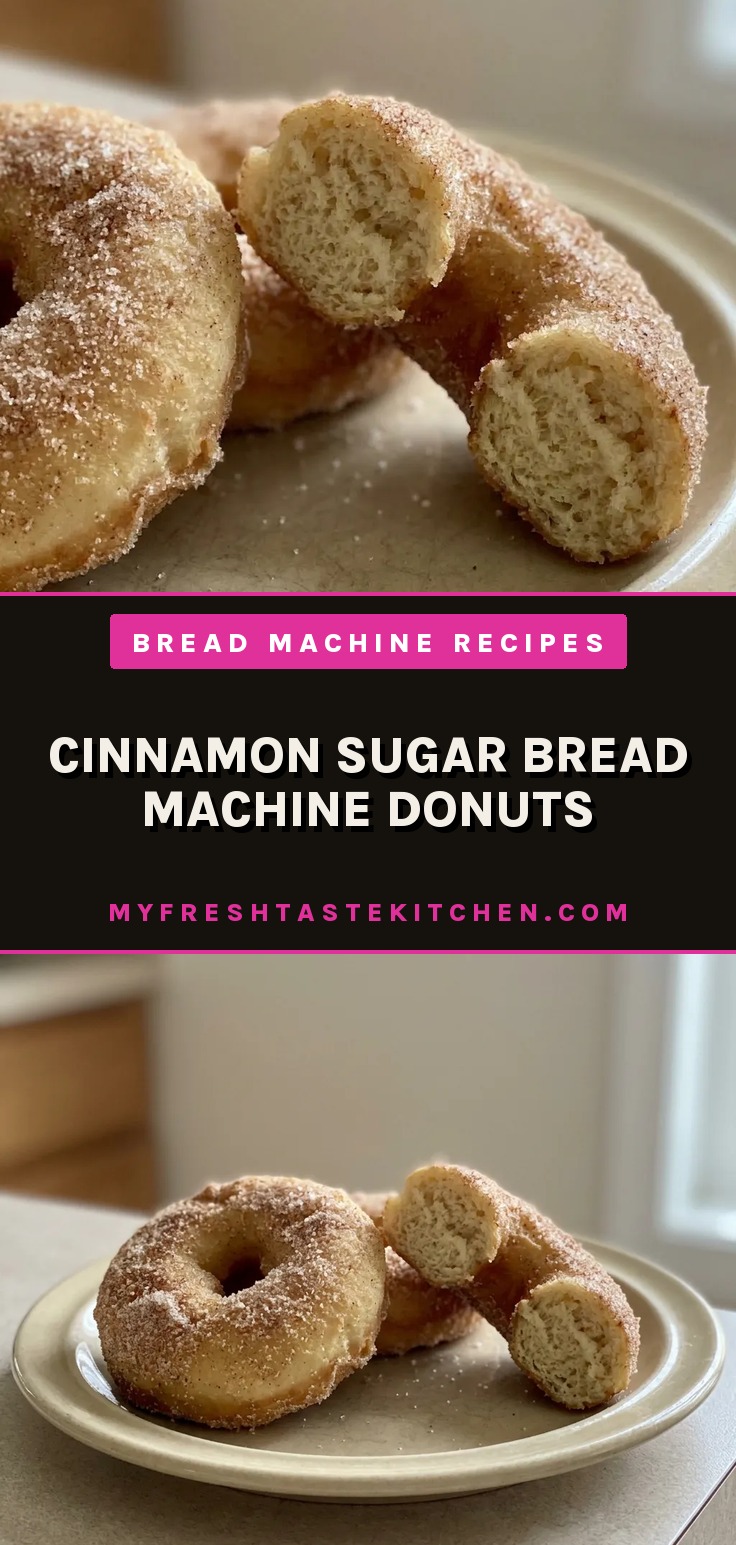
You’d think donuts from a bread machine would be a gimmick, dense, bready rounds that mock the real thing. But here’s the catch: the machine’s controlled kneading and steady proofing create an interior so consistently airy that hand-kneading can’t touch it.
The challenge isn’t the dough; it’s the oil temperature and that second rise. Miss either, and you’re left with greasy, leaden rings or pale, puffy ones.
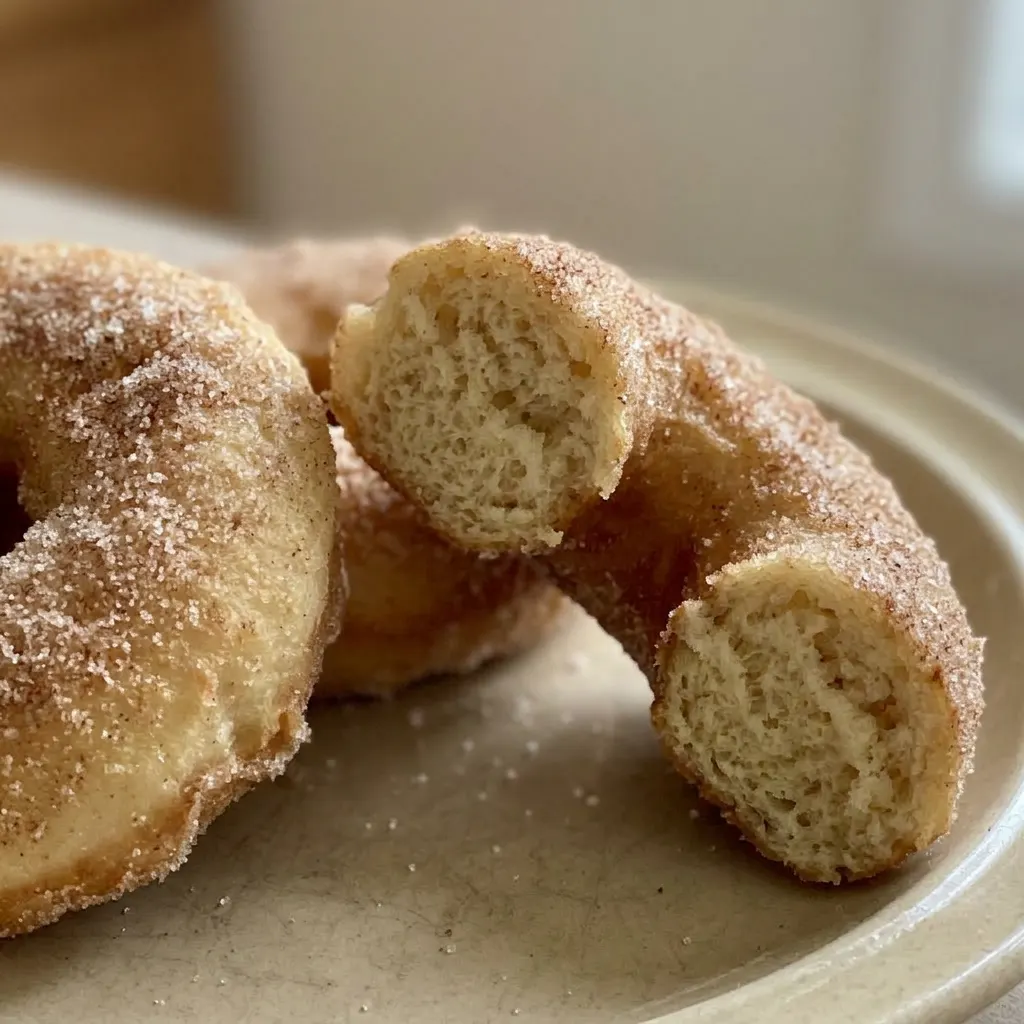
When you nail both, the pay-off is a cinnamon sugar bread machine donut with a crust that shatters and a crumb that barely holds together, exactly what you want, with half the arm work.
A machine’s gentle hand
Bread machine dough gives donuts a lighter, more consistent crumb than hand-kneading. The machine’s controlled kneading develops gluten evenly without overheating or underworking the dough. Its proofing cycle holds a steady temperature, so the yeast activity is predictable.
The result is an airy interior with a uniform texture, no dense spots or uneven holes. For bread machine dough recipes, this approach removes the guesswork from the first rise.
Warmth seals the coating
Coating donuts while they’re still warm does more than make sugar stick. Heat from the freshly fried surface partially melts the sugar granules, creating a thin, crunchy shell. Cinnamon’s volatile oils release with warmth, so the aroma blooms right when you bite.
The contrast between that crisp, sweet-spiced crust and the soft, tender interior is what sets these apart. In sweet bread recipes, this technique ensures the coating doesn’t just sit on top, it becomes part of the donut.
Hot oil, crisp shell
Oil temperature around 350°F is the sweet spot. At that heat, the exterior sets quickly, forming a golden crust that stops grease from soaking in.
Drop the temperature too low, and the donut absorbs oil before it cooks through, you’ll taste it in every heavy bite. Too high, and the outside burns while the middle stays raw. For best bread machine recipes that involve frying, getting the oil right is what gives you a light, non-greasy donut every time.
The rise before the fry
Letting shaped donuts double in volume is important. That second rise lets yeast produce more gas, building the airy pockets that make a donut fluffy.
Skip it, and you get a dense, bready ring, more like a roll than a donut. Proper rise ensures the interior stays tender after the hot oil hits it. For bread machine recipes easy enough to make any morning, this wait is what changes dough into something worth having.
Prep: 10 min · Cook: 25 hr · Total: 26 hr 40 min · Servings: 12
Bread flour gives the chew
Bread flour: Higher protein than all purpose, so donuts get a tender chew without turning tough.
Instant yeast: No proofing needed; just stir into the flour. Keeps the bread machine cycle simple.
Cinnamon: Buy fresh; old cinnamon tastes flat. The coating needs that sharp, warm punch.
From bread machine to golden ring
Load the machine
Add ingredients in the order listed: water, milk, butter, egg, sugar, flour, salt, yeast. The wet base keeps yeast from hitting salt too early. When dough comes together, it should feel soft, not sticky.
Roll and cut
After the dough cycle, turn dough onto a lightly floured surface. Roll to 1/2 inch thick, if it springs back, let it rest 5 minutes. Stamp out donuts; the scraps re-roll once, but no more or they toughen.
Second rise
Cover shaped donuts loosely with plastic wrap. Let rise until doubled, poke one gently; the dent should fill slowly. Under-risen donuts will be dense; over-risen ones may collapse in oil.
Heat the oil
Pour 2 cups oil into a deep pot, enough for 2 inches depth. Heat to 350°F.
A scrap of dough dropped in should sizzle and float within seconds. If it sinks and sits, wait; if it burns, cool the oil.
Fry in batches
Slide in donuts without crowding. After about 1 minute, the bottom turns deep golden, flip.
The second side cooks faster. Total: roughly 2 minutes. They should puff, not bloat.
Drain briefly on paper towels.
Coat while warm
Mix cinnamon and sugar in a shallow bowl. Toss each donut while still hot, the sugar melts slightly and sticks.
Too cool, and the coating falls off. The shell should feel crisp, not powdery.
Cinnamon Sugar Bread Machine Donuts
Ingredients
- 1/2 cup warm water
- 1/2 cup warm milk
- 1/3 cup melted butter 6 tbsp, 75 g
- 1 egg
- 1/3 cup sugar 67 g
- 3 3/4 cup bread flour or all-purpose flour 469 g
- 1 tsp salt
- 2 1/4 tsp instant yeast
- 2 cups vegetable or canola oil for frying
- 1/3 cup cinnamon
- 1/3 cup sugar 67 g
Instructions
Load bread machine:
Place every component into your bread machine following the given sequence, then choose the dough cycle.Roll and cut dough:
After the dough cycle ends, transfer the dough to a lightly floured surface and roll it out to roughly 1/2 inch (1.3 cm) thick. Using a donut cutter or circular cookie cutters, stamp out donut shapes.Rise and prepare coating:
Wrap the donuts in plastic film and allow them to rise until they double in volume. While they rise, warm the oil and prepare the cinnamon sugar coating by mixing 1/3 cup cinnamon with 1/3 cup sugar.Deep-fry donuts:
Deep-fry each donut in hot oil for approximately 1 minute per side until they become golden. Employ a slotted spoon to move the donuts onto a wire rack lined with paper towels, letting excess oil drip off briefly.Coat in cinnamon sugar:
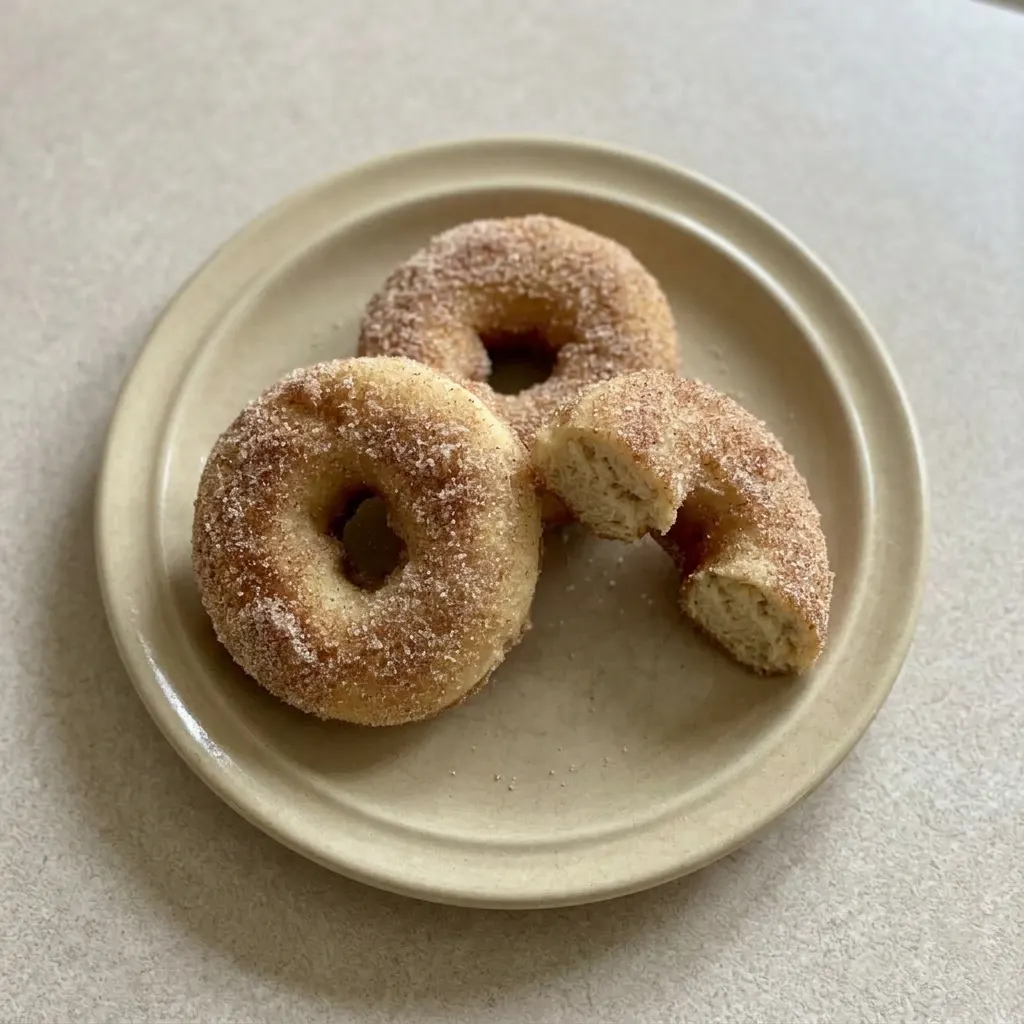
Coat the still-warm donuts in the cinnamon sugar mixture.Serve and enjoy:
Serve and enjoy!
Swap flour, fat, or spice, but don’t touch the yeast or oil
Bread flour: All-purpose flour (by weight, 469 g). All-purpose has less protein, so the donuts will be softer and less chewy, more cake-like than bakery-style. The dough may feel a bit stickier; add flour only if it won’t come together.
Butter: Margarine (same melted amount). Margarine has more water and less milk solids, so the dough will be slightly less rich and the browning a little paler. The donuts will still be tender, but the buttery flavor disappears.
Cinnamon: Pumpkin pie spice (same volume). Pumpkin pie spice adds nutmeg, ginger, and clove, shifting the flavor from pure cinnamon warmth to a spiced, autumn profile. The coating will be less sharp, more complex, good for a variation, but not a straight swap if you want classic cinnamon sugar.
Warm milk: Any plain non-dairy milk (same amount, warmed). Non-dairy milks like oat or soy work fine in the dough; the donuts will be a touch less rich.
Avoid vanilla or sweetened flavors, they can throw off the sugar balance. The texture remains similar, so this is a safe dairy-free swap.
Tips
- Use a chopstick to gently stir the oil between batches; this evens out hot spots and keeps the temperature consistent for each donut.
- Reserve the donut holes and fry them alongside the rings; they cook in about half the time and make a tester for oil temperature.
Storage and Serving
Eat these donuts within a few hours of frying for the best texture. The cinnamon sugar coating stays crisp and the interior remains tender.
After that, the coating softens as moisture from the donut migrates into it. Store leftover donuts in an airtight container at room temperature for up to 2 days.
They will still taste good, but the exterior will be chewy rather than crunchy. Do not refrigerate; cold air dries them out and stiffens the crumb. To refresh a day-old donut, warm it in a 300°F oven for 3 to 5 minutes, then toss in fresh cinnamon sugar.
Freezing is not recommended. The coating becomes sticky when thawed, and the fried texture turns soggy.
If you must freeze, freeze the uncoated fried donuts in a single layer, then wrap airtight for up to 1 month. Thaw at room temperature, then reheat and coat just before serving.
I see so many people end up with greasy, soggy donuts because they’re too impatient to let the oil come up to temp. They think ‘hot enough’ means shimmering, but that’s not enough.
Frequently Asked Questions
Can I make the dough ahead of time and fry the donuts later?
Yes, but only if you freeze the uncoated fried donuts, not the raw dough. Raw dough that’s been refrigerated overnight will overproof and collapse in the oil. Fry fresh, then freeze uncoated in a single layer for up to 1 month.
Thaw, reheat at 300°F for 3 to 5 minutes, and coat with cinnamon sugar just before serving.
Why did my donuts come out greasy?
The most likely cause is oil that wasn’t hot enough, it should be 350°F. At lower temperatures, the crust doesn’t set quickly, so oil soaks into the dough.
A second cause is crowding the pot: too many donuts at once drops the oil temperature. Fry in batches of 2-3, and you’ll see the difference.
Can I bake these donuts instead of frying?
No, this recipe is designed for frying. Baking won’t give the same quick crust formation that keeps the interior light; you’d end up with a dense, bread-like ring. The oil temperature around 350°F is what creates the crisp shell and soft crumb.
For a baked donut, you’d need a different formula entirely.
How do I know when the oil is hot enough without a thermometer?
Drop a small scrap of dough into the oil. If it sizzles immediately and floats to the surface within seconds, the oil is ready. If the scrap sinks and sits on the bottom, the oil is too cool.
If it burns before it fully floats, the oil is too hot. You want that steady sizzle with no smoke.
What’s the difference between these bread machine donuts and traditional yeast donuts?
The bread machine develops gluten more evenly than hand-kneading, so the crumb is lighter and more uniform, no dense spots. The machine’s proofing cycle also keeps a steady temperature, making yeast activity predictable. Traditional hand-kneaded donuts can vary batch to batch; these come out consistently airy every time.