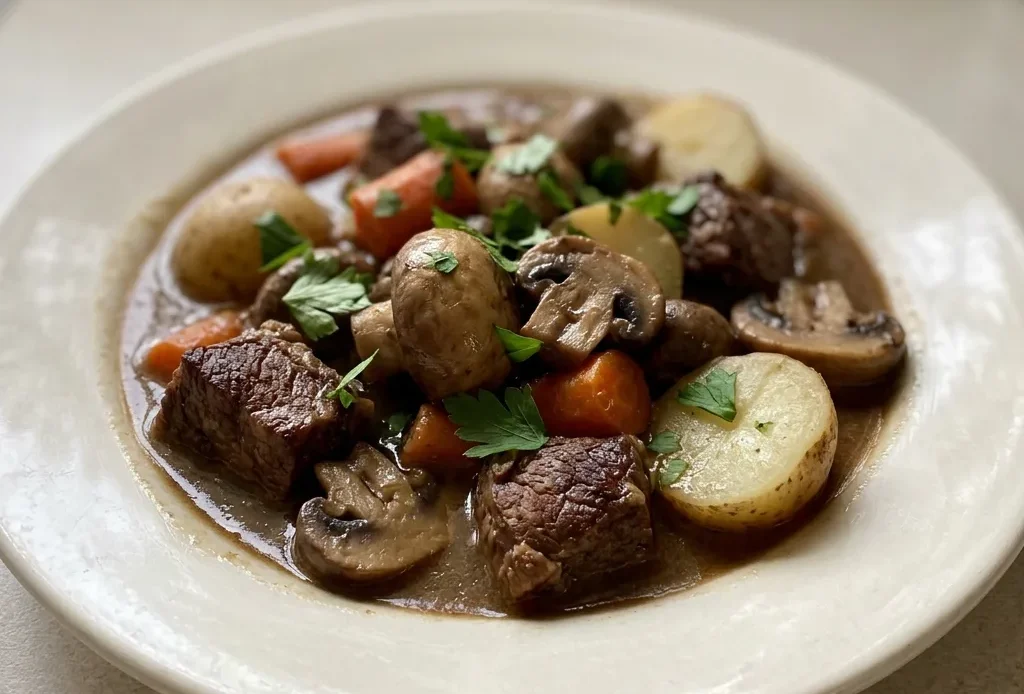
Most stews end up with gray meat and a thin, flat broth because cooks rush the sear or skip it entirely. Here, browning the beef in batches builds a deep crust that turns into flavor, and the long oven braise makes even chuck roast fork-tender. This beef stew with mushrooms gets its glossy, savory broth from balsamic vinegar and Worcestershire sauce working in two stages, one for depth, the other for brightness.
The mushrooms add earthy heft, and the cornstarch slurry keeps the finish silky instead of floury. It’s a stew that tastes like you fussed, but really just took your time with the basics.
Why brown the beef in batches?
When you sear beef, the high heat creates a brown crust packed with savory depth through the Maillard reaction. That crust is where much of the stew’s flavor comes from. But if you crowd the pan, the meat releases moisture and steams instead of browning.
Working in batches lets each piece make full contact with the hot surface. The fond, those browned bits left in the pot, will later dissolve into the broth, enriching it without extra effort. Reserve the seared meat and its juices; they add back moisture and flavor during the long braise.
You’ll see the difference in the deep color and taste.
How balsamic vinegar and Worcestershire sauce build flavor
Balsamic vinegar brings acidity and a touch of sweetness that cuts through the beef’s richness, while Worcestershire sauce adds umami from anchovies, molasses, and tamarind. This recipe uses them in two stages: part goes in before braising so the flavors settle together into the broth, and an optional final addition brightens everything right before serving. The result is a tangy-savory backbone that makes the stew taste more complex than it is.
Taste the broth at the end, if it seems flat, that last splash of vinegar and Worcestershire can wake it up.
Why braise in the oven instead of on the stovetop?
Oven braising surrounds the pot with steady, gentle heat, so there are no hot spots to scorch the bottom. The meat becomes fork-tender without the risk of overcooking the vegetables you’ll add later.
Because the lid stays on, steam circulates inside, keeping everything moist and concentrating the flavors. You can leave it alone for hours and come back to a cooked stew. The difference shows in the even doneness and the silky texture of the meat.
The point of the cornstarch slurry
Cornstarch mixed with cold water thickens the broth as it braises, giving it a silky, clear finish without the cloudy, floury taste that roux can leave. Unlike flour, cornstarch creates a glossy sheen that looks appetizing.
Just stir the slurry in thoroughly before it goes into the oven, any lumps will stay as small clumps in the finished stew. The broth will coat the back of a spoon when it’s done, and the flavor stays clean and beefy.
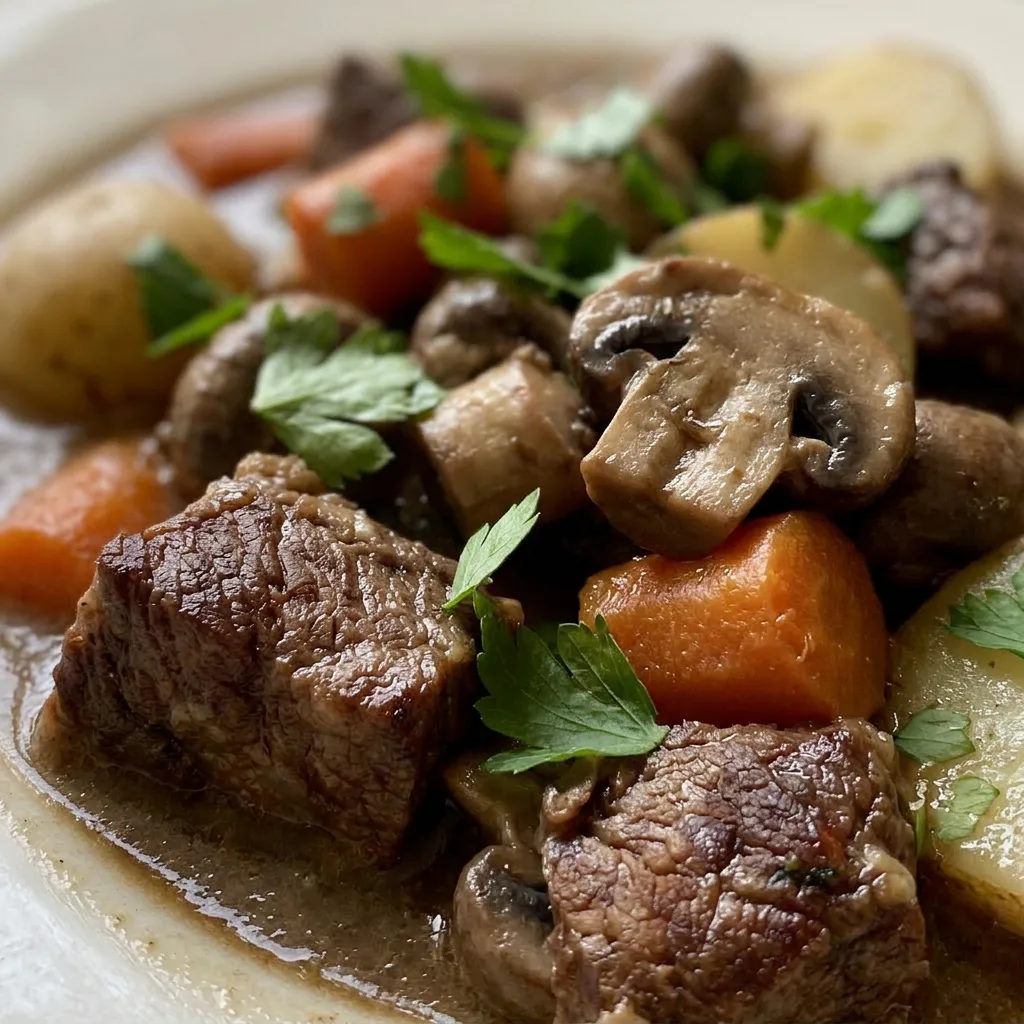
Prep: 25 min · Cook: 3 hr 25 min · Total: 7 hr 35 min · Servings: 6 · Calories: 430 kcal
Choosing and prepping the ingredients for this stew
Chuck roast or stewing meat: Buy a whole chuck roast and cut it yourself to control the size and trim excess fat.
Mixed mushrooms: Use a mix like cremini, shiitake, and oyster for varied texture and earthy flavor.
Red wine: Pick a dry red you’d drink, like Cabernet or Merlot; it doesn’t need to be expensive.
Baby Yukon potatoes: Leave small ones whole; halve only if they’re larger than a golf ball.
Building the stew in stages: from sear to braise
Dry and season the beef
Pat the cubes dry with paper towels, moisture is the enemy of browning. You’ll see them steam less and sizzle more when they hit the pan.
Sear in batches
Heat oil until it shimmers. Add meat in a single layer, leaving space between pieces.
If they crowd, they’ll release liquid and gray instead of brown. Flip when a deep crust forms.
Cook the mushrooms
After removing the beef, lower the heat and add the mushrooms. They’ll release liquid at first, then start browning again when the pan dries out. Stop when they’re golden, not limp.
Sweat the aromatics
Add onions, garlic, herbs, balsamic, and a splash of stock. Stir and scrape up the fond. If the bottom darkens too fast, add a little more stock, you want the onions soft, not scorched.
Build the braising liquid
Stir in tomato paste and sugar, then return the beef and its juices. Pour in wine, broth, and the cornstarch slurry. Bring to a boil, you should see bubbles breaking the surface, then cover.
Braise in the oven
Transfer the covered pot to a 325°F oven. After 2 hours, the meat should yield easily to a fork but not fall apart. Add carrots and potatoes, then braise another hour until tender.
Finish and adjust
Remove bay leaves. Taste the broth, if it tastes round and savory, it’s done. If it seems flat, stir in the optional extra balsamic and Worcestershire.
The broth should coat a spoon.
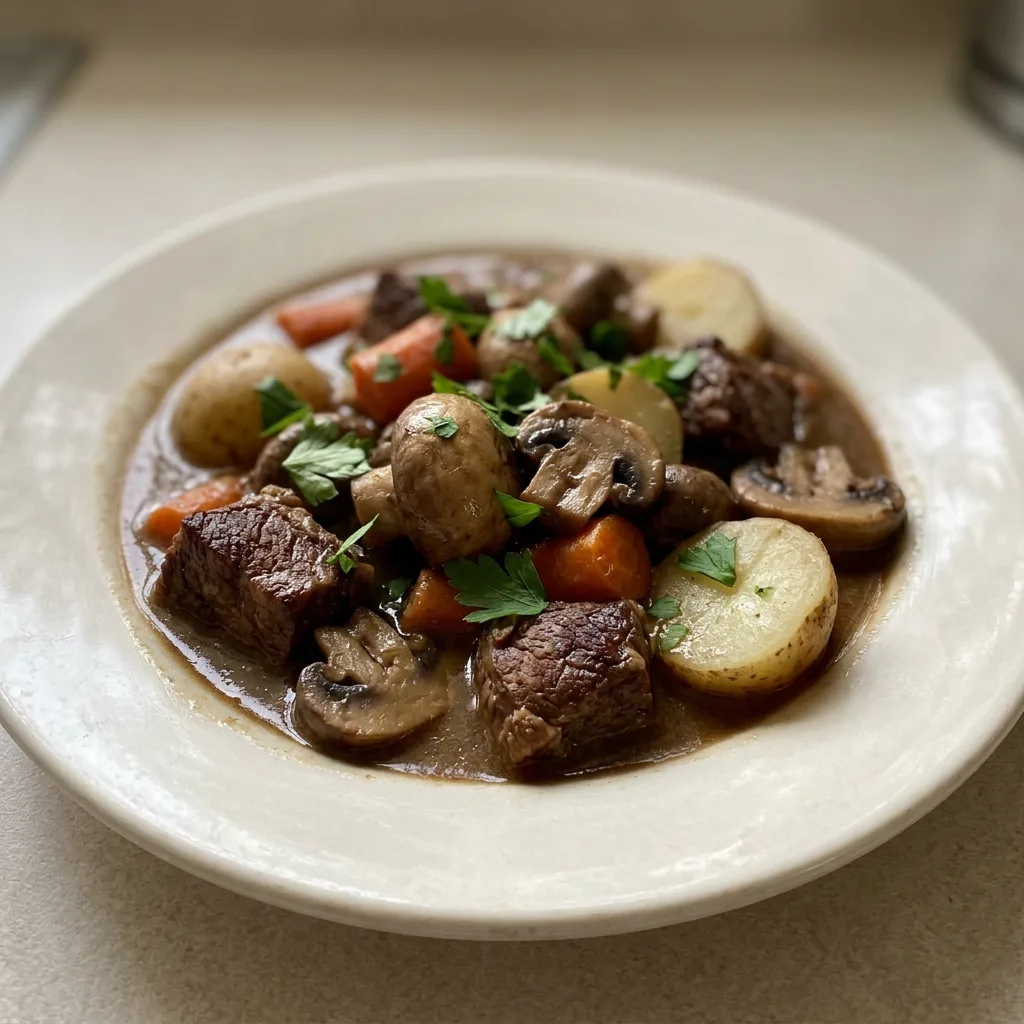
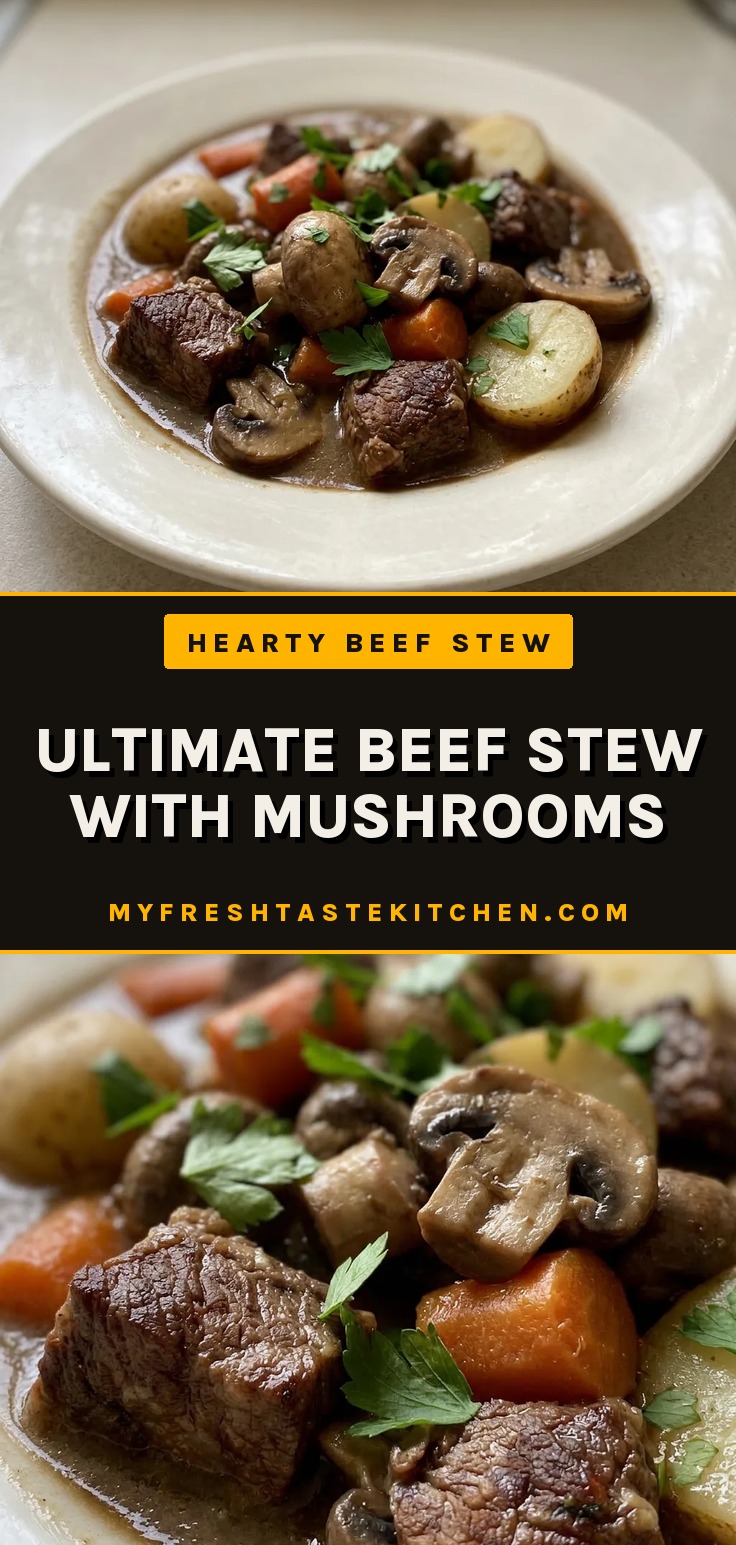
Ultimate Beef Stew with Mushrooms
Ingredients
Method
Preheat oven:
Heat the oven to 325°F (165°C) and place a rack on the lower middle shelf.Dry and season beef:
Dry the beef with paper towels, then sprinkle with salt and pepper.Sear beef in batches:
In a large Dutch oven or heavy soup pot, warm 1 tablespoon of olive oil over medium-high heat until it shimmers. Working in 2-3 batches, sear the meat for roughly 5 minutes per batch. Add 1 tablespoon of oil for each new batch. Move each batch of browned meat plus its juices to a big bowl and reserve.Cook mushrooms:
Lower the heat to medium, toss in the mushrooms, and cook for 4 minutes.Sauté aromatics:
Mix in the onions, garlic, thyme, parsley, bay leaves, 3 tablespoons of balsamic vinegar, and 1/2 cup of stock; cook for about 5 minutes. Add extra stock as needed to avoid scorching.Add tomato paste:
Stir in the tomato paste and sugar.Bake covered stew:
Return the beef and its collected juices to the pot. Pour in the wine, beef broth, and the cornstarch slurry; bring to a boil. Give it a stir, cover the pot, move it to the oven, and bake for 2 hours.Add vegetables and bake:
Take the pot out of the oven, add the carrots and potatoes. Replace the lid and return to the oven for another hour, or until the vegetables are tender. The meat should be fork-tender and the broth slightly thickened.Adjust seasonings:
Remove the pot from the oven, discard the bay leaves, taste and adjust seasonings. If you like, stir in 1 more tablespoon of balsamic vinegar and 1 more tablespoon of Worcestershire sauce.Garnish and serve:
Sprinkle with fresh parsley and serve the stew hot.
What to swap (and what to leave alone) in this stew
Red wine: Substitute an equal amount of beef stock, or use non-alcoholic red wine. Beef stock makes a milder broth, less tangy and complex. Non-alcoholic wine keeps the acidity closer to the original.
Either way, the stew still tastes beefy but loses some depth.
Mixed mushrooms: Use all cremini or all shiitake if you can’t find a mix. Oyster mushrooms are optional.
All cremini gives a milder, more uniform mushroom flavor. All shiitake adds a stronger, earthier note. Texture stays fine either way.
Worcestershire sauce: For gluten-free, use gluten-free Worcestershire (Lea & Perrins is not GF). For umami without anchovies, try 1 tablespoon soy sauce plus 1 teaspoon molasses per 2 tablespoons Worcestershire. GF versions taste similar.
The soy-molasses mix adds a slightly different savory-sweet note but still deepens the broth. Start with the recipe’s amount and adjust to taste.
Cornstarch: Use 2 tablespoons arrowroot powder mixed with 2 tablespoons cold water instead. Arrowroot thickens at a lower temperature and gives a similar glossy finish. The broth may be slightly less stable if reheated, but for one meal it works fine.
Storage and Serving
This stew thickens as it cools, so don’t worry if the broth looks looser when hot. Refrigerate leftovers in a covered container for up to 4 days. The flavor deepens overnight, but the vegetables soften a bit more each day.
For longer storage, freeze for up to 3 months. Thaw overnight in the fridge before reheating. Reheat gently on the stovetop over medium-low heat, stirring occasionally, to avoid breaking the sauce.
If it thickens too much, splash in a little beef broth or water. Serve the stew hot, ideally within 30 minutes of finishing it. The final sprinkle of fresh parsley should go on just before serving to keep its color and texture.
For make-ahead, you can prepare the stew through step 9, cool completely, and refrigerate or freeze. When ready to serve, reheat and garnish with parsley.
Tips
- After patting the beef dry, let it sit uncovered on a plate in the fridge for 15 minutes; the cold surface sears faster and deeper.
Frequently Asked Questions
Can I make this stew a day ahead? Does it taste better the next day?
Yes, you can make it a day ahead, and the flavor deepens overnight. The broth becomes more rounded as the balsamic and Worcestershire infuse further.
Just cool it completely, refrigerate, then reheat gently on the stovetop over medium-low heat. Add the final parsley right before serving to keep its color.
Why is my beef tough after braising? How can I avoid that?
Tough beef usually means it wasn’t cooked long enough. This recipe braises for 2 hours before adding vegetables, then another hour, the meat should be fork-tender at that point.
If it’s still tough, give it more time; the low oven heat won’t dry it out. Also check that your cubes are 2 inches; smaller pieces can overcook and dry out.
Can I freeze this beef stew? How should I reheat it?
Yes, freeze it for up to 3 months. Thaw overnight in the fridge, then reheat gently on the stovetop over medium-low heat, stirring occasionally.
If the broth thickens too much, add a splash of beef broth or water. The vegetables will soften a bit more after freezing, but the flavor stays rich.
What’s the difference between this stew and a classic beef stew without mushrooms?
The mushrooms add earthy depth and a meaty texture that makes the broth more complex. Balsamic vinegar and Worcestershire sauce provide tang and umami that a classic stew often lacks. The cornstarch slurry gives a glossy, silky finish instead of a floury roux.
Overall, it’s a more savory, layered version without losing the beefy core.