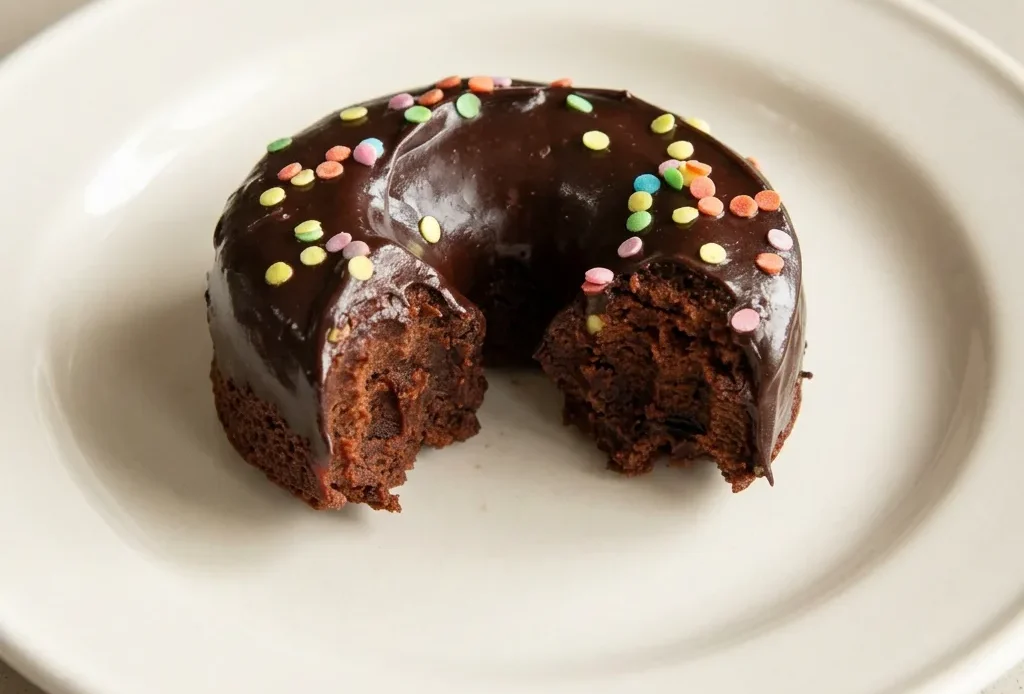
You’re basically making a brownie that happens to be ring-shaped, which means the margin for error is tighter than a regular brownie pan. Too much air in the batter or a minute too long in the oven and you lose that fudgy center that makes a brownie a brownie.
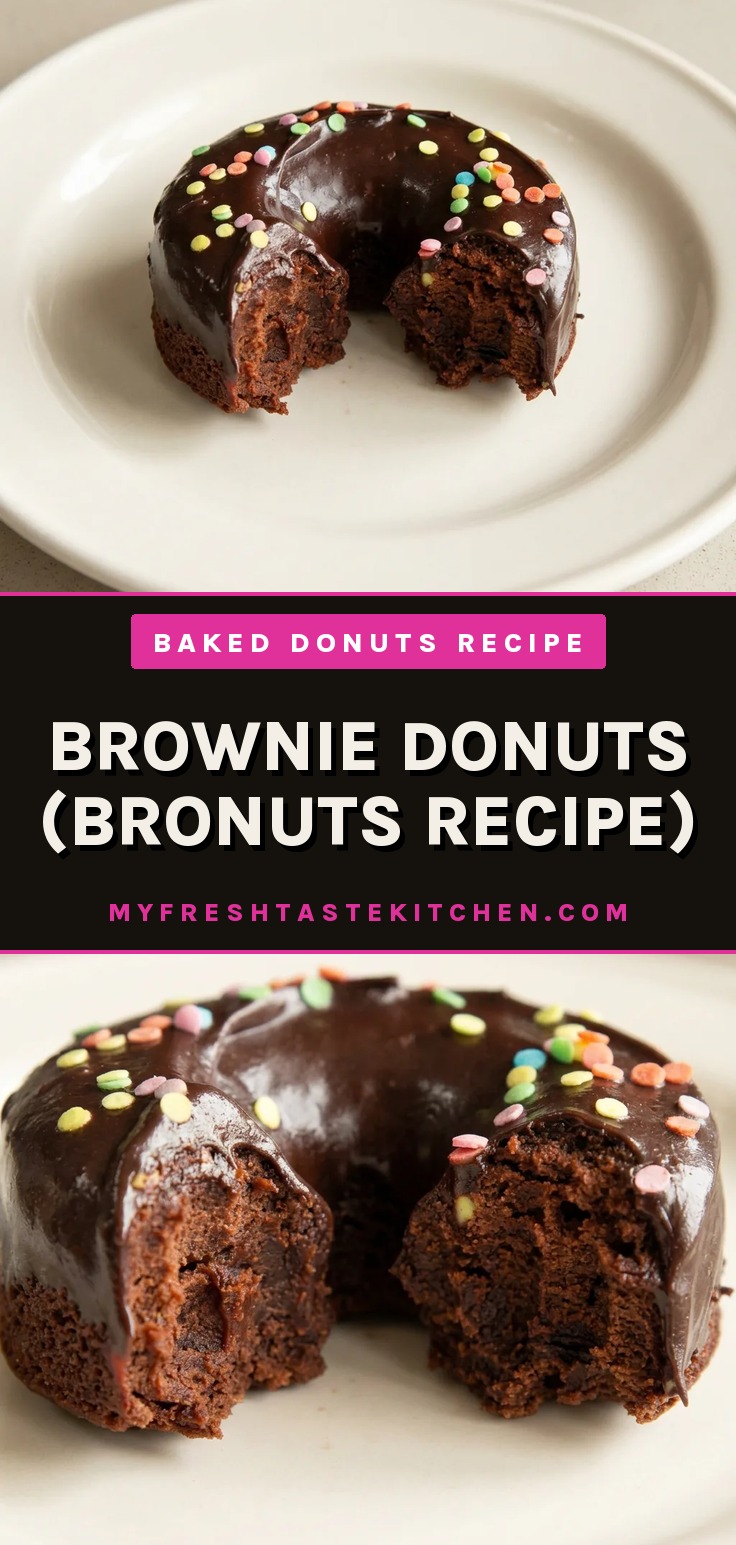
This brownie donuts recipe gets the balance right: dense, gooey, with a thin glaze that stays tacky instead of hardening into a shell. It’s a portable brownie, but it demands respect for its limits.
Why are these brownie donuts so fudgy when they’re baked?
The texture comes down to how you build the batter. Melted chocolate and butter are stirred together, not creamed with sugar.
Creaming traps air; stirring does not. Less air means a denser crumb. Then the ratio of fat to flour is high, lots of butter and chocolate, relatively little flour.
That keeps the structure from setting too firmly. Baking at 350°F for only 20 minutes leaves the center underdone. A skewer should come out with wet, sticky crumbs, not clean.
That gooey center is what makes it taste like a brownie, not a cake donut.
Why a thin glaze instead of a thick frosting?
The glaze is meant to be pourable and thin, so it coats the donut without overwhelming it. Cocoa powder and icing sugar give it body, but enough milk keeps it runny.
When you dip a slightly warm donut, the glaze adheres and soaks into the surface just a bit, adding moisture. The cocoa brings slight bitterness that cuts the sweetness of the brownie base.
And because the glaze doesn’t fully harden, it stays a little tacky, it matches the squidgy texture of the donut itself. A thick frosting would feel separate; this glaze becomes part of the bite.
Why grease the molds generously and pipe the batter carefully?
This batter is sticky. High sugar and fat content means it will cling to the mold, especially the central column, and tear when you try to unmold it if you skimp on spray. A piping bag lets you fill each cavity evenly without dropping clumps of batter that trap air.
Air pockets cause uneven rising or cracking, which can mess up the shape and make the donuts look ragged. Even distribution also means they bake at the same rate. Grease every crevice, pipe gently, and the donuts will release cleanly, keeping that ring shape.
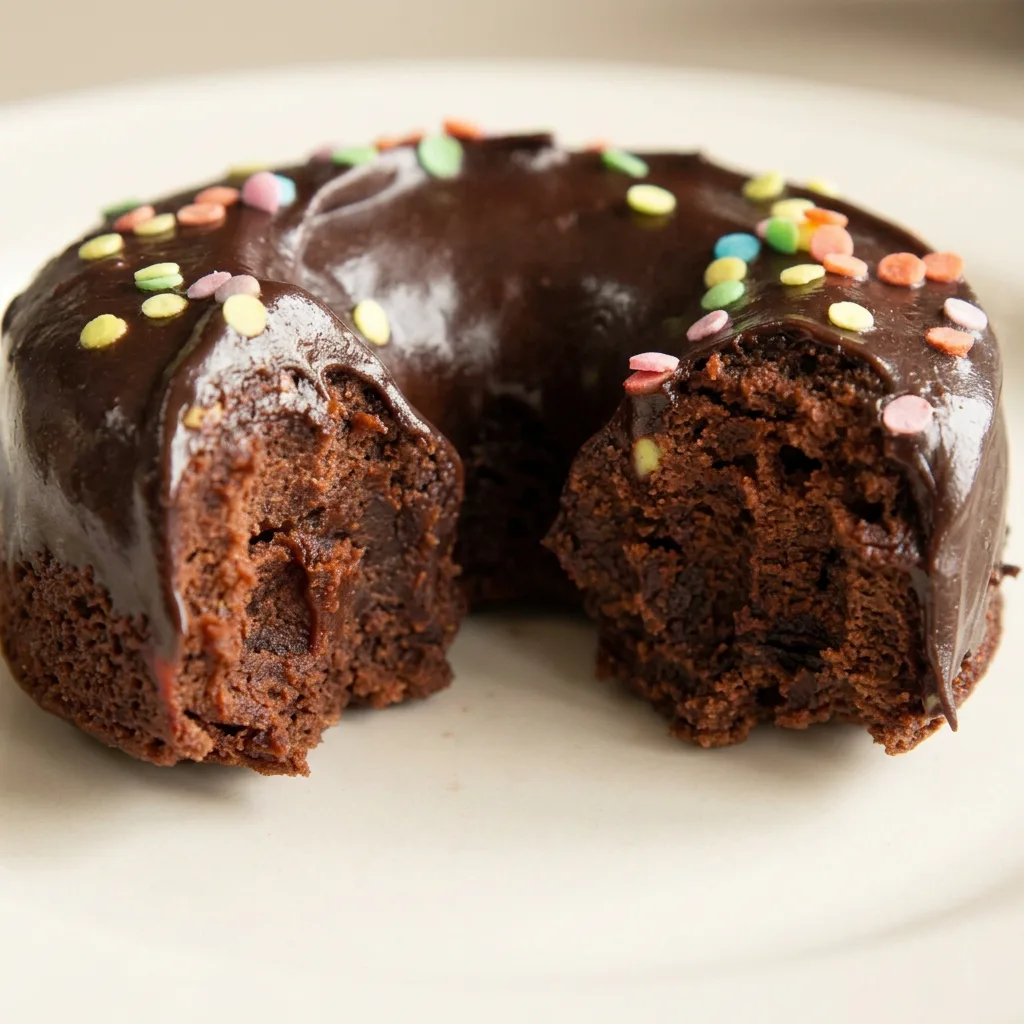
Prep: 20 min · Cook: 20 min · Total: 40 min · Servings: 12 · Calories: 380 kcal
A few notes on what to buy for bronuts
Dark chocolate 70%: Use a good quality bar you’d eat out of hand. Chips often have stabilizers that keep them from melting smooth.
Salted butter: Room temp cubed butter blends into the melted chocolate without seizing or separating.
Cocoa powder: Dutch processed gives a darker color and smoother flavor; natural cocoa can make the glaze taste sharper.
Chocolate chunks: Roughly chop a bar into small pieces. Chips hold their shape too much; chunks melt into gooey pockets.
How to get bronuts right every time
Make the batter
Melt chocolate and butter together in 30-second bursts, stirring each time. Stop when just melted; if it seizes or looks grainy, you overheated it. Stir in sugar, don’t whisk vigorously, just combine.
Add eggs and vanilla, stir gently. The batter should look glossy and smooth, not bubbly.
Fill the molds
Pipe the batter into greased molds, filling to about 1 cm from the top. If you overfill, the donuts will dome and lose their hole. Scatter chocolate chunks on top; they’ll sink slightly during baking, creating pockets of goo.
Bake until just set
Bake at 350°F for 20 minutes. Test with a skewer, it should come out with wet, sticky crumbs, not clean. If the skewer is dry, you’ve overbaked and they’ll be cakey, not fudgy.
Let cool in the mold completely before unmolding.
Glaze and decorate
Whisk cocoa, icing sugar, vanilla, and milk into a pourable glaze. It should coat the back of a spoon but drip off. Dip each donut flat-side down, lift, and let excess drip back.
Sprinkle immediately before the glaze sets. The glaze stays tacky, matching the brownie’s squidge.
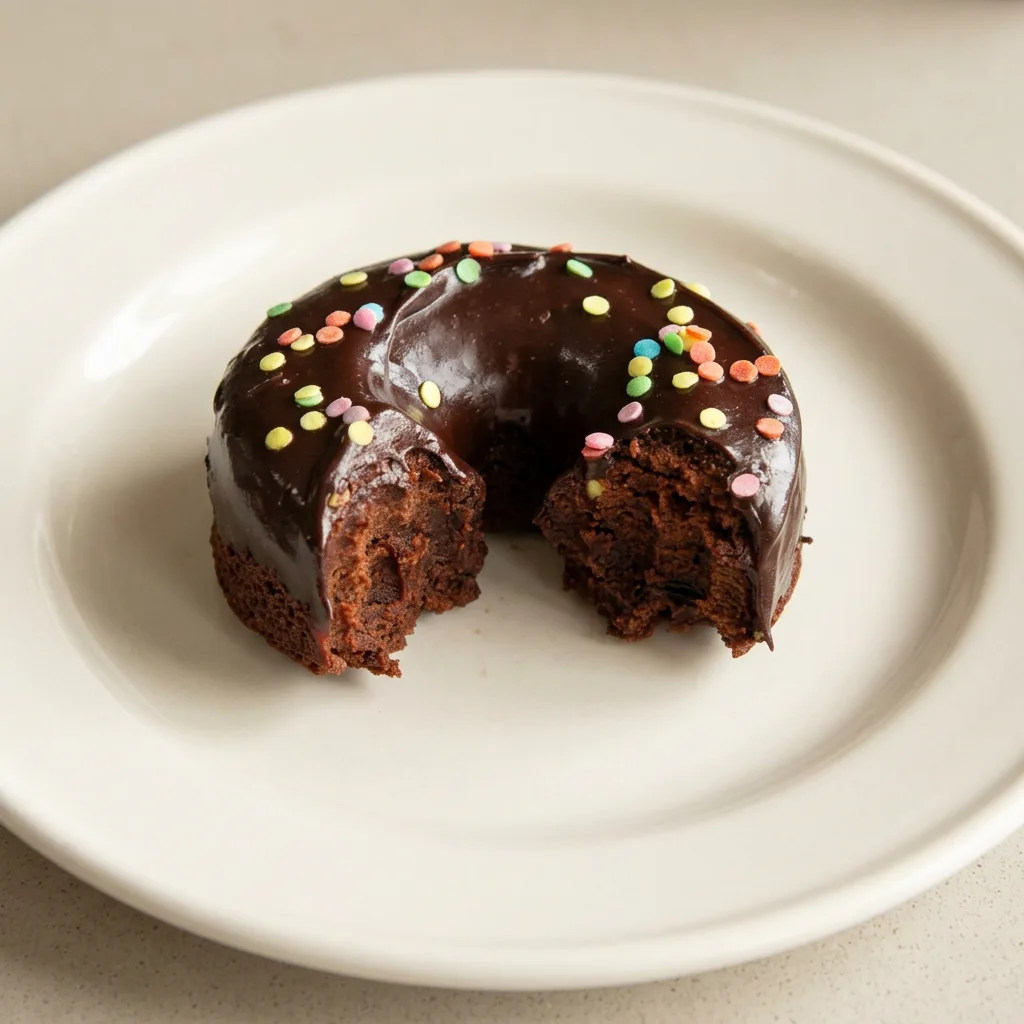
Brownie Donuts (Bronuts)
Ingredients
Method
Preheat oven to 350°F:
Preheat the oven to 350°F (180°C, 160°C fan).Spray donut molds:
Place your donut molds on a tray and spray generously with cake release spray, making sure to reach the central column of each round.Melt chocolate and butter:
Put the dark chocolate and butter in a large microwave-safe bowl. Microwave in 30-second bursts, stirring between each burst, until melted. Avoid overcooking as this can negatively affect the chocolate.Stir in caster sugar:
Add the caster sugar. Stir through with a manual whisk – stir as you don’t want to add air but a whisk is still the best tool as it distributes everything quickly.Add eggs and vanilla:
Add the eggs and vanilla. Stir with the whisk again.Sift in flour:
Sift the flour into the bowl. Stir to combine.
Pipe batter into molds:
Share the bronut batter evenly between the donut molds. The batter should reach about 1 cm (1/4 inch) shy of the top. Transfer the batter to a piping bag, snip off the end and pipe the filling in.Scatter chocolate chunks:
Scatter the chocolate chunks on top.
Bake until sticky crumbs:
Place in the oven and bake for approximately 20 minutes, or until a skewer comes out with wet, sticky crumbs. Timings will depend on the size and depth of your donut mold, whether your oven has a fan, how well it circulates heat and more so keep an eye on them towards the end of the baking time.Cool and release donuts:
Transfer the molds to a cooling rack and allow to cool to room temp, then flip the molds over to release the brownie donuts.Chill if fragile:
If the brownies feel a bit soft or fragile, pop them in the fridge for 15 minutes to firm up.
Sift cocoa and sugar:
Sift the cocoa and icing sugar into a bowl.Add vanilla and milk:
Add the vanilla and a little bit of the milk.Whisk to thick icing:
Whisk while gradually adding the milk until you have a thick icing. You might not need all the milk. Likewise, if the icing is too thick, add a touch more milk.Dip donuts in icing:
Dip the donuts into the icing, flat side up and sit them back on the wire rack. Place a tray or piece of baking paper beneath the rack to catch any drips.Add sprinkles immediately:
Straight away, scatter the sprinkles over the icing.Let set and enjoy:
Leave to set and then enjoy. The icing doesn’t have to be completely set – it’s nice a bit sticky to match the squidgy brownie!
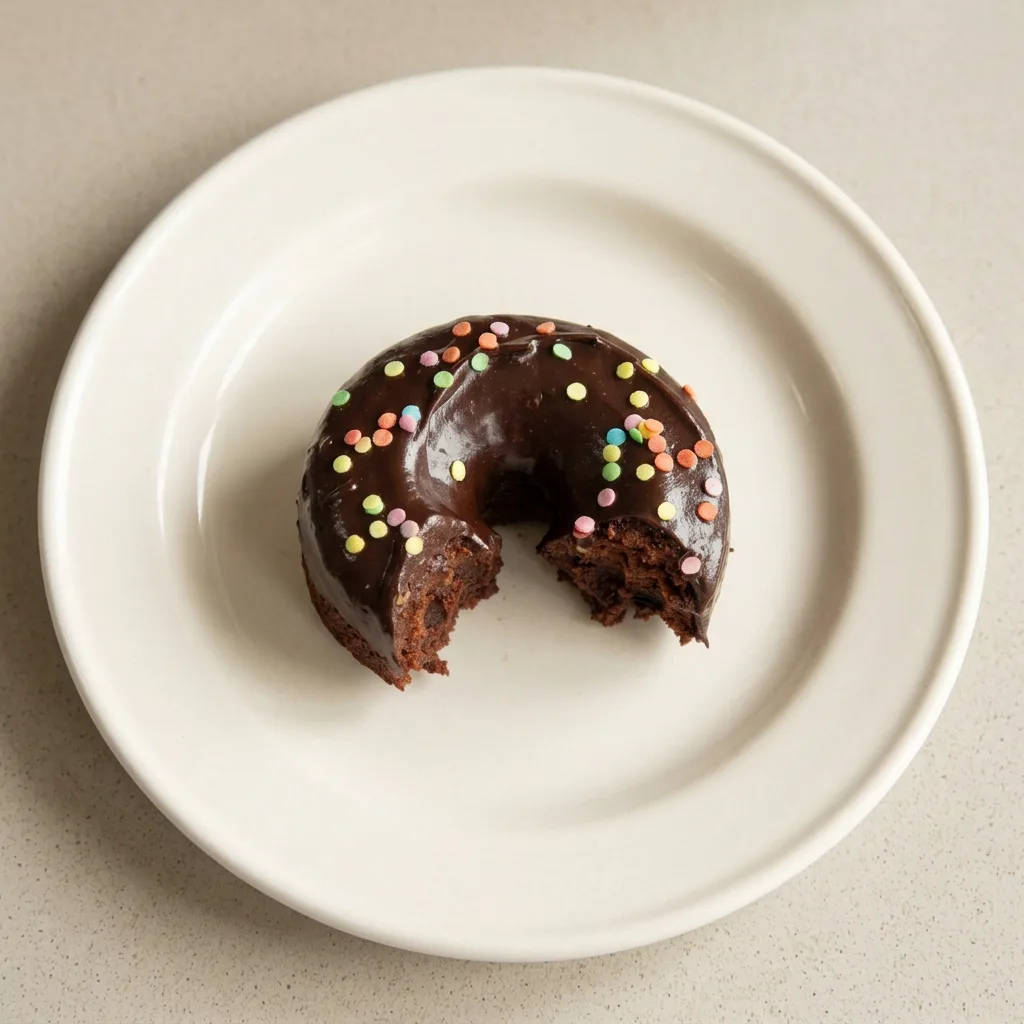
Swap the chocolate, keep the fudge factor
Dark chocolate 70%: Milk chocolate. Use the same weight. The brownie will be sweeter and less intense, but the fat ratio stays the same so the fudgy texture holds.
If you swap to a lower cocoa percentage, the batter may be slightly looser.
Salted butter: Unsalted butter plus 1/4 tsp salt. Use the same weight.
Salt balances sweetness; without it the bronuts taste flat. Add the salt with the sugar.
Plain white flour: Gluten-free 1-to-1 flour blend. Use the same volume. The brownie will be a touch more delicate and may spread slightly, but the fudgy center remains.
Overmixing makes it gummy, so stir just until combined.
Whole milk (for glaze): Any milk or non-dairy milk (oat, almond, soy). Use equal volume.
Oat milk gives a slightly thicker glaze; almond milk may make it thinner. Start with half the milk and add more as needed to reach a pourable consistency.
Storage and Serving
Serve these brownie donuts within a few hours of glazing for the best texture: the glaze stays tacky and the brownie is maximally fudgy. Store leftovers in an airtight container at room temperature for up to 3 days. The glaze remains sticky, and the brownie stays moist and dense.
Refrigeration firms the brownie and dries the glaze, so avoid it unless your kitchen is very warm. To bring a refrigerated donut back, let it sit at room temperature for 20 minutes.
Freezing is not recommended: the glaze loses its tacky finish, and the brownie’s tender crumb can become mealy upon thawing. If you must freeze, freeze unglazed donuts in a single layer, then wrap individually. Glaze after thawing at room temperature.
The chocolate chunks soften over time, so day-old donuts taste more uniformly fudgy than fresh. For the best texture, eat them the day they’re made.
Tips
- Let the melted chocolate and butter cool for 2 minutes before adding the sugar; if the mixture is too hot, the sugar can dissolve too much and make the batter runny, leading to flat donuts.
- When dipping the donuts in glaze, let them sit flat-side up for 10 seconds before flipping to drip; this allows the glaze to cling to the surface rather than sliding off, giving a thicker coating.
Frequently Asked Questions
Can I make the batter ahead of time and bake later?
Not really. The batter loses its fudgy texture if it sits, the flour hydrates and the mixture stiffens, so the donuts bake up denser and less gooey.
You’re better off baking them all at once and storing the unglazed donuts. Glaze just before serving to keep that tacky finish.
My donuts came out too cakey, not fudgy. What went wrong?
Most likely you overbaked them. The skewer test is key: it should come out with wet, sticky crumbs, not clean. If you baked longer than 20 minutes or your oven runs hot, the center set too firmly.
Next time, check at 18 minutes and pull them when the crumbs are still gooey. Overmixing the batter can also add too much air, so stir gently after adding flour.
How do I store leftover brownie donuts and keep them fresh?
Keep them in an airtight container at room temperature for up to 3 days. The glaze stays tacky and the brownie remains moist. Don’t refrigerate, it firms the brownie and dries the glaze.
If you have to, let them sit out 20 minutes before eating.
What’s the difference between these baked brownie donuts and fried donuts?
Fried donuts are light and airy from yeast and hot oil; these are dense and fudgy from melted chocolate and a high fat-to-flour ratio. They’re baked at 350°F for 20 minutes, so there’s no greasy exterior, just a crackly crust from the glaze. The texture is like a brownie in a ring shape, not a traditional cake donut.
