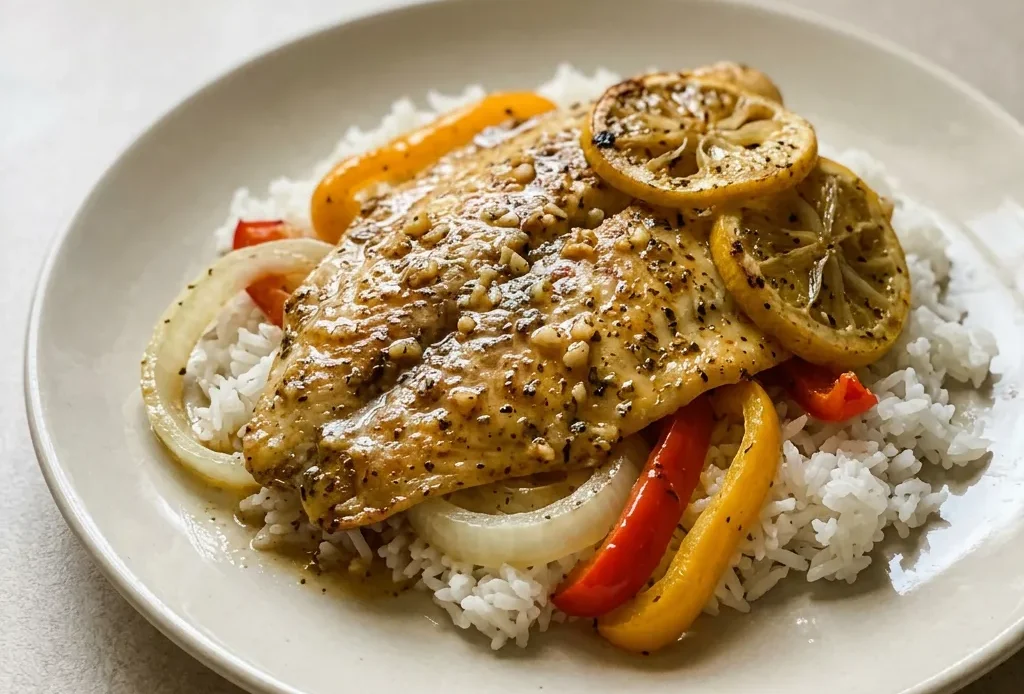
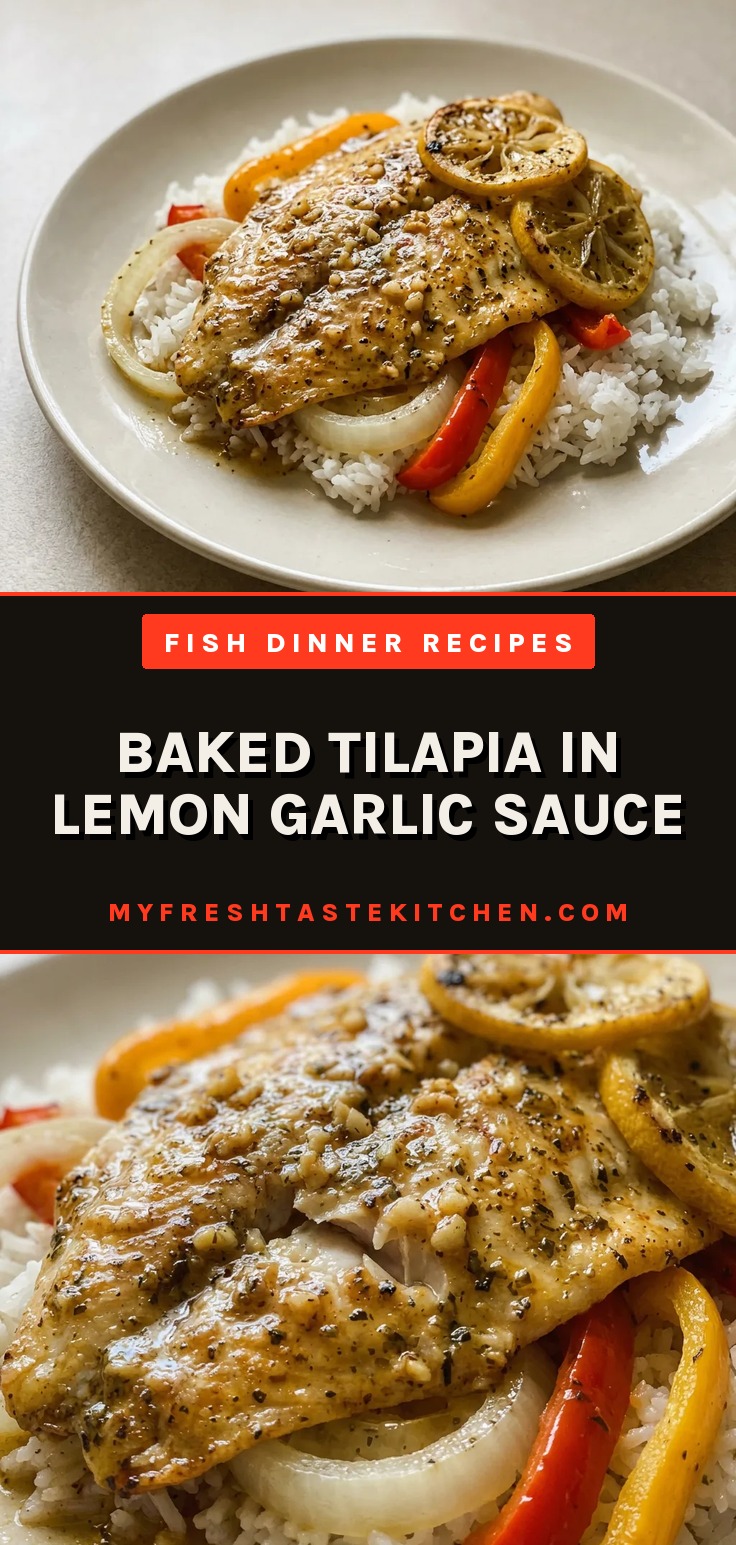
That bed of onions and peppers under the fish is doing real work, lifting the fillets off the pan so the bottoms don’t steam into mush. The vegetables caramelize while the tilapia stays flaky, and they soak up the lemon butter as they cook.
It’s a one-pan trick that solves the soggy-fish problem before it starts. This baked tilapia in lemon garlic sauce is forgiving on timing, but watch the 10-minute mark: tilapia goes from flaky to cottony faster than you’d expect.
My first attempt had the fillets swimming in a pool of liquid, turning them into sad, floppy messes instead of flaky perfection.
Why does layering fish over vegetables prevent soggy fillets?
That bed of onions and peppers isn’t just a side dish, it’s a built-in rack. The vegetables lift the fillets off the pan, so the fish isn’t sitting in its own juices. As the onions and peppers soften, they release moisture that steams the underside of the fish, keeping it tender without the fillet bottom turning wet.
Because everything’s in a single layer, heat circulates evenly around each piece. Now I always layer the onions and peppers underneath to lift the fish off the pan and let the steam escape.
You’ll taste the difference: the tilapia stays flaky, and the vegetables soak up the lemony butter as they caramelize.
What does the lemon-garlic butter marinade do besides flavor the fish?
Think of this marinade as a two-for-one. You brush it on both sides of each fillet so every bite is seasoned, not just the top.
The lemon juice cuts through the butter’s richness, keeping the fish bright and balanced. Italian seasoning and paprika add depth, earthy, slightly smoky, without overwhelming the delicate tilapia. But the real bonus is the puddle of sauce left in the pan after baking.
That buttery, garlicky, lemony liquid becomes a ready-made pan sauce to spoon over the fish and rice. No extra steps, no separate saucepan.
Why bake tilapia at 400°F in the upper third of the oven?
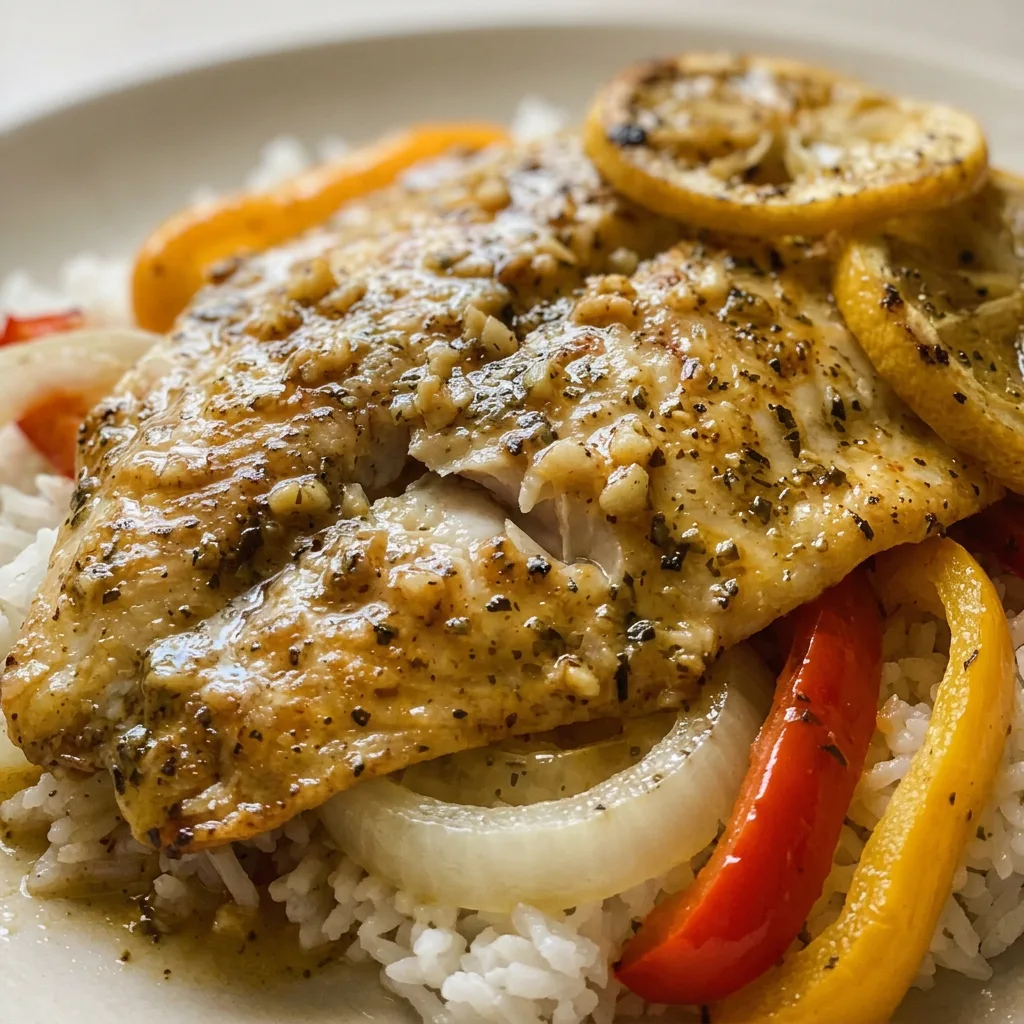
Hot oven, high rack, that’s the shortcut to a browned exterior without drying out the fish. 400°F is aggressive enough to cook thin tilapia fillets in 10 to 12 minutes, and the upper third position puts the fish closer to the heating element. That direct heat encourages browning on top and prevents the fish from steaming in its own moisture.
Tilapia is lean and cooks fast; push it past that narrow window and it goes from flaky to cottony. The high heat, short time, and rack position work together to give you a caramelized surface and a tender, just-done center.
Prep: 10 min · Cook: 15 min · Total: 25 min · Servings: 4 · Calories: 290 kcal
What to look for in the ingredients for this tilapia bake
Tilapia fillets: Fresh or thawed frozen, about 6 ounces each; look for moist, not slimy, and no fishy smell.
Onion and peppers: Choose firm, heavy vegetables; cut into uniform strips so they cook evenly in the short bake time.
Unsalted butter: Use unsalted so you control the salt; melted butter blends smoothly into the marinade.
Fresh lemon juice: Bottled juice tastes flat; squeeze from real lemons for bright, clean acidity that balances the butter.
Smoked paprika: Regular paprika works, but smoked adds a subtle char that mimics grilling without the grill.
How to layer, marinate, and bake tilapia for flaky results
Make the marinade
Whisk melted butter, garlic, lemon juice, Italian seasoning, paprika, onion powder, salt, and pepper in a bowl until smooth. Taste it, the butter should taste balanced, not raw garlic, heavy or greasy.
Prep the pan and rack
Spread sliced onion and pepper strips in a single layer across a baking tray. Crowd them and they steam instead of caramelize; you want a little sizzle when the fish goes on.
Assemble the fillets
Set tilapia fillets on top of the vegetables, not touching each other. Brush marinade over both sides, the underside picks up flavor from the veggies, and the top browns. Lay lemon slices over the fish.
Bake in the upper third
Slide the tray onto the upper third rack of a 400°F oven. After 10 minutes, check: the fish should flake easily when poked with a fork and look opaque, not translucent. If still jiggly, give it 2 more minutes, no longer, or it turns cottony.
Finish with pan sauce
Spoon the buttery liquid from the pan over the fish and vegetables. That pooled sauce is the payoff: garlicky, lemony, and infused with caramelized onion bits. Serve immediately.
Baked Tilapia in Lemon Garlic Sauce
Ingredients
- 4 large Tilapia fillets
- 1 large onion, thick sliced
- 2 cups peppers, cut into medium-thick strips
- 1/4 cup melted unsalted butter
- 2 teaspoons minced garlic
- 3/4 teaspoon salt
- 1/4 teaspoon pepper
- 2 teaspoons Italian seasoning (or mixed dry herb)
- 1 teaspoon smoked paprika (substitute with regular paprika)
- 1/2 teaspoon onion powder (optional)
- 2 tablespoons fresh lemon juice
- 3-4 fresh lemon slices
Instructions
Make Lemon Butter Marinade:
Combine melted butter, garlic, lemon juice, Italian seasoning, paprika, onion powder, salt, and pepper in a bowl to create the marinade.Preheat Oven to 400°F:
Heat oven to 400°F (205°C) and position the rack in the upper third section.Spread Vegetables on Tray:
Spread sliced onion and pepper strips in a single layer across a baking tray.Brush Marinade on Tilapia:
Set Tilapia fillets atop the vegetables. Brush the marinade generously over both sides of each fillet.Top with Lemon Slices:
Lay lemon slices on top of the fish.Bake Tilapia 10-12 Minutes:
Cook in the upper third of the oven at 400°F (205°C) for 10-12 minutes.Serve with Rice and Sauce:
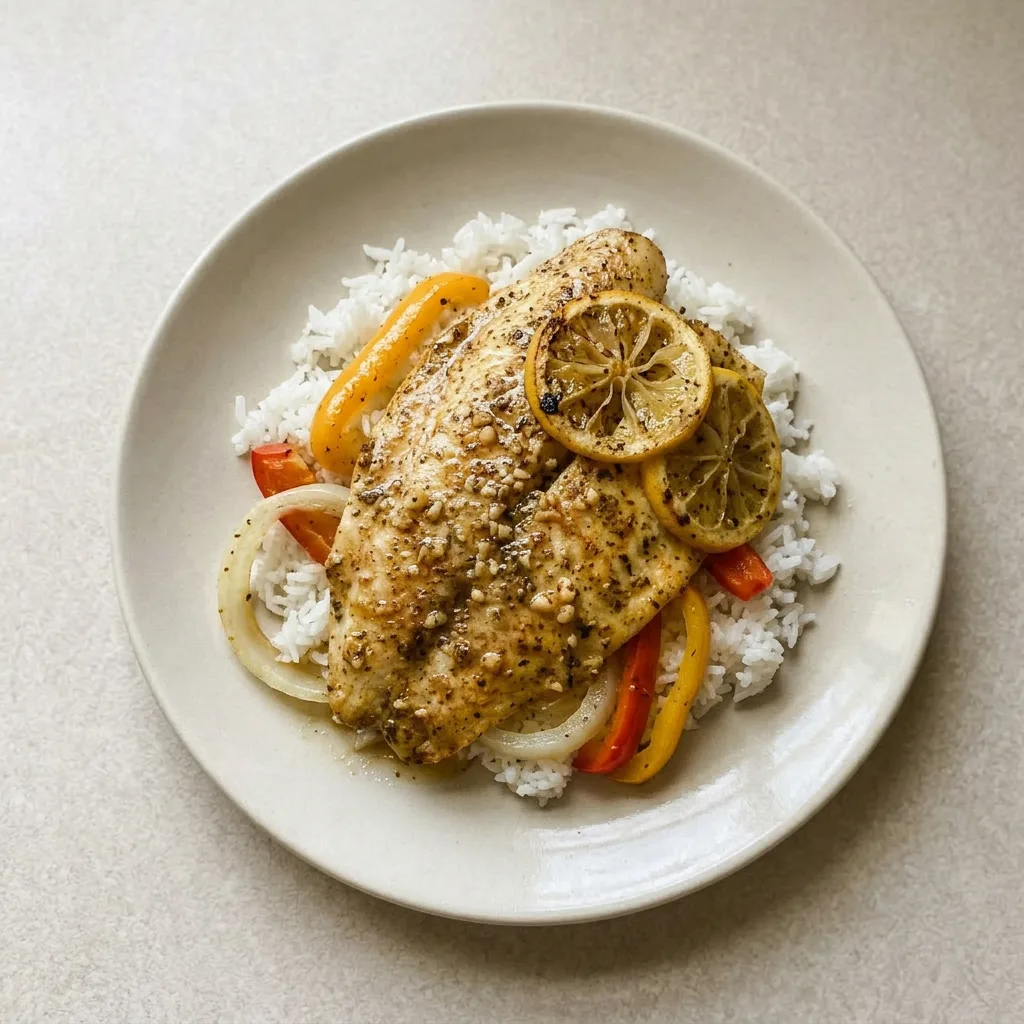
Present over a bed of rice with vegetables. Drizzle remaining lemon butter sauce from the pan over the fish.
Three smart swaps for this lemon-garlic tilapia bake
Tilapia fillets: Cod, haddock, or any firm white fish fillet of similar thickness. A thicker fillet like cod needs a few extra minutes in the oven, start checking at 12 minutes and pull when it flakes. The texture will be meatier, less delicate, but it holds up just as well with the vegetables and sauce.
Smoked paprika: Regular (sweet) paprika. You lose the subtle smoky char that hints at grilling.
The dish still tastes good, but it’s less complex. No other adjustment needed, use the same amount.
Unsalted butter: For dairy-free: use a block-style vegan butter (not spreadable tub). For a lighter option: substitute with olive oil. Vegan butter mimics butter’s richness and browning reasonably well; the sauce will be slightly less creamy.
Olive oil makes the marinade thinner and the final pan sauce more vinaigrette-like, still tasty, but lighter and less emulsified. In either case, use the same volume as butter.
Storage, Reheating, and Serving
This dish is best served right out of the oven, within 15 minutes of baking, while the fish is flaky and the sauce is emulsified. The butter sauce will begin to separate as it sits.
For leftovers, transfer fish, vegetables, and any pan sauce to an airtight container. Refrigerate for up to 2 days. The fish and vegetables reheat well, but the sauce may separate.
To reheat, warm gently in a covered skillet over low heat for 3 to 4 minutes, or microwave in 30-second bursts at 50% power. Avoid high heat, which toughens the fish. The lemon slices will soften and intensify in flavor; remove them before storing if you prefer a milder taste.
Freezing is not recommended; thawed tilapia turns mushy and the sauce breaks irretrievably.
Tips
- Pat the tilapia fillets dry with paper towels before brushing with the marinade. This removes surface moisture, allowing the butter to brown directly on the fish and the seasonings to adhere better, resulting in a more caramelized top and flakier texture.
Frequently Asked Questions
Can I prepare the marinade and slice the vegetables ahead of time?
Yes, slice the onions and peppers up to a day ahead and store them in a sealed bag in the fridge. The marinade can be mixed and refrigerated in a covered jar for up to 24 hours. Bring the marinade back to a liquid state by letting it sit at room temperature for 15 minutes or microwaving in 10-second bursts at low power.
How do I know when the tilapia is done without overcooking it?
After 10 minutes at 400°F, poke the thickest part of a fillet with a fork. The flesh should flake easily into large, opaque segments and look white throughout, not translucent. If it still feels jiggly or looks wet in the center, give it 2 more minutes max, tilapia turns from flaky to cottony fast.
Can I use frozen tilapia fillets directly in this recipe?
No, frozen fillets must be fully thawed before baking. Straight-from-freezer fish releases too much water as it cooks, which steams the fillets and makes them soggy instead of flaky. Thaw overnight in the fridge, then pat dry with paper towels before brushing on the marinade.