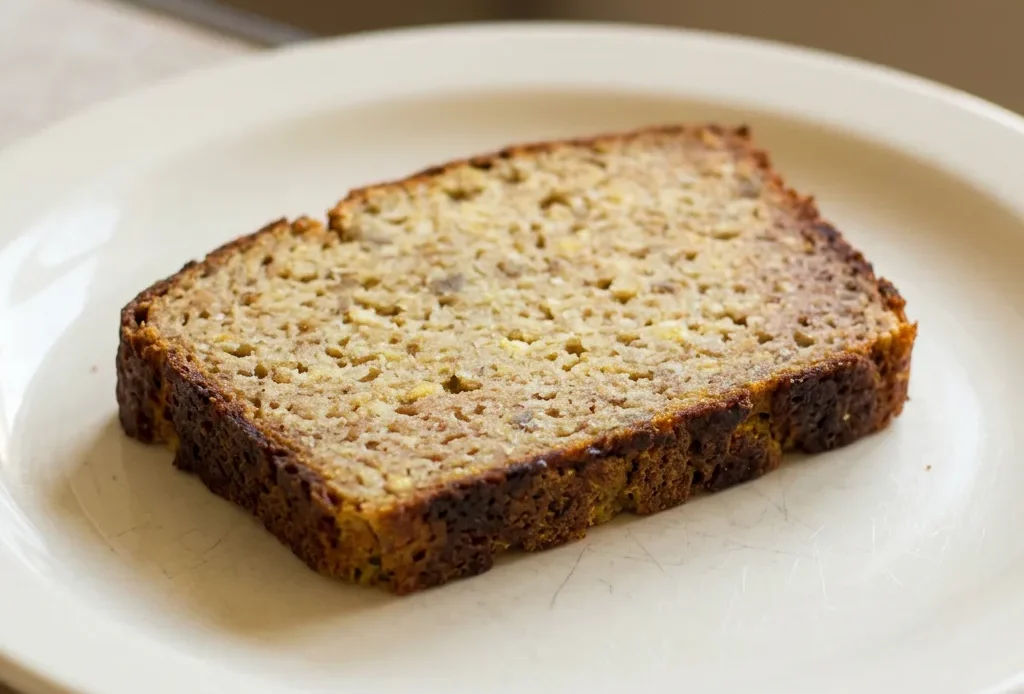
This is not a quick bread. It’s a naturally leavened loaf that uses green plantains and a 24-hour fermentation to build a tangy, tender crumb without grains or nuts.
The sauerkraut juice does the heavy lifting, breaking down starches so the texture rivals wheat-based sourdough. Getting the timing right, especially that overnight rest, is the one variable that separates a sliceable sandwich bread from a dense brick. These aip bread recipes often compromise on texture; this one doesn’t.
Ferment the plantain puree overnight
The sauerkraut juice jump-starts a natural fermentation that changes the bland plantain base into something with a tangy, sourdough-like character. Over those 24 hours, enzymes break down the starches in the green plantains, making them easier to digest and giving the crumb a lighter, more open texture. Meanwhile, the tiger nut flour hydrates fully, so the batter develops some structure without any gluten.
You’ll smell a pleasant sourness when you uncover the bowl, that’s the sign it’s ready. The result is a bread that tastes complex, not flat, and slices without crumbling.
How green plantains and nut-free flours mimic gluten
Green plantains are the backbone here, they’re starchy and firm, and when baked, the starch gels to give the loaf body and a tender chew. Tiger nut flour adds a subtle sweetness and a lot of fiber, which helps the batter hold together.
Coconut flour and tapioca flour play supporting roles: coconut flour soaks up moisture and adds a bit of density, while tapioca flour brings chewiness and a soft crumb. Together, they create a network that traps air and supports the loaf, so you get bread that feels like bread, not a dense brick.
Gelatin provides structure and sliceability
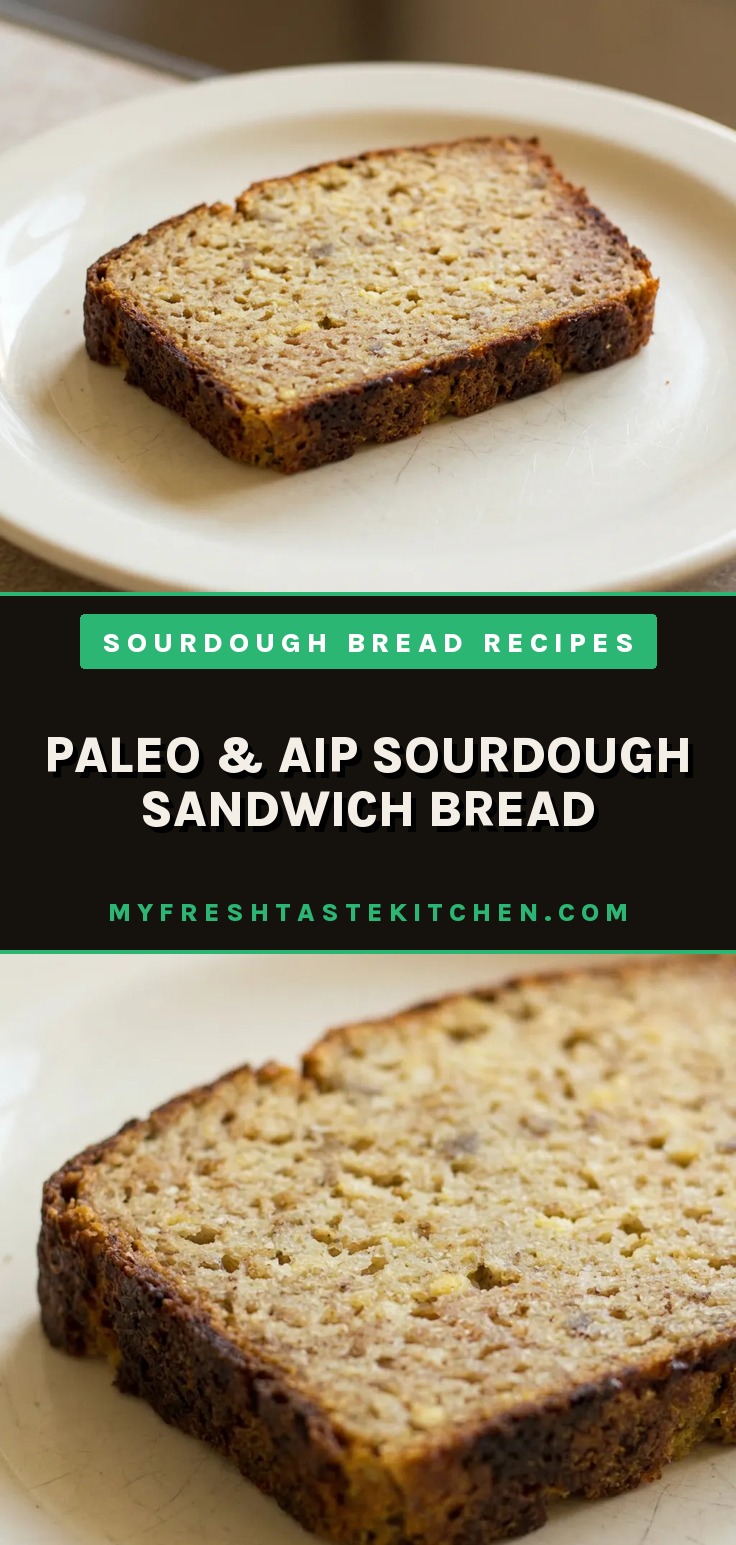
In AIP baking, gelatin is what gives this loaf its backbone. It acts like gluten by binding the batter and adding elasticity, so the bread can trap air bubbles and rise a bit in the oven. You’ll see it in the final crumb: tender but sturdy enough to slice thin without falling apart.
Gelatin also helps form a golden, slightly crisp crust. Just be sure it’s mixed in thoroughly, any lumps won’t dissolve and will leave spots. The payoff is a sliceable loaf that holds up to toasting and spreads without crumbling.
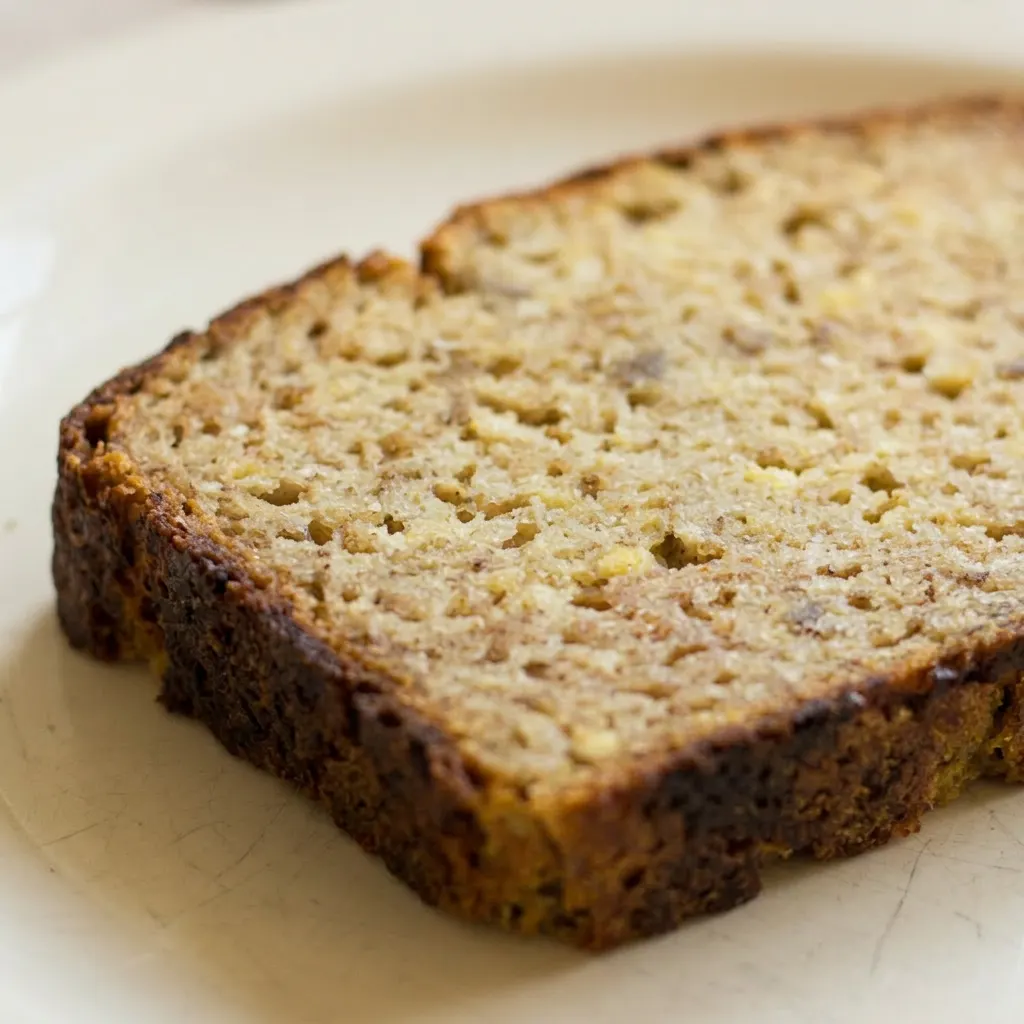
Prep: 25 min · Cook: 1 hr · Total: 25 hr 25 min · Servings: 10 · Calories: 210 kcal
A few ingredients need a second look
Light green plantains: Use light green ones, not yellow or black. Too ripe and they’ll be sweet and soft.
Sauerkraut juice: Use the brine from a raw, fermented sauerkraut, not a vinegar-based one.
Gelatin: Standard powdered gelatin works fine. Avoid ‘kosher’ gelatin, which is plant-based and won’t set.
I once baked two loaves side by side: one fermented 24 hours, the other just 8. The 8-hour loaf was dense and gummy; the 24-hour one had a light, sliceable crumb. The extra time was important.
Ferment and bake for a sourdough-like crumb
Blend the plantain puree
Blend green plantain pieces with water and oil until mostly smooth. A few tiny bits are fine, plantains are firm. Add sauerkraut juice and pulse once.
Mix and ferment overnight
Stir in tiger nut flour until no dry spots remain. Cover with a towel and leave in a warm spot for 24 hours. When you uncover it, you should smell a pleasant sour tang, that’s the fermentation working.
Add the remaining dry ingredients
Stir in coconut flour, tapioca flour, gelatin, baking soda, and salt. Pour apple cider vinegar on top and mix quickly until just combined. The batter will lighten and become airy, stop as soon as it looks uniform.
Bake until a toothpick comes out clean
Scrape batter into a lined loaf pan, smooth the top with wet fingers. Bake at 350°F for 1 hour.
Test with a toothpick: it should come out sticky but free of wet batter. If not, bake 10 to 15 minutes more.
Cool completely before slicing.
Paleo & AIP Sourdough Sandwich Bread
Ingredients
- 3 light green plantains (roughly 9 inches each), peeled and cut into pieces
- 3/4 cup filtered water chlorine-free
- 1/2 cup avocado oil or olive oil
- 1/4 cup sauerkraut juice
- 3/4 cup tiger nut flour
- 1/4 cup coconut flour
- 1/4 cup tapioca flour
- 2 tablespoons gelatin
- 1 teaspoon baking soda sifted
- 3/4 teaspoon sea salt
- 2 tablespoons apple cider vinegar
Instructions
Blend Plantains with Water:
Remove peel from green plantains and chop them. Transfer to a blender along with water and oil. If needed, use a tamper. Blend until mostly smooth (some tiny bits remain because of firmness). Add sauerkraut juice and blend briefly.Ferment with Tiger Nut Flour:
Transfer the puree to a large ceramic or glass mixing bowl. Mix in tiger nut flour. Drape a dish towel over the bowl and let it sit in a warm spot overnight (roughly 24 hours).Preheat Oven and Prep Pan:
Set oven to 350°F (175°C). Prepare a loaf pan (7.5 x 3.75 inches, slightly smaller than standard) by lining it with parchment paper.Mix Batter with Dry Ingredients:
To the fermented puree, incorporate coconut flour, tapioca flour, gelatin, baking soda, and sea salt. Pour apple cider vinegar to one side. Use hand beaters or a spoon to mix until well combined, being careful not to overmix. The batter will become light and airy.Bake and Cool Loaf:
Pour and scrape batter into the prepared loaf pan. Use a spatula to shape the top, then smooth it with water-dipped fingers. Bake for 1 hour; test by inserting a toothpick into the center—it should come out sticky but clean (no wet batter). In my oven, it takes 1 hour 15 minutes. Let the loaf cool a bit in the pan, then transfer to a wire rack. Cool completely before slicing.
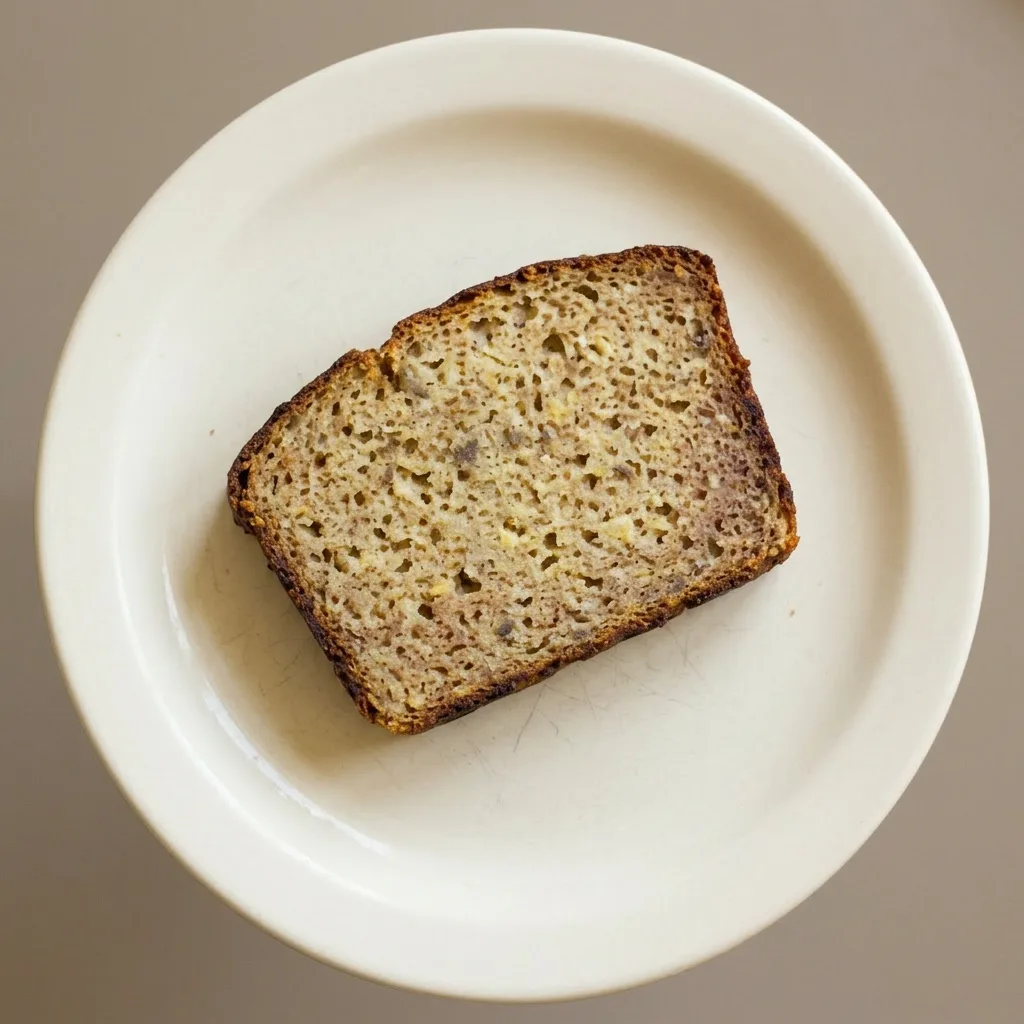
Storage and Serving
This bread is best the day it’s baked, with a tender crumb and crisp crust. For leftovers, wrap the whole loaf in a clean kitchen towel and keep at room temperature up to 2 days. After day one, slice and toast to restore texture.
Refrigerate tightly wrapped for up to a week; the crumb will firm and dry slightly, but toasting revives it. Freeze sliced, separated by parchment, in a zip-top bag for up to 3 months. Toast straight from the freezer.
Make ahead: you can ferment the puree up to 2 days ahead and refrigerate, then bring to room temperature before mixing. The baked loaf does not improve with sitting; eat within 2 days at room temp for the best crumb.
Tips
- Peel the plantains under cold running water: the sap can be sticky and hard to remove from hands and knives. Running water prevents the sap from clinging, making the process much cleaner.
- Let the baked loaf cool completely in the pan set on a wire rack before slicing. Cutting too early will compress the crumb and make it gummy, because the starches need time to set.
What you can swap in this sourdough-style bread
Light green plantains: Ripe yellow plantains, but reduce water to 1/2 cup. Yellow plantains are sweeter and softer, so the bread turns out noticeably sweet and a bit denser. Cutting back water keeps the batter from getting too loose.
Sauerkraut juice: Brine from fermented pickles or plain kombucha. Any live-culture brine will drive the same tangy fermentation.
Pickle brine adds a slight dill note; kombucha gives a milder sourness. Avoid vinegar-based brines, they won’t ferment and the loaf will taste flat.
Avocado oil: Melted coconut oil or olive oil. Coconut oil sets firm at room temp, so the crumb may feel slightly more solid. Olive oil adds a fruity note that works well with the plantain.
Use the same 1/2 cup measure.
Gelatin: Do not swap. Gelatin provides the structure that mimics gluten, without it, the loaf won’t hold together and will crumble when sliced. No other ingredient here does that job.
Frequently Asked Questions
Can I make this bread ahead of time and freeze it?
Yes, once fully cooled, slice and freeze with parchment between slices for up to 3 months. Toast straight from frozen to restore texture, the crust crisps and the crumb softens. The loaf is best the day it’s baked, so freezing is a good way to stretch it.
Why did my bread turn out dense and gummy?
A gummy crumb usually means the fermentation fell short, the 24-hour rest in a warm spot is crucial for breaking down plantain starches. If the puree didn’t smell pleasantly sour and look slightly bubbly, it wasn’t ready. Another cause: your plantains might have been too yellow (sweeter, less starchy), which makes the batter wet and dense.
Stick with light green ones.
How is this different from regular sourdough bread?
This bread gets its tang from sauerkraut juice fermenting the plantain puree, not from a wheat-based starter. The texture is denser and more tender than wheat sourdough, and it’s completely grain-free and gluten-free. The crust is thinner and softer, while regular sourdough has a thicker, chewier crust from gluten.
Can I skip the fermentation step if I’m short on time?
Skipping the 24-hour fermentation will cost you the sourdough tang and the light, airy crumb, the bread will taste flat and be denser. The fermentation also helps hydrate the tiger nut flour and break down plantain starches, making the loaf easier to digest. You can ferment the puree up to 2 days ahead and refrigerate it, then bring to room temperature before mixing.