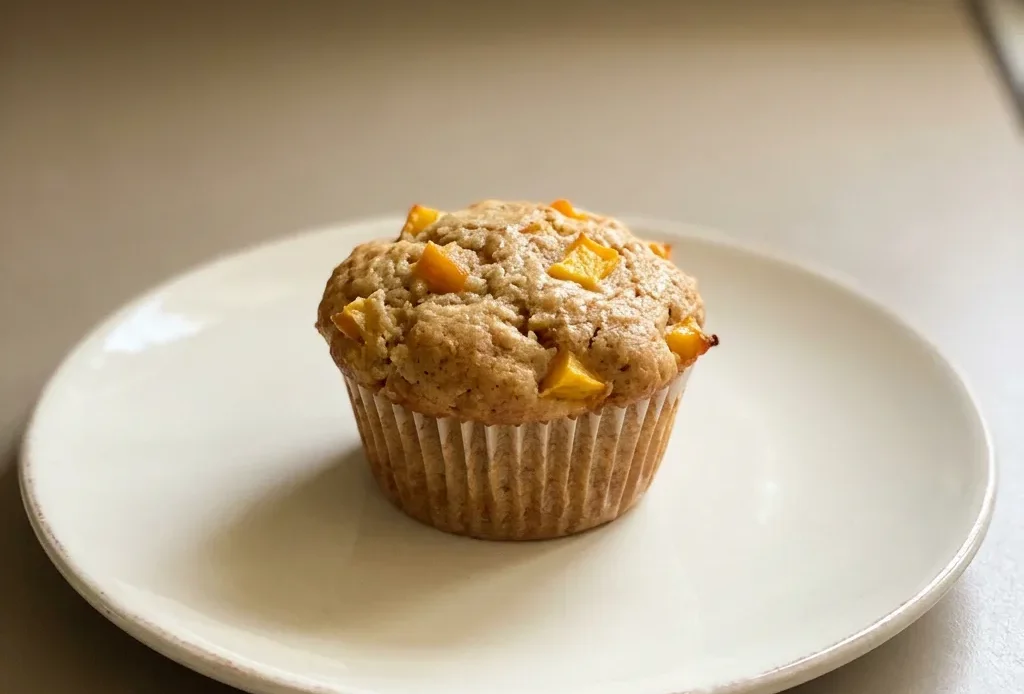
The trick to peach muffins isn’t the peaches, it’s dodging the soggy bottom. Too much juice from the fruit turns the crumb wet before it sets, and you end up with a dense, pudding-like streak near the paper liner. The fix is simple: dice firm, ripe peaches and fold them in gently, just enough to coat.
That single choice, more than any spice swap, decides whether these peach muffins taste like summer or like regret. The rest, two sugars, a cinnamon whisper, a short bake, just lets the fruit shine.
Two sugars for better texture and flavor
Granulated sugar does more than sweeten, it creeps into the batter’s structure, giving each muffin a firm crumb that holds the fruit. Brown sugar brings moisture and a faint molasses edge.
Together they nudge the peach’s natural sweetness into something deeper, almost caramelized, without you tasting sugar separately. You’ll feel it in the bite: tender but not fragile, sweet but not cloying.
Why this wet-to-dry ratio works
Too much liquid turns breakfast muffins gummy; too little leaves them dry and tight. Here, melted butter and milk plus two eggs hit a balance that makes the crumb tender but sturdy enough to hold peach chunks. The flour soaks up exactly what it needs, leaving the interior moist without crossing into dense.
You’ll see it when you cut one open: a soft, even crumb that doesn’t fall apart.
Fresh peaches beat canned and frozen here
For peach muffins, fresh fruit is the clear choice. Diced fresh peaches keep their shape through mixing and baking, and they release just enough juice to moisten the batter without making it soggy.
Canned peaches are already soft and waterlogged, so they break down and thin the batter. Frozen ones, if you don’t thaw and drain them first, bleed excess moisture that can weigh down the crumb.
Stick with fresh for chunks that stay distinct in every bite.
Cinnamon and vanilla as quiet supporters
A teaspoon each of cinnamon and vanilla might seem modest, but they work behind the scenes. Cinnamon adds a gentle warmth that highlights the peach’s fruity tang without overwhelming it.
Vanilla rounds off the sweetness and fills in any flat notes. Neither spice shouts, you taste peach first, then notice the depth underneath.
The amounts are set so the fruit stays the star, not a spice blend.
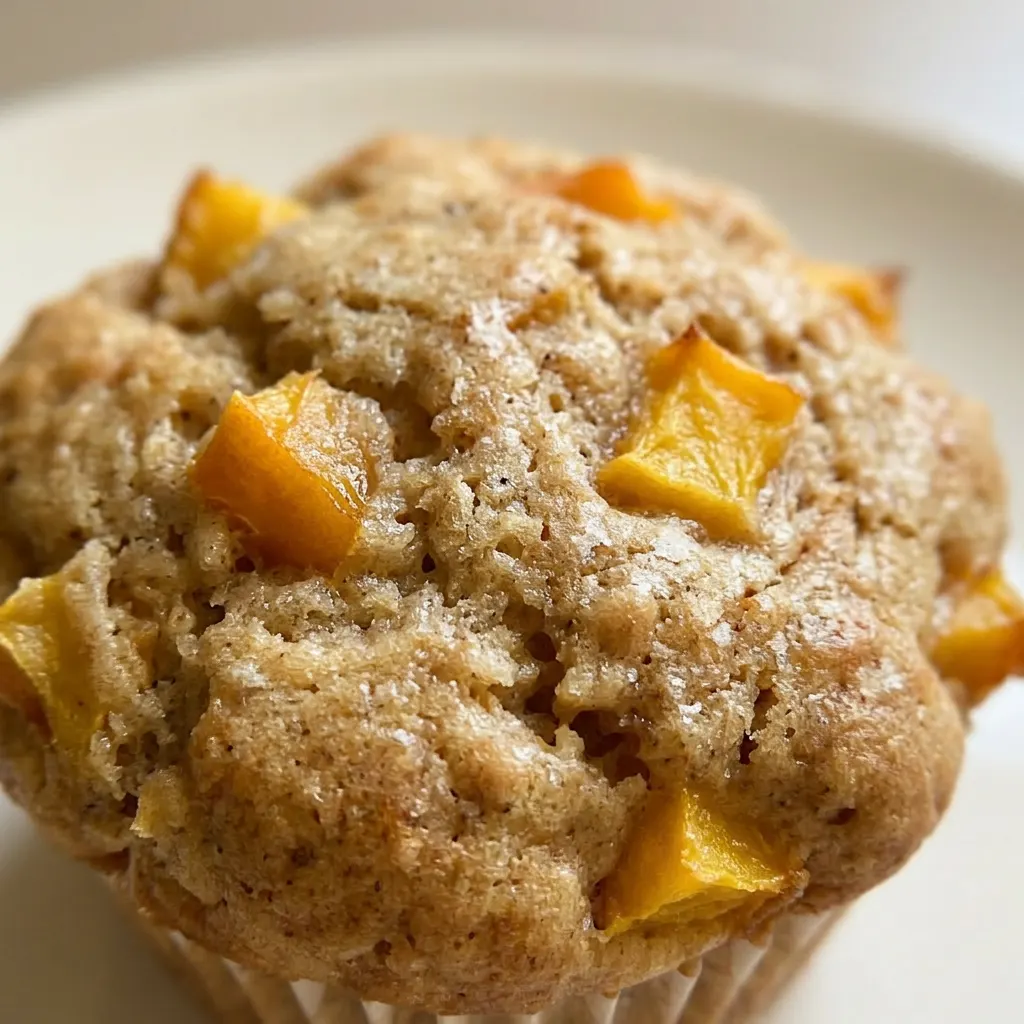
Prep: 15 min · Cook: 20 min · Total: 35 min · Servings: 12 · Calories: 180 kcal
Three ingredients worth a second look
Fresh peaches: Buy ripe but firm peaches so they hold their shape and don’t turn the batter soggy.
Brown sugar: Light or dark brown sugar works; dark gives a deeper molasses note.
Unsalted butter: Melt and cool slightly before mixing so it blends without cooking the eggs.
How to get the batter right and keep peach chunks intact
Prep the oven and pan
Set the oven to 350°F and line a 12-cup muffin tin with paper liners or grease well. A hot oven gives an immediate rise; a cold one lets the batter slacken and spread.
Whisk the dry ingredients
In a large bowl, whisk together flour, both sugars, baking powder, salt, and cinnamon until uniform. Clumps of sugar or baking powder will leave bitter spots or uneven holes.
Mix the wet ingredients
In another bowl, whisk melted butter, eggs, milk, and vanilla until smooth. The butter should be warm enough to blend easily but not hot, if it’s too hot, it’ll cook the eggs on contact.
Combine wet and dry
Pour the wet mixture into the dry and fold with a spatula just until no dry streaks remain. Stop while it still looks a little lumpy; overmixing develops gluten and makes muffins tough.
Fold in the peaches
Add the diced peaches and fold gently, only 3, 4 turns. You want the batter to coat the fruit without crushing it, crushed peaches release juice that dyes the crumb and makes it wet.
Fill the muffin cups
Divide the batter evenly among the 12 cups, filling each about two-thirds full. Too little gives flat tops; too much spills over and the muffins lose their domed shape.
Bake and test for doneness
Bake for 18 to 20 minutes, rotating the pan halfway if your oven runs hot. The tops should be golden and spring back when lightly pressed; a toothpick inserted in the center should come out clean.
Cool in the pan then on a rack
Let the muffins sit in the pan for 5 minutes, this lets the steam finish setting the structure. Then transfer to a wire rack to cool completely; if left in the pan too long, the bottoms steam and turn soggy.
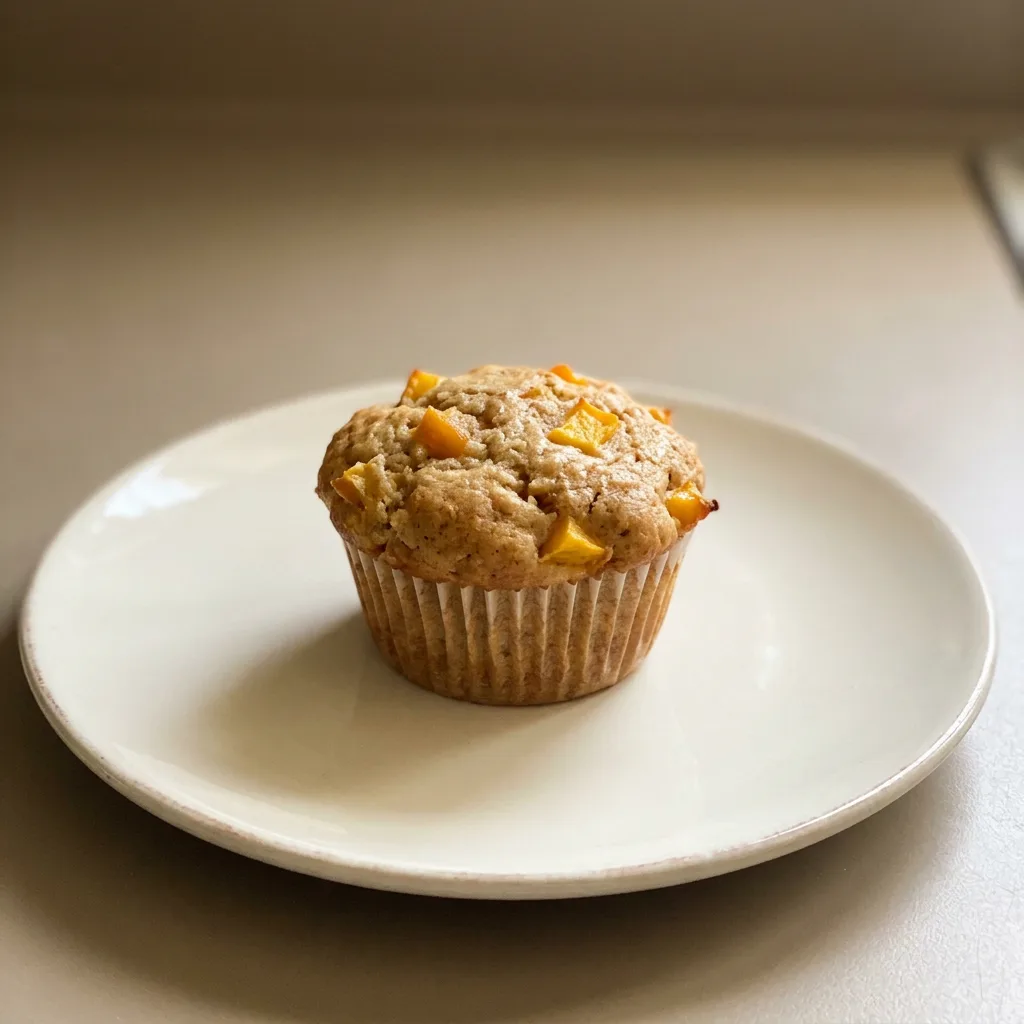
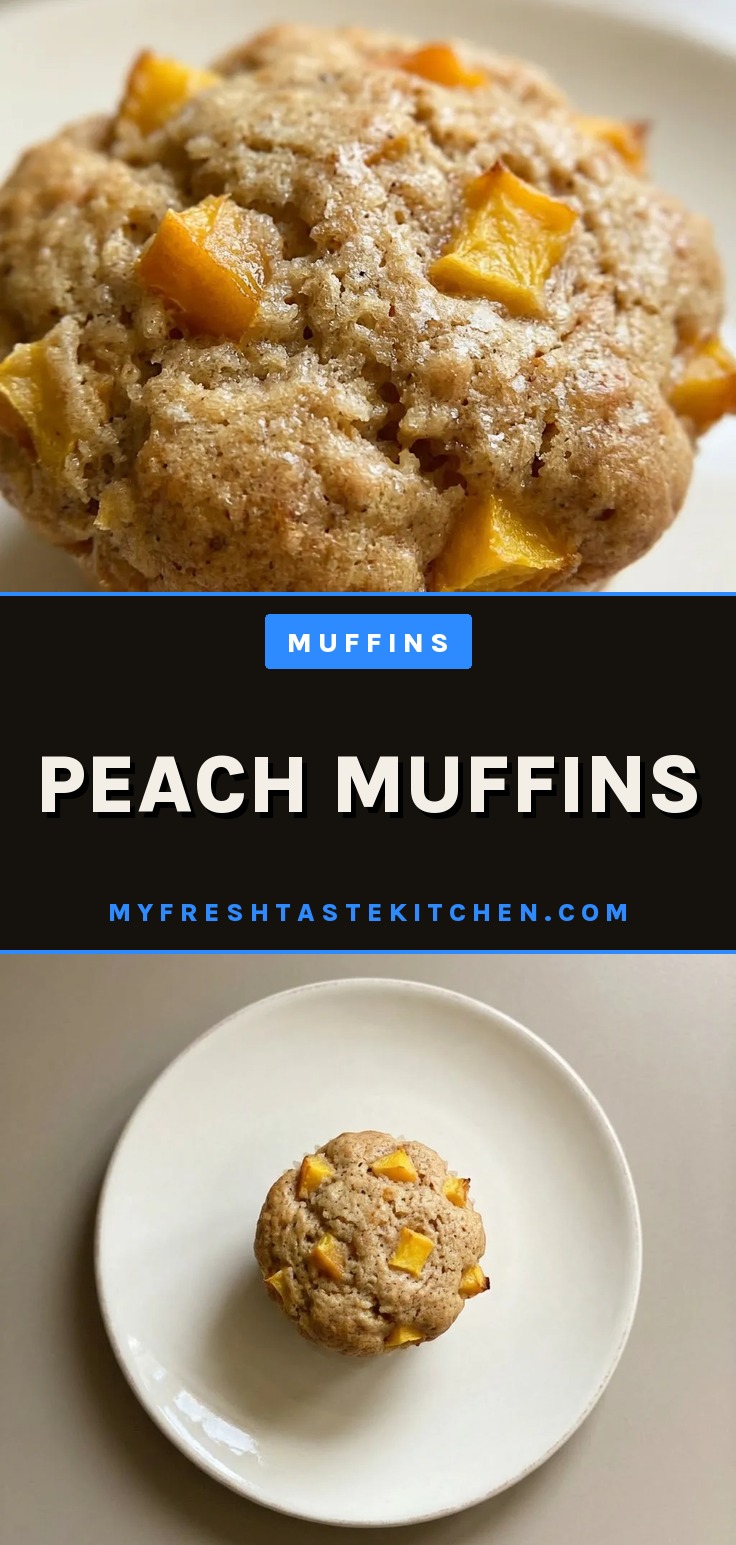
Peach Muffins
Ingredients
Method
Preheat Oven and Prep Pan:
Set the oven to 350°F (175°C). Coat a muffin tin with grease or insert paper liners.Whisk Dry Ingredients Together:
In a big bowl, combine the flour, granulated sugar, brown sugar, baking powder, salt, and cinnamon with a whisk.Mix Wet Ingredients:
In a separate bowl, mix the melted butter, eggs, milk, and vanilla extract using a whisk.Combine Wet and Dry Mixtures:
Add the wet blend to the dry one and fold with a spatula until barely combined.Fold in Diced Peaches:
Incorporate the diced peaches by folding them gently into the batter.Fill Muffin Cups:
Portion the batter into the muffin cups, filling each to roughly two-thirds full.Bake Until Golden:
Bake for 18-20 minutes until the tops turn golden and a toothpick inserted in the center emerges clean.Cool Muffins in Pan:
Let the muffins sit in the pan for 5 minutes, then move them to a wire rack to cool fully.
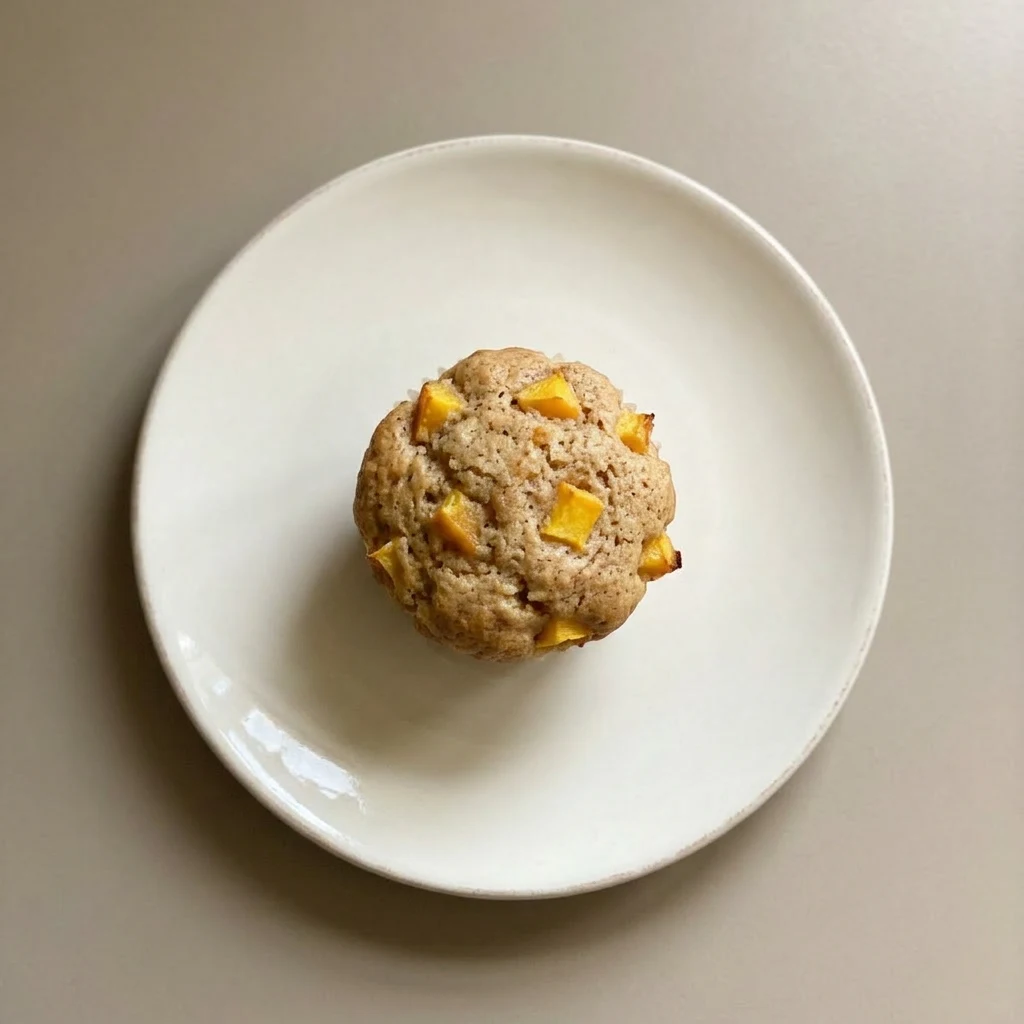
Storage and Serving
Peach muffins taste best the day they’re baked, when the crumb is tender and the peach chunks are moist. Store leftovers in an airtight container at room temperature for up to 3 days.
After day one, the muffins start to dry out slightly; reheat a single muffin in a 300°F oven for 5 minutes to restore some softness. Microwaving 15 seconds works too but can make the exterior chewy. For longer storage, freeze the muffins in a zip-top bag for up to 3 months.
Thaw at room temperature or reheat from frozen. Do not refrigerate; the cold air dries them out faster than room temperature. If you add a streusel topping or glaze, apply it just before serving so it stays crisp or glossy.
Once topped, eat within a few hours.
Tips
- Toss the diced peaches in 1 tablespoon of flour before folding them into the batter. The flour coating helps suspend the fruit evenly throughout the muffin, preventing it from sinking to the bottom during baking.
- Use a cookie scoop or ice cream scoop to portion the batter into the muffin cups. This ensures uniform size and even baking, so all muffins are done at the same time.
Three swaps that work for peach muffins, and one that doesn’t
fresh peaches: frozen peaches (thawed, drained, patted dry). Frozen peaches work if you thaw them first, drain off the liquid, and pat dry. Skip that step and the extra water thins the batter, making the muffins dense and gummy.
The texture turns out heavier, the crumb less open. Flavor is fine, but the peaches soften more during baking, so you get less distinct chunks.
all-purpose flour: gluten-free 1-to-1 baking flour blend. Swap cup for cup.
A blend with xanthan gum (like King Arthur or Bob’s Red Mill) gives a tender crumb close to the original. Without xanthan gum, the muffins will be crumbly and likely fall apart. Expect a slightly grittier texture and a paler top, gluten-free flours don’t brown as fast.
Check doneness a few minutes early; they can go from done to dry quickly.
milk: buttermilk. Use the same amount. Buttermilk adds a tang that sharpens the peach flavor and makes the crumb even more tender.
The batter will be a bit thicker. No other adjustments needed, baking powder handles the acidity fine. The muffins will have a softer, almost cake-like texture and a more complex taste.
This swap is a clear win if you like a little edge to the sweetness.
unsalted butter: coconut oil (melted). Use the same amount.
Coconut oil makes the crumb slightly firmer and less tender, butter has water that steams and softens the structure. The muffins will have a faint coconut aroma that may or may not play well with peaches. If you want neutral, go with a refined coconut oil.
Color and rise stay similar. For a dairy-free option, this works, but the texture loses that buttery softness.
Frequently Asked Questions
Can I make these muffins ahead of time?
Yes, bake them up to 3 days ahead and store in an airtight container at room temperature. For longer storage, freeze for up to 3 months. Reheat a single muffin in a 300°F oven for 5 minutes to bring back softness.
Why did my muffins turn out dense?
Overmixing the batter is the usual culprit, it develops gluten and toughens the crumb. Another cause is skipping the thaw-and-drain step if using frozen peaches; extra moisture weighs down the batter. Fold just until no dry streaks remain, and stop.
Can I use frozen peaches instead of fresh?
Yes, but thaw them first, drain off the liquid, and pat dry with paper towels. Skip that step and the extra water will thin the batter, making the muffins dense and gummy. The peaches themselves will be softer and less distinct than fresh.
How do I keep the peaches from sinking to the bottom?
Toss the diced peaches with a tablespoon of the flour from the recipe before folding them in. The flour coating helps the fruit grip the batter. Also, fold gently and only 3, 4 turns so the batter stays thick enough to support the chunks.
