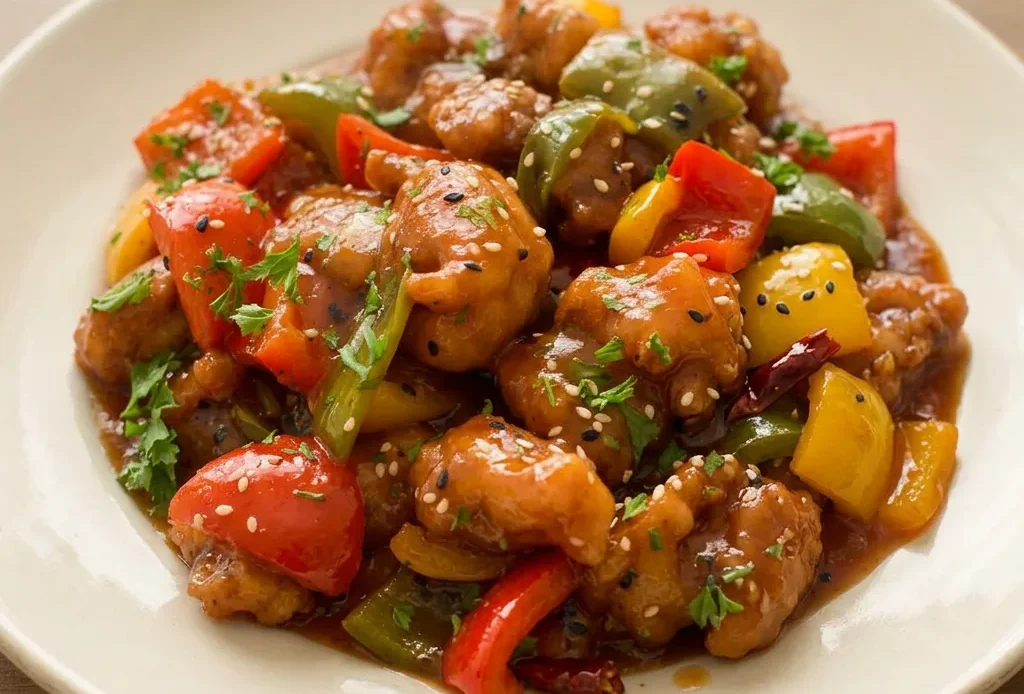
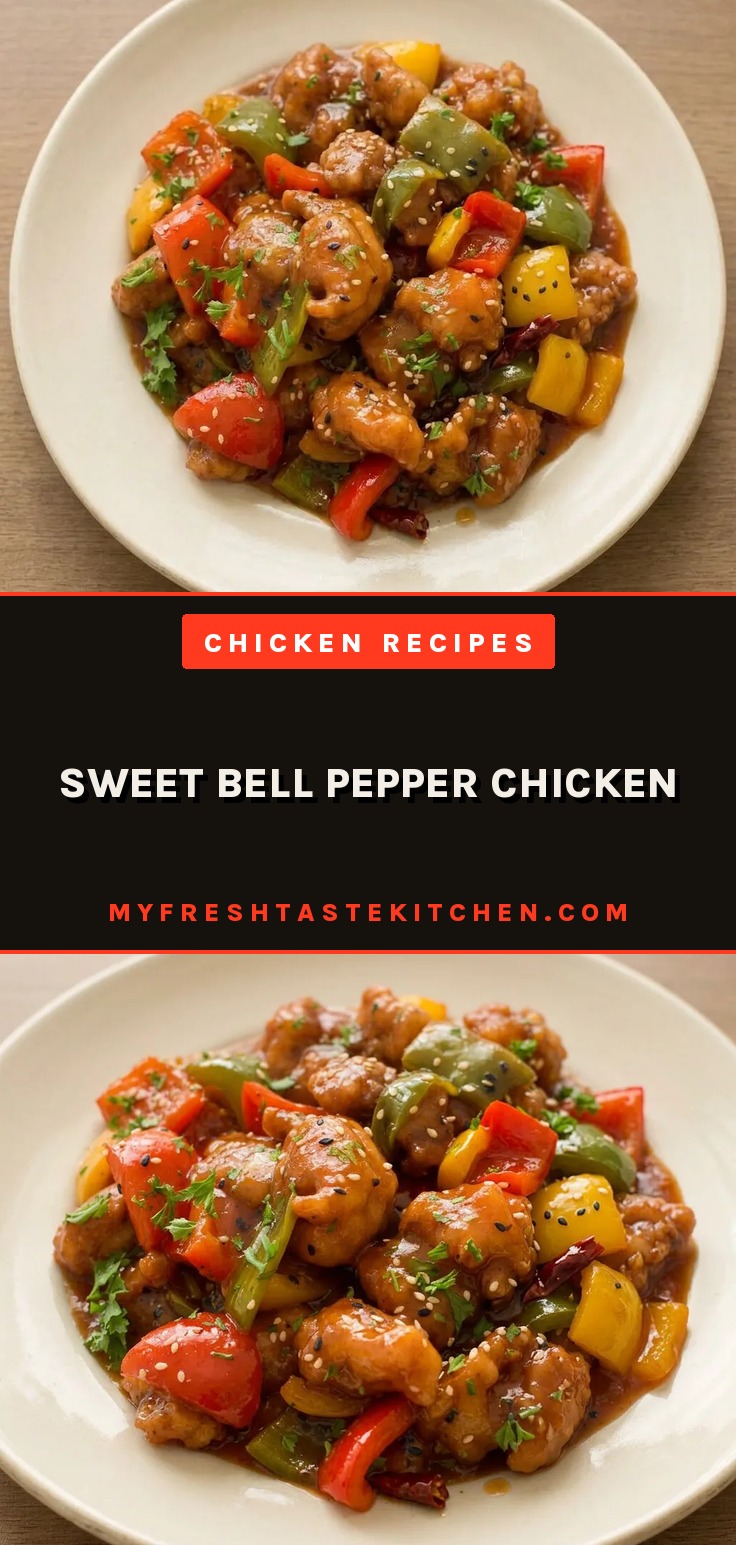
The trick to this sweet bell pepper chicken isn’t the sauce or the peppers, it’s the cornstarch crust that stays crunchy even after you toss it with the glossy, sweet-tangy glaze. Most stir-fried chicken turns soft the second sauce hits, but this one holds its crackle for a good 15 minutes on the plate, long enough to actually enjoy the contrast.
Coat chicken in cornstarch for a lasting crisp
Flour-based coatings turn soggy once they hit a stir-fry sauce. Cornstarch works differently. It clings tightly to the meat and forms a thin, crunchy crust that doesn’t soften when you toss the chicken with peppers and sauce.
As the pieces fry, the starch absorbs surface moisture and creates a delicate shell. That shell stays intact during the final simmer, so every bite stays crisp against the tender meat.
You’ll see the coating turn opaque white as it fries, then a pale gold. The texture holds for minutes after saucing, unlike a flour dredge that would have wept and turned gummy.
Balance savory chicken with a sweet-tangy sauce
The sauce does the heavy lifting of tying the dish together. Ketchup and sugar supply sweetness and body, so the sauce coats each piece without running off. Rice vinegar cuts through the richness of the fried chicken, keeping the plate bright.
Cornstarch thickens the mixture just enough to cling to the bell peppers and chicken without turning gloppy. As the sauce bubbles and clears, you’ll see it become glossy and translucent.
That gloss means it will stick to every surface rather than pool on the plate. The result: each forkful tastes sweet, tart, and savory at once.
Use three bell pepper colors for better flavor and looks
Red, green, and yellow peppers aren’t just for show. Green peppers taste sharper and more vegetal, red ones bring sweetness, and yellow sit in between. Together they give the dish a range of flavors you wouldn’t get from one color alone.
The mix also creates visual contrast: bright red, sunny yellow, deep green against the golden chicken. That variety makes the plate feel more interesting before you even take a bite. When you cook them briefly, the peppers keep some crunch, which adds texture next to the tender meat.
The final dish looks and tastes layered, not one-note.
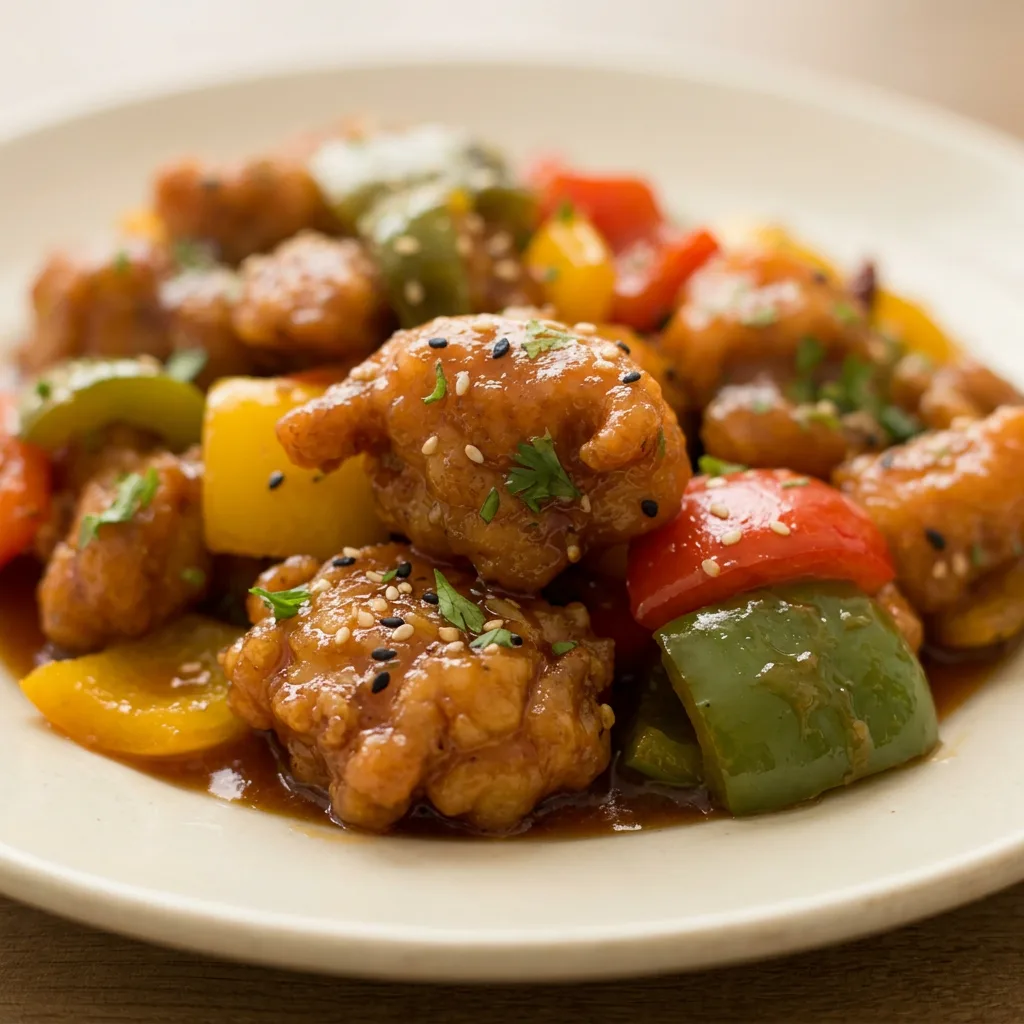
Prep: 20 min · Cook: 25 min · Total: 45 min · Servings: 4 · Calories: 480 kcal
Choose bell peppers by color, not just by look
Boneless skinless chicken thighs: Buy thighs, not breasts; they stay moist through frying and saucing.
Cornstarch: Use cornstarch, not flour, for a crust that stays crisp after sauce hits.
Bell peppers: Get one red, one green, one yellow; each color brings a different sweetness and bite.
Rice vinegar: Use plain rice vinegar, not seasoned; seasoned has sugar and salt that throw off the balance.
People always ruin it by dumping sauce on too early and wondering why the crust going soggy.
Fry chicken in batches so the crust stays crisp
Heat the oil
Pour vegetable oil to a depth of 2 inches in a heavy pot. Heat to 350°F. A drop of batter should sizzle and float immediately, not sink.
Fry the first batch
Drop chicken pieces in a single layer, not crowded. Fry until deep golden, about 4 to 5 minutes.
The coating will turn opaque white then pale gold. Overcrowding drops oil temperature and makes the crust greasy.
Drain and repeat
Transfer fried chicken to a paper towel-lined plate. Let the oil come back to 350°F before adding the next batch. You’ll hear the sizzle resume, that’s the signal.
Check the crust
A properly fried piece feels rigid and rattles on the plate. If it bends or feels soft, the oil was too cool or the batch too large. Adjust for the next round.
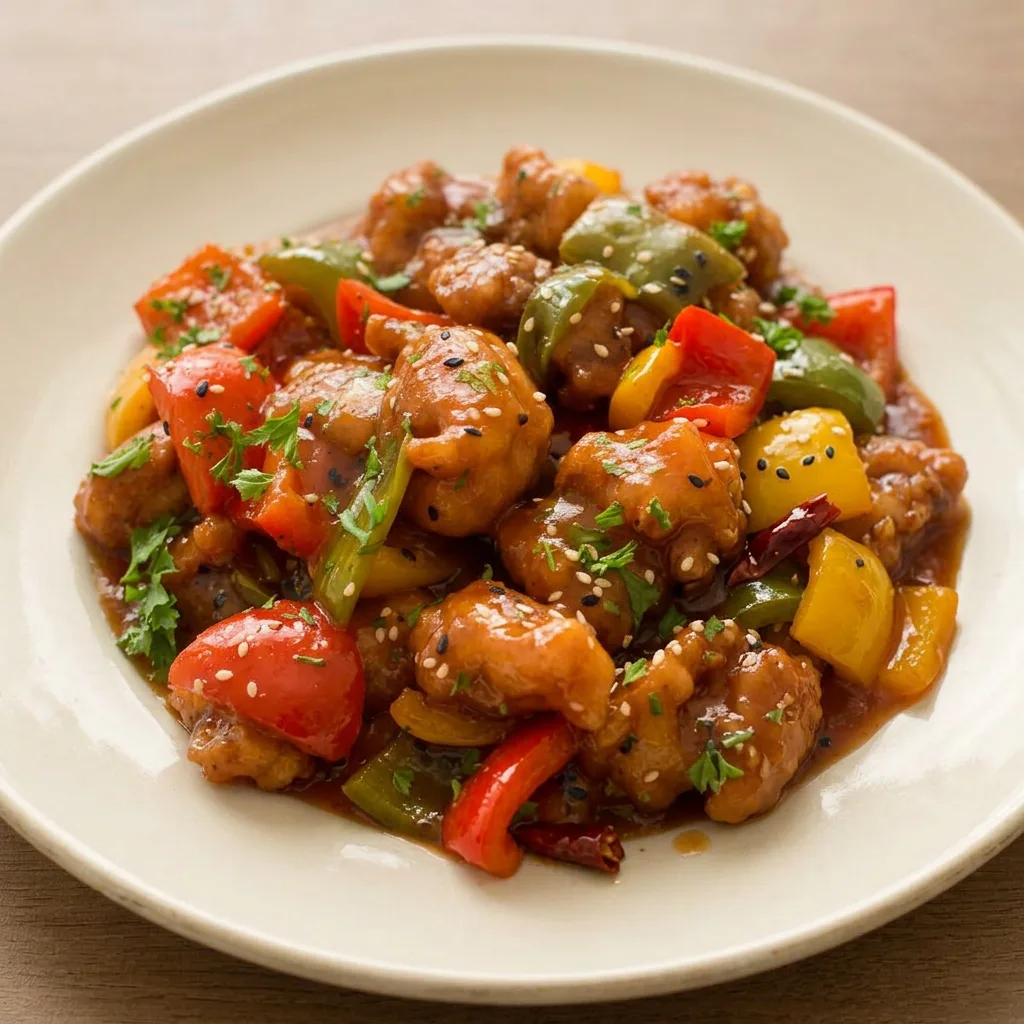
Sweet Bell Pepper Chicken
Ingredients
Method
Season the Chicken:
In a bowl, toss the chicken pieces with 1 tablespoon olive oil, garlic powder, onion powder, 1/2 teaspoon salt, and black pepper. Using a food-safe glove, rub the seasonings into the meat thoroughly.Coat with Cornstarch:
Add 1/3 cup cornstarch over the seasoned chicken and mix until every piece is evenly coated. Reserve.Make the Sauce:
In a saucepan, combine water, rice vinegar, sugar, 1/2 teaspoon salt, minced garlic, red chili flakes (if using), ketchup, and 1 1/2 tablespoons cornstarch. Whisk over medium heat until the mixture reaches a gentle boil and thickens. Take off the heat and set aside.Fry the Chicken:
Pour vegetable oil into a heavy-bottomed pot to a depth of 2 inches. Heat to 350°F (175°C). Fry the chicken in batches until golden brown. Transfer to a plate lined with paper towels.Cook the Peppers:
Heat 1 tablespoon olive oil in a large skillet over medium heat. Add the bell pepper pieces and cook, stirring, until they reach your preferred texture (crunchy or soft).Combine Everything:
Add the fried chicken and prepared sauce to the skillet with the peppers. Stir to combine. Cook for 2-3 minutes, stirring frequently, until everything is hot and well integrated.
Serve and Garnish:
Serve and add any desired garnishes.
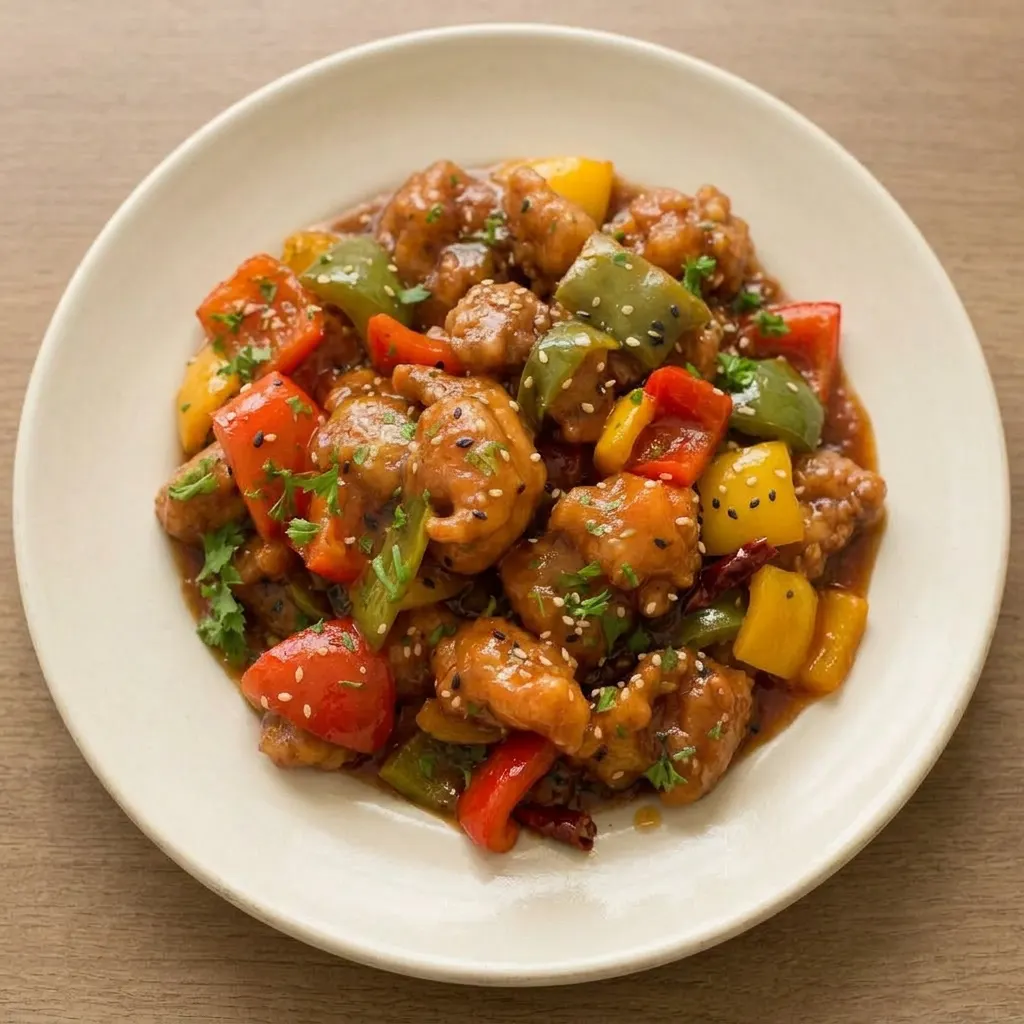
Storage and Serving
Serve this dish right after you toss the chicken and peppers with the sauce. The crust is crispest in the first 15 minutes. After that, the coating softens as it sits in the sauce.
For leftovers, transfer to an airtight container and refrigerate for up to 3 days. The chicken will lose its initial crunch, but the flavor holds. To reheat, use a skillet over medium heat, stirring until hot, or spread on a baking sheet in a 350°F oven for 5 to 7 minutes.
The microwave will make the coating chewy, so avoid it. Do not freeze the assembled dish; the peppers turn limp and the sauce separates.
You can freeze the fried chicken pieces alone for up to 2 months, then make fresh sauce and peppers when you’re ready to serve. Thaw the chicken in the fridge overnight and reheat in a hot oven to restore some crispness before saucing.
Tips
- Cut bell peppers into 3/4-inch pieces so they finish cooking at the same time as the chicken reheats in the sauce. Larger pieces stay raw in the center; smaller ones turn limp before the sauce clings.
- Toss the bell peppers in the skillet with a pinch of salt before adding the chicken and sauce. The salt draws out a little moisture, which helps the peppers soften evenly without steaming or burning.
Swap chicken for breasts or tofu, but watch the cooking time
Boneless skinless chicken thighs: Boneless skinless chicken breasts, cut into 1 1/2 inch pieces. Breasts cook faster and can dry out.
Fry them 3 to 4 minutes instead of 4-5. The crust will still hold, but the meat will be leaner and less juicy.
Boneless skinless chicken thighs: Firm tofu, pressed and cut into 1 1/2 inch cubes. Tofu won’t brown as deeply; it stays pale.
Coat with cornstarch as directed and fry until golden and crisp on the outside. The sauce clings well, but the texture is soft, not meaty.
Rice vinegar: Apple cider vinegar. Apple cider vinegar is slightly fruitier and less sharp. The sauce will taste a bit sweeter and milder.
Use the same amount as rice vinegar.
Ketchup: Tomato paste (3 tablespoons) mixed with sugar (1 tablespoon). Tomato paste is thicker and less sweet. The sauce will be darker, less glossy, and less sweet.
Whisk the paste and sugar into the water before adding other sauce ingredients. Adjust sweetness to taste.
Frequently Asked Questions
Can I make this dish ahead of time and reheat it?
Yes, but only if you’re okay with the crust softening. The dish is crispiest within 15 minutes of saucing.
For leftovers, refrigerate in an airtight container for up to 3 days. Reheat in a skillet over medium heat or in a 350°F oven for 5 to 7 minutes. Avoid the microwave, it makes the coating chewy.
You can also freeze the fried chicken pieces alone for up to 2 months; thaw overnight, reheat in a hot oven to restore some crunch, then toss with fresh sauce and peppers.
How do I prevent the chicken from getting soggy after adding the sauce?
Cornstarch is your shield. Unlike flour, it forms a thin, crunchy crust that resists softening even when stirred with sauce.
Fry the chicken in small batches at 350°F so the coating sets properly, overcrowding drops the oil temp and leads to greasy, fragile crust. Once you add the sauce, cook only 2 to 3 minutes, just until hot and integrated. The crust will stay crisp for minutes after saucing, but serve right away for the best texture.
Is this dish similar to General Tso’s chicken or other Chinese-American dishes?
It shares the sweet-tangy-savory profile of Chinese-American stir-fries, but it’s not a copy of any one dish. The sauce uses ketchup and rice vinegar for brightness, while General Tso’s often relies on soy sauce and chili paste.
The cornstarch coating and frying method are standard for many Chinese-American classics, but the three-color bell peppers and lack of a heavy soy base give this its own identity. Think of it as a cousin, not a twin.
