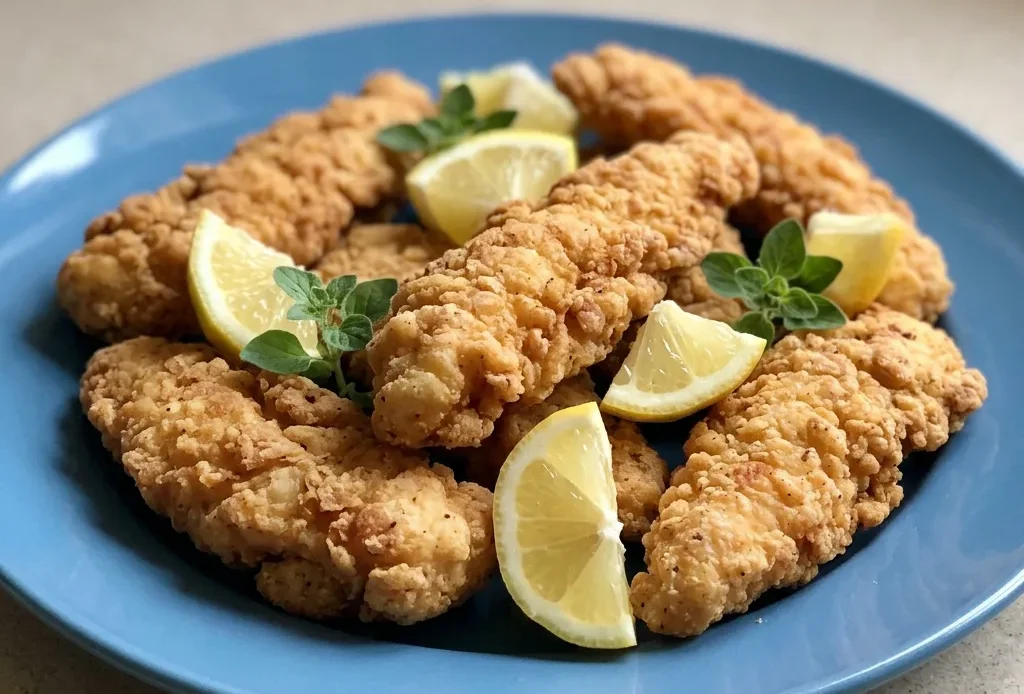
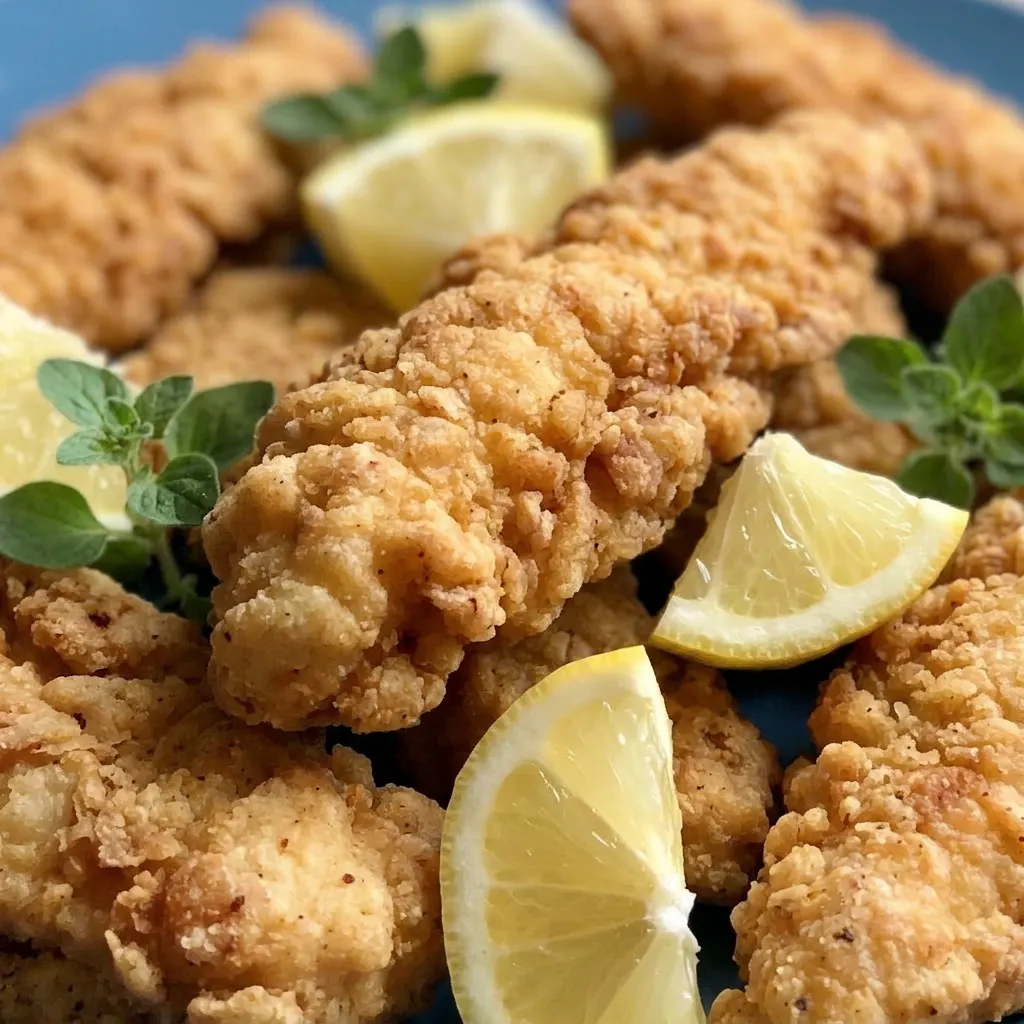
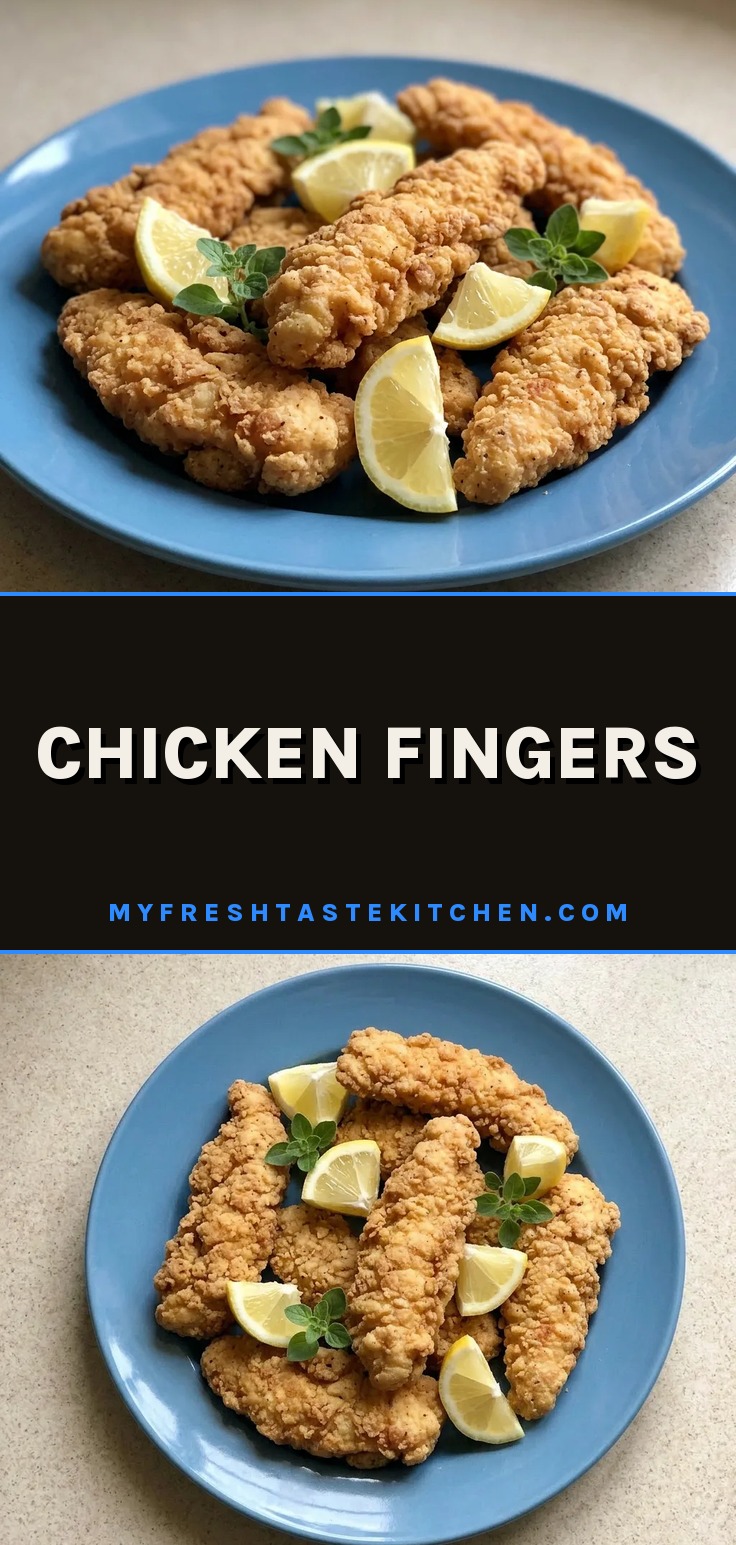
The double-coat method, flour, then a honey-mustard-and-hot-sauce egg wash, then another press into flour, sounds fussy, but it’s what keeps the crust from sliding off in the oil. Each strip comes out with a craggy, shatteringly crunchy shell that locks in the meat’s moisture, something a single dip never achieves. These chicken fingers deliver that restaurant-level texture and a tangy-spicy kick without requiring an overnight marinade or a deep-fryer thermometer you trust.
Double coating builds a shattering crust
Each strip gets a flour dusting, then a dip in the egg mixture, then another press into flour. That second coat is what locks in the moisture and creates a craggy, crunchy shell that doesn’t peel off during frying.
The egg mixture, honey mustard, hot sauce, ketchup, clings to the first flour layer and gives the second something to bind to. Paprika and cayenne in the flour add color and a subtle heat that you see in the golden-brown finish.
The egg wash does double duty as flavor
Honey mustard and ketchup bring sweetness and tang; hot sauce and cayenne supply a slow-building heat; lemon juice cuts through with acidity. Those same ingredients also act as the glue that holds the flour crust to the chicken. You taste the seasoning in every bite, not just on the surface.
For homemade chicken fingers, this wet mix ensures the coating stays put and the meat stays moist.
Uniform strips mean even doneness
Cut the breasts into strips of roughly the same thickness so they finish cooking at the same moment. A thin end will dry out while a thick middle stays raw if you don’t match sizes. Slicing slightly against the grain shortens the muscle fibers, making each strip easier to bite through.
Quick chicken recipes like this one depend on that consistency, no guesswork about which piece is ready.
Prep: 15 min · Cook: 10 min · Total: 25 min · Servings: 4 · Calories: 560 kcal
What to look for in the ingredients
Chicken breasts: Slice across the grain into strips of even thickness so they cook at the same rate.
Hot sauce: Use your favorite vinegary Louisiana style; it adds heat without overpowering the other flavors.
Honey mustard: Go for a smooth, not grainy, honey mustard so the egg wash stays uniform and clings evenly.
Cayenne pepper: Adjust to your heat preference; the amount in the card gives a mild tingle, not a burn.
Watch the crust turn from floury to golden brown
First flour coat
Toss each strip in the seasoned flour, shake off the excess. You want a thin, even dusting, if you see clumps of dry flour, you left too much on.
Egg wash dip
Submerge the floured strip in the egg mixture. Let the excess drip off for a second, dripping means the next flour coat will be too wet and slide off.
Second flour press
Drop the wet strip back into the flour and press firmly with your fingers. You should feel the flour clumping and adhering, bare spots mean the crust will be thin there.
Fry in batches
Lower strips into 375°F oil, no more than 2, 3 at a time. The oil should bubble vigorously; if it barely bubbles, the temp is too low and the crust will absorb oil.
Check doneness
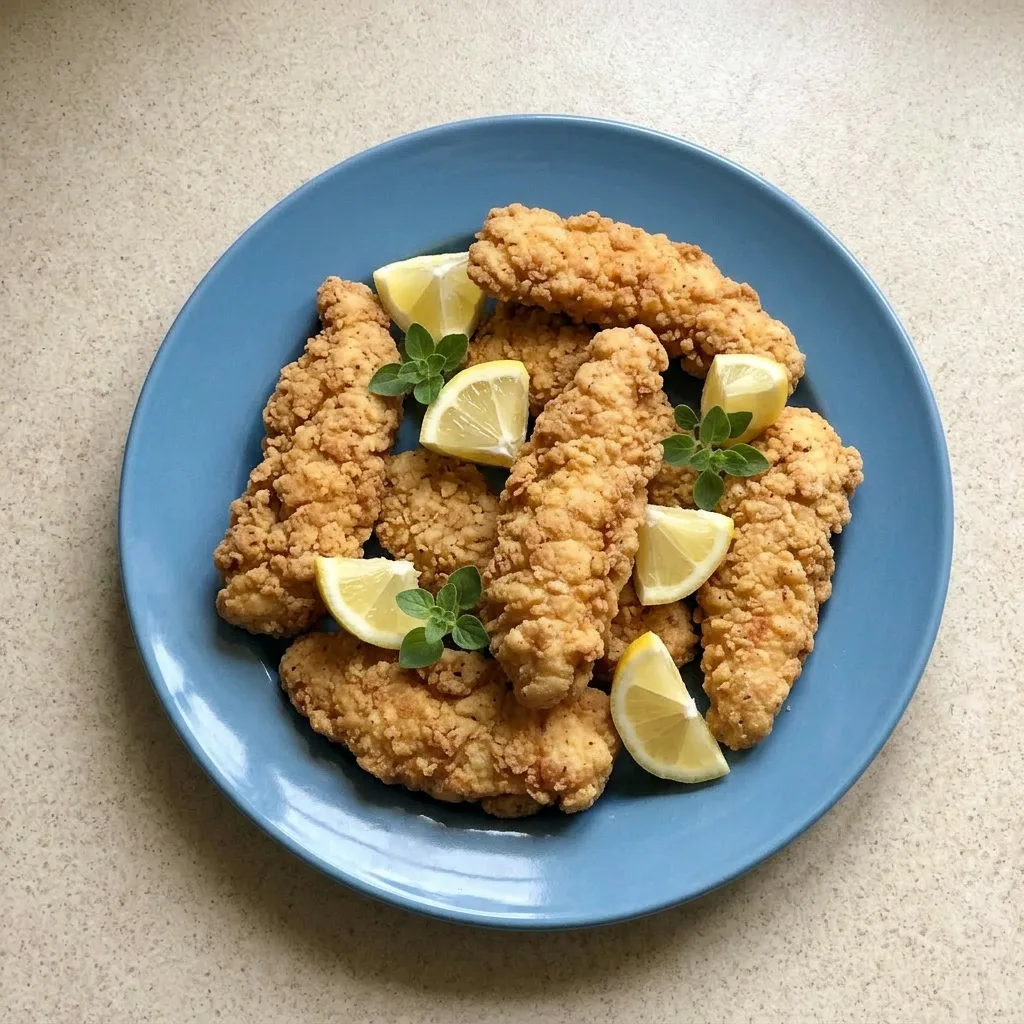
After 5 to 8 minutes (or 3, 5 in a deep fryer), the crust should be deep golden brown and the chicken should feel firm when pressed. Cut one open to confirm no pink.
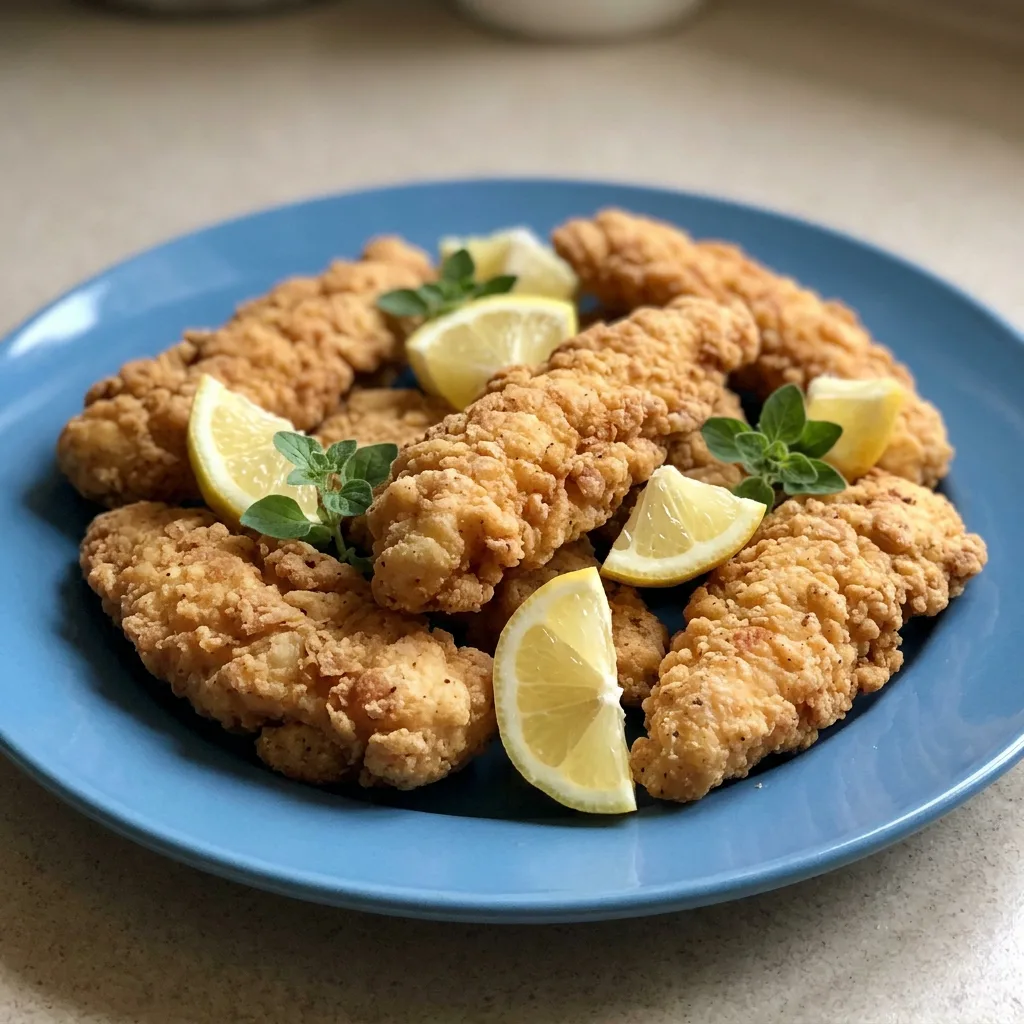
Chicken Fingers
Ingredients
Method
Mix dry ingredients:
In a shallow bowl, mix together 2 cups all-purpose flour (250g), 1 teaspoon salt, 1 teaspoon black pepper, 1 teaspoon garlic powder, 1 teaspoon onion powder, 1 teaspoon dried oregano, 1/2 teaspoon sweet paprika, and 1/4 teaspoon cayenne pepper (or to taste).Whisk wet mixture:
In a separate bowl, whisk 2 large eggs (or 1 extra large egg) with 2 tablespoons honey mustard, 2 minced garlic cloves, 1/4 cup hot sauce (optional, or to taste), 3 tablespoons ketchup, 2 tablespoons lemon juice, 1/2 teaspoon salt, 1/2 teaspoon black pepper, 1/2 teaspoon dried oregano, 1/2 teaspoon paprika, 1 teaspoon onion powder, and 1 teaspoon garlic powder.Slice chicken strips:
Slice the chicken into strips of your desired size and thickness.Coat in flour:
Coat each chicken strip in the flour mixture, then shake off any excess.Dip in egg mixture:
Immerse the floured strips in the egg mixture, ensuring an even coating.Heat oil to 375°F:
Heat a deep fryer to 375°F (190°C) or fill a small pot halfway with oil and heat over medium-high heat.Double coat in flour:
Remove chicken from the egg mixture, allow excess to drip off, then coat again in the flour mixture, pressing firmly to create a thick crust.Fry chicken in batches:
Fry the chicken in batches: in the deep fryer for 3-5 minutes, or in the pot with 2-3 pieces at a time for 5-8 minutes, until golden and fully cooked. Adjust timing based on strip size and thickness.Drain and serve:
Let the chicken drain on paper towels for 1 minute. Serve right away.
Three swaps that change the crust, the heat, or the diet
All-purpose flour: Gluten-free 1-to-1 flour blend or cornstarch. A gluten-free blend works nearly the same; expect a slightly less crisp coating. Cornstarch alone makes a lighter, crunchier crust but won’t brown as deeply, skip the second flour coat or mix cornstarch with rice flour for better color.
Hot sauce: Sriracha or chili garlic paste. Sriracha is thicker and sweeter, so the egg wash stays tacky but loses some vinegary tang. Chili garlic paste adds chunky heat and a bit more salt; thin it with a teaspoon of water or lemon juice to match the original consistency.
Honey mustard: Dijon mustard plus 1 tablespoon honey. Dijon has the same sharpness but less sweetness; adding honey brings the balance back. The egg wash will cling identically, no texture change, just a slightly brighter mustard note.
Tips
- Press the flour firmly onto the wet chicken with your fingertips, enough to feel the coating compact. This creates uneven surfaces that fry up extra crunchy and prevents the crust from sliding off in the oil.
Storage and Serving
Chicken fingers are best eaten within 30 minutes of frying, while the crust is still shatteringly crisp. If you have leftovers, arrange them in a single layer on a wire rack set over a baking sheet and refrigerate uncovered for up to 2 hours.
Once cool, transfer to a container lined with paper towels, seal, and refrigerate for up to 3 days. The crust will soften over time as moisture migrates from the chicken.
To restore crunch, reheat in a 400°F oven on a wire rack for 5 to 7 minutes; do not use a microwave, which turns the coating rubbery. For longer storage, freeze the cooked, cooled strips in a single layer on a tray, then transfer to a freezer bag for up to 2 months. Reheat from frozen at 400°F for 10 to 12 minutes.
Avoid freezing uncooked coated strips; the wet egg mixture soaks into the flour and yields a gummy texture after thawing.
Frequently Asked Questions
Can I make chicken fingers ahead of time and reheat them?
Yes, but the crust will soften as the chicken sits. Reheat in a 400°F oven on a wire rack for 5 to 7 minutes to restore some crunch. Don’t microwave, it turns the coating rubbery.
For longer storage, freeze cooked strips for up to 2 months and reheat from frozen at 400°F for 10 to 12 minutes.
How do I prevent the coating from falling off during frying?
The double coating is your safeguard. After the first flour dusting, dip in the egg mixture and let excess drip off, if it’s too wet, the second flour coat slides off. Then press firmly so the flour clumps and adheres.
Bare spots mean a thin crust that may detach.
What’s the difference between these chicken fingers and classic buttermilk ones?
Classic buttermilk fingers rely on an acidic marinade to tenderize the meat. Here, the egg wash, mixed with honey mustard, ketchup, and hot sauce, does double duty as both binder and flavor source. You get a tangy, spiced crust without the overnight soak.
How can I tell when the chicken fingers are fully cooked without a thermometer?
Cut one open, there should be no pink and the juices should run clear. The crust will be deep golden brown and the strip will feel firm when pressed. For 1-inch thick strips, that usually happens after 5 to 8 minutes in a pot or 3 to 5 minutes in a deep fryer at 375°F.
