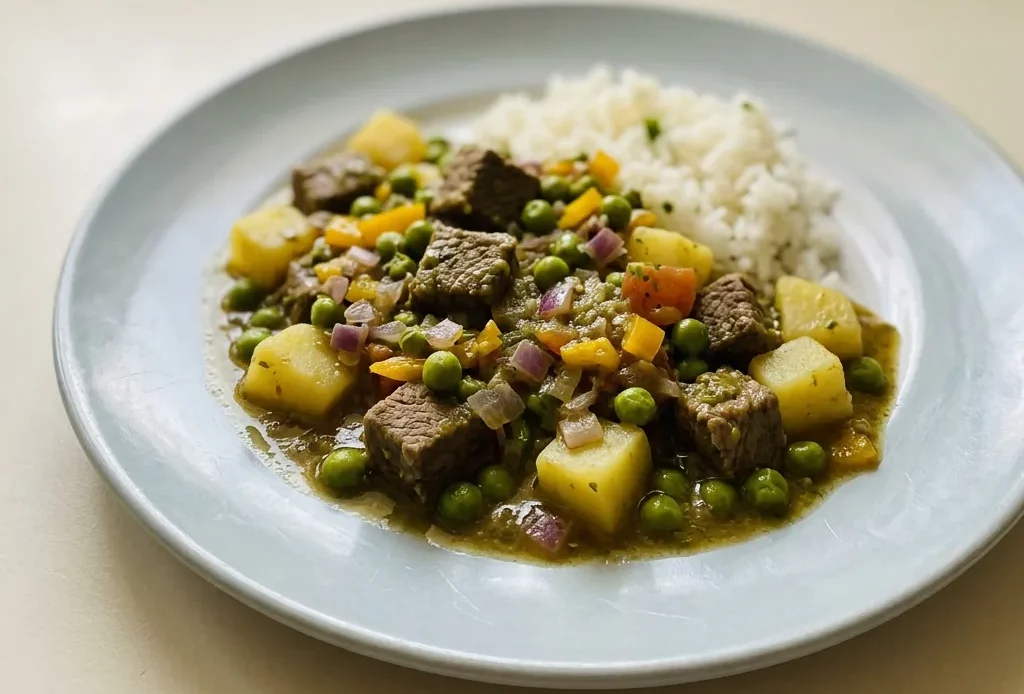
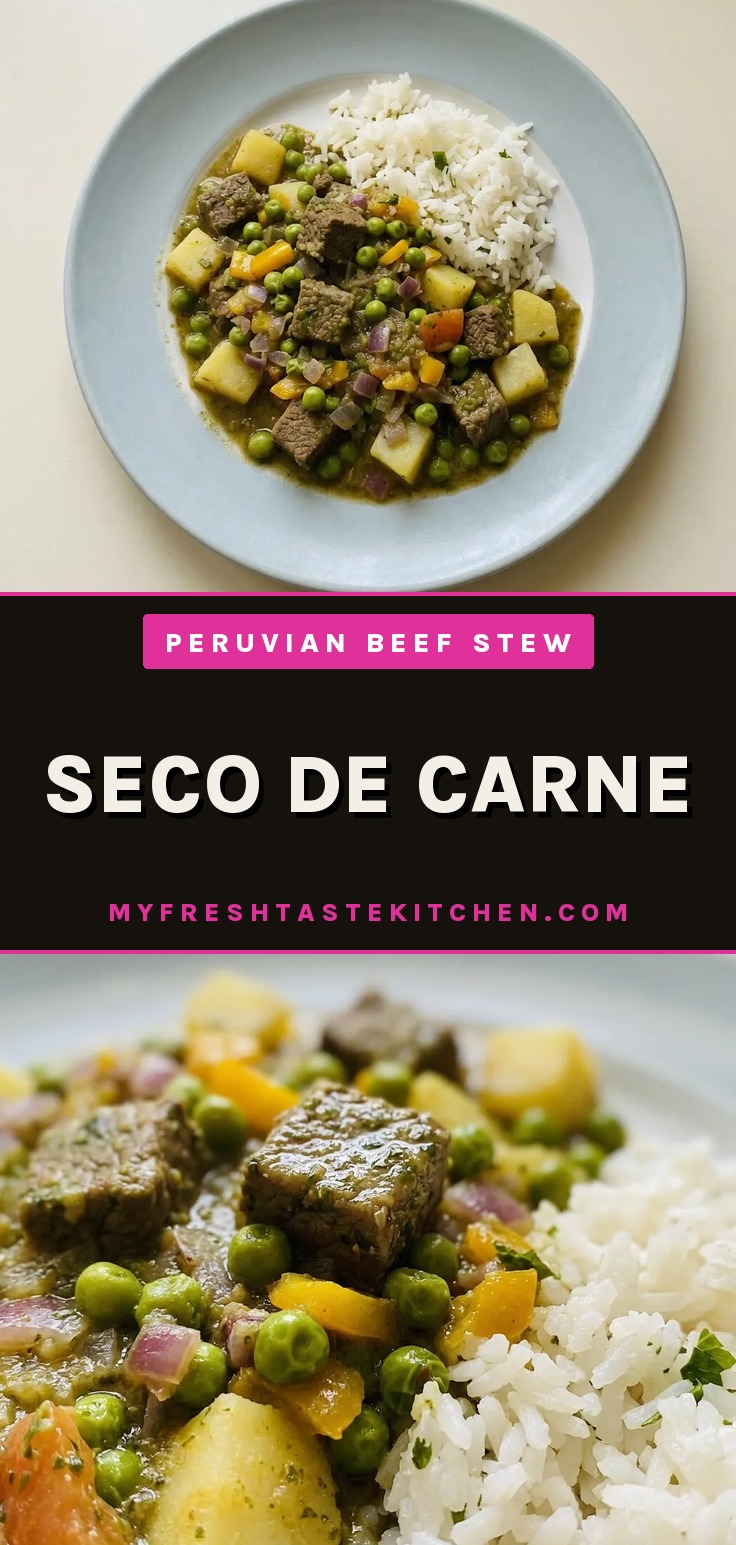
A Peruvian beef stew that turns a whole bunch of cilantro into a vivid green sauce, that’s the hook, but the real trick is the balance. Cilantro can turn bitter if simmered too long, so the timing of when it enters the pot matters. Blended with water and added after the aromatics have softened, the herb stays bright and grassy, not muddied.
This is the kind of dish where a small misstep in heat or order can flatten the color or dull the flavor. Seco de carne rewards patience and attention to the sequence, not complexity.
Why does marinating the beef with a garlic-cumin paste matter?
When you crush garlic, peppercorns, salt, and cumin into a paste, you get a coating that clings to the meat instead of dripping off. Refrigerating the coated cubes for 30 minutes lets those flavors sink past the surface. The salt draws out moisture, then redraws it back in carrying the aromatics.
Cumin and pepper do more than sit on top, they reach the interior. At the same time, enzymes in the garlic begin breaking down proteins, softening the meat so it yields faster during simmering.
You taste the cumin and garlic in every bite, not just the crust. This Peruvian beef stew depends on that deep, even seasoning.
What does browning the meat in a single layer do for the stew?
Crowding the pan drops the temperature and the meat steams instead of browning. A single layer over medium-high heat lets each cube make direct contact with hot oil.
The surface dries quickly, sugars and proteins react, and a golden crust forms. That crust carries a concentrated, savory flavor, the Maillard reaction, that no amount of simmering can create from scratch. Stirring too soon tears that crust off, so leave the pieces alone until they release easily.
A deep iron pot holds heat well for this job. The browned bits left in the pot also enrich the broth as the stew cooks.
That brown crust is what gives this beef stew its deep, meaty backbone.
Why is the cilantro-water blend the defining element of Seco?
Cilantro (or culantro, its more pungent relative) is not just an herb here, it becomes the cooking liquid. Blending a whole cup of leaves with water releases their grassy, almost citrusy oils into a bright green sauce. Poured into the pot, that sauce tints the broth and coats every piece of meat and potato.
The flavor is clean and herbal, distinct from tomato-based stews. Without it, the dish would taste like a generic braise. The color alone tells you this is something different.
That green liquid is what makes a Peruvian beef stew recognizable across the country.
How do potatoes and peas shape the stew’s texture?
Potatoes go in early, alongside the meat, so they simmer in the cilantro broth for 30 minutes or more. As they cook, they release starch that thickens the liquid into a light gravy without any flour or roux.
The cubes hold their shape but turn tender enough to break with a spoon. Peas, on the other hand, go in near the end, no more than five minutes on the heat. That short cook keeps them bright green with a pop of sweetness and a slight resistance.
They contrast the soft potatoes and the beef. Together they give this traditional beef stew a range of textures: creamy, firm, and snappy.
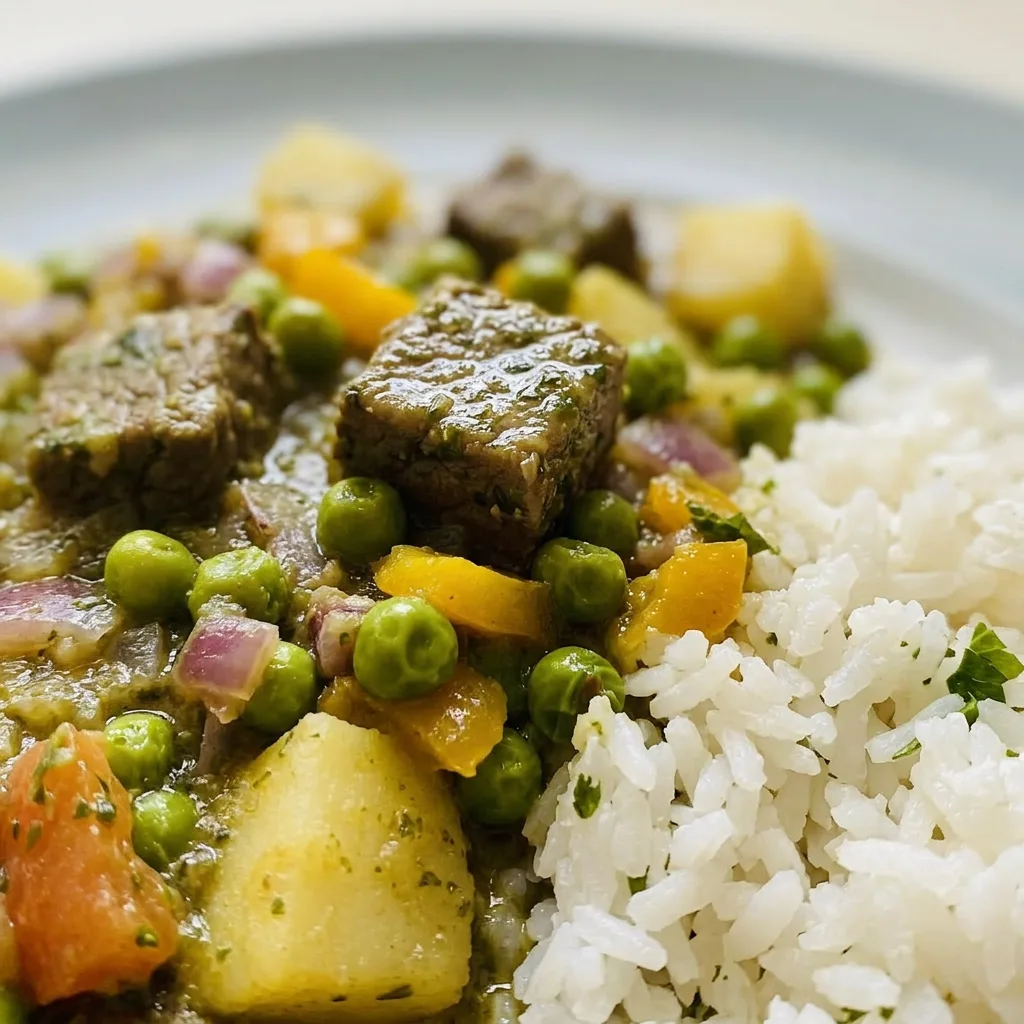
Prep: 30 min · Cook: 2 hr · Total: 2 hr 30 min · Servings: 4 · Calories: 860 kcal
What to look for when buying and prepping the ingredients for Seco de Carne
beef (top sirloin): Choose a lean, firm yet tender cut like top sirloin. Dice into 1.5-2 cm cubes at home for uniformity.
aji amarillo paste: Buy aji amarillo paste; it is fruity and moderately hot. Avoid substitutes that skew the flavor.
cilantro: Use a whole cup of fresh cilantro leaves. The stems are fine but avoid wilted or yellow leaves.
purple onion: Purple onion is milder than white. Chop finely so it melts into the stew without crunch.
green peas: Fresh or frozen both work. Add only in the last 5 minutes to keep them bright and snappy.
Build the stew in stages, watching for color and texture cues
Marinate the beef
Crush garlic, peppercorns, salt, and cumin into a paste. Coat the cubes thoroughly, cover, and refrigerate for 30 minutes. The paste should cling, not drip.
Brown in a single layer
Heat oil over medium-high until shimmering. Add meat in one layer, listen for a steady sizzle. Turn pieces only when they release easily; a golden crust means deep flavor.
Add aromatics and potatoes
Stir in tomato, yellow pepper, onion, garlic, and aji amarillo until fragrant, about 2 minutes. Add potatoes and cook 5 to 10 minutes, stirring occasionally. They should begin to soften at the edges.
Pour in cilantro water
Blend cilantro with 4 cups water until bright green and smooth. Pour over the pot; the liquid should just cover the meat and potatoes. The stew will look vividly green.
Simmer until tender
Cover and simmer 30 to 45 minutes. Check tenderness: meat should yield easily to a fork, potatoes should be creamy but not falling apart. If too thick, add 1 cup water.
Finish with peas
Add peas in the last 5 minutes. They should stay bright green and pop with a slight snap when bitten. Remove from heat and let rest 10 minutes before serving.
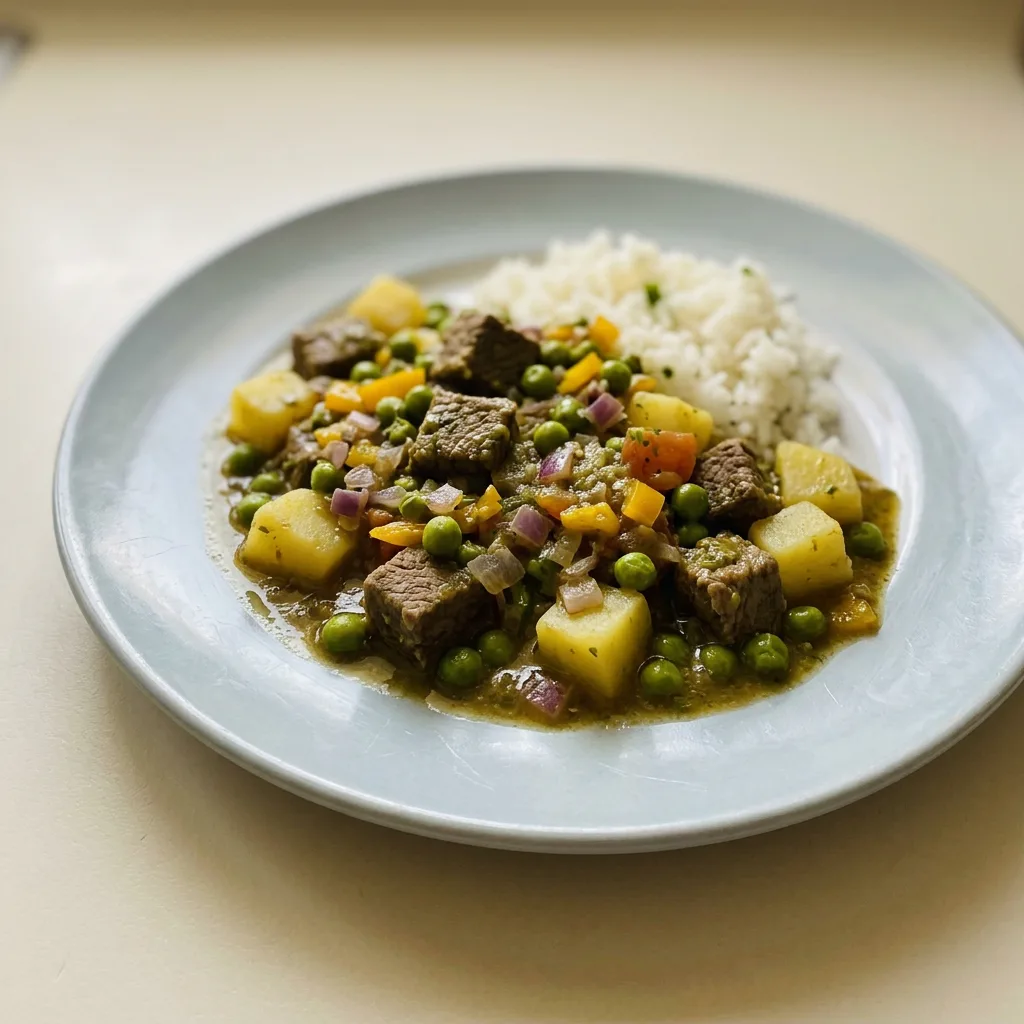
Seco de Carne (Peruvian Beef Stew)
Ingredients
Method
Dice and Prepare Meat:
Choose a lean, firm yet tender cut like top sirloin. Dice into 1.5-2 cm cubes at home for uniformity. Rinse and pat dry with a towel.Make Spice Paste:
In a mortar, crush garlic with peppercorns, salt, and cumin into a paste. Coat the meat cubes with this mixture, then cover and refrigerate for 30 minutes to marinate.Brown Meat and Vegetables:
Over medium-high heat, warm 2 tbsp corn oil in a deep iron pot or saucepan. Once hot, add meat cubes in one layer and brown on all sides until golden and juices start to flow. Stir in tomato squares and chopped yellow pepper; cook for a few minutes. Add potato cubes (same size as meat).Sauté Aromatics:
Incorporate purple onion, garlic, and aji amarillo paste; sauté until softened.Blend Cilantro Water:
Cook the potatoes for 5-10 minutes, stirring now and then. Meanwhile, blend cilantro with 4 cups water for 3 minutes. (Traditional Seco de Carne uses culantro; cilantro is a good substitute. Optionally replace 1-2 cups water with beer for a regional twist.)Simmer Stew:
Cover and simmer for 30-45 minutes until meat is tender. If the stew becomes too dry, add 1 more cup water. A few minutes before removing from heat, mix in peas; cook for no more than 5 minutes. Let rest 10 minutes before serving.Serve with Sides:
Serve with sides like white rice seasoned with sweet chili, boiled yucca, white bean stew, or fried plantain. Garnish with avocado slices and purple onion if desired.
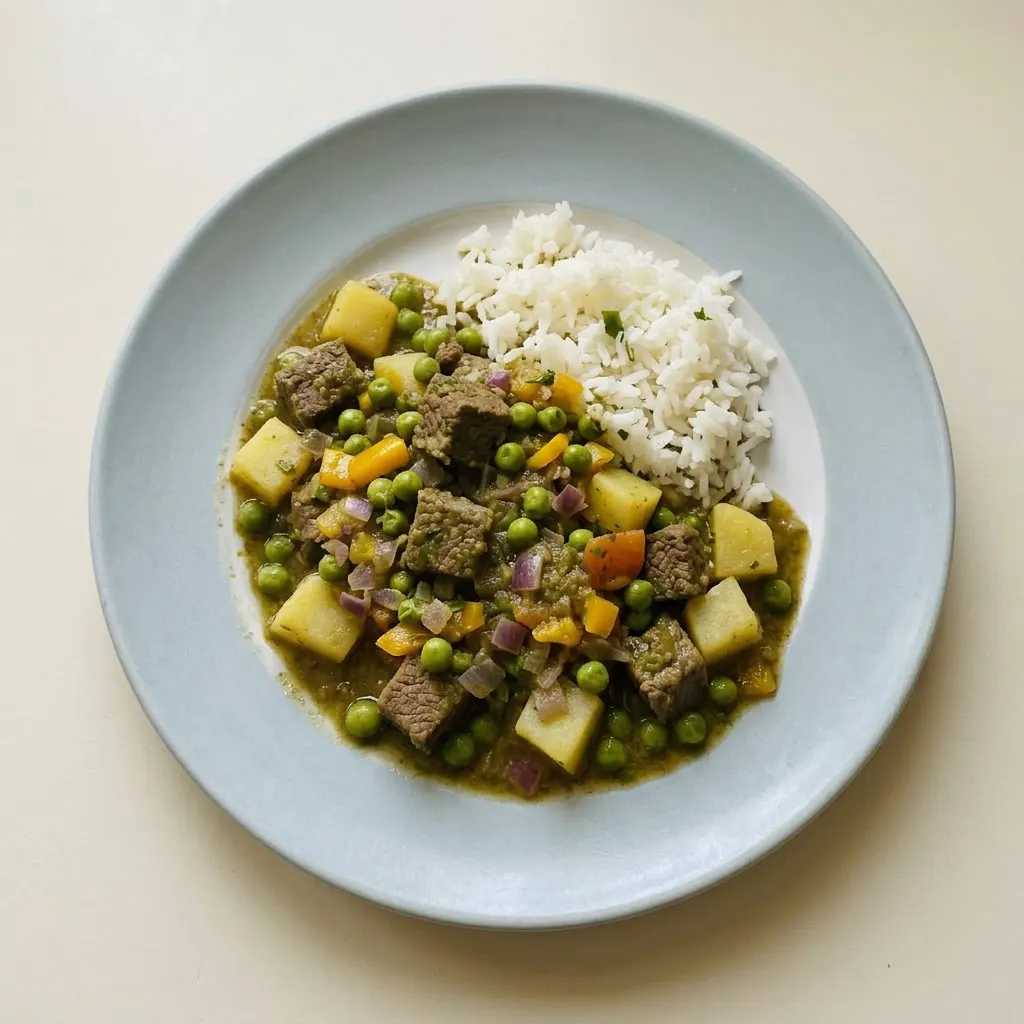
Three ingredients you can swap in Seco de Carne (and one you shouldn’t)
5, 2 cm cubes. Avoid tenderloin or other lean cuts. Chuck has more connective tissue, which breaks down during the 30 to 45 minute simmer into gelatin, making the broth richer and the meat more tender.
Bottom round is leaner but still benefits from the long cook; it stays firmer. Top sirloin is already the recipe’s choice for leanness with tenderness.
Any lean cut like tenderloin will dry out and toughen.
aji amarillo paste: 1 tbsp yellow chili powder mixed with 1/2 tsp turmeric, dissolved in 2 tbsp warm water. Or 1 tbsp yellow Scotch bonnet paste (much hotter).
The paste provides fruity heat with a bright yellow color. The chili powder + turmeric swap mimics the color and some warmth, but loses the fruity note; the stew will taste more like a generic chili-spiced braise. Scotch bonnet is hotter and sweeter, so start with less and adjust.
The original paste is worth seeking out.
cilantro: Culantro (also called recao or Mexican coriander), same volume: 1 cup leaves. Or substitute 1/2 cup parsley + 1/2 cup mint.
Culantro is the traditional herb in Seco; it has a stronger, more pungent flavor than cilantro. The parsley-mint blend yields a greener, less assertive herbaceousness, still pleasant but the stew will lack the signature cilantro punch. Cilantro works fine as the recipe notes; this swap is for those who find cilantro soapy.
purple onion: White or yellow onion, same volume (1 cup finely chopped). Purple onion is milder and slightly sweeter; it melts into the stew. White or yellow onion is sharper and more pungent, but after 30 minutes of simmering the difference is subtle.
The stew will still taste good. Do not use red onion, which can turn an unappetizing grayish color.
Tips
- Pat the marinated meat dry with paper towels before searing to ensure a deep golden crust; excess moisture from the marinade will steam the cubes instead of browning them.
Storage and Serving
Seco de Carne is at its best within the first two days. The beef stays tender, the potatoes hold their shape, and the cilantro broth retains its bright green color. After that, the potatoes soften further and the color fades.
Store leftovers in an airtight container in the fridge for up to 4 days. The flavors deepen overnight, but the texture shifts after day two.
Reheat gently on the stovetop over low heat, stirring occasionally; add a splash of water if the stew has thickened. Freezing is not recommended, the potatoes turn grainy and the peas lose their snap.
If you must freeze, do so before adding the peas, and expect the potatoes to be softer after thawing. Serve reheated Seco with fresh white rice and fried plantain; the rice and plantain should be made just before serving, not stored with the stew. Garnish with avocado and purple onion right before eating, not during storage.
Frequently Asked Questions
Can I make Seco de Carne ahead of time?
Yes, it keeps well for up to two days in the fridge. The beef stays tender and the broth stays bright green through day two.
After that, the potatoes soften and the color fades. Reheat gently on the stovetop with a splash of water if needed.
Why is my Seco de Carne too watery?
Likely the potatoes didn’t release enough starch. They need to simmer for at least 30 minutes to thicken the broth. If you added extra water early, the stew stays thin.
Next time, don’t add more water unless it’s drying out, and let it simmer uncovered for the last 10 minutes to reduce.
How do I know when the beef is tender enough?
Test a cube with a fork: it should pierce easily and yield without resistance. The meat should pull apart with gentle pressure, not shred into strings. If it still feels firm, simmer another 10 minutes and check again.
What is the difference between Seco de Carne and other Peruvian stews?
Seco de Carne is defined by its vivid green broth made from blended cilantro or culantro. Other Peruvian stews like Ají de Gallina use a creamy yellow sauce, or Carapulcra uses dried potatoes. The green color and herbal flavor set Seco apart.
Can I use a different cut of beef for Seco de Carne?
Yes, chuck or bottom round work well. Chuck has more connective tissue that breaks down into gelatin, making the broth richer and the meat more tender. Avoid lean cuts like tenderloin; they dry out during the 30 to 45 minute simmer.
