
Cold glass sweating on the counter, rosemary and orange oils rising before the first sip: that’s what a cranberry aperol spritz gives you, and it comes together in the time it takes to fill a glass with ice. What separates a good one from a forgettable one isn’t the pour count.
It’s the judgment calls you make mid-build, the ones no written ratio can cover for you. Bitter and sweet sit close together here, and the window between balanced and cloying is narrower than most spritzes let on. Sweetened juice will mute the Aperol until the whole thing drinks like fruit punch; let the glass sit and the bubbles fade into something flat.
The recipe is simple. Reading the drink while you build it is the actual skill, and it’s a short one to learn.
The hard step in this recipe is step 5, ‘Serve immediately.’ Ice begins melting the moment it meets the liquid, and each melting ice cube adds water that dilutes the 2:2:4 ratio of cranberry juice, Aperol, and Prosecco. At the same time, carbon dioxide dissolved in the Prosecco and club soda escapes into the air, and the rate of escape accelerates with time, warmer temperatures, and the large surface area of a wine glass, so a drink left standing loses both its chill and its fizz.
Why do the pours go 2, 2, and 4?
Aperol lands at 2 ounces because its bitterness and sugar need cranberry juice in equal measure to stay in check. The juice’s tartness cuts through Aperol’s candy-orange edge, and the two settle into something neither could be alone. Prosecco takes the largest pour at 4 ounces because its bubbles and acidity lift that dense, sweet-bitter base.
Without enough wine, the drink sits heavy and syrupy on the tongue. Too little cranberry juice and the Aperol turns medicinal and flat, more like cough syrup than a cocktail.
Too much juice and you’ve made a soft drink with a wine chaser. The club soda splash is a final adjustment, not a main player, so the drink stays wine-forward.
Add it last, taste, and stop when the fizz feels lively but the Aperol still leads. The ratio is the spine of the drink; pour accordingly.
Bitter-sweet, not sweet-sour
Cranberry and Aperol are both bitter-sweet, so the tension here is between fruit sugar and herbal bitterness, not between sweet and sour. Aperol’s gentian-and-rhubarb bitterness makes the cranberry read as tart instead of candy-like; without it, the juice would taste like a fruit punch. Cranberry juice brings its own astringency, a dry edge on the finish that a sweeter juice would erase.
The orange slice reinforces that bitterness: its oils and a hint of pith echo the Aperol note rather than just adding color. If your cranberry juice is a sweetened cocktail blend rather than 100% juice, the drink can taste flat and cloying, because the bitterness has nothing to push against.
Use unsweetened juice and the balance holds. The first sip should make you aware of both the fruit and the herb, not one over the other.
Frozen cranberries and rosemary are not just for looks
Frozen cranberries act as slow-melting ice, keeping the drink cold without diluting it as fast as cubed ice would. They also signal the bitter-herbal profile before you taste it.
Rosemary’s piney oils sit on the nose and bridge the herbal bitterness of Aperol with the fruit. Orange slices add a citrus-oil lift when the glass is brought to the face, not just color. A red wine glass or tall glass is the right vessel: wide enough for aromatics to gather, tall enough to hold the garnishes without crowding.
When you bring the glass up, you should catch rosemary and orange first, then the bitter-orange note of Aperol underneath. The garnishes are structural, not decorative; they set up the first sip.
That’s why they go in before serving.
A fruitier cousin of the classic spritz
The classic Aperol Spritz is Prosecco, Aperol, and soda, with the soda playing a bigger role. This version swaps that soda-forward profile for a juice-forward one, adding cranberry juice for color and a sweeter, less bitter taste. Because it’s sweeter and less bitter than the classic, it suits palates that find a standard spritz too austere.
It’s more of a brunch or holiday drink than a pre-dinner aperitivo in the strict Italian sense, since the juice makes it feel more like a fruit cocktail than a bracing opener. The 5-minute total time means it’s built to order, not batched ahead like a punch.
That also means you can adjust the club soda splash to your liking, but the core remains cranberry, Aperol, and Prosecco. Serve it when you want a spritz that’s a little softer and more fruit-driven.
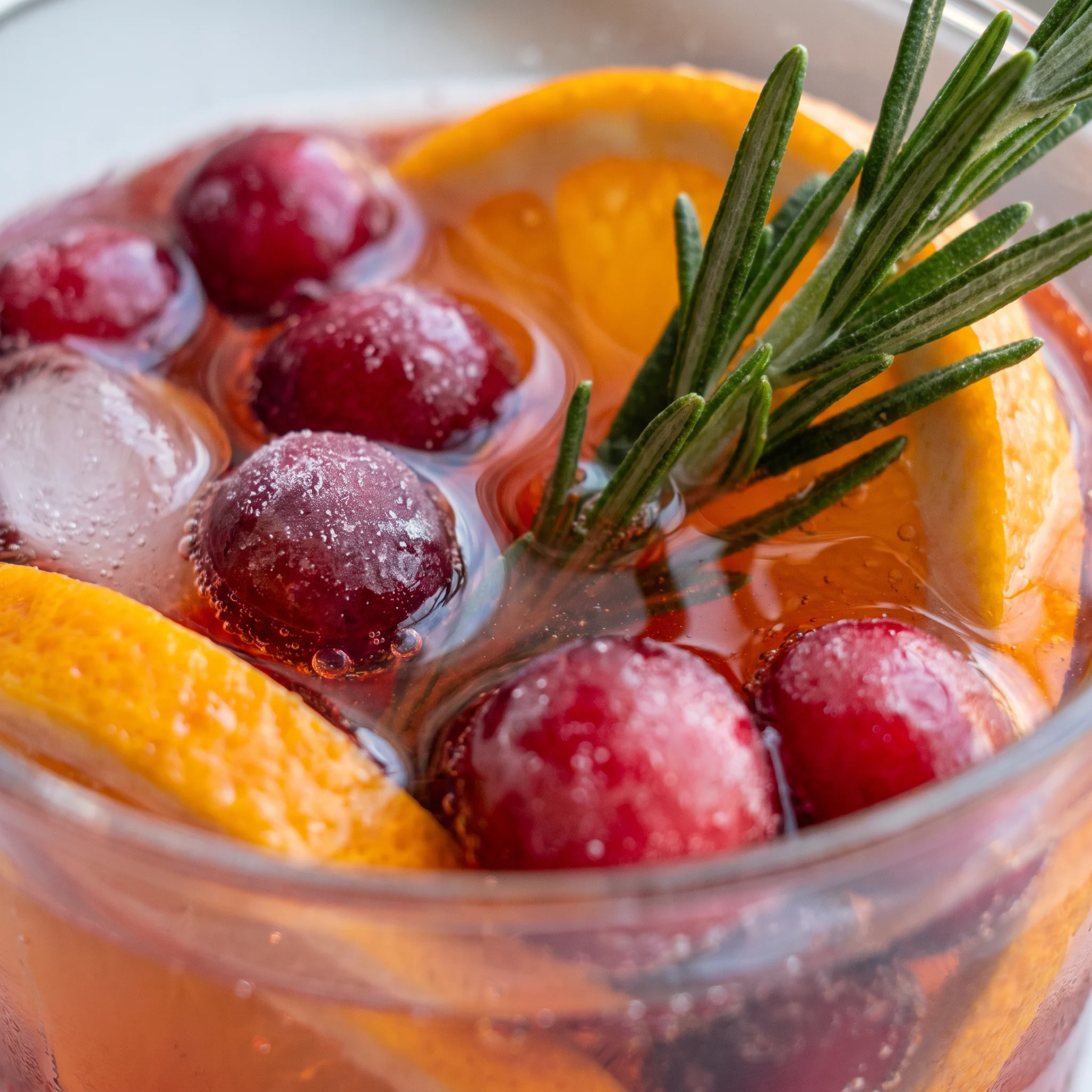
Two ingredients decide whether this drink works
Cranberry juice: Use 100% unsweetened juice, not a sweetened cocktail blend, or the drink turns flat and cloying.
Aperol: Fresh bottles carry bright bitter-orange notes; old or opened-too-long Aperol tastes flat and syrupy.
Prosecco: A dry brut Prosecco keeps the drink wine-forward; sweet or off-dry styles push the whole glass candied.
Club soda: Chilled, unflavored club soda, not tonic or flavored seltzer, so the splash adjusts fizz without adding sugar.
Frozen cranberries: Keep them frozen solid; thawed berries bleed juice and turn soft in the glass.
Fresh rosemary sprigs: Use a short sprig with firm needles, not dried or woody stems that shed and taste dusty.
The split-second calls that decide a spritz
Reading the ice before you pour
Fill the glass to the brim with ice. If the cubes are small or hollow, they’ll melt fast and water down the drink before you finish pouring.
Use large, solid cubes if you have them, and pack them tight so they don’t shift and splash. A full glass means less liquid volume, so the drink stays cold and concentrated. Leave headroom and the Prosecco goes flat in minutes.
The ice is the first thing you judge.
Tasting the Aperol edge as you build
After the cranberry juice and Aperol hit the ice, take a small sip before the Prosecco goes in. You’re checking that the bitterness is present but not harsh. If it tastes like cough syrup, the juice is too sweet or the Aperol is old and flat.
If it’s thin and bitter with no fruit, add a touch more juice. This is your only chance to adjust the base before the wine dilutes your ability to taste it clearly.
The club soda splash: when fizz feels lively but the Aperol still leads
Add club soda a splash at a time, stir once, and taste. The drink should feel effervescent on the tongue but the bitter-orange note of Aperol must stay in front.
Too much soda and you’ve made a wine cooler; the Prosecco’s acidity gets lost. Stop when the fizz tickles but doesn’t dominate. There’s no fixed measure here, just your palate and the glass in front of you.
Garnishes as the first aromatic cue
Before you sip, bring the glass to your nose. Rosemary and orange should hit first, then the bitter-orange of Aperol underneath. If you smell only wine, the rosemary is too far from the surface or the orange slice is buried.
Tuck the rosemary sprig so its needles sit just above the rim, and float an orange slice on top. Frozen cranberries should be visible, not sunk.
These garnishes set up the first sip; if they’re lost, the drink tastes flatter than it is.
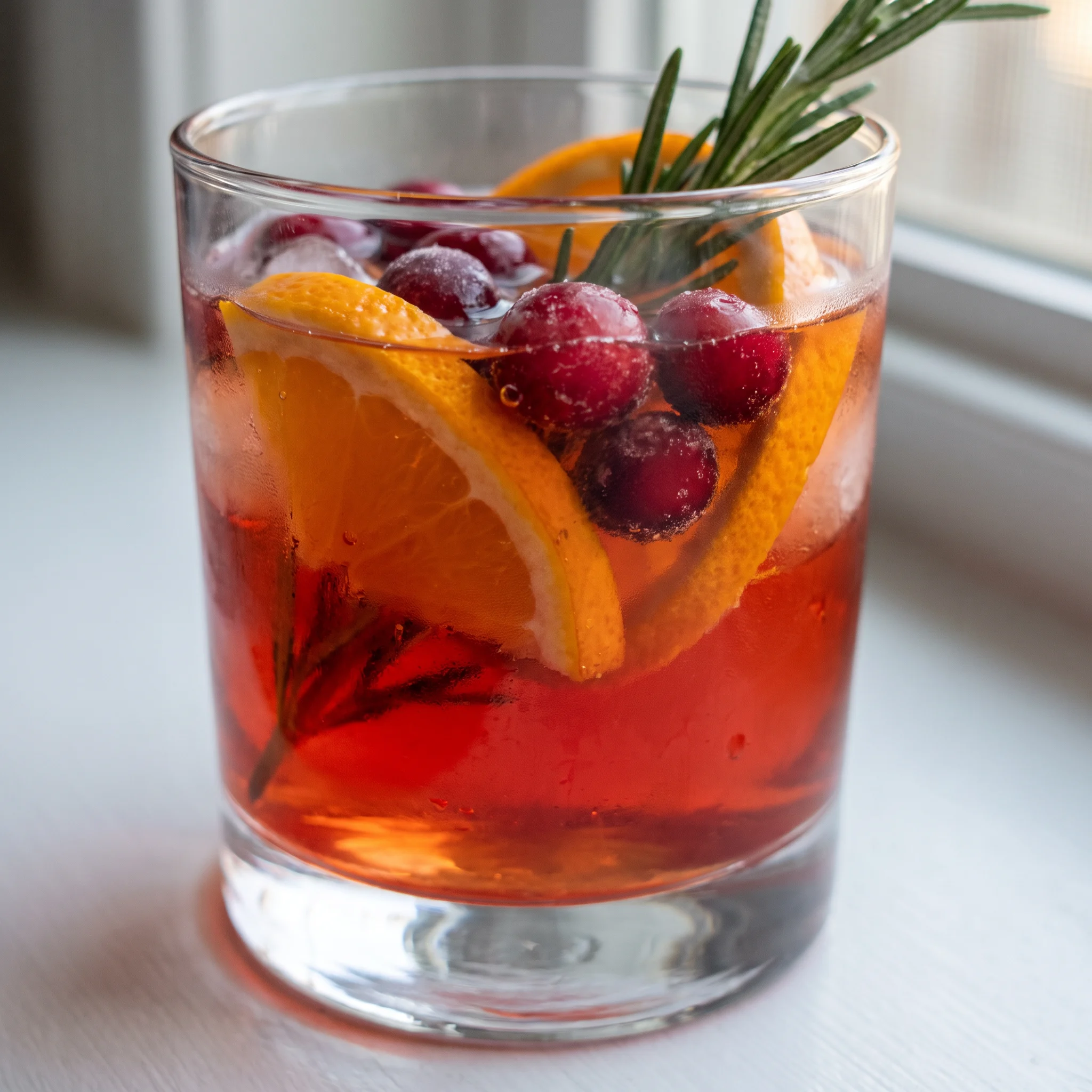
Cranberry Aperol Spritz with Prosecco
Ingredients
Method
- Fill a red wine glass or tall glass with ice.
- Pour the cranberry juice, Aperol, and Prosecco over the ice.
- Top with a splash of club soda.
- Garnish with orange slices, frozen cranberries, and a rosemary sprig.
- Serve immediately.
Drink it within ten minutes, and prep components ahead
This drink has no storage life. It’s built over ice, and Prosecco goes flat fast. Once poured, the carbonation fades within ten minutes, the ice dilutes the base, and the Aperol’s bitter-orange edge softens into something flat and sweet.
Mix the cranberry juice and Aperol in a pitcher up to a day ahead. Keep it covered in the fridge. The Prosecco stays in its bottle until you pour.
Frozen cranberries can sit in the freezer for months. Cut orange slices and rosemary sprigs the morning of, or an hour before. To serve, fill the glass with ice, pour 4 ounces of the juice-Aperol mix, top with Prosecco and club soda, then garnish.
The garnish goes on the finished drink, not before, so the rosemary oils stay on the surface. If you have leftover mixed juice and Aperol, it holds in the fridge for two days. The Prosecco won’t.
Tips
- Read the label for the words “100% juice” or “unsweetened” and check the added-sugar line on the nutrition panel. Cranberry cocktail blends list sugar or corn syrup first among ingredients, and those extra grams push the drink toward candy-flat because there is no astringent edge left to cut the Aperol. A bottle of pure juice has one ingredient: cranberry juice (or cranberry juice from concentrate and water).
- If the only bottle you can find is a sweetened blend, cut it to 1.5 fl oz and add 0.5 fl oz fresh lemon juice before the Aperol goes in. The lemon restores the tartness the sugar muted, and the total liquid stays at the 2 fl oz the recipe calls for, so the Prosecco pour and the final balance hold.
Aperol, Prosecco, and the juice carry the drink; leave the soda and garnish alone
Aperol: Campari. Campari is stronger and more bitter, with a deeper red. Use half the amount, 1 fl oz, then taste after the cranberry juice goes in.
Too much and the drink turns harsh and medicinal, overwhelming the fruit. The orange note you expect from Aperol is dimmer here, so the rosemary garnish matters more.
Prosecco: Cava or Crémant. Both are dry and sparkling, so they slot in at the same 4 fl oz. Cava brings a slightly earthier edge; Crémant is rounder.
Either keeps the wine-forward character. Avoid sweet or off-dry sparklers, which push the whole glass candied and flatten the bitter edge.
Cranberry juice: Pomegranate juice. Pomegranate is sweeter and less astringent than cranberry. Start with the same 2 fl oz, then taste after the Aperol goes in.
If the drink reads too soft, add a squeeze of lemon to bring back the tartness. The color stays deep red, but the finish loses cranberry’s dry edge.
Club soda: None worth making. The splash is there to adjust fizz, not flavor. Tonic adds sugar and quinine bitterness that fights the Aperol.
Flavored seltzer muddies the orange and cranberry. If you’re out, a splash of plain sparkling water works; otherwise skip it and let the Prosecco carry the bubbles.

Frequently Asked Questions
Can I make this Cranberry Aperol Spritz ahead of time for a party?
Batch only the cranberry juice and Aperol, which hold together in a covered pitcher in the fridge for up to a day. Keep the Prosecco corked until the moment you pour, and leave the garnishes whole and separate.
At serving, fill each glass with ice, pour 4 ounces of the juice-Aperol mix, top with Prosecco and the club soda splash, then garnish. Leftover mixed juice and Aperol keeps for two days; the Prosecco won’t.
Why did my Cranberry Aperol Spritz taste watered down?
Ice is the usual culprit, especially small or hollow cubes that give up their water before you’ve finished the glass. Pack the glass to the brim with large solid cubes so there’s less room for liquid and the melt has less surface to work from.
A second check is the juice itself: a sweetened cocktail blend reads thin and flat next to 100% unsweetened juice, and the drink tastes weak even when nothing has melted. If the mix already sat in the glass a while, the carbonation is gone too, and flat Prosecco tastes like water with a bitter edge.
How is this different from a classic Aperol Spritz?
Cranberry juice takes the place of some of the soda, which shifts the whole drink fruitier and sweeter, with less of the austere bitter bite a standard spritz carries. The 4 ounces of Prosecco still lead, but the juice gives the glass a deeper red and a rounder, softer finish. It drinks more like a brunch or holiday pour than a pre-dinner aperitivo, since the fruit makes it feel closer to a cocktail than a bracing opener.
What kind of glass should I use for a Cranberry Aperol Spritz?
A red wine glass or a tall glass, and it should be wide enough at the rim to gather the rosemary and orange aromas and tall enough that the garnishes don’t crowd the surface. That width matters more than the shape: bring the glass up and you want rosemary and orange first, then the bitter-orange of Aperol underneath.
A narrow tumbler buries the garnishes and you smell only wine. Whatever you choose, fill it to the brim with ice so the drink stays cold and concentrated.
