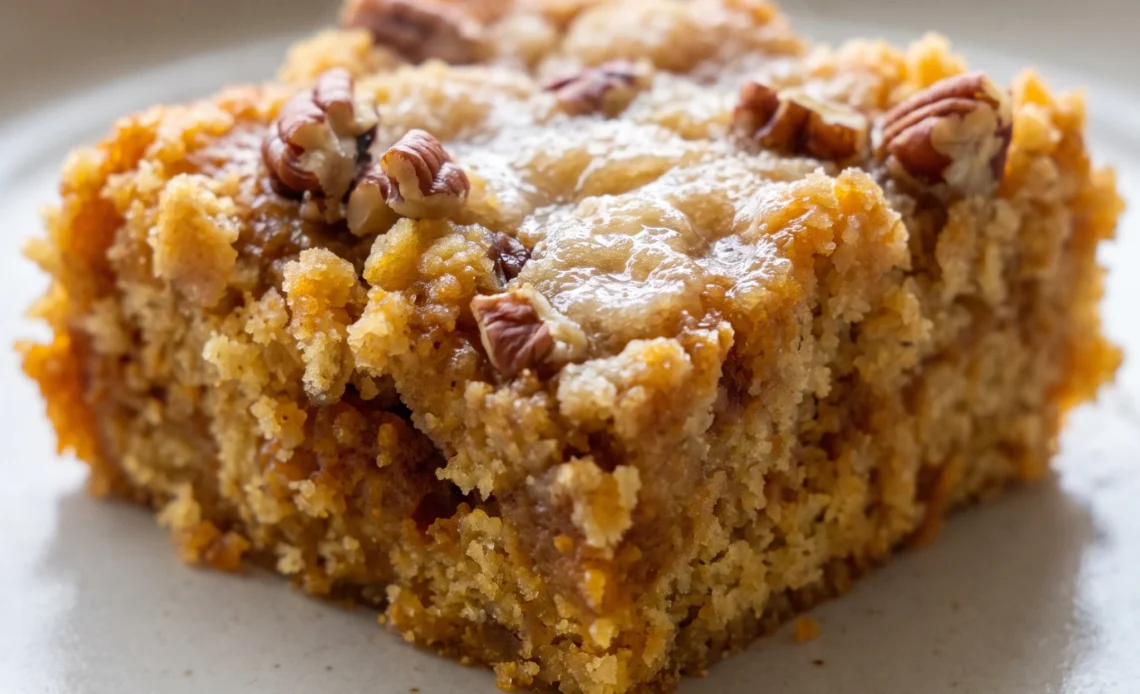
Most people pull this out when the top looks golden and cut into a puddle. The problem is that the topping browns well before the custard underneath has set, and you can’t see the difference through the pecan layer. A pumpkin dump cake lives or dies on that gap.
What you’re after is a spiced custard that slices clean under a lid of butter-soaked cake mix and toasted pecans, and the whole thing comes together without creaming butter or folding batter. The trick isn’t in the mixing.
It’s in how the layers go into the pan, and more cooks get that wrong than get the ingredient list wrong. Knowing what to look for when the top lies to you is the difference between a dessert that holds a square and one that slumps on the plate.
Layered Assembly
Sprinkle the dry cake mix over the pumpkin batter instead of stirring it in. That dry layer sits on top because the batter is thick enough to hold it; stirring would turn the mix into a paste and you’d lose the contrast between the creamy base and the crisp top.
The pecans go on next, scattered evenly. They rest between the cake mix and the butter, so as the butter soaks down, the nuts toast in the fat and anchor the topping. Finally, pour the melted butter slowly and evenly.
A fast dump would create wet pockets where the mix stays raw and others where it’s dry. Slow pouring lets the butter hydrate the cake mix gradually, so the entire surface bakes into a golden, crisp lid. When it’s done, that top shatters under a fork while the pumpkin below stays soft.
That’s the texture you’re after, and it comes from the order, not from any stirring.
Custard Base
The pumpkin mixture is a custard, and its set depends on the balance of eggs, evaporated milk, and brown sugar. Eggs coagulate as they bake, giving the base structure so slices hold together. Evaporated milk adds richness and liquid without watering it down.
Brown sugar brings moisture and a mild caramel note that plain granulated sugar lacks; that hint of molasses flavor complements the pumpkin. Pumpkin pie spice is the only seasoning here, so it needs to be whisked thoroughly into the batter.
Any clumps will leave uneven bites, and you want that warmth in every spoonful. Once baked, the custard should be firm but creamy, not watery.
If it’s soupy, the ratios were off. This base is what makes the cake more than just a topping.
Pan Size Matters
A 9×13-inch pan isn’t arbitrary. That size gives the right depth for the custard, about an inch, so it sets into a sliceable layer without becoming too thick and pudding-like. The surface area is also ideal for the topping: enough room for the cake mix and pecans to spread thin and crisp up.
Use a smaller pan and the custard gets deeper, taking longer to bake and risking a soggy center. A larger pan spreads the custard too thin, and the topping may burn before the base sets.
Greasing the pan might seem unnecessary since you don’t invert the cake, but it prevents the custard from sticking and makes cleanup easier. The edges release cleanly, and you can cut neat squares.
Dump Cake Architecture
Dump cake is a distinct American dessert format: you layer ingredients without mixing, and the oven does the work. This pumpkin version has no crust, unlike a pumpkin pie, and the custard sets to a different texture, softer and less firm.
It’s also not a conventional cake because there’s no creaming of butter and sugar, no folding, no batter to beat. Instead, the dry cake mix sits on top, and as it bakes, it hydrates from the butter and the moisture rising from the custard, turning into a tender, crisp topping.
The oven sets the custard and creates the cake layer simultaneously. That’s the architecture: simple layers that change in the heat.
The result is a dessert that’s part custard, part cake, and entirely its own thing.
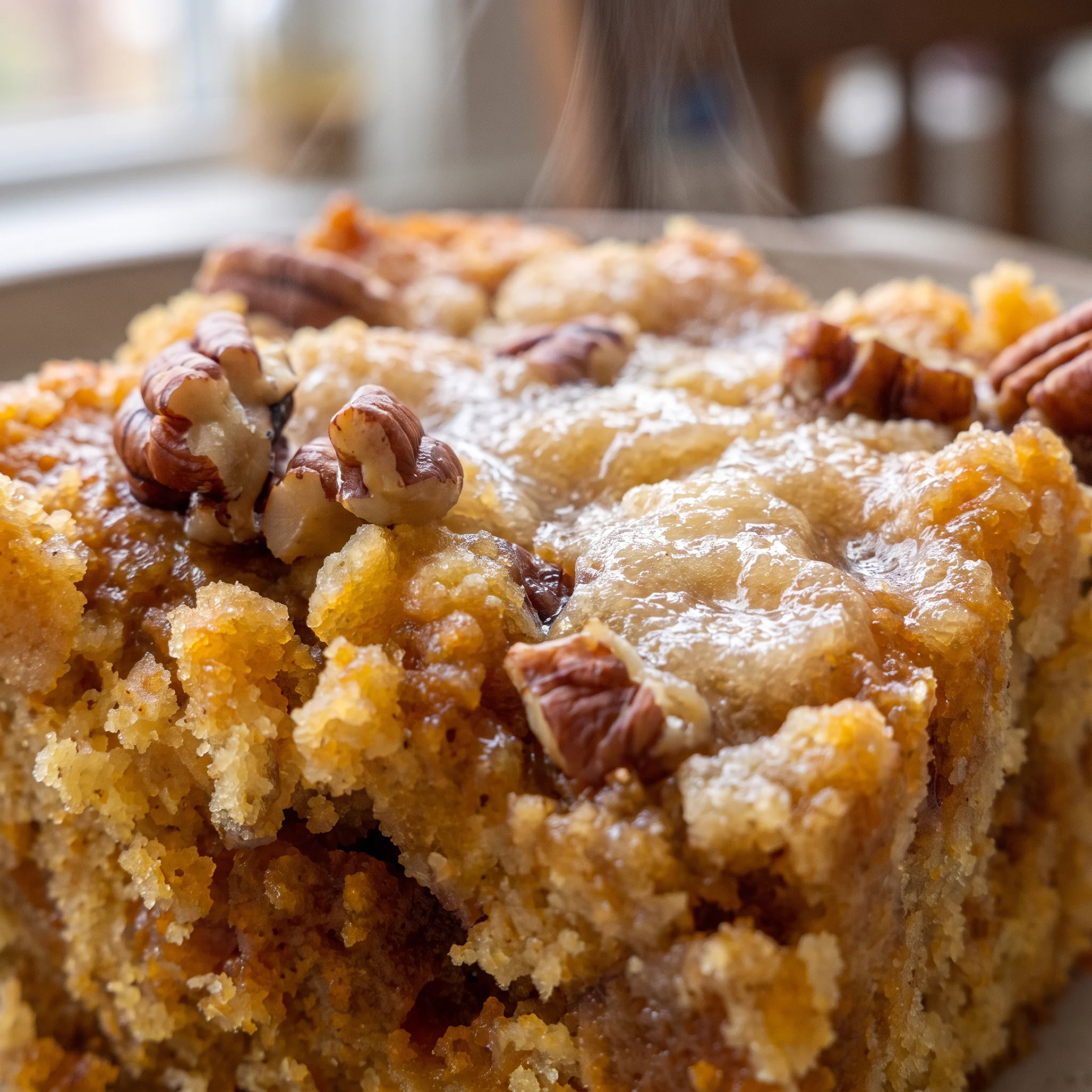
What to Buy and Prep for the Pumpkin Layer and Topping
Canned pumpkin puree: Buy plain puree, not pumpkin pie filling, which already has sugar and spice and would throw off the custard.
Evaporated milk: Shake the can well before opening; the milk solids settle and you want them blended into the custard.
Pumpkin pie spice: Smell your jar first; if the spice smells flat or dusty, the custard will taste the same way.
Yellow cake mix: Use a standard 15.25-ounce box; the dry mix goes on as is, so don’t buy a pouch that’s already mixed with pudding.
Chopped pecans: Taste one; if they’re bitter or soft, they’ll stay that way after baking, so fresh nuts matter here.
Unsalted butter: Melt it and let it cool for a minute; hot butter poured straight from the pan can start setting the eggs.
Judging the bake when the top hides the custard
Reading doneness through a crisp lid
A knife in the middle tells you more than the top does. The cake mix and pecans hide the custard, so you can’t see whether the center has set.
Insert a knife at the center point; it should come out clean. If it comes out with wet custard clinging, the middle is still liquid.
The edges will be golden before the center is ready, so go by the knife, not the color. Five more minutes, then check again.
When the butter pools instead of soaking in
Pour the melted butter slowly over the dry cake mix and pecans. If you see shiny pools sitting on top after a minute, the butter is running off instead of soaking in.
That means the topping will bake unevenly: crisp where it soaked, raw where it pooled. Stop pouring and give the pan a gentle tilt to spread the liquid. Then continue.
The goal is an evenly damp surface, not a flooded one.
The wobble that means underbaked, not creamy
At 45 minutes, nudge the pan. The center should not ripple like liquid. A slight jiggle is fine, but a visible wave means the custard hasn’t set.
The eggs and evaporated milk need time to firm up, and pulling it early gives you a soupy middle once sliced. If you see a wave, bake another 5 minutes and check with a knife.
The edges may darken; that’s preferable to a runny center.
Why the topping browns before the custard sets
The cake mix and pecans sit on top, directly under the heat, so they’ll turn golden brown before the custard is done. That’s expected.
But if the top is deeply browned and the center still jiggles, loosely tent the pan with foil for the remaining time. The foil slows the browning while the custard catches up.
Without it, you’d have a burnt lid and a raw middle. Check at 45 minutes, then decide.
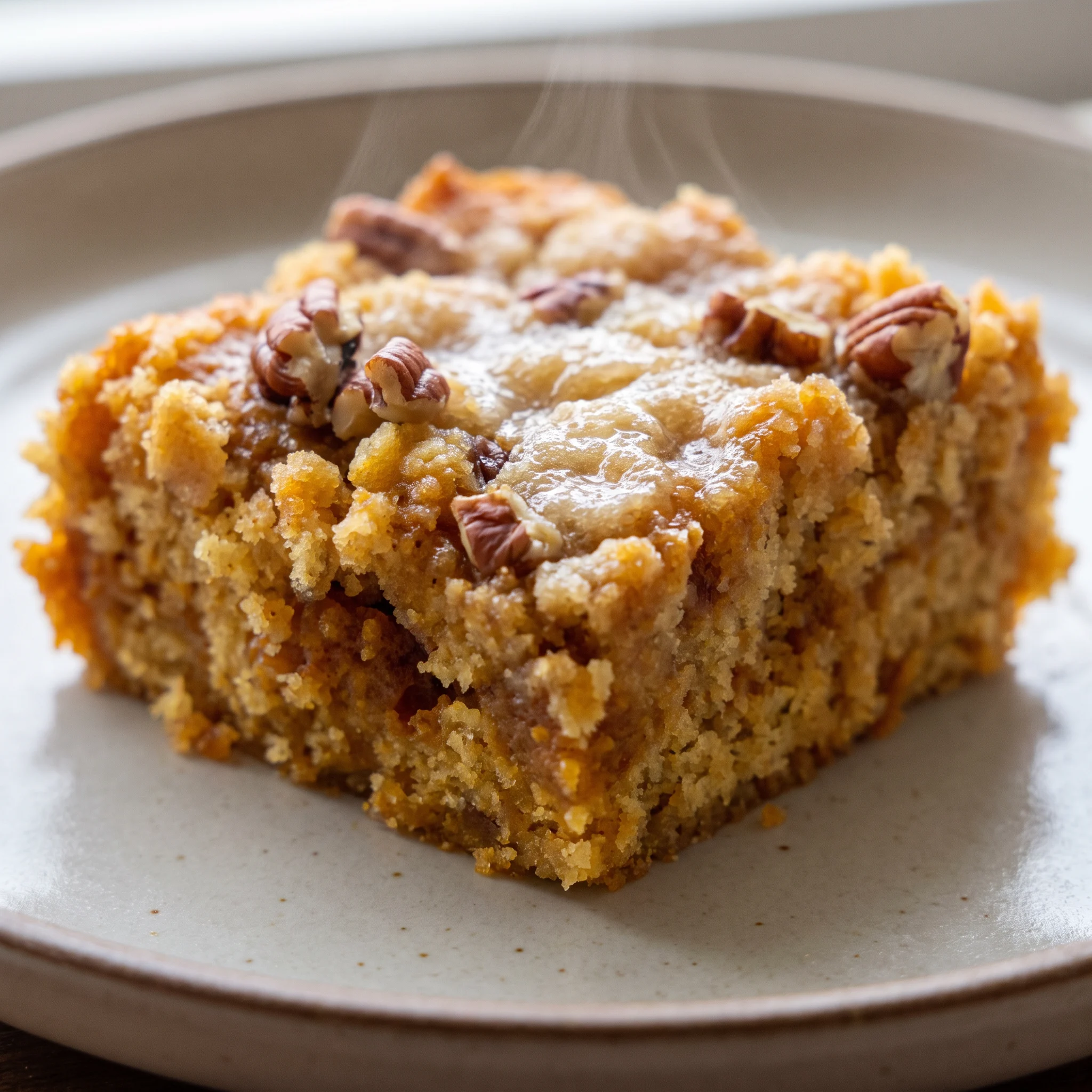
Pumpkin Dump Cake with Pecans
Ingredients
Method
- Set oven to 350ºF (175ºC). Apply non-stick cooking spray to the bottom and sides of a 9×13 inch cake pan to prevent sticking and ensure easy removal after baking.
- In a large mixing bowl, combine the canned pumpkin puree, evaporated milk, packed brown sugar, eggs, and pumpkin pie spice. Whisk until fully blended and smooth. Pour this pumpkin batter evenly into the prepared cake pan.
- Sprinkle the dry yellow cake mix as evenly as possible over the entire surface of the pumpkin batter in the pan. Next, evenly scatter the chopped pecans over the cake mix layer. Finally, slowly pour the melted unsalted butter over the top, making sure to cover as much of the surface as possible. Drizzle the butter slowly to help create a crisp, golden top.
- Transfer the pan to the preheated oven and bake for 45-50 minutes. The edges should be golden brown and the center should be set. Test doneness by inserting a knife in the middle; it should come out clean. Once finished, allow the cake to cool slightly before serving. For extra flavor, sometimes dust the cooled cake with a light sprinkle of powdered sugar or serve with whipped cream.
What You Can Swap Without Wrecking the Custard
Yellow cake mix: A gluten-free yellow cake mix, or a spice cake mix if you want the topping to carry the seasoning instead of the custard. Gluten-free mixes absorb the melted butter differently and the lid often bakes up softer and less shattery, so pour the butter a little more slowly and expect a tender crumb rather than a crisp snap. A spice cake mix pushes cinnamon and clove into the top layer, which doubles up with the pumpkin pie spice below; cut the spice in the custard to 1 teaspoon if you go that route.
Evaporated milk: Full-fat coconut milk, or whole milk in a pinch. This is the one that breaks quietly.
Coconut milk tastes faintly of coconut against the pumpkin, and the custard sets a touch looser. Whole milk is thinner, so the base bakes up lighter and can edge toward watery at the center; add 5 minutes to the bake and go by the knife, not the clock. Don’t reach for skim or a nut milk, both leave you with a custard that never quite firms.
Skim is the worst of them.
Chopped pecans: Walnuts, or toasted pepitas for a nut-free top. Walnuts are softer and turn slightly bitter as they toast, so they won’t give you the same crunch under the butter. Pepitas stay firm and green, and they taste more like the pumpkin than the nuts do.
Either way, scatter the same 1 cup the recipe calls for; the topping needs that coverage to insulate the custard as it sets. Leave them out entirely and the butter hits the dry mix directly, giving you a flatter, denser lid.
Unsalted butter: A plant butter that melts and browns like dairy butter, not a tub spread. Tub spreads carry water and won’t hydrate the cake mix evenly, so you get pale patches and greasy spots across the top. A stick-style plant butter pours and soaks in much the same way.
Keep the same 1 cup; the topping is built on that much fat, and cutting it back leaves dry cake mix that never softens. Salted butter works too, just expect a saltier lid.
Pumpkin puree, eggs, and brown sugar: Leave the ratios alone. These three set the custard, and the amounts here are balanced against each other.
More pumpkin or more milk and the middle stays liquid; fewer eggs and slices slump on the plate; less brown sugar and you lose the moisture that keeps the base creamy. Swap brands of puree if you like, but keep the measures as written.
Tips
- Let the pan sit on a rack for at least 30 minutes before the first cut. The custard keeps firming as it cools, and a slice taken at 10 minutes slumps on the plate even when the knife came out clean. Thirty minutes gives you squares that hold their shape with the topping still warm and crisp.
- If you need to serve sooner, chill the pan uncovered for 15 minutes instead. The cold air sets the custard from the top down without trapping steam, which is what softens the cake mix layer if you cover it. Uncovered chilling keeps the lid shattery while the center finishes firming.
Storage and Serving: Why This Cake Peaks the Same Day
Eat this within a few hours of baking if you can. The topping is the reason: it starts crisp and shatters under a fork, and once the custard’s moisture migrates upward, that lid softens into something closer to wet bread. Nothing reverses it.
Cool leftovers completely, then refrigerate them covered, where they hold three to four days thanks to the eggs and evaporated milk. Cold slices eat flat and dense, so reheat a portion at 300ºF until the topping re-crisps and the custard loosens, about 10 minutes; a microwave softens the top further and won’t bring back the contrast.
Freezing doesn’t work here. The custard weeps on thaw and the topping never recovers, so keep it in the fridge only. If you’re dusting with powdered sugar or adding whipped cream, do it on the plated slice, not the whole pan: sugar dissolves into the surface within an hour, and cream slumps.
Bake it the day you serve it.
The melted butter must hydrate the dry cake mix gradually and evenly; pouring it slowly in a thin stream allows the butter to be absorbed across the entire surface. If poured too fast, the butter channels into pockets, leaving some cake mix still powdery and other areas overly wet, which prevents the topping from forming a uniform crisp, golden crust.
Frequently Asked Questions
Can I make pumpkin dump cake ahead of time and bake it later?
Assemble it and bake it, then reheat portions later. The unbaked pan is a gamble: the dry cake mix starts pulling moisture out of the custard within the hour, so by the time you bake it the topping has gone past damp and bakes up dense instead of shattering. If you must hold it, keep the assembled pan refrigerated no more than a day and expect a softer lid.
Better plan is to bake it the day you serve it and reheat slices at 300ºF for about 10 minutes.
Why is my pumpkin dump cake still liquid in the middle after baking?
Most often the pan came out early because the top looked done. The cake mix and pecans brown well before the custard sets, so a golden lid means nothing about the center. Go by a knife inserted at the middle: clean means done, wet custard clinging means five more minutes.
If the top is already dark and the center still moves, tent it loosely with foil so the lid stops browning while the middle catches up. The other check is your pan: a 9×13 gives the custard about an inch of depth, and anything smaller leaves it too deep to set in the time the edges need.
How do I know when pumpkin dump cake is done without overbaking it?
Pull it the moment a knife at the center comes out clean and the pan gives only a slight jiggle when nudged, no visible wave. A wave means the eggs and evaporated milk haven’t firmed yet; set means you’re there. If you wait for the center to look dry through the topping, the custard goes past creamy toward grainy and the pecans take on a scorched edge.
The edges will be golden brown well before this point, which is normal, so ignore them and trust the knife.
What’s the difference between pumpkin dump cake and pumpkin cobbler?
A cobbler gets a biscuit or batter topping dropped on in spoonfuls, which bakes into distinct puffy islands with gaps between them showing fruit below. This cake spreads a dry cake mix in one even sheet over the custard, then butter soaks down through it into a single continuous lid that shatters under a fork.
The base differs too: cobbler filling is usually chunkier fruit in syrup, while here the pumpkin puree, evaporated milk, and eggs bake into a smooth sliceable custard. Same idea of layering, different architecture on top and a softer set underneath.
