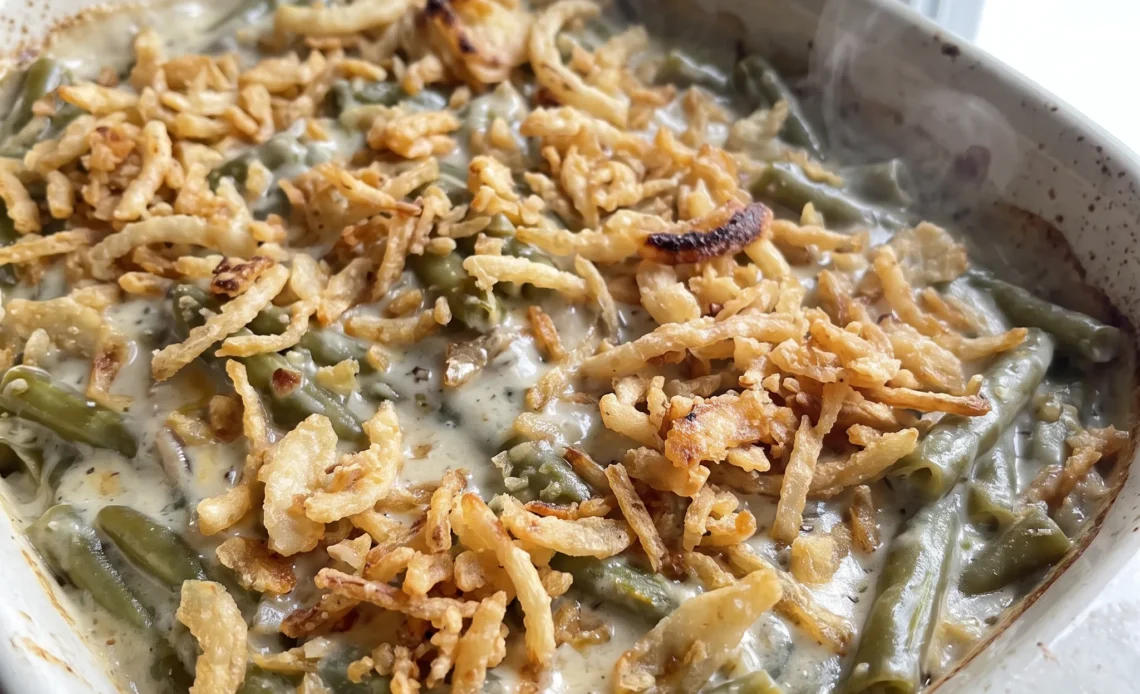
A crockpot green bean casserole isn’t a dump-and-go accident. It’s a side that asks you to get the base right before you walk away, then rewards you with a pot that frees the oven for the bird.
Ten minutes of work, mostly draining and folding, buys you three hours of unattended cooking. The hard part isn’t the wait; it’s reading the sauce before the beans go in, because the slow cooker won’t fix a thin start or a flat taste.
Get that right and the dish holds warm for hours without drying out. Get it wrong and you’ll know at the first spoonful.
Why Drain the Green Beans Before They Go In?
Canned green beans sit in liquid that tastes like the can, and that liquid will thin out the sauce. The crockpot traps every bit of steam, so any extra water you add stays put.
A slow cooker doesn’t reduce like a skillet or an oven; moisture has nowhere to go. You end up with a soupy casserole that weeps onto the plate. Draining well, or thawing frozen beans and patting them dry, keeps the texture where it should be: creamy but spoonable.
The soup, milk, and sour cream form the base, and they need to stay thick enough to coat the beans. If the mixture looks watery before you cover the pot, it will only get thinner as the beans release their own liquid. A quick taste of the sauce before cooking tells you if it needs a pinch more salt or pepper, since the beans will dilute the seasoning slightly.
Get the base right and the slow cooker does the rest.
How Does the Crockpot Change the Texture Compared to Baking?
In an oven, a casserole browns on top and some moisture evaporates, concentrating flavors and giving a bit of chew. A crockpot is a sealed box. Steam condenses on the lid and drips back in, so nothing dries out.
That’s a plus for make-ahead ease, but it means the finished dish is looser and softer than oven-baked. The green beans cook gently and stay tender, never al dente.
The sauce stays creamy but doesn’t thicken much beyond how it starts. If you want a firmer set, you’d need to leave the lid off for the last half hour, but that’s not part of this method. What you get here is a uniformly soft, comforting side that holds together on a fork.
The trade-off is worth it when you want to set it and forget it. Just don’t expect crisp edges; that’s not what a slow cooker does.
Why Divide the French Fried Onions?
Half the can goes into the mix, half stays out for the top. That’s not a suggestion; it’s the difference between a one-note casserole and one with two textures.
The onions stirred in soften as they sit in the warm sauce, losing their crunch but lending their savory, slightly sweet onion flavor throughout. They almost dissolve into the creamy base, adding body.
The reserved onions go on right before serving, so they stay crisp and give a contrasting bite. Without that final handful, you’d have a soft, uniform dish with no texture at all. The contrast is what makes each spoonful interesting.
If you add all the onions at the start, they’ll go limp and you’ll miss that crunch. If you add all at the end, the casserole lacks the deep onion flavor that comes from the ones that cook in.
So split them. It’s a small step that pays off big.
What Do Parmesan and Sour Cream Add to the Classic?
Traditional green bean casserole relies on cream of mushroom soup for its creamy base, but it can taste a bit flat. Parmesan brings a salty, savory punch that wakes up the whole dish. It doesn’t melt into strings like mozzarella; instead, it dissolves into the sauce, adding depth.
Sour cream contributes a gentle tang that cuts through the richness of the soup and milk. Without it, the casserole can feel heavy and one-dimensional.
Together, they make this version taste more grown-up than the potluck standard. The green beans themselves have a natural sweetness, and the salty-tangy combo balances that nicely. You won’t taste either as distinct ingredients; they just make the sauce taste more complete.
If you’re used to the oven version, this slow cooker take will seem a bit richer and more seasoned. That’s the point of adding them.
Building the Base First for an Even Casserole
Stirring the soup, milk, sour cream, seasonings, and cheese together before anything else ensures they’re evenly combined. If you dump everything in at once, you risk pockets of garlic powder or clumps of cheese that never fully incorporate. The green beans and onions are delicate; once they’re in, you want to fold, not stir vigorously.
Folding means gently lifting and turning the mixture, which coats the beans without breaking them. Overmixing can crush the beans and make the casserole look muddy.
A uniform base also means every bite tastes the same, no surprises. You’re not looking for a smooth puree here, just a consistent creamy sauce. When you add the beans and half the onions, fold until they’re just distributed.
The result is a casserole where each serving has the right ratio of sauce to vegetables. That evenness is what makes a potluck dish disappear.
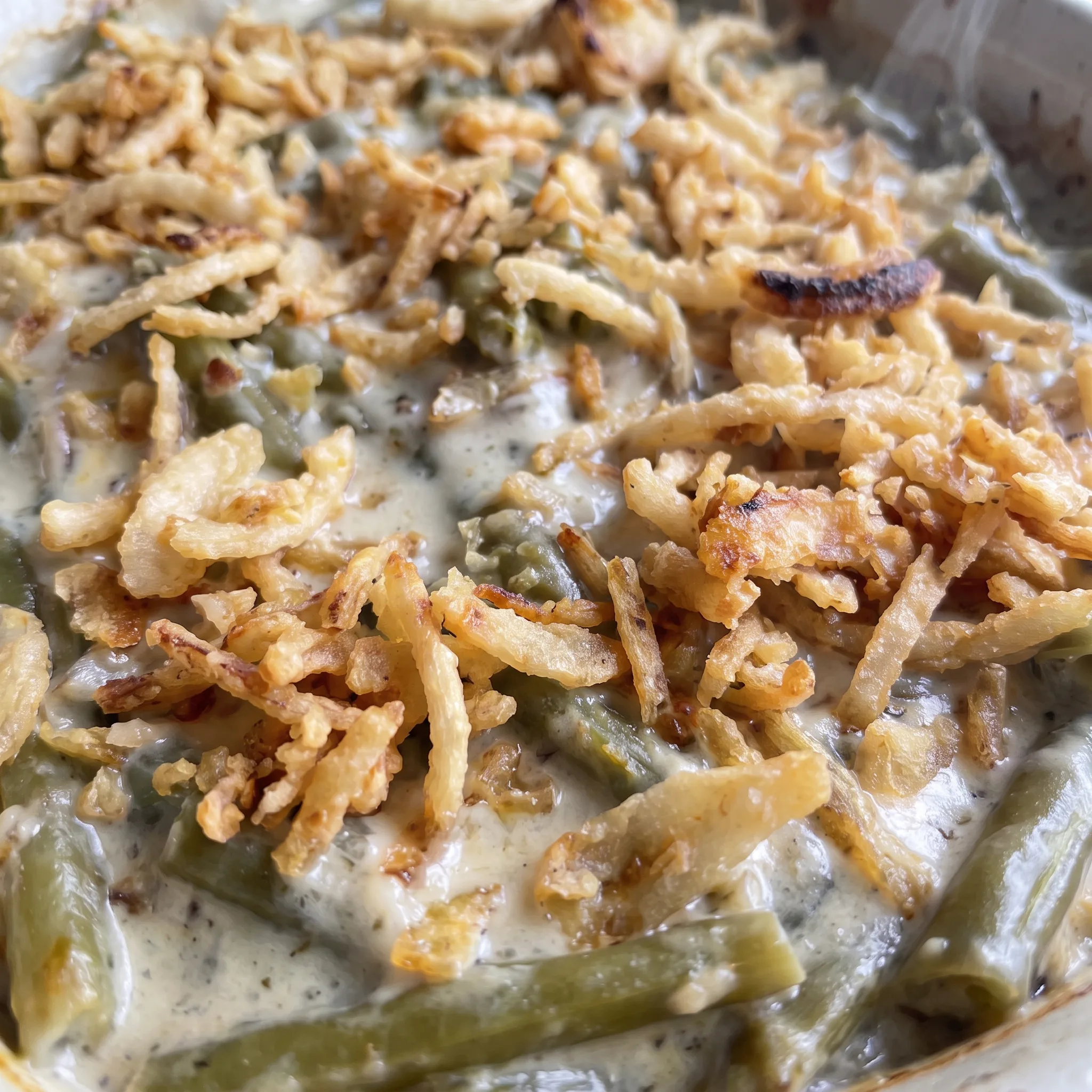
The Ingredients That Decide How This Casserole Turns Out
Green beans: Canned cut or French style need a full drain, and frozen beans should thaw and get patted dry before they go anywhere near the pot.
Condensed cream of mushroom soup: Two 10.5-ounce cans, and the cream of chicken version works just as well if that’s what’s in the pantry.
Milk: Whole milk keeps the sauce loose enough to coat, while heavy cream or half-and-half for the same 3/4 cup gives a noticeably richer body.
Parmesan cheese: Shred it fresh off the block, since the pre-shredded stuff in a tub is dusted with starch and won’t dissolve into the sauce.
French fried onions: One 6-ounce container, and stale or crushed onions from the bottom of the can won’t give you the crunch on top.
Reading the Pot Before You Walk Away
Judging the sauce before the beans go in
After stirring the soup, milk, sour cream, seasonings, and cheese, look at the mixture. It should be a uniform, creamy liquid with no dry pockets of garlic powder or clumps of Parmesan. Taste it.
The sauce should be a touch saltier and more seasoned than you want the finished casserole to be, because the green beans will soak up salt and dilute the flavor. If it tastes flat now, it will taste flat later.
Add a pinch more salt or pepper if needed.
Knowing how much to fold, not stir
Once the green beans and half the onions are in, you’re folding, not stirring. Use a spatula to lift from the bottom and turn the mixture over.
Stop as soon as the beans are coated and no big clumps of onions remain. Overmixing breaks the beans and makes the sauce look muddy.
If you’ve already overmixed, don’t panic; the casserole will still taste fine, but the texture will be softer and less defined. Next time, aim for just combined.
The point when the casserole is done, not just hot
Two to three hours on low. At the two-hour mark, lift the lid and look. The sauce should be bubbling gently around the edges and the beans should be tender all the way through, not just warm.
If the beans still have a slight bite, give it another 30 minutes. If the sauce looks thin, it will stay thin; the slow cooker doesn’t reduce. You can leave the lid off for the last 30 minutes to let some steam escape, but that’s not in the card.
The safest test is to taste a bean: it should be soft, not al dente.
When to add the reserved onions for crunch
The remaining French fried onions go on at the very end, after the casserole has cooked. If you add them earlier, they’ll soften and lose their crunch. So the judgment is timing: you want them on when you’re ready to serve, not before.
If you’re holding the casserole on warm for a while, wait to add the onions until the last minute. Once they’re on, they start to absorb moisture from the steam, so serve soon after for the best texture.
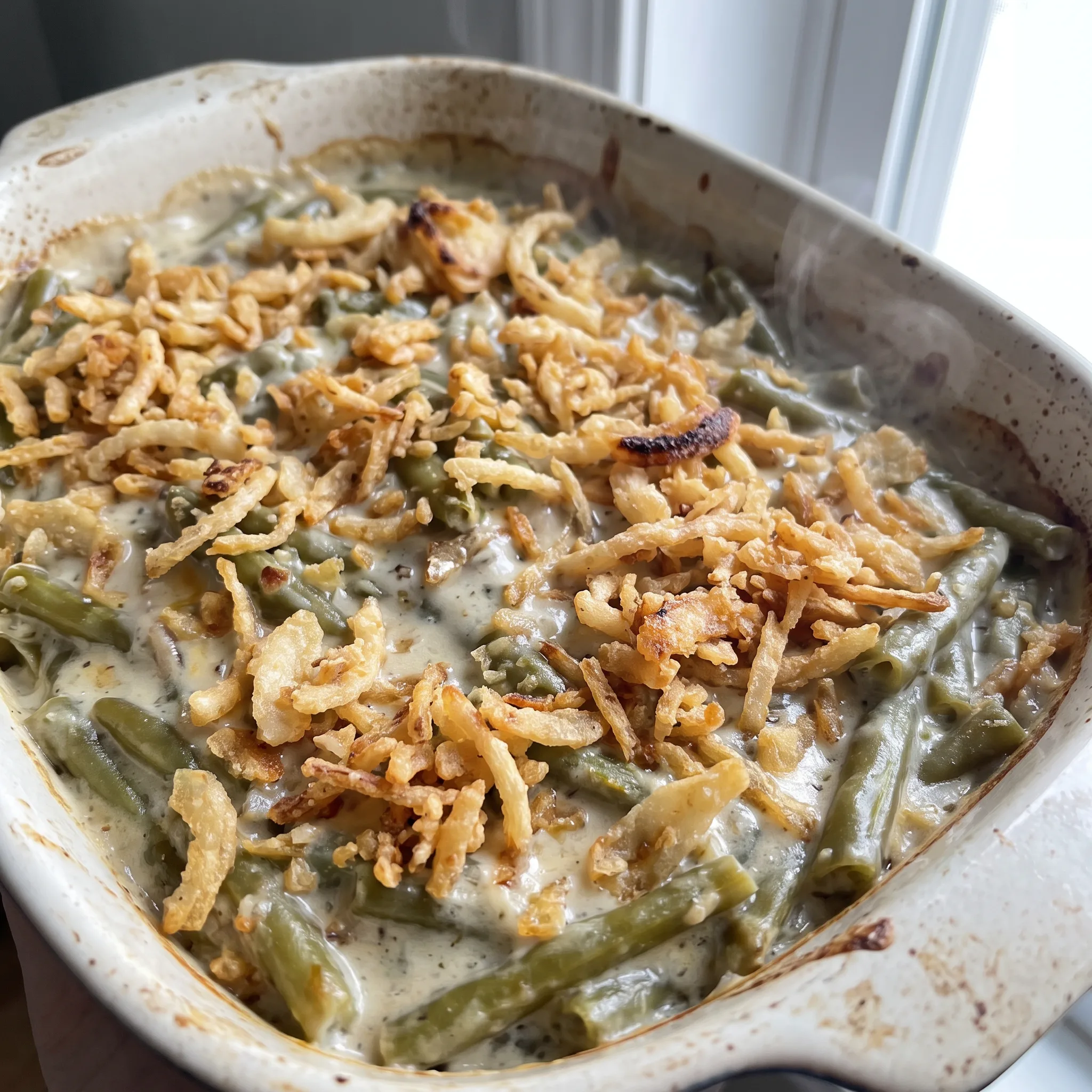
Crockpot Green Bean Casserole with Parmesan
Ingredients
Method
- Into the crockpot’s bottom, place the cream of mushroom soup, milk, sour cream, seasonings, and shredded cheese. With a wooden spoon or spatula, stir everything until thoroughly blended.
- Stir Dump in the green beans and half of the French fried onions, stir until just mixed.
- Cook Cover and cook on low for 2-3 hours.
- Serve Stir well and pour the remaining French fried onions on top of the casserole. Serve warm, enjoy!
Storing and Serving Crockpot Green Bean Casserole
That final handful of French fried onions goes on at the moment of serving, never before. Once they hit the warm casserole, steam softens them within minutes. If you’re holding the pot on warm, wait until the last second.
For leftovers, store the casserole without any topping in an airtight container in the fridge. It keeps three to four days. The sauce thickens and the beans soften further each day, so day one is the best texture.
Reheat gently on the stovetop or in the microwave, then add fresh onions from a new can or re-crisp the old ones in a dry skillet or toaster oven. Never microwave the topping with the casserole. The assembled dish doesn’t freeze well because the dairy sauce separates and the beans turn watery, but you can freeze the base without the onions for up to two months.
Thaw overnight in the fridge and reheat, then top with fresh onions.
What Swaps Work Here and What You’d Regret Changing
5-ounce cans. Tastes a little less earthy, a little more savory chicken.
The texture stays the same because both soups thicken the same way. If you’re feeding someone who hates mushrooms, this is the one to reach for.
Milk: Heavy cream or half-and-half, same 3/4 cup. Heavy cream makes the sauce noticeably thicker and richer, so it clings to the beans instead of pooling.
Half-and-half lands in between. If you use heavy cream, the casserole will look more like a gravy than a light sauce, which some people prefer.
Green beans: Frozen green beans, thawed and patted dry, same 58 ounces. Frozen beans are usually blanched before freezing, so they’re already partly cooked. They’ll end up a bit softer than canned after three hours.
Patting them dry matters more than with canned, because frozen beans release extra water that would thin the sauce.
Parmesan cheese: Leave it alone. There’s no good stand-in here.
The Parmesan dissolves into the sauce and gives it a salty backbone. Pecorino is sharper and saltier, so you’d need to cut back on the added salt. Skip the green can of grated Parmesan; it won’t melt smoothly and leaves a sandy texture.
Freshly shredded is the only version worth using.
French fried onions: Don’t substitute these. They define the top and the built-in onion flavor. The ones that go in soften and flavor the sauce; the ones on top stay crisp.
If you leave them out, you lose the crunch and the casserole tastes flat. Other crispy onions, like the kind for salads, are usually too thin and burn or go limp.
Stick with the 6-ounce container the recipe calls for.
Tips
- A quick taste of the drained beans tells you how much liquid they’ll shed. Canned beans from a salty, well-drained can taste firm and clean; beans that taste flat or metallic, or that squish when pressed, have already soaked up their packing liquid and will water down the sauce no matter how long you drain them. If they taste weak, spread them on a sheet pan and blot with paper towels before they go in.
- Let the drained cans sit in a colander for 10 minutes rather than dumping and shaking once. Canned beans hold liquid in the hollow centers of the cut pieces, and that trapped liquid drips out slowly. Ten minutes of passive draining gets rid of it; a single shake does not. If you’re short on time, roll the beans in a clean kitchen towel after draining to wick off the surface moisture.
The most common mistake is adding canned or frozen green beans straight from the package without draining or thawing them first. In a crockpot, moisture has nowhere to go, so any extra liquid from the beans pools at the bottom and turns the soup, milk, and sour cream mixture into a thin, soupy sauce. Draining canned beans and thawing frozen ones removes that hidden water before it can ruin the texture.
Frequently Asked Questions
Can I make this crockpot green bean casserole ahead of time?
Build it in the insert up to the point where everything is folded together, cover, and park it in the fridge overnight. The next day the insert goes into the heating base cold, which adds time before the sauce starts bubbling at the edges, so judge doneness by a bean that’s soft all the way through rather than by the clock. Hold back the reserved fried onions until serving no matter what; they’re the one thing that can’t wait.
Leftovers themselves keep three to four days, so a day-ahead assembly is well within range.
Why did my green bean casserole turn out watery?
Nine times out of ten it’s the beans, not the sauce. Canned beans that got a quick tip-and-pour carry a surprising amount of packing liquid, and frozen ones throw off water as they thaw, so drain the cans into a colander and let them sit a minute, or thaw frozen beans and pat them dry.
The crockpot gives that water nowhere to go, so what looks like a slightly loose sauce at the start only gets thinner. A second check is the dairy: if you used skim milk instead of whole, the base starts runnier and never tightens. Taste a spoonful of the sauce before the lid goes on; it should coat the back of the spoon, not run off it.
How is this slow cooker version different from the classic oven-baked one?
The oven version gets a browned, slightly chewy top and loses some moisture as it bakes, so the sauce concentrates and the edges crisp. A crockpot is a closed box, so the beans come out uniformly tender and the sauce stays closer to how it went in, creamy but looser. You also gain the hands-off window: 180 minutes on low with no stirring, no watching, no hot oven competing for space.
What you give up is the crisp edge, and for a potluck where the dish needs to sit and stay warm, that trade usually goes the right way.
Can I keep it on warm for a few hours after it’s done cooking?
Yes, and the topping is the only thing that needs babysitting. Leave the casserole on warm with the lid on and it’ll hold without drying out, since the trapped steam keeps everything loose.
Wait to scatter the reserved fried onions until you’re actually ready to serve, because once they hit the warm surface they start pulling in moisture and soften within minutes. If the sauce tightens up during the hold, a splash of milk stirred in brings it back. Serve within a couple of hours for the best texture on the beans.
What’s the best way to reheat leftovers without making the onions soggy?
Reheat only what you’re eating, and reheat it without any topping on it. A gentle stovetop warm or short bursts in the microwave both work; the sauce loosens as it heats and the beans soften a little more each pass.
Then add crunch from a fresh handful out of a new can, or spread the old onions on a sheet pan and give them a few minutes in a dry skillet or toaster oven to crisp back up. Never microwave the topping with the casserole, that’s what turns it limp. The base keeps three to four days, so plan to eat it before the texture slides too far.
