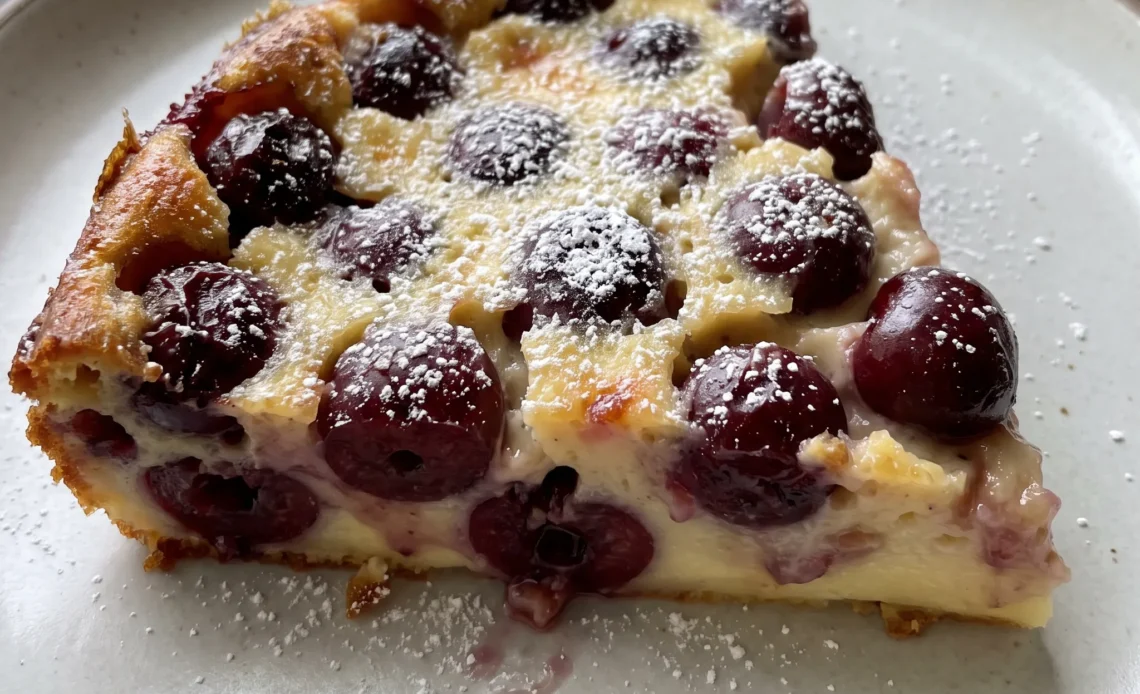
Most desserts ask you to choose between rustic and refined, but a cherry clafoutis shrugs at that split. It’s a country French bake that looks almost too plain until you cut into it: a golden, puffy top hiding a custard that’s barely set, with cherries tucked throughout.
The batter is thin enough to pour, and that’s exactly why it works, letting the fruit settle where it lands while the eggs and cream turn silky in the oven. What’s tricky isn’t the technique, it’s judgment, knowing when the center has set without crossing into rubbery.
Pull it early and you’ll have a runny middle; leave it too long and you lose that soft give. The almond essence is what makes it sing, a fragrant nudge that turns simple cherries into something you’ll remember.
Clafoutis relies on a delicate balance of eggs and dairy to set into a custard. Overbaking causes the egg proteins to contract excessively, squeezing out moisture and resulting in a tough, rubbery texture instead of the intended silky, creamy crème. The visual cue of a golden puffy top can mislead, as the center may still be slightly jiggly when done.
Almond Essence Sets the Tone
That perfume of almond is what tells you you’re eating clafoutis, not just baked custard. The cherries bring their own brightness, but the essence pulls them into sharper focus.
You don’t need much; 3/4 teaspoon is enough to make the flavor known without shouting over the fruit. When the batter bakes, that almond note stays present in every bite, echoing against the tart cherries. A plain custard would taste sweet and eggy, but this one has a fragrant edge that makes it memorable.
It’s the difference between a dessert you forget and one you remember.
Why the Batter Stays Thin
The batter should pour like a light cream, not a thick cake mix. That thinness is what lets it settle around each cherry, hugging the fruit as it bakes.
With less flour and more liquid, milk, cream, and eggs, the mixture stays pourable and spreads evenly across the dish. As it cooks, the eggs set into a custard that’s delicate and soft, not dense or bready. If the batter were thicker, it would bake up more like a cake, losing that silky texture.
The ratio is deliberate: enough structure to hold the cherries, but enough liquid to keep it tender.
Prepping Cherries for Even Serving
Pitting the cherries is about comfort at the table; nobody wants to navigate around a pit while the custard is still warm. Arranging them in a single layer serves two purposes.
Each slice gets its fair share of fruit, and the cherries stay put instead of sinking to the bottom. In a deeper pan, the batter would push them aside as it sets, leaving a fruity bottom layer and a plain top.
But here, spread out flat, they stay visible and evenly spaced, so every serving looks as good as the next.
Letting It Rest Before Serving
Out of the oven, the clafoutis is puffed and golden, but it’s still fragile. Let it sit for those 5 to 10 minutes and it settles into itself, the custard firming up just enough to slice cleanly.
You’ll see it deflate slightly as it cools, that’s normal and part of the charm. The texture stays creamy, not rubbery, when you give it that rest. Serve it warm or at room temperature; both are good, but the flavors open up more once it’s not piping hot.
A dusting of powdered sugar and a dollop of cream never hurt, though it’s just as fine on its own.
The Ingredients That Matter
Cherries: Use fresh or frozen, but if frozen, don’t thaw; add them straight from the bag.
Almond essence: It’s potent, so measure carefully. A little goes a long way.
Whole milk and heavy cream: Don’t swap in lower fat; the richness is what makes the custard silky.
Eggs: Bring them to room temperature so they blend smoothly into the batter.
Reading the Bake: Doneness and Texture
Judging when the top is truly golden
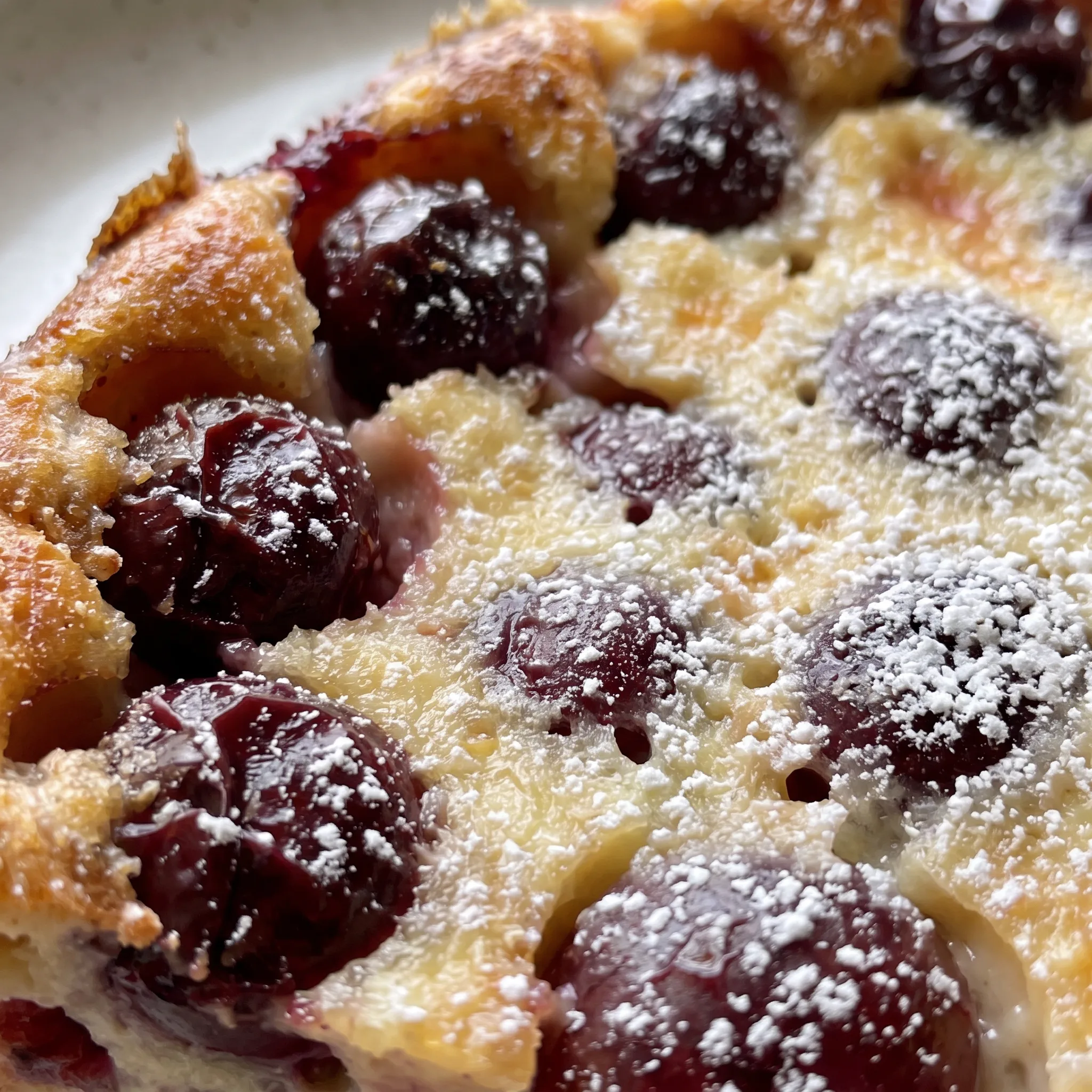
The card says 30 to 40 minutes, but the clock is only a guide. You’re looking for a deep golden brown across the surface, not just pale yellow. That color means the custard has set and the sugars have caramelized.
If the top is still blond at 30 minutes, give it more time, check every two minutes. Pull it too early and the center will stay runny, not just jiggly.
The toothpick test and what ‘clean’ really means
Insert a toothpick into the center, not the edge. The card allows a small amount of custard clinging, which is fine, that’s a sign of a moist, custardy interior. But if the toothpick comes out with wet batter, it’s not done.
That wetness means the eggs haven’t fully set, so return it to the oven for a few more minutes. A clean or nearly clean toothpick tells you the structure is there.
Watching the rise and fall without alarm
Expect the clafoutis to puff up dramatically in the oven, it might look like it’s going to overflow. That’s normal; the eggs and steam are doing their job. When you pull it out, it will deflate within minutes.
Don’t mistake that collapse for failure. If it stays puffy and rigid, it’s overbaked.
The gentle fall is what creates that soft, creamy texture you’re after, so let it happen without interference.
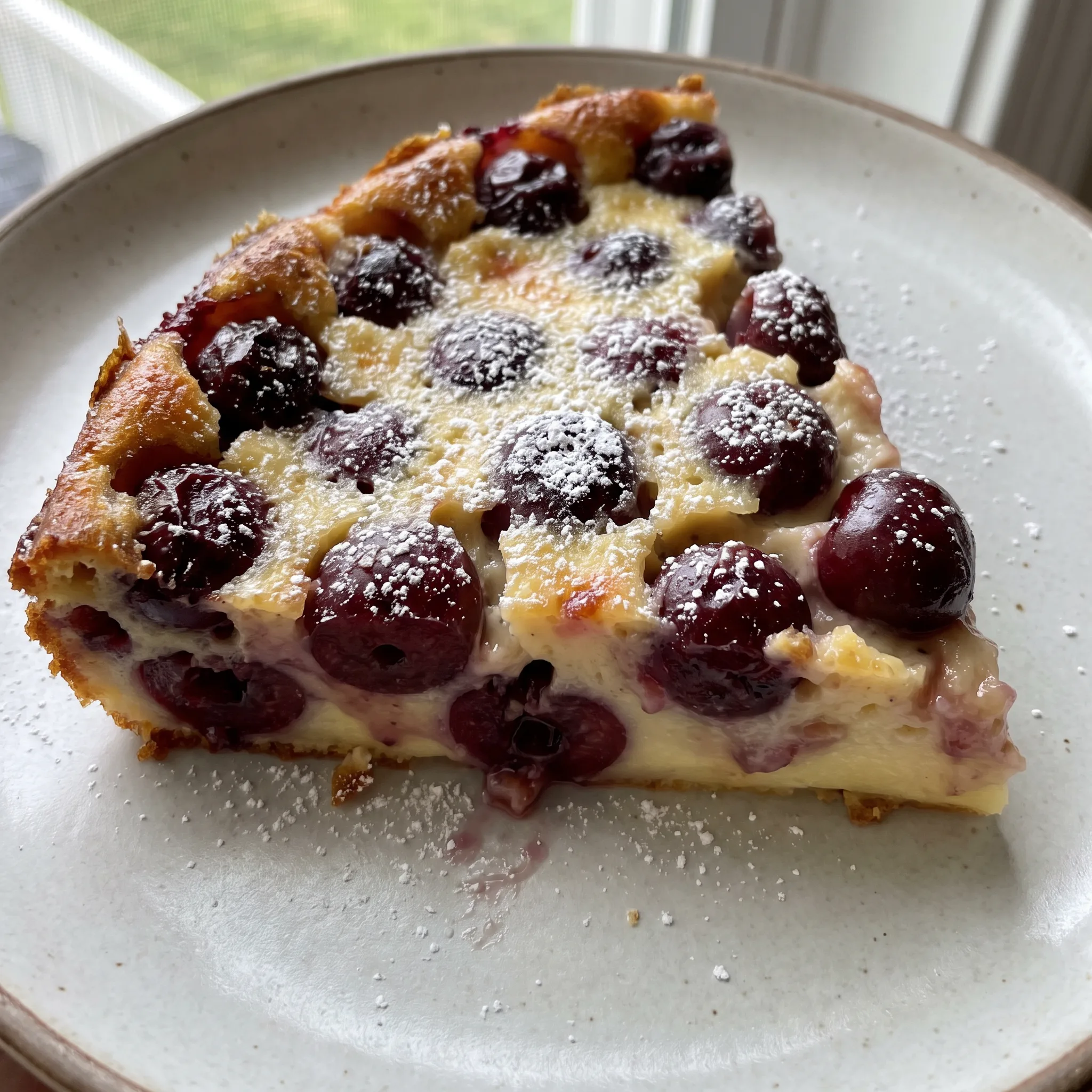
Creamy Cherry Clafoutis
Ingredients
Method
- Heat oven to 375°F (190°C). Use the softened unsalted butter to thoroughly grease a 9×13-inch baking dish (or a similar 2-quart pan), ensuring all corners and sides are covered to avoid sticking and to add flavor.
- Arrange the pitted cherries evenly across the bottom of the buttered dish in a single layer. Since they’ll settle during baking, spread them out so each serving gets a cherry.
- In a blender, place the room-temperature eggs, whole milk, heavy cream, all-purpose flour, 1/3 cup sugar, vanilla extract, almond essence, salt, and lemon zest. Process on medium speed for 30-45 seconds, stopping once to scrape down the sides, until the mixture is silky and free of lumps. The batter should be thin and pourable, akin to crêpe batter.
- Pour the batter over the cherries, making sure it’s distributed evenly. Bake at 375°F (190°C) for 30-40 minutes, or until the top is golden and puffy, and a toothpick inserted into the center comes out clean or with a small amount of custard clinging. The clafoutis will rise significantly, then deflate a bit upon cooling.
- Take out of the oven and allow to rest at room temperature for 5-10 minutes so it sets properly without becoming tough. If desired, sprinkle powdered sugar over the top before serving. Serve warm or at room temperature, accompanied by whipped cream, crème fraîche, or vanilla custard.
Storing and Serving Leftover Clafoutis
Clafoutis is best within a day of baking. The custard stays creamy and the cherries keep their shape. If you wait longer, the texture turns softer and a bit wet as the cherries release juice.
That’s not bad, but it’s not the same. For the best texture, serve it warm or at room temperature within a few hours.
If you have leftovers, cover the dish with foil or plastic wrap and refrigerate. They’ll keep for about two days, but expect the texture to become more custard-like and less puffy.
To bring back some of the original feel, reheat individual portions in a 300°F oven for 5 to 10 minutes, just until warm. Avoid the microwave; it makes the custard rubbery.
Freezing is tricky because the dairy custard can separate and turn watery when thawed. If you want to freeze, do it with the baked clafoutis, well wrapped, for up to a month.
Thaw overnight in the fridge and reheat gently. The texture won’t be as silky, but it’s still pleasant. Don’t freeze an unbaked batter; the eggs and cream won’t hold up.
Tips
- When testing with a toothpick, aim for the center of the clafoutis and look for moist crumbs or a bit of custard clinging, but if the center still wobbles when you gently shake the dish, bake for 3-5 more minutes before retesting; the residual heat will finish setting the center during the rest.
Swapping the Fruit and the Flavorings
Cherries: Plums or apricots, pitted and sliced. Both hold their shape during baking and bring a similar tartness. Plums lean juicier, so the custard might soften a bit around them; apricots are firmer and drier, so they’ll stay more distinct.
Either works, but you’ll need to adjust sugar: taste the fruit first. If it’s very tart, add a tablespoon more to the batter; if it’s sweet, leave the sugar as is.
Almond essence: Vanilla extract, same amount. The almond perfume is what makes this clafoutis taste like clafoutis, not just baked custard.
Swapping in vanilla gives you a cleaner, sweeter flavor that lets the cherries speak louder, but you lose that fragrant edge. If you go this route, consider adding a splash of amaretto or a few drops of bitter almond extract to get closer to the original.
Just know the character shifts.
Whole milk and heavy cream: Dairy-free alternatives, like oat milk and coconut cream. This is the one that can break the texture. The custard sets because of the eggs and the fat content in the dairy.
Oat milk and coconut cream bring some richness, but they’re thinner and behave differently. The clafoutis will be softer, less set, and might not puff as high.
Use the same amounts, but expect a longer bake time and a slightly more delicate slice. If you can, add an extra egg yolk to help it firm up.
All-purpose flour: Gluten-free all-purpose blend. A 1:1 gluten-free flour mix works here, but the batter will be more fragile.
The clafoutis relies on gluten for structure, so without it, the custard may not hold together as well. You might see it collapse more after baking, and the texture could turn slightly gritty if the blend has rice flour. Stick to a blend with xanthan gum, and don’t overmix, that can make it gummy.
Frequently Asked Questions
Can I make clafoutis ahead of time and reheat it?
Yes, you can make it ahead, but the texture shifts. The clafoutis is best within a day; after that, the cherries release juice and the custard softens.
If you do make it ahead, cover and refrigerate for up to two days, then reheat individual portions in a 300°F oven for 5 to 10 minutes. Avoid the microwave, it turns the custard rubbery.
Why did my clafoutis turn out rubbery or tough?
A rubbery clafoutis usually means it was overbaked or the eggs were cooked too hard. You want to pull it when the top is golden and a toothpick comes out with just a small amount of custard clinging, not completely clean. Overmixing the batter can also develop gluten, making it chewy, blend just until smooth.
Is clafoutis supposed to be served warm or cold?
Clafoutis is best served warm or at room temperature, not straight from the fridge. The recipe suggests letting it rest 5 to 10 minutes after baking so it sets without turning tough. If you refrigerate it, let it come to room temperature or reheat gently in a 300°F oven to restore some of the soft, creamy texture.
