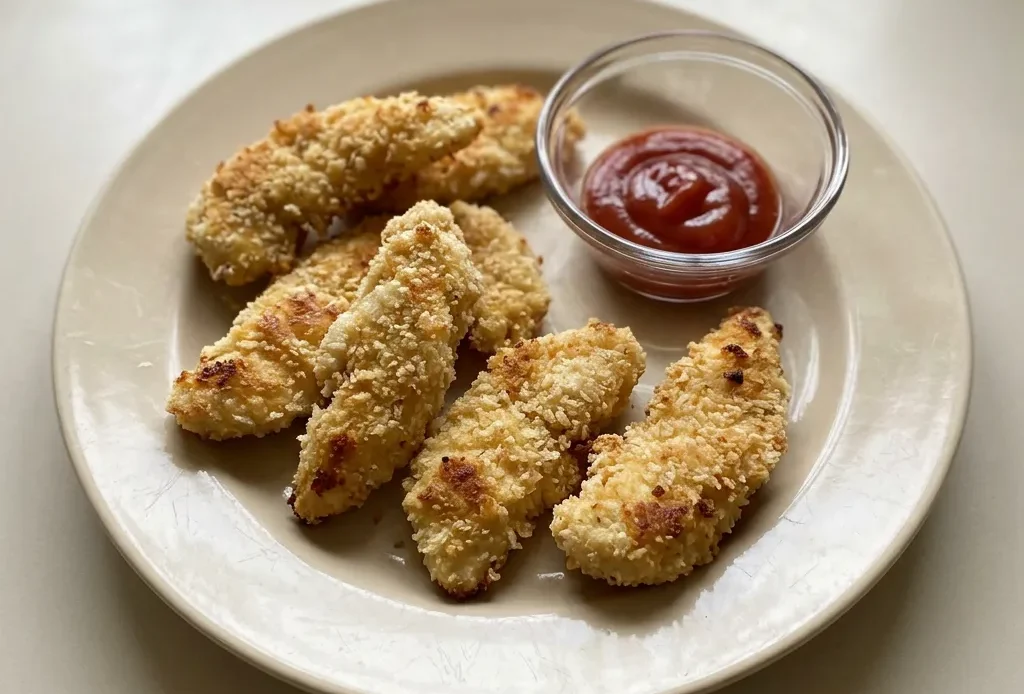
The crunch is everything here, and it comes down to dry chicken and a hot oven. Moisture is the enemy, the egg slides off wet meat, leaving bare spots that never crisp.
Pat the tenders dry, press the coating on firmly, and don’t flinch at 425°F. These crispy oven-baked chicken tenders earn their texture without a fryer, but only if you respect that heat.
One flip halfway and you’ll see the difference: a crust that shatters, not crumbles. The margin for error is small, but the result is honest crunch.
Why does coating chicken in egg before breading help the crust stick?
Egg acts as a glue that holds the breadcrumb mixture onto the chicken. Without it, the coating would fall off during baking, leaving bare spots. The beaten egg also creates a thin barrier that traps moisture inside the meat, so the tenders stay juicy.
Now I always pat the chicken dry and coat thoroughly in beaten egg, pressing the breadcrumbs on firmly so they stick. When you see the crust holding together after flipping, you know the egg did its job.
What’s special about panko and Parmesan for crunch without frying?
Panko breadcrumbs have larger, airier flakes than standard breadcrumbs. Those flakes create more surface area that browns and crisps up in the oven, giving you a texture close to fried chicken. Grated Parmesan adds savory umami and encourages browning because it contains fats and proteins that react under heat.
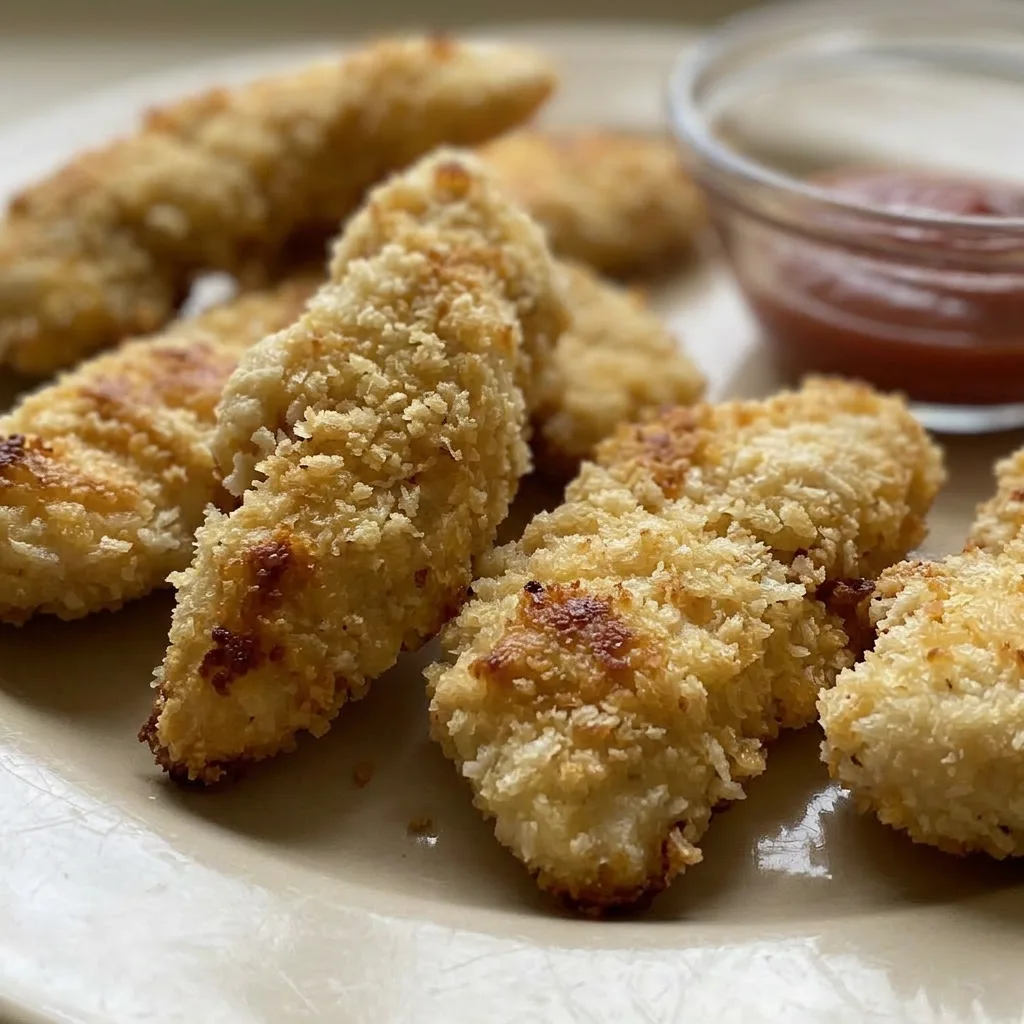
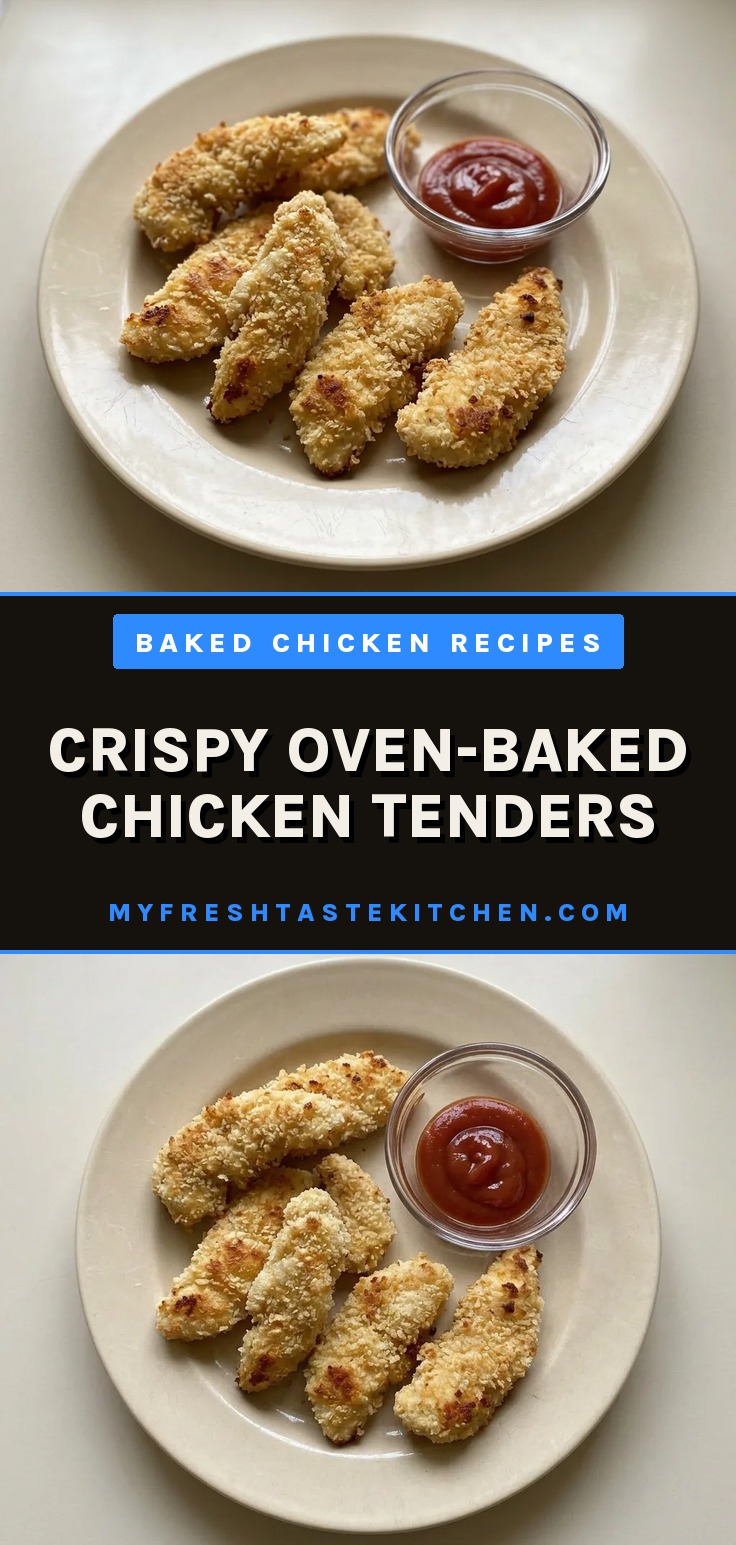
The combination yields a crunchy, golden coating with much less oil than deep-frying. You can see and taste the difference: the crust shatters when you bite, not just crumbles.
Why must the oven be at 425°F for these baked chicken tenders?
A hot oven is the key to getting a crisp exterior before the inside overcooks. At 425°F, the breading browns quickly, forming a crunchy shell. The short total baking time keeps the chicken tender and juicy rather than dry and tough.
Flipping the tenders halfway ensures both sides brown evenly, which you can see by the uniform golden color. If the oven runs cooler, the coating will turn out pale and soggy instead of crispy.
Prep: 10 min · Cook: 20 min · Total: 30 min · Servings: 4
A few things about these ingredients
Chicken tenders: Buy tenders or slice breasts evenly so they cook at the same rate. Pat them dry or the egg won’t stick.
Breadcrumbs: Panko gives a lighter, crunchier crust. If you use standard breadcrumbs, they’ll be denser but still work.
Parmesan: Optional but adds savory browning. Use finely grated from a block; pre shredded won’t melt as evenly.
Eggs: Beaten until uniform so they coat without clumps. Let excess drip off to avoid a soggy crust.
Olive oil: Brushing or drizzling helps browning; too much makes the crust greasy, too little leaves it pale.
How to get a crunchy crust that stays on
Prep the chicken and oven
Set the oven to 425°F. Pat the chicken dry, moisture makes the egg slide off, so the breading won’t stick. Line a baking sheet with foil or parchment for easy cleanup.
Mix the coating
Combine breadcrumbs, Parmesan, garlic powder, salt, and pepper in a shallow dish. Use your fingers to break up any clumps, you want an even texture so every tender gets a uniform crust.
Coat each tender
Dip a piece in beaten egg, let excess drip off, then press into the breadcrumb mixture. Press firmly, you should feel the crumbs embed. If you see bare spots, touch up with more crumbs.
Arrange and oil
Place tenders on the sheet with space between them, crowding traps steam and softens the crust. Drizzle or brush with olive oil; the oil helps browning and crunch. Each tender should look glossy, not drenched.
Bake and flip
Bake 12 to 15 minutes until the bottoms are golden. Flip each tender, if the crust sticks to the foil, it’s not ready; give it another minute. Bake 5, 7 more minutes until both sides are deep golden and the chicken is cooked through.
Check for doneness
The thickest tender should feel firm to the touch and register 165°F inside. Cut one open: the meat should be opaque and juicy, not pink. Let them rest a couple minutes, the crust sets and stays crunchy.
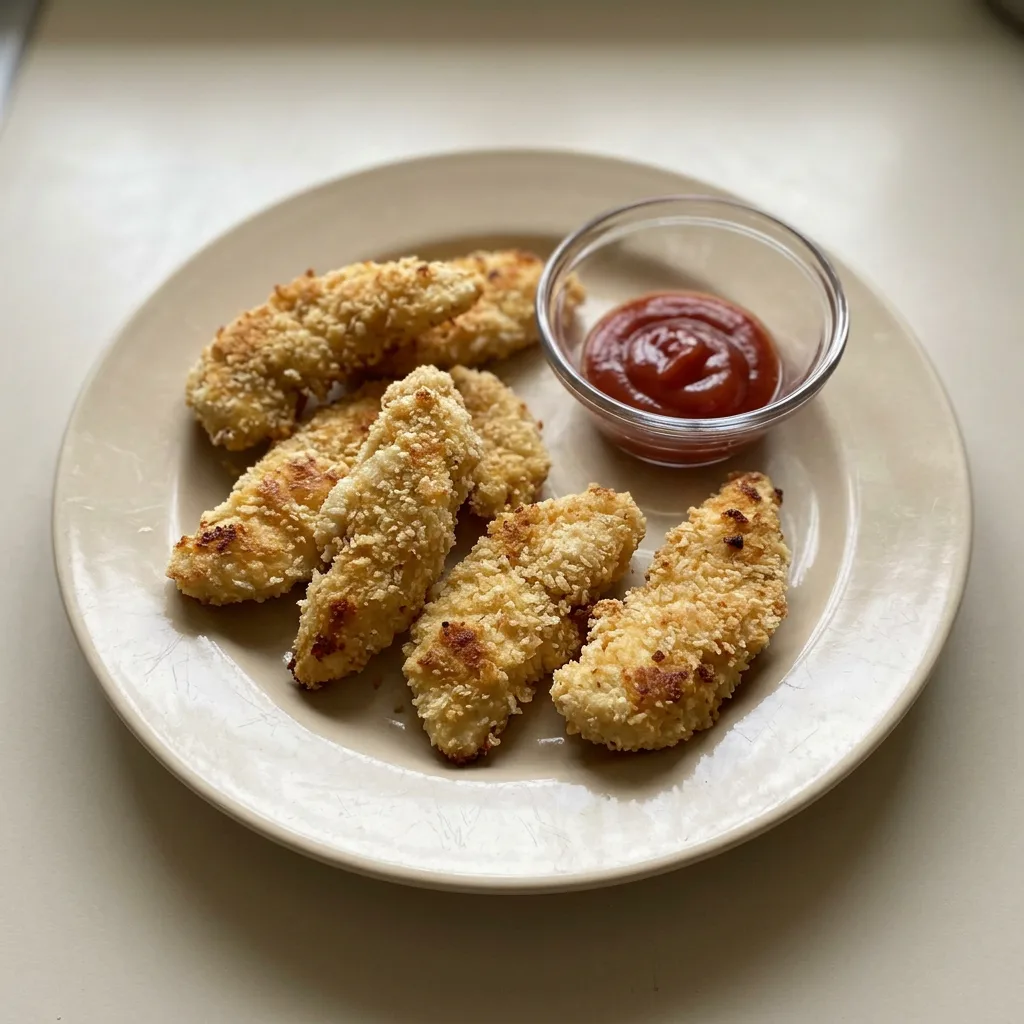
Crispy Oven-Baked Chicken Tenders
Ingredients
Method
Preheat Oven:
Set oven to 425°F (220°C) and cover a baking sheet with foil or parchment.Prepare Coating Mix:
In a shallow dish, combine breadcrumbs, Parmesan, garlic powder, salt, and pepper.Coat Chicken Pieces:
Coat each chicken piece in beaten eggs, then press into the breadcrumb mixture.Arrange on Sheet:
Arrange on the sheet, drizzle or brush with olive oil, and keep space between pieces.Bake Until Golden:
Cook for 12–15 minutes, turn over, then bake another 5–7 minutes until golden and fully cooked.
Storing and Reheating Leftovers
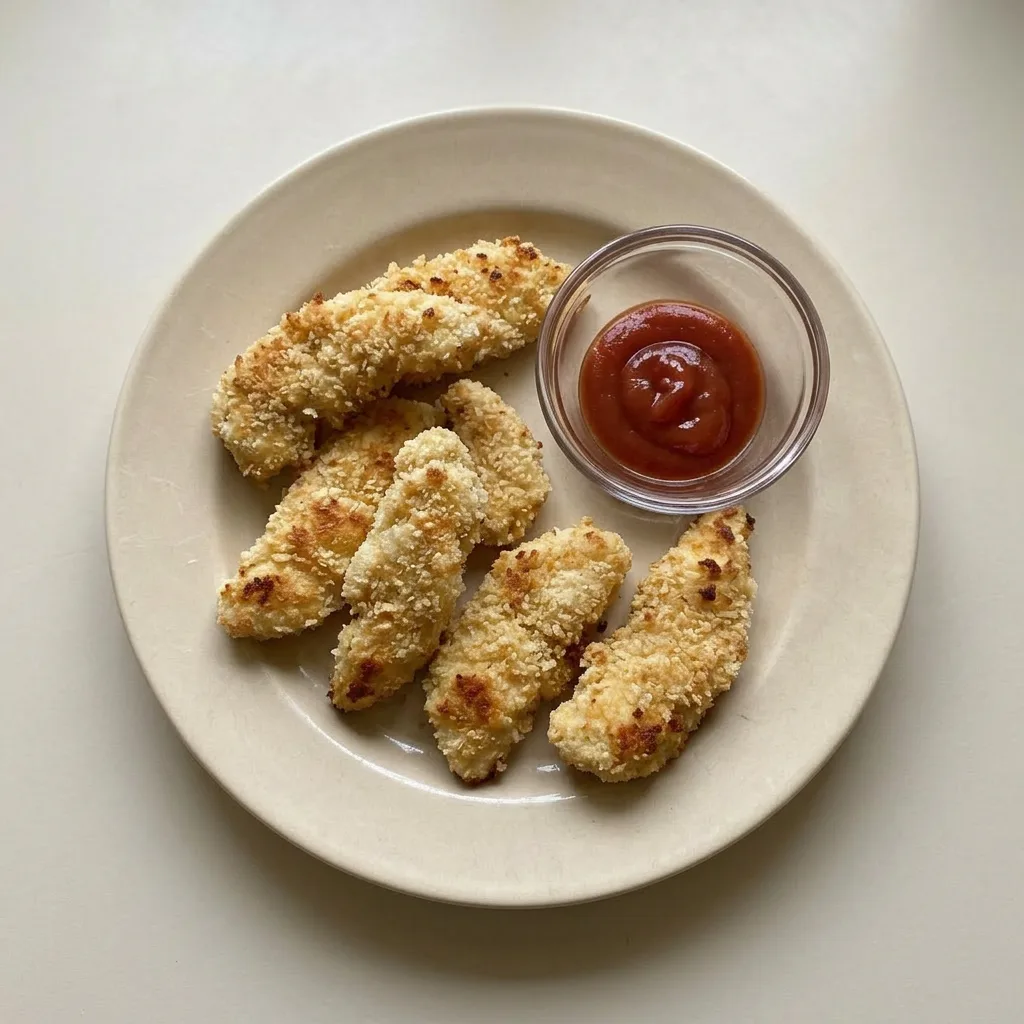
These chicken tenders are best eaten within 30 minutes of coming out of the oven, while the crust is still shatteringly crisp. If you have leftovers, let them cool completely on a wire rack so steam doesn’t get trapped.
Store in an airtight container in the fridge for up to 3 days. The coating will soften over time as moisture migrates from the chicken. To restore crunch, reheat in a 400°F oven for 5 to 7 minutes on a wire rack set over a baking sheet.
This lets hot air circulate and redries the exterior. Avoid the microwave: it turns the crust steamy and rubbery. These tenders don’t freeze well because the breading becomes soggy when thawed and reheated.
For the best texture, only make what you’ll eat in a few days.
Tips
- Pat the chicken tenders dry with paper towels before coating: the egg wash slides off wet chicken, leading to bare spots and a soggy crust. Drying removes surface moisture so the egg clings evenly.
What to swap in these chicken tenders without losing the crunch
Panko or breadcrumbs: Crushed cornflakes or almond flour. Cornflakes give an even crunchier, craggier crust but absorb a bit more oil; check after flipping. Almond flour makes them gluten-free and lower-carb but yields a denser, less crisp coating, bake 2 to 3 minutes longer.
Parmesan: Nutritional yeast. Swaps in for dairy-free: nutritional yeast adds similar savory umami but less browning, so the crust will be paler. Use the same 1/2 cup; the texture stays fine.
Olive oil: Melted butter or avocado oil. Butter browns faster and adds richer flavor, watch the oven a minute early. Avocado oil works like olive oil with a neutral taste; use the same amount.
Chicken tenders: Chicken breast sliced into strips. Works fine; just cut even strips about 1/2 inch thick so they cook in the same time. Pat dry or the egg won’t stick.
Frequently Asked Questions
Can I make these chicken tenders ahead of time and reheat them?
These are best within 30 minutes of baking, but you can make them ahead if you reheat properly. Let leftovers cool on a wire rack, then refrigerate up to 3 days. Reheat in a 400°F oven on a wire rack for 5 to 7 minutes to restore crunch.
The microwave will make the crust soggy.
How do I keep the breading from getting soggy after baking?
Bake them at 425°F and flip halfway so both sides crisp. If you’re storing leftovers, cool them on a wire rack so steam escapes. When reheating, use a 400°F oven on a rack, this lets hot air dry the crust.
Don’t crowd the baking sheet during the initial bake, or trapped steam will soften the coating.
What’s the best way to serve these chicken tenders?
Serve them straight from the oven while the crust is shatteringly crisp. They work as a main with a side of roasted vegetables or a salad, or as a snack with dipping sauces like ranch, honey mustard, or marinara. The Parmesan in the coating adds savory depth, so they don’t need much else.
Are these chicken tenders healthier than fried ones?
Yes, because they use only 2 tablespoons of oil instead of a deep-fryer full. The oven baking at 425°F still gives a crunchy crust from panko and Parmesan, but with less fat and fewer calories. You get similar texture with less grease.
Can I use chicken breast instead of tenders?
Yes, slice breasts into 1/2-inch strips so they cook evenly. Pat them dry before coating so the egg sticks. The baking time stays the same, check doneness when the thickest strip reaches 165°F.