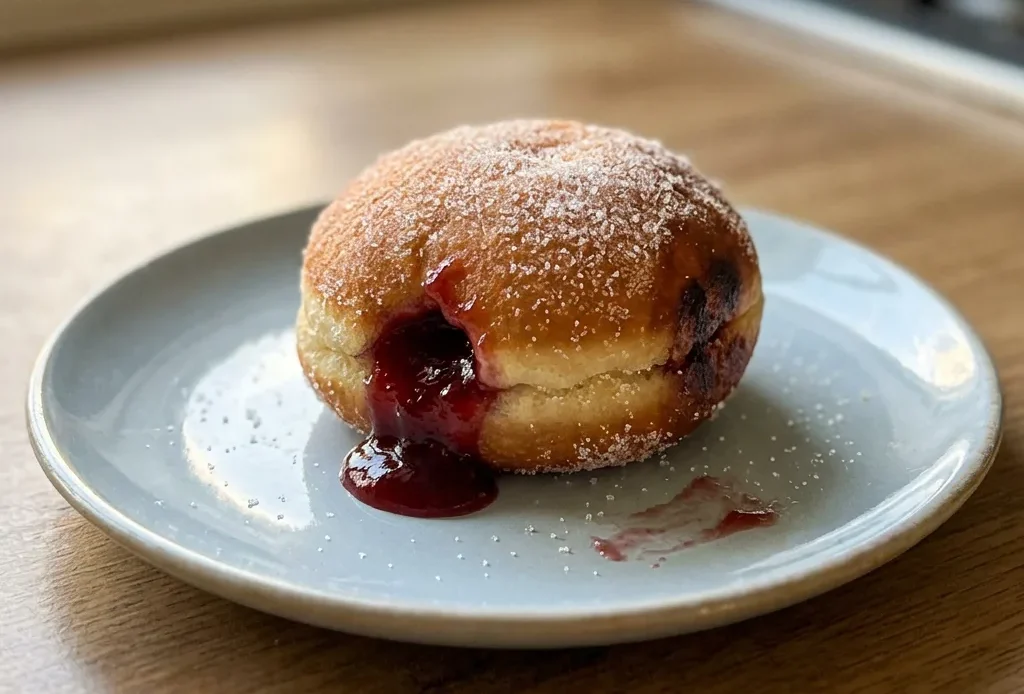
The most common mistake with vegan jam doughnuts is over-flouring the dough. Because the dough is intentionally sticky, tackier than a standard yeast dough, home cooks reflexively add flour until it feels manageable. That impulse turns a light, airy crumb into something dense and bready.
These doughnuts work because the high hydration keeps the interior tender, and the double proofing builds a structure that resists turning greasy. You’re not fighting the stickiness; you’re working with it. The right texture is supple and slightly wet, not dry and smooth.
Get that right, and the rest, shaping, proofing, frying, falls into place. Vegan jam doughnuts rely on technique, not dairy or eggs, for that soft bite.
Sticky dough is the goal
The dough feels tacky at first, but that’s what keeps the doughnuts tender. Add flour only if it’s unworkably wet; over-flouring makes them dry and dense.
Kneading develops gluten for structure, but you want a supple, elastic dough, not a stiff one. If the dough resists stretching and tears, it’s too dry.
The slight stickiness ensures the dough stays moist through the long rise and fry. Resist the urge to flour the surface; let the dough’s own moisture do the work. A properly hydrated dough yields a light crumb that traps air bubbles, giving that soft texture.
Proofing controls oil absorption
The first rise develops flavor and volume; the second proof makes the doughnuts puffy before they hit the oil. Under-proofed doughnuts are dense and soak up grease like a sponge.
Over-proofed ones collapse in the fryer, leaving you with flattened, oily discs. When the dough has doubled and then puffed again, it’s ready.
That airy structure creates a barrier that minimizes oil uptake. The result: a golden crust with a light, airy interior, not a greasy mess. Trust the visual cues, doubled in size, puffy, not the clock alone.
Fry at 340°F for even cooking
That temperature seems low for deep-frying, but it’s deliberate. The dough needs time to cook through before the exterior burns. At 340°F, the crust develops gradually, turning deep golden brown in about 5 minutes total.
5 minutes to ensure both sides color evenly. If the oil’s too hot, the outside darkens while the inside stays raw. Too cool, and the dough absorbs excess oil, turning soggy.
A timer ensures consistency. When you pull them out, they should be evenly bronzed, with no pale spots or scorched edges.
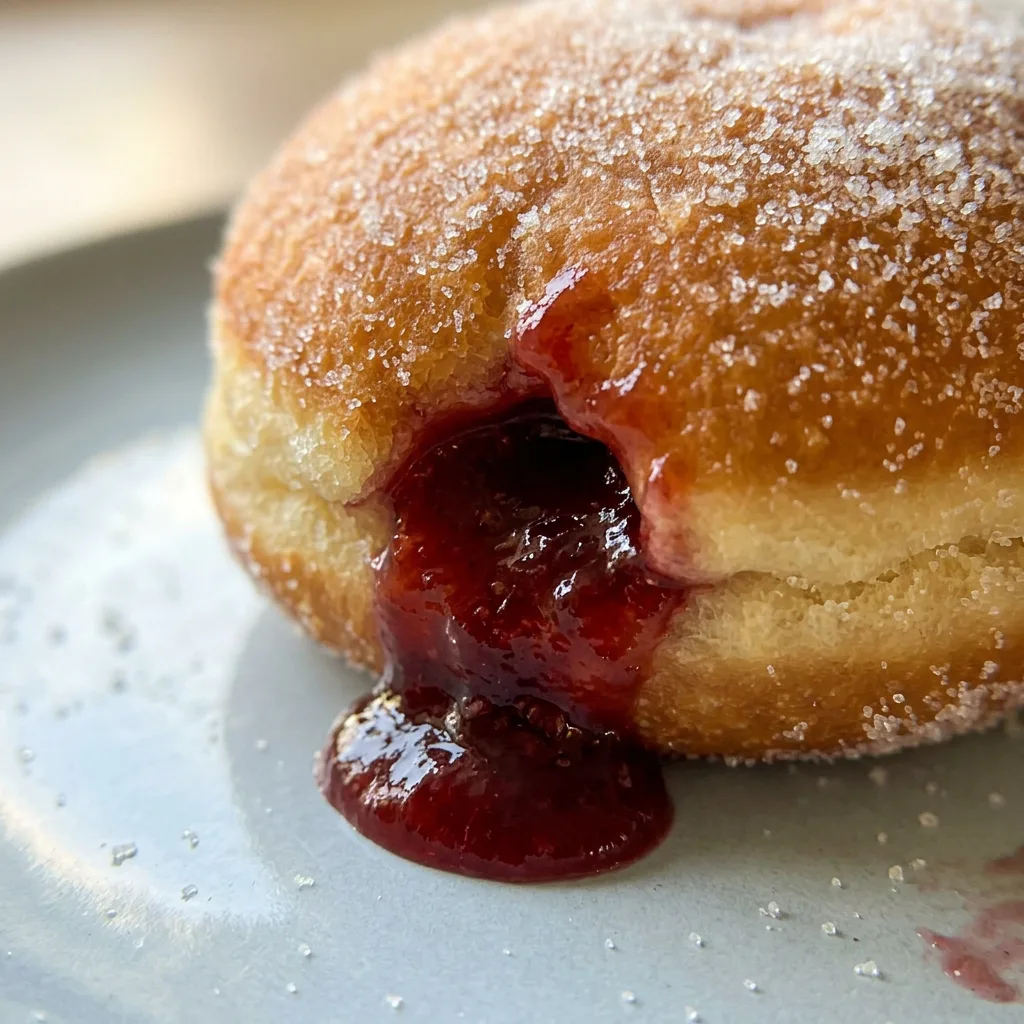
Prep: 45 min · Cook: 20 min · Total: 3 hr 50 min · Servings: 8
Choose Your Jam and Flour Wisely
White bread flour: Bread flour’s higher protein builds the gluten structure needed for a chewy, airy crumb.
Instant yeast: Instant yeast dissolves directly into the flour; no proofing needed, just mix with dry ingredients.
Non-dairy milk: Use unsweetened soy or oat milk; they have enough protein to help brown the doughnuts.
Jam: Pick a smooth jam without fruit chunks; they’ll clog the piping tip. Seedless raspberry works well.
Vegetable oil for frying: Use a neutral oil with a high smoke point, like canola or peanut, for clean flavor.
Shaping and proofing set the texture
Divide and shape
Weigh each portion to 8 equal pieces. On a lightly floured surface, pull the edges to the center, pinch to seal, flip, and roll into a smooth ball. If the dough sticks excessively, your surface needs a dust more flour.
Flatten for even cooking
Press each ball into a disc about 1½, 2 cm thick. Thicker discs yield a doughier center; thinner ones cook through faster. You’ll feel a slight resistance when the dough is properly shaped.
Second proof
Arrange discs on a parchment-lined sheet, cover loosely, and let rise until puffy, about 45 minutes. Test readiness: a gentle finger press leaves an impression that slowly rebounds. If it springs back fast, proof longer.
If it collapses or doesn’t rebound, you’ve over-proofed; punch down, reshape, and re-proof.
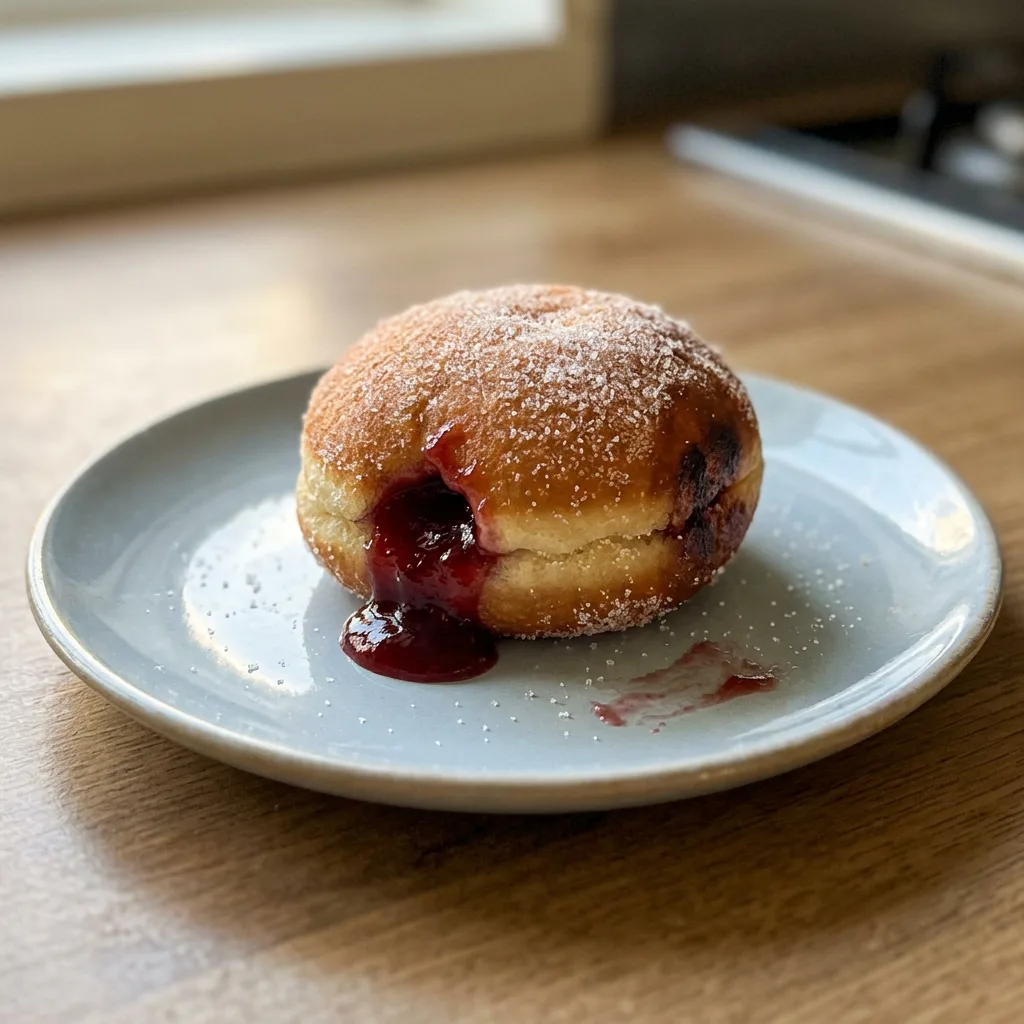
Vegan Jam Doughnuts
Ingredients
Method
Mix Dry Ingredients:
In a bowl, combine bread flour, sugar, yeast, and salt.Add Wet Ingredients:
Pour in milk, melted butter, and vanilla extract; stir until a soft, sticky dough forms.Knead Dough:
Knead on an unfloured surface for roughly 10 minutes until smooth, supple, and elastic. The dough should remain slightly sticky but not wet. If overly wet, dust with a small amount of extra flour, but avoid overdoing it to prevent dry doughnuts.First Rise:
Transfer dough to a lightly oiled bowl, cover, and let rise until doubled—about 1 1/2 to 2 hours in a warm area or overnight in the refrigerator.Deflate Dough:
Deflate the risen dough and knead briefly to eliminate air pockets.Divide Dough:
Split into 8 equal portions (use a scale for precision).Shape Balls:
On a surface dusted with flour, form each piece into a ball: pull edges to the center and pinch to seal, then flip over, cup with your hand, and roll into a smooth sphere.Flatten Discs:
Press each ball into a disc roughly 1 1/2 to 2 cm thick. Repeat with remaining pieces. (For thicker doughnuts, omit flattening.)Second Rise:
Arrange discs on a parchment-lined baking sheet, cover loosely, and let rise until puffy, about 45 minutes. The dough is ready when a gentle finger press leaves an impression that slowly rebounds. If it springs back quickly, extend proofing; if it collapses or fails to spring back, the dough is over-proofed—punch down, reshape, and re-proof.Preheat Oil:
Shortly before proofing ends, preheat deep fryer to 340°F (170°C). Prepare a shallow dish with caster sugar and a plate lined with paper towels.Fry Doughnuts:
Fry doughnuts in batches of two. Gently slide them into the hot oil; they are fragile, so handle minimally. Cook for 2 1/2 minutes (use a timer), then flip and fry another 2 1/2 minutes until deep golden brown.Drain and Sugar:
Retrieve with a slotted spoon and drain on paper towels. While still warm, roll each doughnut in caster sugar.Pierce Doughnuts:
Pierce the side of each doughnut with a skewer or small sharp knife, then wiggle to create an interior cavity.Fill Piping Bag:
Fill a piping bag fitted with a medium round nozzle (or a syringe) with jam.Inject Jam:
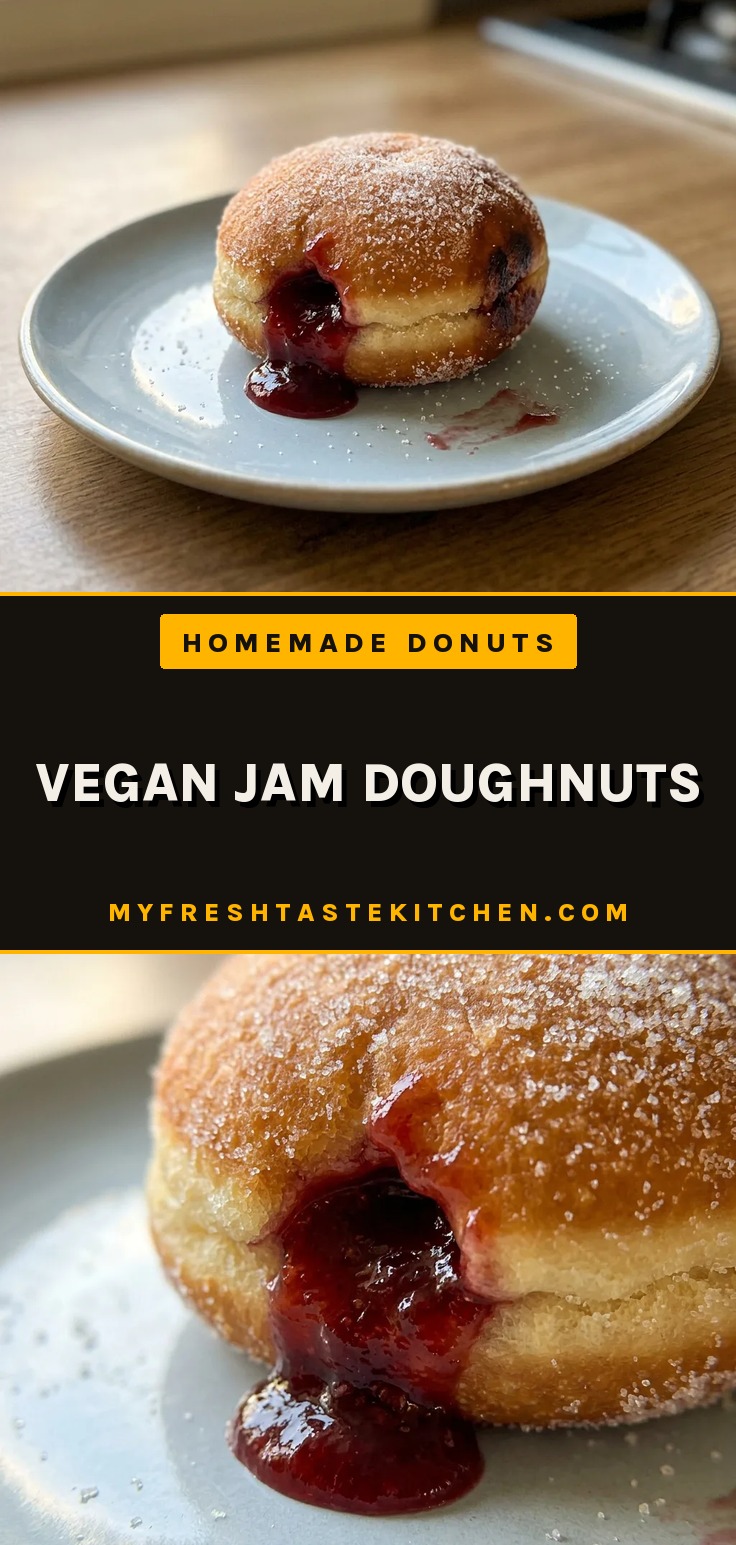
Insert the nozzle into the hole and inject a generous amount of jam. Serve immediately.
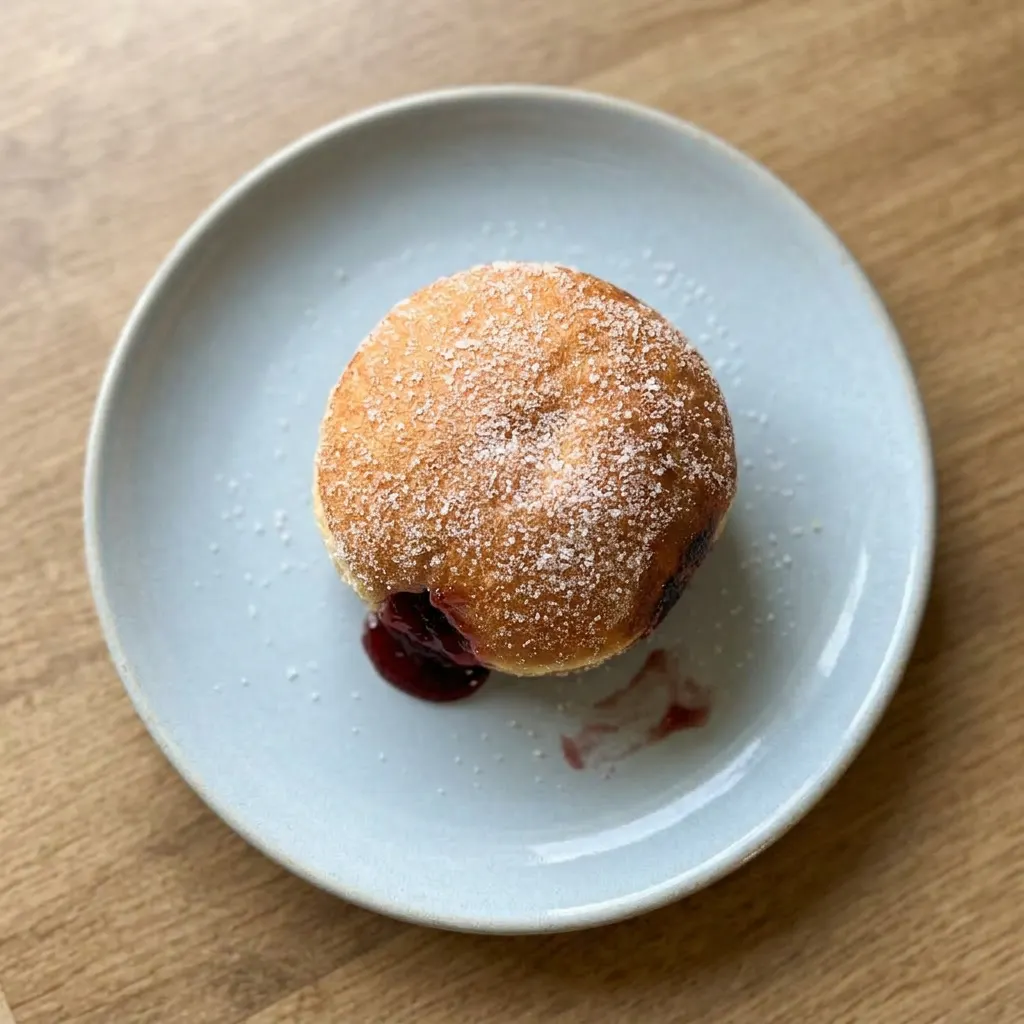
Flour and Jam Matter Most Here
White bread flour: All-purpose flour. Doughnuts will be less chewy and slightly softer because all-purpose has lower protein. They’ll still work, but the crumb won’t have the same springy bite.
Jam: Any seedless fruit preserve. Smooth textures only, chunky jam will clog the piping nozzle and tear the doughnut interior. Seedless raspberry or apricot are good choices.
Non-dairy milk: Another unsweetened plant milk (oat, almond, etc.). Oat milk works fine; almond milk may brown less and yield a slightly paler crust. Avoid sweetened varieties, they throw off the sugar balance and can cause faster browning.
Instant yeast: Active dry yeast. Use the same amount but dissolve it in the warm milk (about 110°F) with a pinch of sugar for 5 to 10 minutes until foamy before adding to dry ingredients. The dough might need a few extra minutes to rise.
Storage and Serving
These doughnuts are best eaten within a few hours of frying, while the exterior remains crisp and the interior is soft. Leftovers keep in an airtight container at room temperature for up to one day, but the sugar crust will soften and the texture becomes denser.
To refresh, warm them in a 350°F oven for 3 to 4 minutes; this restores some crispness but not the original fry. Do not refrigerate. Freezing is not recommended, as thawing makes the doughnuts soggy and the jam can weep.
If you must store longer, freeze the unfilled, unsugared doughnuts after cooling completely, wrapped tightly in plastic and foil for up to one month. Thaw at room temperature, then reheat in a 350°F oven for 4 to 5 minutes, roll in sugar, and fill with jam just before serving. Always fill and sugar after reheating for best texture.
Tips
- Weigh the dough after the first rise, then divide by 8. This ensures each doughnut fries at the same rate, so none are under or overdone.
- Use a kitchen timer set to 2 minutes 30 seconds for each side. The difference between and burnt is seconds at frying temperature.
Frequently Asked Questions
Can I make the dough ahead and refrigerate it overnight?
Yes. After the first rise, refrigerate the dough overnight instead of letting it sit at room temperature for 1½, 2 hours. Next day, punch it down, shape, and proceed with the second proof.
The cold dough might take a few extra minutes to puff up, look for the same finger-test cue: a gentle press leaves an impression that slowly rebounds.
Why did my doughnuts turn out dense and greasy?
Most likely they were under-proofed. If the dough didn’t double and then puff fully during the second proof, the structure traps too much oil. Check your proofing cues: ready dough feels puffy and a finger press leaves a slow-rebounding dent.
Another cause: oil too cool, below 340°F, lets the dough soak up fat instead of forming a quick crust.
What’s the difference between these vegan doughnuts and traditional yeast doughnuts?
The swap from dairy to plant milk and vegan butter doesn’t change the method, you still knead, proof, and fry. The main difference is a slightly less rich flavor because there’s no butterfat or eggs.
The texture stays airy and tender if you keep the dough on the sticky side and proof properly. The crust may be a shade paler unless you use soy or oat milk, which promote browning.
