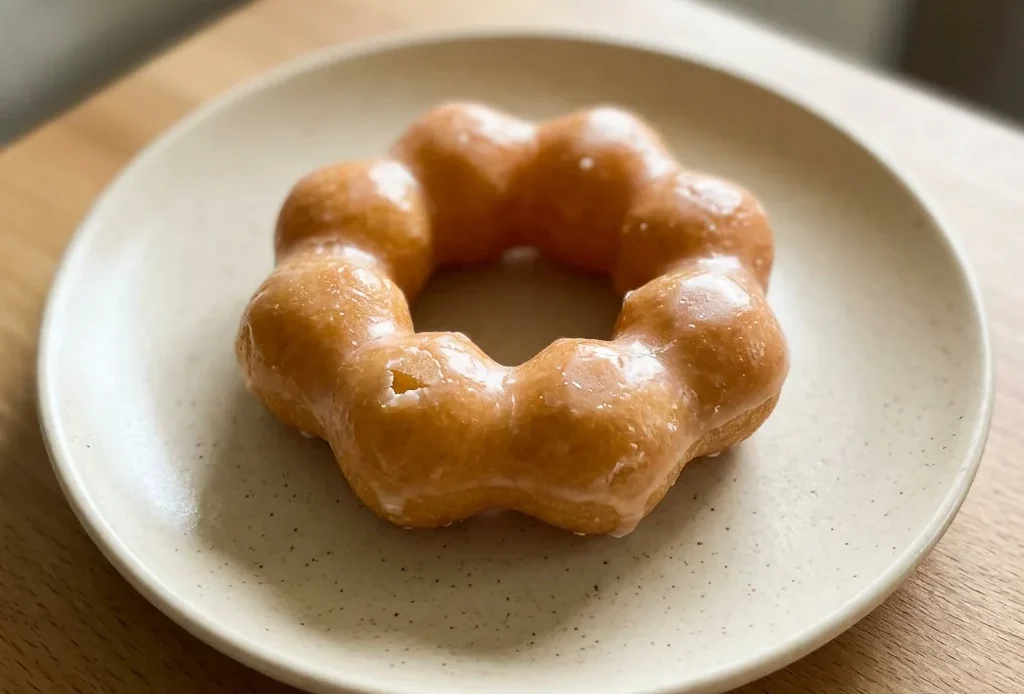
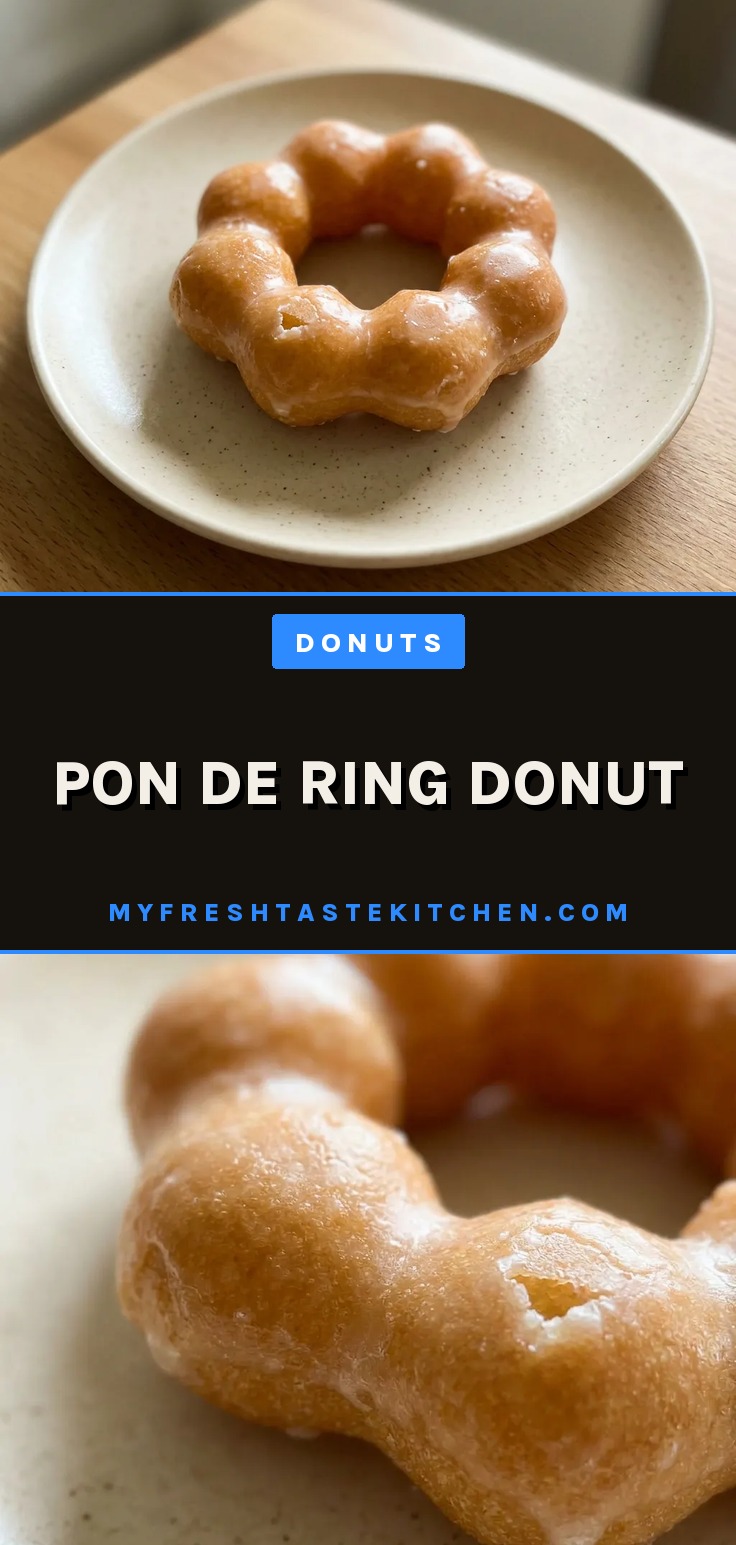
The first bite gives a bouncy, stretchy pull that’s nothing like a standard ring donut. Tapioca flour creates that chew, and the dough fights you the whole way, sticky, wet, and demanding trust.
Shaping eight tiny balls per ring and frying them in a narrow temperature window separates these from any mochi or cake version. The payoff is a crisp shell that shatters before giving way to that signature tug, finished with either a sweet vanilla set or a grassy matcha glaze that fades fast on purpose.
This pon de ring donut recipe asks for patience, but the texture is the whole story.
Why Tapioca Flour Matters
Tapioca flour gives these donuts their signature bouncy, stretchy chew, nothing like a yeast-raised ring. The dough comes out wet and tacky, almost like a thick batter, that’s normal. Resist the urge to add extra flour during kneading; the stickiness is what builds the elastic network.
All-purpose flour adds enough structure to hold the rings together, but tapioca delivers that distinctive pull when you bite. If you’ve ever had mochi or Brazilian cheese bread, you know the texture.
It’s not a substitute; it’s the whole point.
Shaping the Rings: Small Balls, Parchment Helpers
Each donut starts as eight 5-gram dough balls. That size ensures every piece cooks through evenly and creates the knobby, cluster look that defines pon de ring. Rolling them small also means they fuse into a cohesive ring during frying, not a blob.
Parchment squares let you lift the fragile assembly into hot oil without warping it, the paper slides off once submerged. Brushing a little water where balls touch encourages them to stick together as the dough puffs.
You’ll see them weld into one piece by the first flip.
Oil Temperature and Batch Size: Why It’s Important
Hold the oil at a steady 350°F and fry no more than two donuts at once. Drop the temp below that, and the dough soaks up oil, turning greasy and heavy. Go over, and the outside browns before the center sets, leaving a raw core.
Two donuts keep the heat stable, check your thermometer between batches. The total fry time is just two minutes: 75 seconds on the first side, 45 on the second.
That window is tight; precise oil management is what gives these donuts a crisp, clean crust without a hint of sogginess.
Plain Glaze, Then Matcha: A Deliberate Split
Glaze half the donuts in plain vanilla, then stir matcha into the remaining glaze for the rest. Matcha’s bitterness cuts the sugar and adds a grassy note, but it also fades quickly once mixed, adding it later keeps the color vivid. The plain option lets the tapioca’s chew stand out without distraction.
Both glazes set into a brittle shell after about 30 minutes, sealing in the warmth. You get two completely different donuts from one batch: one sweet and simple, one with a subtle, earthy bite.
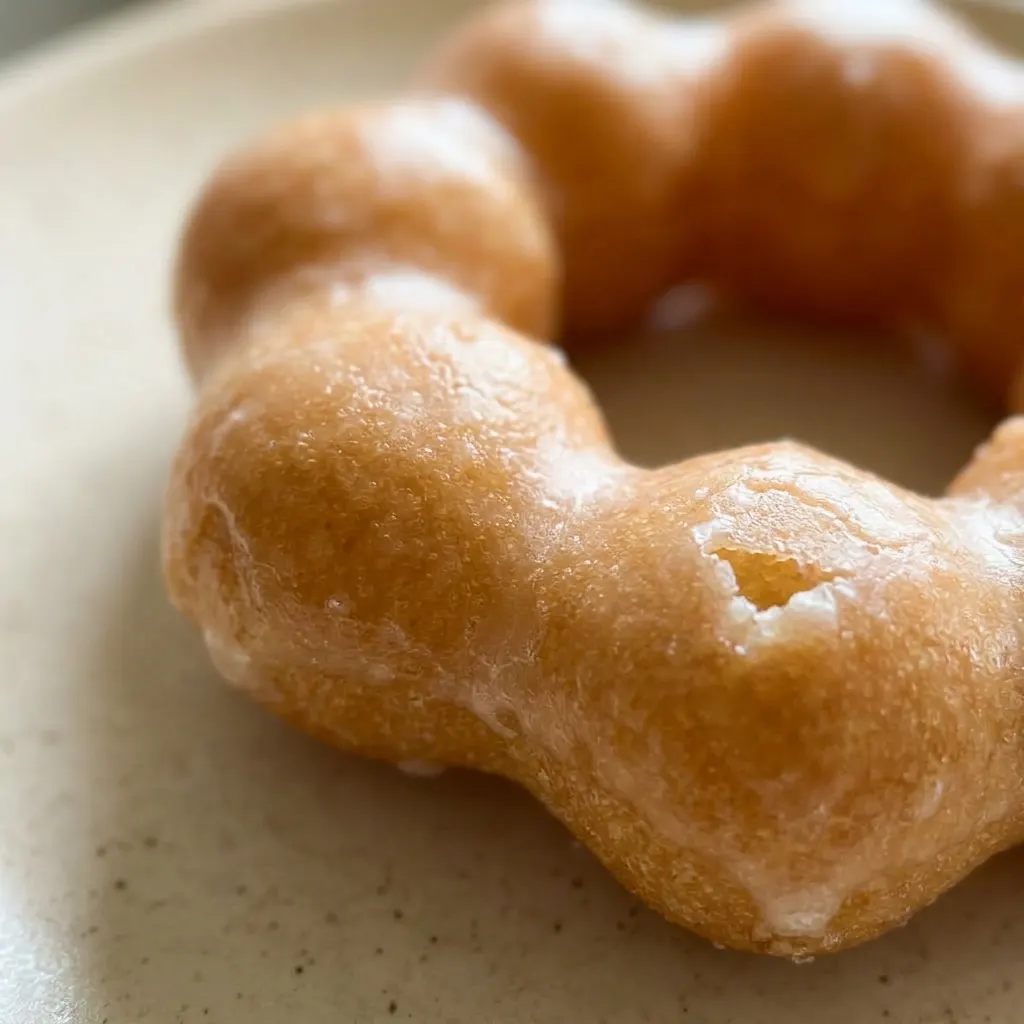
Prep: 1 hr 30 min · Cook: 40 min · Total: 3 hr 40 min · Servings: 24 · Calories: 190 kcal
Key Ingredients for Pon de Ring Donuts
Tapioca flour: Use tapioca flour, not starch; the flour gives the bouncy, stretchy chew that defines pon de ring.
Instant yeast: Instant yeast does not need proofing; just stir it into warm milk with a pinch of sugar to activate.
Safflower oil: Safflower oil has a high smoke point and neutral flavor, ideal for deep-frying at 350°F.
Matcha: Ceremonial or grade matcha works; add to half the glaze after glazing the plain batch.
Whole milk: Whole milk gives the glaze a creamy body and helps it set into a brittle shell.
Working the Sticky Dough: Trust the Process
Bloom the yeast
Stir instant yeast into warm milk with a pinch of sugar. After 5 to 10 minutes, you should see a foamy layer on top, if not, the yeast is dead; start over.
Mix and knead
Add wet ingredients to the milk-yeast mix, then incorporate the flours gradually. The dough will look shaggy, then come together as a wet, sticky mass, resist adding flour.
Knead until smooth
Run the mixer on medium-high for 3 to 4 minutes. The dough should pull away from the bowl sides but still cling to the bottom, it’ll be smooth, stretchy, and very tacky.
First rise
Place the dough in a greased bowl, cover, and let it double in size, about 70 to 80 minutes. It should feel puffy and airy when you poke it, if it springs back fast, let it go longer.
Divide and shape
Flour your work surface lightly. Press the dough flat to deflate, then cut into 24 equal pieces. Roll each into a 5-gram ball, they should be uniform and about ½ inch across.
Assemble rings on parchment
Place 8 balls in a circle on a parchment square, pressing them together. Brush a little water where they touch, this helps them fuse during frying.
Short rest
Cover the assembled rings with a damp towel and let them rest 15 to 20 minutes. They should puff slightly but still hold their shape, if they spread, they’ve rested too long.
Fry at 350°F
Heat oil to 350°F. Fry two donuts at a time, 75 seconds on the first side, 45 on the second. The donuts should be deep golden brown and feel crisp when tapped.
Glaze while hot
Dip each hot donut into the plain glaze, then set on a rack to drip. After glazing half, stir matcha into the remaining glaze and dip the rest, the color should be vivid green.
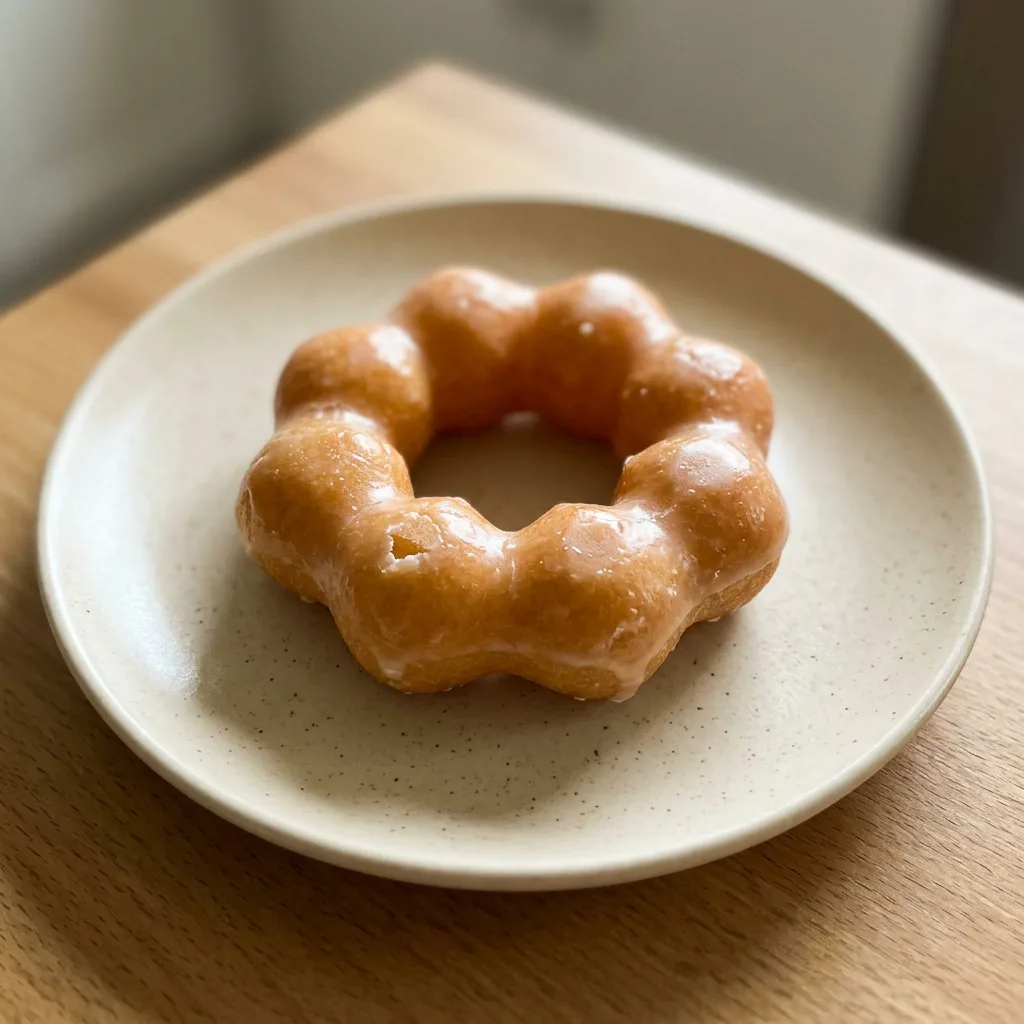
Pon de Ring Donut Recipe
Ingredients
Method
Weigh and Prep Ingredients:
Assemble and weigh all components. Employ a kitchen scale for the flours. Cut 24 parchment squares, each 4×4 inches (10×10 cm). Do not scale this recipe up or down; prepare multiple batches if necessary.Soften Butter and Beat Eggs:
Soften 6 Tbsp unsalted butter in a microwave or small saucepan; allow to cool a bit. In a separate bowl, lightly beat 2 large eggs; reserve.Activate Yeast Mixture:
In a stand mixer bowl (or a large mixing bowl), whisk together 1 cup whole milk (heated to 110°F/45°C) and 1 tsp instant yeast. Add ½ tsp sugar from the measured ¼ cup; whisk again. Let sit for 5–10 minutes.Sift and Blend Flours:
Sift 320 g tapioca flour and 180 g all-purpose flour through a fine-mesh sieve into another large bowl; whisk to blend; set aside.Add Sugar and Eggs:
Attach the flat beater to the stand mixer. Pour the remaining sugar and the beaten eggs into the milk-yeast mixture.Add Melted Butter and Vanilla:
Add the melted butter and 1 tsp vanilla extract to the bowl.Mix on Low Speed:
Mix on low speed (Speed 2) for 1 minute until combined. Alternatively, stir with a wooden spoon.Incorporate First Flour Portion:
Add roughly 2 cups of the flour blend; mix on low until fully incorporated.Add Salt and Remaining Flour:
With the mixer still on low, gradually add ½ tsp salt and the rest of the flour mixture, one scoop at a time. The dough will become thick. Reserve the flour bowl for later greasing.Knead Dough Until Elastic:
Knead the dough on medium-high speed (Speed 6) for 3–4 minutes until smooth and elastic. The dough will be wet and sticky; do not incorporate extra flour. If kneading by hand, work for 5–6 minutes; if too sticky, add 1–2 Tbsp flour at most.Grease the Flour Bowl:
While the mixer runs, grease the reserved flour bowl lightly with oil using a paper towel.Stop Mixer and Check Dough:
After 3–4 minutes, stop the mixer when the dough is smooth, sticky, and stretchy.First Rise Until Doubled:
Use a dough scraper to remove the dough from the bowl; gather it into a mass and place it in the greased bowl. Smooth the top. Cover loosely with plastic wrap and place in a warm spot until doubled in size, about 70–80 minutes. An oven set to proof at 100°F (40°C) with a bowl of hot water works well. Ensure the temperature is not excessive.Heat Oil to Frying Temperature:
After 70–80 minutes, pour 4 cups safflower oil into a Dutch oven or heavy-bottomed pot. Attach a cooking thermometer with alarms set to 325°F (165°C) low and 350°F (175°C) high.Flour Work Surface and Hands:
Dust your work surface with 1–2 Tbsp all-purpose flour. Lightly flour your hands and the surface.Deflate and Shape Dough Log:
Turn the dough out onto the floured surface; sprinkle a little flour on top and press down to expel air bubbles.Cut Dough into Two Portions:
Using a dough scraper, shape the dough into a rough log; cut it into two equal portions.Shape One Portion into Ball:
Set one piece aside; shape the other into a ball and cover with plastic wrap. Cut the piece on the work surface into quarters and roll each into a ball. Work with one ball at a time, keeping the rest covered.Divide Ball into 24 Small Balls:
Each dough ball yields about 3 Pon de Ring donuts. Divide the first dough ball into 24 small balls, each ½–¾ inch (1.5 cm) in diameter and weighing 5 grams.Roll Small Balls Smoothly:
Quickly roll each small ball between your palms; avoid overworking. Use the dough scraper to lift any sticky bits.Assemble Donut Rings on Parchment:
Assemble the donuts: use 8 small balls per donut. Place one ball at a time onto a parchment square, arranging them in a ring and ensuring they touch. Each ring should weigh about 40 grams.Shape Remaining Rings:
Continue shaping the remaining rings.Brush Water and Rest Donuts:
Lightly brush water with a pastry brush where the balls meet to help them stay together during frying. Cover the donuts with a damp paper towel or light cloth; rest for 15–20 minutes. If the process takes long, refrigerate to slow proofing.Prepare Oil and Cooling Racks:
As you finish the last batch, heat the oil to 350°F (175°C). Line one baking sheet with paper towels and another with parchment topped with a wire rack.Lower Donut into Hot Oil:
Lift one parchment square with its donut; gently lower the donut (still on parchment) into the hot oil.Fry First Side for 1 Minute 15 Seconds:
Release the donut; start a timer for 1 minute 15 seconds for the first side. Fry only 2 donuts at once to keep the oil temperature stable.Flip and Fry Second Side:
When the timer sounds, quickly flip the donuts using chopsticks or tongs; fry the second side for 45 seconds. Carefully remove the parchment square.Drain and Transfer to Paper Towels:
After the second timer, retrieve the donuts with a skimmer or tongs; let excess oil drain. Transfer to the paper towel-lined sheet to absorb extra oil.
Glaze Hot Donuts:
While the donuts are still hot, dip each into the glaze, coating both sides. Glaze them as you fry; having a helper is useful.Set Glazed Donuts on Wire Rack:
Place the glazed donuts on the wire rack to allow extra glaze to drip off; the glaze will set and harden in about 30 minutes.Make Matcha Glaze:
After glazing 12 donuts, stir 1 Tbsp matcha into the remaining glaze until smooth.Glaze Remaining Donuts with Matcha:
Dip the remaining donuts into the matcha glaze; place them on the rack; the glaze will set after 30 minutes.Serve and Store Leftovers:
Best served warm. Enjoy the same day. Store in an airtight container at room temperature for up to 1 day. Reheat in a microwave for 15–20 seconds before serving.
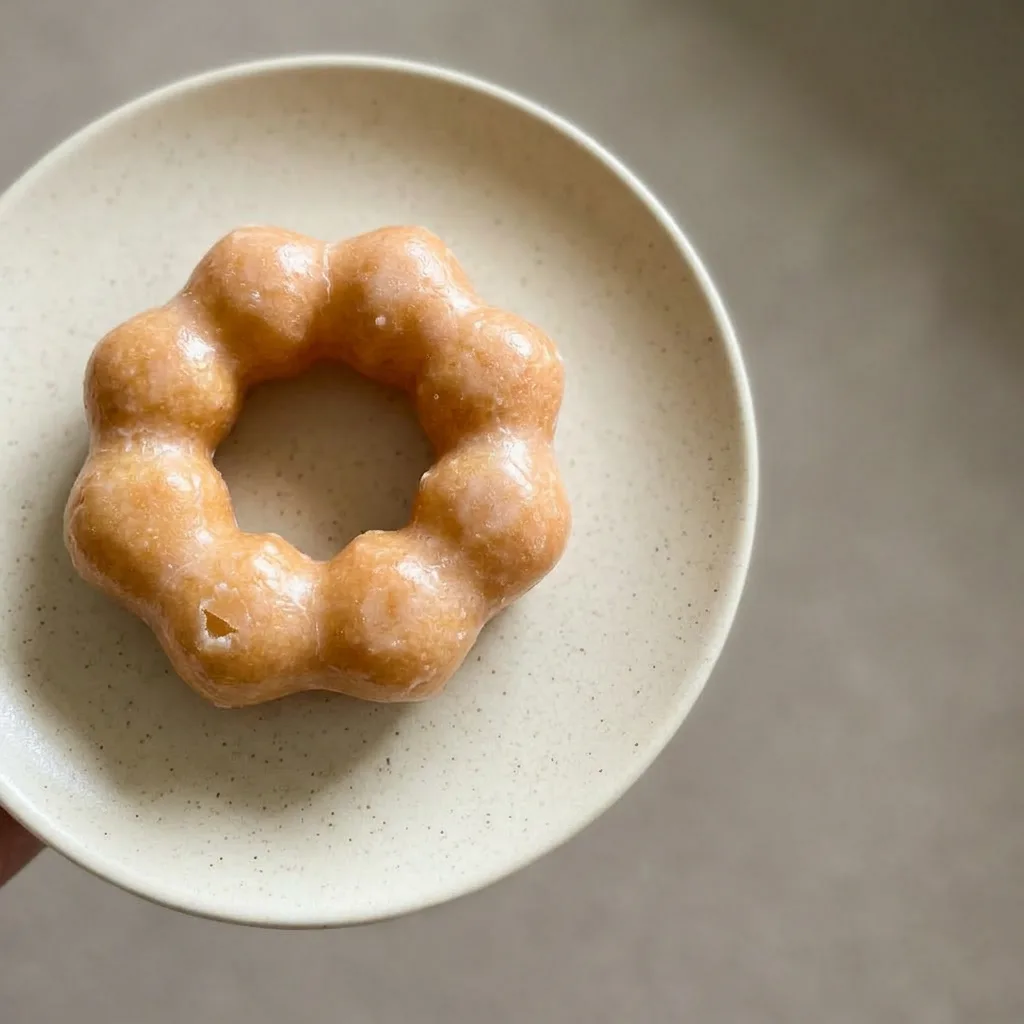
Storage and Serving
These donuts are best warm, within a few hours of glazing. The glaze sets into a brittle shell after about 30 minutes; eat them soon after for maximum contrast between the crisp exterior and chewy interior. Leftovers will soften as the glaze absorbs moisture from the air.
Store glazed donuts in an airtight container at room temperature for up to 1 day. Do not refrigerate, as that accelerates staling and makes the tapioca texture turn dense and gummy. To reheat, microwave a single donut for 15 to 20 seconds to restore warmth and soften the crumb.
The glaze will become sticky again, not crisp. These donuts do not freeze well; the tapioca structure breaks down upon thawing, leaving a wet, heavy ring. If you must freeze, freeze unglazed donuts in a single layer on a sheet pan, then transfer to a freezer bag for up to 1 month.
Thaw at room temperature for 30 minutes, then reheat in a 350°F oven for 3 to 4 minutes before glazing.
Substitute Carefully: These Donuts Have a Delicate Balance
Tapioca flour: Do not substitute. Tapioca flour is important for the signature bouncy, stretchy texture. No other flour, not cassava flour, not sweet rice flour, will give the same chew.
Swap it and you’ll get a cakey donut, not the mochi-like pull. The dough won’t hold its shape during frying, and the rings will be dense, not airy.
Safflower oil: Canola or vegetable oil, same amount. These have similar smoke points (around 400°F) and neutral flavors. The donuts will fry just as crisp and clean.
Avoid olive oil, coconut oil, or butter, they burn or add off-flavors.
Whole milk (in dough and glaze): For dairy-free: use unsweetened oat milk or full-fat canned coconut milk (not boxed). For the dough, warm to 110°F as directed.
For the glaze, use the same ¼ cup measure. Oat milk keeps the dough tacky and the glaze creamy.
Coconut milk adds a faint tropical note that can clash with matcha, use only if you don’t mind. Skim or 2% milk will make the glaze thinner and less brittle; the dough may be slightly less tender.
All-purpose flour: Gluten-free all-purpose blends (like King Arthur Measure for Measure or Bob’s Red Mill 1-to-1) can work, but expect a softer, less structured ring. The dough will be stickier and harder to shape; the rings may puff less and feel more like a cake donut (like the keyword suggests). Weigh the blend exactly as you would all-purpose flour.
No other gluten-free flour works alone.
Tips
- Use a small digital scale to portion each dough ball to exactly 5 grams. Even slight variations (e.g., 6g instead of 5g) cause some balls to cook faster or slower, leading to uneven browning and inconsistent chew across the ring.
- After rolling all 24 balls for one donut, arrange them on the parchment square in a circle and then gently press each ball against its neighbors to flatten the contact points slightly. This increases the surface area where they fuse, preventing gaps during frying.
Frequently Asked Questions
Can I make the dough ahead and fry later?
Yes, after the first rise, punch it down, wrap tightly, and refrigerate overnight. Next day, shape and fry straight from the fridge; the cold dough holds its ring shape better during the second rest. Do not freeze the dough, the tapioca structure breaks on thawing.
Why did my donuts turn out greasy?
Most likely the oil temperature dropped below 350°F. Fry only two at a time and let the oil come back to temp between batches. Also, make sure you fried each side the full 75 and 45 seconds, under-frying leaves moisture that soaks oil.
How do I know when the oil is at the right temperature without a thermometer?
Drop a small scrap of dough into the oil; it should sink, then rise within 30 seconds and bubble steadily. If it browns in 15 seconds, the oil is too hot; if it barely sizzles, it’s too cold. A thermometer is far more reliable for the narrow 350°F target.
What’s the difference between Pon de Ring and mochi donuts?
Pon de Ring uses tapioca flour for a bouncy, stretchy chew, while mochi donuts rely on sweet rice flour for a denser, more elastic bite. The shaping also differs: pon de ring clusters small balls, mochi donuts are pressed into a ring mold. Both are chewy, but the texture and method are distinct.
