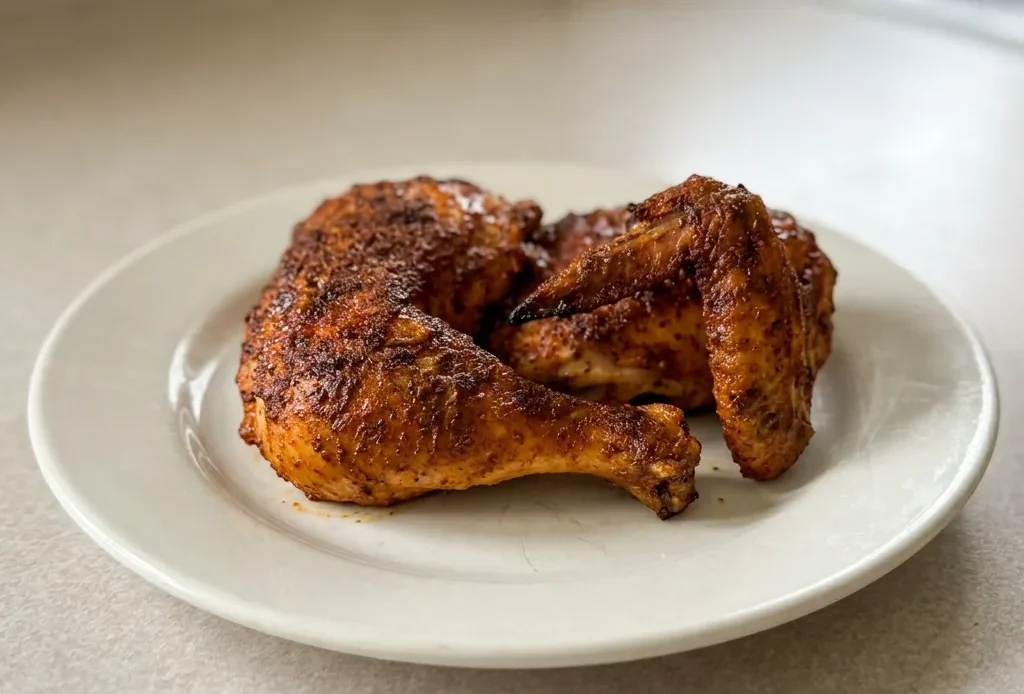
Choosing between spatchcocking and trussing is where this Thanksgiving chicken recipe splits. One route gets you dinner in under an hour; the other keeps the classic bird shape. Both work, but pick wrong for your timeline and you’re stuck with dry breast or a late meal.
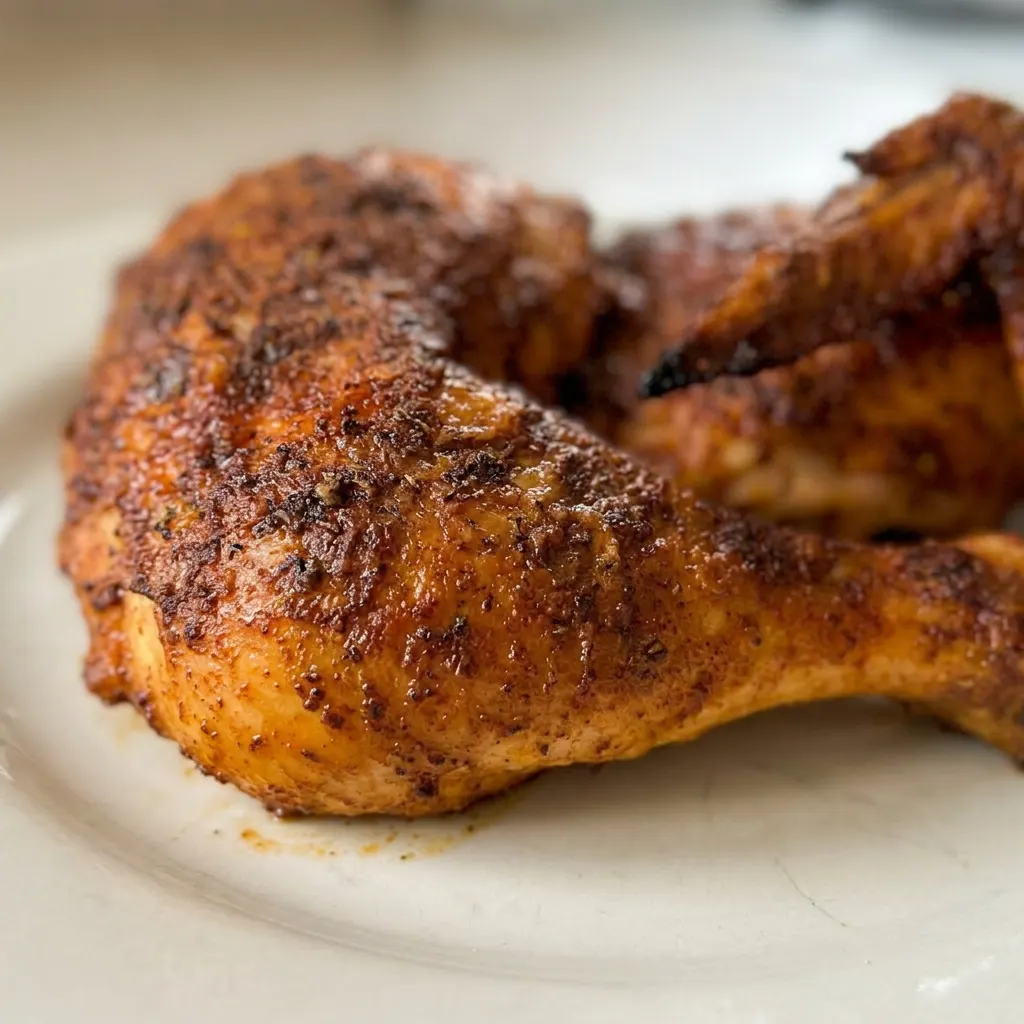
The real trick, no matter which method you pick, is nailing the roast so the skin shatters and the meat stays juicy, that’s the difference between a forgettable bird and one that steals the show. These thanksgiving chicken recipes lean on high heat and a thermometer, not guesswork.
I see so many people skip drying the chicken and then complain their skin is rubbery. I did it once and learned my lesson.
Dry the chicken thoroughly for crispy skin
Moisture is the enemy of browning. When the skin is wet, it steams rather than roasts, and you end up with pale, flabby skin. Patting the chicken dry with paper towels removes surface moisture, letting the heat hit the skin directly.
Dry skin also lets the oil and spices stick better, so the seasoning doesn’t slide off. You can feel the difference: a dry bird feels tacky, and the oil spreads evenly.
The result is skin that crisps up, not one that peels off in rubbery patches.
Spatchcock or truss: choose your roast time
How you prep the bird changes the cooking time dramatically. Spatchcocking, cutting out the backbone and flattening the chicken, lets heat reach every part evenly. A spatchcocked chicken roasts in 40 to 50 minutes, with the breast and thighs finishing at the same moment.
Trussing keeps the legs tucked in for a traditional shape, but the bird cooks more slowly, taking 1 hour 20 minutes or more. The trade-off is convenience: spatchcocking saves time and gives more even doneness, especially if you’re looking for whole chicken recipes that don’t dry out the breast while the legs catch up.
Let the chicken rest before carving
Slicing into a hot bird right out of the oven releases a flood of juices that end up on the cutting board, not in the meat. Resting lets those juices redistribute from the center back into the outer fibers. You need at least 15 to 20 minutes of rest.
During that time, the carryover heat continues cooking the interior a bit, but the real payoff is moisture. A rested chicken slices cleanly and tastes juicy. If you skip the rest, you’ll notice the meat looks wet at first but quickly dries out on the plate.
The extra wait is important for a tender result.
Prep: 10 min · Cook: 1 hr 20 min · Total: 1 hr 50 min · Servings: 5 · Calories: 340 kcal
A few things to know about the ingredients
whole chicken: Look for a 4.5 to 5 lb bird; larger ones take longer and may dry out the breast.
olive oil: Use enough to coat the skin fully; too little and the spices won’t stick evenly.
poultry seasoning: Old jars lose potency; if yours is more than a year old, replace it.
smoked paprika: Sweet or hot works, but avoid regular paprika; it lacks the smoky depth.
Roast at 425°F for a deeply browned, juicy bird
Dry and season the chicken
Pat the chicken bone-dry with paper towels, moisture left on the skin will steam instead of brown. You’ll feel a tacky surface when it’s ready for oil. Rub the oil and spices all over, including under the skin if you can get in without tearing it.
Truss or spatchcock?
If you truss, tie the legs snugly with kitchen twine and tuck the wingtips under. A trussed bird takes the full 1 hour 20 minutes.
If you spatchcock, flatten the chicken and roast for only 40 to 50 minutes. Both work; choose based on your schedule.
Roast until the thigh hits 165°F
Set the chicken breast-side up on a rack in a skillet. Slide a thermometer into the thickest part of the thigh, avoiding bone. When it reads 165°F, the bird is done.
Start checking at 1 hour 15 minutes for a trussed bird, earlier for spatchcock.
Rest before you carve
Let the chicken sit on the cutting board for at least 15 minutes. If you slice sooner, you’ll see a pool of juice escape, that’s moisture leaving the meat. After resting, the juices stay inside and the meat feels tender, not dry.
Thanksgiving Chicken Recipe
Ingredients
- 1 (4.5-5 lb) whole chicken
- 1 tablespoon olive oil enough to fully coat the chicken
- kitchen twine if not spatchcocking
- 1/2-1 tablespoon poultry seasoning
- 1-2 teaspoons smoked paprika
- 1 teaspoon garlic powder
- 1 teaspoon onion powder
- salt and pepper to taste
Instructions
Preheat oven to 425°F:
Set oven to 425°F (220°C).Dry and prepare chicken:
Dry chicken thoroughly with paper towels. Check cavity and remove giblets if present.Truss or spatchcock chicken:
If not spatchcocking, secure legs together with kitchen twine and tuck wingtips under the bird. For spatchcock method, refer to separate instructions.Season chicken with spices:
Coat chicken with olive oil, then apply poultry seasoning, smoked paprika, garlic powder, onion powder, salt, and pepper. Massage spices into skin, covering all surfaces; add extra if needed.Place chicken on rack:
Position chicken breast-side up on a roasting rack inside a pan or cast iron skillet.Roast until 165°F internal:
Bake for 1 hour 20 minutes to 1 hour 40 minutes, until a thermometer inserted into the thickest thigh area reads 165°F (75°C). Roasting duration depends on bird size; rely on thermometer. Spatchcocked chicken requires 40-50 minutes.Rest chicken before carving:
Allow chicken to rest at least 15-20 minutes before carving so juices redistribute. Cutting too early yields dry meat. When removing pan, watch for spills of any beer.
Storage and Serving
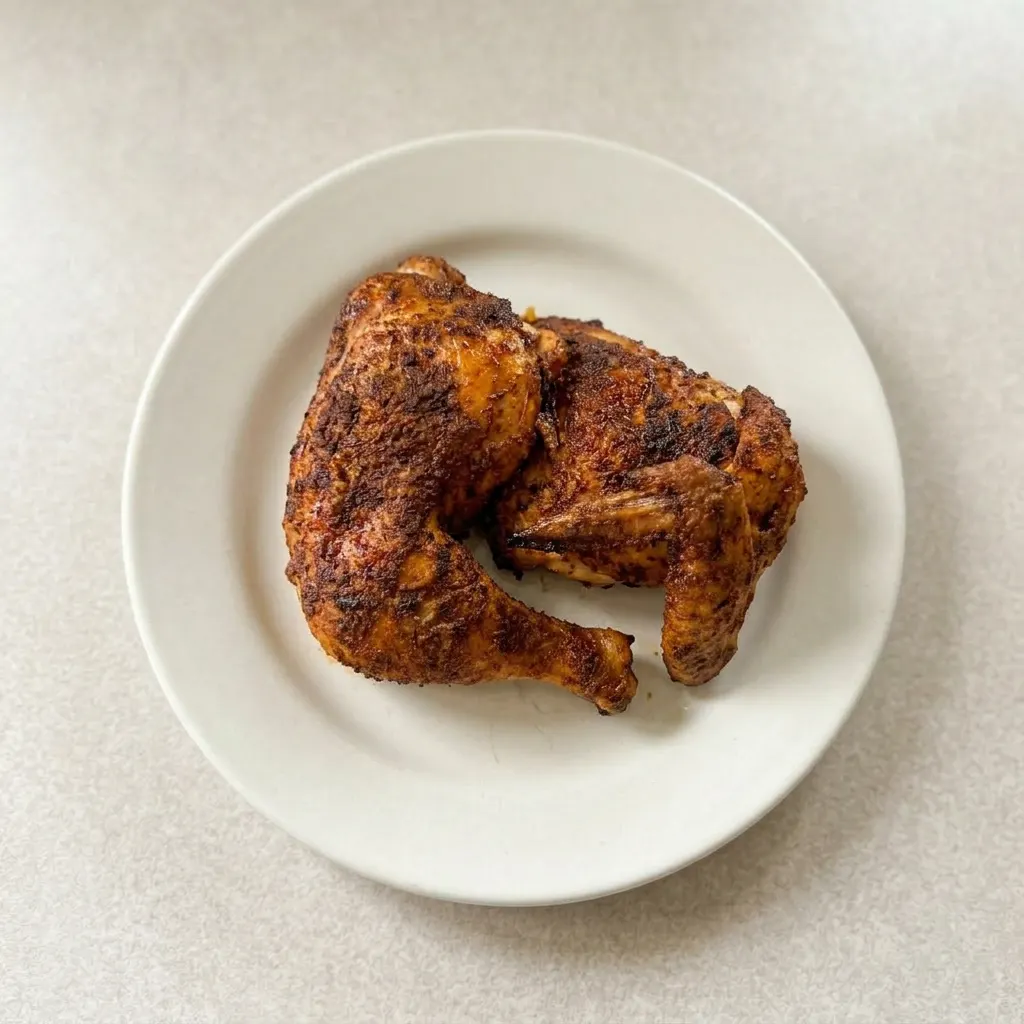
Leftover roasted chicken stays juicy for up to 3 days in the fridge when stored in an airtight container. The skin will soften over time, so for the best texture, eat within 24 hours.
To reheat without drying, place chicken skin-side up in a 350°F oven for 10 to 15 minutes, or in a covered skillet with a splash of broth. Microwaving will toughen the meat; avoid it. Freeze shredded or sliced chicken in a sealed bag for up to 3 months, but note that frozen and thawed skin will never crisp again.
Serve leftovers cold on salads or sandwiches, or warm as a main. The 20-minute rest after roasting is mandatory before carving; do not skip it. For make-ahead, roast the chicken completely, carve, and refrigerate; reheat as described.
Do not attempt to serve the chicken sooner than the full rest time, as the meat will be dry.
Swapping spices without losing the roast chicken flavor
poultry seasoning: Mix equal parts dried thyme, rosemary, and sage (about 1/2 teaspoon each per tablespoon needed). You get a similar herbal backbone; the blend may be slightly more aromatic if using fresh-dried herbs. Start with the same total amount as the recipe calls for.
smoked paprika: Regular paprika plus a pinch of chipotle powder (about 1/8 teaspoon chipotle per teaspoon paprika). Regular paprika lacks the smoky depth but adds color; chipotle brings heat and a different smoke.
The final flavor will be more spicy and less sweet-smoky. Use the same volume of regular paprika, then add chipotle to taste.
olive oil: Any neutral oil like canola or avocado oil. No flavor difference worth noting; the oil’s job is to help spices stick and promote browning. Use the same amount.
garlic powder: Granulated garlic (same amount) or 1 minced garlic clove per teaspoon powder, mixed into the oil. Granulated garlic works identically. Fresh garlic will burn at 425°F if left on the surface, it turns bitter.
If using fresh, tuck it under the skin or mix into a paste with the oil. For safety, stick with powder.
Tips
- Insert the thermometer into the thickest part of the thigh without touching bone; check the breast as well, aiming for 160°F in the breast (carryover will take it to 165°F). This prevents overcooking the breast while the thigh catches up.
Frequently Asked Questions
Can I use a smaller or larger chicken? How does that affect cooking time?
You can, but the cooking time will shift. 5 lbs) will be done sooner, start checking the thigh temp 10 to 15 minutes early. A larger bird (over 5 lbs) takes longer and risks drying out the breast while the thighs catch up; if you go that route, expect 15 to 20 extra minutes and rely on a thermometer, not the clock.
5, 5 lb trussed chicken; any size change alters that window.
What if I don’t have a roasting rack? Can I use something else?
Yes, but the goal is to keep the chicken off the pan bottom so hot air circulates underneath. A wire cooling rack set inside a sheet pan works fine. In a pinch, crumple long strips of aluminum foil into coils and arrange them as a makeshift rack, just make sure the bird sits stable and not in pooled fat.
Can I prepare the chicken the night before and refrigerate it?
Yes, and it actually helps the seasoning penetrate and the skin dry out, which promotes browning. Season and oil the chicken as directed, then place it uncovered on a rack in the fridge overnight. The next day, let it sit at room temperature for 20 minutes before roasting, the cold bird will increase oven time slightly, so trust the 165°F target in the thigh.
How is this different from a traditional Thanksgiving turkey recipe?
The biggest differences are scale and technique. A turkey is larger, so it roasts longer at a lower temperature (often 325°F) to avoid burning the skin before the dark meat is done.
This chicken recipe uses a higher 425°F heat for a shorter time, which gives crisper skin and a juicier breast, small bird advantages. Spatchcocking, if you choose it, cuts the time even more.