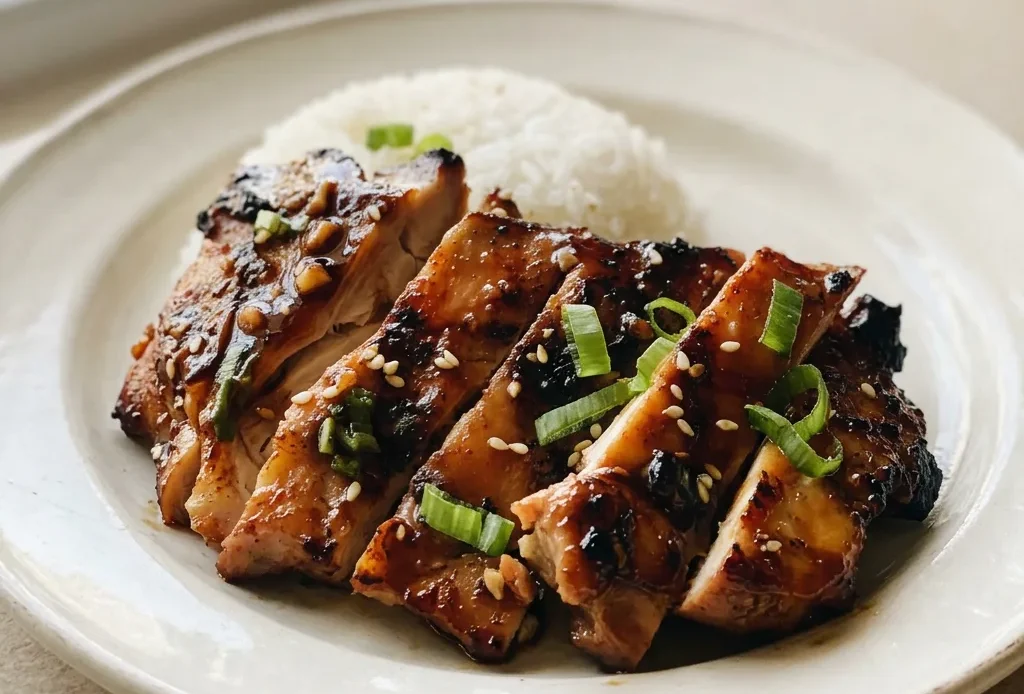
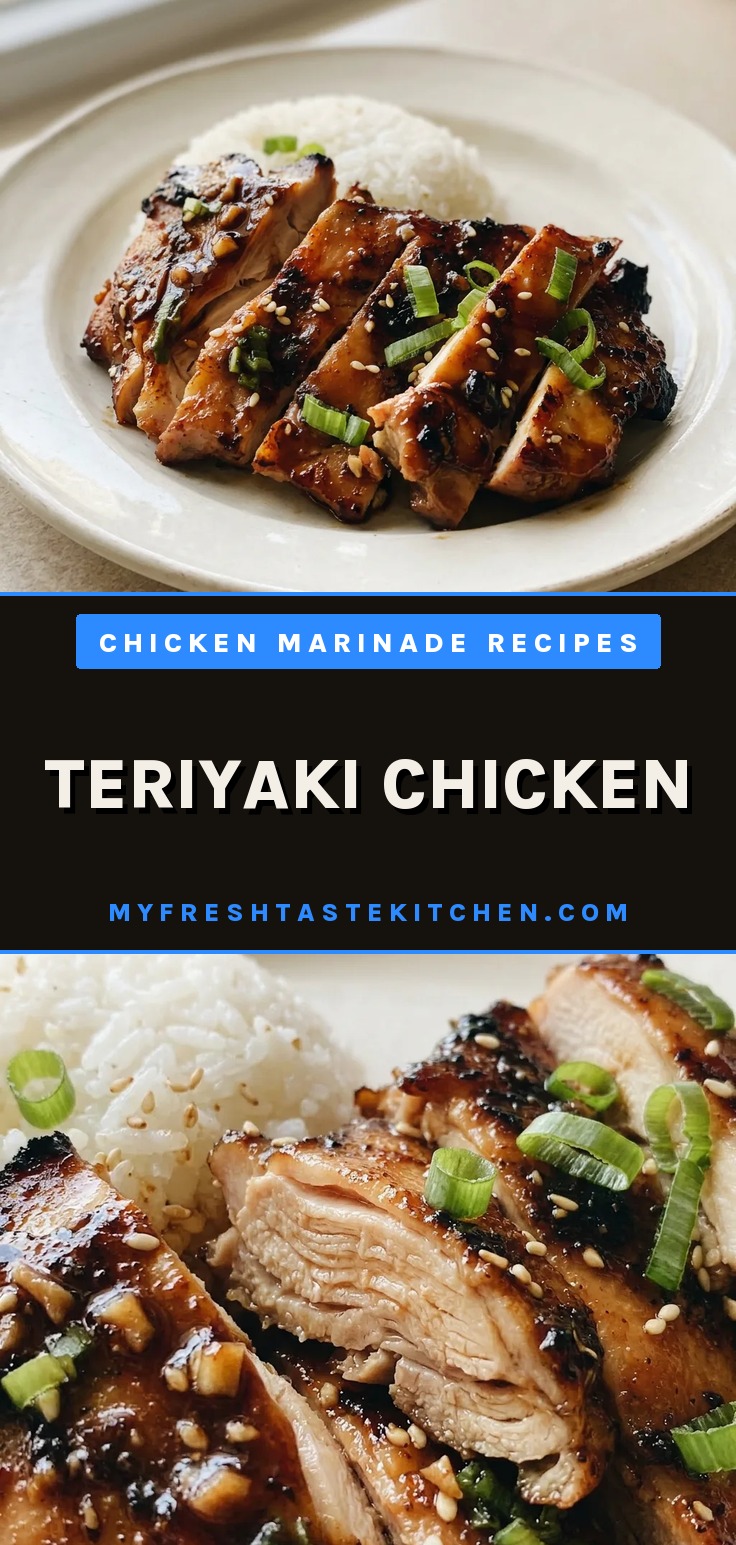
Restaurant teriyaki chicken has that lacquered, glossy crust and juicy interior, the split marinade technique makes it happen at home without a deep fryer. One half soaks into the meat while you simmer the other into a thick, brushable glaze that caramelizes on the grill. The two-hour minimum marinate isn’t negotiable; the sugar and soy need that time to penetrate, not just sit on the surface.
I still whisk the cornstarch into the cold marinade in a separate bowl before pouring it into the pan, even though it feels like an extra step that makes me look fussy.
Marinate at least two hours for deep flavor
A quick dip won’t do it. The soy sauce and brown sugar need time to work into the meat, not just sit on the surface. Rice vinegar adds brightness, garlic and ginger bring warmth.
Two hours is the minimum; overnight is better. You’ll see the chicken darken as it absorbs the marinade. The sugar also helps tenderize, so the thighs stay juicy when cooked.
Don’t skip the long soak, it’s what makes the difference between a bland piece of chicken and one that tastes infused.
Split the marinade to build a glaze
You reserve half the marinade before it touches raw chicken. That reserved portion becomes a glossy sauce.
Simmer it with cornstarch to thicken; it will go from thin to syrupy in minutes. This sauce does double duty, it brushes onto the chicken during grilling, adding shine and a concentrated sweet-savory finish. The split prevents cross-contamination and lets you control the final flavor.
The result is a lacquered coating that caramelizes over the heat.
Grill over high heat for a caramelized crust
High heat is important. It sears the outside quickly, locking in moisture and creating char marks that taste of caramelized sugar.
Cook each side six to seven minutes for the initial sear, then brush with sauce and flip for another three to four minutes per side. The chicken is done when juices run clear, not pink. Let it rest ten minutes before slicing, this redistributes juices so the meat stays moist.
The contrast of sticky crust and tender interior is what you’re after.
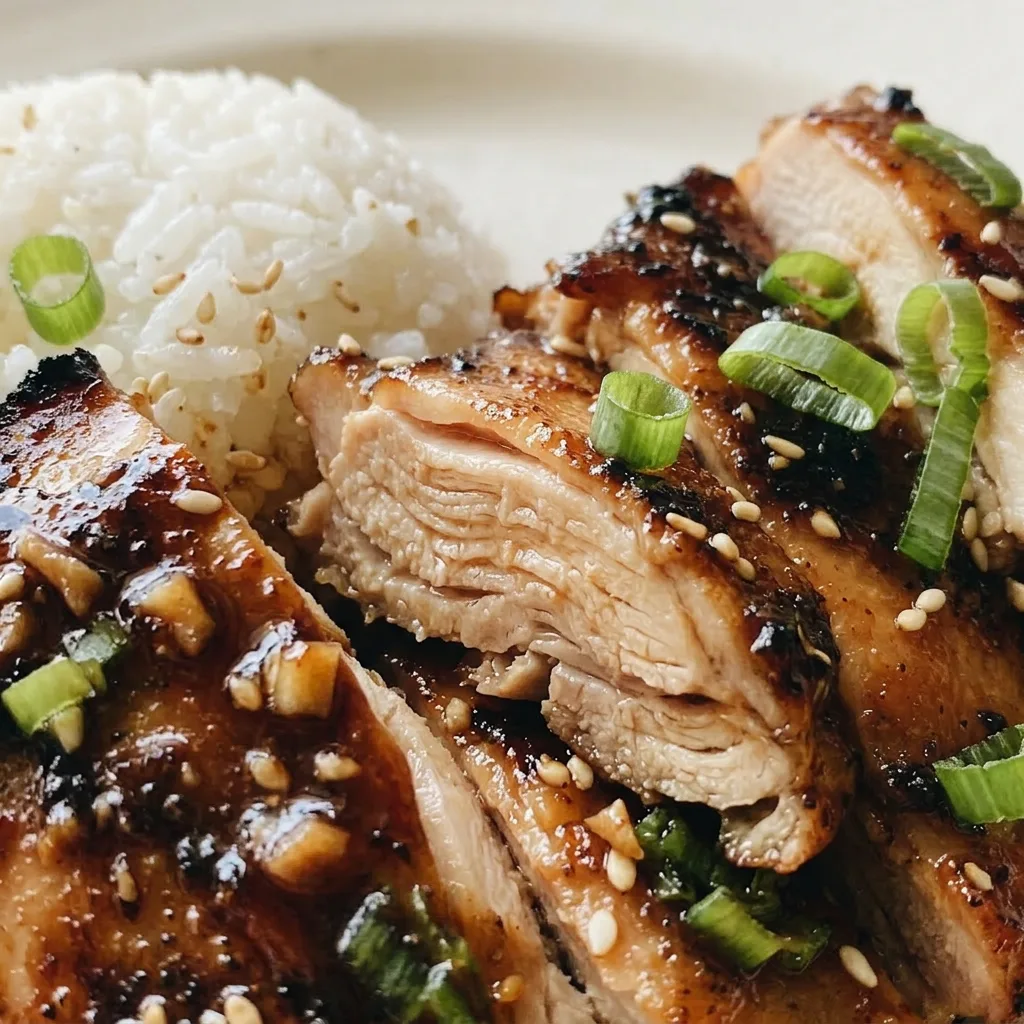
Prep: 2 hr · Cook: 20 min · Total: 2 hr 30 min · Servings: 8 · Calories: 320 kcal
Choose the right chicken and aromatics
Boneless skinless chicken thighs: Boneless skinless thighs stay juicier than breasts because they have more fat and connective tissue.
Freshly grated ginger: Grate on a microplane: jarred ginger tastes flat and lacks the heat that fresh gives.
Cornstarch: Cornstarch thickens the reserved marinade into a glossy glaze; arrowroot works but yields less shine.
Grill over high heat for a caramelized crust
Marinate the chicken
Pour half of the combined soy sauce, brown sugar, vinegar, water, garlic, and ginger over the chicken. Refrigerate at least 2 hours. The meat will darken as it absorbs; overnight is better.
Make the glaze
Whisk cornstarch into the reserved marinade in a saucepan. Bring to a boil, then simmer 3 to 4 minutes until syrupy and glossy. It should coat the back of a spoon.
Set aside.
Sear the chicken
Preheat grill or cast iron skillet on high. Cook chicken 6 to 7 minutes per side. You want dark grill marks and a sizzling sound.
The surface should look dry and browned.
Glaze and finish
Brush teriyaki sauce onto both sides. Cook another 3 to 4 minutes per side.
The glaze will bubble and caramelize. Chicken is done when juices run clear, not pink.
Rest before serving
Let chicken rest 10 minutes off heat. Juice pools on the cutting board if you cut too soon. Resting lets it reabsorb, so slices stay moist and the glaze stays sticky.
Teriyaki Chicken
Ingredients
- 8 boneless skinless chicken thighs
- 1 cup low sodium soy sauce 240 ml
- 1 cup brown sugar 200 g
- 1/4 cup rice wine vinegar 60 ml
- 1/2 cup water 120 ml
- 4-5 large cloves garlic, finely minced
- 3 teaspoon freshly grated ginger
- 2 tablespoons cornstarch 16 g
- 3 green onions, sliced
- sesame seeds optional
Instructions
Make teriyaki marinade:
Combine soy sauce, brown sugar, rice vinegar, water, garlic, and ginger in a small bowl and whisk. Pour half over the chicken; marinate at least 2 hours, ideally overnight.Marinate the chicken:
Put the remaining marinade in a small saucepan over medium heat. Whisk in cornstarch until dissolved. Bring to a boil, then lower heat and simmer for 3-4 minutes. Take off heat and set aside.Grill and glaze chicken:
Preheat a grill or cast iron skillet on high. Cook chicken 6-7 minutes per side for a good sear. Brush teriyaki sauce onto both sides; continue cooking 3-4 minutes per side until juices run clear.Rest and serve:
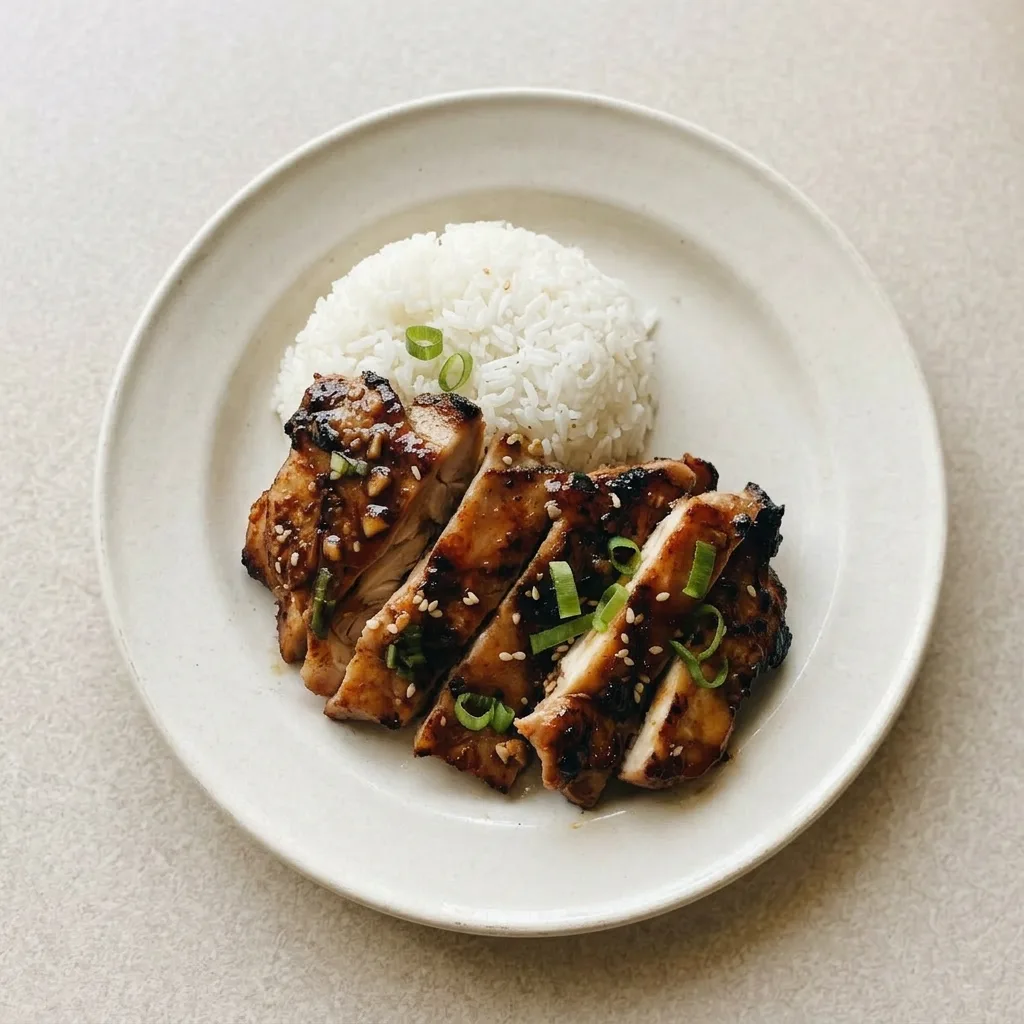
Allow chicken to rest 10 minutes. Serve over rice, garnished with green onions and optional sesame seeds.
Storage and Serving
Store leftover teriyaki chicken in an airtight container in the fridge for up to 4 days. The glaze will soften and the chicken may dry out slightly on reheating. To bring it back, reheat gently in a covered skillet over medium low with a splash of water or extra sauce, turning once.
Microwave on 50% power in 30 second bursts if you’re short on time. The texture is best within the first 2 days; after that, the chicken gets firmer and the glaze less sticky. Freezing is not recommended: the sauce breaks and the chicken turns stringy.
Serve leftover chicken cold or reheated over rice. Garnish with fresh green onions and sesame seeds just before serving; they lose crunch and color quickly once added.
Swap the protein, adjust the heat
Boneless skinless chicken thighs: Boneless skinless chicken breasts. Breasts cook faster and dry out more easily. Reduce initial sear to 5 to 6 minutes per side, then glaze and cook another 2 to 3 minutes per side.
Check doneness at 160°F internal temp; carryover cooking will take it to 165°F.
Low sodium soy sauce: Tamari or coconut aminos for gluten-free. Tamari is a straight swap by volume; the flavor is similar but slightly less salty. Coconut aminos are sweeter and thinner, start with the same amount, then taste and add more soy or salt if needed.
Brown sugar: Honey or maple syrup. Honey makes a thicker, stickier glaze that darkens faster, watch the heat. Maple syrup adds a distinct flavor and a thinner consistency; reduce liquid elsewhere by 2 tablespoons per cup to keep the glaze from being runny.
Tips
- If the glaze thickens too much while resting, whisk in a teaspoon of water before brushing to keep it spreadable.
- For a deeper char without burning, pat the chicken dry with paper towels before the initial sear to remove excess moisture.
Frequently Asked Questions
Can I use chicken breasts instead of thighs?
Yes, but expect drier meat if you cook them the same way. Breasts lack the fat that keeps thighs juicy, so reduce the initial sear to 5 to 6 minutes per side and the glaze step to 2 to 3 minutes. Pull them at 160°F internal temp; carryover cooking brings it to 165°F.
The texture will be firmer, not as tender as thighs.
How far ahead can I make the teriyaki sauce?
Make the glaze up to 4 days in advance and refrigerate in an airtight container. The cornstarch thickener may gel when cold, just reheat gently and whisk to loosen it. The marinade portion should be fresh, since it’s used raw with the chicken.
Why is my teriyaki chicken not caramelizing?
Most likely the heat isn’t high enough. The grill or pan needs to be ripping hot so the sugar in the glaze sears before it runs off.
If the chicken is overcrowded, it steams instead of browning. Also, make sure the glaze has simmered to a syrupy consistency, thin glaze won’t stick and caramelize.
Can I cook this in the oven instead of on the grill?
Yes, but you lose the smoky char and direct caramelization. Sear the thighs in a hot cast iron skillet on the stovetop first, then brush with glaze and finish in a 400°F oven for 5 to 7 minutes until the glaze bubbles and the chicken is cooked through. The crust will be less lacquered, but the flavor is still good.