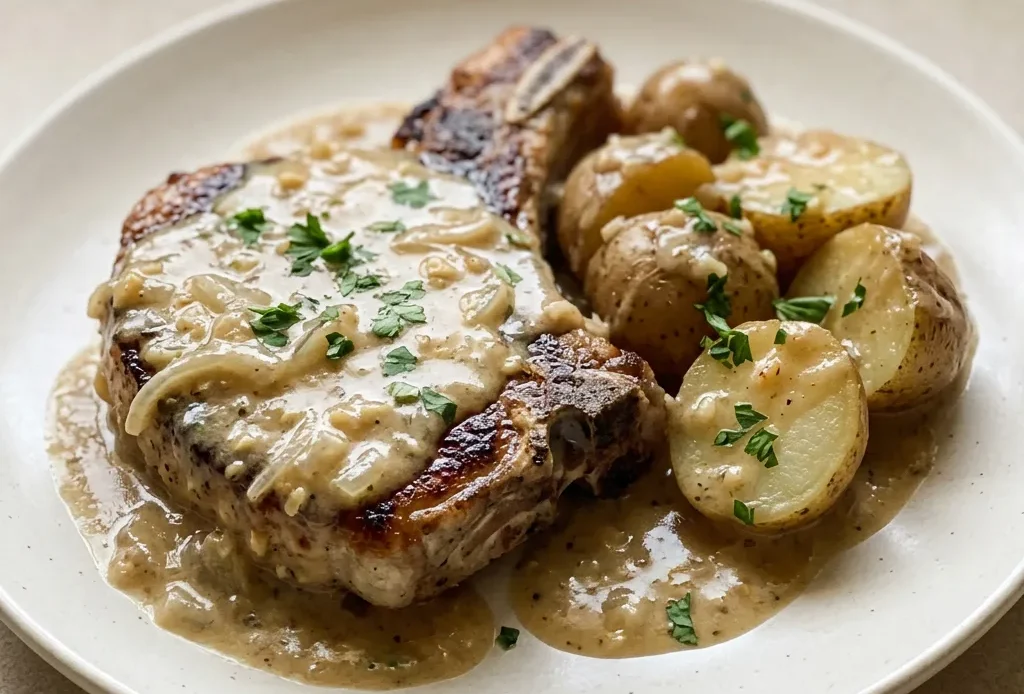
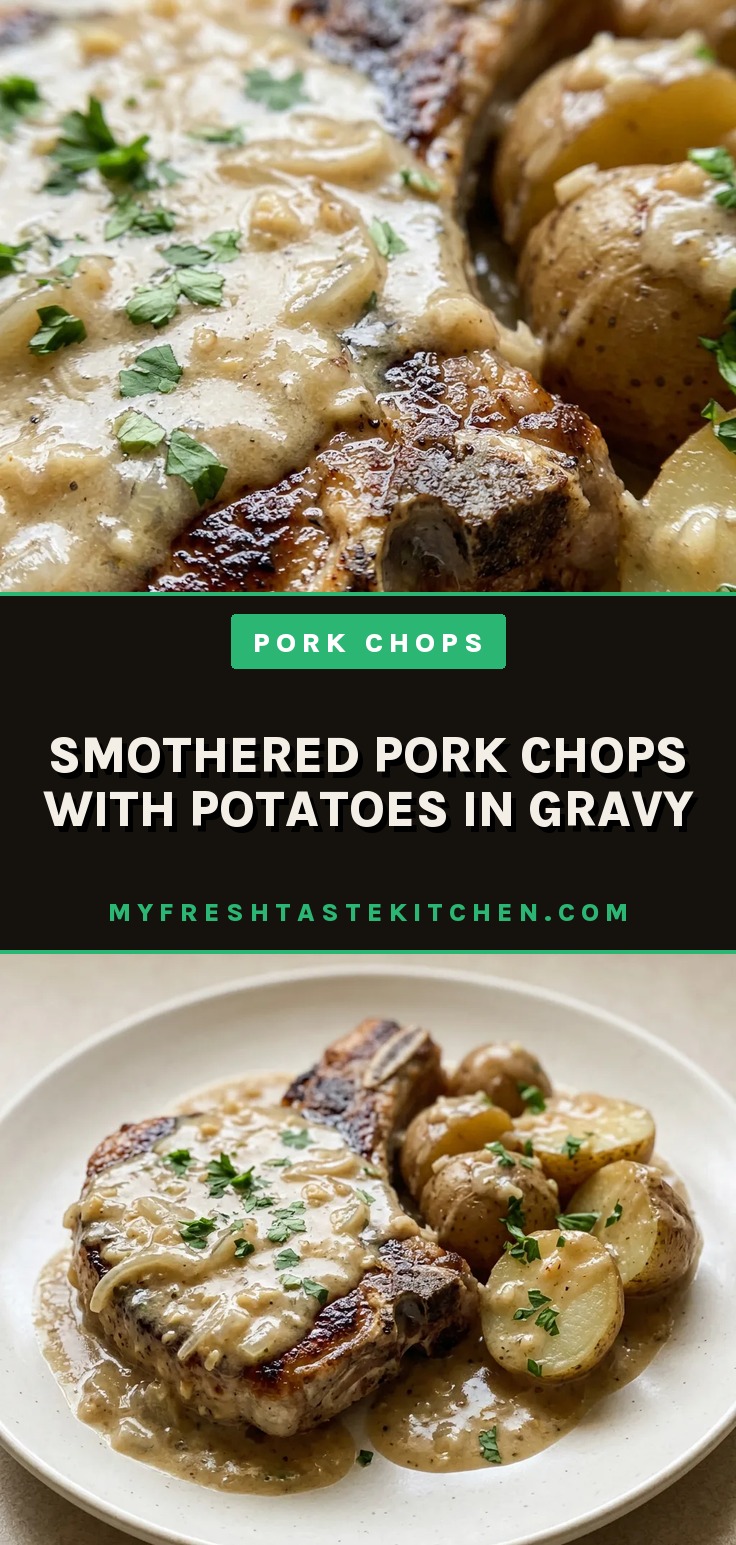
Smothered pork chops with potatoes in gravy is a one-pot dinner that hinges on two things: a good sear and the right potato size. Skip either and the gravy turns watery or the pork dries out. But get both right, and you get tender meat and creamy potatoes in a sauce that needs no roux.
The flour goes straight over the onions, so there’s no separate fat-and-flour step, just whisk in the broth and watch it thicken. Every bite of potato tastes like the gravy it simmered in, which is the whole point.
I was rushing and dumped flour straight into the broth, ending up with lumpy gravy that no amount of whisking could fix.
Browning builds flavor and texture
Searing pork chops before simmering isn’t just for color. The high heat triggers the Maillard reaction, creating a savory brown crust that deepens the meat’s flavor. That crust also helps render fat from the chop’s edge, and that fat becomes the backbone of your gravy, rich and meaty.
Beyond taste, the quick sear firms the exterior while the interior stays raw. That seal keeps juices inside during the long simmer, so the chops come out tender, not dry. You see the difference when you lift the lid: the meat looks moist, not shriveled.
Skip this step and you lose that concentrated flavor and end up with pale, bland chops that dry out before the potatoes are done.
Gravy comes together without a roux
Instead of making a separate roux, you dust flour directly over the sautéed onions. The fat clinging to the onions absorbs the flour, forming a paste that thickens the liquid.
Whisk in the broth gradually, if you dump it all at once, the flour clumps. You’ll see the gravy turn smooth and glossy as it simmers. The cream and butter stirred in at the end add body and a silky mouthfeel, rounding out the broth’s sharpness.
Watch the gravy coat the back of a spoon; it should be thick enough to hold the pork chop’s weight but still flow. That richness comes from the fat and starch working together, not from any roux technique.
Baby potatoes soak up gravy best
Baby potatoes are small enough to cook in the same time as the pork chops, so everything finishes together. Halving or quartering them exposes more surface area to the gravy; they absorb the seasoned liquid as they simmer, turning creamy and savory from the inside.
Meanwhile, the starch released from the cut surfaces naturally thickens the gravy as it cooks. You’ll taste it: each bite of potato tastes like the gravy itself, not just a bland starch. Larger potatoes would take longer and leave the chops overcooked.
Cut them evenly so they all soften at the same rate, fork-tender, never mushy.
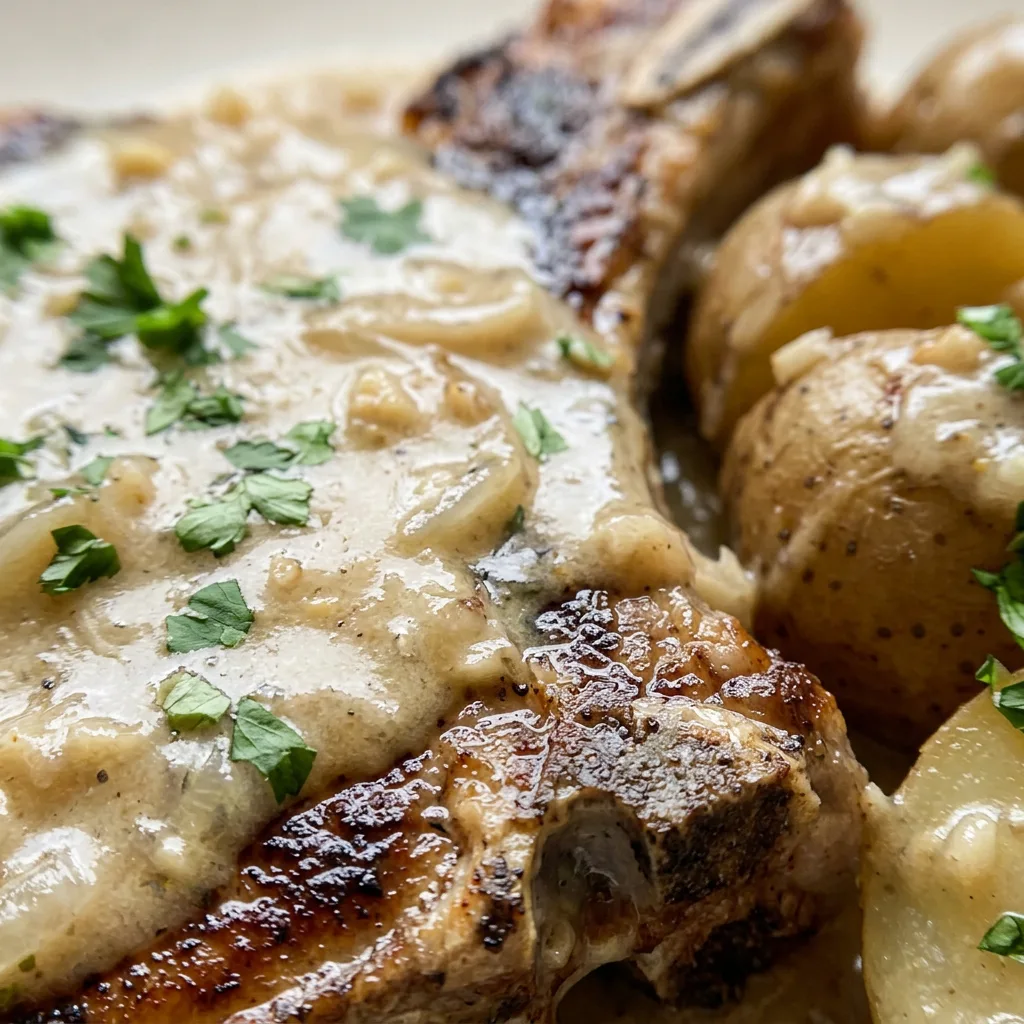
Prep: 15 min · Cook: 45 min · Total: 1 hr · Servings: 6
What to Look For in Each Ingredient
Pork chops: Bone-in, 1 inch thick: bone adds flavor, thick holds up to simmering without drying out.
Baby potatoes: Halve or quarter so they soak up gravy and cook in the same time as the chops.
Heavy cream: Adds body and silky texture; whole milk works but gravy will be thinner.
Chicken broth: Low sodium lets you control saltiness; regular broth makes gravy salty if reduced.
Vegetable or olive oil: Use a neutral oil with high smoke point for browning; olive oil adds flavor but watch heat.
Brown the chops, then build the gravy in the same pan
Sear the pork chops
Pat the chops dry so they brown, not steam. Get the oil shimmering over medium-high heat.
Lay them in without crowding, listen for a steady sizzle. After 3 to 4 minutes, flip; the underside should be deep golden, not pale.
If it sticks, it’s not ready; wait another 30 seconds.
Cook the onions and garlic
Once chops are out, reduce heat to medium. The pan should have fond (brown bits) and some fat. Add onions; scrape up the fond as they soften.
After 5 minutes, they’ll be translucent with brown edges. Toss in garlic and stir for 1 minute until fragrant, don’t let it burn.
Make the gravy
Dust flour over the onions and stir until no white streaks remain. Pour in broth slowly while whisking, if you dump it, you’ll see lumps.
Bring to a simmer; the gravy will thicken in 5 minutes. Stir in cream, thyme, and butter; the color turns a warm tan, and it coats a spoon.
Add potatoes and finish cooking
Submerge potatoes in the gravy, then tuck chops on top. Spoon some gravy over the meat. Cover, lower heat to low, and let it bubble gently.
After 25 minutes, test a potato with a fork, it should slide in with slight resistance. The pork should read 145°F; if not, cook 5 more minutes.
Smothered Pork Chops with Potatoes in Gravy
Ingredients
- 4 bone-in pork chops approx. 1 inch thick
- 1 teaspoon salt
- ½ teaspoon black pepper
- 1 teaspoon paprika
- 1 teaspoon garlic powder
- 2 tablespoons vegetable oil or olive oil
- 1 medium onion thinly sliced
- 3 cloves garlic minced
- 3 tablespoons all-purpose flour 24g
- 2 cups chicken broth low sodium preferred
- ½ cup heavy cream or whole milk
- 1 teaspoon dried thyme or 1 tablespoon fresh
- 2 pounds baby potatoes halved or quartered if large
- 2 tablespoons butter
- Fresh parsley chopped (for garnish)
Instructions
Season Pork Chops:
Dry the pork chops with paper towels and season evenly on both sides with salt, pepper, paprika, and garlic powder.Brown Pork Chops:
Warm oil in a large skillet or Dutch oven over medium-high heat. Brown pork chops for 3–4 minutes per side until golden. Remove and reserve.Sauté Onions and Garlic:
In the same vessel, sauté onions for 5 minutes until softened and lightly browned. Add garlic and cook an additional 1 minute.Make Creamy Gravy:
Dust flour over the onions and toss to coat thoroughly. Gradually pour in chicken broth while whisking until smooth. Stir in cream, thyme, and butter. Let simmer for 5 minutes until gravy thickens.Add Potatoes and Pork:
Submerge potatoes in the gravy, then arrange pork chops on top. Ladle some gravy over the meat.Simmer Until Tender:
Cover, lower heat to low, and cook for 25–30 minutes, stirring from time to time, until potatoes are fork-tender and pork chops reach an internal temperature of 145°F (65°C) / 63°C.Garnish and Serve:
Sprinkle with chopped parsley. Serve hot, spooning extra gravy over the pork chops and potatoes.
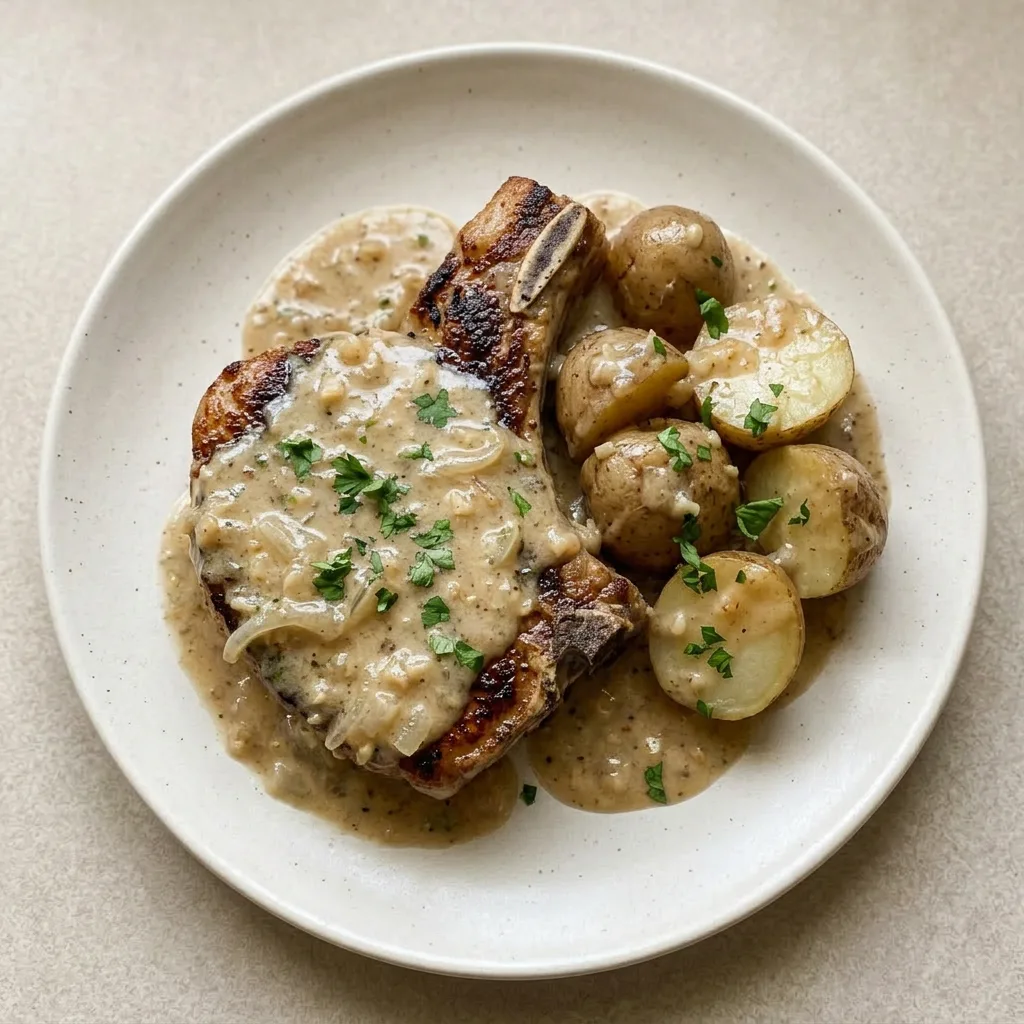
Swap the Cream, Keep the Bone
Heavy cream: Whole milk or half-and-half (same volume). The gravy turns thinner and less silky.
Whole milk yields a lighter sauce; half-and-half lands closer to the original. Either way, the gravy won’t coat the spoon as thickly, but it still tastes rich from the pan drippings and butter.
Chicken broth: Vegetable broth or low-sodium beef broth (same volume). Switch to vegetable broth and the gravy loses the meaty undertone from the seared pork.
Beef broth adds a deeper, more savory note that works well with the chops. Either swap is fine, but adjust salt at the end, vegetable broths vary widely in saltiness.
All-purpose flour: Gluten-free all-purpose flour blend (same weight, about 24g). The gravy will thicken similarly, but the texture may be slightly less smooth, with a faint graininess depending on the blend. Do not skip the flour or swap with cornstarch alone, the gravy won’t have enough body to coat the potatoes, and it won’t reheat well.
Bone-in pork chops: Do not swap for boneless chops. Boneless chops cook faster and dry out during the 25-minute simmer.
You would need to pull them out early, then cook the potatoes alone, defeating the one-pot method. Stick with bone-in, 1-inch thick, the bone insulates the meat and adds flavor to the gravy.
Tips
- Use a heavy skillet like cast iron to maintain steady heat during browning; a thin pan cools when the pork is added, leading to steaming instead of searing.
- After searing, deglaze the pan with a splash of broth before adding the onions to lift the fond, then proceed with the onions. This prevents the fond from burning while the onions cook.
Storage and Serving
Serve the smothered pork chops and potatoes right away for the best texture. The pork is most tender and the gravy is silkiest when freshly cooked.
Leftovers keep in a sealed container in the fridge for up to 3 days. The gravy thickens as it cools; when reheating, add a splash of broth or water and warm gently on the stovetop or in the microwave, stirring occasionally.
The potatoes will soften further with each day, absorbing more gravy but losing some firmness. Freezing is not recommended because the cream-based gravy can separate and the potatoes turn mealy upon thawing. Garnish with fresh parsley just before serving; do not add it to stored portions as it will wilt.
Frequently Asked Questions
Can I make smothered pork chops ahead of time?
You can, but the texture suffers. The gravy thickens as it cools, and the potatoes soften more each day. Reheat gently with a splash of broth, but the pork won’t be as tender as fresh.
Leftovers keep up to 3 days in the fridge; freezing is not recommended because the cream gravy can separate.
Why did my gravy turn out lumpy?
Most likely you added the broth too fast. Whisking slowly while pouring prevents the flour from clumping.
If lumps already formed, whisk vigorously or strain the gravy. Another cause: the flour wasn’t fully incorporated into the onions before adding liquid, stir until no white streaks remain.
What’s the difference between smothered pork chops and country fried pork chops?
Smothered pork chops are seared then simmered in a gravy made from pan drippings, flour, and broth, no breading. Country fried chops are breaded and fried, then served with a separate cream gravy. This recipe uses a single pot, and the gravy thickens from flour dusted over the onions, not from a roux or breading.