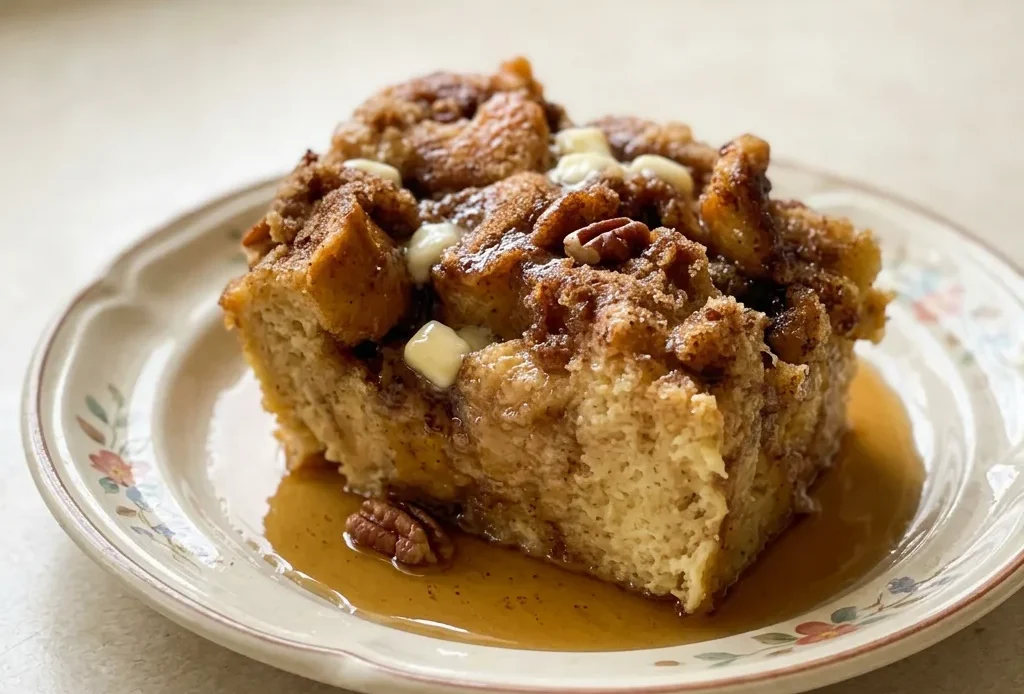
The single hardest thing about slow cooker french toast casserole is getting the bread-to-custard ratio right. Too little custard and you’ve got eggy croutons. Too much and you’re eating soup.
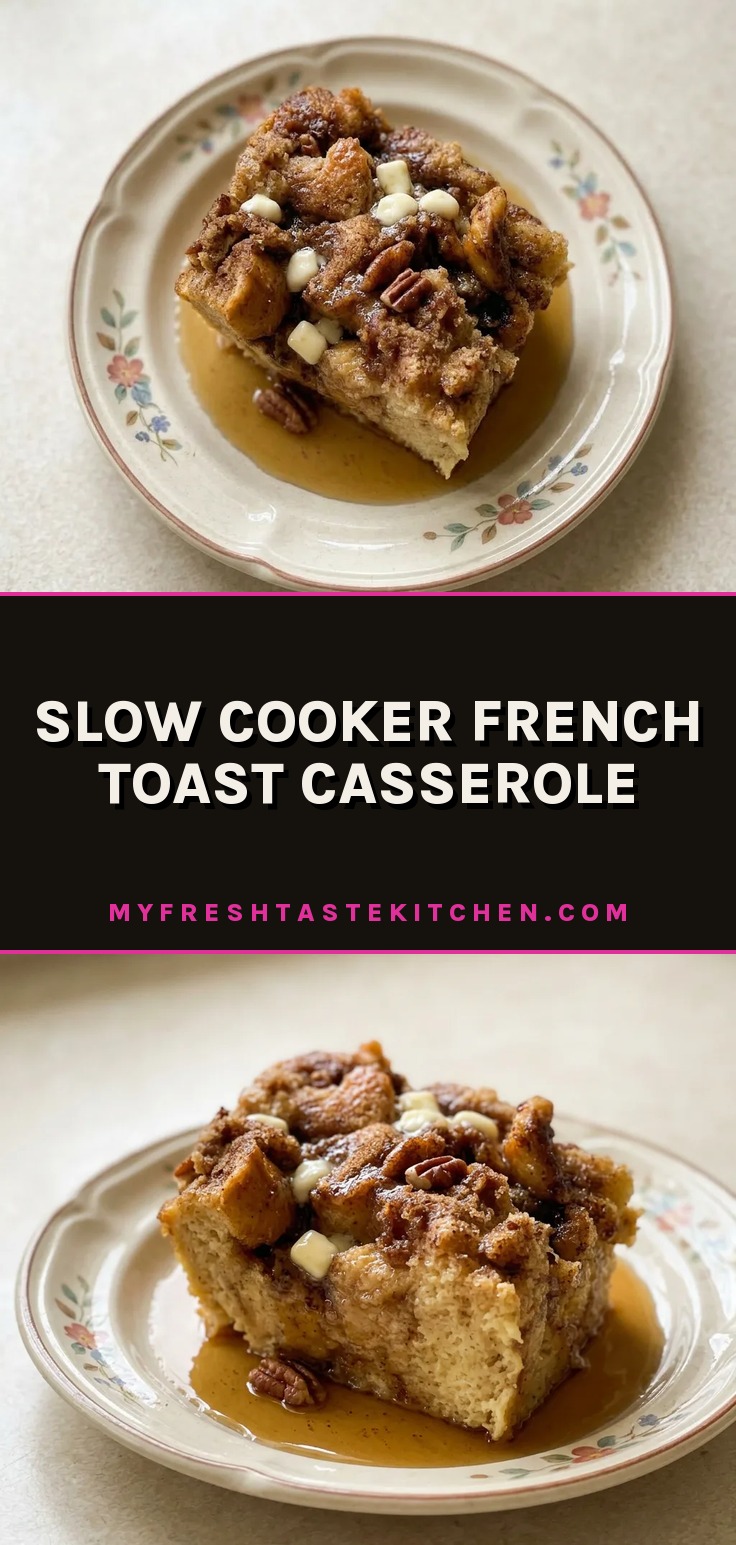
But nail that balance, and let stale bread do its slow, patient soak, and the slow cooker delivers something an oven never can: a tender, custardy casserole that stays hot for hours without drying out. The brown sugar topping caramelizes into a thin, sticky crust that shatters against the soft interior. It’s a breakfast that rewards patience, not speed.
Why does stale bread matter for the texture?
Stale bread has a firmer, drier crumb that soaks up the custard slowly without collapsing. Fresh bread, with its higher moisture content, turns sodden the moment the liquid hits it.
The result: a gummy, wet casserole instead of one with distinct, custard-filled cubes that hold their shape. Because the slow cooker heats gently, fresh bread never gets a chance to firm up before it absorbs too much liquid.
If you’ve got fresh brioche or challah, cube it and spread on a baking sheet, then dry in a 250°F oven for 10 minutes. That mimics staleness. For crock pot brunch recipes, this step separates a decent dish from a great one.
How does the slow cooker change the texture compared to baking?
An oven bakes French toast casserole with dry heat, creating a firmer, slightly drier top and a more set interior. The slow cooker surrounds the dish with gentle, moist heat. That environment prevents the top from drying out before the center sets.
The custard thickens evenly, and the bread stays tender throughout, almost like a bread pudding. You don’t get that crispy edge you’d expect from an oven, but you do get a uniformly soft, custardy casserole that holds together when scooped. The trade-off is worth it for a brunch that stays warm for hours without turning tough.
Why let the bread soak in the custard before cooking?
If you pour the custard over the bread and start the slow cooker right away, the liquid barely penetrates the cubes. You’ll end up with dry spots, pockets of bread that taste like plain toast amid the custard.
Letting the mixture rest for at least two hours gives the bread time to drink up the egg-milk mixture completely. Now I always let the bread rest for at least two hours so it fully absorbs the custard, preventing those dreaded dry spots. Every bite turns out uniformly moist and flavorful.
The bread softens without losing its structure because the slow, gentle soak hydrates it from the inside out. No fighting with uneven texture later.
What’s the topping for: brown sugar, butter, and cinnamon?
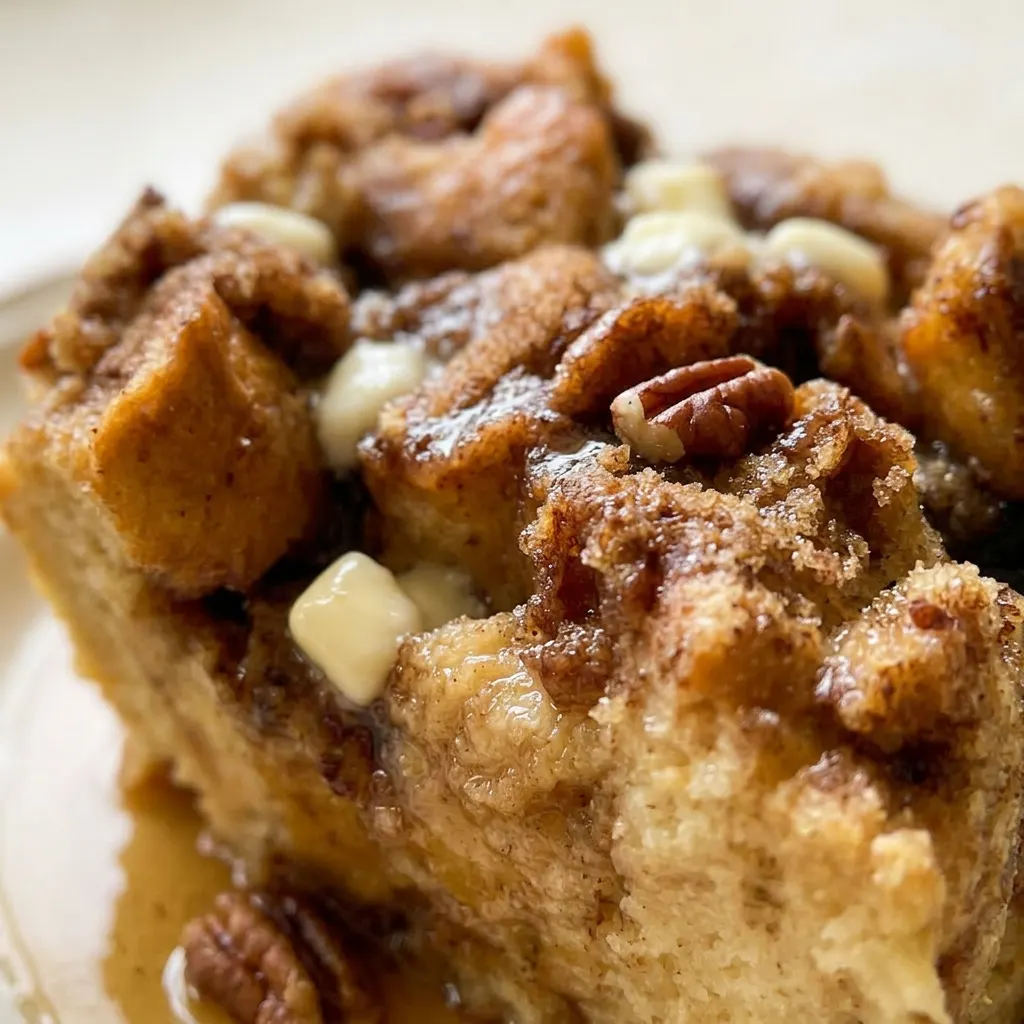
As the casserole cooks, the butter melts and mingles with the brown sugar to form a syrup that sinks into the top layer. That syrup caramelizes slowly over hours, creating a thin, sticky crust that contrasts with the soft custard underneath. The cinnamon in the topping echoes the spice in the custard but adds a more pronounced warmth right where you get the first bite.
Without it, the surface would stay pale and soft, missing that little hit of sweetness and texture. The topping is what keeps the casserole from feeling one-note.
Prep: 15 min · Cook: 2 hr 30 min · Total: 2 hr 45 min · Servings: 12 · Calories: 400 kcal
Ingredient Notes for Slow Cooker French Toast Casserole
Brioche bread: Stale bread soaks up custard without going soggy. Fresh? Dry it in a 250°F oven for 10 minutes.
Pecans: Optional for crunch. Chop them so they distribute evenly; large pieces sink to the bottom.
Whole milk: Use whole milk for richness. Lower fat makes the custard thin and watery.
Real maple syrup: Use real maple syrup, not pancake syrup. It’s less sweet with a deeper flavor.
Butter: Salted or unsalted both work. Slice it small so it melts evenly into the topping.
Brown sugar: Light or dark brown sugar works. Dark gives a stronger molasses flavor.
Assemble the casserole for even custard absorption
Cube the bread
Cut the brioche into 1-inch cubes. Stale bread holds its shape; fresh cubes feel spongy when squeezed. If using fresh, dry them in a 250°F oven for 10 minutes until they feel firm and dry to the touch.
Layer bread and pecans
Arrange the cubes and pecans in the greased slow cooker. Spread them evenly so no mound sits higher than another. Uneven layers lead to dry pockets or overly soggy spots.
Whisk the custard
Whisk eggs, milk, maple syrup, vanilla, salt, cinnamon, and nutmeg until the yolks are fully broken and the liquid is uniform. A streak of egg white means uneven custard; whisk until you see a single color.
Pour and soak
Pour the custard over the bread and stir gently to coat every cube. Press down with a spatula so the top cubes get submerged. Let it rest at least 2 hours; after resting, a pressed cube should feel heavy and wet, not springy.
Add the topping
Dice butter into small pieces. Mix brown sugar with cinnamon and sprinkle evenly over the soaked bread. Dot with butter bits.
If the sugar pools in one spot, it will burn there before the rest caramelizes.
Cook on high or low
Cover and cook on HIGH for 2 to 2½ hours or LOW for 3 to 4 hours. The casserole is done when the center jiggles slightly but doesn’t slosh, and the edges are set and puffed. A knife inserted near the center comes out clean.
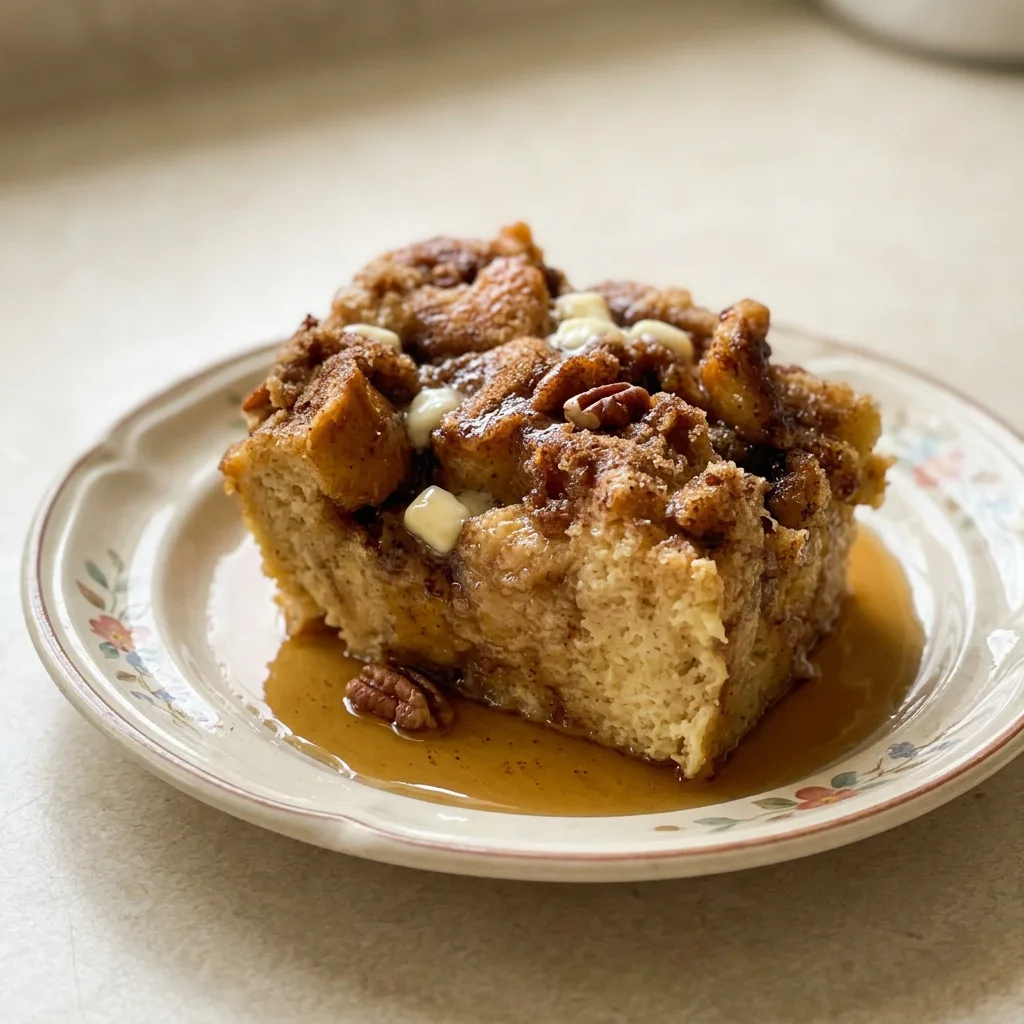
Slow Cooker French Toast Casserole
Ingredients
Method
Coat slow cooker:
Coat the slow cooker insert with nonstick cooking spray or butter.Cube bread and layer:
Cube the bread into 1-inch pieces. Arrange the cubes and pecans (if using) in layers inside the slow cooker. Pro tip: Stale bread yields best results. If yours is fresh, spread the cubes on a baking sheet and bake at 250°F (120°C) for 10 minutes.Whisk custard mixture:
In a large bowl, whisk eggs, milk, maple syrup, vanilla, salt, cinnamon, and nutmeg until combined.Pour custard over bread:
Pour the egg mixture over the bread and nuts. Stir gently to ensure even coating. Ideally, let it rest for a couple of hours so the bread fully absorbs the custard.Make brown sugar topping:
For the topping: Dice the butter into small pieces and set aside. Combine brown sugar and cinnamon in a small bowl. Sprinkle this mixture over the soaked bread, then dot with the butter pieces.Cook and serve:
Cover and cook on HIGH for 2 to 2½ hours or on LOW for 3 to 4 hours. Serve with warm maple syrup, powdered sugar, or fresh fruit.
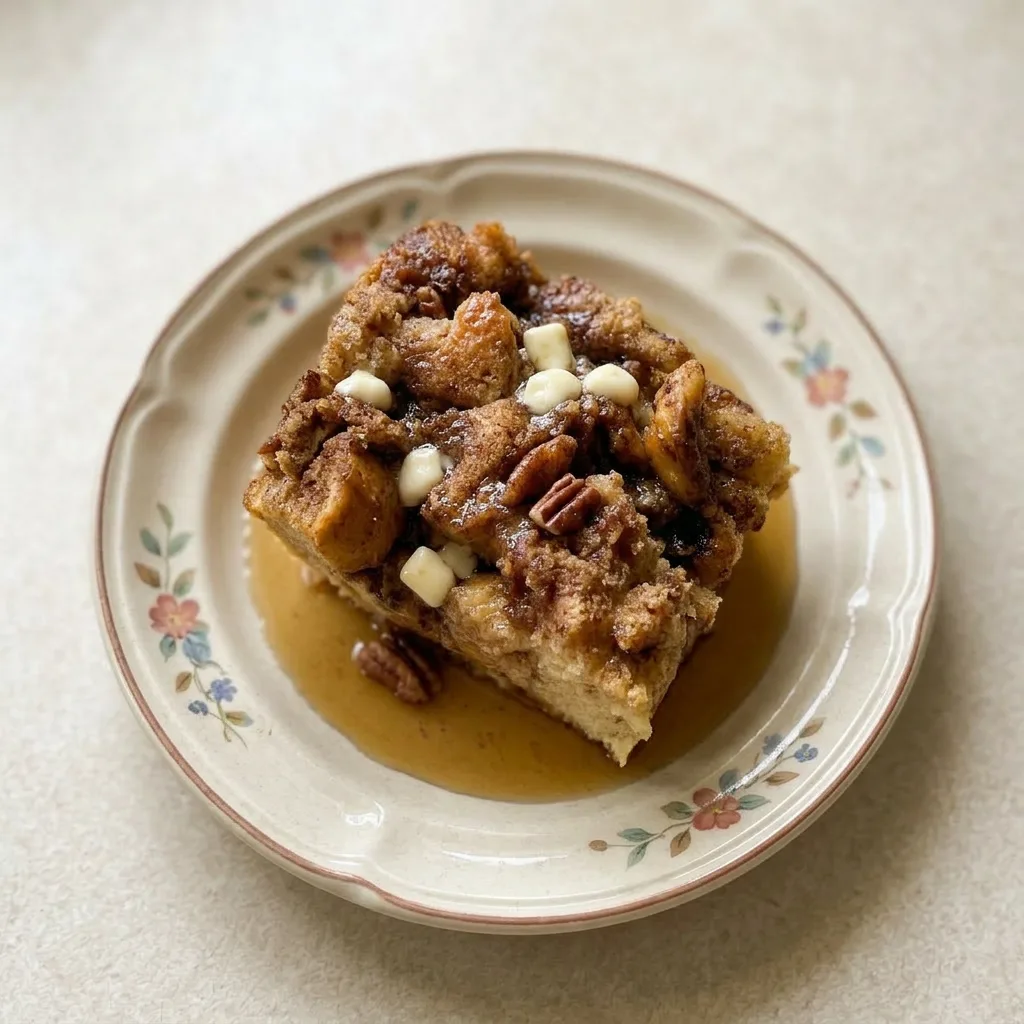
Three swaps that work, and one that doesn’t
Brioche bread: Challah, French bread, or Texas toast. Challah is the closest in richness; French bread yields slightly firmer cubes that hold up well. Texas toast works but soaks faster, cut cubes a bit larger (1½ inches) so they don’t disintegrate.
Pecans: Walnuts or almonds. Walnuts bring a similar crunch with a slightly bitter edge; almonds stay crunchier. Chop both about the same size as pecans so they distribute evenly.
Brown sugar: Coconut sugar. Coconut sugar is less sweet and has a milder molasses note. The topping won’t caramelize as darkly, you’ll get a lighter, subtly nutty crust.
Use the same amount; test sweetness before adding more.
Whole milk: Half-and-half (up to half the milk). Replacing some milk with half-and-half makes the custard noticeably richer and thicker, almost like a bread pudding.
The casserole will set more firmly. Don’t replace all the milk, full cream makes it too heavy and greasy.
Tips
- When cubing the brioche, trim off the dark brown crust from the outside of the loaf before cutting. The crust absorbs custard at a different rate than the soft interior, leading to uneven texture. Removing it ensures every cube behaves the same way.
Storage and Serving
Serve this casserole within 30 minutes of the cook time ending. The top caramelizes best right away; as it sits, the brown sugar syrup softens. Leftovers keep in the fridge for up to 4 days, but the texture turns softer each day as the custard continues to soak the bread.
To reheat, microwave individual portions for 45 to 60 seconds or warm in a 350°F oven for about 10 minutes. The oven restores some crust, but the casserole will never be as firm as fresh. You can assemble the casserole up to 24 hours ahead: layer bread, pour custard, cover, and refrigerate.
Add the topping just before cooking. Freezing the assembled casserole is not recommended because the custard’s dairy separates and bread turns grainy after thawing.
If you must freeze, freeze the baked casserole in an airtight container for up to 1 month. Thaw overnight in the fridge and reheat as above.
Frequently Asked Questions
Can I make this overnight in the slow cooker?
Yes, but you’ll need to shorten the cook time. The recipe calls for 2 to 2½ hours on HIGH or 3 to 4 hours on LOW. Cooking overnight on LOW for 6 to 8 hours will overcook the custard, making it curdle and separate.
If you want it ready in the morning, assemble the casserole the night before, refrigerate, and start the slow cooker on LOW for 3 to 4 hours early in the morning.
Why did my French toast casserole turn out soggy?
Most likely you used fresh bread that wasn’t dried first. Fresh brioche or challah has too much moisture; it absorbs the custard too quickly and collapses. Dry the cubes in a 250°F oven for 10 minutes before soaking.
Another cause could be undercooking, the center should jiggle slightly but not slosh. If it still looks wet after the recommended time, let it go another 30 minutes on HIGH.
Can I use a different type of bread like challah or Texas toast?
Yes, both work well. Challah is the closest to brioche in richness and absorbs custard similarly.
Texas toast is thicker and softer, so cut the cubes slightly larger, about 1½ inches, to keep them from disintegrating. For any bread, stale or dried cubes are key to avoiding a soggy casserole.
How is slow cooker French toast different from baked French toast?
The slow cooker uses moist, gentle heat, so the casserole stays uniformly soft and custardy with no crispy edge. Baked French toast develops a firmer, drier top and a more set interior. The trade-off is that the slow cooker version stays tender throughout and holds well for buffet-style serving, but you miss that oven-baked crust.
