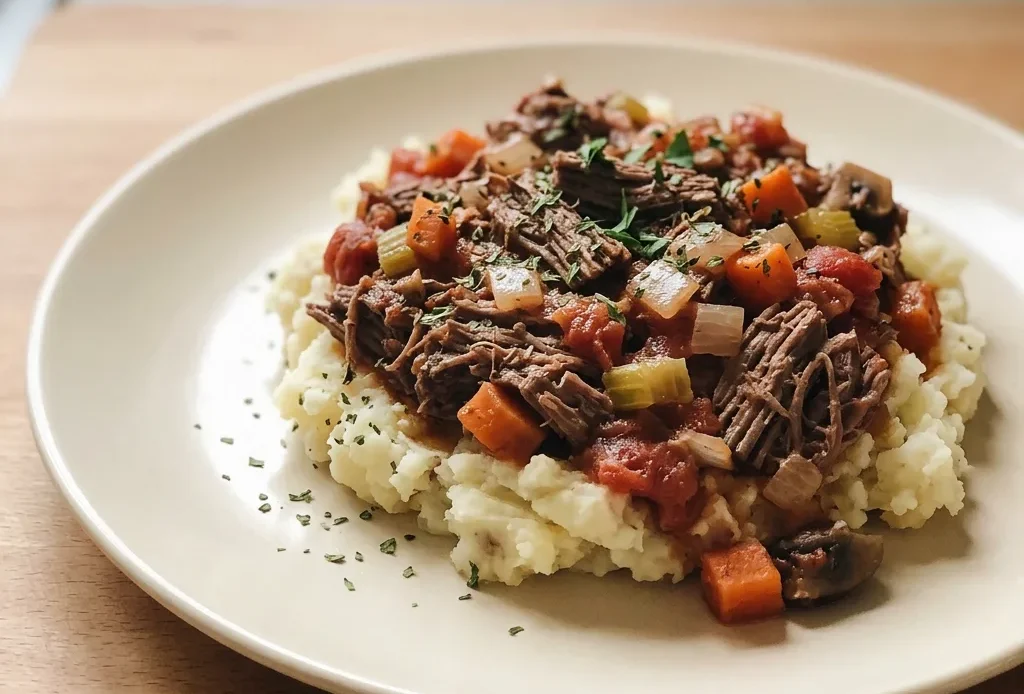
Almond milk and pomegranate juice aren’t tricks, they fix two common ragu problems at once. Dairy-free?
Check. Wine-free? Also check.
The sauce stays creamy, the beef gets tender, and no one misses either. A slow cooker beef ragu that actually works without cream or red wine, and the mushrooms do the heavy lifting for depth.
Everyone complains their ragu is watery and blames the almond milk, but the real issue is skipping the arrowroot or adding it at the start.
Almond milk and pomegranate juice as dairy and wine swaps
You might wonder why almond milk and pomegranate juice show up here. Almond milk adds creaminess and a subtle nuttiness that traditional dairy would bring, without the lactose. Pomegranate juice supplies acidity and sweetness, mimicking wine’s role in tenderizing meat and deepening flavor.
Both are unexpected, but together they enhance the beef’s richness, you’ll taste a rounder, more complex sauce.
Mushrooms and tomato paste build umami fast
A ragu usually relies on long-simmered stock for depth, but here mushrooms and tomato paste accelerate that process. Mushrooms release savory compounds that boost meatiness, while tomato paste concentrates flavor and adds body.
Together they create a bold foundation that mimics a traditional ragu. The mushrooms soften and meld into the sauce, lending an earthy note you’ll notice in every bite.
Why chuck roast works for shreddable beef
Chuck roast has enough fat and collagen to stay moist during long cooking. Low heat over hours melts connective tissue, making shredding easy.
The cut is economical and yields a rich, beefy flavor that stands up to the bold sauce. When you fork the meat after eight hours, it will pull apart into tender strands without effort.
Arrowroot flour for a clean, smooth thickener
Arrowroot flour thickens without altering flavor and is gluten-free. It works at lower temperatures, ideal for slow cookers. Dissolved in water first, it prevents clumps and ensures a smooth sauce.
The result is a silky, glossy ragu sauce that clings to pasta or cauliflower mash without any starchy aftertaste.
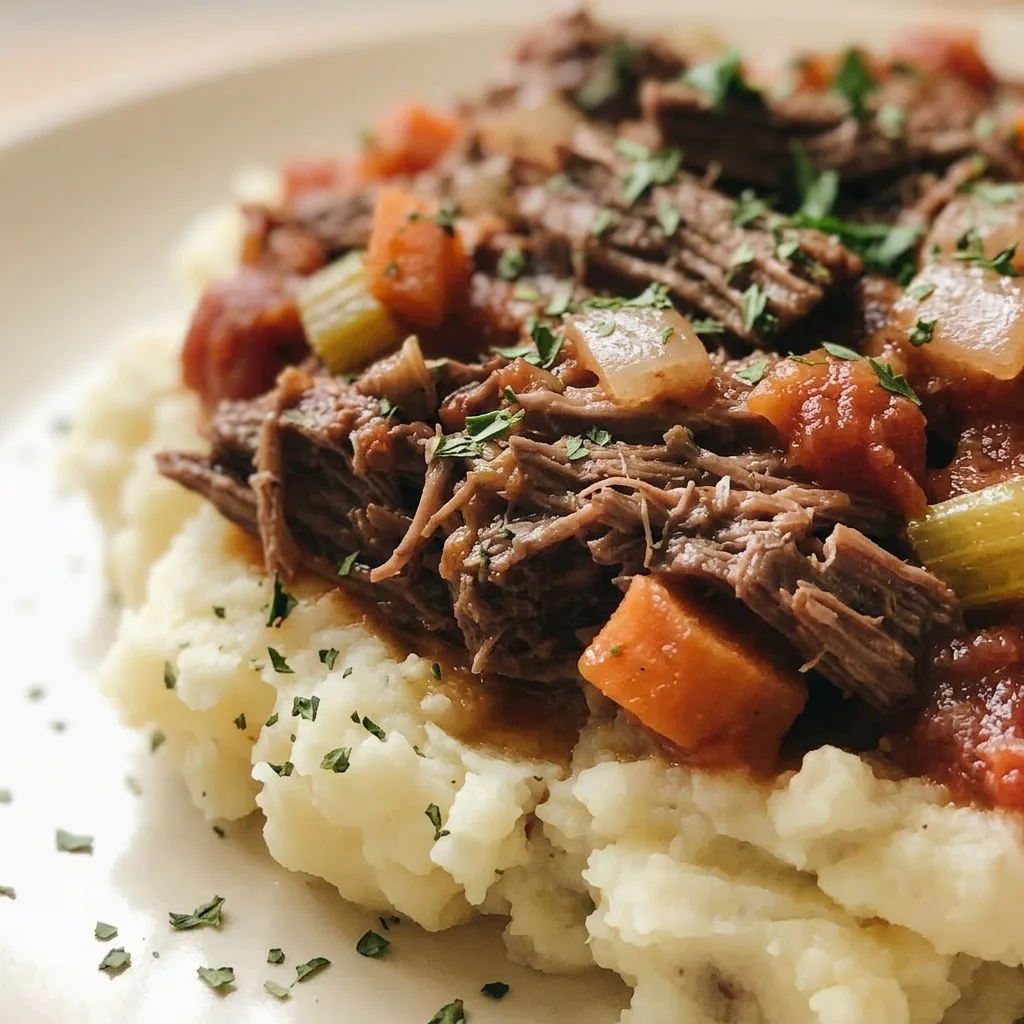
Prep: 10 min · Cook: 8 hr · Total: 8 hr 10 min · Servings: 6
Ingredient notes for this ragu
Beef chuck roast: Buy a 2.5 to 3 pound piece with good marbling; it’ll shred tender after long cooking.
Almond milk: Use unsweetened plain almond milk; vanilla or sweetened will throw off the savory balance.
Pomegranate juice: Look for 100% pomegranate juice without added sugar or other fruit juices.
White mushrooms: Buy fresh mushrooms, not canned; they add umami and texture that dried can’t match.
Arrowroot flour: Arrowroot is gluten free and thickens at low heat; dissolve thoroughly in cool water before adding.
Building the ragu in the slow cooker
Load the roast and wet ingredients
Set the chuck roast in the slow cooker. Pour in almond milk, pomegranate juice, and broth. The liquid should come about halfway up the roast, if it doesn’t, add a splash more broth.
Add vegetables and seasonings
Scatter mushrooms, carrots, onions, celery, and garlic around the meat. Add diced tomatoes, tomato paste, salt, parsley, and pepper. Stir everything together; the tomato paste should dissolve evenly into the liquid, turning it a deep brick red.
Cook low and slow
Cover and cook on low for 6 to 8 hours. At 6 hours, test with a fork: the meat should offer little resistance and start to pull apart. If not, let it go another hour.
On high, check at 3 hours and again at 4.
Shred and thicken
Remove the roast to a cutting board and shred with two forks, it should fall into strands easily. Return the meat to the slow cooker. If the sauce is thin, stir in the arrowroot slurry; it will thicken in 5 minutes, turning glossy.
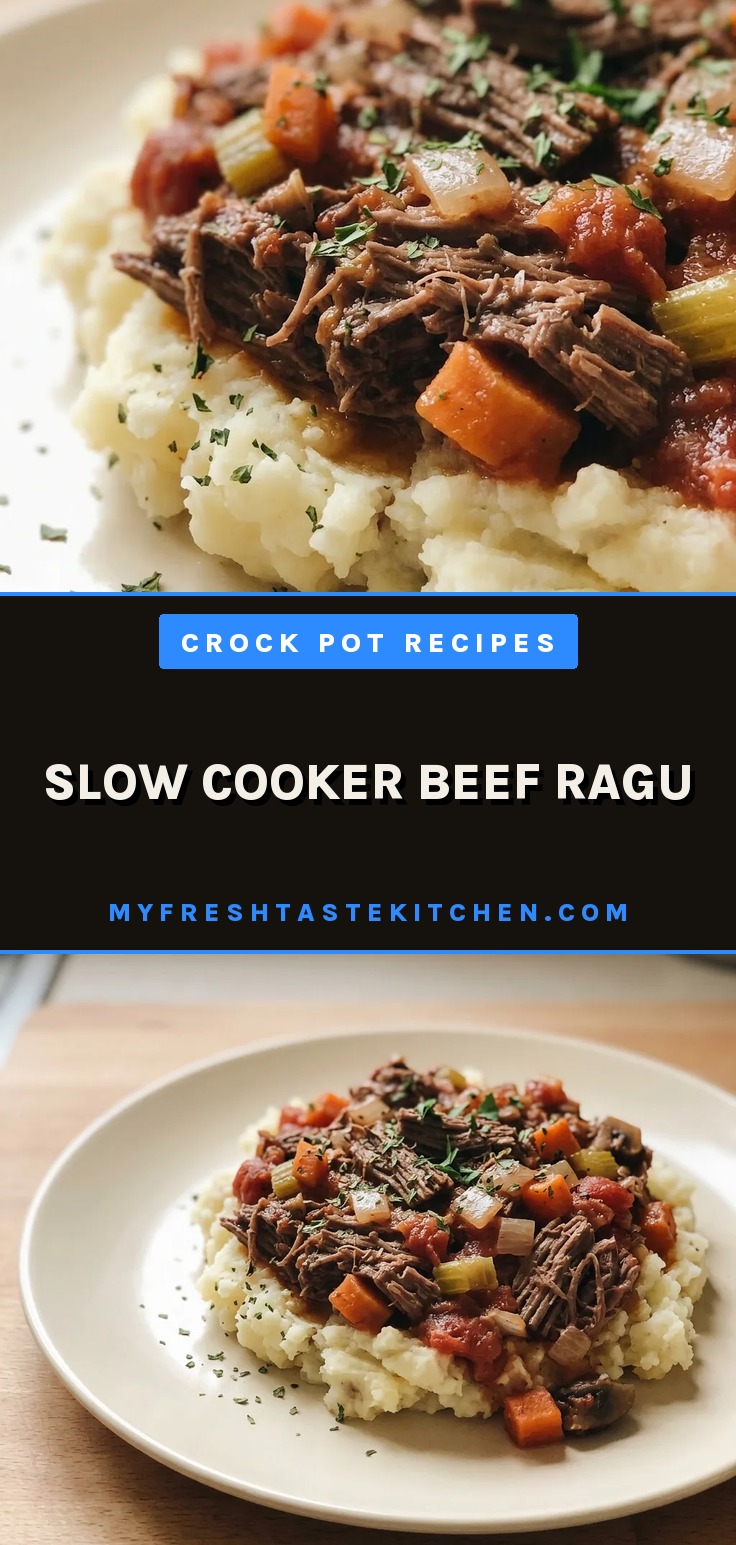
Slow Cooker Beef Ragu: Whole30, Paleo, Gluten-Free
Ingredients
- 2.5-3 lb. beef chuck roast
- 1/2 cup almond milk
- 1/2 cup pomegranate juice
- 1/2 cup beef broth
- 1 cup sliced or diced white mushrooms
- 1 cup diced carrots
- 1 cup diced white onions
- 1 cup diced celery
- 1 tbsp minced garlic
- 1 (14.5 oz) can diced tomatoes, drained
- 1 (6 oz) can tomato paste
- 2 tsp salt
- 2 tsp dried parsley flakes
- 1 tsp black pepper
- 1 tbsp arrowroot flour dissolved in 1 tbsp water for thickening
- Chopped fresh parsley to garnish
Instructions
Combine ingredients in slow cooker:
Put the roast into the slow cooker. Add every ingredient except the arrowroot mixture. Stir thoroughly to combine.Cook until beef shreds:
Cook on low heat for 6-8 hours or on high for 3-4 hours, until the beef can be easily shredded with two forks.Thicken sauce with arrowroot:
Optional: For a thicker sauce, mix arrowroot flour with water in a small bowl until dissolved, then pour into the sauce and stir.Serve over base:
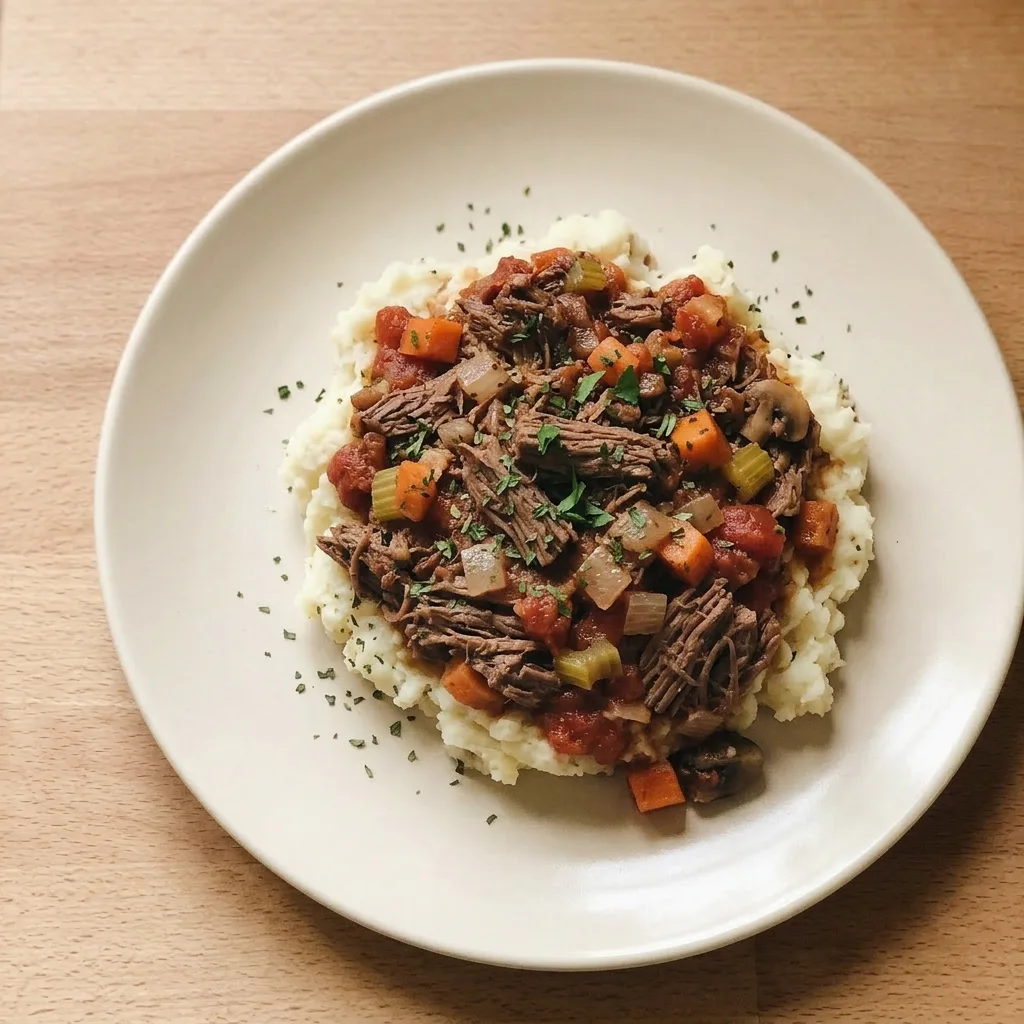
Serve over mashed potatoes, mashed cauliflower (for Whole30), or gluten-free noodles.
Swapping around almond milk and pomegranate juice, and what to leave alone
Almond milk: Full-fat coconut milk (canned). Swaps the nutty note for a faint coconut flavor that doesn’t fight the beef.
Texture stays creamy, sauce remains dairy-free. Use the same 1/2 cup; shake the can first.
Pomegranate juice: Dry red wine (like Cabernet or Merlot). Replaces the fruity sweetness with wine’s acid and tannins, closer to a classic ragu.
The sauce will taste deeper, less bright. Use the same 1/2 cup; let it cook off fully.
Arrowroot flour: Cornstarch, same amount dissolved in water. Cornstarch thickens similarly but can turn slightly cloudy if overcooked. Stir in at the end, not earlier; the sauce will be glossy, not matte.
Same ratio: 1 tbsp to 1 tbsp water.
Beef chuck roast: Beef brisket or bottom round. Brisket shreds just as tender due to similar collagen.
Bottom round is leaner; it may dry out if cooked beyond shredding point, test at 6 hours on low. Use the same weight.
Tips
- Cut the chuck roast into 2-inch chunks before browning; the increased surface area deepens the fond and the smaller pieces shred more uniformly after cooking.
- Deglaze the slow cooker insert with a splash of beef broth after browning to lift the browned bits into the sauce, which adds a richer beef flavor without extra steps.
Storage and Serving
This ragu tastes best the day it’s made, when the sauce is at its silkiest and the beef is most tender. Leftovers keep in the fridge for up to 4 days.
The sauce will thicken as it sits; thin it with a splash of broth when reheating. For longer storage, freeze the ragu without the arrowroot thickener.
Thaw overnight in the fridge, then reheat and thicken fresh. The sauce may separate slightly after freezing; whisk it back together as it warms. To serve, reheat gently on the stovetop or in the microwave.
Spoon over pasta or mashed potatoes and garnish with fresh parsley just before eating. The garnish won’t hold overnight, so add it fresh each time.
Frequently Asked Questions
Can I cook this on high instead of low, and how does that affect the texture?
Yes, cook on high for 3 to 4 hours. The meat will still shred, but the connective tissue won’t break down as completely, so the beef may be slightly less tender. The sauce will also have a thinner consistency because less time means less gelatin and collagen dissolve into it.
Can I make this ragu a day ahead and reheat it?
Yes, you can make it a day ahead. The sauce will thicken as it sits; add a splash of broth when reheating to loosen it. Reheat gently on the stovetop or microwave until piping hot, and add fresh parsley just before serving.
Why is my sauce watery after 8 hours, and how can I fix it?
Most likely the lid was left off or opened frequently, letting steam escape and preventing proper reduction. If the sauce is thin at the end, stir in the arrowroot slurry from the recipe; it will thicken in about 5 minutes. Another cause: if your chuck roast had less marbling, it released less gelatin, but the arrowroot fix still works.
How is this different from a traditional Italian ragu?
Traditional ragu uses wine and often dairy (milk or cream). This recipe swaps wine for pomegranate juice, which adds acidity and a fruity note, and uses almond milk instead of dairy for creaminess. It also builds umami quickly with mushrooms and tomato paste rather than relying on hours of stock reduction.