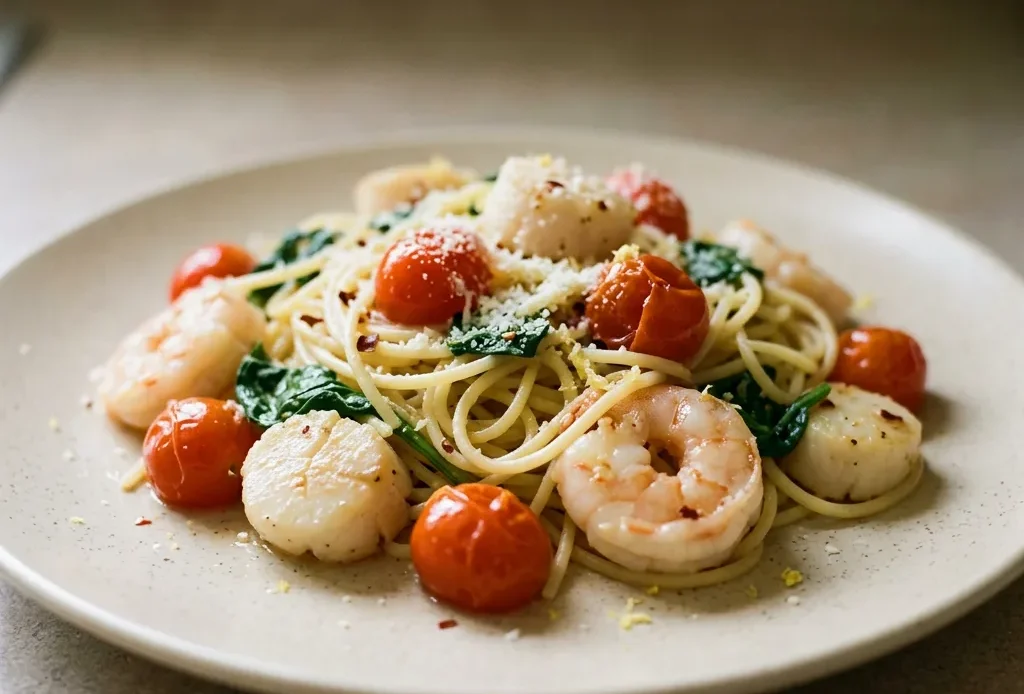
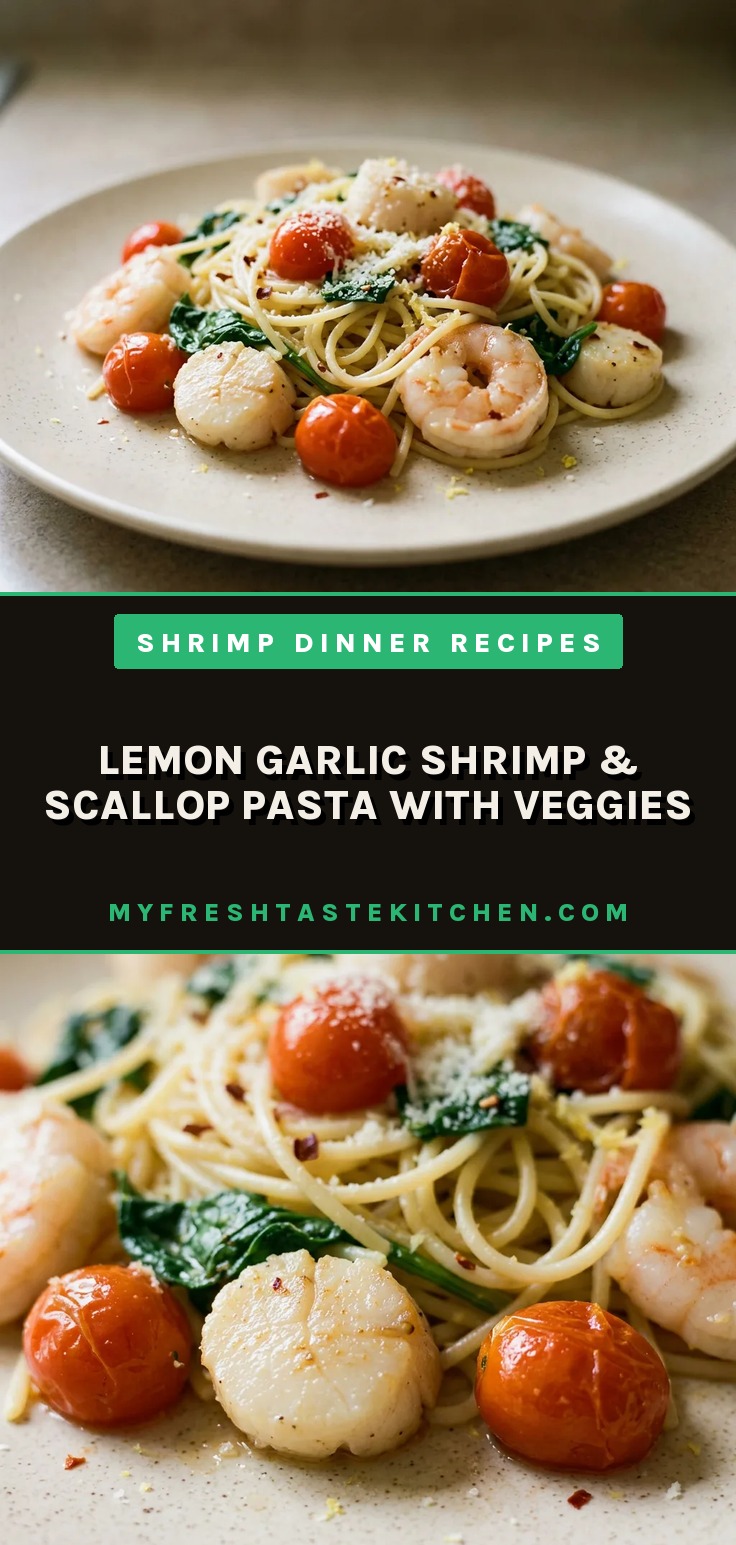
This isn’t a heavy, cream-laden seafood pasta. It’s a bright, garlicky tangle of spaghetti where seared scallops and shrimp share the plate with burst cherry tomatoes and wilted spinach, all held together by olive oil and fresh lemon. The trick is keeping the seafood from turning tough while the sauce comes together in the same pan.
Searing Scallops and Shrimp Separately
Scallops need a blast of high heat to form that golden crust without turning rubbery inside. Shrimp, on the other hand, cook in half the time and release water as they go. If you cooked them together, the shrimp would steam the scallops, robbing them of browning and leaving both soggy.
By searing scallops first, you get a crisp exterior and tender center. Then the same pan sears the shrimp quickly, just until opaque and pink, and you pull them both off the heat.
Setting them aside means they won’t overcook while you build the sauce. The result is each piece of seafood with its own texture, not a uniform mush.
Building a Pan Sauce from Fond and Tomatoes
After searing, the pan holds browned bits clinging to the surface, that’s concentrated seafood flavor waiting to be released. Sautéing garlic in the same pan pulls that fond into the oil. Then in go the cherry tomatoes.
Let them cook until they soften and burst, releasing their juices to scrape up the fond. The tomatoes break down into a light, slightly acidic sauce that coats the pasta without weighing it down.
The spinach wilts in the residual heat, adding color and a mild earthiness. What you get is a sauce that tastes like the sea and the garden, not just oil and garlic.
Finishing with Lemon Juice and Zest Off Heat
Lemon juice cuts through the richness of olive oil and seafood, making each bite feel bright. Add it while the pan is still hot, and the acid can dull or turn bitter.
By pulling the pan off the heat before adding juice and zest, you keep that fresh, sharp citrus punch. The zest brings aromatic oils that perfume the dish without extra liquid. Toss everything together right as you serve, and the lemon stays forward, balancing the savory notes.
A final grind of pepper wakes it all up. This way the citrus lifts the dish rather than cooks into it.
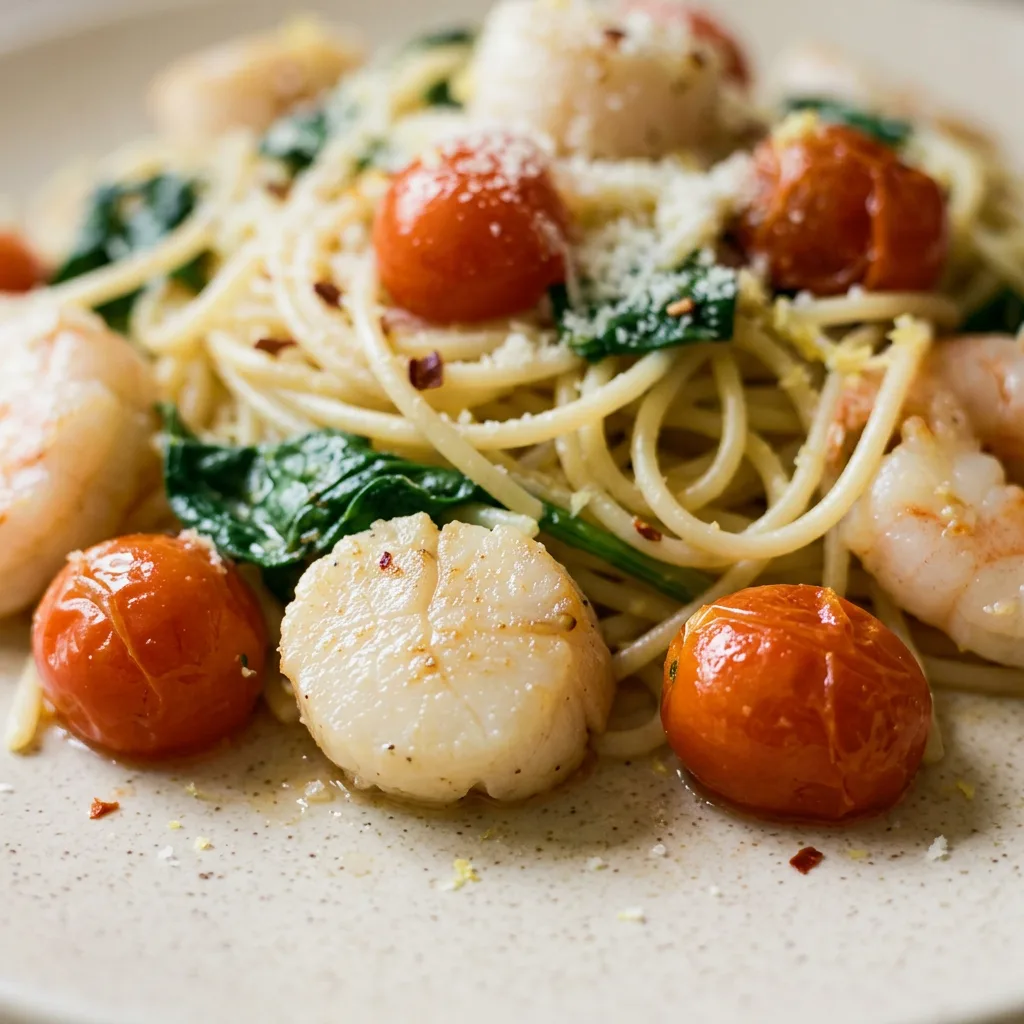
Prep: 20 min · Cook: 20 min · Total: 40 min · Servings: 2 · Calories: 710 kcal
What to Watch For in the Seafood and Veggies
shrimp and scallops: Buy dry-packed, not water added, to avoid excess moisture that ruins the sear.
cherry tomatoes: Use ripe ones that burst easily under heat; hard or pale ones won’t release enough juice.
baby spinach: Pre washed is fine, but pat dry if wet; extra water will dilute the sauce.
lemon: Zest before juicing; the oils are in the colored part, not the white pith.
Building a Seafood Pasta That Tastes Bright, Not Muddy
Dry and Sear Scallops First
Pat scallops bone-dry, any moisture steams them and kills crust. Sear 2 minutes per side in 1 Tbsp oil over medium-high. They release from the pan easily when ready.
Cook Shrimp Right After
In the same hot pan, cook shrimp 1 to 2 minutes per side. They turn opaque and pink quickly; pull them the second they curl. Overcooking makes them tough.
Sauté Garlic and Tomatoes
Lower heat to medium, add 1 Tbsp oil and garlic. Stir 2 minutes until fragrant but not brown. Add tomatoes; cook 5 minutes until they soften and burst, scraping up browned bits.
Wilt Spinach into the Sauce
Toss in spinach and stir until just wilted, about 2 minutes. It should collapse but stay green. Overcooking turns it drab and slimy.
Finish Off Heat with Lemon
Remove pan from heat. Add pasta, seafood, lemon juice, zest, pepper flakes, and remaining 2 Tbsp oil.
Toss well, the citrus stays sharp, not cooked out. Adjust salt and pepper.
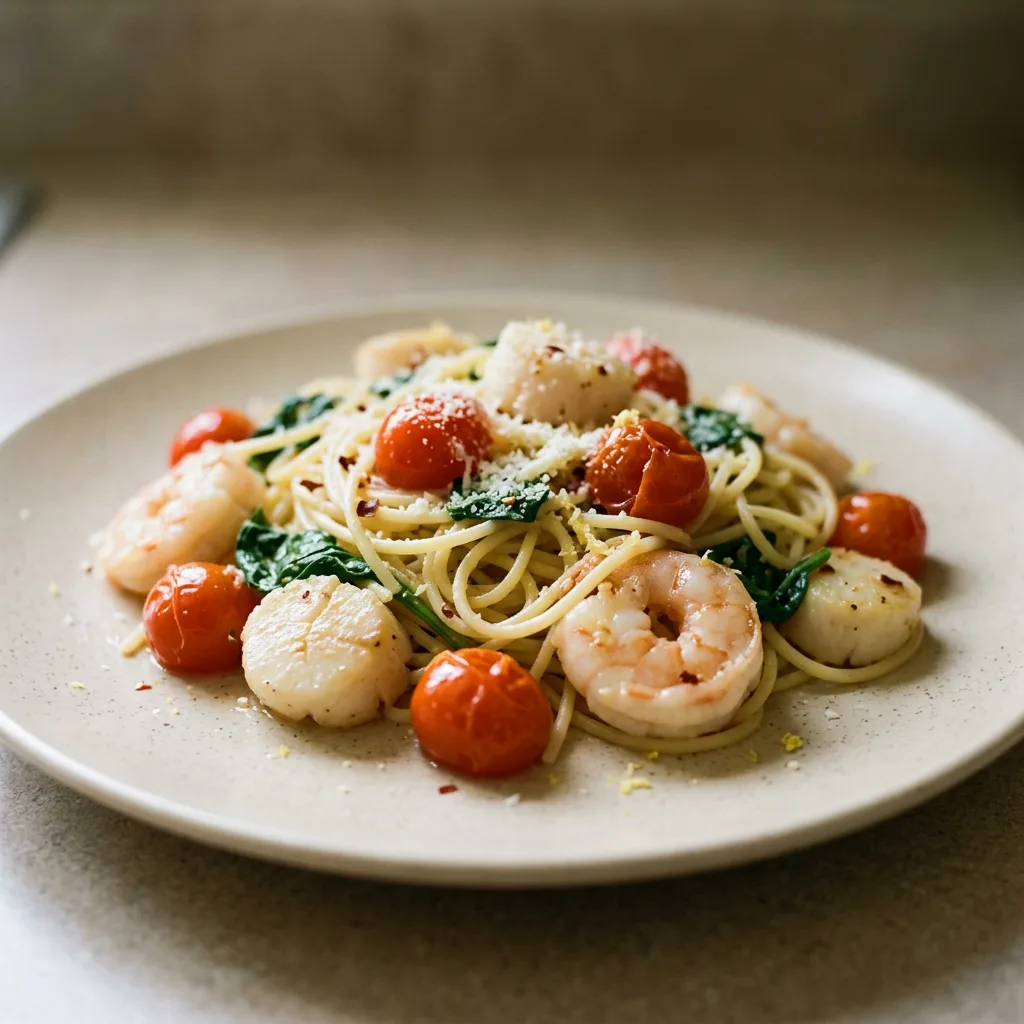
Lemon Garlic Shrimp & Scallop Pasta With Veggies
Ingredients
Method
Prepare Seafood and Aromatics:
Defrost shrimp and scallops; take off tails and shells. Blot dry. Finely chop garlic. Grate lemon zest, then squeeze the juice.Cook Spaghetti:
Fill a large pot with water and bring to a boil. Cook spaghetti as directed on the package. Drain.Sear Scallops:
Meanwhile, in a large pan over medium-high heat, warm 1 Tbsp olive oil. Sear scallops for 2 minutes per side until they turn opaque and get a light brown crust. Transfer to a plate.Cook Shrimp:
Using the same pan, cook shrimp for 1-2 minutes per side until they become opaque and pink. Set aside with the scallops.Sauté Garlic and Vegetables:
Add another 1 Tbsp olive oil to the pan and lower the heat a bit. Sauté garlic for 2 minutes. Toss in tomatoes and cook for 5 minutes, letting them burst and release juices. Add spinach and cook until it wilts, roughly 2 minutes.Combine Pasta and Seafood:
Remove pan from heat. Mix in the cooked pasta, seafood, lemon juice, lemon zest, red pepper flakes, and the remaining 2 Tbsp olive oil. Season with salt and pepper, toss everything together. Adjust seasoning as needed.Top with Parmesan:
If desired, top with freshly grated Parmesan before serving.
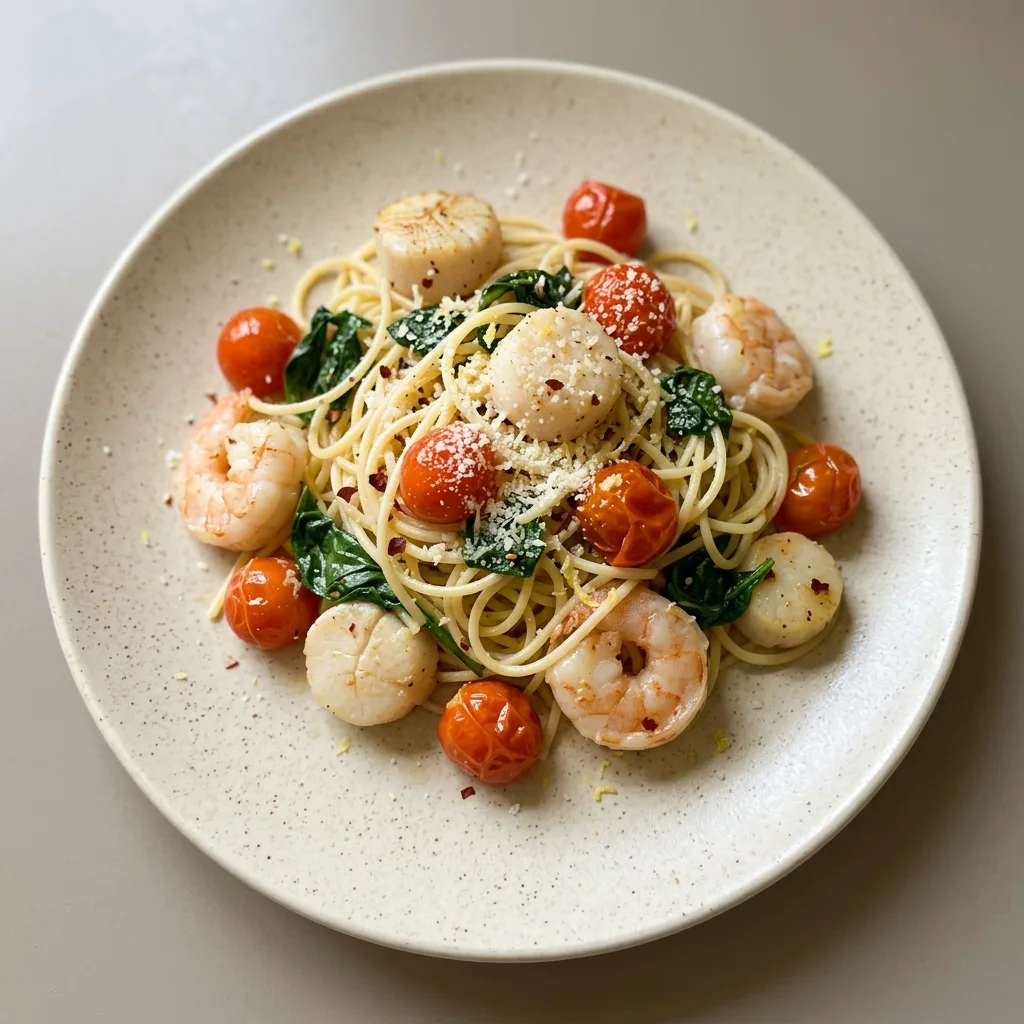
Storage and Serving
This pasta is at its peak right after you toss it with lemon and olive oil off heat. Serve within 30 minutes for the brightest citrus and firmest seafood. If you make it ahead, store leftovers in a sealed container in the fridge for up to 2 days.
The pasta absorbs sauce over time, turning softer and less bright. To reheat, add a splash of olive oil and a squeeze of lemon to bring back moisture and brightness, warming gently in a skillet or microwave.
Freezing is not recommended; shrimp and scallops turn rubbery, and the spinach becomes slimy when thawed. Parmesan can be stored separately and added fresh upon serving.
Swapping the Seafood Without Losing the Lemon-Garlic Base
shrimp: Chicken breast, cut into bite-size pieces. Shrimp cook fast and stay tender. Chicken needs more time, sear it first in the pan until golden and cooked through, then remove.
The longer cooking means the lemon and garlic will still work, but you lose the briny flavor shrimp brings. The texture is firmer, more meaty.
scallops: Firm white fish like cod or halibut, cut into 1-inch chunks. Scallops have a delicate sweetness and a buttery bite.
Fish chunks sear similarly but flake apart more easily; handle gently and cook just until opaque. The texture is softer, less distinct. The lemon and garlic still balance, but the dish leans more toward a simple fish pasta than a seafood medley.
spaghetti: Gluten-free pasta (brown rice or legume-based). Gluten-free pasta can turn sticky or mushy if overcooked. Cook it al dente by the package time, then rinse briefly if the package says to.
The sauce, olive oil, lemon, and veggie juices, clings well but won’t emulsify as thickly. The texture will be less springy, more tender.
Parmesan (optional): Nutritional yeast (for dairy-free). Parmesan adds salty, umami depth.
Nutritional yeast gives a cheesy, nutty flavor without dairy. Sprinkle about 2 tablespoons over the finished pasta; it won’t melt the same, but it coats the strands. The dish will taste earthier, less sharp.
Tips
- Use a paper towel to press firmly on each scallop to remove surface moisture; any residual water will turn to steam and prevent browning.
Frequently Asked Questions
Can I use frozen shrimp and scallops without thawing first?
No, you need to defrost them first. The recipe calls for blotting dry before searing, frozen seafood releases too much water, which steams instead of browns. Thaw in the fridge overnight or in cold water, then pat dry.
How do I prevent the seafood from becoming rubbery?
Cook each seafood separately and pull them off heat the moment they’re done. Scallops sear 2 minutes per side until opaque with a golden crust; shrimp go 1 to 2 minutes per side until just pink and curled. Overcooking even 30 seconds makes them tough.
Can I make this pasta ahead of time and reheat it?
It’s best served within 30 minutes of tossing for bright citrus and firm seafood. If you need to prep ahead, store leftovers in a sealed container for up to 2 days, the pasta will soften. Reheat with a splash of olive oil and fresh lemon to revive it.
